Outdoor Power Equipment
Split-Fire 403 PTO Wood Chipper Review: Simple Design, Serious Performance
A 4-inch PTO-driven wood chipper with a self-feeding design, belt-driven drivetrain, and no hydraulics to maintain.
Introduction
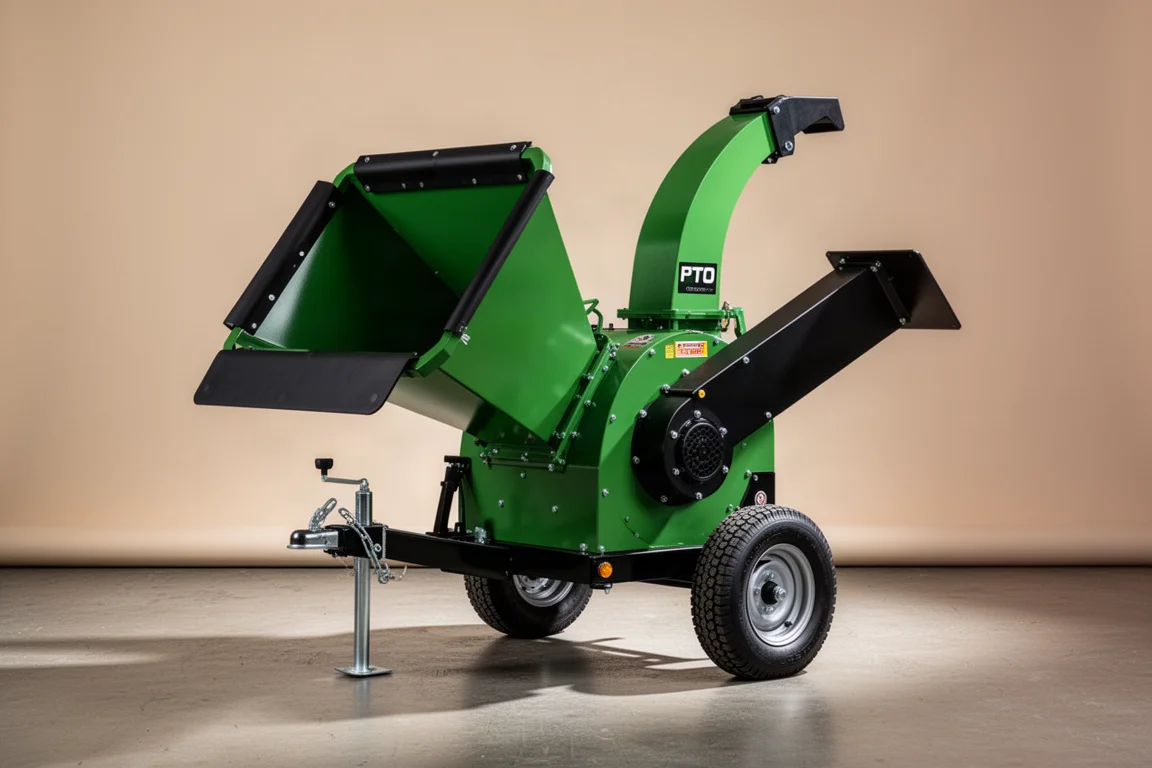
When shopping for a PTO-driven wood chipper, the priorities were straightforward: keep it simple, keep it cost effective, avoid a tangle of hydraulics, and make sure it actually works well. The Split-Fire 403 checks every one of those boxes. It is a 4-inch capacity chipper, but its design makes it a step above many alternatives on the market.
Who This Product Is For
This chipper suits tractor owners who want a low-maintenance, self-feeding machine without hydraulic infeed systems. If you maintain trails, clear brush, or process yard debris regularly and want something that just works, this is the profile it fits. It is also a strong choice for buyers who value equipment built in Canada rather than sourced from overseas, where cheaper options do not always perform as well.
The Design That Sets It Apart
The standout feature is the infeed. The opening is actually larger than the stated 4-inch capacity, which means branches with plenty of forks and wispy side growth can pass through without getting caught. The extra opening exists specifically so larger branches can go in and the wispy pieces travel through with them. Because of this, the machine continuously sucks material through on its own, and no hydraulics are needed to push branches in.
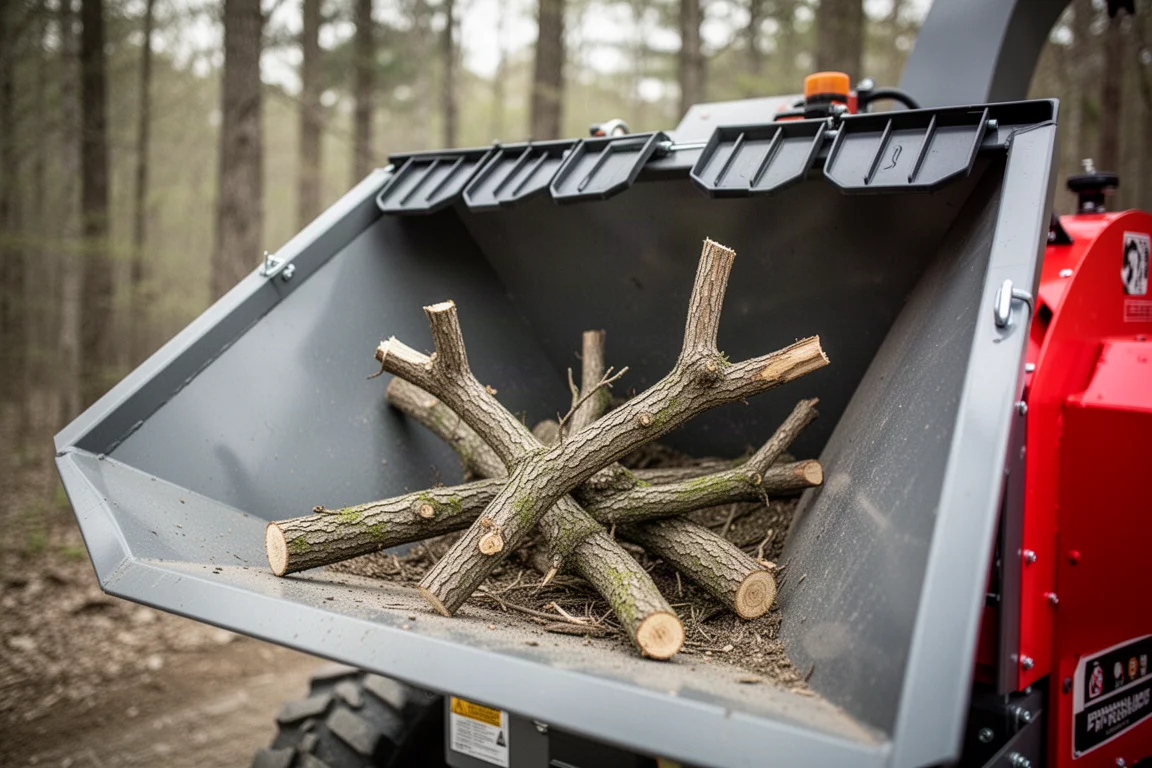
That self-feeding behavior is the core argument here. Many competing chippers have only a square or rectangular opening that limits the brush you can feed, which is precisely why they need a hydraulic infeed in the first place. With the Split-Fire 403, that expense and complexity simply is not necessary.
Safety is addressed with plastic flap guards on the infeed that stop branches from coming back at you. If something catches inside, you can pull the flaps back and inspect the chamber.
Drivetrain and Overload Protection
The chipper is iMatch compatible, and in this setup it runs with a quick hitch system that works very similarly. An emergency stop can be hooked into the tractor’s electronics, much like a rotary cutter setup.
Instead of a shear pin, the design uses a gearbox on top with belts underneath driving the chipper. If you overload it, you do not break a shear pin. The belts simply slip. You stop the PTO using the emergency stop, and in an overload you may see a little smoke from the belts. According to the manual, if anything stops the belts for more than about 20 seconds, the belts should probably be replaced.
The belt system is arguably a huge benefit: a bit of slippage when things go wrong hurts neither the chipper nor the tractor, and the belts are easy to replace.
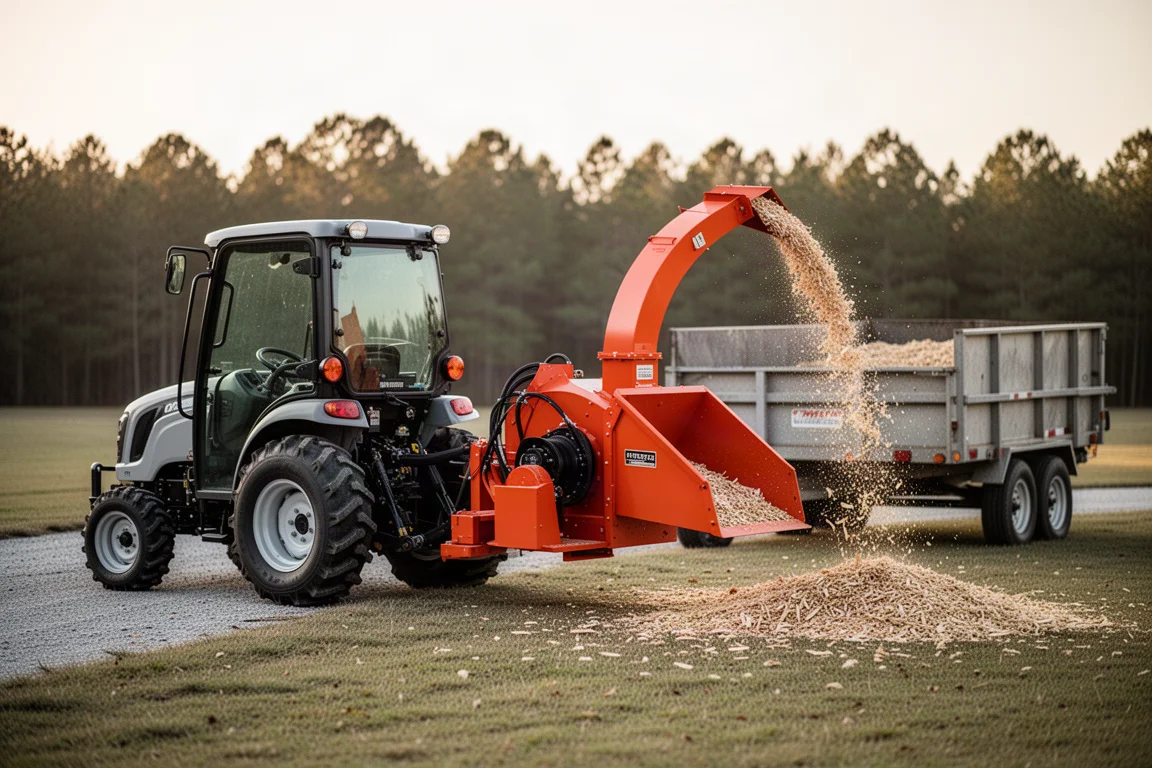
The discharge orientation is also flexible. Remove the bolts around the large infeed tube and rotate it so the outfeed points to the side instead of the back. That means you can park a trailer on the hitch behind it, blow chips straight into the trailer, and move or dispose of them as you like.
Maintenance and Long-Term Care
Inside the cutting chamber is a horizontal drum with essentially two blades. They are reversible, hardened, and sharp, and replacement parts are available, which is a real advantage over disposable designs. The rotor itself weighs about 100 pounds, which is light compared to some units, but it clearly works well.
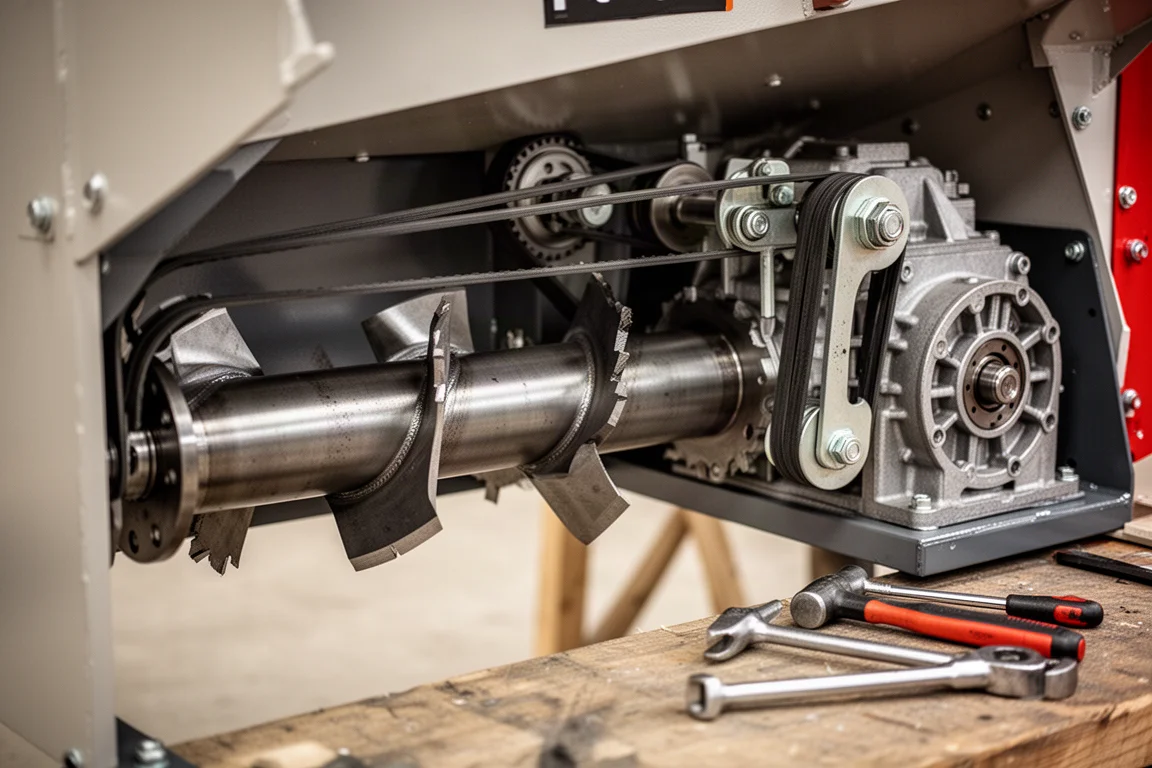
Maintenance is genuinely simple. There is a belt tensioner at the front of the gearbox for keeping belt tension where it should be, and it is worth checking occasionally. Two grease fittings sit on the bottom, easy to reach, and do not need greasing very often.
One caution worth repeating: be safe with this equipment. Branches can be sucked in, moved around, and whipped back out, so hearing protection and face protection are strongly recommended.
Real-World Use and Working Tips
After roughly four hours of use, the machine handled long, forked branches with ease. The manual says larger 4-inch branches should only be 3 to 4 feet long, but even pieces running 10 to 15 feet were chewed up without issue, thanks to the large infeed area taking in all shapes of branches without forcing them through a small square opening.
Two practical tips made the day go smoothly. First, keep a small battery-powered saw nearby, such as a compact DeWalt or Milwaukee model or even a hatchet, for cutting down pieces or trimming forks that will not fit. Second, a tool rack on the front of the tractor lets you carry oil, the saw, safety gear, and everything else wherever you go.
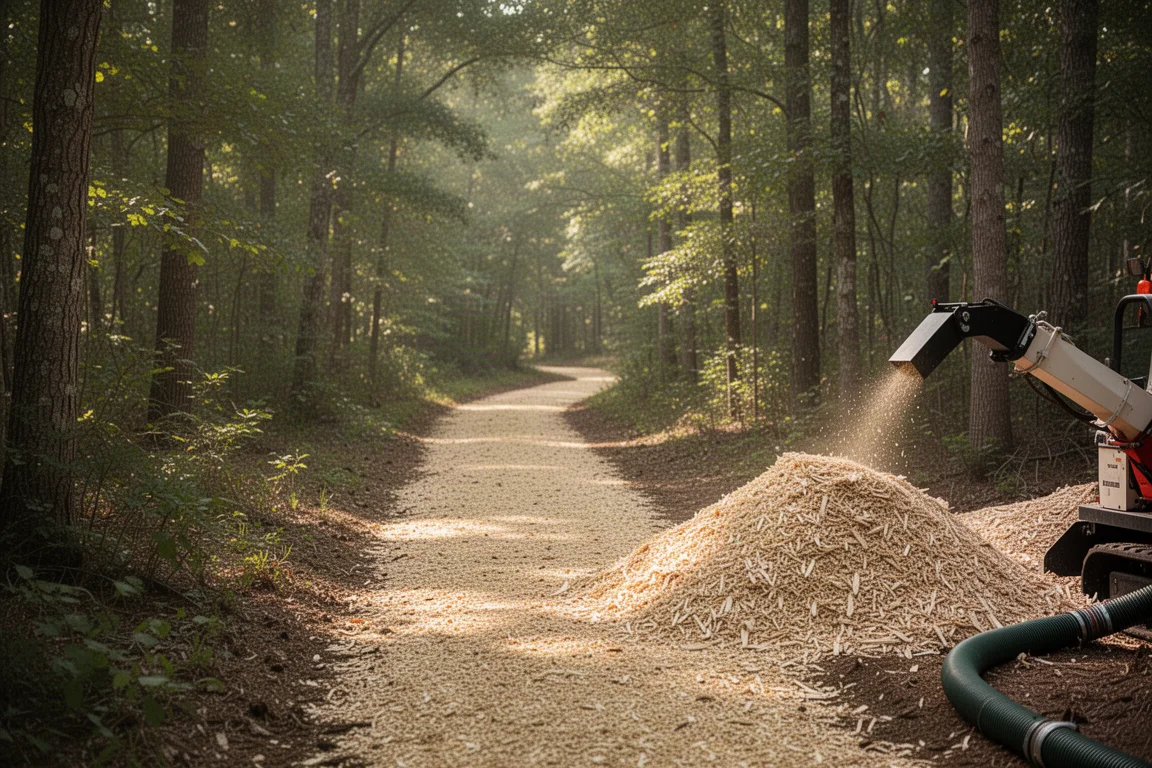
Even on a used unit with dull blades and tired belts, it chips impressively well, which says a lot about the underlying design.
Buying Advice
If you are weighing whether to pay extra for a hydraulic infeed, the answer here is no. This machine moves everything through on its own, and on the rare occasion something sticks because a branch catches, simply running another branch through clears it. Combined with easy belt and blade service, a flexible discharge, and a build origin in Canada, the Split-Fire 403 is an easy recommendation for tractor owners who want capability without complexity.
Conclusion
The Split-Fire 403 proves that a thoughtfully designed 4-inch PTO chipper can outperform more complicated machines. The oversized infeed, self-feeding action, forgiving belt-driven drivetrain, and simple maintenance add up to a tool that is a pleasure to use and easy to live with.
Product link
View more details for Split-Fire 403 Wood Chipper
This product is mentioned in the review. Check the specifications, options, and compatibility before buying.
View more details for Split-Fire 403 Wood ChipperFurther reading
Related Reviews

Outdoor Power Equipment
Best Cordless Chainsaws 2026: EGO, Milwaukee, and Stihl Compared
Three flagship battery-powered chainsaws from EGO, Milwaukee, and Stihl go head to head in cutting speed, power, weight, and price.

Outdoor Power Equipment
Best Cordless Leaf Blowers 2026: Nine Models Put to the Test
We tested nine leading cordless leaf blowers from Ryobi, STIHL, Toro, EGO, Husqvarna, DeWalt, Makita, Milwaukee, and Echo to find the best blowing force, run time, and value.
Outdoor Power Equipment
Amazon Big Spring Sale 2026: Best Outdoor Power Equipment and Backyard Deals
Cordless mowers, blowers, grills, and portable power on sale this spring, with practical advice on which packages are actually worth buying.