Outdoor Gear
SOTO Pocket Torch XT Extended Version Review: Compact, Telescoping, and Slightly Finicky
A hands-on look at the SOTO Pocket Torch XT Extended Version, covering its telescoping burner, butane and isobutane fuel options, wind resistance, and how it behaves in cold weather.
Introduction
A torch lighter is a small piece of kit that either earns its place in a pack or quietly becomes dead weight. The SOTO Pocket Torch XT Extended Version belongs firmly in the first group. It comes from a Japanese outdoor company best known for stoves and cook kits, and it follows the same design thinking: compact, purposeful, and built around a burner head that telescopes outward when you need reach.
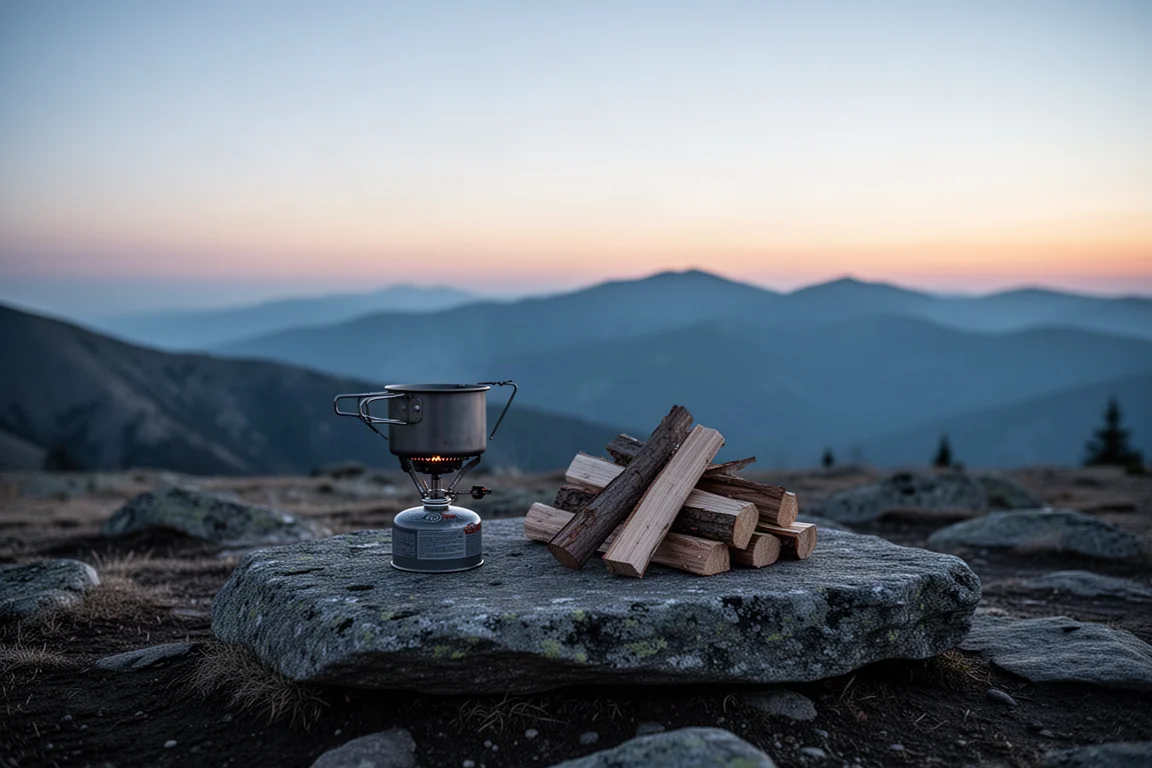
Across roughly six months of regular use, this lighter proved capable in warm conditions and far less predictable when the temperature dropped. It is not a perfect product. Cold weather and elevation change how it behaves, and the wind resistance claim on the packaging deserves a closer look. Even so, for lighting stoves, campfires, and solid fuel without singeing your knuckles, the extending burner is genuinely useful.
Who This Product Is For
This lighter makes the most sense for campers, backpackers, and stove users who want a compact ignition source with a bit of reach. If you regularly light a stove with a pot already sitting on the burner, the telescoping design keeps your hand and gloves well away from the flame.
It is a weaker fit for anyone who needs dependable performance in freezing temperatures, at higher elevations, or in exposed and windy conditions. It also suits people who value low running costs, because it runs on inexpensive butane that lasts a very long time in a lighter this size.
Main Strengths: Compact Size and Telescoping Reach
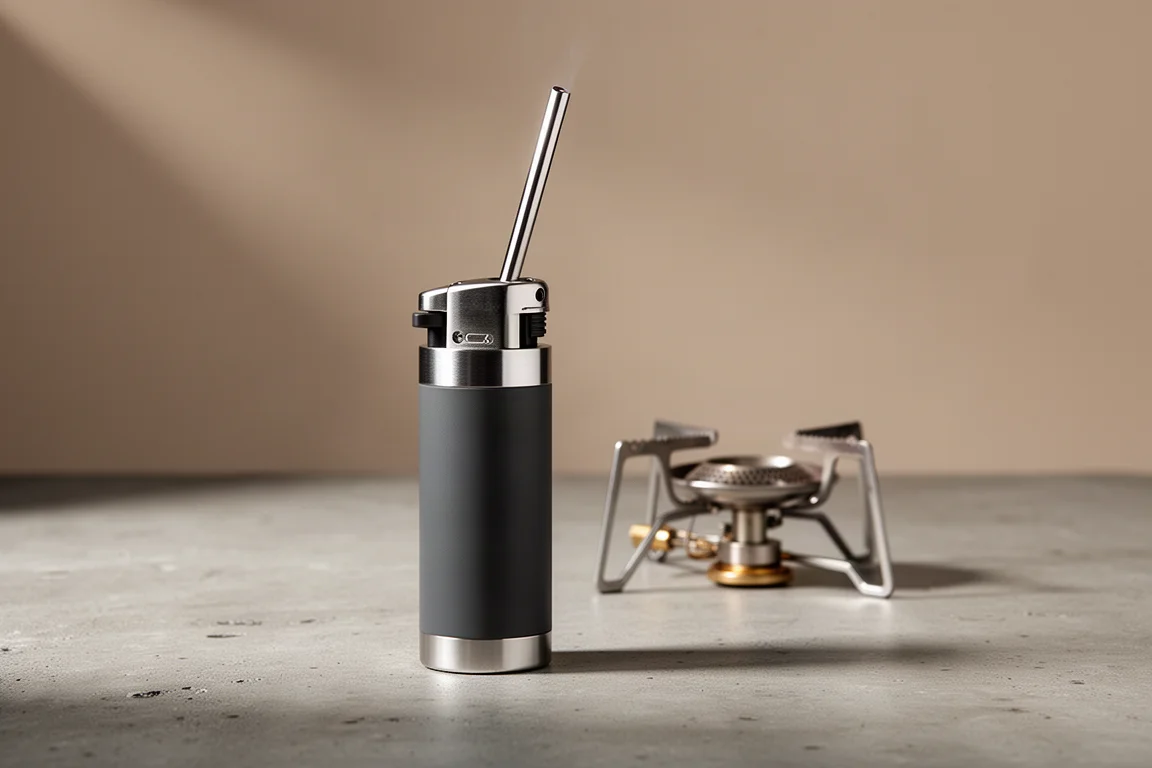
The headline feature is the extension. The lighter measures 1.3 inches wide and 4.3 inches long when collapsed, extending to 7.2 inches. It weighs 1.8 ounces when full of fuel, and the burner diameter is half an inch. That combination makes it easy to pocket while still giving you real distance between your hand and the flame.
The burner head is not locked in place when retracted, so it can telescope at any point, and a small stud gives your finger something to push against when extending it. Ignition is electric, with a safety built into the trigger: press the safety in, then press down to light. A lever on the body adjusts flame intensity, and the flame itself is a fine, centralized jet that puts out a serious amount of heat.
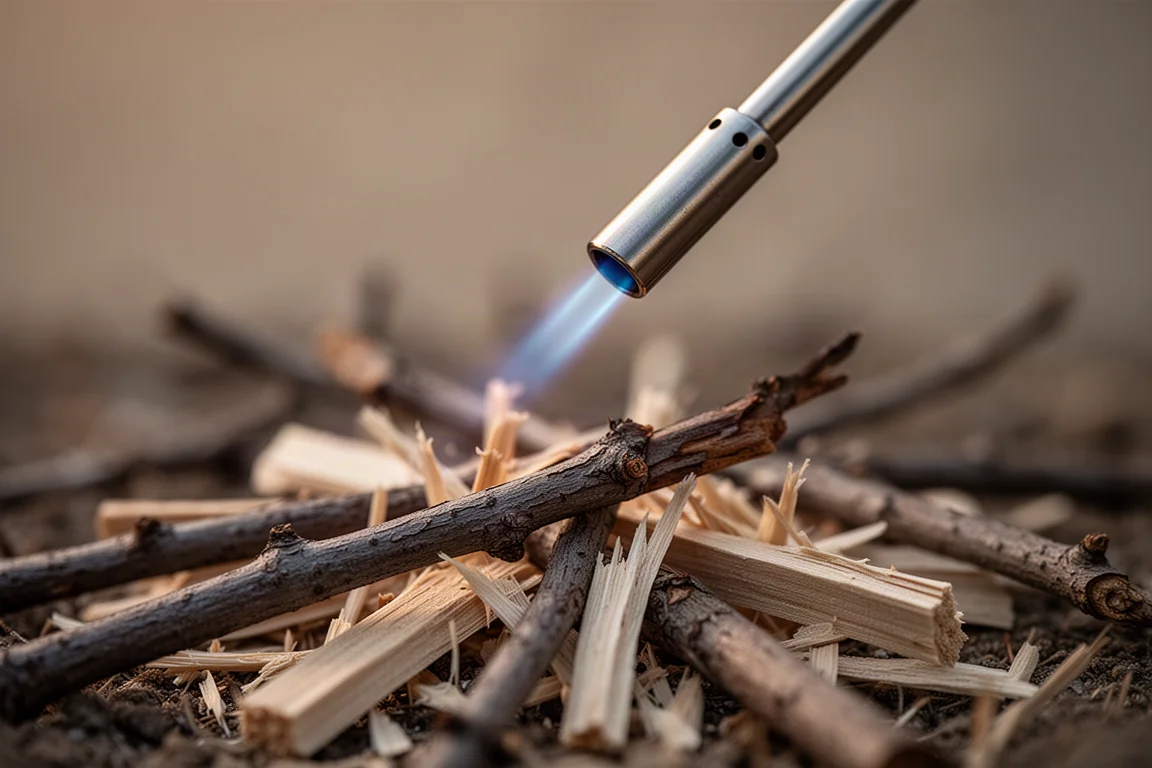
Refueling is straightforward. The refill port sits at the bottom, and a window on the side shows the liquid fuel level inside, with air bubbles shifting to the bottom as you rotate the lighter. In practice the window works surprisingly well for judging how much fuel remains.
Fuel economy is another clear strength. One fill lasted roughly seven months of use, covering hundreds of ignitions, before the fuel line began to drop. With butane at around $4 a canister, that makes running costs negligible over a season.
Fuel Options and Running Costs
The lighter accepts pure butane and isobutane. It will not run on pure propane, and the manufacturer explicitly warns against filling it with propane because of the explosion risk. That warning is worth taking seriously.
Butane is the practical choice for most buyers. It is inexpensive, widely available, and easy to find in outdoor shops and general retailers. Isobutane performs better in cold conditions but is harder to source, and it is typically sold in bulk at a much higher cost, with six canisters running around $40. A dedicated refill adapter is available, though a standard butane canister can be connected directly to the port at the base without one.
Cold Weather, Altitude, and Wind Resistance
The manufacturer warns against using this lighter in cold conditions and at elevations above 5,000 feet. In testing it was used at 6,000 feet without any issues, and in cold weather at roughly 19 degrees it struggled at first before working normally once warmed. The simple fix is to keep the lighter close to your body for a few minutes before you need it, which brings the fuel up to temperature and restores reliable ignition.
Wind resistance is where the marketing runs ahead of reality. The burner is only mildly wind resistant. It is noticeably better than a match or a disposable lighter, but it is not the strong wind resistant burner the packaging suggests, and performance drops further in the cold. Warm conditions are where it shines, with easier ignition and better flame stability.
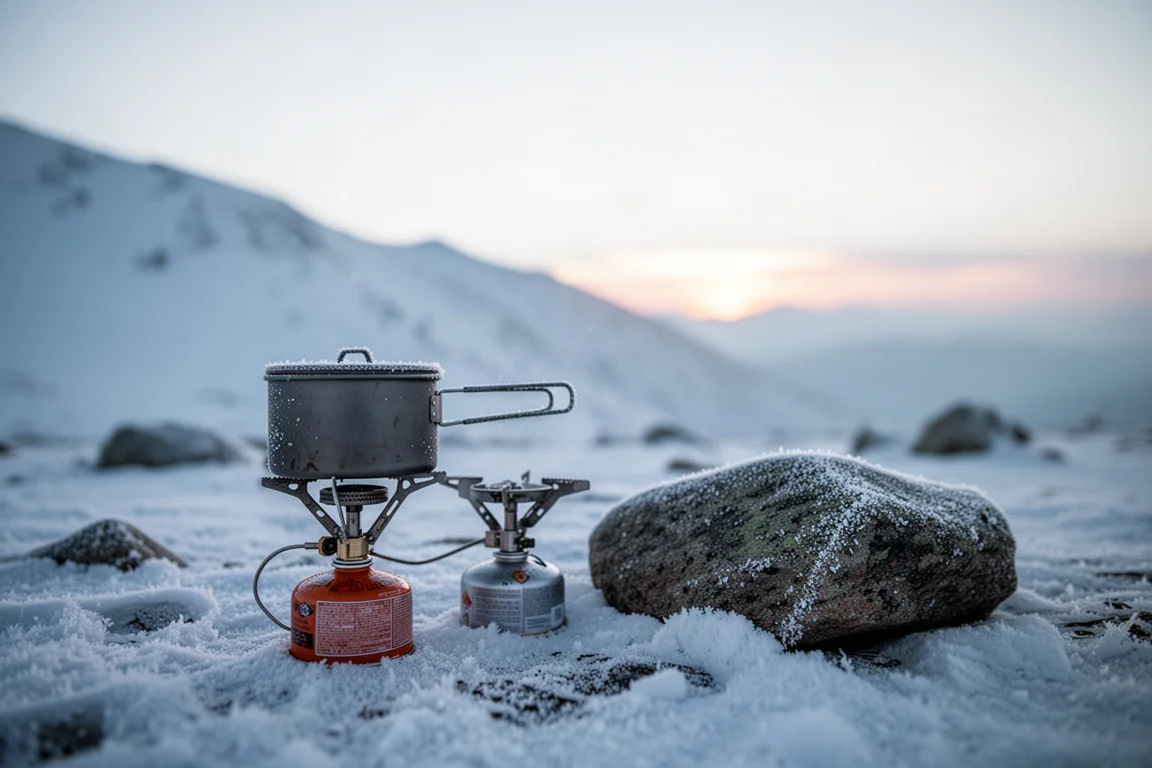
Expect to click the trigger more than once. In mild conditions two clicks is typical, and after that it lights readily. In cold conditions it can take several attempts, and gloves make finding the safety and pressing the trigger noticeably more awkward.
Things to Consider Before Buying
The lighter is finicky by nature. Ignition is rarely instant, and the trigger, safety catch, and fuel temperature all affect how quickly it lights. That is manageable once you know the routine, but it is not a one-click tool in the way a simple pocket lighter is.
It also will not stay ignited when turned upside down and pointed downward, which can make lighting certain stoves and fire layouts more fiddly than expected. After you release the ignition, leftover fuel continues to burn off briefly, so it is important to watch the flame die out before the lighter goes into a pocket, pack, or gear bag.
Finally, treat the cold weather and altitude limits as real guidance rather than fine print. The manufacturer included those warnings for a reason, and results in genuinely cold conditions depend heavily on warming the fuel first.
Buying Advice
At around $25, this is fair value for what it offers, and even at $30 it holds up as a reasonable buy. Two separate units were used during testing, one purchased and one received as a gift, and both behaved identically, which suggests the quirks are inherent to the design rather than a single bad sample.
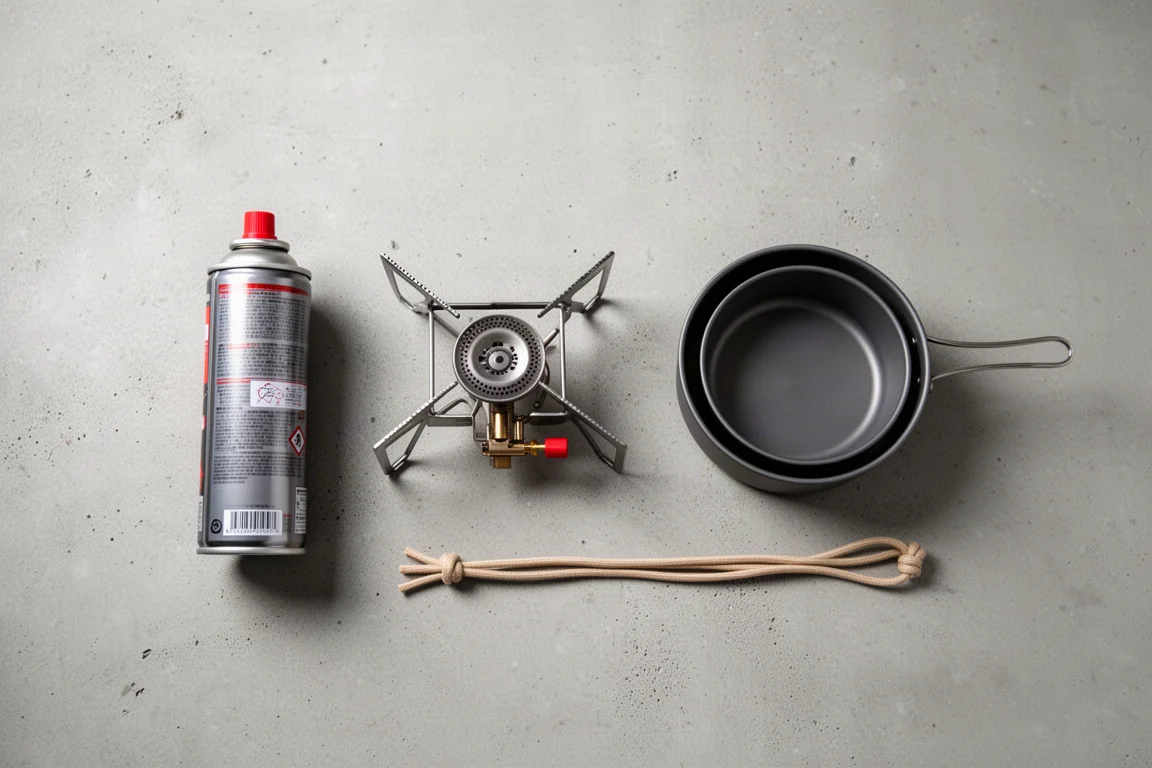
Buy it for warm to moderate conditions, for stove lighting, campfires, and solid fuel, and for the convenience of a burner that reaches where your hand should not go. If your trips regularly involve freezing temperatures, exposed ridgelines, or high altitude, plan on the warm-up routine or consider a lighter built specifically for those conditions. Used within its comfort zone, this is a genuinely likeable piece of kit.
Conclusion
The SOTO Pocket Torch XT Extended Version is not a perfect lighter, but it is a thoughtful one. The telescoping burner, compact body, clear fuel window, and exceptional fuel economy make it easy to recommend for three-season camping and everyday stove use. Buyers who understand its cold weather and wind limitations will get far more out of it than those expecting all-conditions reliability.
Product link
View more details for SOTO Pocket Torch XT Extended Version
This product is mentioned in the review. Check the specifications, options, and compatibility before buying.
View more details for SOTO Pocket Torch XT Extended VersionFurther reading
Related Reviews
Outdoor Gear
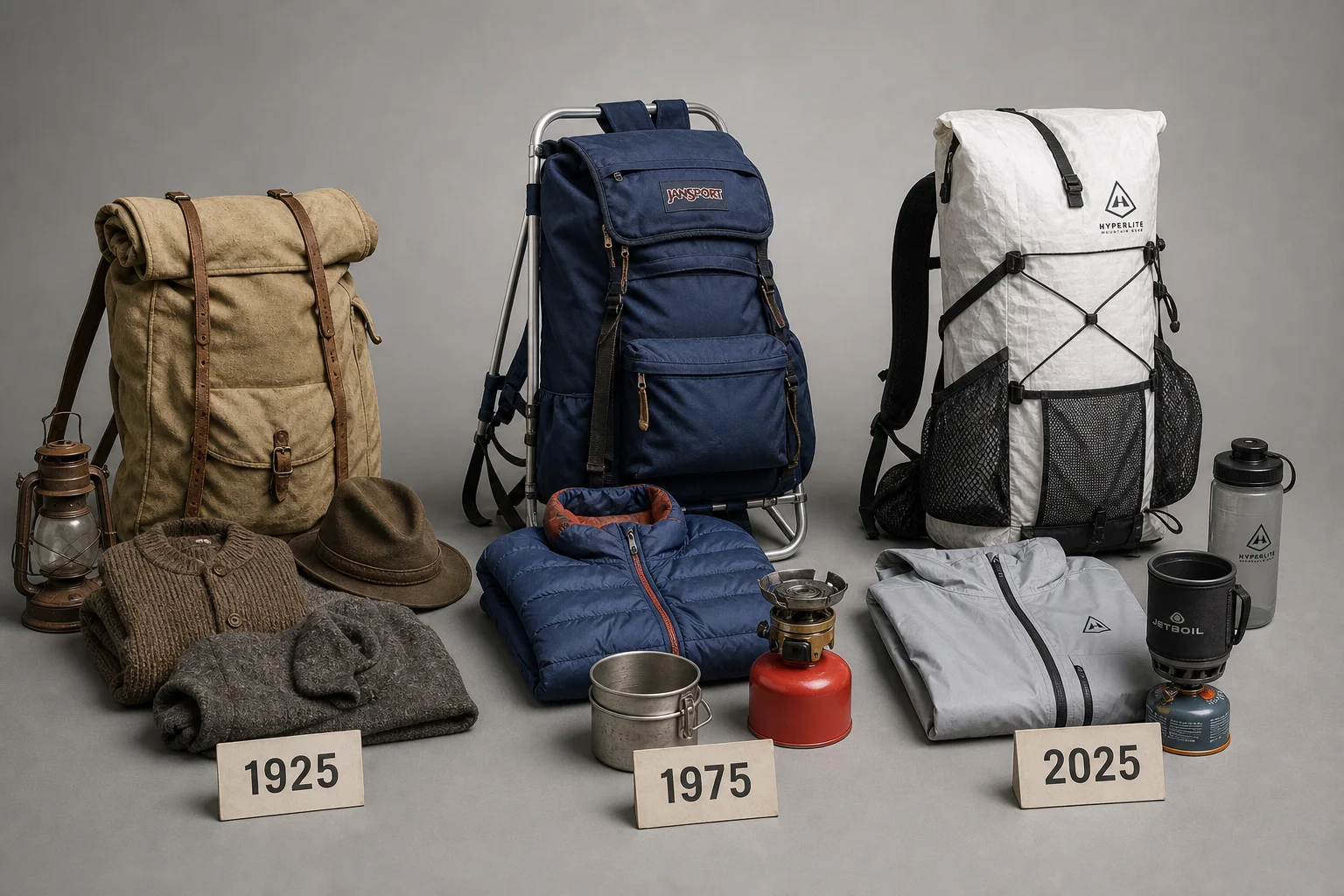
Backpacking Gear Evolution: 100 Years of Technology Compared
We tested backpacking gear from 1925, 1975, and 2025 across a three-day hike in Yosemite. Here's how technology has transformed comfort, weight, and the outdoor experience.
Outdoor Gear
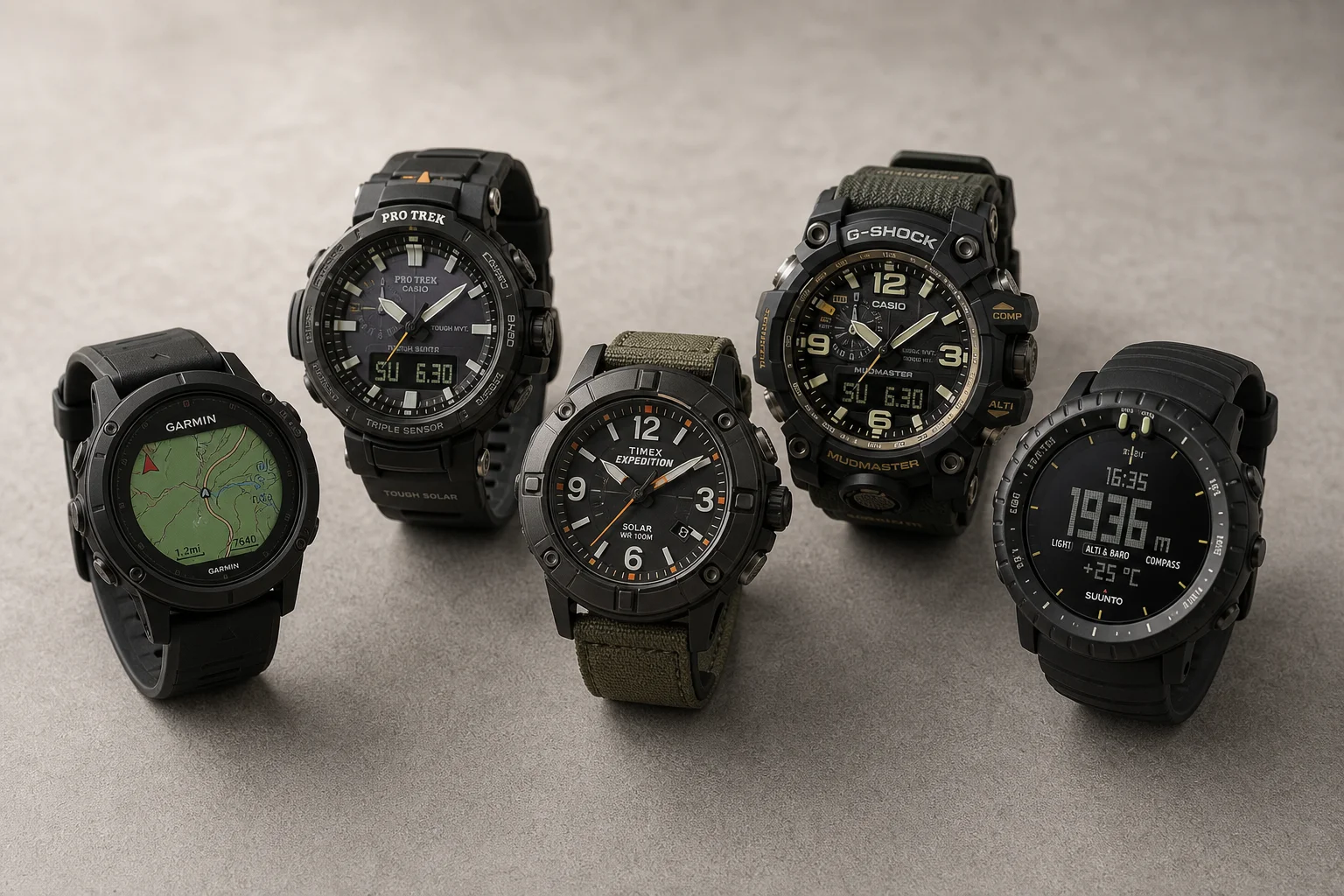
Best Affordable Hiking Watches: Five Rugged Options for Outdoor Adventures
Five durable hiking watches that balance ruggedness, functionality, and value for outdoor enthusiasts who need reliable GPS tracking and weather resistance.
Outdoor Gear
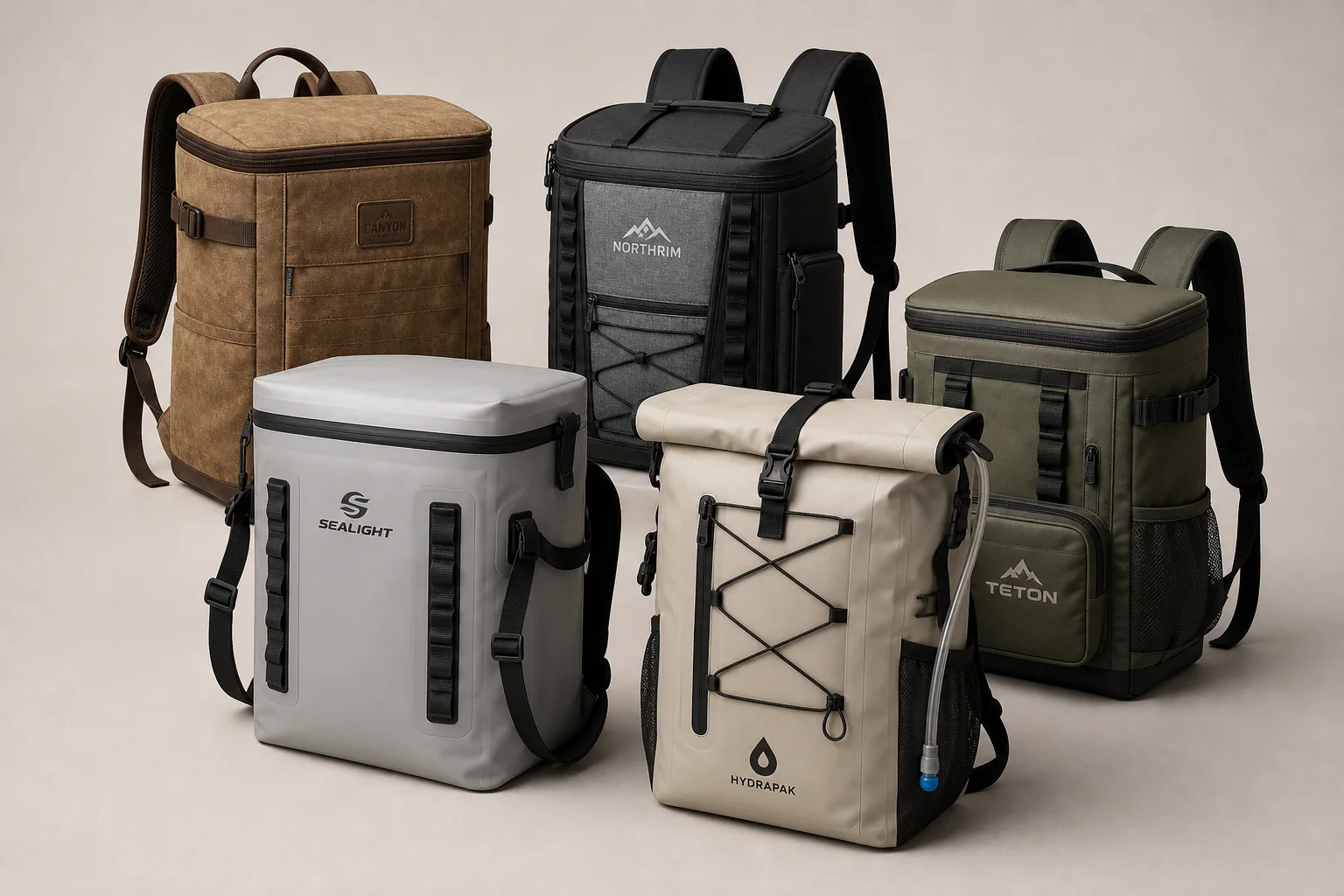
Best Backpack Coolers 2026: Five Practical Options for Outdoor Adventures
Five backpack coolers with distinct cooling capabilities, storage features, and design trade-offs to help you choose the right one for your outdoor needs.