Stereo Amplifiers
SMSL A300 Review: A Compact Amplifier With Subwoofer Output and Bridgeable Power
A compact, high-value stereo amplifier with flexible inputs, eight EQ modes, a subwoofer output, and the option to bridge two units for extra power.
Introduction
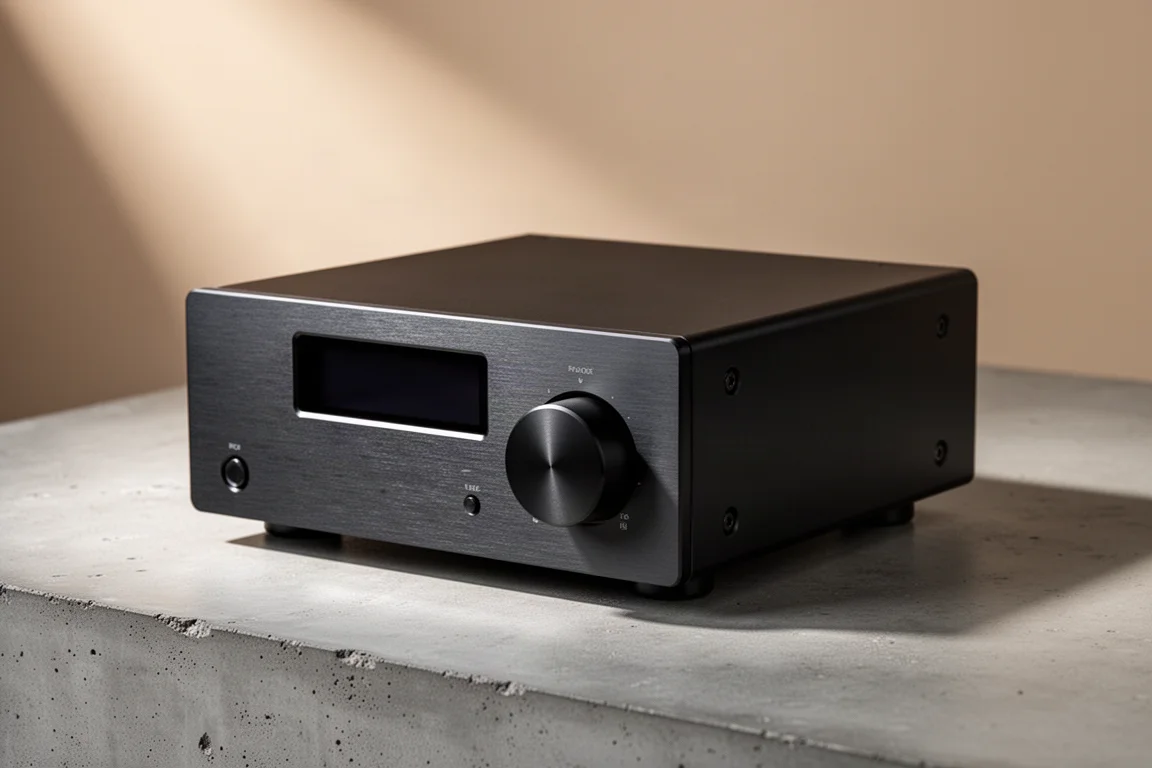
The SMSL A300 is a compact stereo amplifier built around the Infineon MA5332MS chipset. That same chipset family appears in the SMSL AL200, an amplifier that earned attention for its sound quality alongside its built-in DAC and headphone stage. The A300 takes a different route. It leaves the DAC out, keeps the price low, and adds two features many listeners specifically asked for: a subwoofer output and the ability to bridge two units into mono for substantially more power.
At around $195, the A300 aims to be the flexible core of a small system rather than an all-in-one box.
Who the A300 Is For
This amplifier makes the most sense for listeners who already own a DAC, streamer, or preamplifier and want a small, affordable power amplifier to sit behind it. Because the A300 has no internal DAC, it lets you choose the conversion stage you prefer, whether that is a budget streamer with its own DAC or a dedicated desktop DAC and preamp.
It also suits anyone building a compact two-channel system with a subwoofer, since the rear panel includes a dedicated subwoofer output. And for listeners who want to experiment, two A300 units can be bridged to run as mono blocks, roughly doubling the available power.
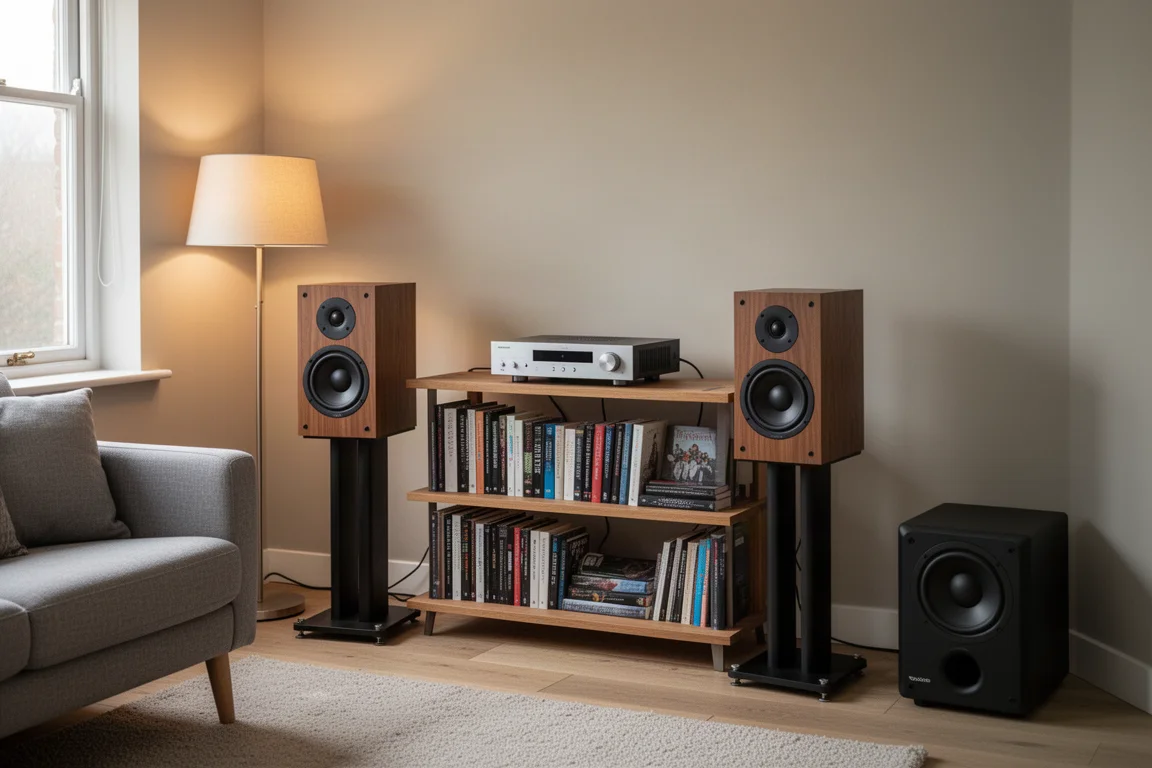
It is also a reasonable candidate for a home theater setup where a small amplifier is needed for a pair of channels, provided the bridging arrangement is planned carefully in advance.
Design and Connectivity
The front panel keeps things simple: a small screen, a single rotating knob for control, and buttons for power, menu, and input selection. Everything can be operated from the front of the unit, which matters if the remote tends to go missing.
The rear panel covers two analog inputs, a subwoofer output, a BTL-R output for bridged operation, a USB input, and a Bluetooth antenna connection, though the antenna is not attached out of the box. There are two speaker binding posts, an IEC power socket, and a master power toggle. The power supply is internal, so there is no external brick to match against a particular voltage or amperage.
Main Strengths
The first strength is sound quality. The Infineon implementation here comes across as natural and refined rather than thin or harsh, which is not always the case with compact chip-based amplifiers. Bass is weighty and full while keeping a good amount of clarity.
Power output is generous for the size. SMSL rates the A300 at 165 watts per channel into 4 ohms and 85 watts per channel into 8 ohms, with bridged output listed at 330 watts into 4 to 8 ohms. In practice, a single unit is loud enough for most rooms and most speakers.
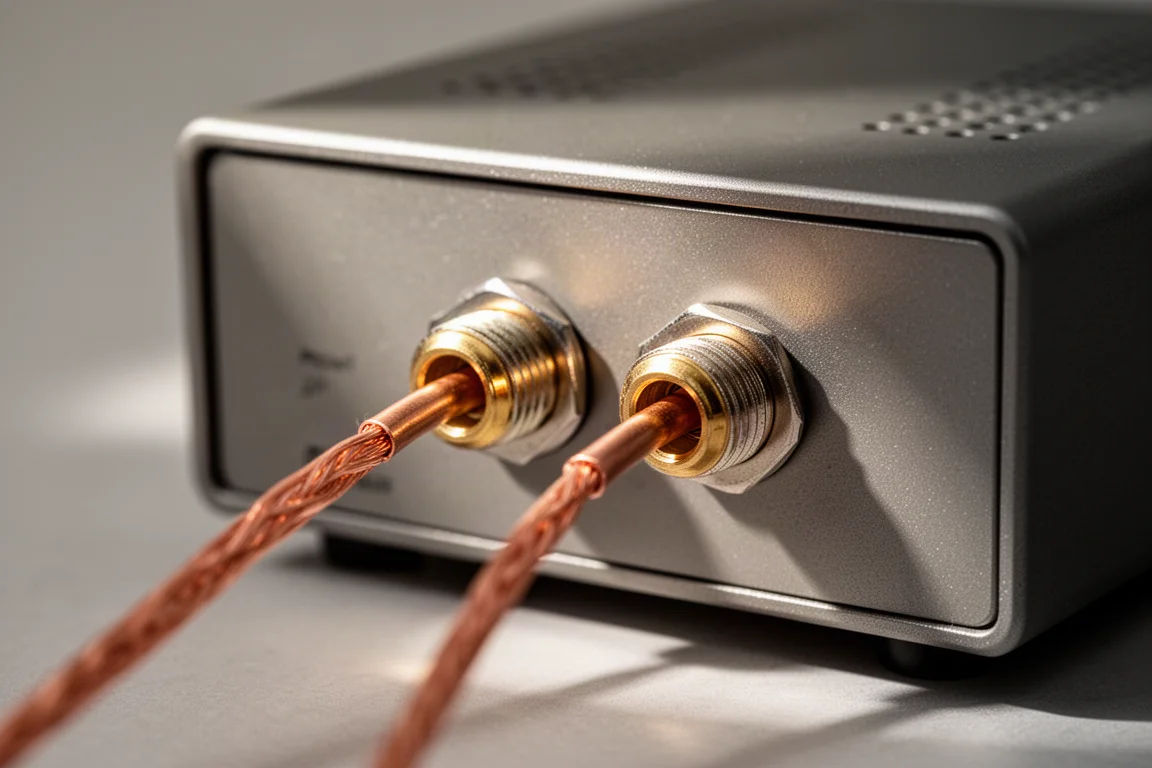
The subwoofer output is a meaningful addition for anyone running a 2.1 system, and the internal power supply keeps the installation tidy. Add the EQ options and the roughly $195 price, and the value case is strong.
Sound Quality and EQ Options
The menu offers eight EQ modes. E0 is direct, with no equalization at all. E1 is labelled tone. E2 is SDB, which behaves much like a loudness control and is the most useful of the group, adding dynamics and weight without making the sound harsh. E3 is a bass boost that can help a thin-sounding speaker, while E4 Super Bass is less broadly useful. E5 Rock is fairly heavy-handed, E6 Soft is subtle, and E7 Clear emphasizes treble.
Separate bass and treble controls are also available with a range of roughly plus or minus nine, though keeping adjustments within plus or minus three is the more sensible approach. There are three screen brightness levels as well. Even in direct mode the A300 holds up well, but SDB is where it becomes genuinely enjoyable.
Bridged Mode: What It Adds
Bridging two A300 units is possible, and the manual does include instructions, but the process is not obvious and there is no marking on the speaker terminals to indicate which posts to use. The speaker cable connects to the left channel input terminals, with the positive lead on the right speaker post and the negative lead on the left post. Both the right and left RCA cables from the source go into one amplifier, which becomes the left channel, and a single RCA cable then runs from the BTL-R output of that unit to the left channel input of the second unit. The BR1 setting must be selected in the menu, and all connections need to be made with the power off.
One practical complication is the remote. A single remote controls the volume on both units, and the volume on the second amplifier is not disabled, so it effectively acts as a balance control for the right channel. Covering the infrared receiver on the second unit is the simplest way to stop the center image drifting.
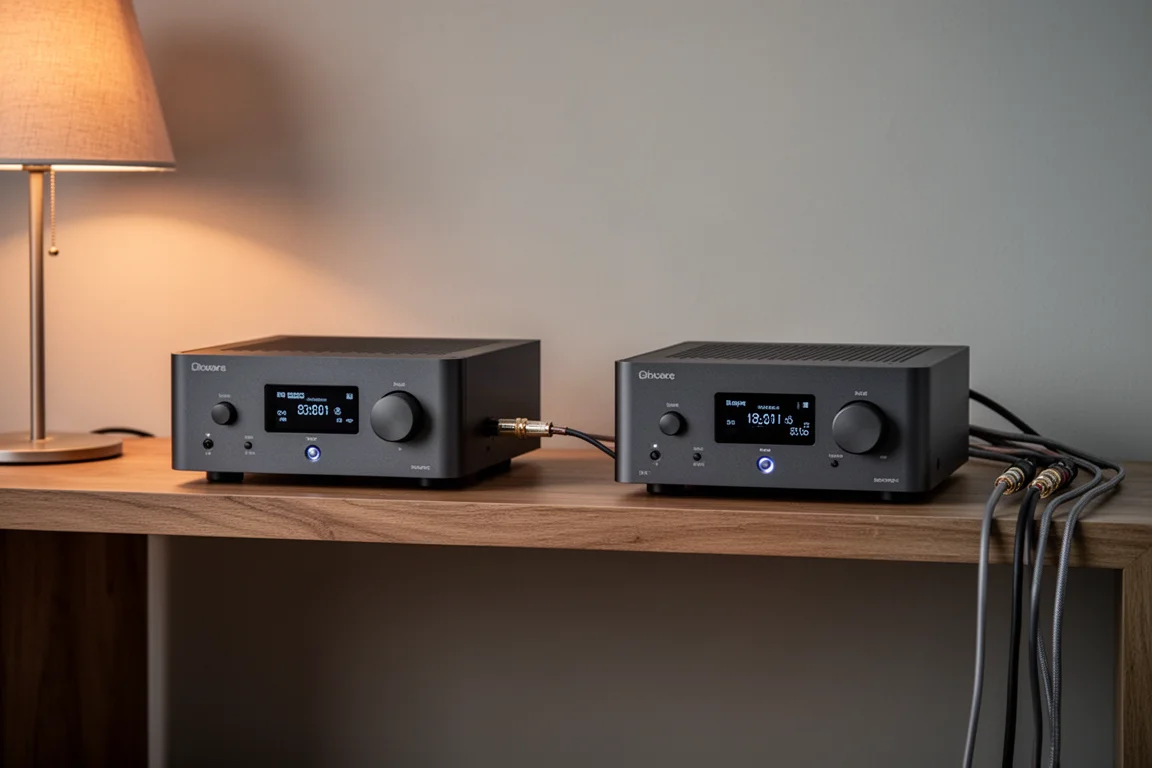
Sonically, bridging did not deliver a dramatic improvement. There may be a slightly larger sound stage, but the difference is subtle, and one unit already produces more power than most setups need.
Things to Consider Before Buying
There is no internal DAC, so a separate source with its own conversion is required. The high pass filter can be switched on or off, but its corner frequency is not documented, which makes it difficult to integrate precisely with a subwoofer.
Ventilation is limited, and prolonged high-power use is worth monitoring even though the amplifier does not run particularly hot in normal listening. The published power figures also do not state a distortion threshold, so the numbers should be treated as manufacturer ratings rather than independently verified measurements.
Bridging adds setup complexity and the remote conflict described above, and long-term reliability is difficult to judge without extended experience. Buyers who want peace of mind should purchase from a retailer that offers straightforward warranty service.
Buying Advice
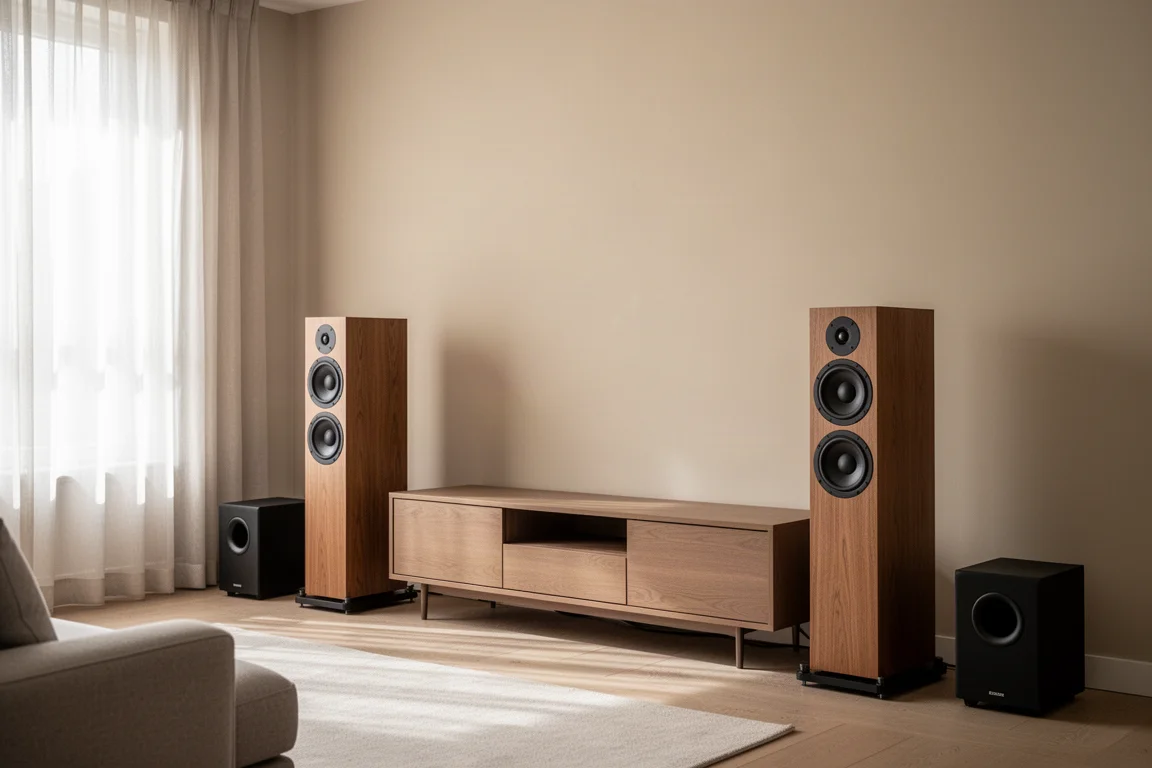
The A300 is at its best as a straightforward stereo amplifier fed by a separate DAC or preamplifier. Pairing it with a desktop DAC and preamp such as the Emotiva XDA-3 gives two analog inputs and a clean signal path, while the A300 supplies the subwoofer output that the preamp may lack.
For home theater use, a single A300 can handle a pair of channels while a compact processor manages the rest of the system. Bridging is best reserved for situations where the extra headroom is genuinely needed, since one unit is already more powerful than most rooms require.
Because these amplifiers are difficult to assess for long-term durability, buying from a seller with local warranty support is a sensible precaution.
Conclusion
The SMSL A300 delivers natural sound, meaningful power, a subwoofer output, and flexible EQ options in a small footprint at around $195. Its lack of an internal DAC is a deliberate trade-off that keeps the price down and lets buyers choose their own source. For anyone who already has a DAC or streamer and wants an affordable, compact amplifier with room to grow, the A300 is an easy recommendation, with the caveat that bridged operation rewards patience.
Product link
View more details for SMSL A300
This product is mentioned in the review. Check the specifications, options, and compatibility before buying.
View more details for SMSL A300Further reading
Related Reviews
Stereo Amplifiers
Aiyima A01 Pro Review: A Compact Bluetooth Amplifier With a Full Tone Stack
A practical look at the Aiyima A01 Pro, a budget Class D amplifier with bass, middle, and treble controls, LDAC Bluetooth, and a clear set of trade-offs.
Stereo Amplifiers
Audiolab 7000A Review: The Flexible Modern All-in-One Integrated Amplifier
A Class AB integrated amplifier with HDMI ARC, a built-in DAC and three operating modes, priced under $2,000. Here is what it does well and what to check first.
Stereo Amplifiers
Best Amplifiers at Every Price Level: 12 Picks From Budget to Audiophile
A practical roundup of twelve stereo amplifiers at increasing price points, from sub-$100 class D mini amps to integrated models with DACs, phono stages, and HDMI ARC.