Stereo Amplifiers
Audiolab 7000A Review: The Flexible Modern All-in-One Integrated Amplifier
A Class AB integrated amplifier with HDMI ARC, a built-in DAC and three operating modes, priced under $2,000. Here is what it does well and what to check first.
Introduction
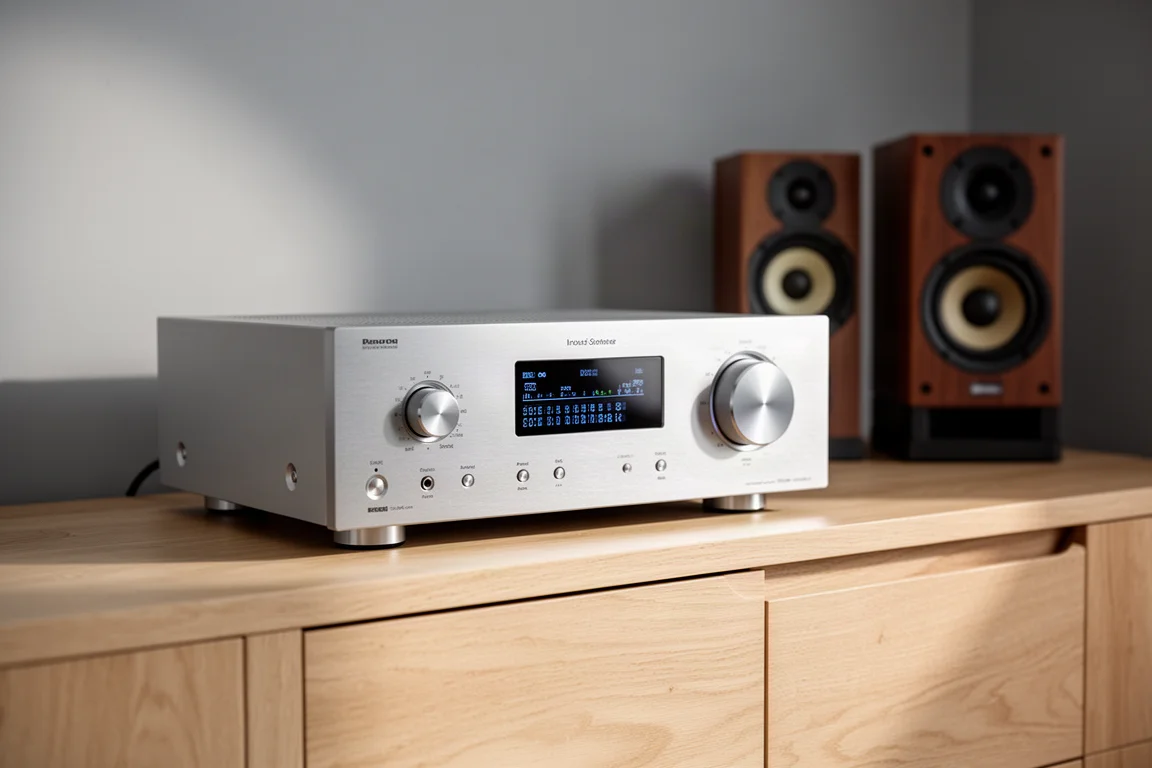
The Audiolab 7000A is a Class AB stereo integrated amplifier rated at 70 watts per channel into 8 ohms and 110 watts into 4 ohms. It sits between the entry-level 6000 series and the flagship 9000 series, and for many listeners it reads as the natural successor to the 8000 series until that line receives an update of its own.
What makes the 7000A interesting is not raw output but flexibility. Like Audiolab’s other integrated amplifiers, it can be configured as a full integrated amplifier, as a preamplifier with the built-in power stages disabled, or as a standalone power amplifier. That three-in-one approach makes it a long-term solution rather than a single-purpose box.
Who the Audiolab 7000A Is For
This amplifier suits listeners who want one component to handle music and television audio without adding a rack of separate boxes. HDMI ARC is on board, so a single HDMI cable carries both the audio signal and control commands from a television. A stereo or 2.1 system then becomes the default setup for films and series as well as albums, and dialogue stays clear at all volumes.
It also makes sense for anyone building a system around a turntable plus a streaming source. There are multiple analog inputs and a solid built-in phono preamp, alongside Bluetooth with aptX support, full MQA decoding and high-resolution audio support. A quarter-inch headphone jack with a built-in headphone amplifier is included for late-night listening.
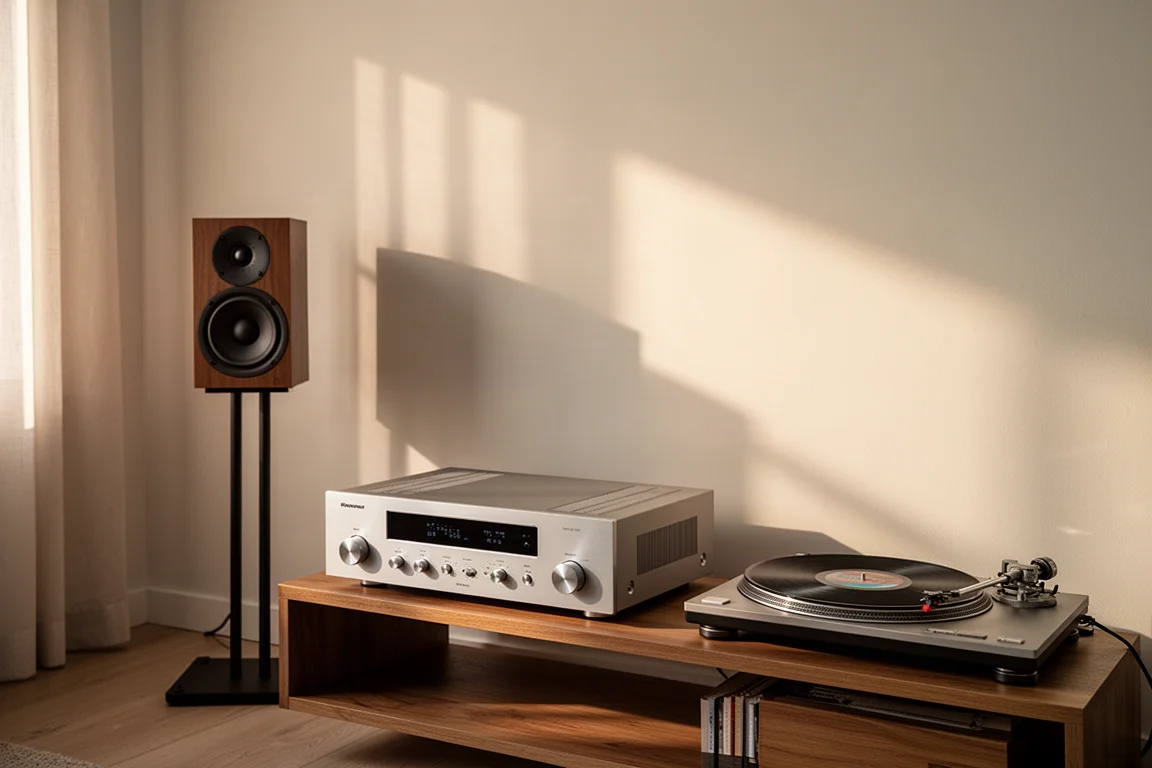
Speaker matching is undemanding. The 7000A drove every speaker it was paired with during testing, and it stayed silent at idle, which makes it a particularly good match for high-efficiency designs. As a practical guide, speakers rated at 4 ohms or higher with sensitivity around 84 dB should work comfortably.
Main Strengths
The appeal of the 7000A comes down to three things: operating flexibility, connectivity, and a neutral tonal balance that holds up over long listening sessions.
Flexible Modes and Everyday Usability
Full integrated, preamp-only or power-amp-only operation covers a lot of system evolution. A single pair of preamp outputs can feed a subwoofer or a separate amplifier if more power is needed later, and the unit is straightforward to integrate into an existing setup.
Day-to-day control is simple. Power and volume can be managed from a television remote over CEC, which in practice made the supplied remote largely unnecessary, though the remote itself is a carryover design. The amplifier was used with a Cambridge Audio AXN10 streamer and an Alva TT V2 turntable, both wired and wirelessly, without fuss.
The 3-inch colour display is a partial carryover from the 9000A and the Omnia. It is not as large or as bright as the 9000A screen, but it carries the same menus and functionality, including digital VU meters. Those meters do not appear to move when the amplifier runs in preamp mode feeding a separate power amplifier. The screen is easy enough to read from several feet away, which means DAC filters and settings can be adjusted from the listening chair.
One long-standing omission remains: there are no tone controls, only balance. Audiolab has been reluctant to add them across its range, and that is unlikely to change here.
HDMI ARC and Digital Connectivity
HDMI ARC with CEC is the headline addition, and it is the first time Audiolab has implemented it. It worked without issue during testing, connecting and controlling the amplifier through a single cable to a 98-inch television and an Apple TV 4K. Response to CEC commands such as volume from third-party remotes was initially a little slow, and a firmware update has improved this along with other CEC behaviour. Further refinement would still help.
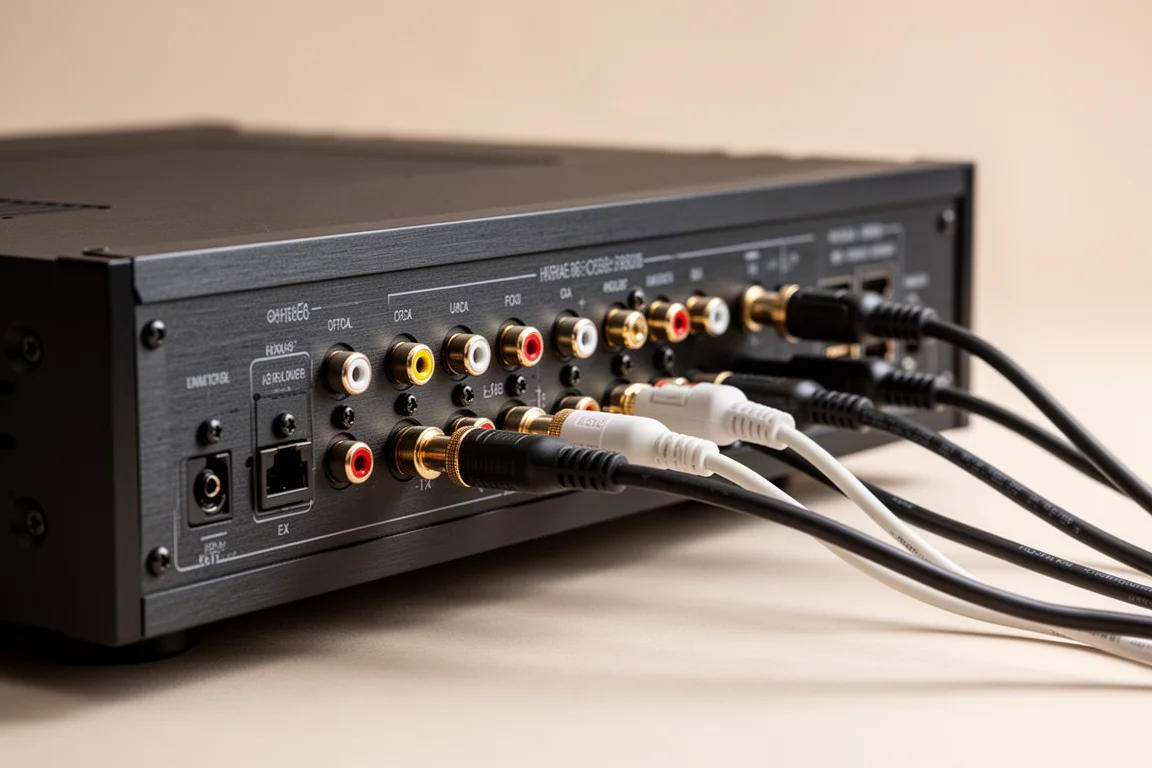
Digital inputs cover optical, coaxial, USB and HDMI. The built-in DAC uses an ESS ES9038Q2M chipset, a step up from the 6000 series but not equal to the ESS Pro DAC inside the 9000A. Analogue connectivity is generous, and the phono preamp is a genuine strength rather than an afterthought.
Sound Quality Across Genres
Tonally the 7000A is neutral, with solid control in the lower registers and a top end that stays polite without sounding rolled off. It is an amplifier that can be enjoyed for hours regardless of genre, without drawing attention to itself.
Control over demanding loads is a real strength. Speakers with triple woofers and dual 8-inch drivers were handled with weight, focus and control at all volumes. Favourite pairings during testing included Martin Logan Motion XTF100, Definitive Technology DM80, Klipsch 8000F Mark II, Klipsch Heresy and Cornwall IV, and Polk R700. The midrange is cleaner, more dimensional and more resolving than the 6000A Play’s, and it stands as an equal to the 9000A’s midrange. Treble delivers detail, texture and air without tipping into aggression, which helps with speakers that have a reputation for brightness. The 9000A remains the more detailed and airy of the two.
The presentation is spacious, and detail and separation are strong. For an integrated amplifier with a built-in DAC and the ability to drive low-impedance speakers, the soundstage ranks among the best available under two thousand dollars. Dynamics are better than the 6000A Play’s, though not as refined or three-dimensional as the 9000A’s. Above all, the 7000A sounds and feels more powerful than its specifications suggest.
Things to Consider Before Buying
No tone controls. Only balance. This is the most common objection, and it is a fair one for listeners who like to shape the sound at the amplifier.
There is also only one pair of preamp outputs, so running a subwoofer and a separate power amplifier at the same time is not possible without a workaround. CEC response from third-party remotes can still lag slightly despite the firmware improvements.
Alternatives exist at both ends of the price range, and the trade-offs are worth knowing. The Bluesound Powernode, at around $950, includes HDMI, Bluetooth and the BluOS streaming platform with roughly 100 watts of Class D power; it remains outstanding value, though it offers fewer analog inputs and no phono stage of this calibre. The NAD C399 is more powerful and more expensive, and it makes most sense with BluOS and room correction added, but its presentation can come across as sterile. The Marantz 40n is functionally comparable and slightly rounder and softer in character, with less grip on bass notes, and it costs about $700 more. The Yamaha R-N2000A adds room correction, tone controls and meters alongside its HDMI input, but it costs more than double. The Audiolab 9000A, at a $3,000 asking price, is the better amplifier if sound quality alone is the priority, while the 6000A Play remains a great product that the 7000A simply improves upon.
Buying Advice
The 7000A is priced under $2,000 and only about $100 above the full-price MSRP of the 6000A Play, which means the extra functionality and the HDMI input do not carry a price premium. That combination of features, build and sound makes it an easy recommendation for a one-box stereo system.
If the budget is closer to $1,000, the Bluesound Powernode is a sensible route and a strong Class D option. If surround sound matters more than two-channel performance, a home theatre receiver is the more practical purchase, and modern receivers can deliver genuinely good stereo sound. For anyone who knows they will stay with two channels, the 7000A is the more focused choice.
There is one further possibility worth noting. Because the amplifier can run in preamp and power amp mode, an external EQ or a miniDSP with parametric EQ or Dirac could in theory be inserted between the preamp outputs and the power amp inputs, which would add room correction to the system for a total of roughly $2,100. That configuration has not been fully tested.
For most buyers the decision comes down to a simple question: how much of the listening happens in two channels? If the answer is most of it, the 7000A covers music, films and headphones from a single chassis without asking for workarounds.
Conclusion
The Audiolab 7000A lands in a useful place between the 6000 and 9000 series. It looks good, it is built to a high standard, it sounds brilliant across genres, and it now handles television audio through HDMI ARC without a separate box. The missing tone controls and the single pair of preamp outputs are real limitations to weigh, but they are the trade-offs of a focused design rather than oversights in the fundamentals. For listeners who want a modern all-in-one that simply works, this is one of the more convincing options under two thousand dollars.
Product link
View more details for Audiolab 7000A
This product is mentioned in the review. Check the specifications, options, and compatibility before buying.
View more details for Audiolab 7000AFurther reading
Related Reviews
Stereo Amplifiers
Aiyima A01 Pro Review: A Compact Bluetooth Amplifier With a Full Tone Stack
A practical look at the Aiyima A01 Pro, a budget Class D amplifier with bass, middle, and treble controls, LDAC Bluetooth, and a clear set of trade-offs.
Stereo Amplifiers
Best Amplifiers at Every Price Level: 12 Picks From Budget to Audiophile
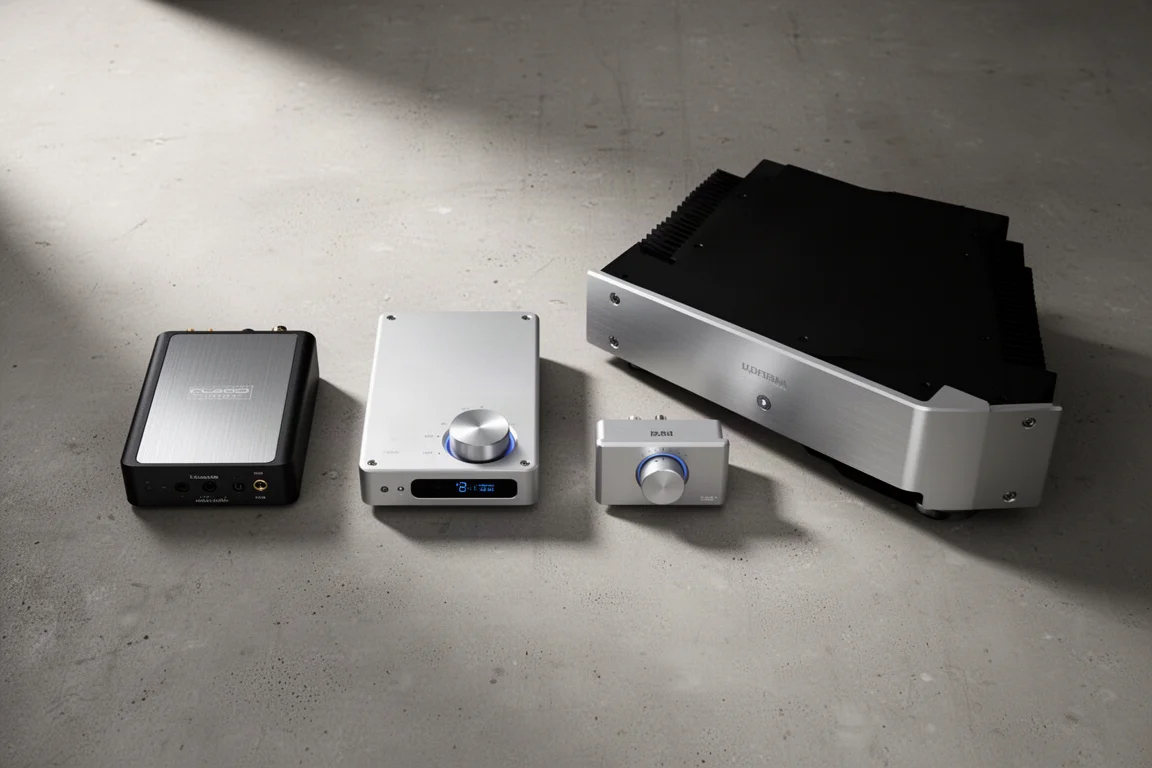
A practical roundup of twelve stereo amplifiers at increasing price points, from sub-$100 class D mini amps to integrated models with DACs, phono stages, and HDMI ARC.
Stereo Amplifiers
Emotiva A2L Plus Review: A $349 Class AB Power Amp That Changes the Budget Math
A slim, full-width Class AB power amplifier with a toroidal linear supply at $349. Here is what it does well, what it leaves out, and who should buy it.