Kitchen Appliances
Small vs Large Food Processors: Which Size Fits Your Kitchen
A practical comparison of small and large food processors, with clear guidance on which size handles specific tasks best and when to consider owning both.
Introduction
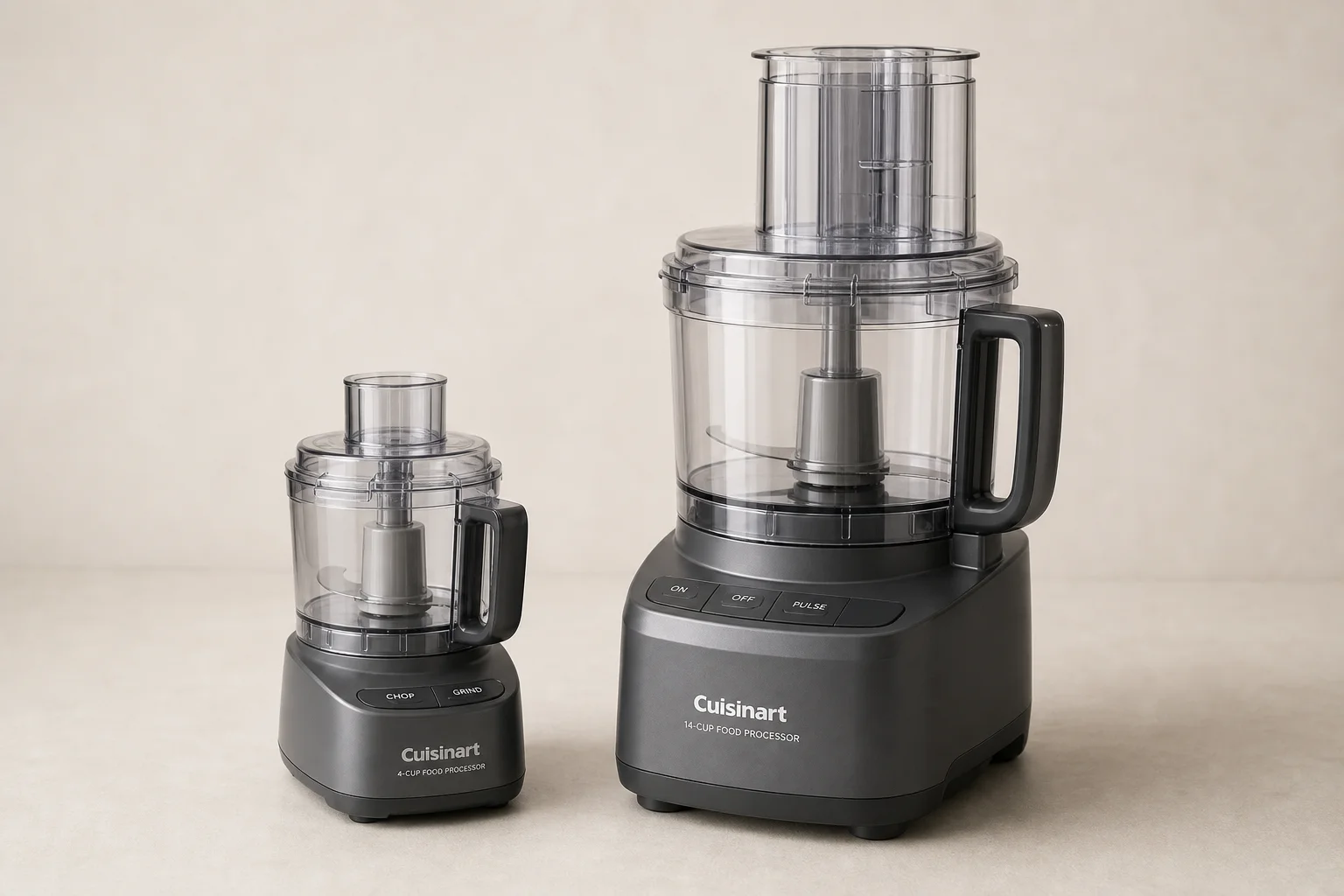
Food processors are among the most useful kitchen tools available, capable of handling tasks that would take significantly longer by hand. But choosing between a small and large model depends on your cooking habits, kitchen space, and budget. Both sizes excel at core tasks like dicing vegetables, grating cheese, and grinding nuts, but each has distinct advantages for specific jobs.
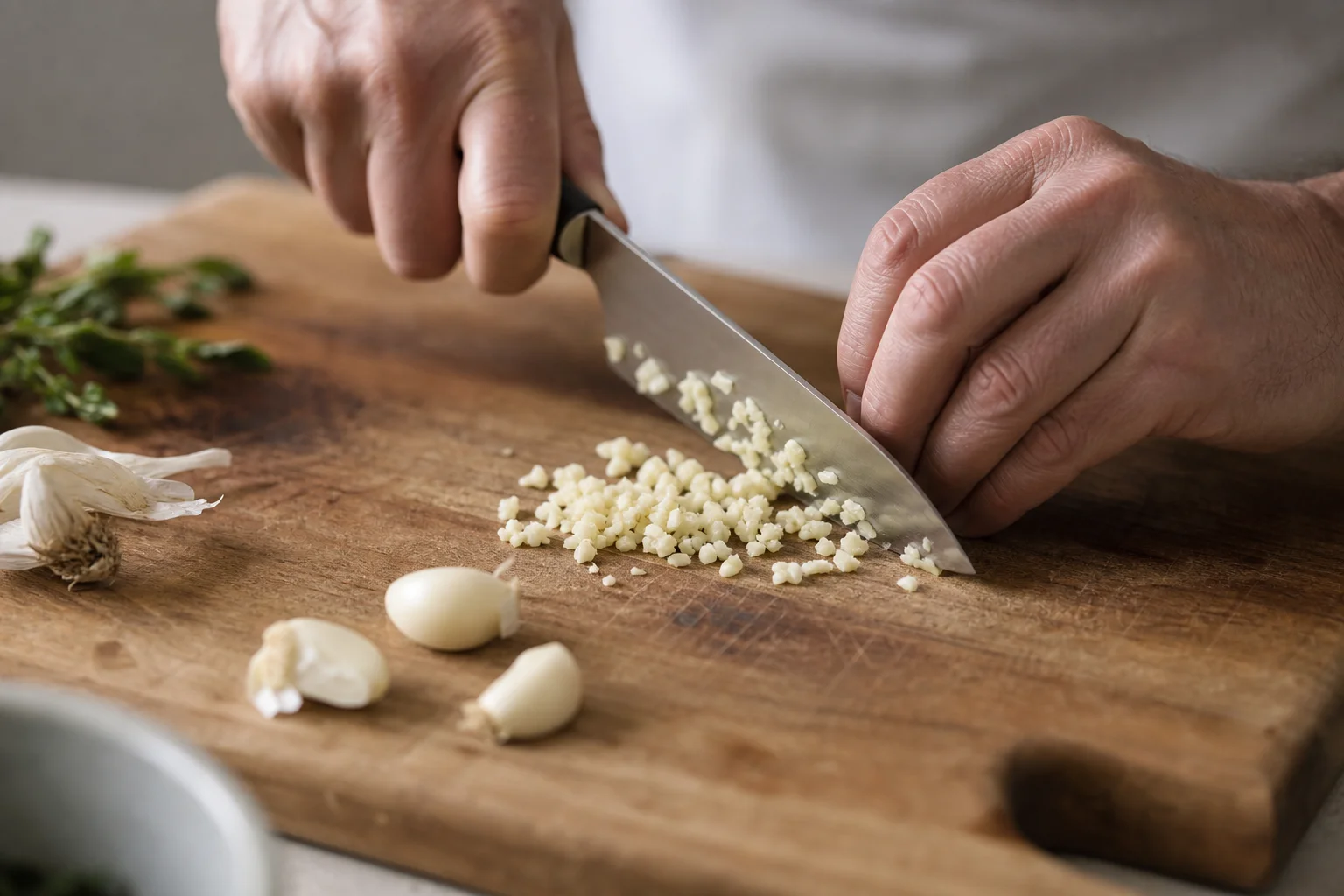
Understanding these differences helps you make a choice that matches your actual cooking needs rather than settling for a one-size-fits-all approach.
What to Look For in Any Food Processor
Regardless of size, certain features matter in every food processor. A relatively powerful motor ensures consistent results across different tasks. Sharp blades are essential for clean cuts rather than crushing or tearing food. Tight tolerances between the blade and work bowl, both at the bottom and sides, allow the processor to work efficiently. Poor clearance can cause problems like egg yolk getting trapped under the blade when making mayonnaise, preventing proper emulsification.
Crisp, responsive controls are equally important. If your model has a pulse feature, the blade should stop moving the instant you release the button. This precision makes a real difference in achieving uniform cuts and consistent texture.
What Large Food Processors Do Better
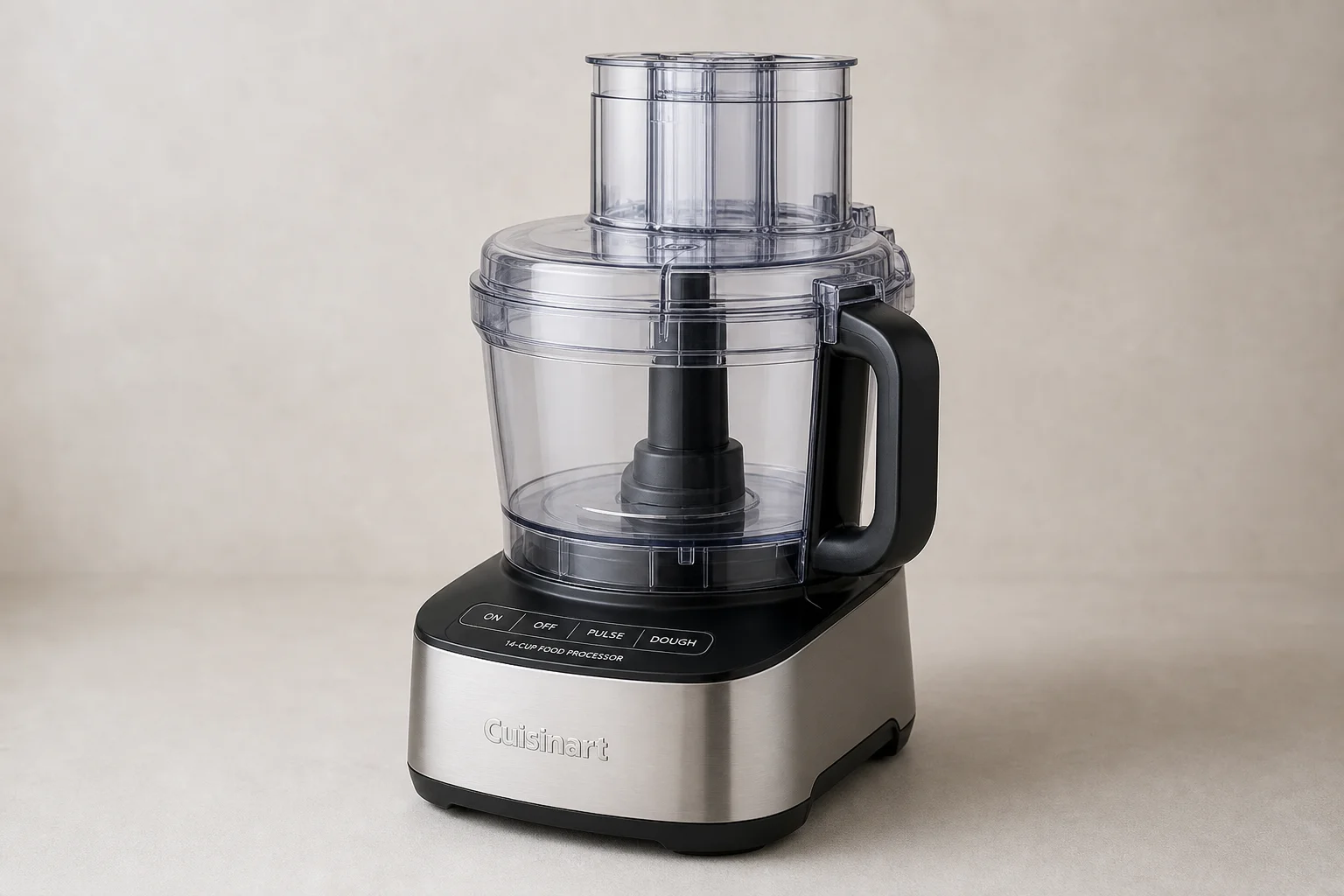
Large models, typically with 14-cup capacity or more, excel at handling bigger jobs. They process larger batches of diced vegetables efficiently, making them ideal for meal prep or cooking for groups. If you grind meat for burgers or other dishes, a large processor handles this task far better than a small one.
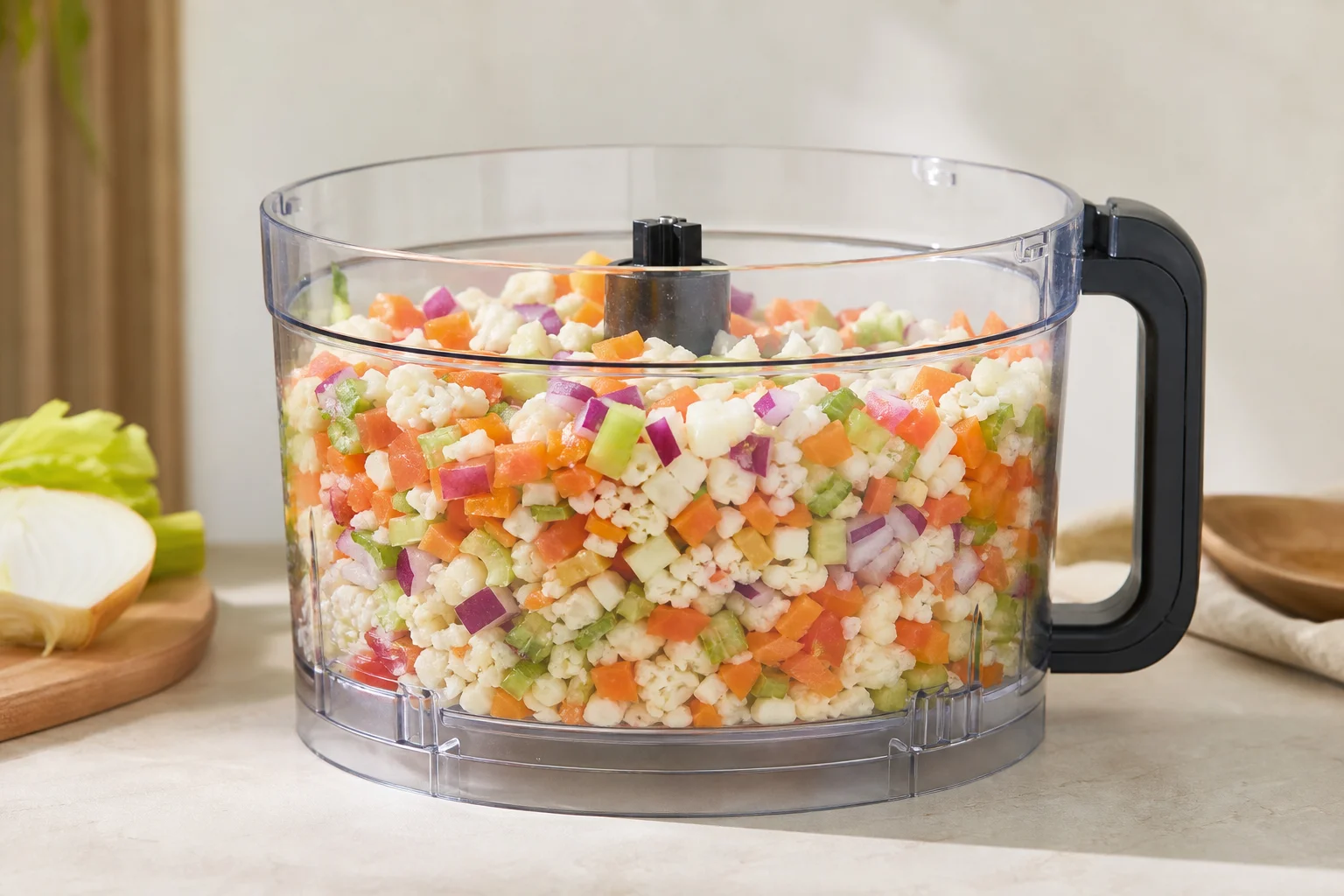
Large models usually include dedicated slicing and shredding blades, which smaller processors typically lack. They’re also superior for cutting cold fat into flour when making pastry dough, and they handle bread dough mixing with ease. The extra capacity means you can process substantial quantities without needing multiple batches.
What Small Food Processors Do Better
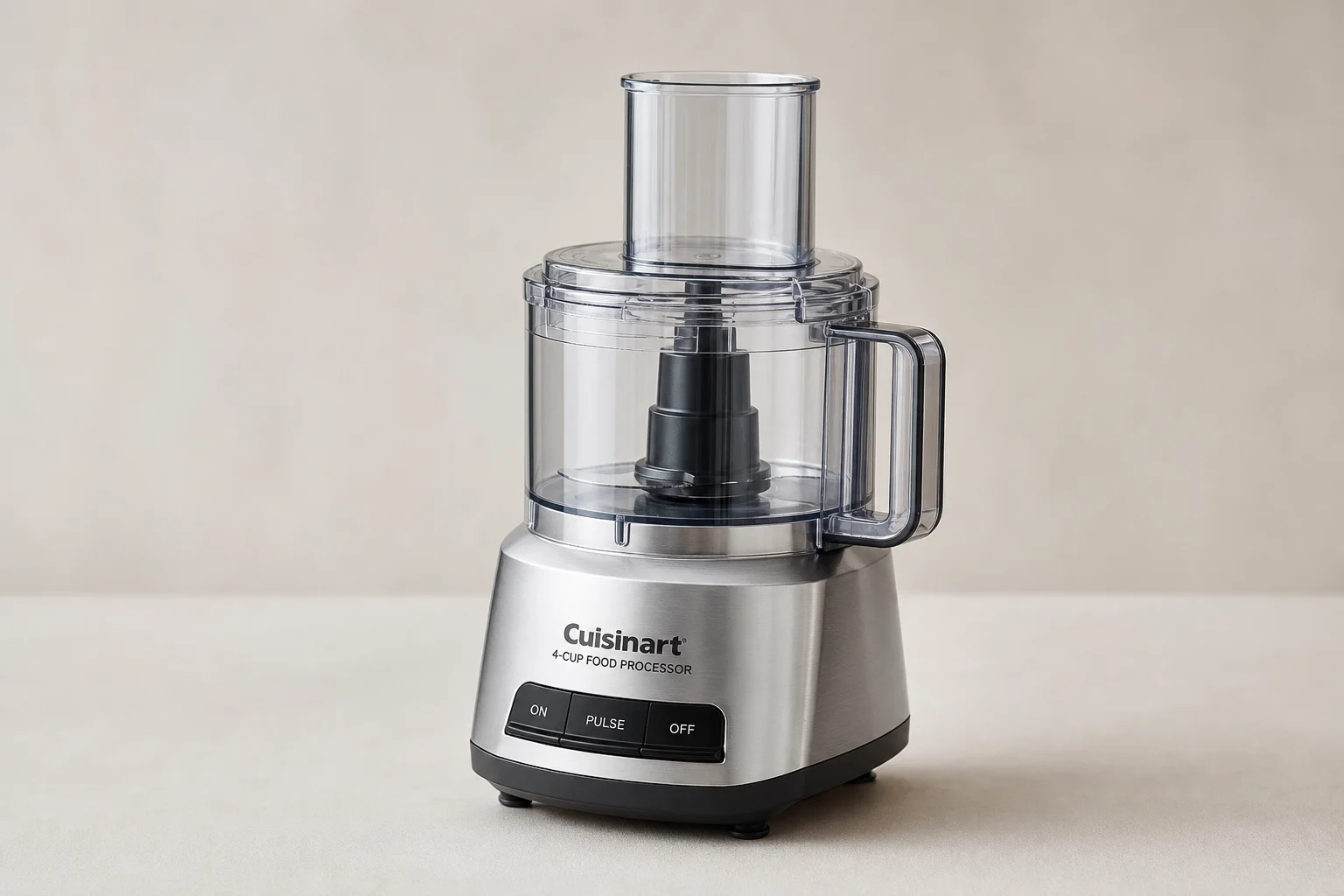
Small processors, with 4-cup capacity, deliver better results for delicate or small-quantity tasks. When chopping just a few cloves of garlic, a small processor produces more uniform, finely chopped results compared to a large one, where the garlic bounces around in excess space and creates uneven pieces.
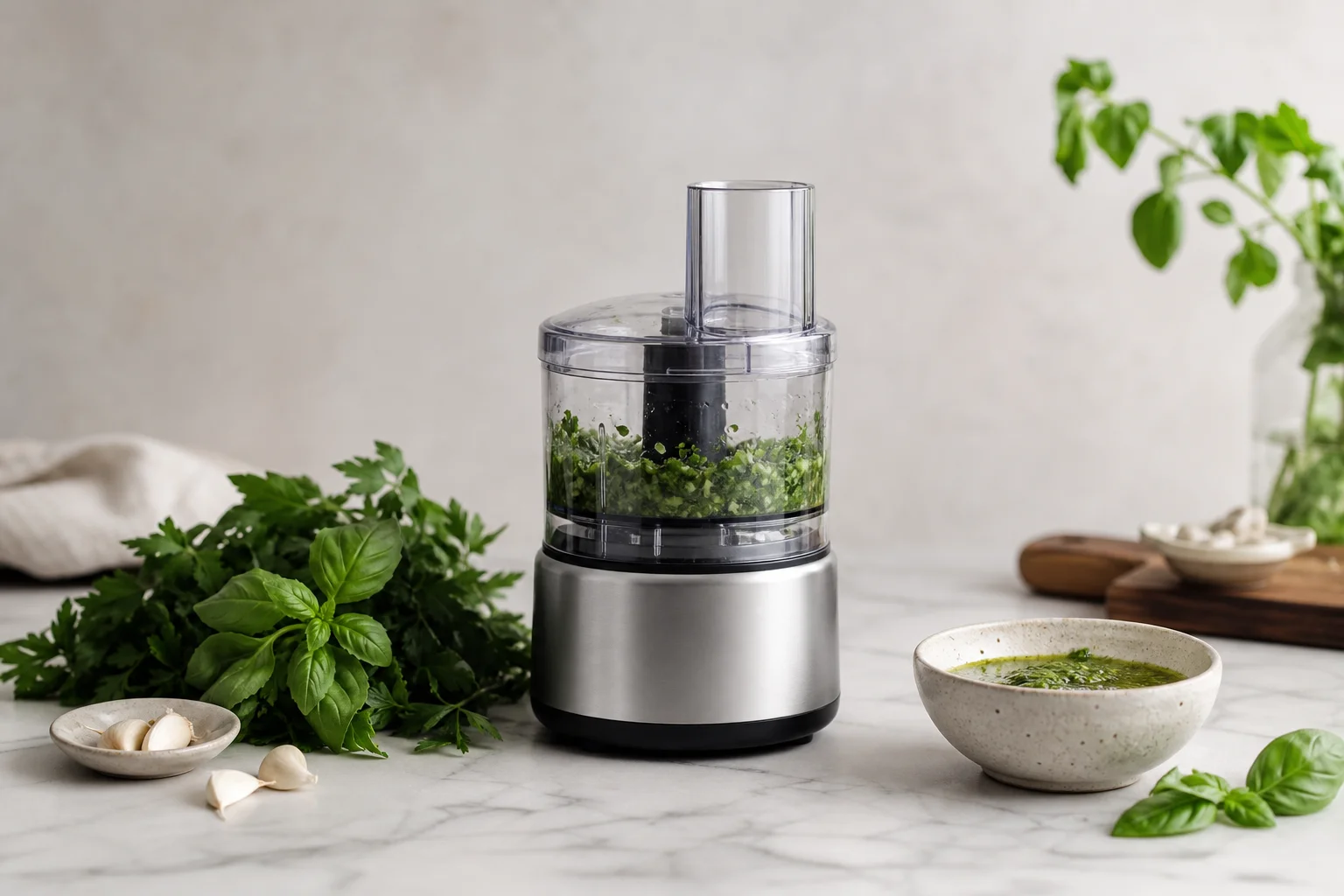
Small models excel at processing fresh herbs, small quantities of nuts, or grated cheese. They’re particularly good at emulsifying tasks like making mayonnaise or vinaigrettes, and they handle marinades and other sauces well. Beyond performance, small processors are practical for kitchens with limited storage or countertop space, and they’re more budget-friendly, making them accessible to more home cooks.
Making Your Choice
The decision between small and large comes down to your cooking patterns and constraints. If you frequently prepare large batches, grind meat, or make pastry, a large processor is the better investment. If you work with small quantities, have limited kitchen space, or prefer a lower price point, a small processor delivers excellent results.
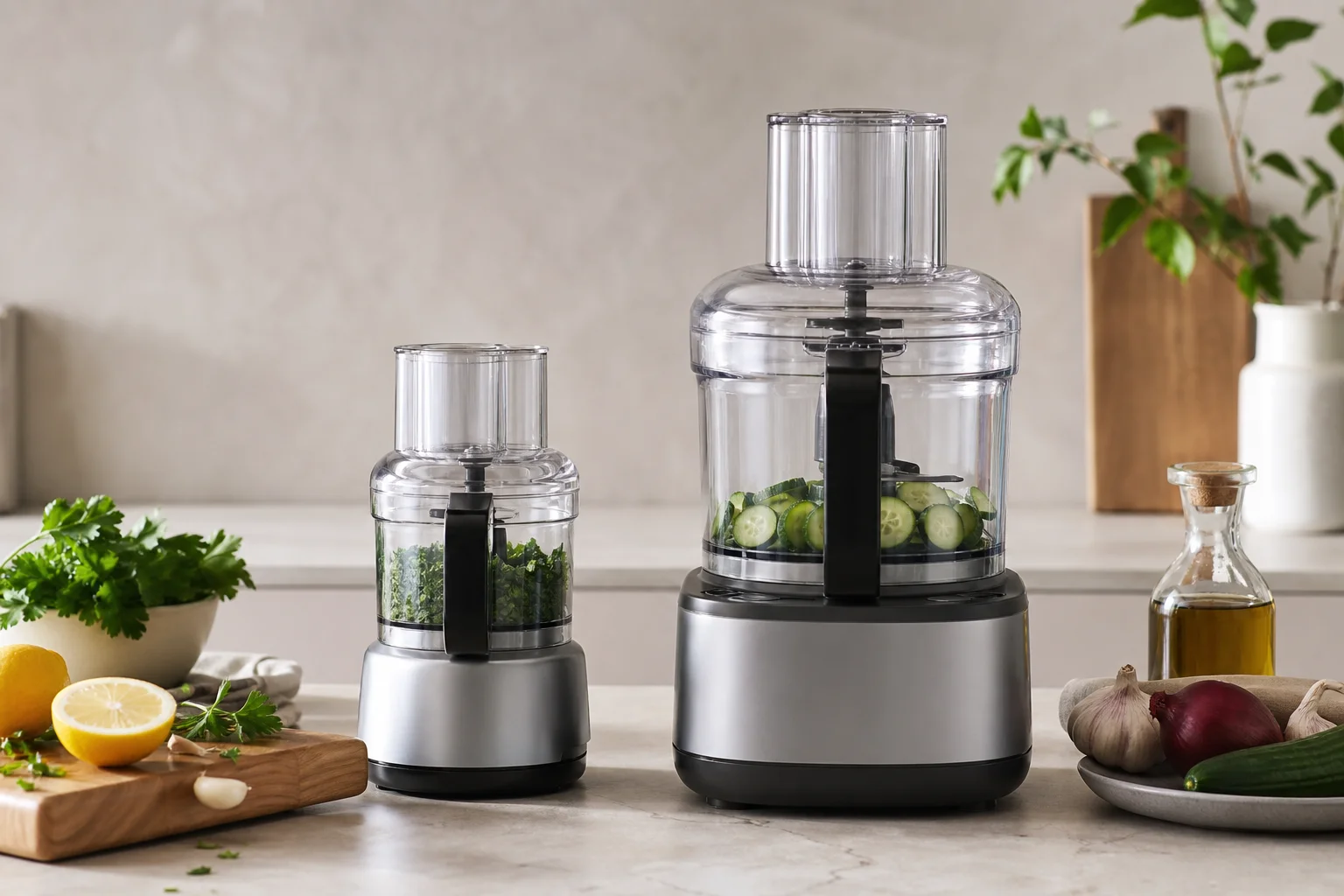
For those with the means and kitchen space, owning both sizes offers the most flexibility. The Cuisinart Elite Collection 4-cup Chopper Grinder is the top choice in the small category, priced around 60 dollars. For full-size processing, the Cuisinart Custom 14-cup Food Processor is the standout option at 249 dollars, offering reliable performance for serious cooking tasks.
Conclusion
Both small and large food processors have earned their place in well-equipped kitchens. The right choice depends on matching the processor size to your actual cooking needs. Start with the size that aligns with how you cook most often, and consider adding the other size if your kitchen and budget allow.
Further reading
Related Reviews
Kitchen Appliances
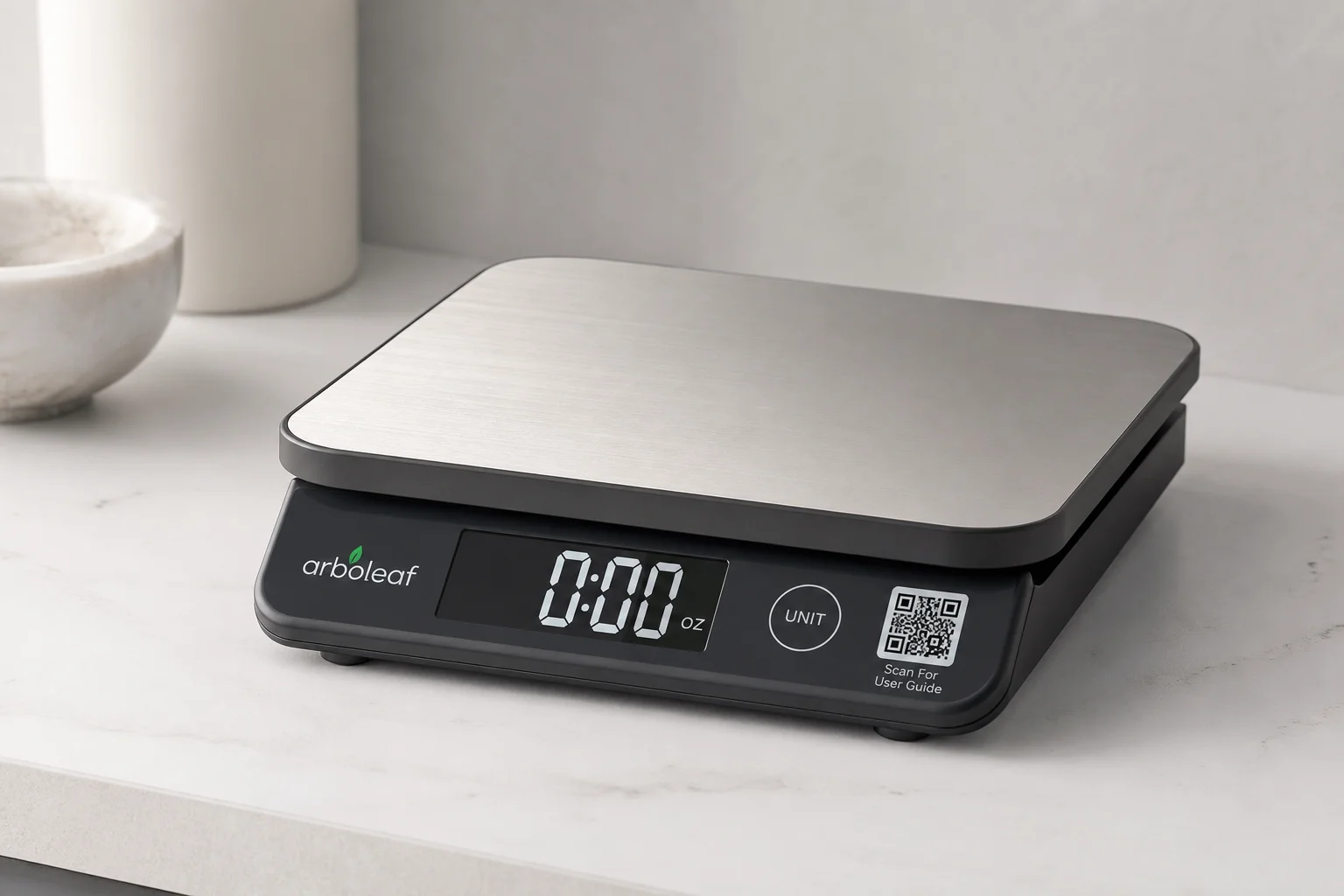
Arboleaf Smart Kitchen Scale Review: Connected Cooking Made Simple
A Bluetooth-enabled kitchen scale that syncs with a nutrition-tracking app, offering real-time weight monitoring and recipe guidance for home cooks.
Kitchen Appliances
Best Air Fryer Toaster Ovens: Three Top Picks for Multi-Function Cooking
Three high-performing air fryer toaster ovens tested for versatility, ease of use, and real-world cooking results. Find the right fit for your kitchen.
Kitchen Appliances
Best Air Fryer Toaster Ovens Under 100: Five Practical Options for Budget-Conscious Kitchens
Five air fryer and toaster oven combinations that deliver real cooking performance without breaking the bank, each with distinct strengths for different kitchen needs.