Ski Gear
Ski Travel Gear Worth Packing: Four Accessory Picks Tested on the Road and Trail
A carry-on ski boot bag, a pair of frameless performance sunglasses, and two versions of a stretch webbing belt, reviewed with the trade-offs that matter before you buy.
Introduction
Ski gear reviews usually start with skis. This one starts with everything around them: the bag that gets your boots to the mountain, the lenses you wear when the light goes flat, and the belt that keeps your pants where they belong on the skin track.
The four products below sit in that ski-adjacent space, and each was chosen because it solves a specific problem rather than adding another logo to the pile. They were used on real trips and real rides before being written up here, and the notes cover both what works and what does not.
That balance matters, because accessories are where the outdoor market gets crowded fastest. A boot bag, a pair of sunglasses, and a belt are all simple objects, and the difference between a good one and a frustrating one usually comes down to a handful of design decisions. Those decisions are what this roundup focuses on.
How These Four Products Were Chosen
Every product here had to clear a basic bar. It needed a clear use case tied to skiing or ski travel, it needed to be usable by an ordinary adult rather than a sponsored athlete, and it needed a price that makes sense for what it delivers.
Beyond that, the evaluation looked at build quality, how each product behaved after repeated use, how comfortable it stayed over long days, and whether the design showed real familiarity with how skiers actually travel. Anything that only looked good in a photograph did not make the cut.
Diamant Ski Boot Bag Backpack: A Carry-On Built Around Ski Boots
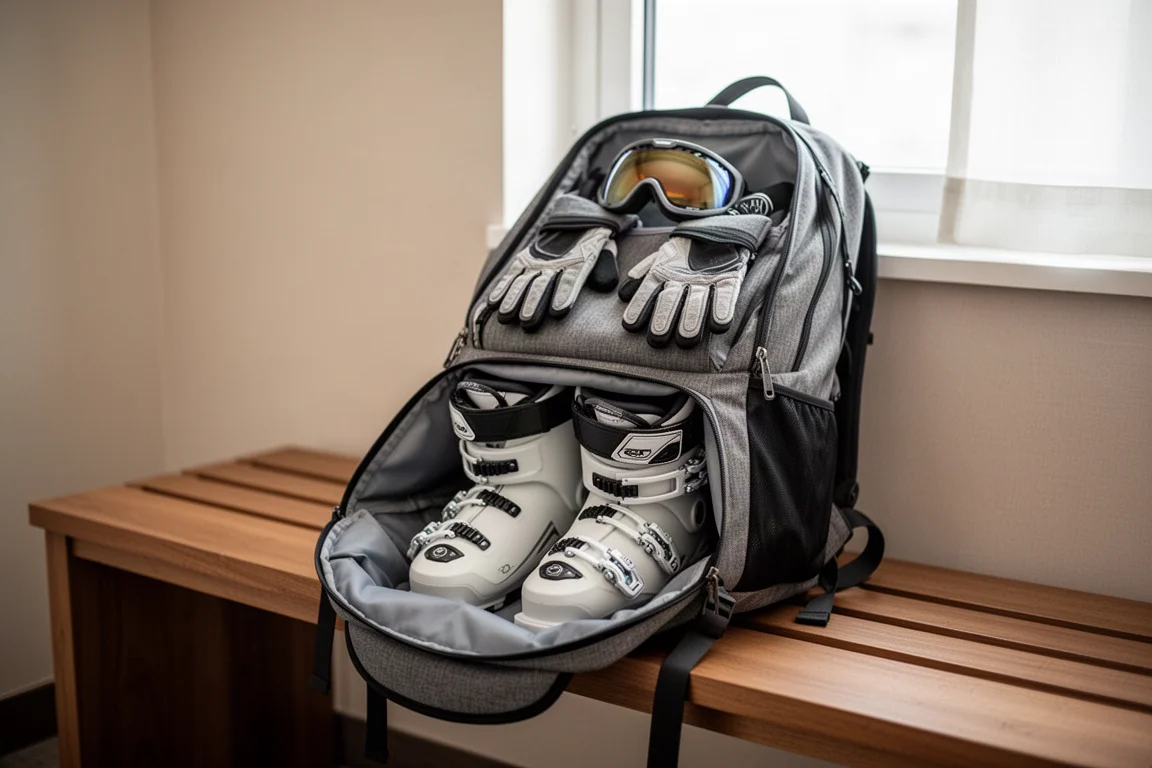
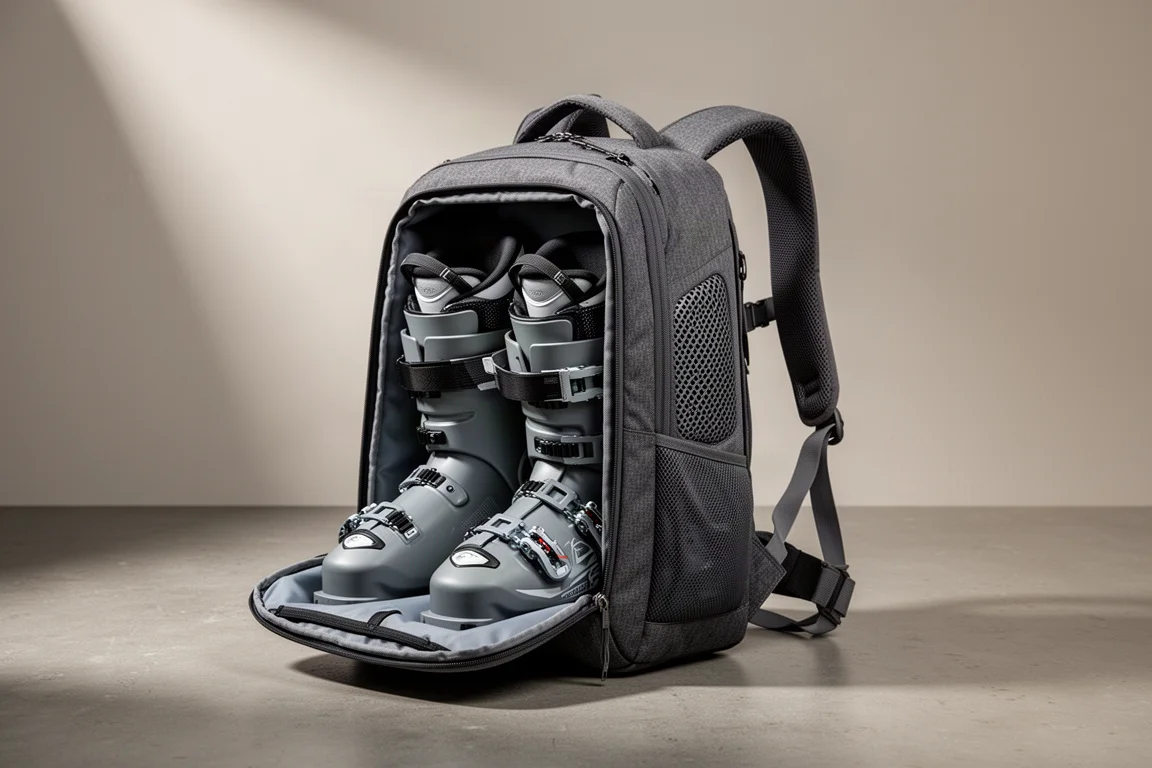
The Diamant Ski Boot Bag Backpack is designed specifically for skiers, and the defining feature is that the boots go inside the bag rather than hanging off the outside. The pack is built to meet TSA standards, which means it can be carried on instead of checked. For anyone who dislikes waiting at a baggage carousel, that single detail changes the whole travel experience.
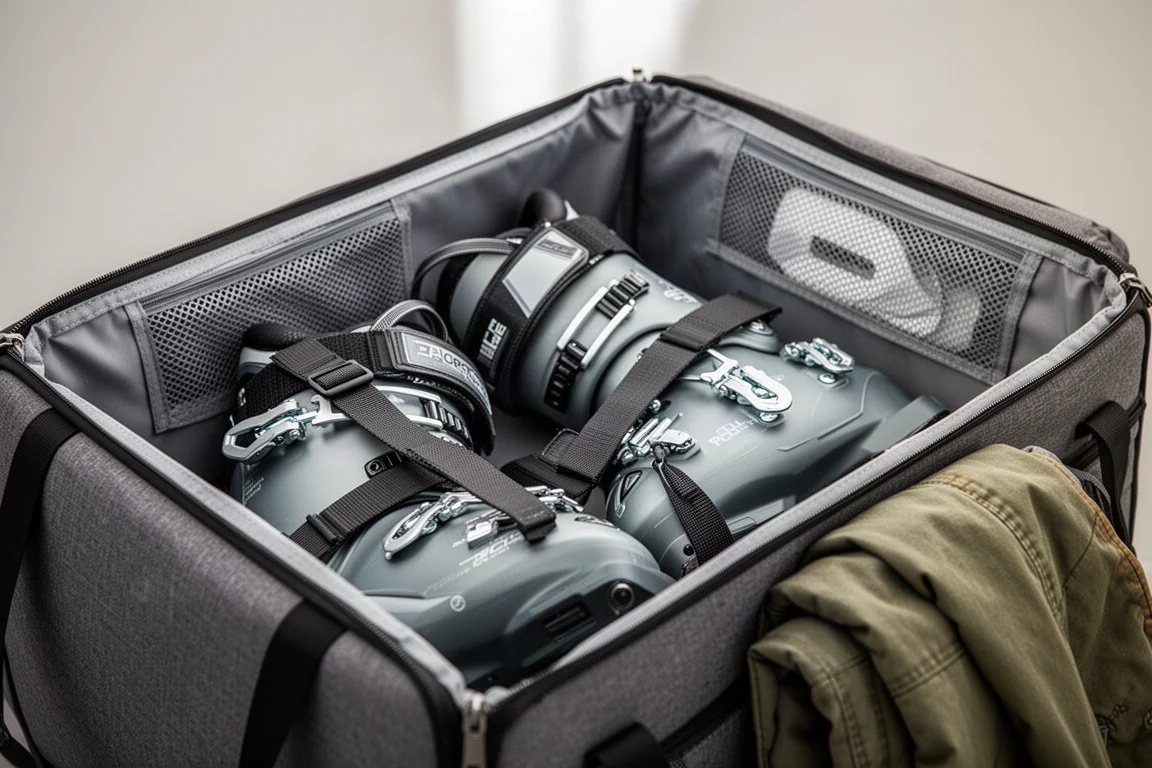
The layout is split into two main zones. An upper area handles smaller items such as goggles, gloves, and socks, while the lower compartment holds the boots, which lie flat and get strapped down so they cannot shift or stack against each other. Side vents run directly into the boot chamber, so even a forgotten pair of damp liners can breathe instead of turning the whole bag sour. The exterior material is thick and sturdy, the kind of fabric that does not tear simply because it is carrying several kilograms of hard plastic shell.
Comfort is where this bag surprises. The shoulder straps are generously padded, adjustable at both the top and the bottom, and there is a waist strap for longer walks. Because the boots sit low and close to the body, the load stays near your centre of gravity rather than dragging backwards.
A few smaller details round out the package. There is a laptop sleeve, though a tablet is probably the more realistic occupant. A soft fleece-lined pocket suits sunglasses. The bag also ships with a small toiletry pouch and a packable day bag with its own water bottle holder, which flattens down small enough to disappear into the front pocket until you need it.
The trade-offs are worth knowing. There is a netted exterior panel with adjustable clamp points, and the obvious use is a ski helmet, but a helmet is a safety item and leaving it exposed on the outside of a bag is not something most skiers will want to do. The bag is also genuinely complex, with enough compartments that finding a specific item can take a moment, and opening it outdoors in falling snow exposes everything at once. It is best understood as a travel bag rather than a lodge bag. There is also no public information about ethical or environmentally responsible manufacturing, and the warranty runs for 30 days. At $199, the value case is strong given how much is included.
Poer Sunglasses: Frameless Lenses With Strong Contrast
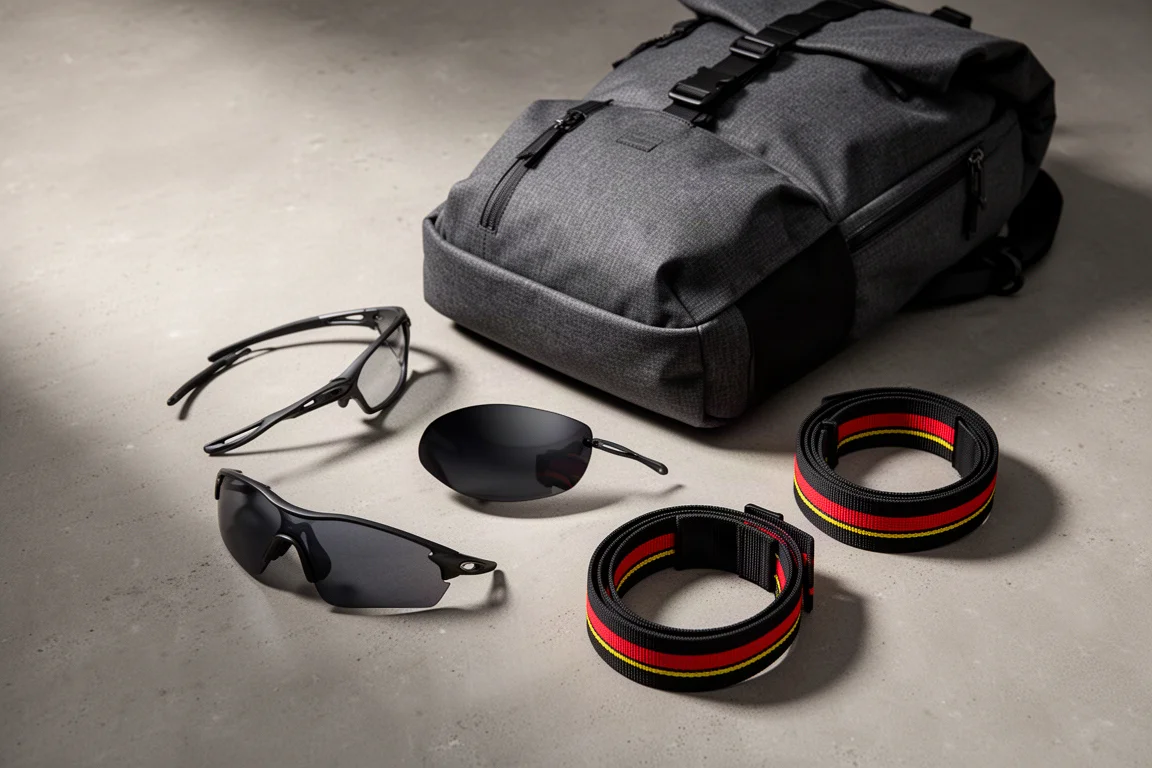
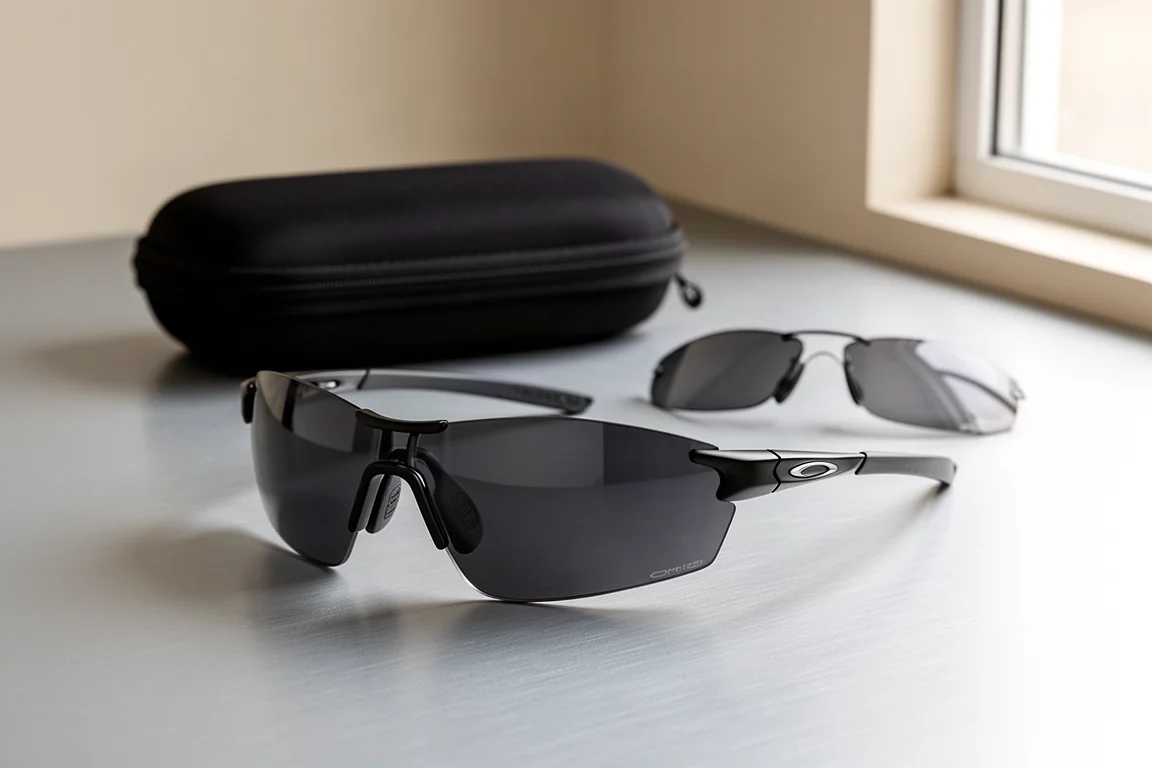
Poer began as a crowdfunding project and now makes ski goggles and performance eyewear. The sunglasses here take the frameless approach to its logical end: the lens is the frame, with two plastic arms clipping directly into it. That construction strips away almost all the weight, and the result is a pair of glasses that disappears on your face within the first hour of a ride.
The lenses are Spectra lenses made by Zeiss, and they are the strongest argument for the product. Two lens options were used across a long weekend of mountain biking in mixed conditions, one lighter and one darker, and both handled bright sun without leaving eyes sore at the end of the day. The more impressive behaviour was in transition. Moving from hard sunlight into deep tree cover, the lenses adjusted faster than most and held contrast well in shade, which made root lattices and changing trail texture easy to read.
Fit is handled by a customizable nose piece, and a spare is included so two riders with very different faces can each find a position that works. The side grip is firm without pressing on the skull, and the glasses rest lightly enough to avoid leaving marks after several hours of wear. Because there is no frame around the lens, the field of view is effectively panoramic, which helps riders who find conventional frames distracting at the edges. The set includes two extra lenses, a case, and a bag.
The compromises are mostly structural. With no frame, there is nowhere clean to grab the glasses, so the lens surface picks up fingerprints and smudges far more readily than a framed pair, and sweat from the brow can reach the lens. The plastic arms also creak slightly, which is an odd sensation at this price. Because the lens is the primary structure, it feels more exposed to stress than a framed design, though no breakage occurred during testing. The glasses retail for $150, and there is no published information about ethical manufacturing. For riders who value lens quality and low weight above all else, the trade-offs are reasonable.
Arcade Jimmy Chin Belt: A Wider Buckle With More Stretch
Arcade builds belts from stretch webbing rather than leather, and the difference is immediately noticeable when you sit down or bend over. The webbing gives just enough to stay comfortable while still holding, which is a meaningful change for anyone whose belts have always felt like a compromise.
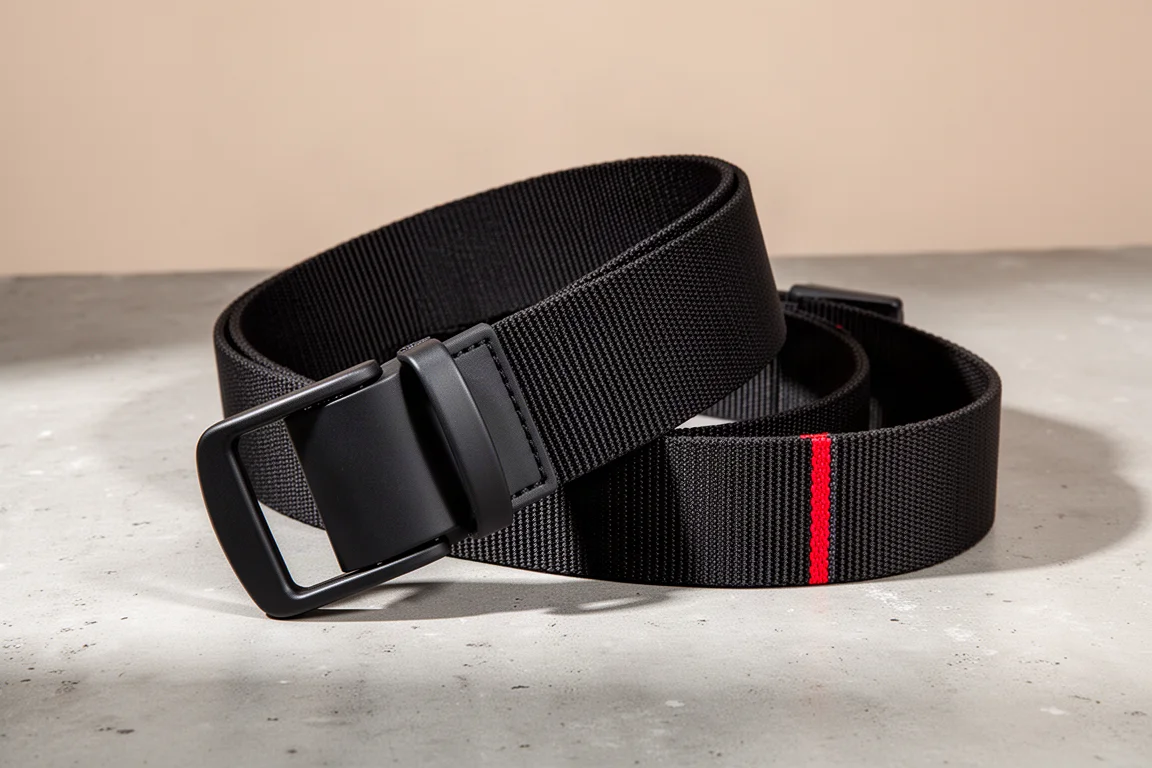
The Jimmy Chin edition is the wider option, with a larger buckle and a broader strap. It carries the same core benefits as the rest of the range: it is very light, it does not drive a buckle into your stomach, and it adjusts continuously rather than through fixed holes. The stretch is what makes it work on the move, and it pairs naturally with hiking shorts or snow pants where a leather belt would feel rigid and heavy.
The wider format is also where the problems show up. The larger buckle is too bulky for some belt loops, particularly on slim-fitting pants, and threading it through can take an unreasonable amount of time. Removing it is worse, because a small hook on the buckle catches on the loop and has to be backed out blind. The buckle itself is plastic and feels lighter than the price suggests, and the belt is made in China with no published ethical manufacturing statement. It retails for $43.
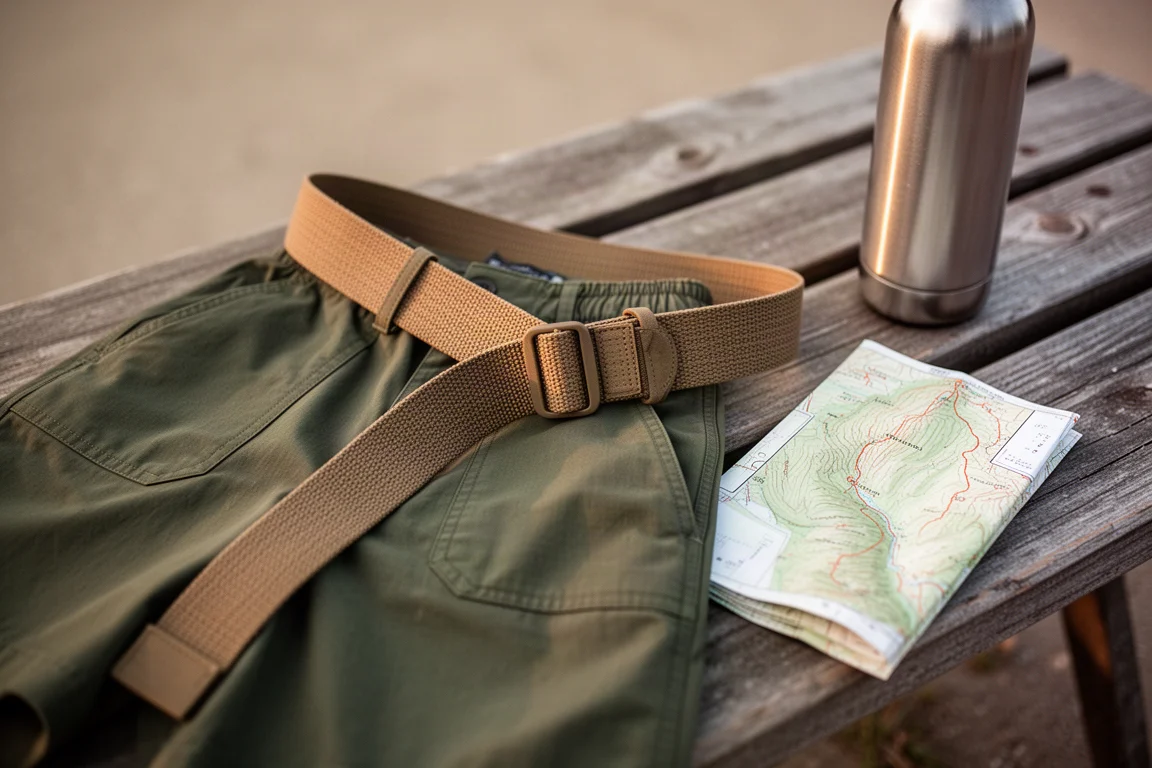
For casual wear with roomier jeans or shorts, the wider belt is fine and the larger buckle is part of the look. For technical pants with narrow loops, it is a genuine inconvenience, and the narrower version of the same belt avoids the problem entirely.
Arcade Original Belt: The Everyday Stretch Belt
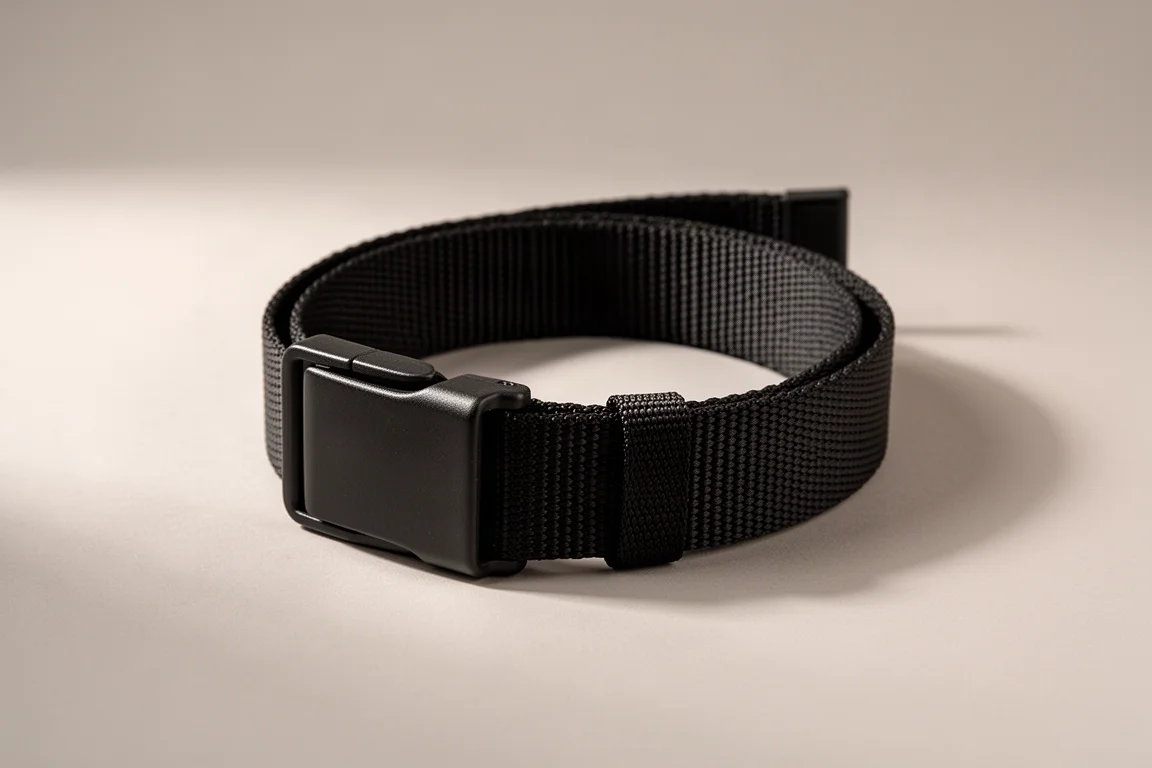
The original Arcade belt is the version to reach for if the wider buckle gave you pause. The strap is narrower, the buckle is smaller, and it threads through standard belt loops without the struggle. It offers the same stretch and the same continuous adjustment, and it retails for $38.
The environmental story is stronger here than on most outdoor accessories. Arcade states that its belts use sustainable materials including REPREVE recycled polyester, and that the webbing incorporates 15 percent natural rubber. That is a real effort rather than a label. The belt is still made in China, and there is no published statement about ethical labour practices, which is worth weighing if those details drive your purchases.
In daily use, the original belt is comfortable in a way that is easy to underestimate. It does not pinch when you bend, it moves with you rather than against you, and it is light enough that it adds nothing noticeable to a pair of shorts. Because it adjusts continuously, it fits a wide range of body types without needing exact sizing. The design has been around long enough to build a loyal following, and that track record shows in the details.
The main annoyance is removal. A small loop on the belt can catch on a pant loop on the way out, so taking it off takes a little more patience than a smooth leather strap. It is a minor friction rather than a flaw, and it does not change the overall recommendation.
Buying Advice: Matching Each Product to the Trip
The right pick depends on how you travel. If flying with ski gear is the main pain point, the Diamant boot bag addresses it directly: boots inside, TSA-friendly dimensions, and enough structure to survive being thrown around. At $199 it is the most expensive item here, but it replaces a checked bag and a separate boot bag at once.
For eyewear, the Poer sunglasses make the most sense for riders who prioritise lens quality and light weight and who can live with smudging. At $150 the lens technology is the value, not the frame, and the customizable nose piece makes them unusually easy to fit without trying them on first.
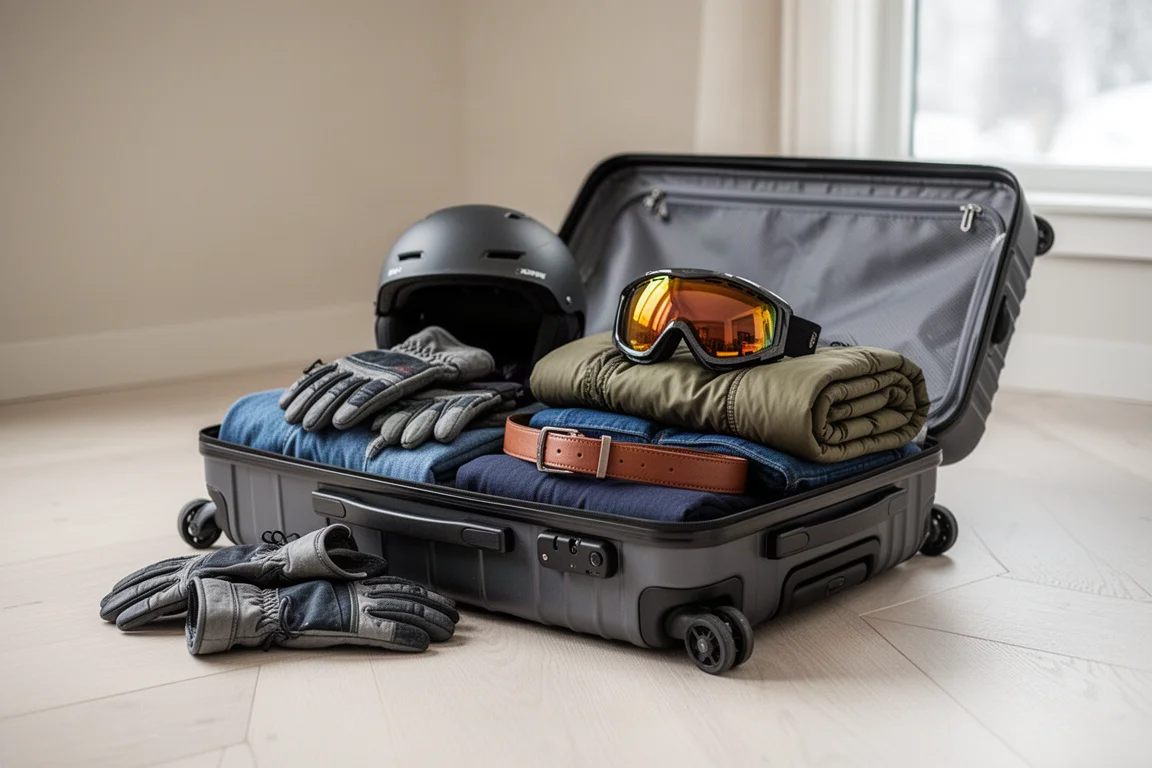
Belts are the simplest decision of the four. The original Arcade belt at $38 is the safer choice for anyone who wears technical pants, hikes, or wants a belt that works with everything. The wider Jimmy Chin version at $43 is worth considering if you like the look and mostly wear roomier pants, but check your belt loops before committing.
If you are only buying one thing from this list, match it to your biggest recurring frustration. For most travelling skiers, that is luggage.
Conclusion
None of these four products is glamorous, and that is rather the point. A boot bag that keeps your boots inside and your hands free, sunglasses that let you read the trail in flat light, and a belt that stretches when you bend are all small improvements that add up over a season of travel and riding.
Each one has a clear limitation: the boot bag is complex and its exterior helmet panel is questionable, the sunglasses smudge easily, and the wider belt fights narrow loops. Those are real considerations, not deal breakers. Buy the version that matches how you actually move, and each of these will earn its place in the rotation.
Further reading
Related Reviews

Ski Gear
2023 Blizzard Hustle vs Rustler: Six Freeride Skis Compared
Blizzard's 2023 Hustle collection rebuilds the Rustler shape with a lighter core and no metal. Here is how all six skis differ, and which one suits your riding.

Ski Gear
2023 Skis of the Year: Atomic Maverick 88 TI, Salomon QST 106, and Look SPX 12 Pro
Three standout ski picks for all-mountain carving, powder days, and reliable binding performance, with practical buying notes for 2023 models.

Ski Gear
2025 Nordica Enforcer 104 Review: A Directional Charger Replaces the 104 Free
The 2025 Nordica Enforcer 104 drops the Free name and the twin-tip personality, gaining weight, stiffness and composure in rough snow. Here is what changed and who it suits.