Backpacking Tents
Simond Sprint Trekking Pole Tent Review: A 620 g Two-Person Dyneema Shelter
Decathlon's Simond Sprint is a 499 g Dyneema trekking pole tent for two, wind tested and genuinely spacious, with warm-weather limits worth understanding before you buy.
Introduction
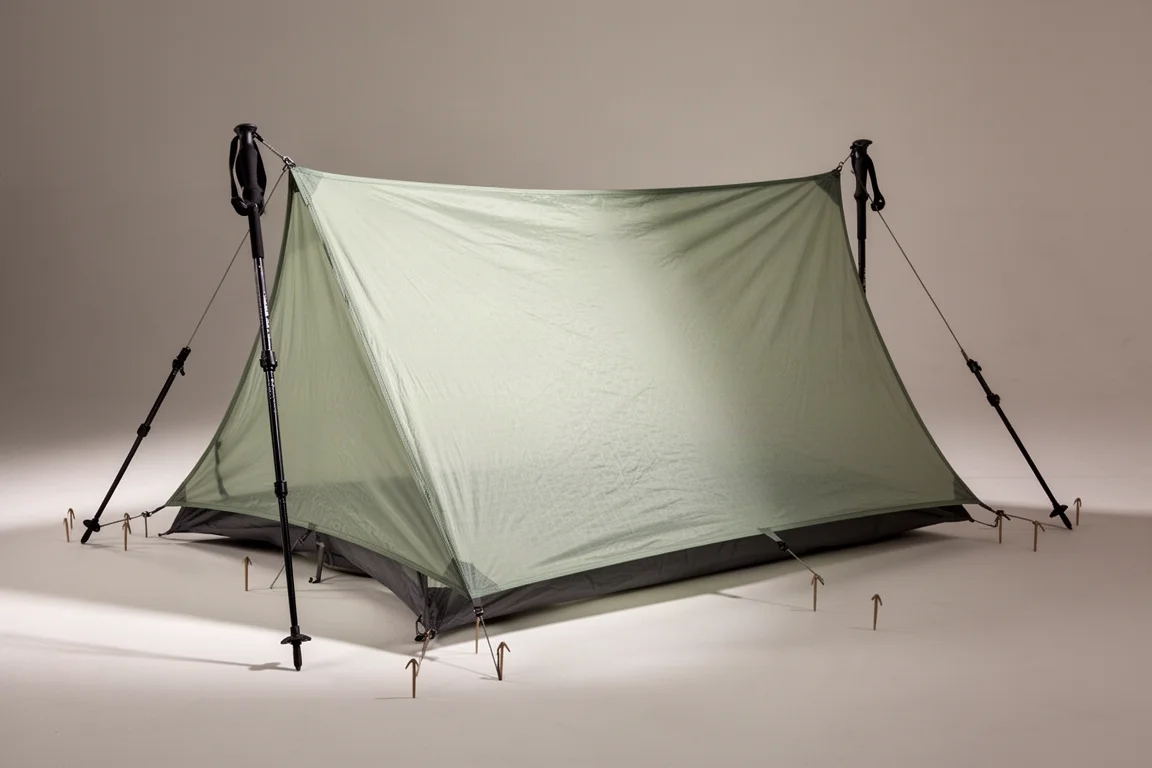
Simond is Decathlon’s mountaineering brand, based in Chamonix-Mont-Blanc in the French Alps, and its equipment is developed and tested in mountain conditions. The Sprint Trekking Pole Tent marks the brand’s arrival in the ultralight backpacking shelter category, and it makes a strong first impression: a two-person tent made from Dyneema DCF fabric that weighs 499 g on its own.
Fully packed, with the stakes, guy lines and stuff sack included, it comes to 620 g and compresses to roughly 4 litres. That is an unusual combination of very low weight and genuinely usable interior space for two people. It is also a specialist piece of gear with a clear set of conditions where it performs at its best, and a few practical trade-offs that come with the fabric itself.
Who This Tent Is For
This shelter is aimed at backpackers who count grams and cover serious distance. Because it packs down so small and adds so little to a pack, it suits long-mileage days where the tent is carried all day and pitched at the end of them. The two-person interior means it can be shared without either occupant feeling squeezed, which is rare at this weight.
The all-mesh inner design points clearly towards warm-weather trips. It is best treated as a summer shelter rather than a snow or deep-winter tent, and anyone planning cold, exposed camps should look at something with a more enclosed inner and a solid fabric option.

For fast, light summer backpacking and wild camping, though, the priorities line up neatly: low carried weight, a small pack size, and enough room to sleep properly after a long day.
Main Strengths: Featherlight, Spacious, and Wind-Tested
The headline number is 499 g for the tent body, rising to 620 g fully packed. Even all-in, that is remarkable for a two-person backpacking tent, and it puts the Sprint among the genuinely serious ultralight shelters.
Lightness has not come at the cost of strength. The tent survived a wind tunnel test at 70 km/h, and the Dyneema DCF fabric it is built from has a strength-to-weight ratio quoted at 15 times that of steel. The fabric is also used for the woven floor, a detail normally reserved for the most expensive North American ultralight tents.
Space is the other surprise. The interior measures 120 cm wide, 225 cm long and 115 cm high, so two standard sleeping pads fit side by side and taller sleepers have usable length. There is a 70 cm vestibule for gear, positioned on one side for two occupants.
Inside the Simond Sprint: Space, Ventilation, and Interior Details
Inside, the design is deliberately minimal, but the features that matter are present. The inner is almost entirely mesh, with additional mesh panels at the head and foot ends, so airflow comes from more than just the side walls. The fly sits raised from the floor, which allows natural ventilation underneath and helps keep condensation down.
There are no dedicated vents, and in practice they are not really needed given how much mesh the inner uses. The doors run on dual zips and use small magnetic tabs to hold them open, which works well in calm weather, though less so when the wind picks up.
Interior detailing includes a loop on each side suitable for hanging a small lantern, and a pocket on each side for storing small items. For a tent at this weight, those touches make it easier to live with over multiple nights.
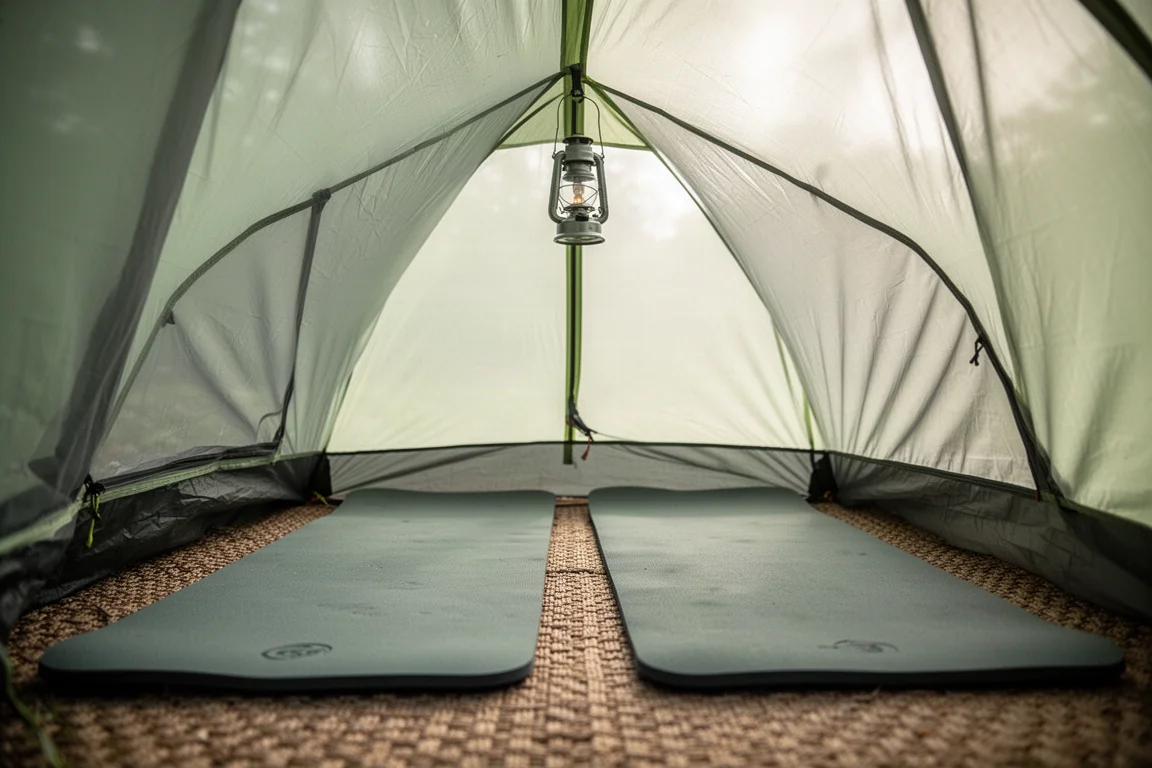
The floor is Dyneema DCF as well, which keeps the weight down and matches the fly in durability. The overall colour is a pale green that reads well in daylight and looks suitably understated on the hillside.
Pitching the Sprint: Trekking Poles, Stakes, and Tension
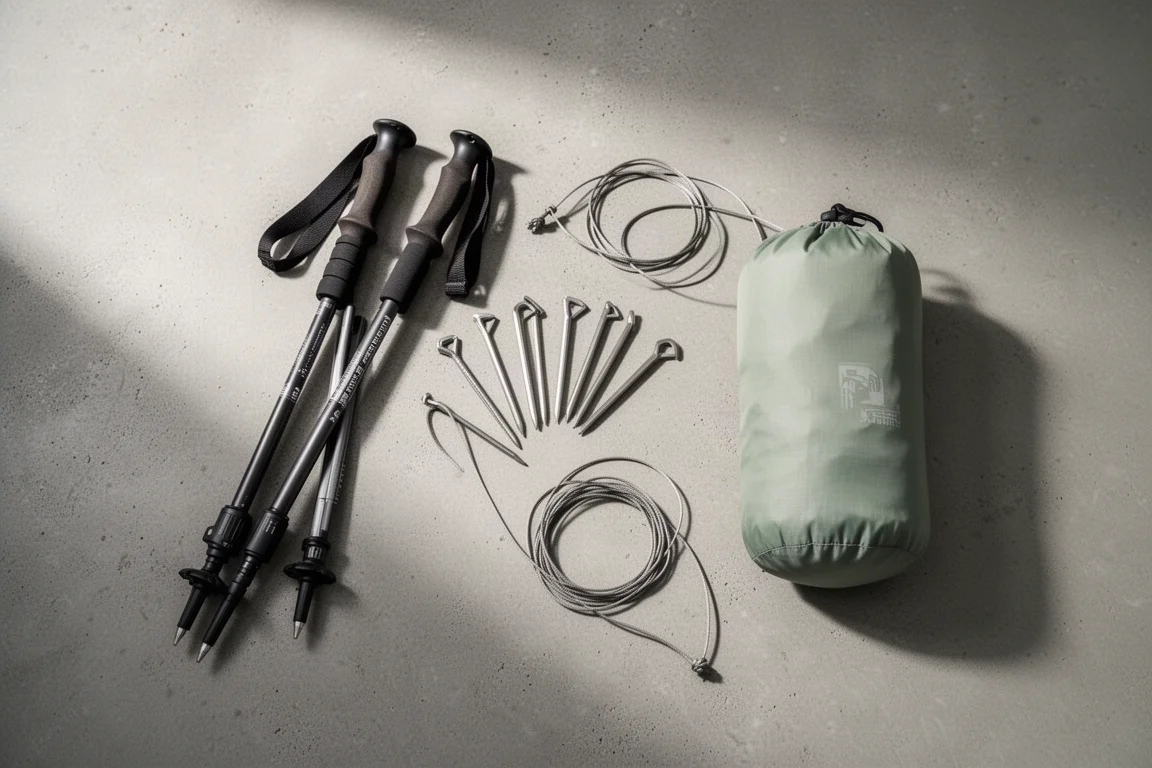
Pitching requires two trekking poles, which are sold separately and set to 115 cm. The tent body even carries a marking at that height, so there is little guesswork. The pole tips seat into small eyelets at each end, and the structure goes up quickly once the four corners are pegged out.
Eight small pencil stakes are included. They are strong for their size and well suited to hard ground. After the corners are fixed, the included adjusters and guy lines let you tension the shelter properly, and there are adjustable pole supports at the front along with guy attachment points at the tops of the poles and at the steep rear wall.
The whole process is fast and intuitive. Getting a truly taut pitch, however, takes a little more patience, and that is where the character of the fabric becomes relevant.
Living With Dyneema: Light, Condensation, and Cold
Dyneema DCF is a superb material for weight and strength, and its characteristics shape how the Sprint behaves in camp. The fabric is extremely thin and translucent. In summer, that means early mornings unless you sleep in a good eye mask, and at night an interior light makes the tent clearly visible from outside, which is worth considering if you prefer to camp discreetly.
The fabric also has effectively zero stretch. On perfectly flat ground that is a benefit, producing a crisp, stable pitch. On lumpy, uneven ground it becomes difficult to get the fly taut, and a light breeze will set the panels flapping. A guy point positioned midway down each door would make it easier to dial in tension, and that is the one addition that would improve the design.
Condensation is a known trait of DCF shelters. In use it has been minimal, helped by the extensive mesh and the raised fly edge, but it is unrealistic to expect a DCF tent to stay completely free of condensation in every condition. With full mesh on both sides and mesh at the front and rear, a cold wind will also pass through the inner, which is another reason to keep this tent to milder trips.
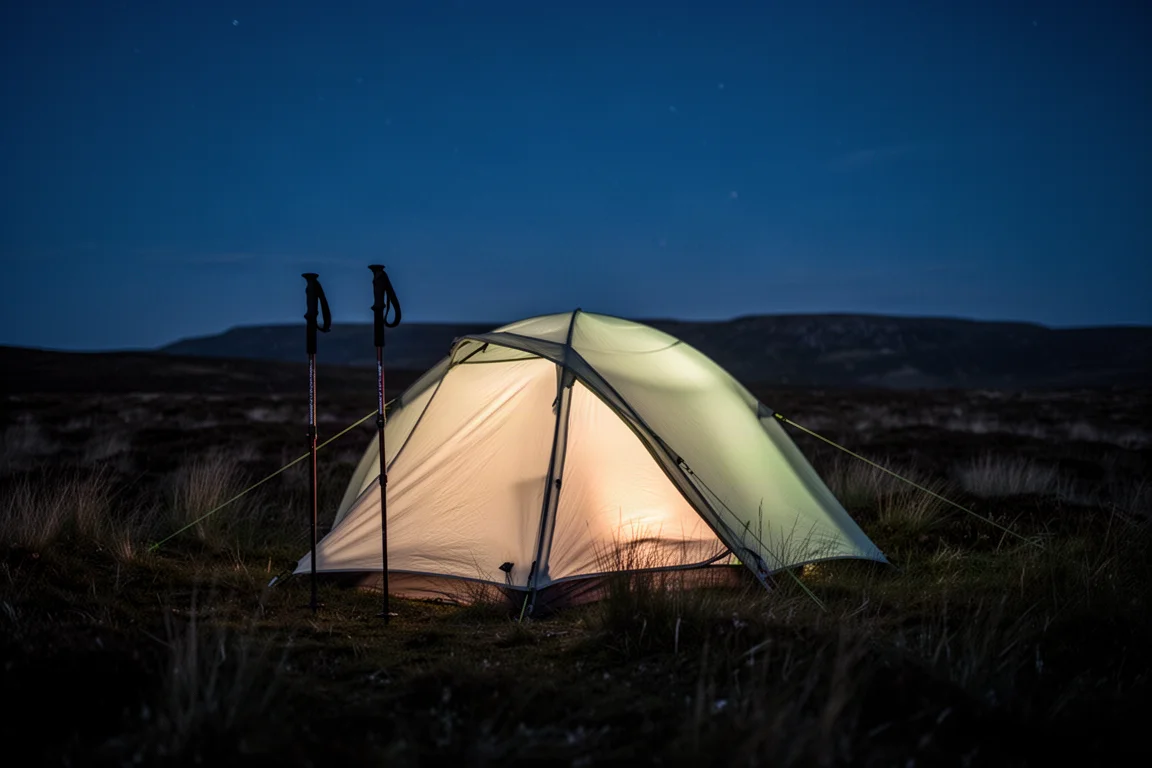
Used within those limits, the fabric delivers exactly what it promises: very low weight, no water absorption to speak of, and a stable shape once tensioned properly.
Things to Consider Before Buying
The first consideration is trekking poles. Without a pair set to 115 cm, the tent cannot be pitched, so factor that into the total cost and the pack list. The second is season. With a fully mesh inner, this is a warm-weather shelter, and it is not the right choice for snow, hard frost or exposed winter camps.
The third is the pitch. Dyneema performs best on flat, even ground, so sites that are rocky or hummocky will demand more fiddling. If your usual camps are rough, that is worth weighing up.
Price is the final point. At £599, the Sprint is not a cheap tent, but Dyneema DCF is an expensive material, and comparable two-person Dyneema shelters from specialist ultralight makers often sit closer to £1,000. Against that backdrop, the Simond is competitively positioned. Magnetic door tabs are handy in calm conditions but less reliable in wind, and the translucent fabric means privacy and light management are part of the deal.
Buying Advice
If your trips are long, warm-weather backpacking days where carried weight and pack volume matter more than anything else, the Sprint is a very strong option. It offers two-person space, a genuinely protective shape and wind-tested construction at a weight that most shelters cannot approach.
It makes the most sense for backpackers who already carry trekking poles, camp mostly between spring and autumn, and are happy to choose reasonably level pitches. If you need a tent for winter conditions, a fully enclosed inner, or heavily uneven ground, this is not the shelter to buy, and a slightly heavier design will serve you better.
For everyone else, the combination of 620 g all-in, a 4 litre packed size and a 120 cm wide interior is difficult to argue with. The tent is well made, thoughtfully detailed for its weight, and priced sensibly for what Dyneema construction normally costs.
Buy it for the conditions it was designed for, and it will quietly do its job night after night without weighing you down.
Conclusion
The Simond Sprint Trekking Pole Tent is a remarkable piece of ultralight engineering. A two-person Dyneema shelter that weighs 499 g for the body and 620 g fully packed, survives a 70 km/h wind tunnel test, and still offers a 120 cm wide, 225 cm long interior with a 70 cm vestibule is an impressive achievement at this price point.
Its limitations are real and clearly defined: a mesh inner that suits summer rather than winter, a fabric with no stretch that rewards a flat pitch, some condensation risk, and the need to supply your own trekking poles. Buyers who understand those boundaries will find a spacious, stable and extraordinarily light shelter that makes long summer routes noticeably easier to walk.
Product link
View more details for Simond Sprint Trekking Pole Tent
This product is mentioned in the review. Check the specifications, options, and compatibility before buying.
View more details for Simond Sprint Trekking Pole TentFurther reading
Related Reviews
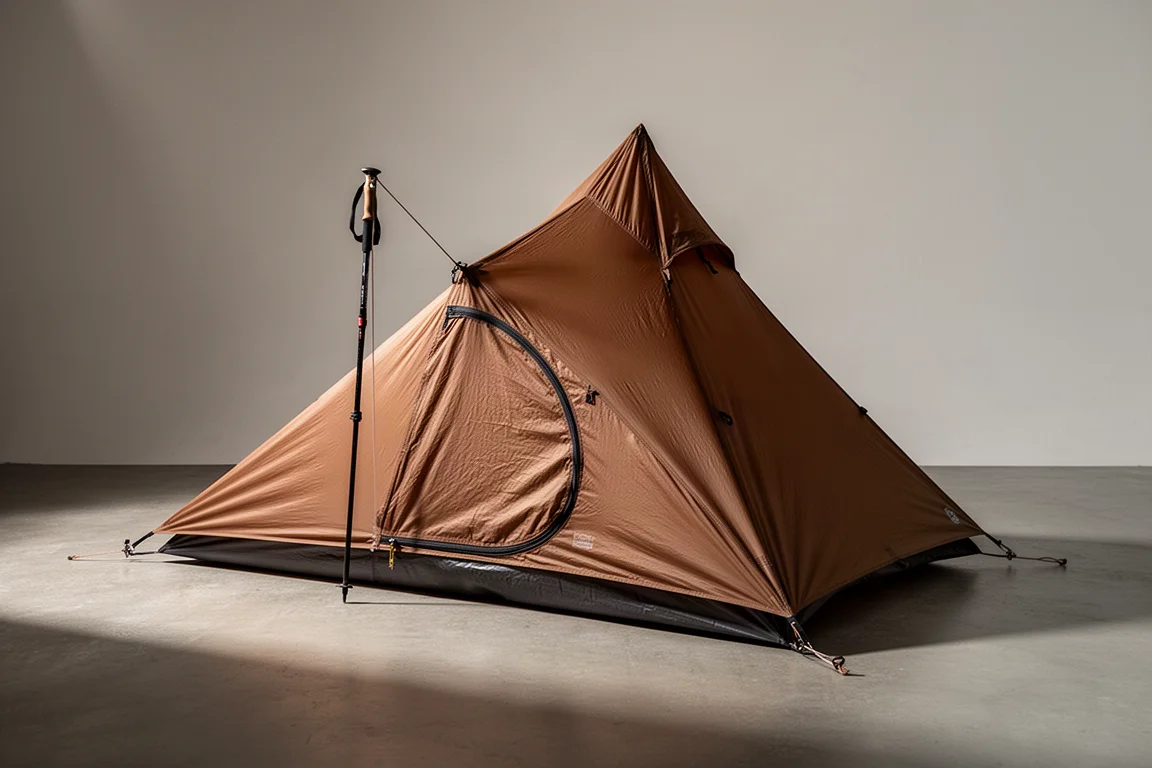
Backpacking Tents
3F UL Lanchan Pro 1 Review: A 1 lb 8 oz Single-Wall Trekking Pole Tent
A practical look at the 3F UL Lanchan Pro 1, a single-wall trekking pole shelter with a 1 lb 8 oz weight, 20D silnylon fabrics, and a roomy 90 x 31 x 49 inch interior.
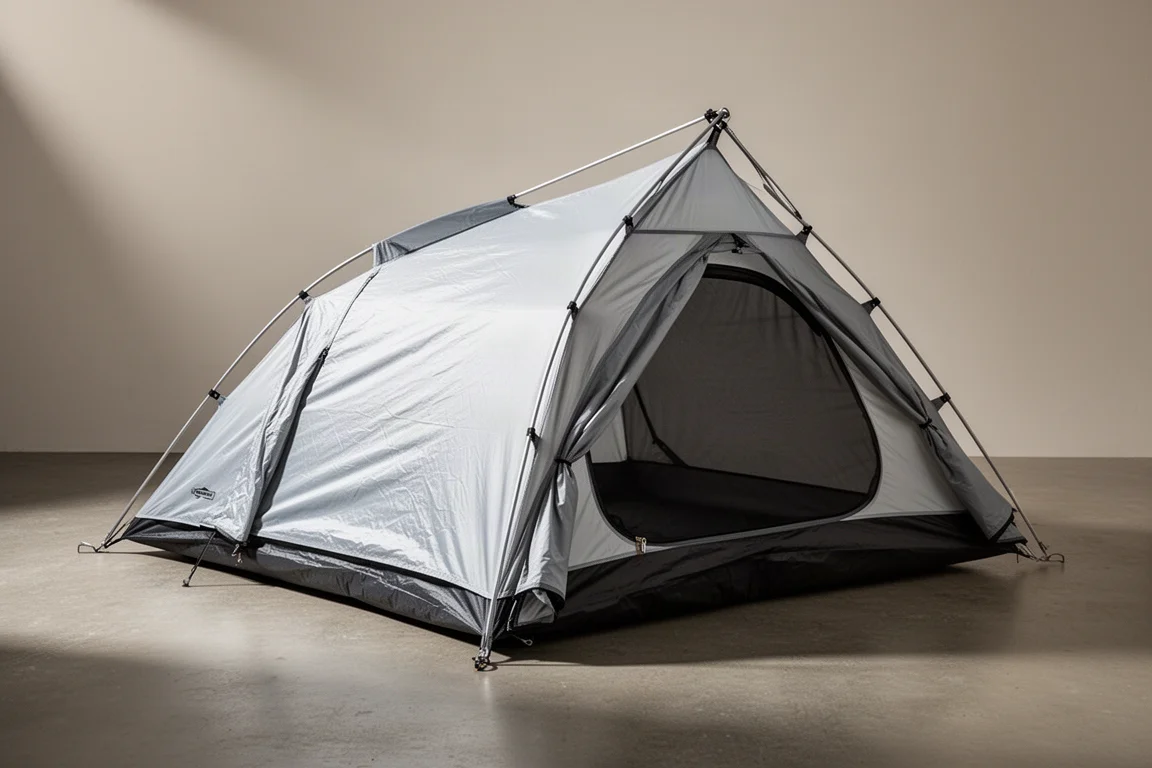
Backpacking Tents
3F UL Taiji 2-Person Tent: A Convertible Backpacking Shelter Worth a Closer Look
A practical look at the 3F UL Taiji two-person tent, covering its materials, true two-person interior, fly-first pitching, and the seasonal inner swap that lets one shelter cover more of the year.
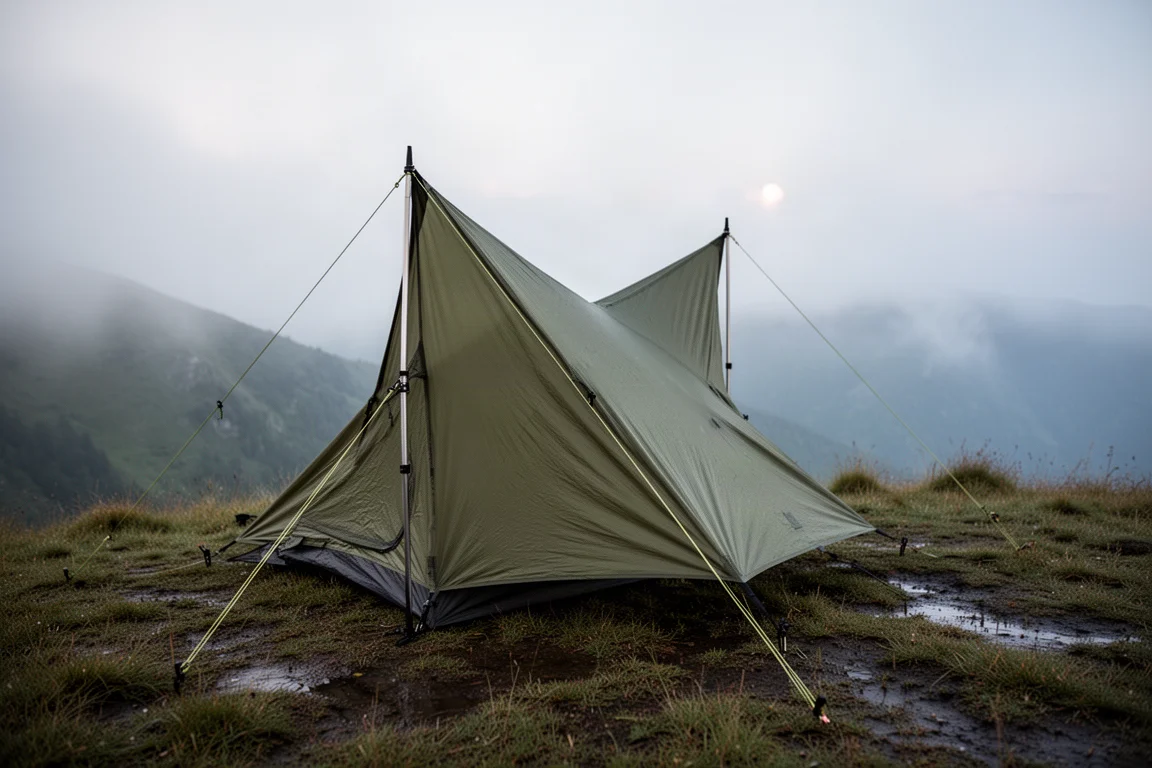
Backpacking Tents
3FUL Lanshan Twoerson Pro Review: A Light Trekking Pole Shelter That Struggled in Rain
A two-person trekking pole shelter with a 2026 redesign, pitched with sticks and put through a night of steady rain. Here is what worked, what did not, and what to check before buying.