Snowboards
Signal Sierra Snowboard Review: Traditional Camber With an All-Mountain Freestyle Focus
A practical look at the Signal Sierra, a traditional camber snowboard that leans all-mountain freestyle, with strong carving grip, a smooth ride, and a few traits worth knowing before you buy.
Introduction
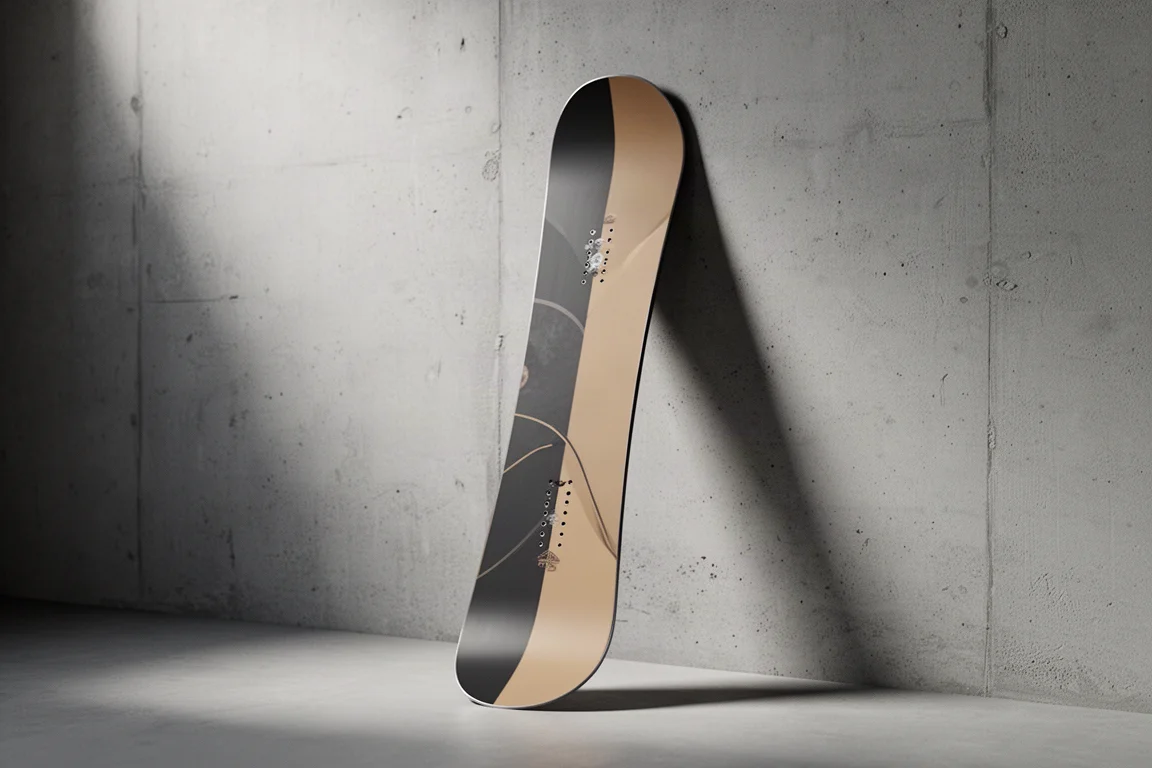
The Signal Sierra is a traditional camber snowboard with an arc that runs from contact point to contact point. That full camber profile is what gives the board its load, pop, snap, and drive, and it is the single design decision that shapes almost everything else about how it rides. The Sierra comes in 156, 158, 160, and 163, so most adult riders can find a length that matches their weight and stance preferences without stretching into a size that no longer suits the board’s character.
On warm spring days with slush, chopped chunder, and firm hero snow on the groomers, the Sierra showed a smooth, consistent personality. It is a board that stays composed across messy conditions rather than forcing the rider to manage it, and that consistency is the quality that stands out most when the snow is less than perfect.
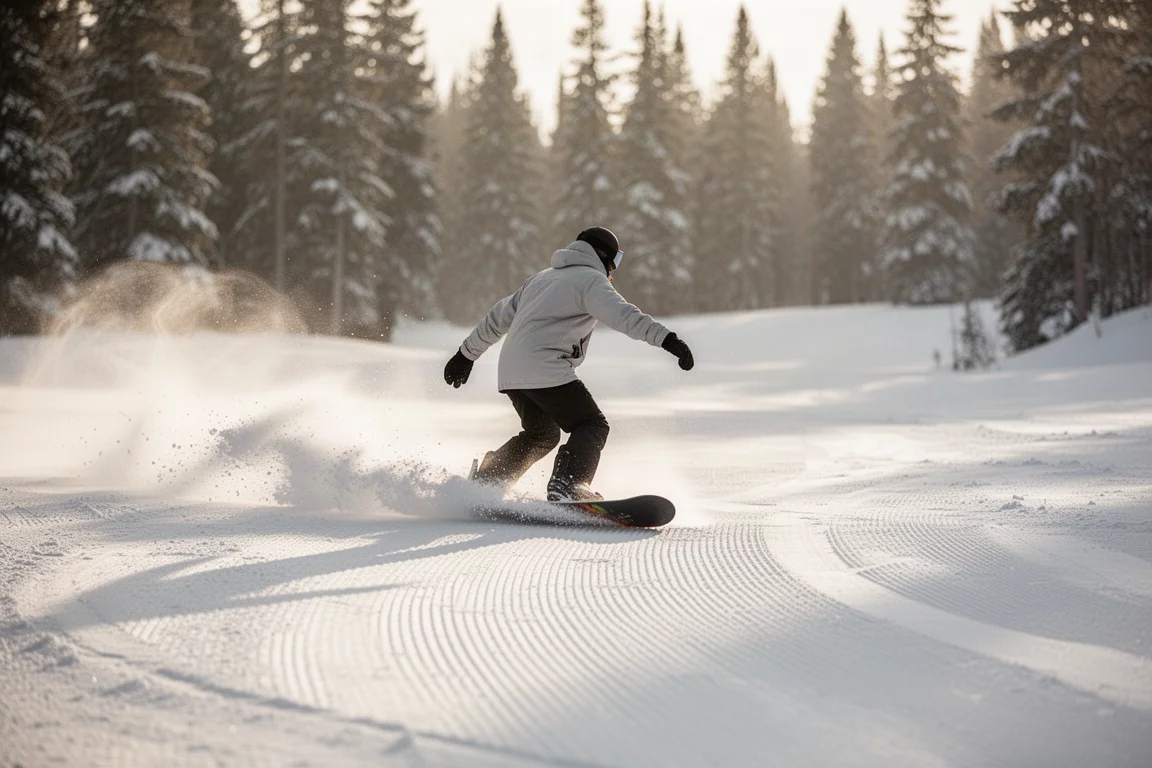
The current version feels a touch softer than earlier iterations, which nudges it away from the all-mountain freeride end of the spectrum and closer to all-mountain freestyle. If you are shopping for a directional freeride deck that wants to charge at full tilt, this is an important distinction. If you want a versatile board that carves well and still plays in the park, the Sierra lands in a genuinely useful place.
Who This Board Is For
This is a board for the all-mountain freestyle rider who also spends time free riding. The softer flex and mellowed sidecut make it approachable for riders who want one deck to cover groomers, park laps, and natural features without feeling like they are fighting the board between those uses.
It also suits riders who value carving. The Sierra is at its best when it is on edge and being driven through turns, and that makes it a reasonable choice for someone who spends most of a resort day laying out turns and dipping into the park on the way past. Riders who mostly chase big mountain lines and deep, steep terrain will likely want something stiffer and more directional.
The middle-of-the-road flex makes it forgiving enough for confident intermediate riders moving into all-mountain freestyle, while still offering enough backbone for advanced riders who know how to load a cambered board.
Main Strengths
Stability is the Sierra’s most reliable trait. It plows through whatever is in its path with relative ease and stays smooth and consistent while doing it. On rutted terrain there is the occasional hard, jarring hit that you feel, and flat basing on a groomer produces a little chatter out in the nose with a slight resonance underfoot, but neither is enough to distract from the overall ride quality.
Loading the board is straightforward, and there is a good amount of rebound once it is loaded. It is not the snappiest board available, but it is solid, and it rewards input with slightly more energy than you put in. That makes rollers, side hits, and ollies feel easy to time, and it handles small jumps without hesitation. Based on the flex and the camber profile, medium and larger jumps should suit it even better, since the board sets down firmly on landing and pops cleanly off the lip.

Basic jibs are another strong point. Nose presses, tail presses, and board slides all work well, particularly when you aim for the sweet spots in the nose and tail and let the board lock in. There is a small amount of fight in the board, but not enough that it ever needs to be manhandled. A little speed goes a long way when jibbing, and the Sierra is designed to hit a feature a little faster rather than creeping up to it.
Carving Performance and Edge Grip
Carving is where the Sierra genuinely shines, and it stands out within its category here. Signal’s directional quad sidecut adds four contact points through the middle of the board. They are very mellow, but they contribute noticeable extra grip, and they make the board easier to steer with the ankles. That combination is what gives the Sierra its confident edge hold without the locked-in, unforgiving feeling that some aggressive sidecuts produce.
The range of turn shapes is broad. Short, tight, quick carves are on the table, as are medium mellow carves, long hard drawn-out carves, and the occasional deep euro carve. The board locks in and cuts through everything in its path, with power off the tail that lets you apex a turn by flexing into the centre of the deck. Edge-to-edge transitions are smooth, and the mellowed sidecut means you never feel trapped in a death carve once you commit to an edge.
That balance of grip and maneuverability is the strongest argument for the Sierra. It gives you the traction you want from a cambered board while staying relaxed enough to redirect mid-turn.
Things to Consider Before Buying
The flex profile is a middle-of-the-road setup: softer tips paired with a stiffer midsection, and a comparable amount of torsional flex that is present but not abundant. That combination is stable, but it does mean the board behaves differently depending on where you load it.
Butters require a bit more commitment than the rest of the board’s repertoire. The sweet spots out by the tip and tail are small, roughly the length of the contact point, so you need to put your weight into them to press out a basic butter. There is rebound to help you pop out of butter variations, but you will feel a small amount of fight along the way. Riders who love long, floaty butters should expect to work for them.
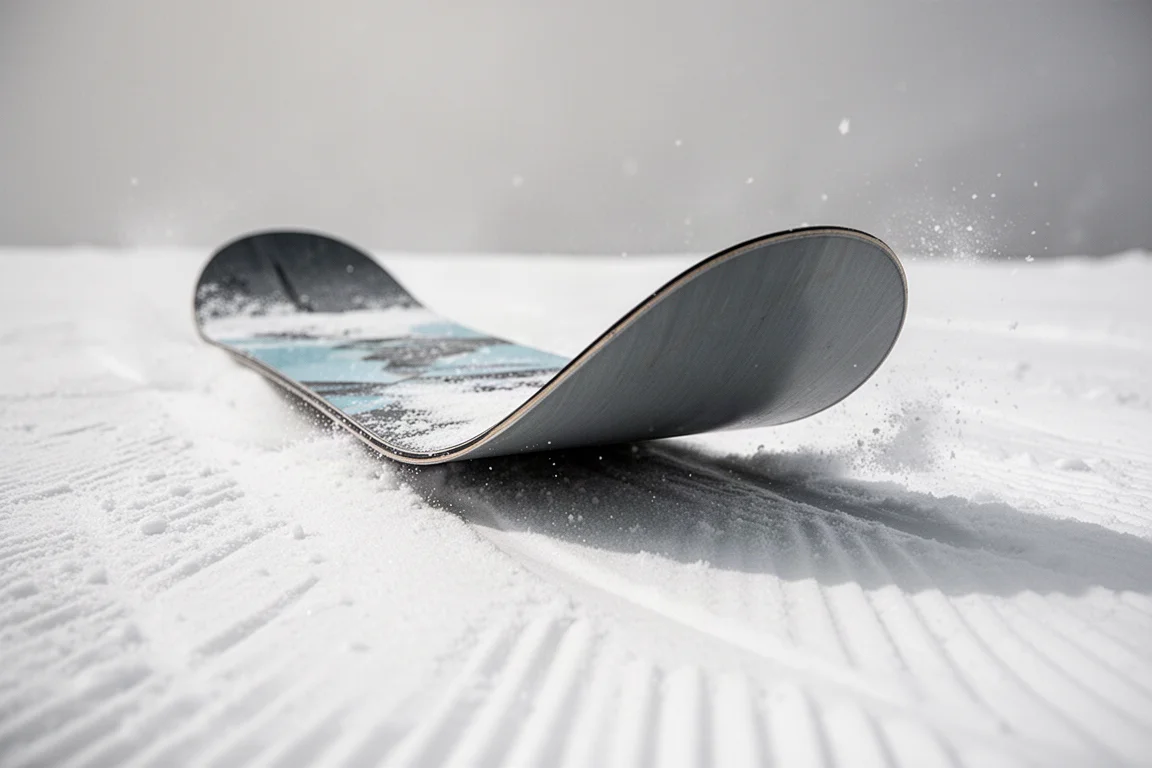
Jibbing has a similar character. The board somewhat cradles a feature rather than hugging it, which means it can handle a board slide without either dying on you or killing you, but it is not primarily built for slow, technical rail work. Think of it closer to a slopestyle approach: a bit of speed, a clean lock-in, and out.
Two smaller notes round this out. On groomers, flat basing brings a little chatter in the nose and a slight resonance underfoot, though it fades once you are on edge. In rutted terrain you will occasionally get a hard jarring hit that travels up through the board. Neither is a dealbreaker, but they are worth knowing if you ride a lot of firm, tracked-out groomers.
Buying Advice
Size selection is the first decision. With 156, 158, 160, and 163 on offer, match the length to your weight and the type of riding you do most, leaning shorter if park and freestyle play a large part in your season and longer if you want more float and stability for free riding. The current Sierra is softer than earlier versions, so if you are replacing an older one, expect a slightly more freestyle-leaning feel.
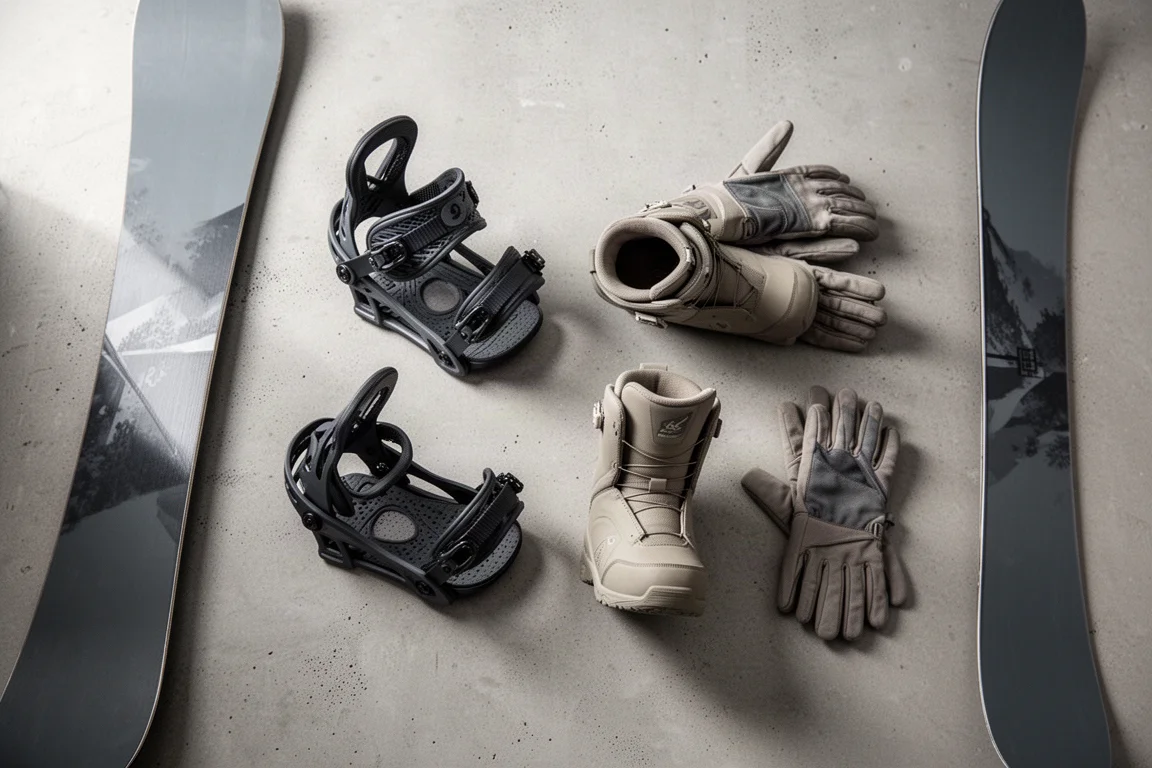
Binding pairing matters with a middle-of-the-road flex. The Ride C8, K2 Formula, and Union Strata are all sensible matches that keep the setup responsive without overstiffening the ride. Comparable boards worth cross-shopping in the same category include the Lib Tech EJack Knife, the K2 Antidote, and the Rome National.
Conclusion
The Signal Sierra is a predictable, smooth snowboard with solid power, solid snap, and sweet spots that are small but usable. Its directional quad sidecut improves its carving without locking you into an unforgiving edge, and its traditional camber gives it the pop and drive that riders expect from a cambered deck. It has been softened and mellowed relative to earlier versions, which makes it a better fit for all-mountain freestyle than for dedicated free riding.
There are boards in this category that stand out more, and it is worth comparing the alternatives before you commit. Even so, the Sierra is not one to overlook, particularly for riders who want one board that carves well, handles mixed conditions, and still plays happily in the park.
Product link
View more details for Signal Sierra
This product is mentioned in the review. Check the specifications, options, and compatibility before buying.
View more details for Signal SierraFurther reading
Related Reviews

Snowboards
32 Middle Earth Scott Stevens Pro Model Snowboard Review: A Park Board With a Reversed Flex
A medium traditional camber park board with carbon V reinforcement that is stiffer in the tips and more playful between the feet. Here is how it rides and who it suits.

Snowboards
32 Snafu Review: A Directional All-Mountain Freestyle Board with Serious Pop
The 32 Snafu pairs a directional camber-rocker profile with a stiffening tail for powerful carves, big ollies, and a surprisingly damp ride.

Snowboards
32 XXX Pat Fava Pro Snowboard Review: A Stiff Camber Beast for Hard-Charging Riders
A full-width traditional camber deck that rewards aggression with stability and edge power, but demands effort everywhere else.