Audio
Sigberg Audio Manta and 10D Subwoofer: A Fully Active Cardioid System
A close look at the Sigberg Audio Manta loudspeaker and 10D subwoofer, covering the passive cardioid cabinet, the coaxial driver array, system integration, and what the $31,000 package buys.
Introduction
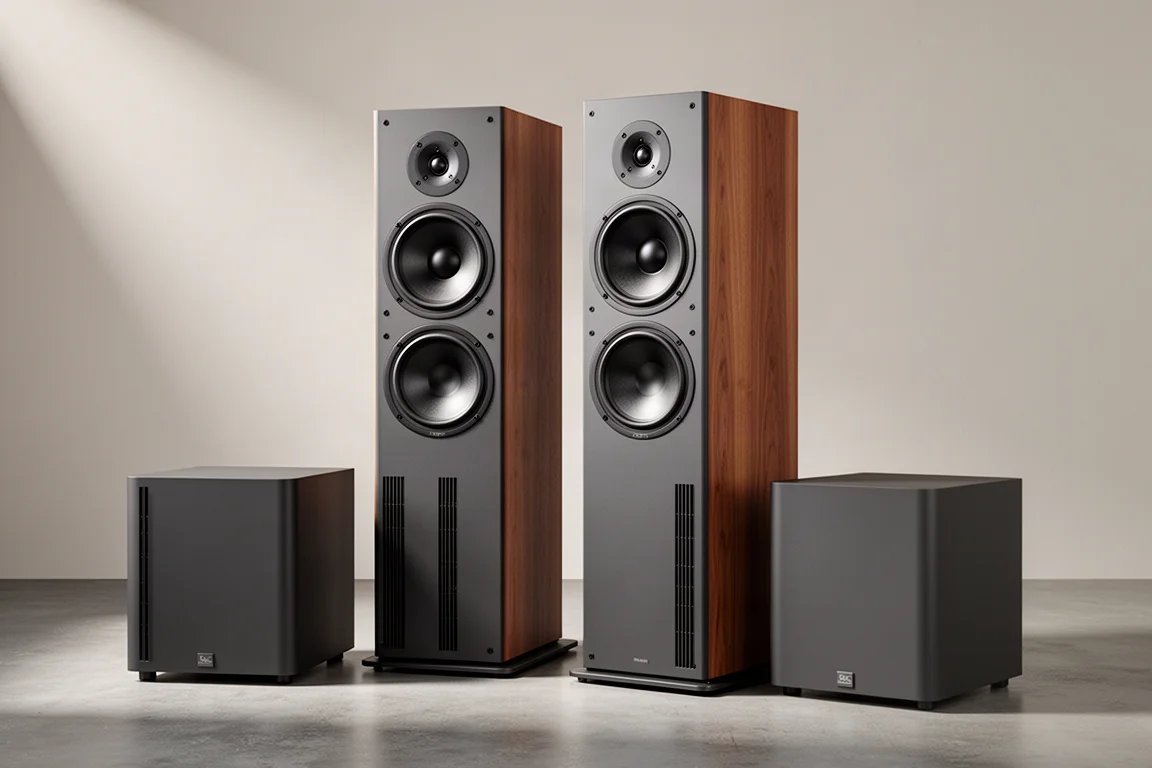
The Sigberg Audio Manta is a fully active floorstanding loudspeaker built around a passive cardioid cabinet and a coaxial driver array, and it is designed to work with the company’s compact subwoofers rather than on its own. Heard as a complete system with two 10D subwoofers in a hotel demonstration room, the setup measured flat to roughly 19.8 Hz and kept its composure in a space with almost no acoustic treatment.
The complete package, Manta speakers plus subwoofers, is priced at $31,000.
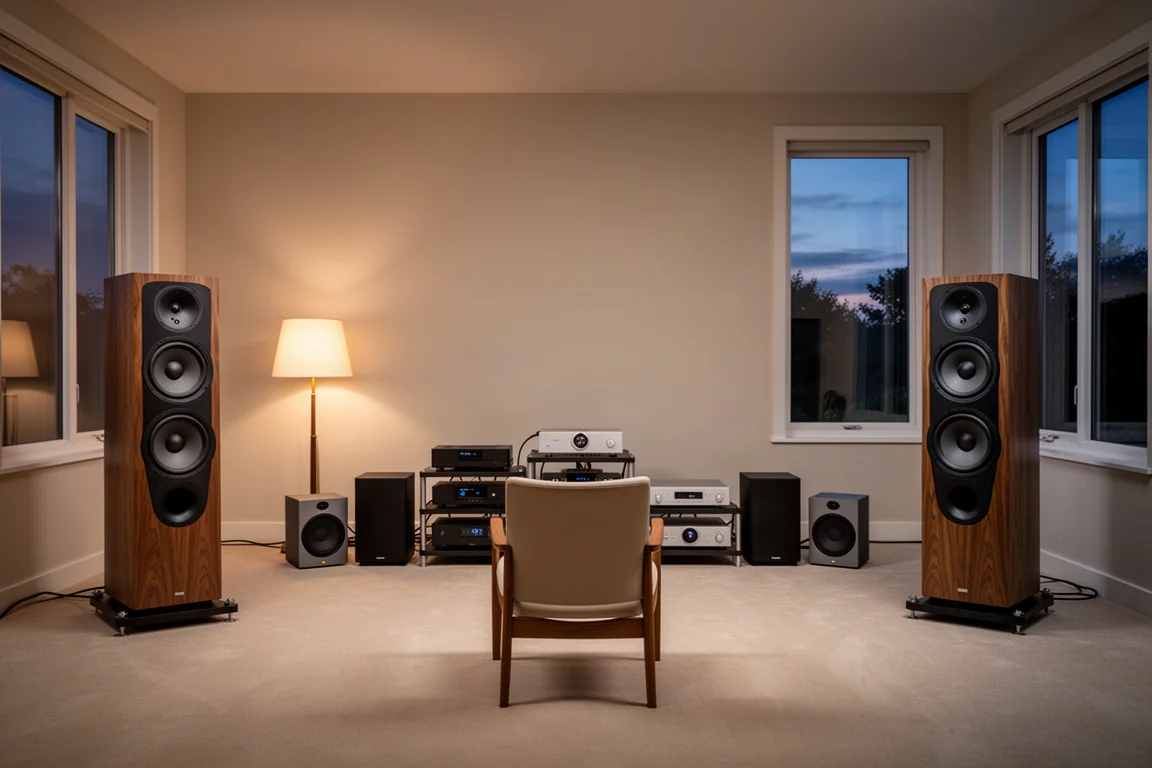
That figure matters because the Mantas are fully active: amplification is built into each cabinet, so there is no separate power amplifier to buy. Feed them from a preamp or a streaming source and the system is essentially complete.
Cardioid Design Explained
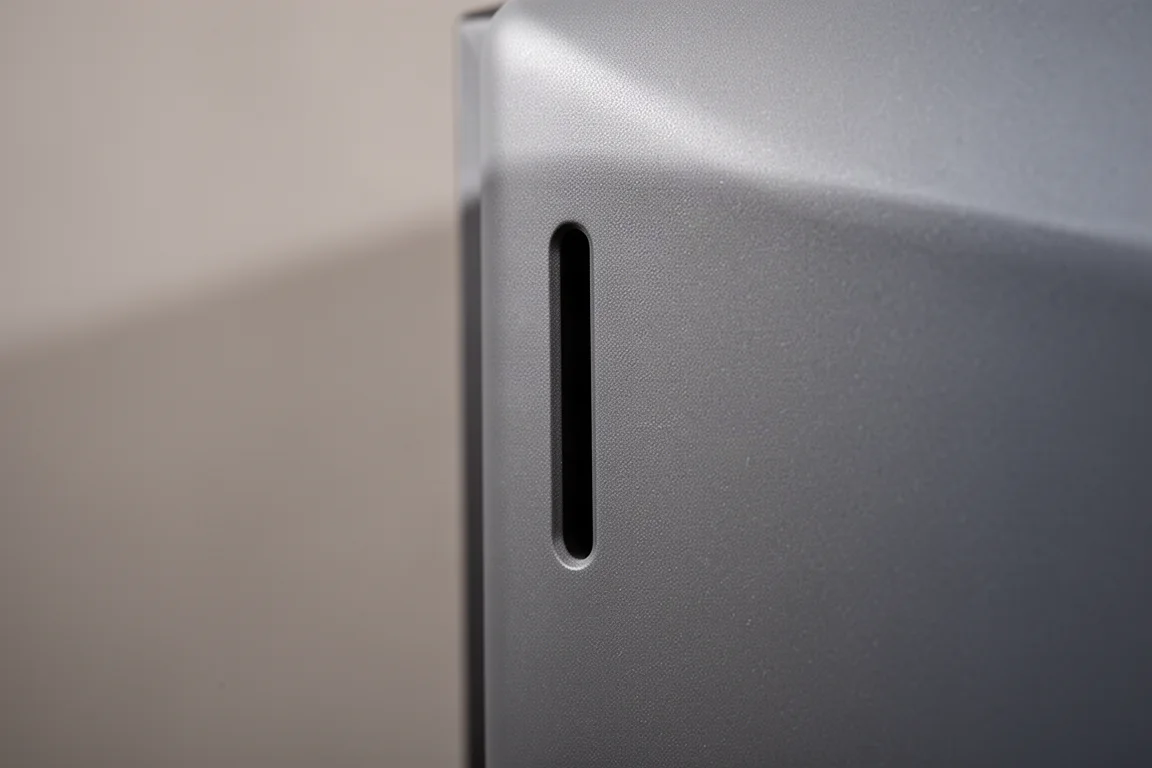
Cardioid behaviour can be achieved in several ways, and Sigberg chose a passive approach for the Manta. Narrow vents on the front and side panels, often described as gills, release a phase-shifted signal from the front of the cabinet that cancels a large part of the output to the sides and rear.
The practical payoff is placement flexibility. A speaker that radiates less energy backwards and sideways can sit closer to a wall or a corner with less room interference, which is useful in real rooms rather than dedicated listening spaces. It also helps imaging, since less reflected energy reaches the listening position from the wrong direction.
Sigberg Audio Manta: Cardioid, Coaxial, and Fully Active
The Manta uses a coaxial arrangement so the drivers behave as a single time-aligned point source, and it pairs that with an unusually large 12-inch midrange driver. That driver is a deliberate choice: it contributes headroom and sensitivity, and it is the reason the speaker is intended to cross over to subwoofers rather than reproduce the lowest octaves itself.
Because the design is fully active, each cabinet carries its own amplification, and digital and analogue sources can be connected directly. A nine-band EQ is available on board in the speakers and the subwoofers, which gives owners a way to tune the system to the room.
Imaging is where the Manta makes its strongest case. The cabinet has a wide baffle that looks as though it should call attention to itself, yet the speakers disappear into the recording. They can also be spaced much further apart than most designs without the centre image collapsing, which opens up a large sound field. Toe-in is not critical; a slight angle inward covers most rooms.
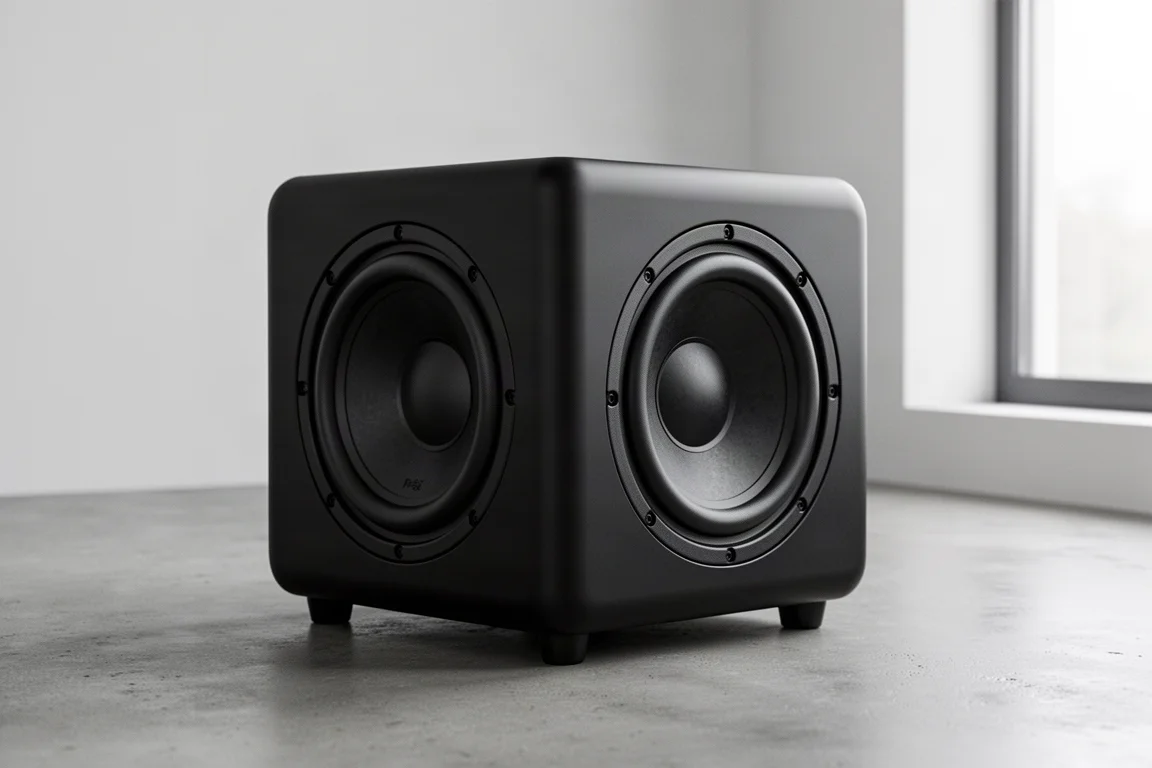
Sigberg Audio 10D Subwoofer: Compact Force-Cancelling Bass
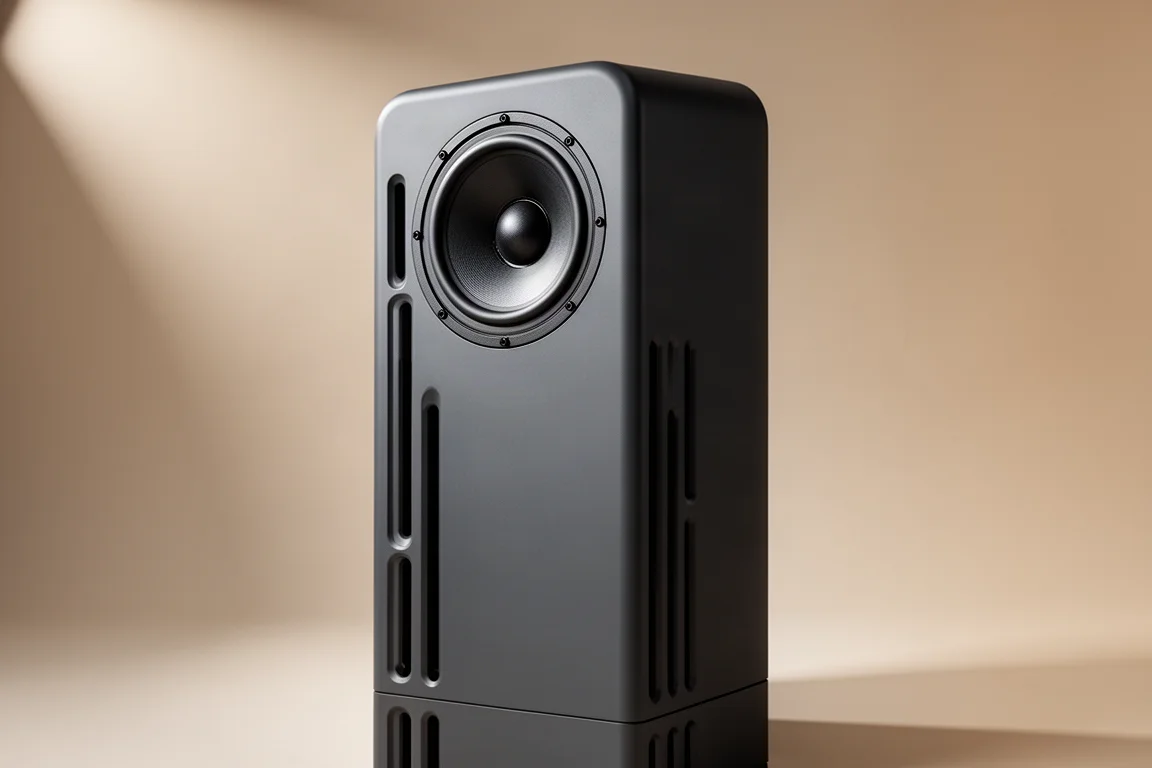
The 10D is a small subwoofer with dual ten-inch drivers in a force-cancelling configuration, a built-in parametric EQ, and a tuning aimed squarely at music. For its footprint it is regarded as one of the more musical subwoofers available, and the two units used in the demonstration integrated so cleanly that the system never announced itself as a separate speaker and subwoofer arrangement.
Force cancelling means the drivers work against each other so cabinet vibration is largely neutralised, and the parametric EQ lets the low end be shaped to the room without external processing.
System Integration and Setup
The demonstration system ran from a streaming player with onboard storage into a preamplifier and DAC, a deliberately clean, low-distortion front end that fed the active speakers directly. With the speakers’ own amplification and EQ handling the rest, the signal path stays short.
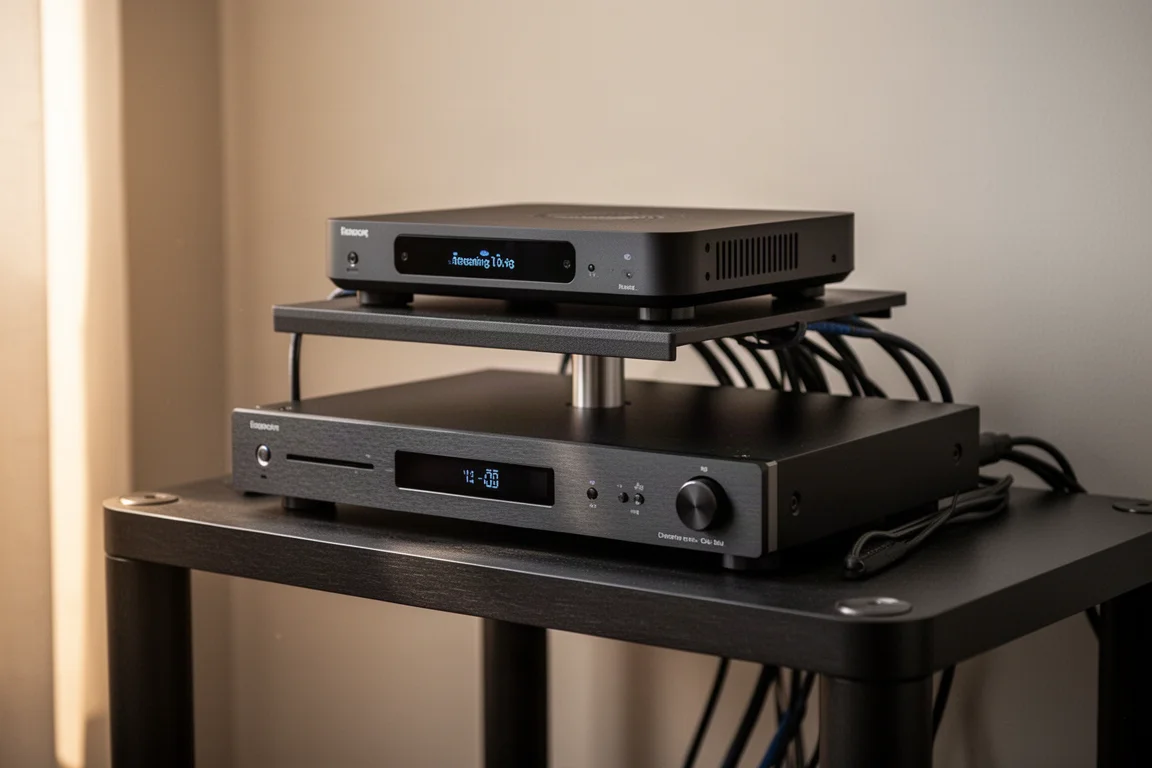
Measured flat to about 19.8 Hz in a hotel room with minimal treatment, the system showed how much of the result comes from integration rather than brute force. Bass remained even across the seating positions, and the handover between the Mantas and the 10D subwoofers was difficult to detect.
Scale is not a problem either. In a considerably larger space, roughly 24 feet long and 22 feet wide with an 18.5 foot ceiling and an open rear wall, the same system filled the room without being pushed anywhere near its limits.
Listening Impressions
Familiar material made the strengths clear. On a spacious, bass-heavy vocal track, the recording’s sense of air came through intact and the low end stayed tight and musical rather than bloated. On a vocal-led cover, the centre image was strong and stable, with plenty of presence and a large overall scale.
Buying Advice
At $31,000 for the speakers and subwoofers, the Manta system competes in premium territory, but the total cost of ownership looks different from a conventional setup. There is no power amplifier to buy, no separate subwoofer EQ, and no need for a large rack of electronics or long runs of speaker cable, since sources can connect straight to the speakers.
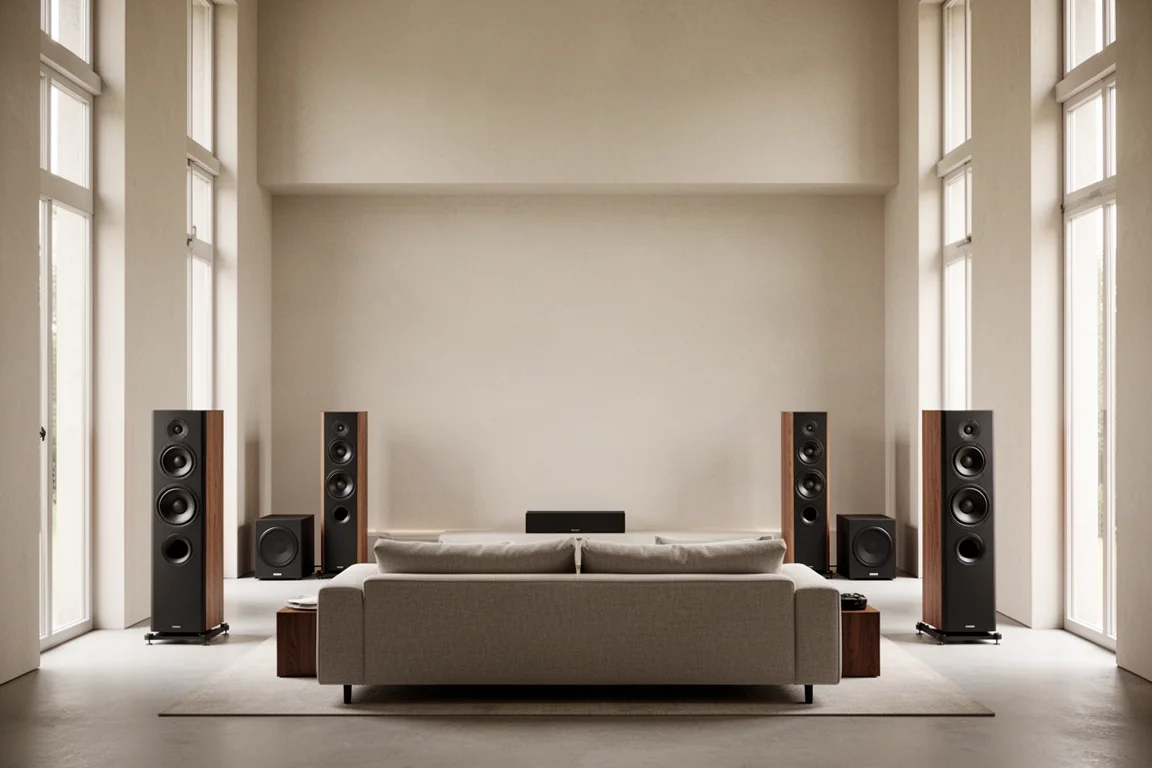
This system suits listeners who want a fully active, cardioid, point-source loudspeaker that hands low frequencies to purpose-built subwoofers, and who value imaging and even bass across a room over sheer output. It is worth hearing in a well-set-up room before deciding, since placement freedom is one of its main advantages.
Availability in the United States runs through a dedicated dealer that also handles service, and Sigberg systems are increasingly found in European recording studios and theaters.
Conclusion
The Manta and 10D combination is a coherent, technically ambitious system: passive cardioid cabinets, a coaxial point-source array, a 12-inch midrange, and compact force-cancelling subwoofers, all driven by built-in amplification with onboard EQ. The result in a difficult room was tight, even bass and imaging that survived being spread wide. For a premium budget and a music-first priority, it is a system that deserves a serious listen.
Further reading
Related Reviews

Audio
Apos x Geshelli Merlin DAC Review: A Natural Match for the Gremlin Amp
The Apos x Geshelli Merlin DAC pairs balanced and single-ended outputs with a smooth, natural sound that complements the Gremlin tube amp.
Audio
Audio Gear That Beats Pricier Rivals: Nine Value Picks for 2026
Nine turntables, streamers, speakers, and amplifiers that deliver far more than their price suggests, plus the trade-offs worth checking before you buy.
Audio
Best Amplifiers Under $200: Four Compact Stereo Amps Worth Considering
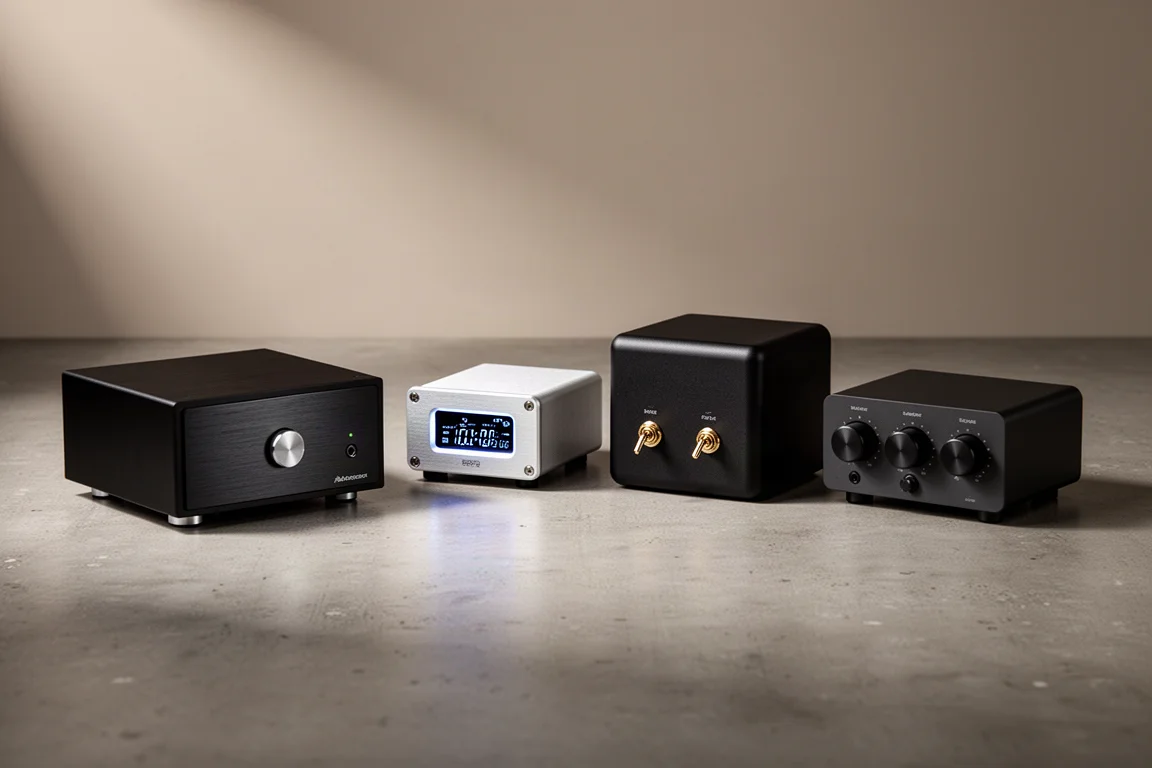
Four compact amplifiers under $200, from a class AB design with a headphone section to a DAC-equipped integrated amp and a low-cost pick from a US-based brand.