Backpacking Tents
Should You Buy a Two-Person Tent for Solo Camping? Three Tents Compared
A practical look at the one-person versus two-person tent decision for solo camping, using the Wild Country Helm 1, Helm 2 and Tarptent Scarp 1 as reference points.
Introduction
Choosing between a one-person tent and a two-person tent for solo camping is one of the most common decisions in backpacking, and it rarely has a clean answer. A two-person tent adds weight and bulk, but it also adds living space, a second door, and a second vestibule. In a recent poll of backpackers, around 70 percent said they would choose a two-person tent for solo camping, which suggests plenty of people are willing to carry the extra grams.
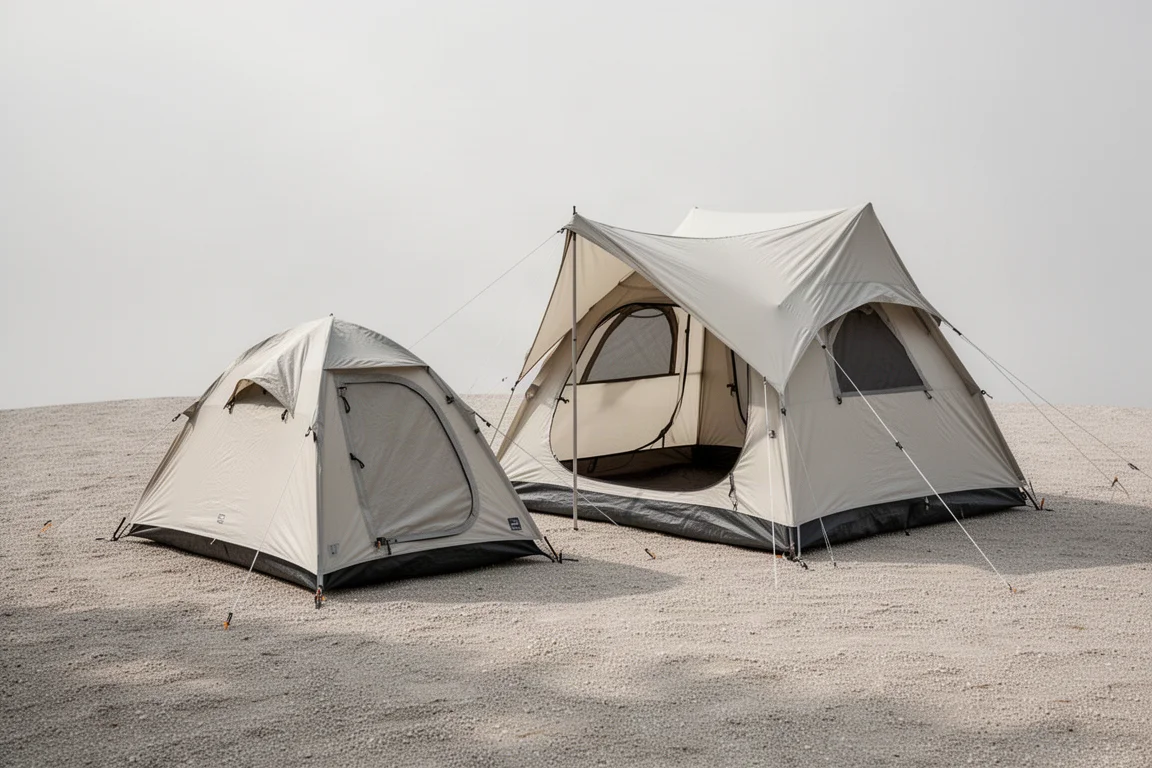
Three tents frame the trade-offs clearly. The Wild Country Helm 1 and Wild Country Helm 2 share the same design in one-person and two-person form, which makes them a fair comparison, and the Tarptent Scarp 1 shows what a genuinely roomy one-person tent with two vestibules can look like.
What Matters When Choosing Between a One-Person and a Two-Person Tent
Weight and pack size are the first things most people notice. In this pairing the two-person tent weighs 2.35 kg against 1.97 kg for the solo version, so roughly 350 g more. The solo tent is also noticeably more compact in a pack, with less width, less length and less height to stow, which leaves more room for the rest of your kit.
Vestibules are the second major difference. As a general rule, one-person tents have a single vestibule and two-person tents have two. On a wet backpacking trip, two vestibules let you keep soaked gear on one side and cook on the other, which is a genuinely useful split. With only one vestibule, gear and cooking have to share the same space.
Construction is worth understanding before you assume a bigger tent is a stronger one. Across one-person and two-person versions of the same model, the groundsheet, inner tent, flysheet, pole thickness and pegs are essentially the same. The difference is sizing, not materials. Both tents in this pair also use the same number of guy points, even though one is considerably larger.
Wild Country Helm 1: The Most Packable Option
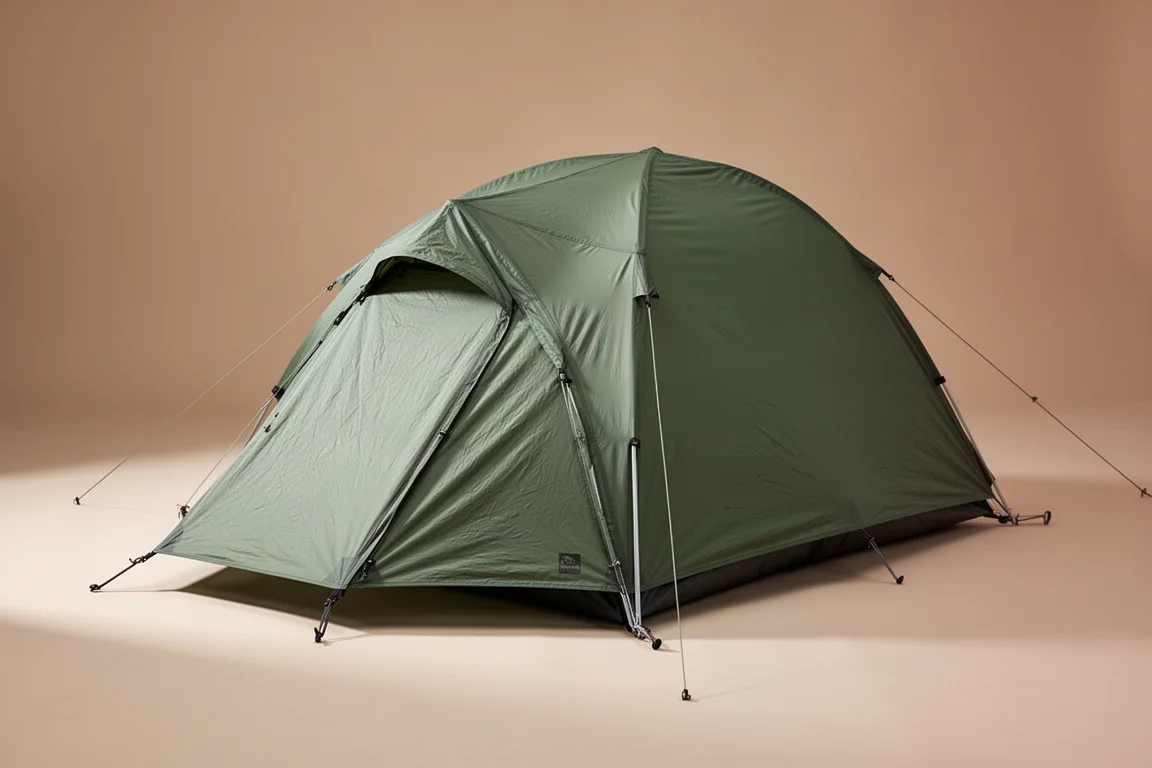
The Helm 1 is the lightest and most compact tent here at 1.97 kg. It has a single vestibule that is 45 cm wide, a height of 92 cm, an inner width of 77 cm and an inner length of 220 cm. That inner width is still generous enough for a wide sleeping pad.
It has one door and two storage pockets. A neat detail is a small secondary vestibule on the opposite side, reachable through a zip from inside the tent, so a small amount of gear can be pushed through to the other side without leaving the inner. The narrow vestibule is the main limitation: even for solo camping, 45 cm is not much room for a pack and wet kit.
Wild Country Helm 2: More Room, More Weight
The Helm 2 weighs 2.35 kg and measures very differently inside. It has two vestibules, each 54 cm wide, a height of 100 cm, which is 8 cm taller, and an inner width of 120 cm, which is 43 cm wider. Two people can sleep in it comfortably.
One detail stands out for taller campers. Despite being the two-person model, the Helm 2 is only 2 cm longer than the Helm 1, at 222 cm. That is a common pattern in two-person tents, and it means extra height and width do not automatically translate into extra length for sleeping. It has two doors and two pockets, and otherwise the features mirror the solo version exactly.
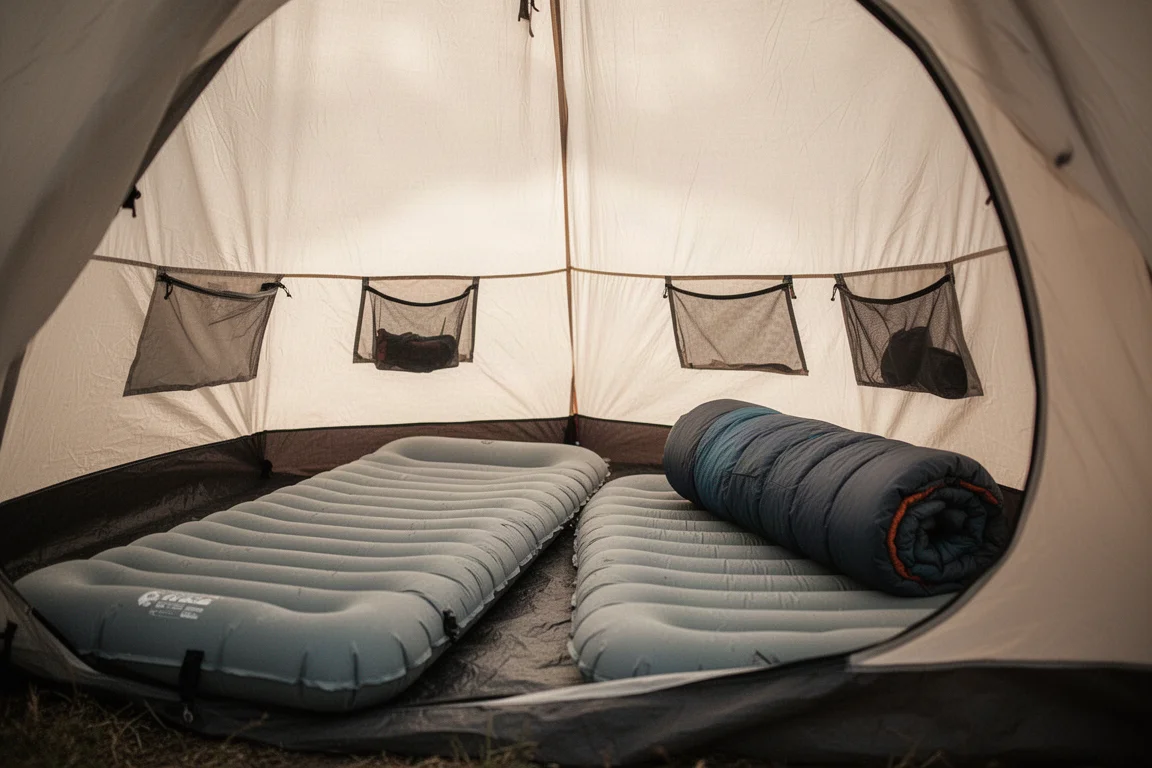
For solo camping, the appeal is the living space. A wide sleeping pad can sit inside with plenty of room left for belongings, and one vestibule can hold wet gear while the other is used for cooking. In cold months, when short days can mean up to 15 hours inside the tent, that extra volume is the difference between a cramped shelter and a comfortable one.
Tarptent Scarp 1: A Roomy One-Person Tent with Two Vestibules
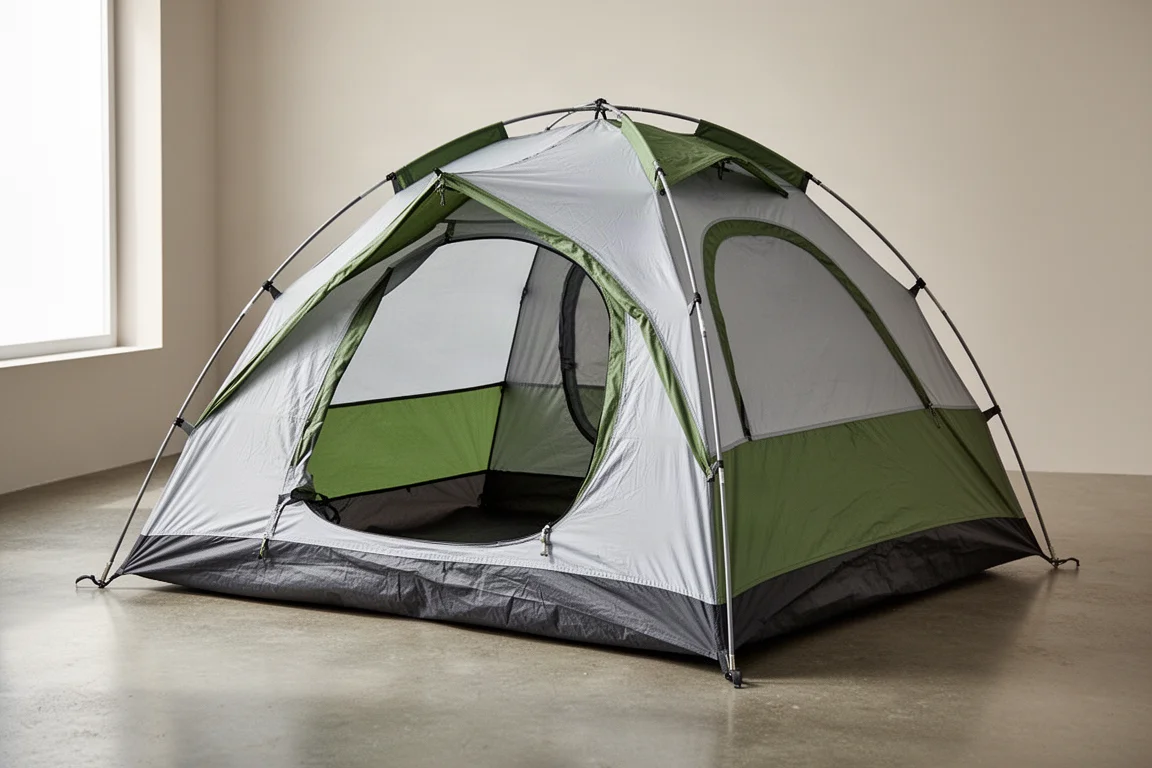
The Tarptent Scarp 1 sits at the other end of the one-person spectrum. It is a large solo tent with a decent inner length and a decent inner width, and unusually for a one-person design it has two vestibules. Pack size is reasonable rather than minimal, and it is a fairly lightweight tent overall.
That combination is exactly why it appeals to solo campers who want the two-vestibule workflow without moving up to a two-person tent. It is not without compromise, but for anyone who wants space and a separate dry side for gear, it is a compelling shape.
Footprint, Pitching and Mountain Camping
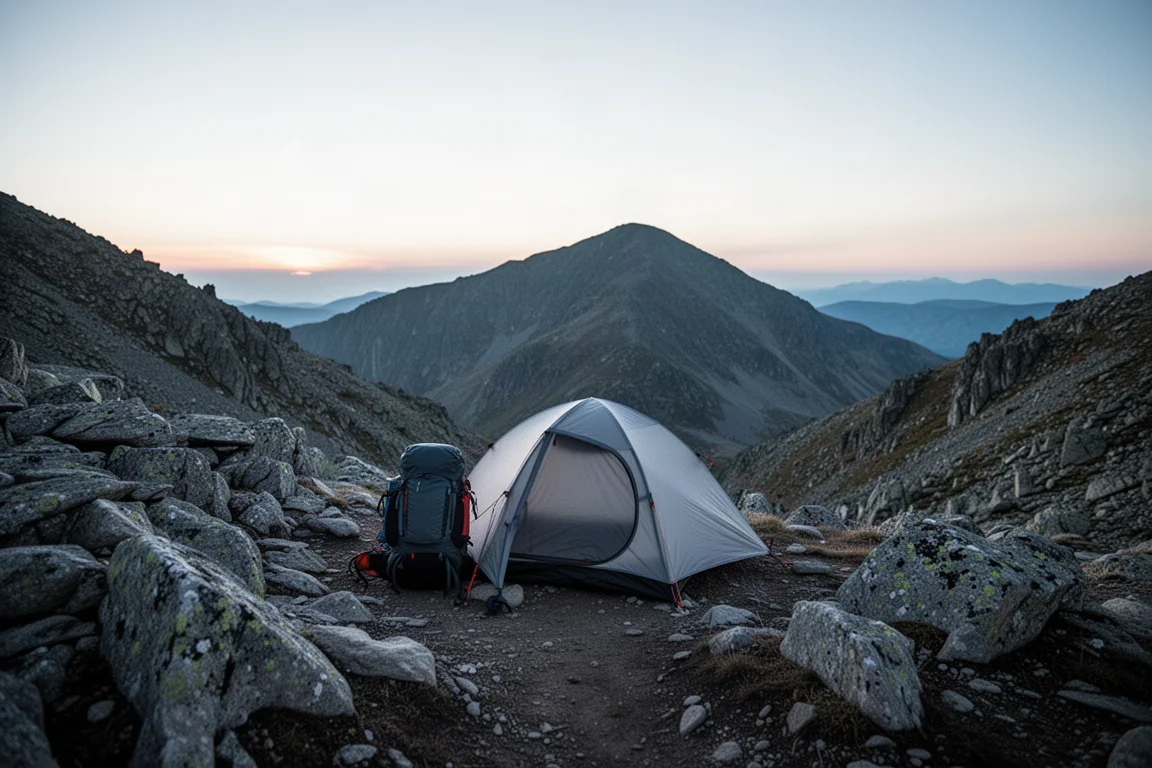
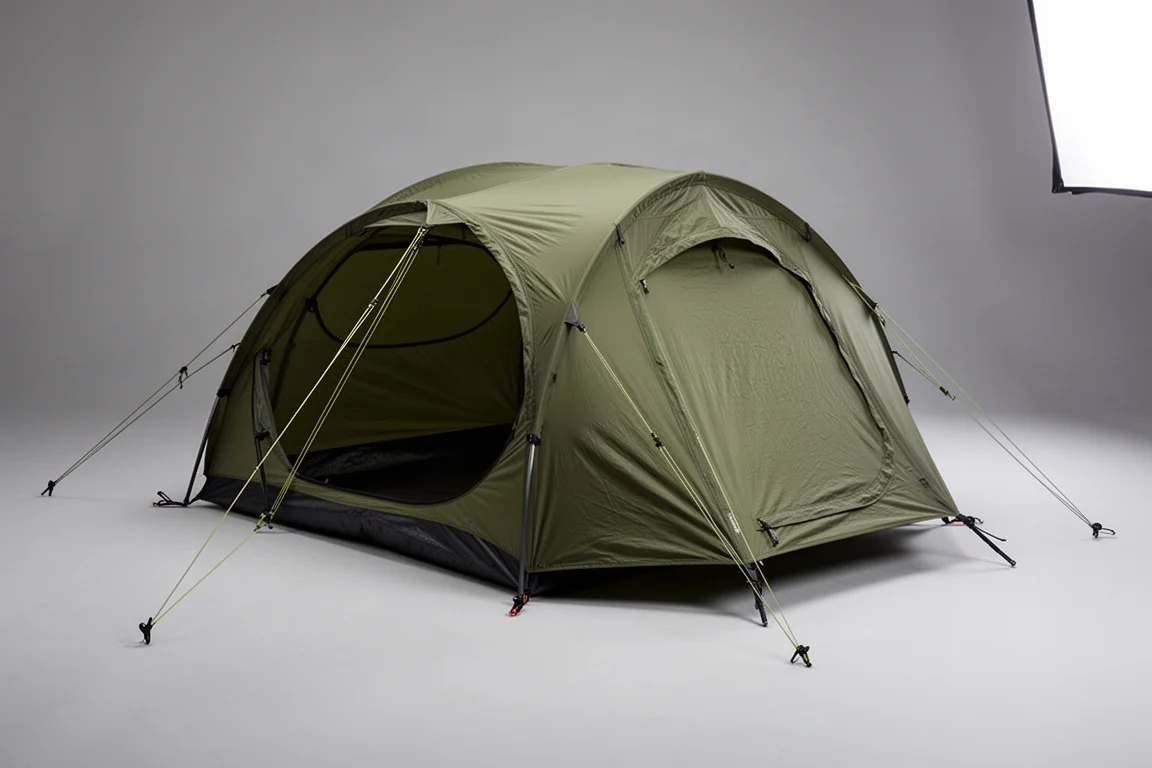
Footprint is the factor that catches people out. On high ground, finding a perfectly flat pitch is harder than many expect, even in large national parks. A smaller one-person tent is much easier to fit onto a narrow ledge or a small patch of level ground, and this is where compact solo tents really excel.
Two-person tents are far less of a problem on campsites or lower ground, where space is rarely in short supply. If you camp mostly at established pitches, footprint is unlikely to be the deciding factor. If you camp on summits and ridges, it often is.
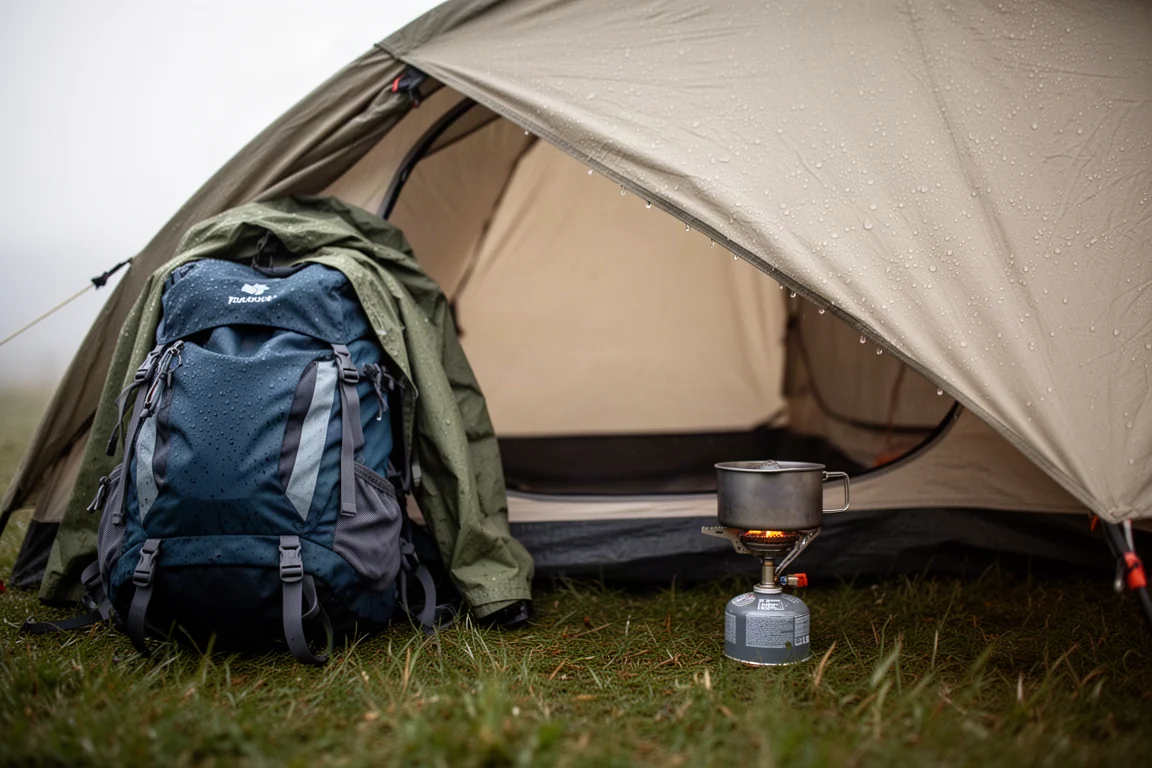
Weather and season push the decision in opposite directions. Wind is the clearest argument for going smaller: a larger tent with the same construction spans wider fabric and wider poles, and the smaller, lower profile of a solo tent is stronger in strong wind. Comfort is the argument for going bigger, especially in winter.
Pack Size, Weight and Winter Comfort
Winter is where the tension is sharpest. Short days mean long hours inside the tent, and a bigger, airier space is genuinely more pleasant when you are waiting out darkness. But winter also means carrying more warm clothing and more gear to keep yourself occupied, all of which competes for the same pack volume.
The Helm 1 and Helm 2 illustrate the squeeze neatly: the solo tent is easier to pack but has a 45 cm vestibule and less internal room, while the two-person tent offers two 54 cm vestibules and a 120 cm inner width at the cost of 350 g and a bulkier roll. Neither is objectively correct. It depends on how much of your kit you want inside the inner tent, how much you are happy to leave in the vestibule, and how much time you expect to spend sitting in it.
Buying Advice
Your own dimensions matter more than any spec table. Height and build, the length and width of your sleeping pad, and even pad depth all change how a tent feels. Thicker pads, around 10 cm deep, lift you closer to the roof, so a lower solo tent can mean your head brushing the top even if you are not especially tall. Wider and longer pads also fill solo tents almost completely, leaving little room for anything else.
The type of camper you are decides the rest. If you like keeping gear in the vestibule and the inner tent clear, a small solo tent with one vestibule will frustrate you, and the two-vestibule layout is worth the weight. If you prefer everything inside with you, a wider two-person inner is the simpler answer. If you camp in adverse weather, in winter, or on exposed ground, weigh stability and footprint against comfort and space.
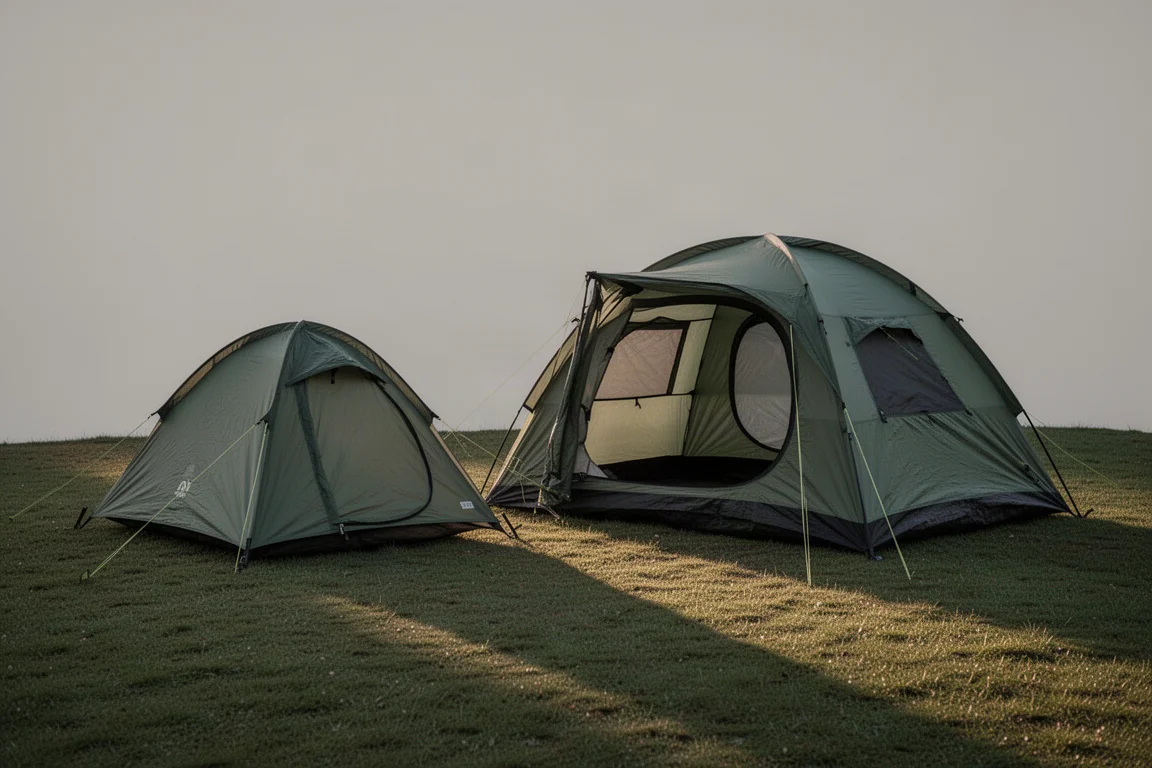
There is no universal winner between a one-person tent and a two-person tent for solo camping. The honest approach is to match the tent to your size, your pad, your season and your camping style, then accept the compromise you have chosen. Given how many backpackers end up on the two-person side of that decision, the extra 350 g is clearly a trade plenty of people are happy to make.
Conclusion
The Wild Country Helm 1 is the most packable and the easiest to pitch on tight ground, with a clever internal zip to a small second vestibule. The Wild Country Helm 2 buys significantly more height, width and vestibule space for about 350 g more, and remains only marginally longer for sleeping. The Tarptent Scarp 1 shows that a one-person tent can still offer two vestibules, decent dimensions and a reasonable pack size. Choose the one that matches how you actually camp, and you will spend far less time second-guessing the decision.
Further reading
Related Reviews
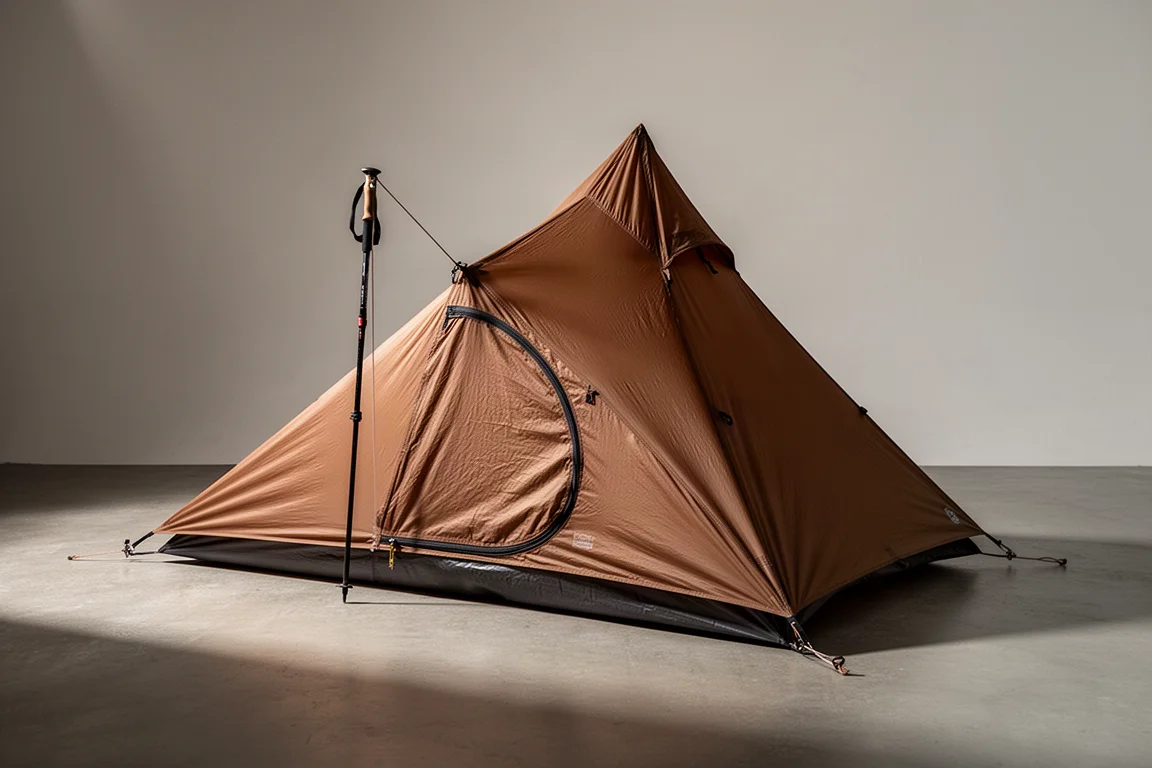
Backpacking Tents
3F UL Lanchan Pro 1 Review: A 1 lb 8 oz Single-Wall Trekking Pole Tent
A practical look at the 3F UL Lanchan Pro 1, a single-wall trekking pole shelter with a 1 lb 8 oz weight, 20D silnylon fabrics, and a roomy 90 x 31 x 49 inch interior.
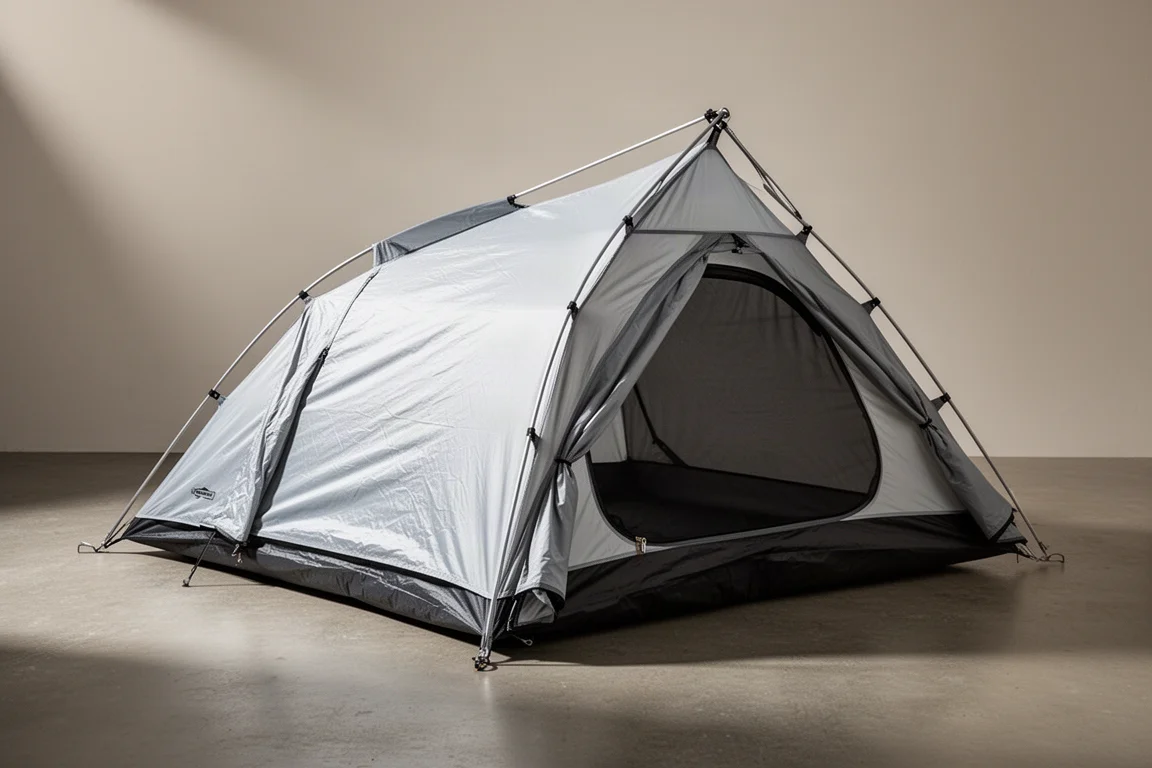
Backpacking Tents
3F UL Taiji 2-Person Tent: A Convertible Backpacking Shelter Worth a Closer Look
A practical look at the 3F UL Taiji two-person tent, covering its materials, true two-person interior, fly-first pitching, and the seasonal inner swap that lets one shelter cover more of the year.
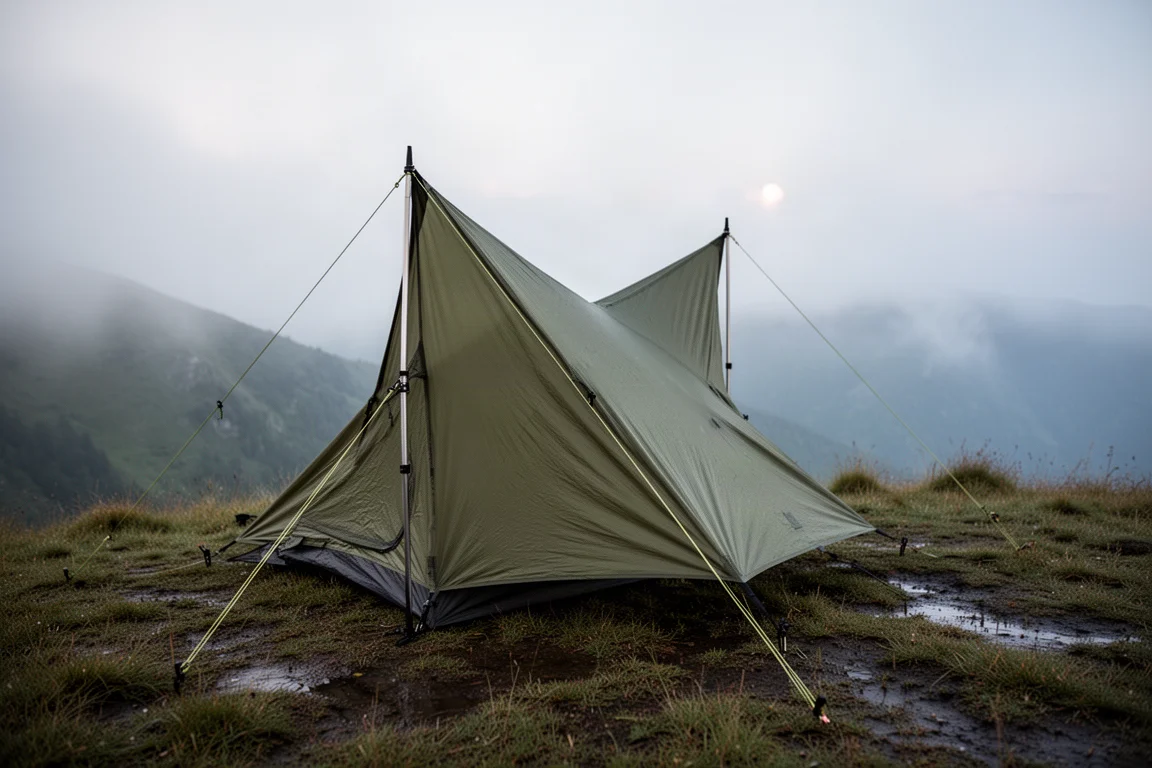
Backpacking Tents
3FUL Lanshan Twoerson Pro Review: A Light Trekking Pole Shelter That Struggled in Rain
A two-person trekking pole shelter with a 2026 redesign, pitched with sticks and put through a night of steady rain. Here is what worked, what did not, and what to check before buying.