Audio
Shokz OpenFit Review: Open-Ear Buds That Skip Bone Conduction
The Shokz OpenFit swaps bone conduction for a new DirectPitch driver design, delivering fuller sound while keeping your ears open to the world around you.

Introduction
Open-ear earbuds have always made a lot of sense on paper: you get your music or podcasts while still hearing traffic, training partners, and everything else going on around you. The catch has been the technology. Bone conduction, the approach Shokz built its reputation on, always came with a trade-off in sound quality that many listeners found hard to live with.
The Shokz OpenFit changes that formula. Instead of vibrating against your bones, these open-ear buds use a new driver approach Shokz calls DirectPitch, while keeping the core promise intact: nothing in your ear canals, full situational awareness, and a design built around movement. After spending time with them on runs, in the gym, and through rainy weather, here is how they hold up.
How the OpenFit Works
The headline feature is what the OpenFit does not use. Shokz still makes bone conduction products, where drivers vibrate against your head to transmit sound, but that approach has traditionally lacked bass and left audio feeling thin and distant. The OpenFit instead uses DirectPitch: a conventional driver and small speaker in each bud, with ports in the enclosure that let sound escape, angled so the audio shoots toward your ears.
Because nothing seals the ear canal, you keep the situational awareness that has always been Shokz’s core value proposition. Another departure is the form factor: rather than the single band that loops around the back of the neck on classic Shokz designs, these are two separate earbuds, each with its own over-the-ear hook.

Fit and Everyday Wear
The OpenFit earns high marks for comfort. They are lightweight enough that they all but disappear during a run, and they were comfortable to keep on for hours at a time through a gym session and back home afterwards. Testing covered long hair, glasses, and heavy sweating, and none of it caused problems.
The touchpad buttons on each side were a mild concern, especially with winter hats. In practice, unintentional presses were rare, limited to a handful of moments while adjusting a hat mid-run. The touchpads even responded through running gloves, which is more than most touch controls can claim.

Weather resistance is rated at IP54, so they are not fully waterproof, but they held up fine in heavier rain during testing with no issues.
Sound Quality: The Big Step Forward
This is where the OpenFit justifies its new approach. Compared with bone conduction, the difference is immediate: there is actual bass here, and the mids and treble are pleasant, producing a noticeably fuller experience. With bone conduction, music always felt like it was faintly playing somewhere else, as if overhearing someone else’s playlist. With the OpenFit, it feels like listening to your own music, and on windy runs there was enough volume that the open design never felt limiting.
Audiobooks and podcasts sound fantastic. For music, though, there is still a gap: the bass and overall fullness do not fully match what sealed earbuds provide, so listeners who prioritize music fidelity may still reach for noise-canceling buds first.
Sound Leak: How Much Others Hear
Older open designs had a reputation for playing everything out loud to everyone nearby. A decibel meter test here produced a genuinely encouraging result: leak is surprisingly low. There is some, certainly more than you would get from noise-canceling earbuds or over-ear headphones, but it was never distracting to measure or experience.
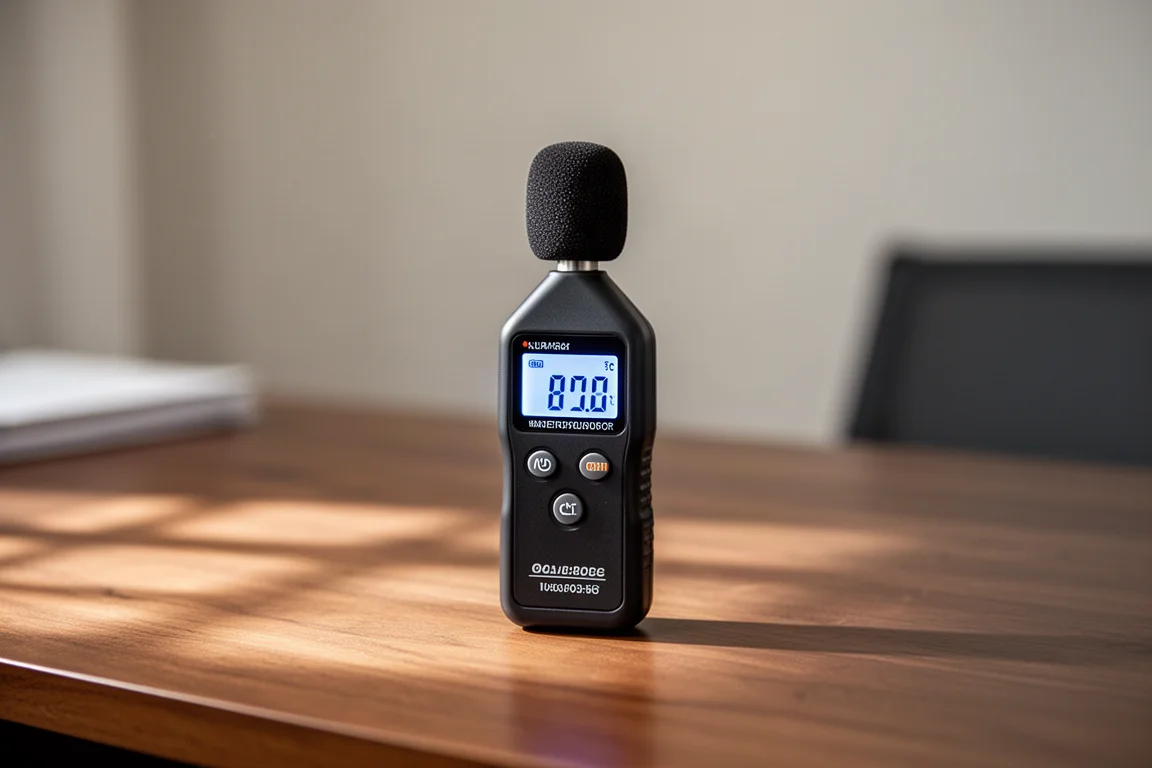
In almost any setting, the leak is unlikely to be noticed by people around you. The one scenario to avoid is a quiet library or similarly silent space, where a quieter listening level would be the polite choice.
Battery Life and Charging
Each earbud charge delivers about 7 hours of listening, and the charging case, which is itself a battery that recharges over USB-C, brings the total to around 28 hours when used together. There is also fast charging: 5 minutes plugged in tops you up for roughly an hour of listening, enough to get through most gym sessions.

Should You Buy Them
The OpenFit is easy to recommend if situational awareness matters to you, whether for running outdoors, cycling commutes, or office days where you still need to hear colleagues. They are also a strong pick for podcasts and audiobooks, where their sound quality genuinely excels.
If deep bass and fully immersive music are your top priority, sealed noise-canceling earbuds remain the better fit. But as an open-ear option, the OpenFit is a substantial improvement over bone conduction, and it makes Shokz’s situational-awareness concept far more appealing than before. Anyone who dismissed bone conduction on sound quality grounds will find this a very different experience.
Conclusion
The Shokz OpenFit proves that open-ear listening does not have to mean compromising on sound. DirectPitch delivers real bass and pleasant mids and treble where bone conduction always fell flat, while the lightweight ear-hook design keeps your ears open for hours of comfortable wear. Add solid battery life, fast charging, IP54 weather resistance, and surprisingly modest sound leak, and you get an easy recommendation for runners and everyday listeners who want to stay aware of their surroundings.
Product link
View more details for Shokz OpenFit
This product is mentioned in the review. Check the specifications, options, and compatibility before buying.
View more details for Shokz OpenFitFurther reading
Related Reviews

Audio
Apos x Geshelli Merlin DAC Review: A Natural Match for the Gremlin Amp
The Apos x Geshelli Merlin DAC pairs balanced and single-ended outputs with a smooth, natural sound that complements the Gremlin tube amp.
Audio
Audio Gear That Beats Pricier Rivals: Nine Value Picks for 2026
Nine turntables, streamers, speakers, and amplifiers that deliver far more than their price suggests, plus the trade-offs worth checking before you buy.
Audio
Best Amplifiers Under $200: Four Compact Stereo Amps Worth Considering
Four compact amplifiers under $200, from a class AB design with a headphone section to a DAC-equipped integrated amp and a low-cost pick from a US-based brand.