Fountain Pens
Shizen Dragon's Descent: An Urushi and Maki-e Fountain Pen Review
A hand-finished urushi and maki-e pen built on an Ebonite body, featuring an Eastern dragon motif and a two-tone 18k gold nib. Here is what stands out, and what to weigh before buying.
Introduction
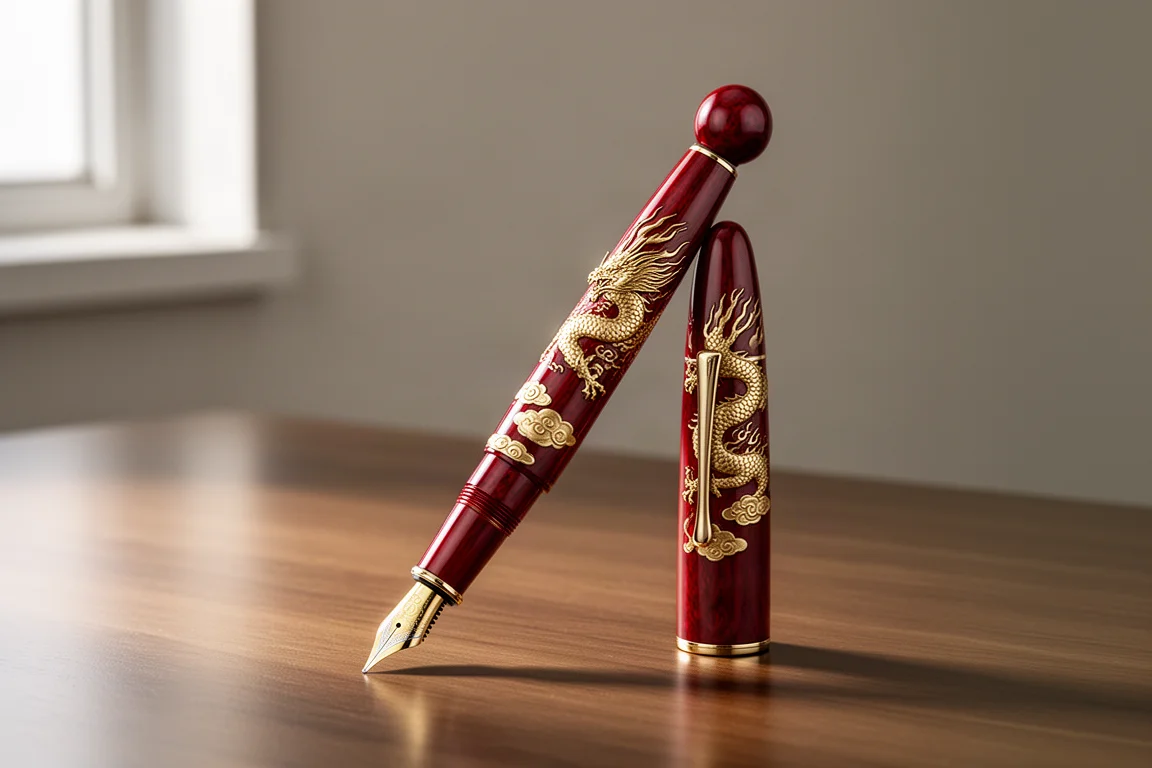
Some fountain pens are tools. Others are art objects that happen to write. The Shizen Dragon’s Descent firmly belongs to the second group, and it is one of the more striking recent discoveries in the high-end urushi and maki-e space. Shizen is a fairly new brand, launching in 2022, focused on high-end urushi and maki-e pens, and this artistic offering is a genuine showcase of what a dedicated artisan can do.
The name Shizen means nature in Japanese, and it breaks down further: “shi” referencing a master craftsman and “zen” pointing to Zen Buddhism, which is deeply ingrained in Japanese history and culture. That theme carries through the entire pen, from the artwork to the nib imprint. This pen was created in partnership with the Indian brand Ranga, with the urushi lacquer and maki-e applied over a Ranga Model 4C pen body made from Ebonite.
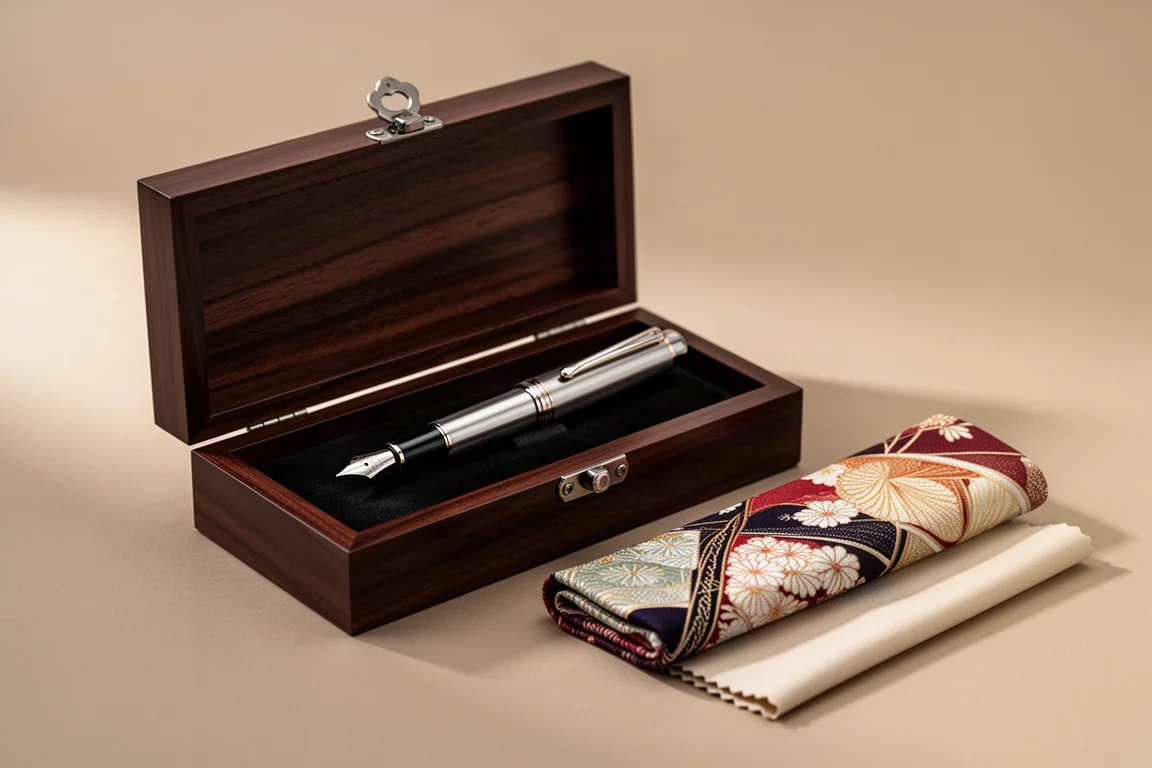
The pen arrives in a nice wooden box with the company name engraved on the top, secured by a neat latch on the front. Inside you get a polishing cloth and a kimono sleeve holding the pen itself. It retails for $4,600, which in the grand scheme of urushi and maki-e pens, and compared to similar artwork from other companies, is not completely out of line for this level of craftsmanship.
The Artwork and How It Was Made
The artwork depicts an Eastern Dragon, a fitting choice for the Year of the Dragon and a creature that is highly influential in Japanese folklore. The maki-e artisan behind the pen is Kesu Sei, who studied lacquer and maki-e at a crafts college in Kyoto after high school, then apprenticed for eight years under one of Japan’s leading maki-e artisans before opening his own business specializing in a wide variety of urushi and maki-e arts.
The process begins with a drawing of the dragon making its way through clouds, which is transferred onto the pen as an outline, much like a tattoo artist would do. Gold powder creates the base layer of the clouds, small pieces of raden are added to the dragon’s claws and eye, and the urushi on the dragon is built up in layers to create a three-dimensional feeling. The base layers are red urushi, with the final layer being gold dust that brings the artwork to life. Flames develop over multiple stages, and the piece is finished with careful polishing and signed by the artist.
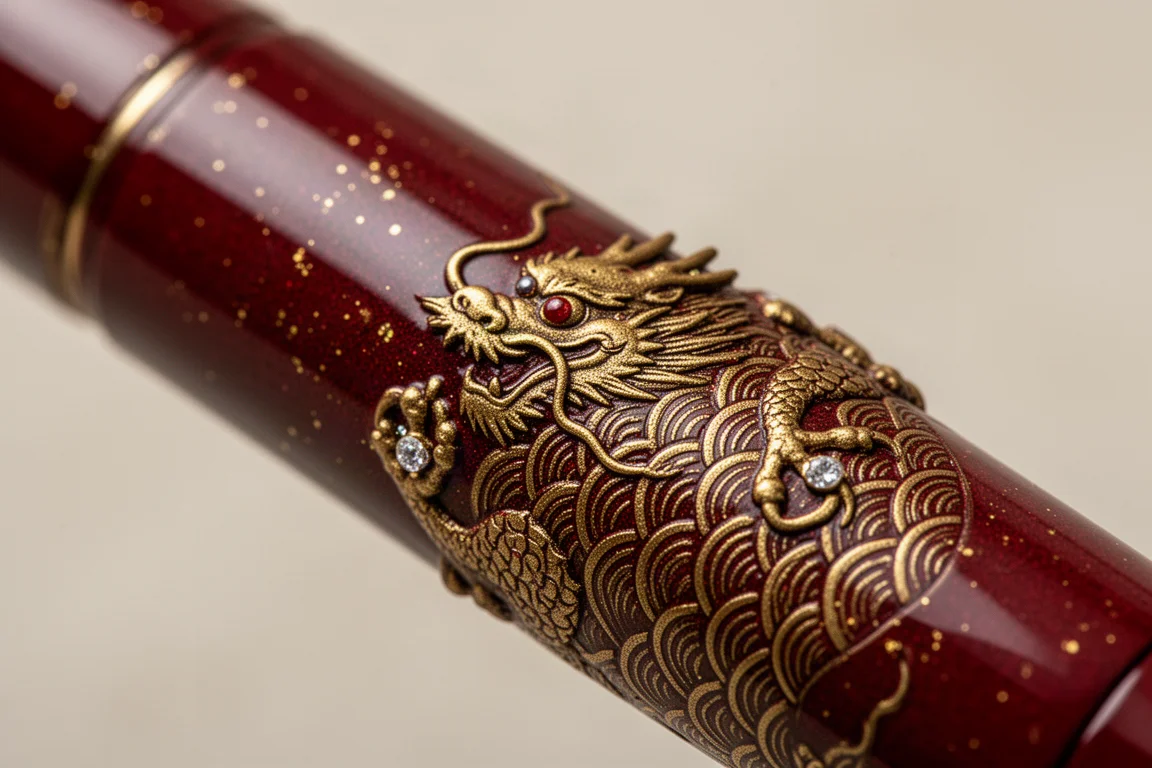
One of the most difficult portions of the artwork is the individual scales on the dragon, which are meticulously placed and evenly spaced with line patterns inside each scale. The clouds flowing over parts of the dragon’s body to depict its descent into the heavens use a mix of techniques: hiramaki-e for flat design, takamaki-e for raised design, and an embedded design technique. Sprinkles of golden powder are scattered across the pen for extra depth. The clever use of raden as the dragon’s eye and in the claws makes those details pop in a way that is easy to miss at first glance but rewards close inspection.
Parts and Features
The pen is clipless, which makes sense here since a clip would block the artwork. The top of the cap is rounded, the cap angles up only slightly and is essentially straight, and the transition between cap and barrel is smooth. The barrel stays straight until about halfway down, where it begins a mild taper, and the barrel end is rounded like the cap top. The cap twists off with one and a half rotations.
One small quirk worth knowing about: there are four different entry points for the cap threads, meaning four potential orientations for the closed cap, but only one of those will make the design on the cap and barrel line up. Comparable maki-e pens sometimes use a single thread orientation so the artwork always aligns, so take a second to get it right each time.
Another note on the base pen: the Ranga Model 4C body is also used on pens without maki-e decoration, where thread orientation does not matter. For the Dragon’s Descent, you will want to be deliberate about it.
The Nib
The nib is a real highlight. It is a Shizen 18 karat gold two-toned number 6 nib, available only in medium, with a genuinely memorable imprint. The design shows the company name alongside its logo, which depicts an ensō circle around a bonsai tree. The ensō circle refers to a hand-brushed circle created in a single brush stroke and a single breath, representing a tranquil meditative state where the mind empties to achieve immense creativity. The bonsai tree represents harmony between man and nature, since living trees require discipline to care for. Both images tie back to Zen Buddhism, keeping the pen’s identity consistent from lacquer to nib.
Size, Balance and Practical Details
The section begins with a steep flare before angling up to the threads, with a medium to large step up to the barrel. The section length is comfortable and the pen feels well balanced in the hand. It is a cartridge-converter pen accepting standard international cartridges, and a converter is provided. With the solid Ebonite barrel, eyedropper conversion is a possibility if you want maximum ink capacity.
The pen is not designed to post, and with a maki-e pen you would not want to post anyway, since posting risks damaging the urushi over time. Next to larger contemporaries like the Nakaya-like maki-e flagships from other brands, the Dragon’s Descent sits at a manageable size, larger than everyday resin pens but not unwieldy.
Writing Performance
Testing with a medium 18k gold nib and a favorite muted green ink with red sheen, the writing experience is very pleasant. You can get a decent amount of flex from the nib, it is decently smooth with just a hint of feedback, and the feed keeps up very well even during fast writing. Reverse writing is a little scratchy but gets the job done. The pen handles daily writing sessions comfortably and rewards a relaxed hand position.
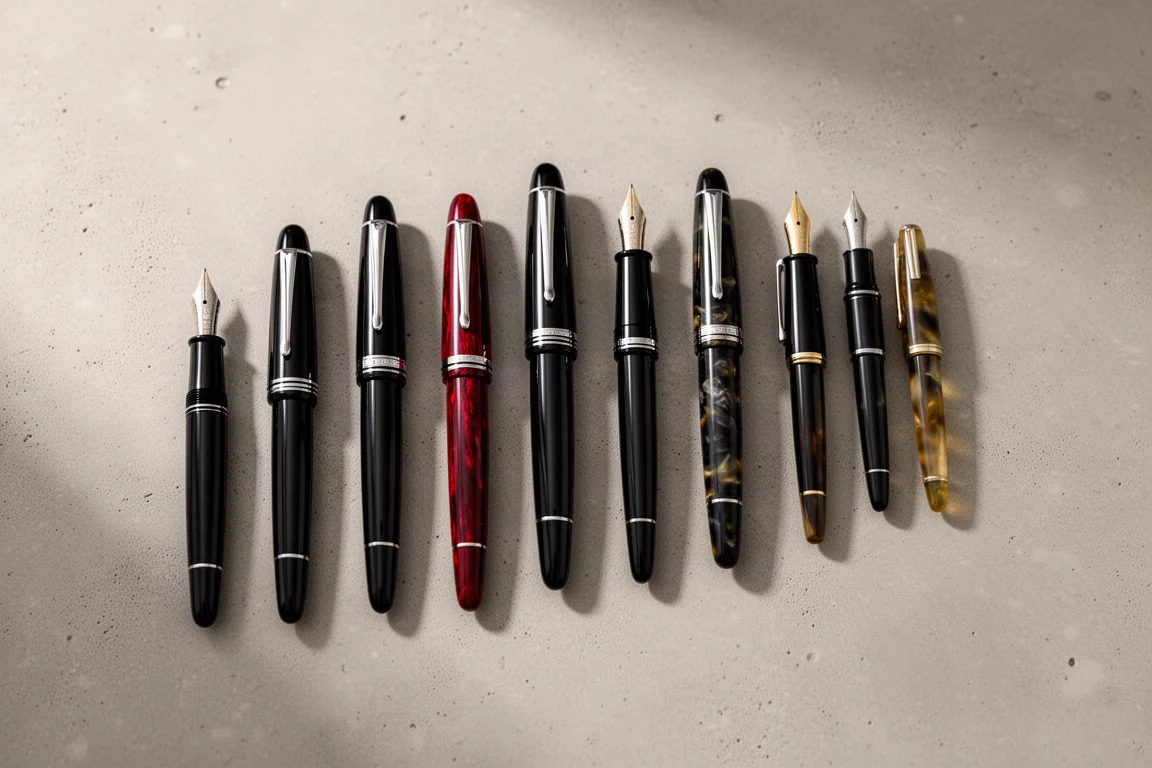
If you are looking for a pen with genuinely high-quality maki-e work, urushi lacquer over an Ebonite body, and a nib with real character, the Shizen Dragon’s Descent is an outstanding example of the category and worth a serious look.
Conclusion
The Shizen Dragon’s Descent is a masterfully created pen. The layered urushi work, the meticulous dragon scales, the mix of flat, raised and embedded maki-e techniques, and the thoughtful Zen-themed nib imprint all point to significant skill and effort. At $4,600 it is a serious investment, but for collectors who value hand-finished Japanese lacquer art on a usable daily writer, it is not out of line with similar artwork from established brands. Just remember to line up the cap threads, and let this one live unposted.
Product link
View more details for Shizen Dragon's Descent
This product is mentioned in the review. Check the specifications, options, and compatibility before buying.
View more details for Shizen Dragon's DescentFurther reading
Related Reviews
Fountain Pens
Best Budget Fountain Pens Tested: 9 Pens, One Clear Winner
A hands-on comparison of nine affordable fountain pens for everyday writing, calligraphy, and sketching, with a clear standout for flexible nib fans.
Fountain Pens
Aurora Optima Review: An Italian Piston Filler That Punches Above Its Price
A 14k gold nib, ebonite feed, and a beautifully deep oraloid body make the Aurora Optima one of the most rewarding piston fillers around.
Fountain Pens
Cross Bailey Light Review: The Entry-Level Fountain Pen Worth Keeping at the Office
A plastic-bodied Cross with a metal clip, snap cap, and famously smooth extra fine steel nib. Around $15, available almost everywhere, and easy to recommend.