Studio Monitors
Shiv Audio 0 Review: A Cardioid Monitor That Rewards Careful Setup
A close look at the Shiv Audio 0, an active three-way cardioid monitor built for nearfield listening close to a rear wall, with real strengths and real limits.
Introduction
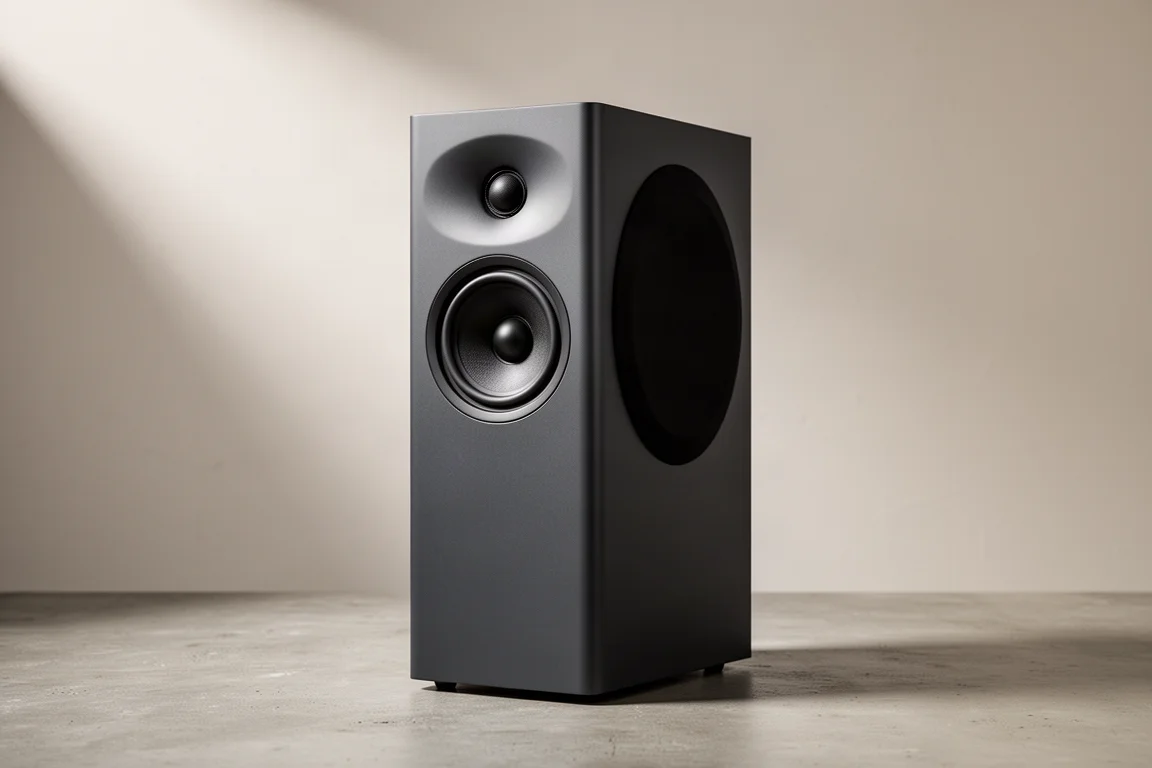
The Shiv Audio 0 is an active three-way cardioid monitor speaker sold as a pair for around €6,500. Each cabinet pairs a 6.5-inch midwoofer and a 1-inch dome tweeter with a waveguide on the front baffle, while two 8-inch woofers are mounted on the sides of the cabinet. A Hypex amplifier module with built-in DSP supplies roughly 300 watts to the low-frequency section, 200 watts to the woofer and 100 watts to the tweeter.
The more interesting part is the directivity. The Shiv Audio 0 is a cardioid design, which means it fires forward and cancels much of the energy that would otherwise wrap around the cabinet and reflect off the wall behind it. That single design choice shapes how the speaker is set up, how it behaves in a room, and who will get the most from it.
Who This Speaker Is For
The Shiv Audio 0 makes the most sense in a nearfield setup, where the listening position sits close to the speakers and the rear wall is only a short distance behind them. Placed roughly 10 to 50 cm from the wall behind, the cardioid behaviour limits midrange reflections while the wall itself supplies low-frequency boundary reinforcement. Listeners who work at a desk or in a compact room and want a neutral, forward-firing presentation are the natural audience.
It is a less obvious fit for anyone hoping to fill a large room at high volume from several metres away. The speaker is an active design with protection circuitry, and the further the listening position moves from the cabinet, the more those limits come into play.
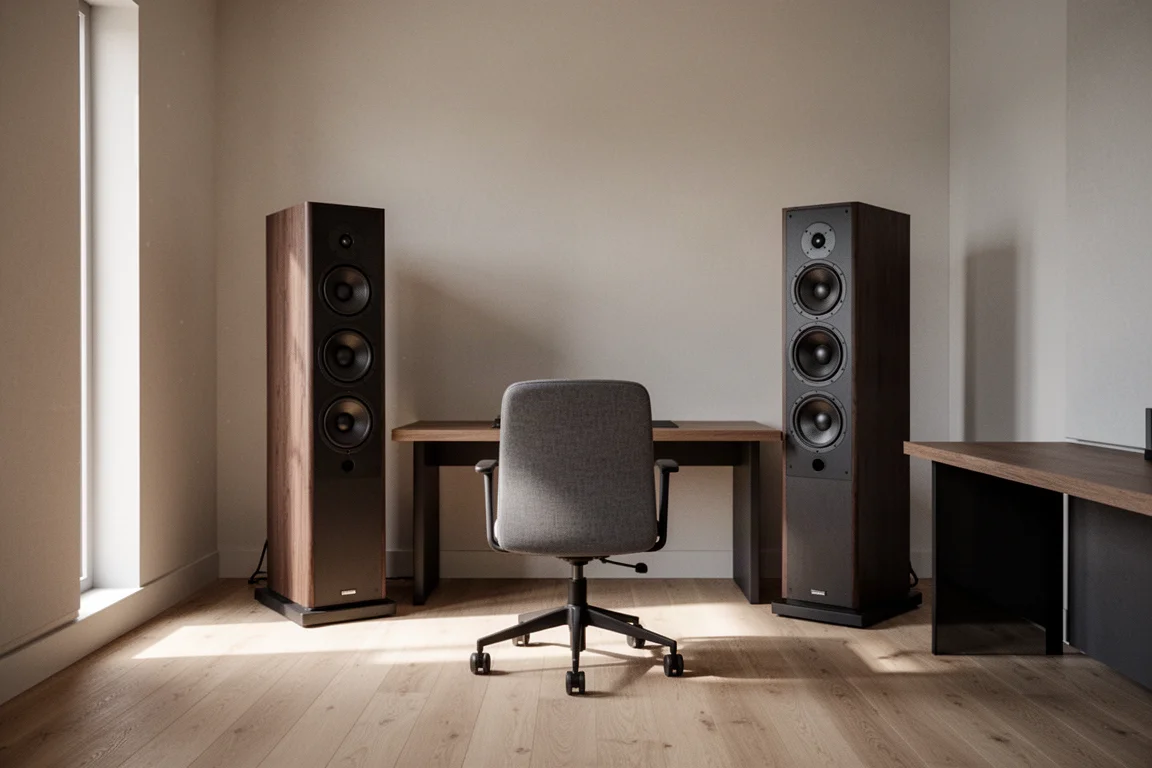
Buyers weighing the Shiv Audio 0 against larger cardioid monitors should be clear about the trade-off: this speaker prioritises directivity control and a compact footprint over sheer output. In a nearfield position that is rarely a problem, and the DSP gives enough flexibility to tune the low end to the room rather than the other way around.
Design, Drivers, and Amplification
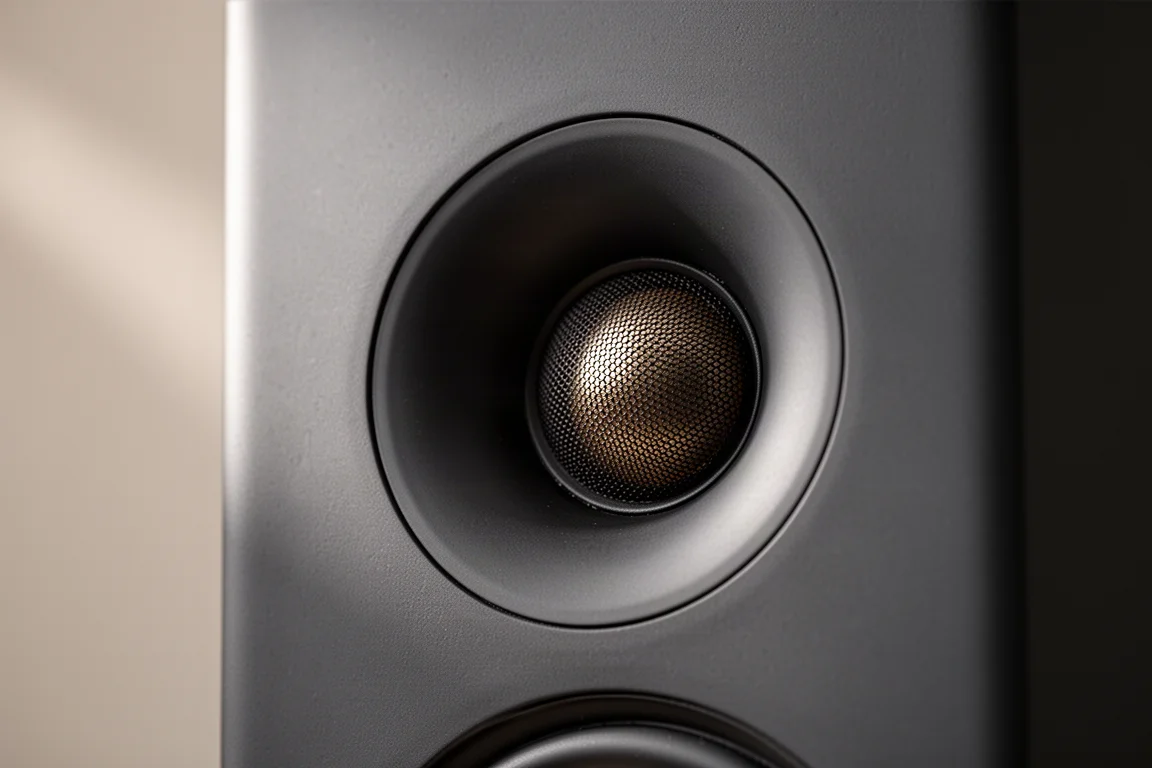
The front baffle carries a 1-inch dome tweeter loaded by a waveguide, sitting above a 6.5-inch midwoofer. Two 8-inch woofers handle the low frequencies from the sides of the cabinet, which is part of how the cardioid behaviour is generated. Amplification comes from a Hypex module with integrated DSP, dividing roughly 300 watts to the bass section, 200 watts to the woofer and 100 watts to the tweeter.
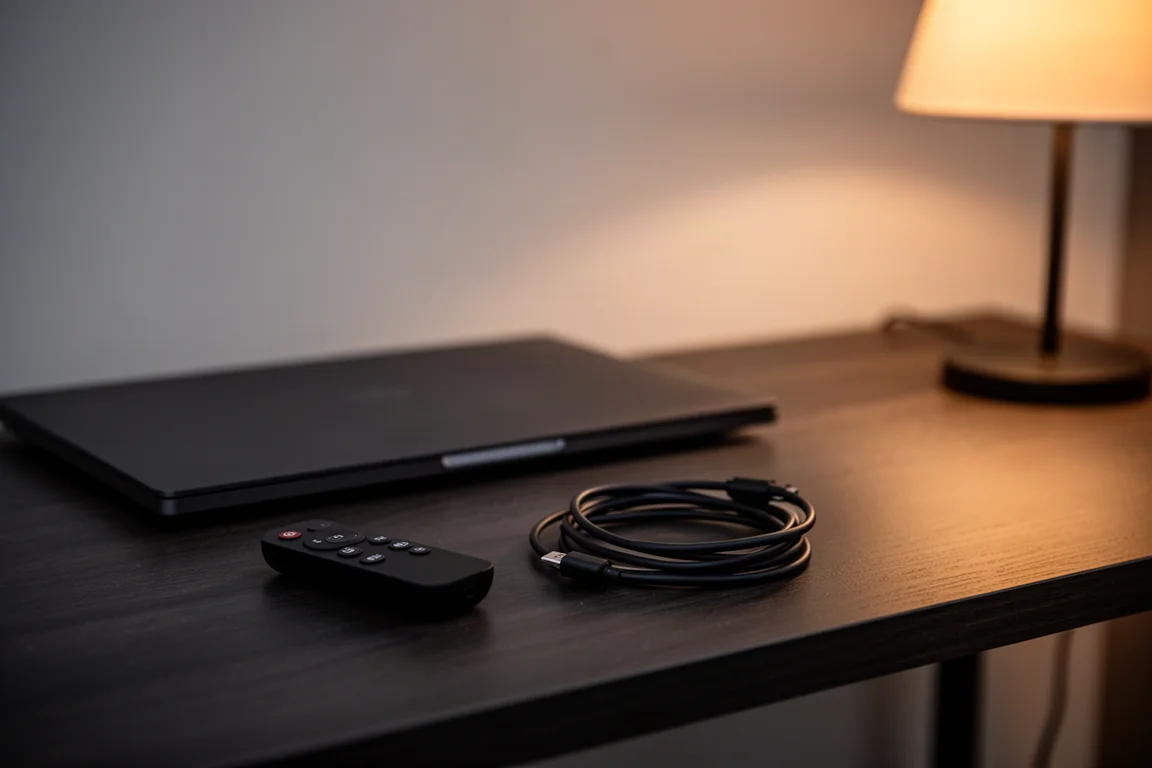
A remote control is included for volume, and the speaker can be connected to a computer so the DSP can be adjusted through the accompanying software. The manufacturer states the acoustic reference axis sits between the tweeter and the midwoofer, which is worth remembering before finalising listening height.
Main Strengths in the Nearfield
Tonally, the Shiv Audio 0 is a neutral speaker. The on-axis frequency response sits at roughly plus or minus 2 dB on average, and the horizontal directivity holds together well out to about 60 degrees either side until roughly 3 kHz. Placed on the reference axis, between the tweeter and the midwoofer, the presentation is clean and evenly balanced.
Self-noise is well controlled as well. With the volume turned fully up and an ear around a foot and a half from the cabinet, no tweeter hiss was audible in a room with a running computer fan. A quieter space could reveal more, but in ordinary working conditions the speaker stays silent.
The cardioid loading is the other clear strength. By limiting the midrange energy that travels backwards, the design reduces the reflections that normally return from the rear wall and interfere with the direct sound. The result is a more cohesive, more coherent midrange, and it allows the speaker to sit closer to the wall than a conventional monopole cabinet without the usual penalty.
Cardioid Design and Room Placement
The Shiv Audio 0 is claimed to be cardioid from 100 Hz upward. Measured data suggests the transition is not fully complete until around 200 Hz, which is a small difference rather than a fundamental one. Below that region most of the energy radiates to the sides and rear, which is consistent with the side-mounted woofers doing the low-frequency work.
The on-axis response rolls off below roughly 200 Hz, and the manufacturer confirms this is intentional: with the cabinet placed near a wall, boundary compensation from that rear wall fills the region in. In-room performance therefore looks flatter than the anechoic data suggests. The speaker reaches an F3 of 31 Hz and an F10 of 22 Hz, so there is genuine low-frequency extension available once the room is taken into account. The manual recommends a distance of 10 to 50 cm from the wall behind the speaker.
Setup, Presets, and DSP Control
Three presets are available. Preset 1 runs full range down to 20 Hz, preset 2 limits extension to 30 Hz in exchange for a little more output, and preset 3 rolls off at 80 Hz for the highest output of the three. Because preset 1 pairs its deep extension with an early-acting protection circuit, it is the least forgiving choice at high levels. Listeners working several metres away in preset 1 may run into those protection limits, whereas a nearfield setup with wall reinforcement usually has enough low end without pushing the speaker that hard.
The Hypex DSP software can be downloaded and used to shape the bass response and address room modes, which makes it straightforward to tune the low end to a specific desk or room rather than accepting the default curve.
Measured compression stays modest, at roughly half a decibel to a decibel when targeting 96 dB, with maximum usable output landing closer to about 95 dB. Multi-tone distortion remained below 3 percent at the highest level tested, with a small rise around 400 to 500 Hz. Applying an 80 Hz high-pass filter made no meaningful difference to midrange distortion, so the main beneficiary of that approach is the excursion of the side woofers rather than the midrange driver.
Things to Consider Before Buying
Vertical directivity is narrow, at roughly plus or minus 20 degrees, so listening height matters. Off the reference axis there is a pronounced dip through the 1 to 2 kHz region, linked to the spacing between the tweeter and the midwoofer. Keeping ears level between the two drivers, and pointing the speakers straight ahead rather than toed off-axis, is the difference between the intended balance and a noticeably hollow one.
There is also a mild character note in the lower midrange. Around 300 Hz the response stands out slightly, and some female vocals can sound a touch chesty or cupped, a region that overlaps with the 200 to 400 Hz area where vocal boom tends to live. It was not consistent across material and may well be room dependent, but it is worth auditioning with familiar tracks.
Output headroom is the other consideration. During stepped sine sweeps at 96 dB and 102 dB, the protection circuit muted everything except the higher frequencies, limiting that particular test to the 76 to 86 dB range. Many powered speakers behave similarly, but it means far-field, high-volume use needs realistic expectations, and preset 3 is the sensible starting point for louder listening.
Buying Advice
Pricing is the clearest context for the Shiv Audio 0. At around €6,500 per pair it costs roughly half, or a little less than half, of a Dutch and Dutch 8C. The 8C extends lower and offers more output potential and better linearity overall, so the comparison sets a fair ceiling rather than a direct equivalence. The Shiv Audio 0 also does not reach as low as the 8C, though the cabinet design and side cardioid slot clearly follow a similar philosophy.
A closer price comparison is the Mesanovic CM65, a smaller cardioid design that does not go as low as the Shiv Audio 0. Buyers who need genuine low-frequency extension in a compact cardioid cabinet will find the Shiv Audio 0 the more capable of the two in that respect.
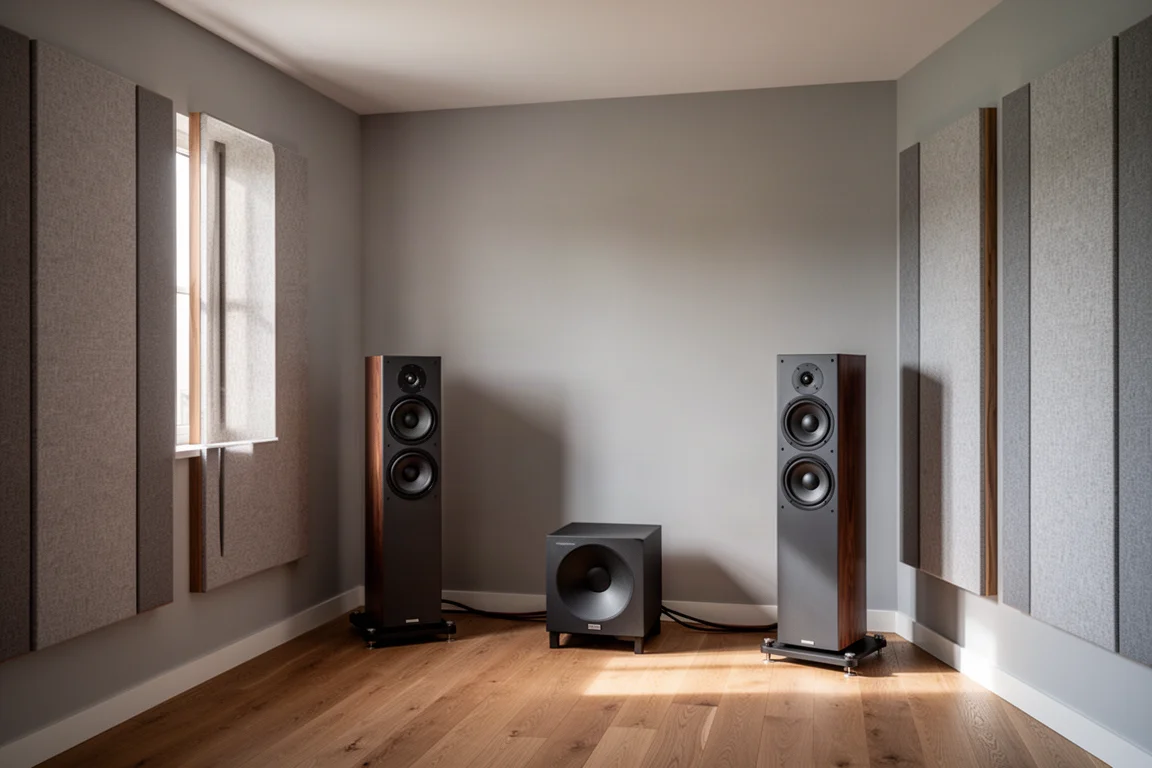
The practical buying decision comes down to the room. Keep 10 to 50 cm of space behind the cabinets, listen in the nearfield on the reference axis between the tweeter and the midwoofer, and choose the preset that matches the job: preset 1 for full-range nearfield listening, preset 2 for a little more headroom, or preset 3 when output matters more than extension, optionally with a subwoofer handling the lowest octave.
Conclusion
The Shiv Audio 0 is a neutral, well-behaved cardioid monitor that does its best work up close and near a wall. Its strengths are the controlled directivity, the coherent midrange that comes from reduced rear-wall reflection, low self-noise and an on-axis response that stays within roughly plus or minus 2 dB. Its limits are equally clear: narrow vertical directivity, a rolloff below 200 Hz that relies on boundary gain, and protection circuitry that caps high-output, far-field use.
For a nearfield listener who wants cardioid behaviour without stepping up to the price of a Dutch and Dutch 8C, the Shiv Audio 0 is a legitimate and thoughtfully engineered option, provided the setup is treated as part of the purchase rather than an afterthought.
Product link
View more details for Shiv Audio 0
This product is mentioned in the review. Check the specifications, options, and compatibility before buying.
View more details for Shiv Audio 0Further reading
Related Reviews
Studio Monitors
ADAM Audio A8H Review: A Three-Way Studio Monitor That Also Knows How to Have Fun
A three-way active studio monitor with an 8-inch woofer, a handmade AMT tweeter, and two distinct tunings, the ADAM Audio A8H aims to satisfy both critical work and everyday listening.

Studio Monitors
Best Studio Monitors 2026: Six High-End Options Compared
We tested six premium studio monitors in a real studio space to see which ones deliver the best mix of accuracy, musicality, and value.
Studio Monitors
Focal Alpha 65 Evo Review: An Honest Studio Monitor With Real Bass
A bi-amplified active studio monitor with deep bass, useful tone controls and a truthful, uncoloured voicing, assessed for small studios and home setups.