Gravel Bike Components
Shimano GRX Di2 Wireless Review: Fast Shifting, Real Trade-Offs
A wireless gravel groupset with quick shifting, a wide 510 percent range, and impressive battery life, plus the compatibility limits worth knowing first.
Introduction
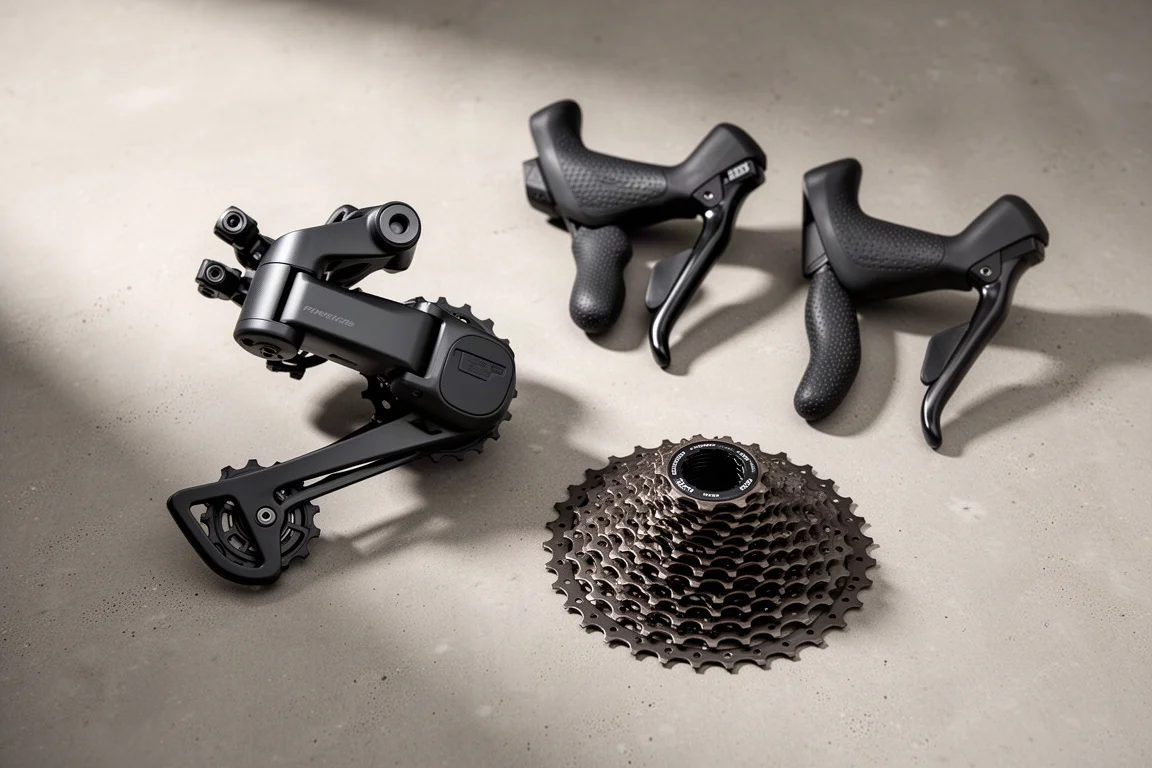
Shimano has gone fully wireless with GRX Di2, the first wireless groupset built for drop-bar bikes. The headline is simple: no wires running to the shifters, and no battery hidden inside the frame. Power now sits in the rear derailleur itself, under a removable cover.
That sounds like a significant step forward. In practice, the picture is more nuanced. Wireless GRX Di2 is best understood as a rear derailleur plus a wireless protocol rather than a complete new groupset, because the remaining components come from the existing GRX Di2 line. That decision brings genuine benefits, and it also shapes most of the criticism.

Over 800 km of unsupported bikepacking across the deserts and mountains of Spain, the system was pushed hard: steep loaded climbs, rough descents, and long days with no charging point anywhere on the route.
What Is Actually New in Wireless GRX Di2
The core change is that the internal frame battery is gone. Power now lives inside the main body of the rear derailleur, beneath a plastic cover, and the battery can be removed and replaced by hand.
Everything else is existing GRX Di2 hardware. The new components are therefore fully backwards compatible with earlier GRX Di2 parts, and because Shimano has not moved to a direct mount style design, the derailleur still attaches to a standard mech hanger. Older frames work without modification, so there is no need to buy a new frame to run the system.
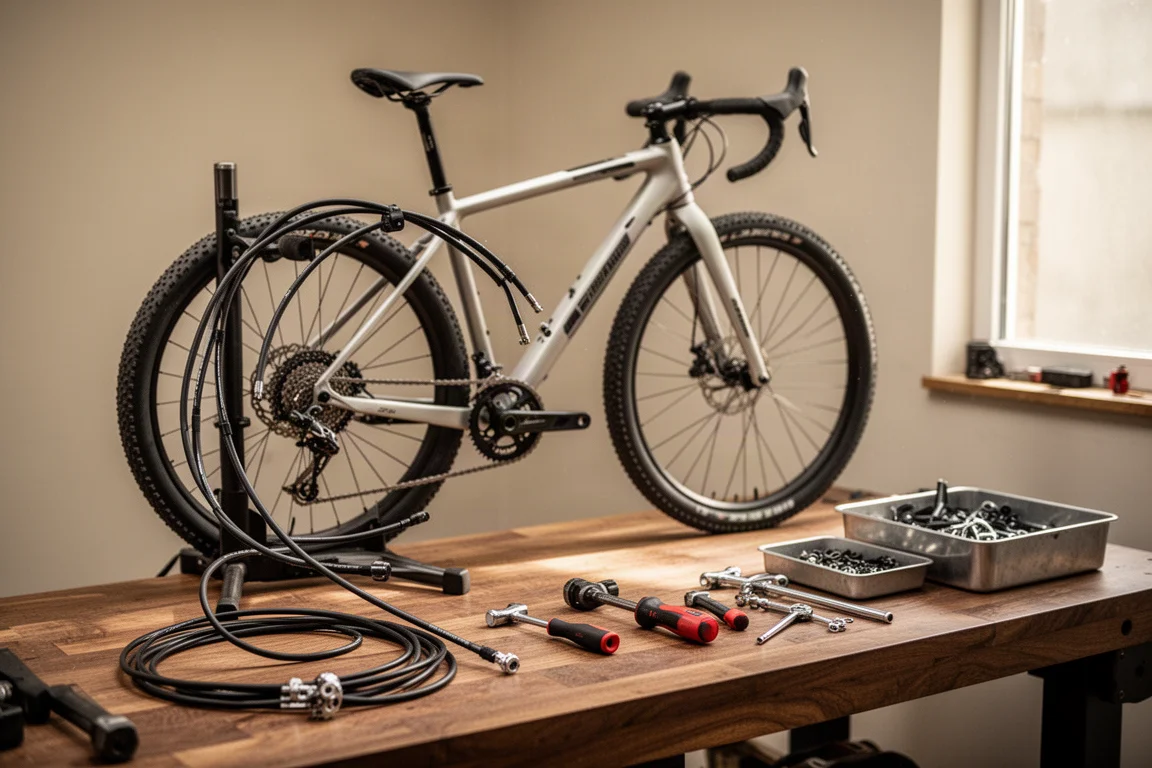
Setup is straightforward. On a custom carbon gravel build, the derailleur and levers were installed following Shimano’s own instructions, and shifting was correct on the first attempt. The fiddliest part of the whole build was routing the brake hose through the fork.
One compatibility detail matters before buying: the cassette requires a Micro Spline freehub body rather than the older HG design. Micro Spline bodies are readily available for most wheelsets currently on the market.
Main Strengths: Shifting Speed, Gear Range, and Battery Life
Shifting speed is the strongest technical argument. In the workstand the system is quick, and it is quicker than the comparable gravel groupset from SRAM. Out on real terrain the gap narrows considerably. Riders adapt to whichever system they use, and the difference only becomes obvious when switching back and forth between the two. Even so, if raw shift speed is the priority, Shimano holds the edge.
Gear range is genuinely wide. A 40-tooth chainring paired with a 10-51 cassette, which is a mountain bike cassette carried over rather than a new gravel-specific design, produces a 510 percent range. That is broader than the 460 percent range of the rival gravel groupset. Progression is reasonable too: two-tooth jumps from the 10 up to the 18 sprocket, then increasingly larger jumps out to the 51.
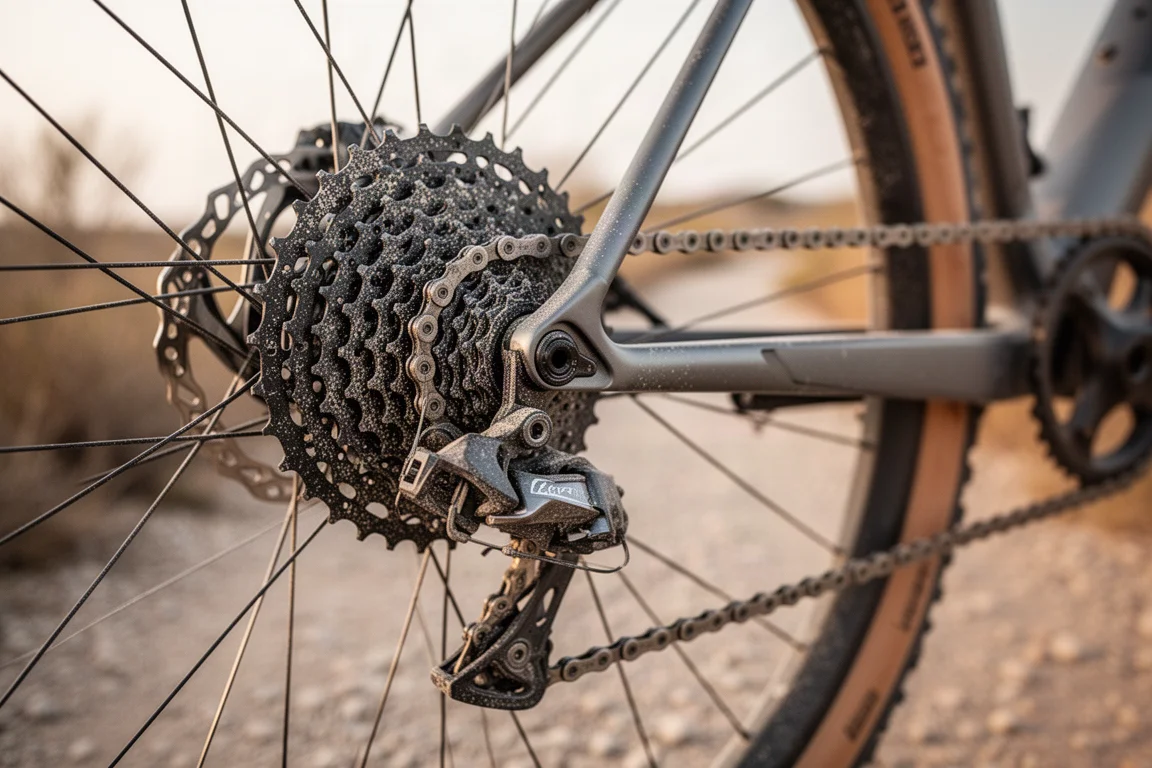
Loaded and climbing steep gradients, that range worked well for most of a long race, although a couple of moments on a fully laden bike left a wish for a smaller chainring. Shimano does not currently offer a 38-tooth option. Riding the same setup unloaded on local trails, the gearing feels well judged.
Battery life is the most impressive part of the package. Shimano claims the same 700 to 1,000 km runtime as wired Di2, and real-world use backed that up. On an 815 km race, the battery lasted roughly 810 km and gave out only in the final 5 km on a gentle downhill into Granada, with no spare battery carried and no attempt made to conserve power at any point.
Ergonomics, Braking, and Shifting Consistency
The hoods are carried over from the current GRX Di2, so the shape is familiar: a tall knob angled back toward the rider, an angled brake lever, and a higher pivot that improves braking control both on the hoods and in the drops. On fast, rough descents the hooked hood shape feels secure to hold, and noticeably more secure than the road version of the same system.
The ribbing on top of the hood is a divisive detail. Without gloves it can be uncomfortable against the hands, which matters for riders who prefer bare hands once the weather warms up.
Braking performance itself is strong. Power is ample, with no noise and no fade under heavy use. Lever effort is the trade-off: the action is noticeably heavier than the lightest levers in the SRAM gravel range, which makes one or two finger braking easier on chunky, fast terrain. On smooth ground the difference is barely noticeable. On rough trails it is a real one.
Shifting consistency is the other nuance. Shimano changes gear quickly, but on some shifts the change does not feel as locked in or as seamless as the SRAM equivalent, which is marginally slower yet has been faultless in never missing a change. Shimano’s slight advantage in speed and SRAM’s slight advantage in reliability are both small, and neither spoils the ride.
Things to Consider Before Buying
There are several limitations to weigh before committing to this groupset.
The system is one-by only. Riders who want a two-by gravel setup still need to look at mechanical options or the existing wired wide-ratio Di2. There is no confirmed timeline for a wireless two-by version.
Cranks stop at 170 mm. Riders who prefer shorter 160 mm or 165 mm crank lengths will not find them here.
There is no power meter option in this groupset.
Mounting is the most consequential point. Shimano still relies on a standard mech hanger rather than a direct mount interface. In a low-speed crash on the final descent of a long race, the bike landed on the rear derailleur, bent the hanger, and threw shifting out of alignment for the rest of the descent. The derailleur’s crash mode, designed to move the mechanism clear and recover, did not resolve the situation. A direct mount design removes the hanger from the equation entirely, and has proven durable over a year of hard use, including crashes.
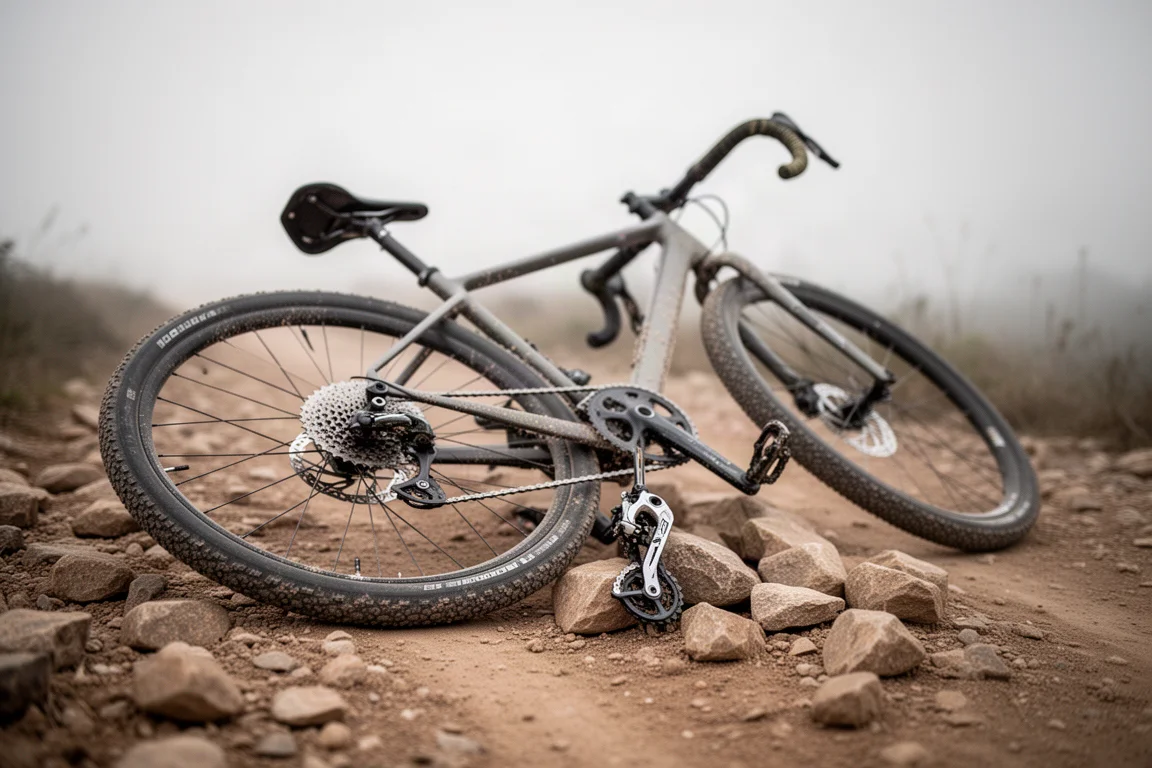
The rear derailleur’s appearance is also a practical consideration for some buyers. The battery housing makes it bulky, and it looks noticeably less refined than the equivalent mountain bike derailleur that shares its basic design.
Price, Build Options, and Compatibility
On price, the new wireless groupset undercuts its closest rival. The complete setup, excluding the bottom bracket, sits at roughly £1,400 to £1,500, against roughly £1,600 to £1,750 for the comparable SRAM gravel groupset. The gap is not large, but it favours Shimano.
There is also room to adjust the build. Three tiers of GRX components are available, so lower-level cranks and a lower-level mountain bike cassette can be specified to hit a target price. SRAM offers a similar degree of flexibility across its Rival, Force, and Red tiers.
Compatibility is where this groupset makes the most sense. Because it keeps the mech hanger mount and reuses existing GRX Di2 components, it drops into older frames and existing Shimano builds without a frame change.
Buying Advice
The honest summary is that wireless GRX Di2 works well. Shifting is fast, the gear range is wide, battery runtime is genuinely impressive, and the derailleur battery can be swapped in seconds during a long ride.
The case for buying it is narrower than the case for the technology itself. Riders already invested in Shimano, upgrading an older Shimano groupset, or running a frame without a direct mount interface have a clear reason to choose it. Riders buying a complete new groupset or a brand new gravel bike face a harder decision, because the rival gravel system offers lighter brake lever action, more gearing options including a wider cassette and a mullet setup, shorter crank lengths, a power meter option, and a more robust mounting design, spread across three tiers that cover most budgets.
Conclusion
Wireless GRX Di2 delivers on shifting speed, range, and battery life, and it slots into existing frames with unusual ease. It also arrives with real gaps: one-by only, no short cranks, no power meter, and a mounting standard that leaves the derailleur exposed in a crash. For Shimano loyalists and older frames it is a sensible upgrade. For a fresh gravel build, the alternatives deserve a serious look first.
Product link
View more details for Shimano GRX Di2
This product is mentioned in the review. Check the specifications, options, and compatibility before buying.
View more details for Shimano GRX Di2Further reading
Related Reviews
Gravel Bike Components
Gravel Upgrades Worth Considering: Shimano GRX Di2 12-Speed, Cane Creek eeSilk and Pirelli RS
A closer look at Shimano's 12-speed GRX Di2 groupset, the mechanical GRX alternative, Cane Creek's eeSilk suspension stem and seatpost, and the Pirelli RS gravel tire.
Gravel Bike Components
Shimano GRX RX 820 Review: The 12-Speed Mechanical Gravel Group Set With Real Range
A 12-speed mechanical gravel group set with a 10-51T cassette, quieter brakes and revised shifter clamps, plus the trade-offs to weigh before buying.
Gravel Bike Components
Shimano GRX RX820 Unstoppable Review: A 12-Speed Mechanical Gravel Groupset With Real Range
A close look at Shimano's 12-speed mechanical gravel groupset, its 10-51T cassette, revised brakes, and the trade-offs worth knowing before you buy.