Fountain Pens
Shibui North Kitsune Review: An Artisan Fountain Pen With Real Character
A handmade aluminum fountain pen from a UK artisan, combining sand-blasted metal, hand-applied cerakote, and Japanese-inspired mokume engraving. Here is what to know before buying.
Introduction
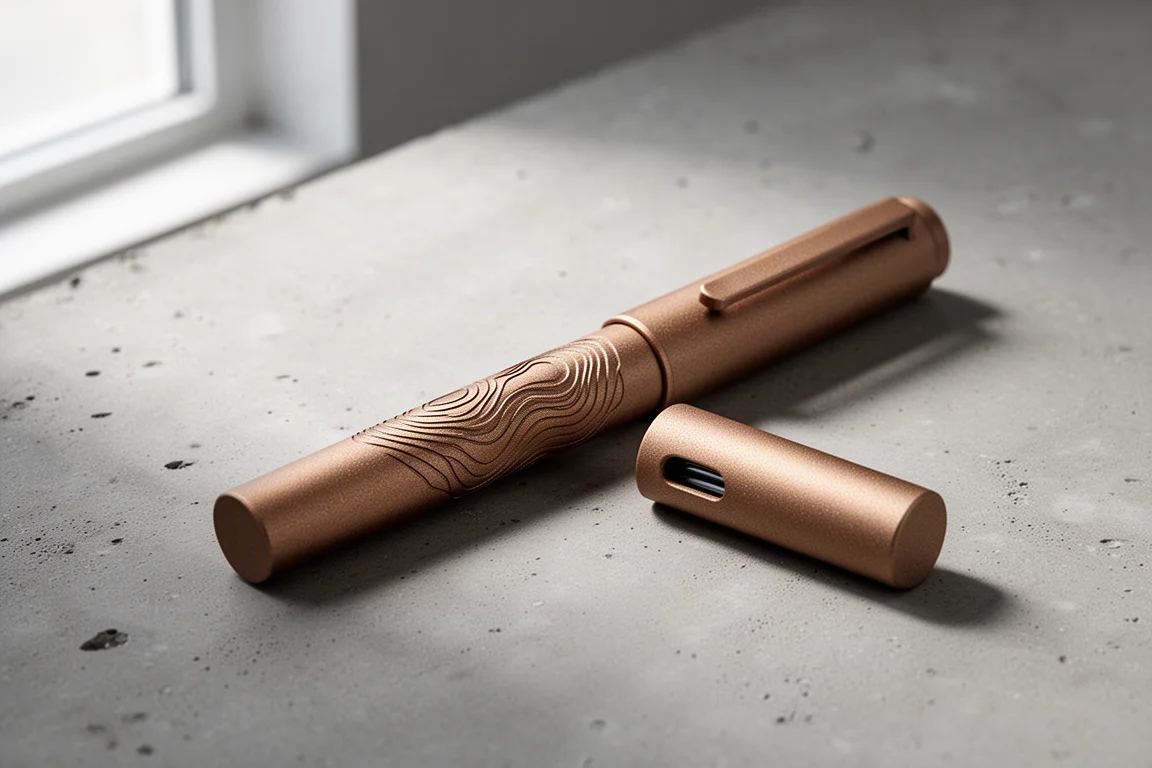
One of the best things about the fountain pen hobby is stumbling across makers you have never heard of before. Shibui North, a small workshop based in Newcastle in northern England, is exactly that kind of discovery. The company’s founder spent ten years living in Japan, where she studied ceramics and urushi, and that experience shapes every design decision in her pens. Each model is created on a CNC machine and finished by hand using techniques such as urushi, gilding, anodizing, and engraving, often in combination.
The pen examined here is the Shibui North Kitsune, a unique aluminum fountain pen that retails for $136. It is sold exclusively through the Shibui North website, with each pen made to order. The wait time for one to be made was only around a week at the time of writing, and international shipping was a reasonable $13.
Design and Finish
Shibui is a Japanese word meaning rustic yet refined, a fitting name for the overall look of this pen. Kitsune is the Japanese word for fox, and foxes are a common subject in Japanese folklore, often depicted as intelligent beings whose abilities grow with age and wisdom.
The pen body is made from aluminum that is sand blasted, then finished by hand with a bronze cerakote ceramic coating. That final coat contains metallic elements, giving each piece a subtle 3D shimmer and a satin-like, tactile feel. It also adds corrosion and UV resistance.
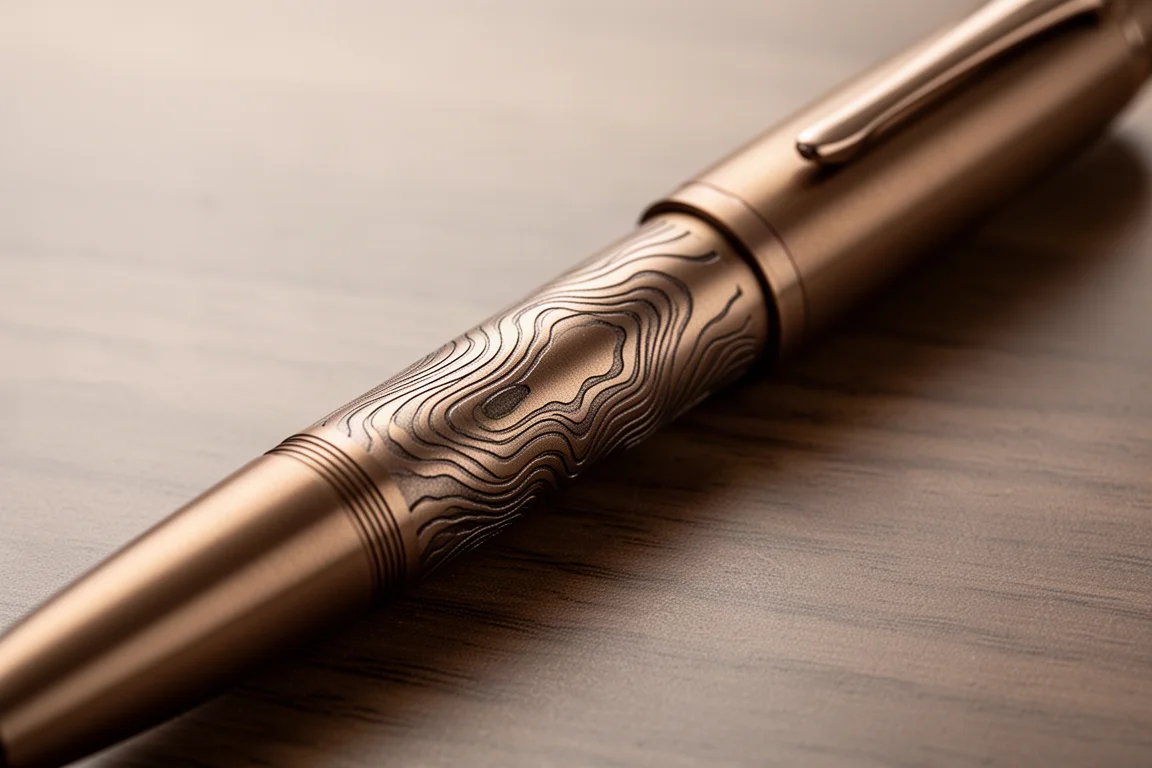
The most eye-catching element is the laser-engraved pattern covering the middle of the barrel in the mokume style, a Japanese metalworking technique built on layered patterns. The engraving resembles a topographical map, and while the same pattern appears on both sides of the barrel, it is reversed, and the sheer variance in the design means you never really notice the repetition.
Construction and Features
The cap is short, only about an inch and a half long, and comes to a flat end at the top. The transition from cap to engraved barrel is smooth, and the barrel runs straight until a second transition to the blind cap, which is identical to the forward cap. Both caps are interchangeable, a genuinely wise design choice: when inking the pen with both caps removed, there is no need to track which cap belongs on which end.
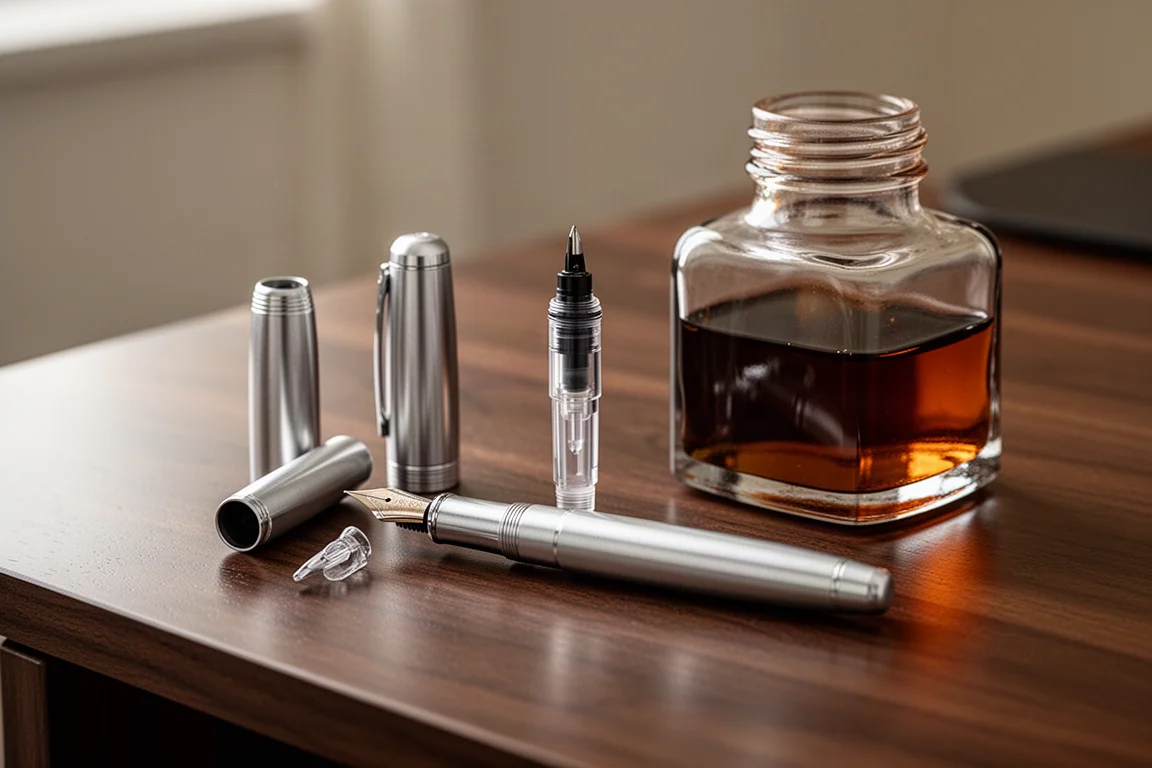
The blind cap unscrews to reveal the converter, and the access here is generous. Some other pens only allow a tiny portion of the converter to peek out, making it awkward to twist, but that is not the case here.
The Ink Window
The barrel has a large ink window, and it is one of the better-executed examples around. What you see through the glass is entirely the clear portion of the converter, with no metal components breaking up the view, so it genuinely reads as an ink window rather than a window into hardware.
There is one suggested improvement: with only a single window, it can be a little tough to judge your ink level, since light only enters from one side. A second window on the opposite side would have helped visibility, and given the uninterrupted back of the barrel, it would not have hurt the looks much.
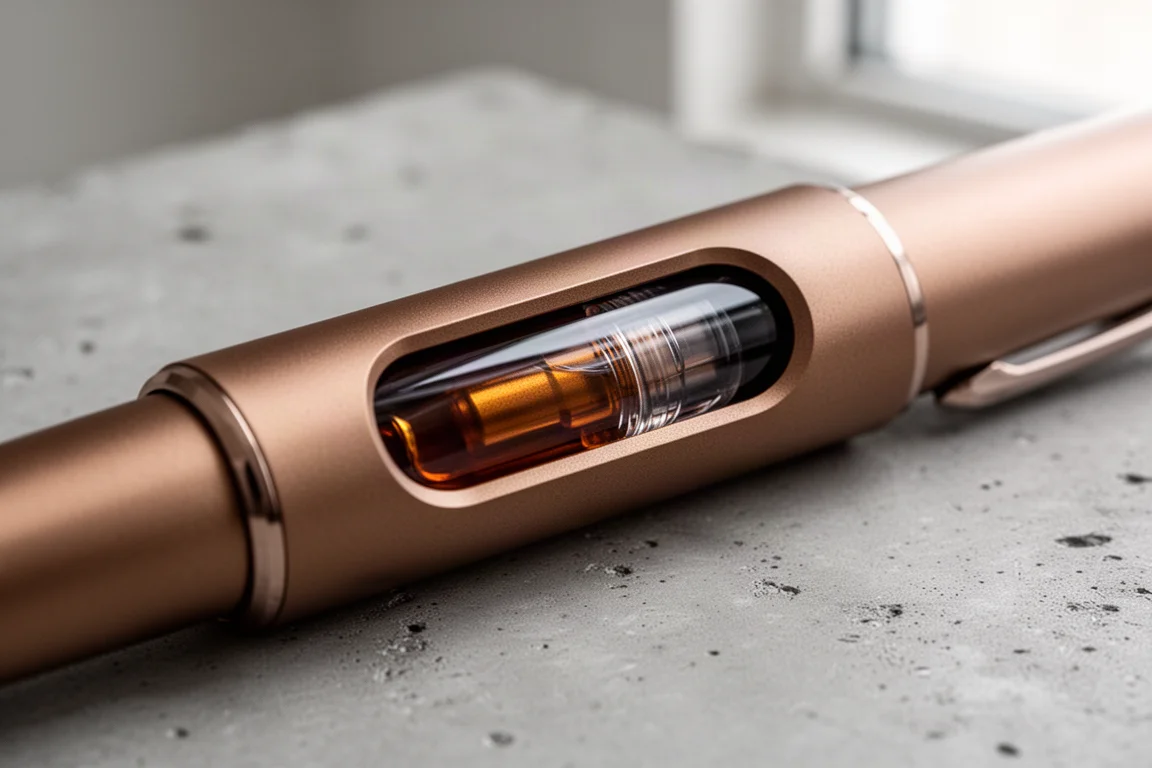
The window’s off-center placement is deliberate. Because the pen is symmetric at both ends, a centered window would give you a 50/50 chance of unscrewing the wrong end. The off-center window acts as a visual cue so you always open the side you intend to open.
The Nib
Under the cap sits a stainless steel number six Bock nib, available in extra fine, fine, medium, broad, and double broad. The nib carries the Shibui name surrounded by a wave motif, a nautical nod from a maker who lives near the ocean.
The cerakote coating gives the nib a distinctive look, but it also stiffens it up noticeably. The coating is polished away from the tip that touches paper, creating a small sweet spot. Stray from that angle and the coated portion of the nib contacts the paper, producing a drag that can feel a bit like writing with an unsharpened pencil. A slightly larger polished area would have improved this.
Grip and Ergonomics
There is no traditional section on this pen. Instead, the cap threads lead to a fairly large step up to the barrel, a design that recalls some Graf von Faber-Castell pens. If you grip your pens high up near the end of the section, this arrangement may feel less natural, and the nib can feel slightly far back.
That said, if you are comfortable gripping on the barrel itself, the engraving genuinely helps maintain grip without slipping. The engraving is not deep enough to create sharp or rough edges, and it feels comfortable where it rests against your palm. The cap is not designed to post.
Writing Performance
The medium stainless steel nib delivers a medium ink flow, neither high nor low, and you should not expect much line variation given how stiff the coating makes the nib. Reverse writing leans a little scratchy, again because the nib can contact the coated portion at unusual angles. On fast writing, the plastic feed keeps up just fine.
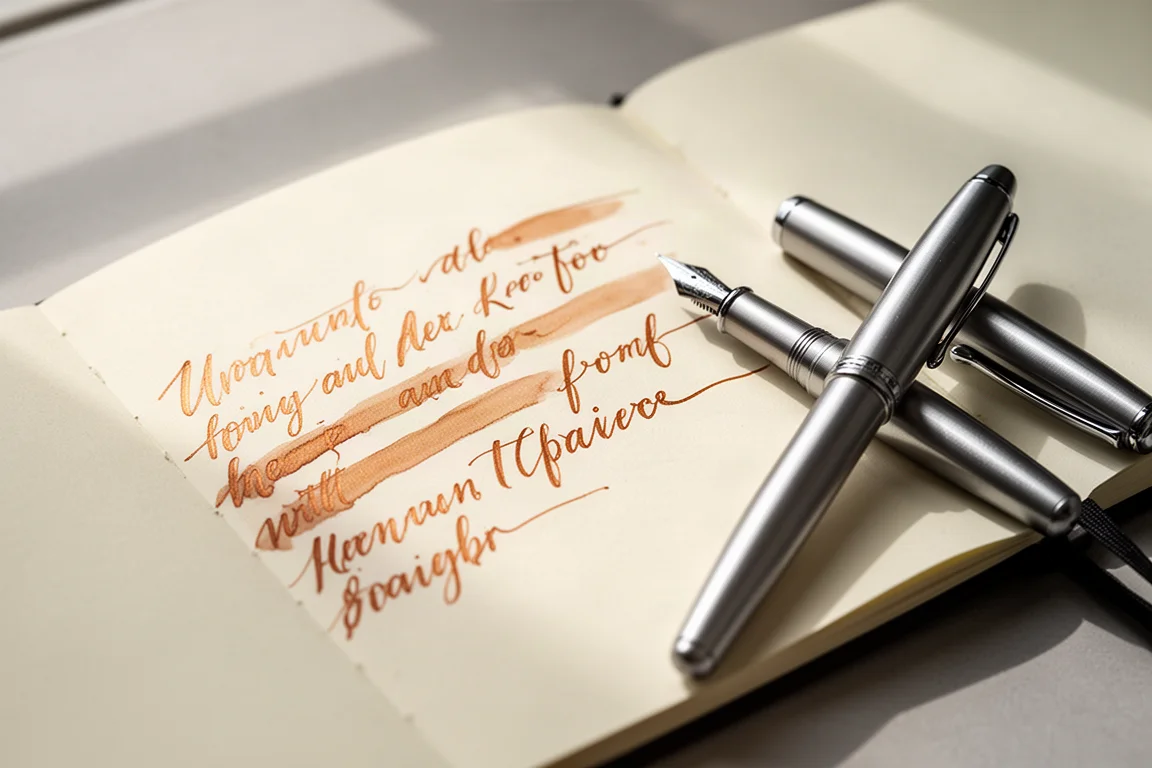
Pairing the pen with a warm coppery brown ink suits the bronze finish beautifully, and inks with a bit more shading also look at home here.
Inking and Everyday Use
The pen uses a standard international converter. You could technically squeeze in a short or long standard international cartridge, but that would be unnecessarily cumbersome, so bottled ink is the practical path.
Inking is straightforward: remove both the blind and forward caps, dip the pen into your bottle of choice, and everything stays together, since there is no section to disassemble. The trade-off is that ink tends to work its way into the grooves of the cap threads, and it can be difficult to extract. After filling, you will want a damp cloth or tissue to wipe the threads down as thoroughly as possible. It is a minor nuisance, but worth knowing about.
Buying Advice
At $136, the Shibui North Kitsune feels reasonably priced for what you receive: a made-to-order pen with hand-applied finishing, a distinctive engraved barrel, and a design you will not find anywhere else. Ships are not immediate since each pen is made to order, but the reported wait was only about a week, and $13 international shipping is fair.
If you grip your pens right at the end of the section, the sectionless design may take adjustment. And if you want a bouncy, expressive nib, the cerakote-stiffened steel nib will not deliver that. But if you want something genuinely unlike anything else in a collection, and you enjoy supporting individual artisans, this pen is well worth a look.
Conclusion
The Shibui North Kitsune has its quirks: the single-window ink level visibility, ink in the cap threads after filling, and a nib with a narrow sweet spot. But it is a lot of fun to use, the engraving is superb, and it stands apart from nearly everything else on the market. For anyone looking to add something a little different to their collection, it comes highly recommended.
Product link
View more details for Shibui North Kitsune
This product is mentioned in the review. Check the specifications, options, and compatibility before buying.
View more details for Shibui North KitsuneFurther reading
Related Reviews
Fountain Pens
Best Budget Fountain Pens Tested: 9 Pens, One Clear Winner
A hands-on comparison of nine affordable fountain pens for everyday writing, calligraphy, and sketching, with a clear standout for flexible nib fans.
Fountain Pens
Aurora Optima Review: An Italian Piston Filler That Punches Above Its Price
A 14k gold nib, ebonite feed, and a beautifully deep oraloid body make the Aurora Optima one of the most rewarding piston fillers around.
Fountain Pens
Cross Bailey Light Review: The Entry-Level Fountain Pen Worth Keeping at the Office
A plastic-bodied Cross with a metal clip, snap cap, and famously smooth extra fine steel nib. Around $15, available almost everywhere, and easy to recommend.