Knife Sharpening
Shibata Bitey Finisher Wet Stone: Differential Grit Sharpening at Home
A two-sided 600/1200 grit stone from master sharpener Takayuki Shibata that lets home users recreate his differential grit sharpening technique for edges with both bite and polish.
Introduction
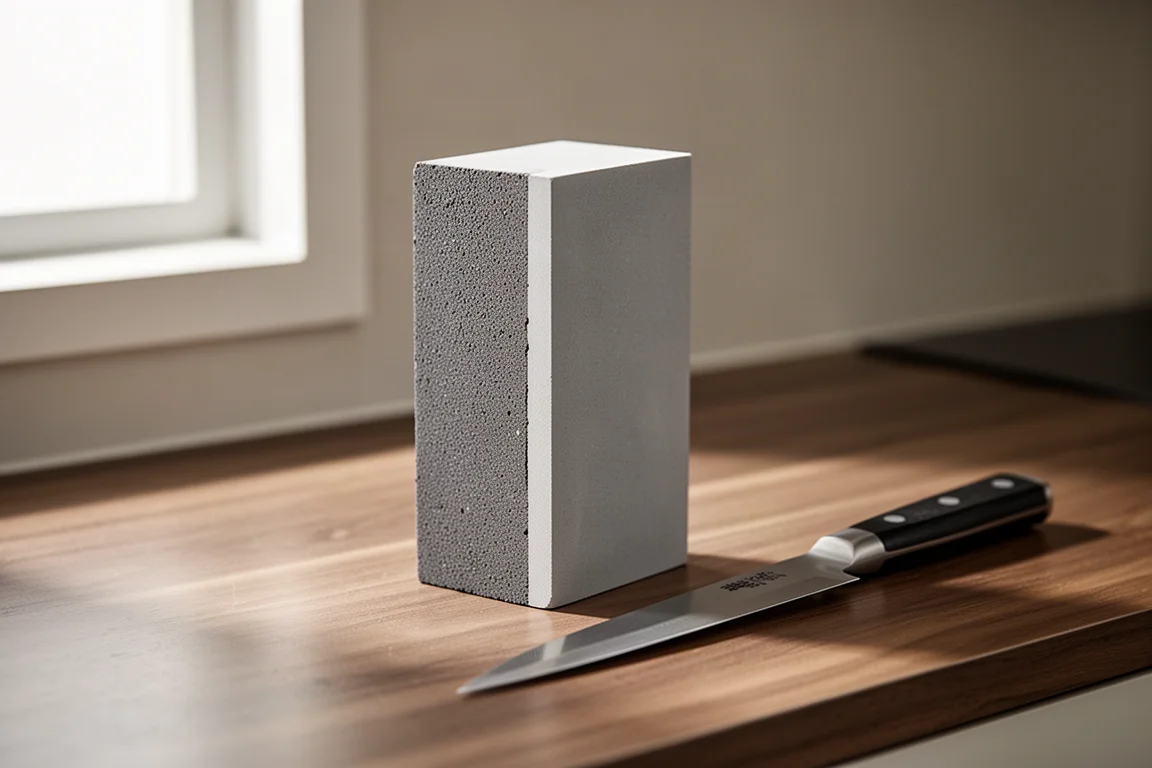
Takayuki Shibata is a Japanese master sharpener known for extremely sharp out-of-box edges on kitchen knives such as his Kotetsu line, and he attributes much of that edge character to a technique known as differential grit sharpening. To make that approach accessible outside his own workshop, he developed the Shibata Bitey Finisher wet stone, a composite stone designed so that home cooks and professional kitchens alike can reproduce the same kind of edge: sharp enough to bite effortlessly into a cherry tomato, yet refined enough to glide through an onion like a fully polished edge.
This review covers what the stone is, how the technique works, and the results achieved with it on a thin 180 mm funayuki-style kitchen knife.
What Is Differential Grit Sharpening?
In its simplest form, differential grit sharpening means sharpening one side of a knife to a higher grit and the other side to a lower grit. The result combines two properties that are usually traded off against each other: the bite and aggressive cutting feel of a lower grit finish, and the smooth, clean cutting behaviour of a higher grit polished edge.
The Bitey Finisher is built specifically for this. It is a composite wet stone with a 600 grit side and a 1,200 grit side, so the entire differential progression can be run on a single stone. Shibata notes that the matrix in his combination stone makes both sides feel slightly higher grit than the numbers indicate.
Unboxing and Setup
The packaging is simple and elegant: a bright, salon-style box reminiscent of the cases used for vintage straight razors, stating that the stone is made by Takayuki Shibata in Japan. There are no frills or accessories; the box holds the wet stone and nothing else.
Even though the stone arrives new, Shibata recommends flattening it first to ensure it is properly flat. A coarse flattening plate such as an Atoma 140 handles this quickly. One important caveat: this stone is meant to add a new edge to a knife, not to repair chips, perform small fixes, or do thinning work. The knife should already be thin behind the edge, and the goal is simply to give it a fresh, crisp edge.
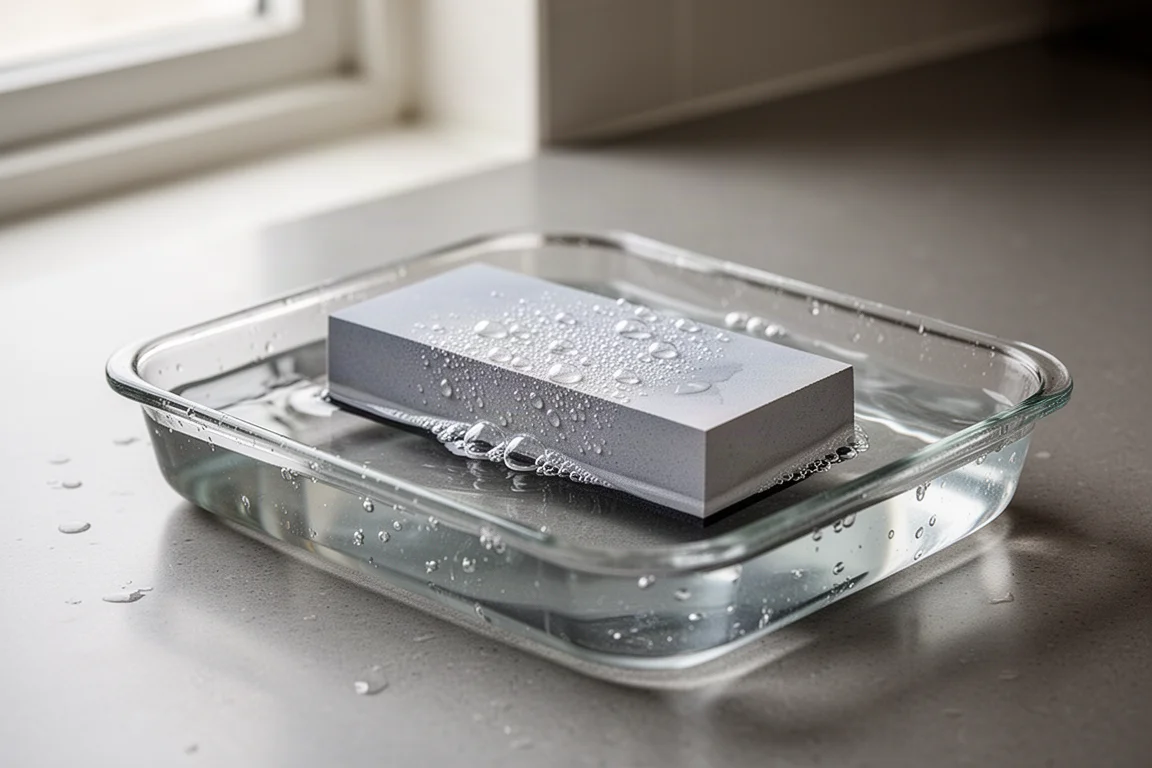
Before use, the stone needs a soak of 1 to 10 minutes. You know it is ready when bubbles stop emerging from the stone; in practice, that took about 3 minutes.
The Sharpening Process
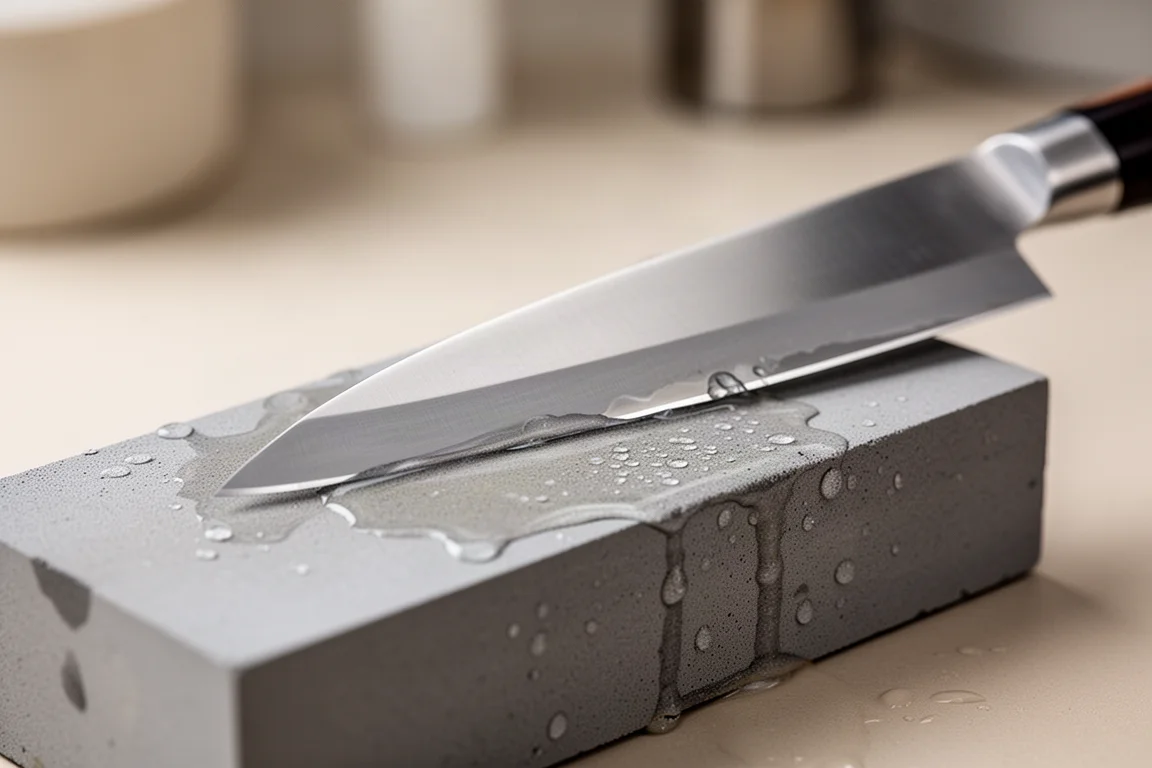
The method follows a standard low-to-high grit progression, with a distinctive twist at the end. If you sharpen right-handed, start on the right face of the blade.
Step 1: 600 grit, both sides. Work the right side of the blade on the 600 grit side until you raise a burr on the left side. Then flip the blade and sharpen the left side on the same 600 grit stone to remove that burr and raise one on the right side.
Step 2: 1,200 grit, both sides. Flip the stone over to the 1,200 grit side and repeat the same sequence: right side first, raise a burr, then flip the blade and finish the left side.
Step 3: The differential finish. This is where Shibata’s technique comes into play. Flip the stone back to the 600 grit side and, on the left side of the blade, perform one edge-leading stroke. That means moving the blade in the direction of the edge rather than the spine, which is the opposite of the edge-trailing strokes used in most finishing work. Flip the stone to the 1,200 grit side and perform one edge-leading stroke on the right side. Shibata recommends repeating this three times, lightening the pressure slightly on each repetition.
Stropping and Testing the Edge
After the final strokes, deburr the edge on leather. Shibata uses jean cloth in his own demonstrations, but a leather strap follows the same principle. A quick paper test confirms the edge is clean and deburred.
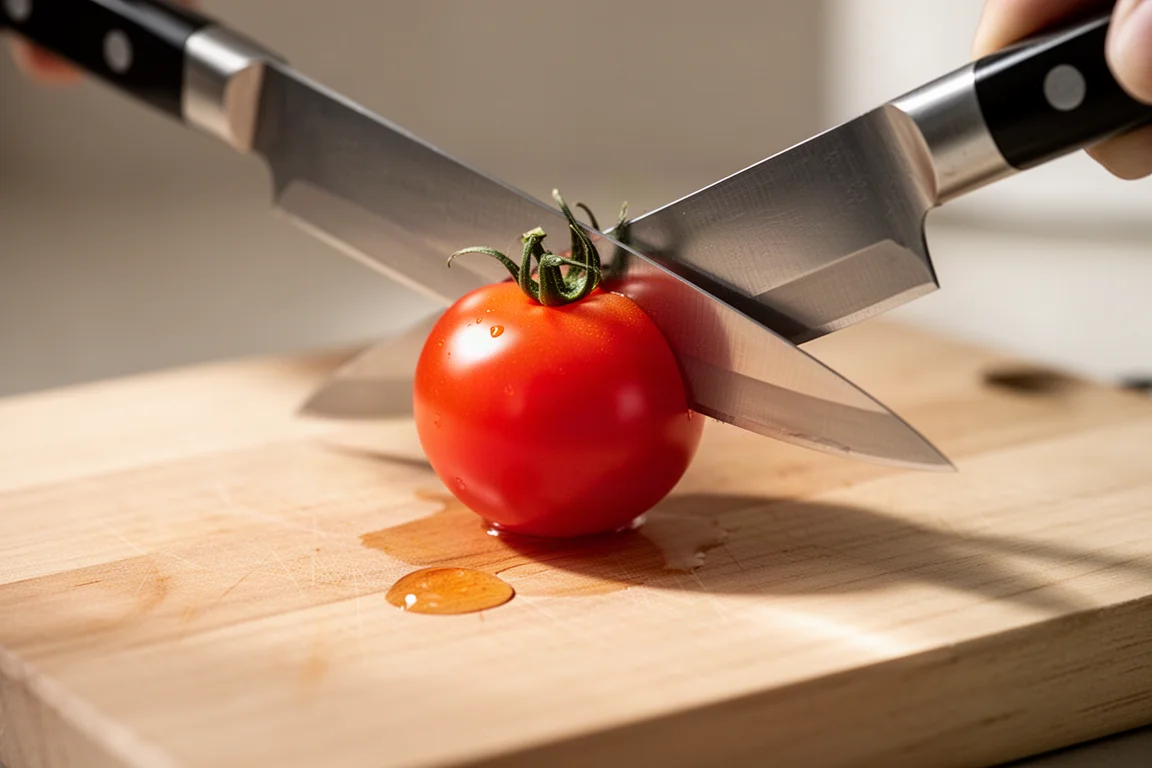
The real proof, though, is in the cutting. The bite on the finished edge is deep and pronounced: it pierces a cherry tomato skin effortlessly, yet still slices an onion with the smoothness of a polished edge. On a carrot, the edge bites so crisply that simply lowering the blade lets the weight of the knife alone cut through, while the slices still release smoothly. It is an edge that manages to feel aggressive and refined at the same time.
Who This Stone Is For
The Bitey Finisher suits cooks who already own a thin, well-maintained kitchen knife and want more bite without giving up a clean, polished cutting feel. It is not a repair stone and it will not rescue a chipped or thick-edged blade, so it works best as a finishing tool within an existing sharpening routine rather than a complete solution on its own.
Things to Consider Before Buying
The stone requires a short learning curve: edge-leading strokes on a finisher are less common than the edge-trailing strokes most people practise, and the soak time and flattening step add a little preparation to each session. The technique itself, however, is straightforward once you have done it a couple of times, and it costs nothing beyond the stone.
Buying Advice
If you admire the bitey, laser-sharp edges associated with Shibata’s knives and want to recreate that character at home, this stone delivers a clear path to it. Pair it with a knife that is already thin behind the edge, follow the progression exactly as described, and you should end up with an edge that both bites and polishes. The wet stone is for sale; the technique is free, and it only takes a few practice sessions to get comfortable with it.
Conclusion
The Shibata Bitey Finisher wet stone does exactly what it sets out to do: it brings differential grit sharpening within reach of home sharpeners. On a thin 180 mm kitchen knife, the resulting edge showed genuine bite on tomatoes and carrots while still cutting smoothly through onions, closely mirroring the results the stone was designed to produce. For anyone serious about kitchen knife edges, it is a distinctive and worthwhile finishing stone.
Product link
View more details for Shibata Bitey Finisher Wet Stone
This product is mentioned in the review. Check the specifications, options, and compatibility before buying.
View more details for Shibata Bitey Finisher Wet StoneFurther reading
Related Reviews
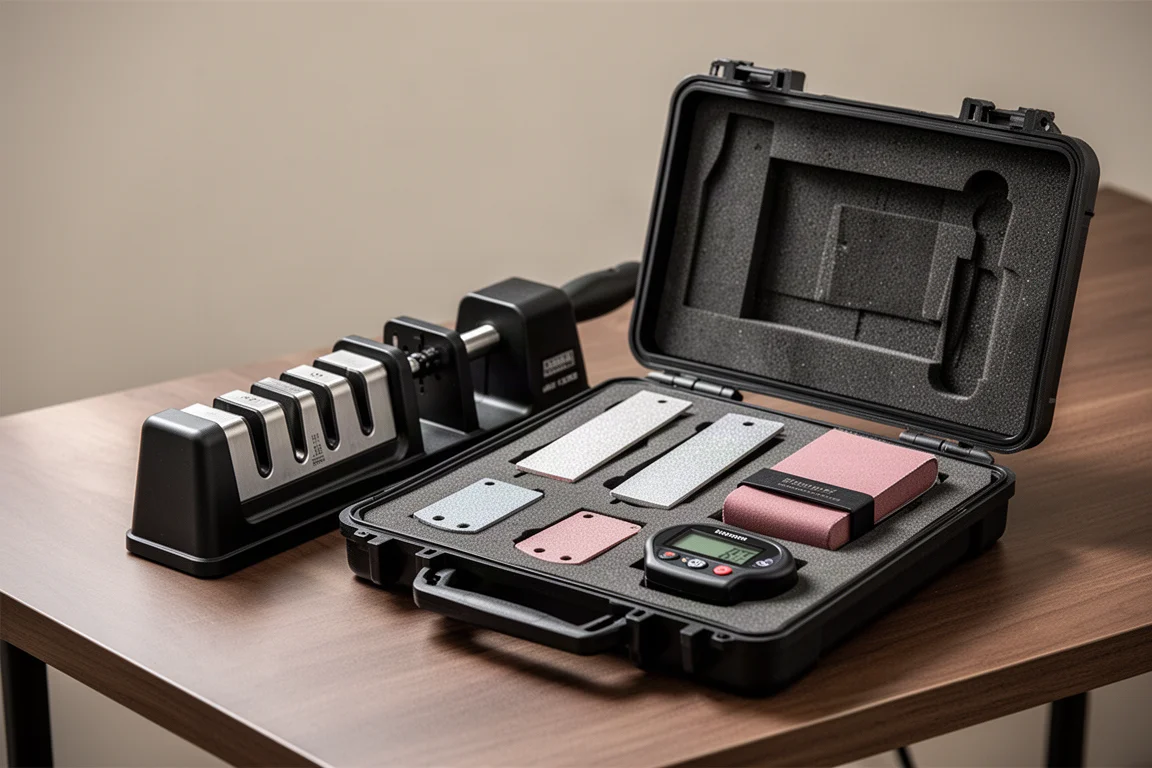
Knife Sharpening
Work Sharp Professional Precision Adjust Elite: A Sharpening System for People Who Care About Edges
The Elite version of the Professional Precision Adjust adds a rugged case, fine resin-bonded diamond plates, and a strop for a true mirror finish.
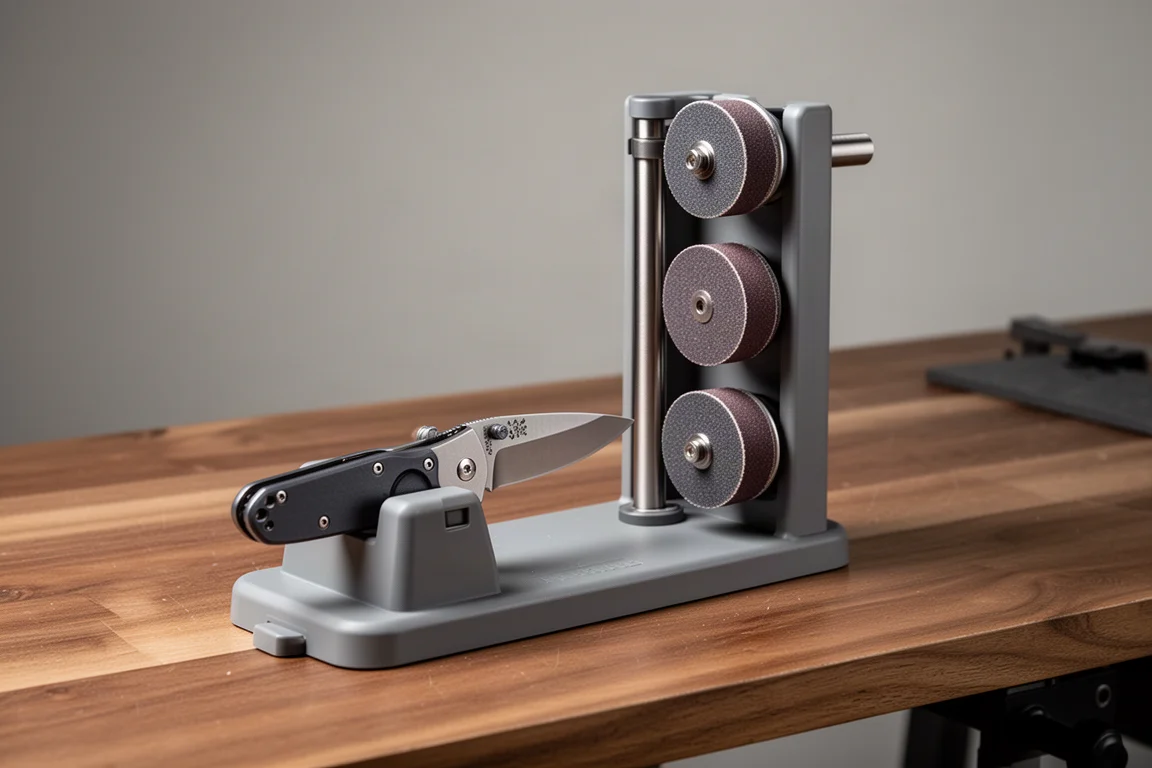
Knife Sharpening
Work Sharp Precision Adjust: The Clamp-and-Jig Sharpener Worth Building Out
A fixed-angle knife sharpener with a rotating abrasive carriage, plus an upgrade kit that turns it into a genuinely complete sharpening setup.
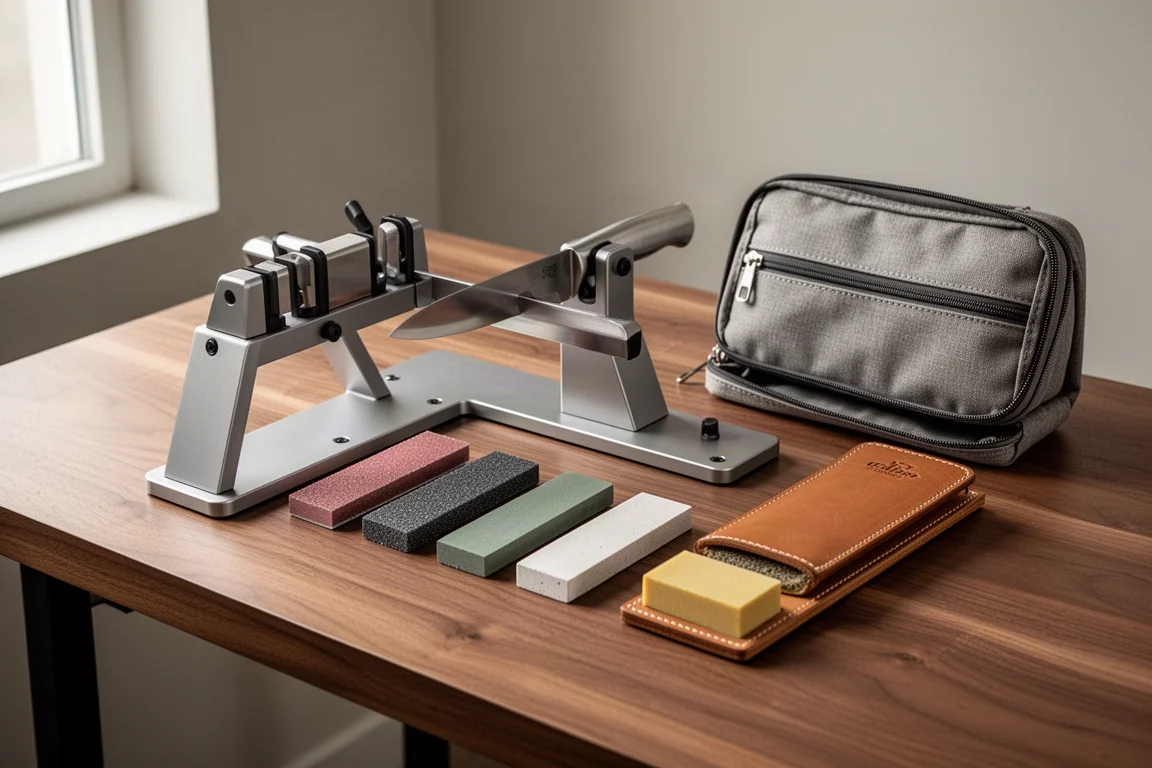
Knife Sharpening
Work Sharp Precision Adjust Upgrade Kit Review: A Wider Grit Range for an Already Great Sharpener
The Upgrade Kit expands the Precision Adjust with extra abrasives, a built-in strop, and a proper carrying case. Here is what changes after months of use.