Knife Sharpening
Sharpel 202H Knife Sharpening Kit Review: Guided Angles for Consistent, Razor-Sharp Edges
A guided sharpening system with interchangeable diamond stones, ceramics, and leather stropping, built to make razor-sharp knives accessible to anyone.
Introduction
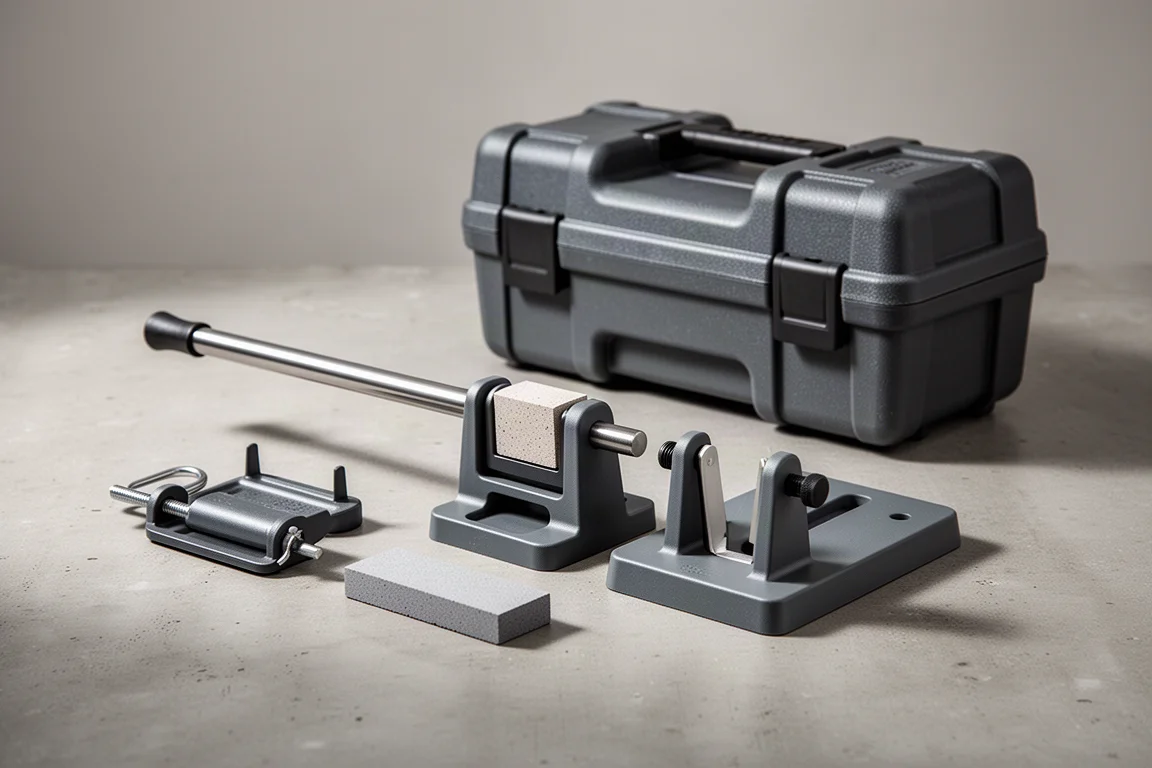
Learning to sharpen a knife by hand usually means guessing at the edge angle and hoping for the best. The Sharpel 202H knife sharpening kit takes that guesswork out with an accurate angle adjustment system: a rod that accepts interchangeable diamond stones and ceramics, lined up to the exact angle of your blade, with the knife locked in a clamp caddy so every pass runs true.
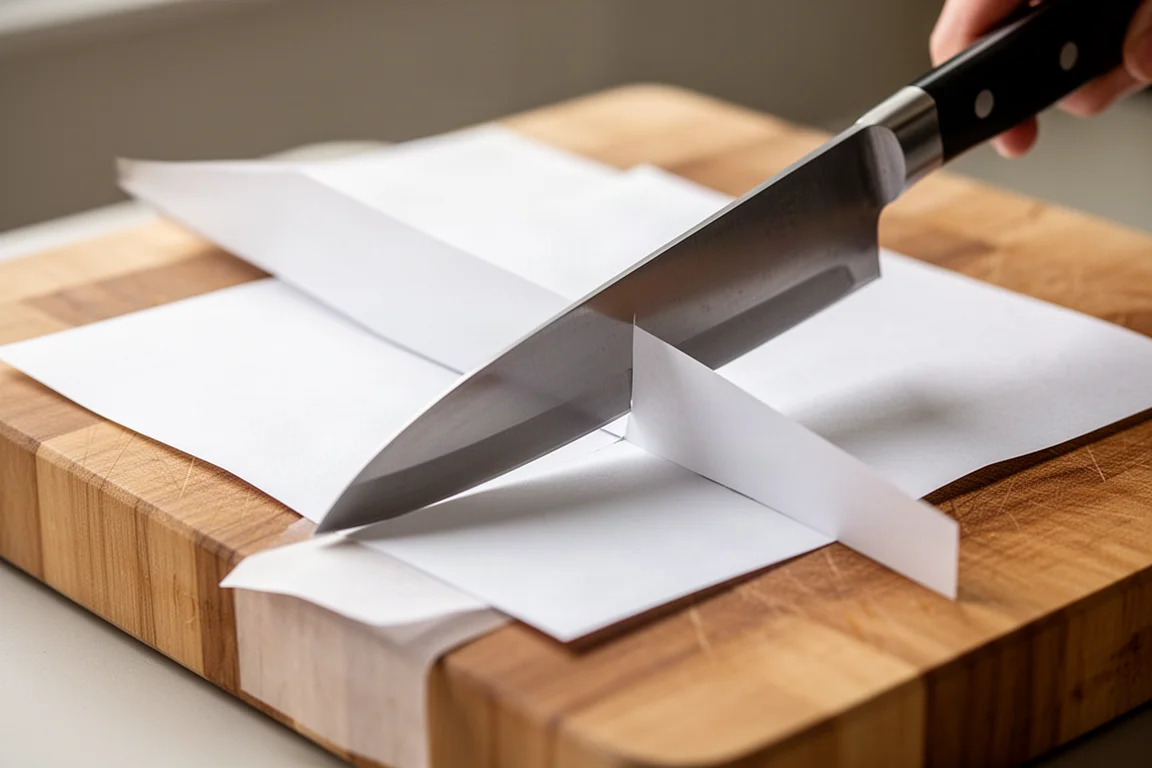
The core idea is simple. You clamp the blade down tight, dial the rod to match the edge angle, and slide the stone across the edge at just the right position. Then you work your way up from lower grits to higher grits, finishing with leather stropping. The result is a razor-sharp edge, and the process itself is calm and methodical. Call it zen and the art of knife sharpening.
How the Guided Angle System Works
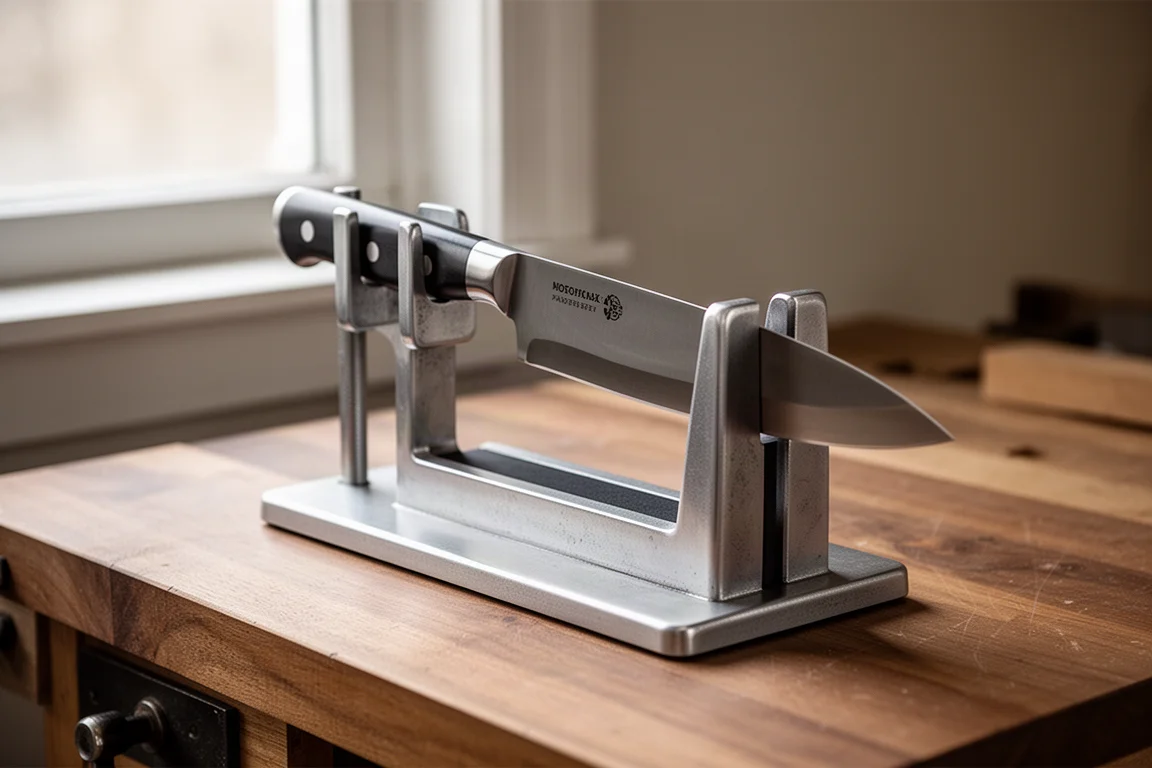
After clamping the knife into the caddy, the first job is finding the blade’s existing angle. The 202H handles this with an adjustment at the rear of the unit that raises and lowers the rod, changing where the flat plane of the stone intersects the edge. In practice, lighting the stone area and using a magnifier to line the stone flat against the bevel works well, and once the angle is locked in, it stays put.
Verification is built in. The kit includes a blue marker: color the bevel, take a light pass with the stone, and if the angle is correct the mark comes off almost instantly along the full edge. If it does, you are aligned. This is the step that makes the system genuinely accessible, since you are confirming the angle rather than trusting your eye.
The blade platform is secured with a set screw. Flipping the knife is a deliberate motion: back off the screw, raise the whole platform, and it drops back into its cradle holding the blade solid, so no angles drift between sides.
Working Through the Grits
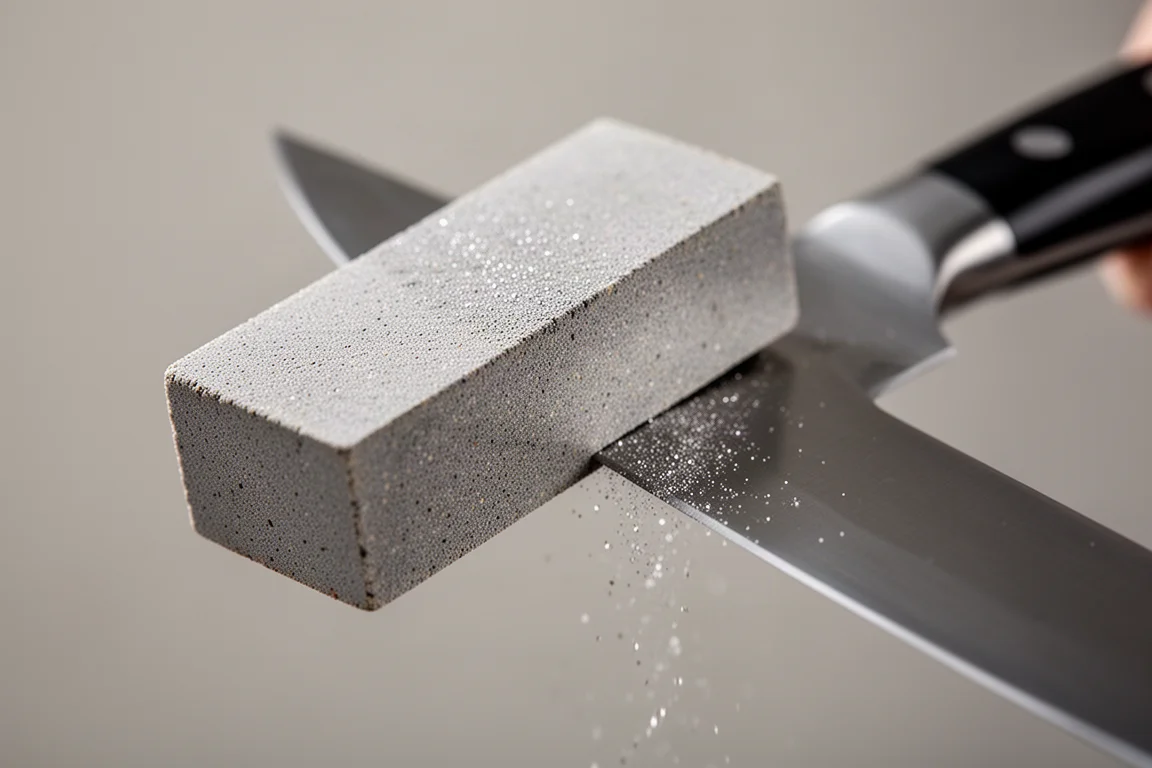
This knife was set up starting with the 325-grit diamond stone. One caution worth repeating: diamond cuts into steel readily, so light pressure is the move. You are not trying to grind off metal aggressively, and you cannot put metal back on. The feedback matters here too. A coarse stone still has resistance and texture, but what you are listening and feeling for is a uniform feel across the edge rather than patchy spots.
Progression moves to a 500/600 stone next, and then to a 1,000-grit stone that feels almost like polished steel for something so smooth. The edge tells you where the work is: the tip may finish quickly, while the center of the slicing area can feel rougher and need more passes. Sound is a surprisingly useful cue. As you turn the corner where there is less metal, the tone changes, and rough spots announce themselves before they smooth out.
Because the system holds the angle so consistently, both sides of the blade tend to feel the same and need roughly the same amount of sharpening time. That uniformity is a big part of why the results come out even from heel to tip.
Is It Beginner Friendly?
This is an advanced-style sharpener designed to make the technique accessible. Anyone who wants razor-sharp knives without years of experience can follow the process, and experienced sharpeners can take it further. The main learning curve is in the feel of the stone against the steel, knowing when an edge is uniformly worked and when to stop. Even so, the guided angle removes the most common beginner failure, which is re-profiling the edge at the wrong angle.
A sensible tip from the testing approach: learn on an inexpensive test knife rather than a favorite. That way you can play around, wear down the blade if needed, and build confidence before moving to knives you care about.
Portability and Storage
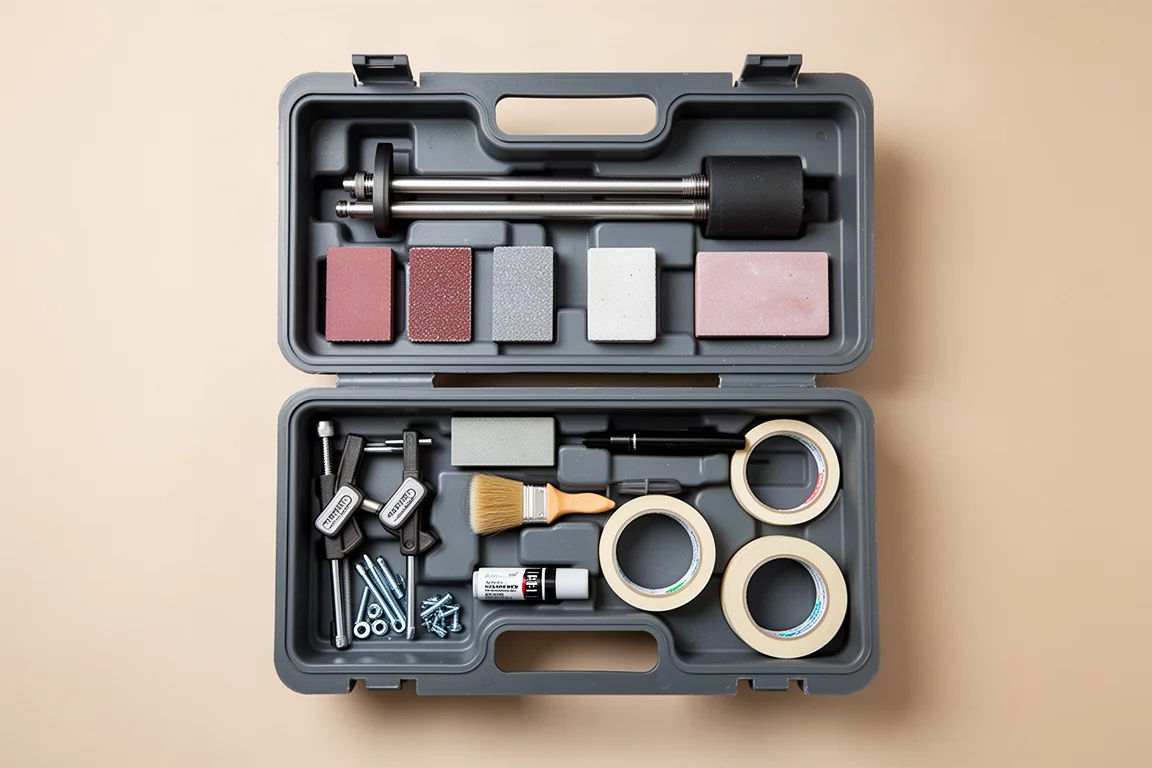
The kit ships in a solid blow-molded case with two layers. The base plate is weighted to hold the unit still on the bench, and it unscrews from the platform for packing. The rod, stones, clamps, paintbrush, marker, and a block of abrasive all have dedicated slots, with spare screws and bolts included for different setups.
Small touches stand out. The included masking tape lets you cover a blade edge, finish, or cheek before the clamps grab down, protecting the finish from scratches. The clamps are fairly deep, so the system handles kitchen knives alongside smaller blades. You can leave it set up on a bench or fold it into the case and take it with you, which is a real advantage given the unusual height of the assembled unit.
Buying Advice
If you have a drawer of dull knives and no interest in freehand sharpening, the Sharpel 202H is a logical pick. The guided angle adjustment, secure clamping, full grit progression, and protective case together solve the problems that make people give up on sharpening. It also looks like a strong candidate for seasonal deals, so it may be worth timing your purchase around major sale events if you are not in a hurry.
Conclusion
The Sharpel 202H turns a skill that usually takes years to develop into a repeatable process: find the angle, verify it with the marker, work the grits from 325 up through 1,000, and strop on leather. It asks for patience and a light touch rather than expertise, and it rewards both sides equally. For anyone who wants to learn to sharpen knives or simply sharpen a lot of them properly, this kit makes the path remarkably clear.
Product link
View more details for Sharpel 202H Knife Sharpening Kit
This product is mentioned in the review. Check the specifications, options, and compatibility before buying.
View more details for Sharpel 202H Knife Sharpening KitFurther reading
Related Reviews
Knife Sharpening
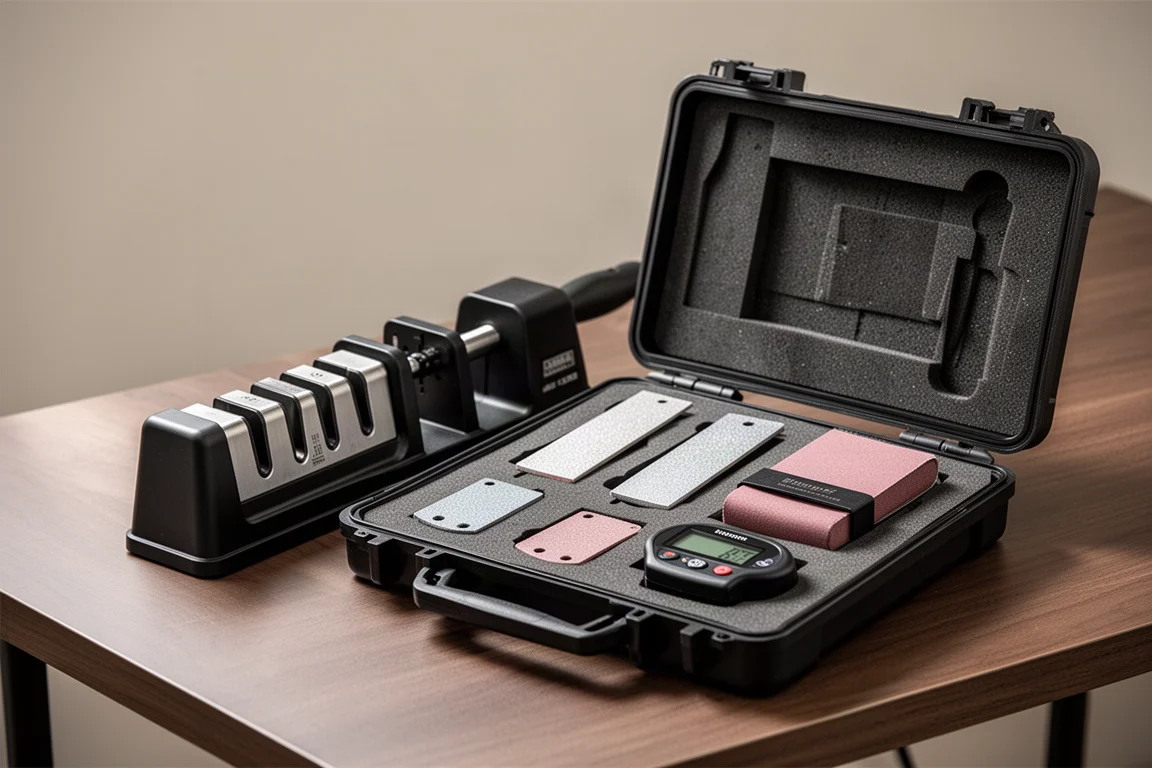
Work Sharp Professional Precision Adjust Elite: A Sharpening System for People Who Care About Edges
The Elite version of the Professional Precision Adjust adds a rugged case, fine resin-bonded diamond plates, and a strop for a true mirror finish.
Knife Sharpening
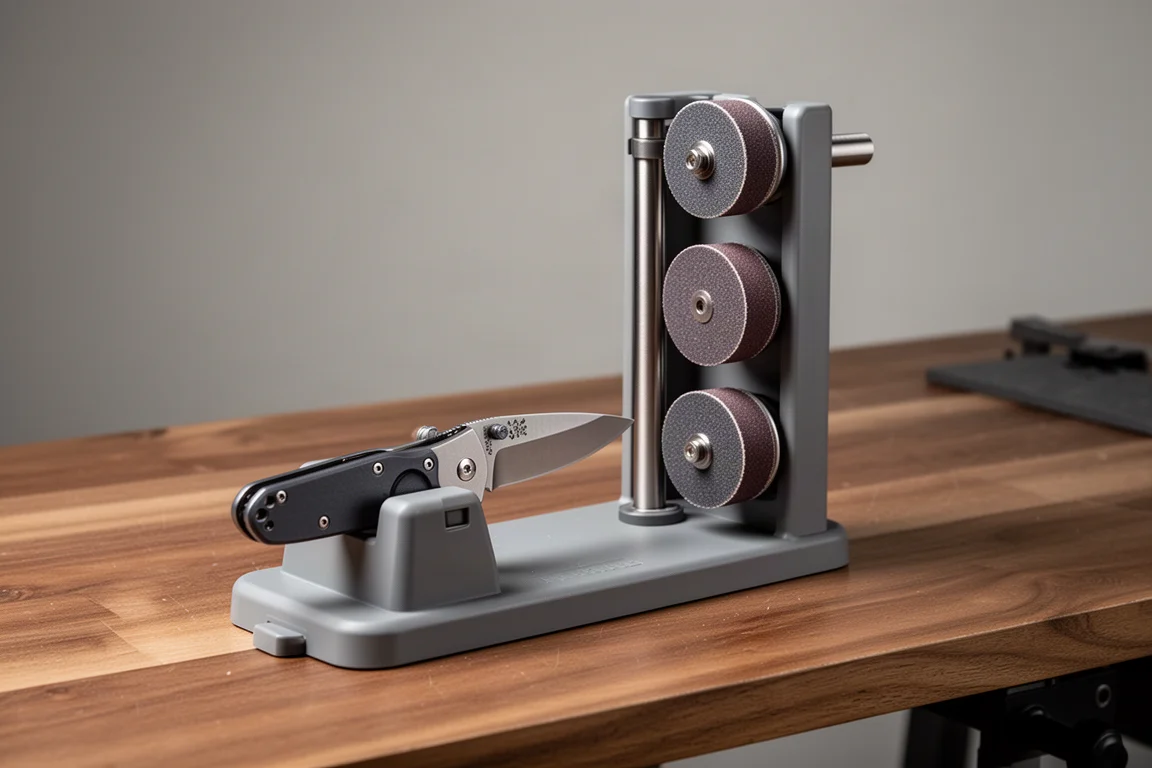
Work Sharp Precision Adjust: The Clamp-and-Jig Sharpener Worth Building Out
A fixed-angle knife sharpener with a rotating abrasive carriage, plus an upgrade kit that turns it into a genuinely complete sharpening setup.
Knife Sharpening
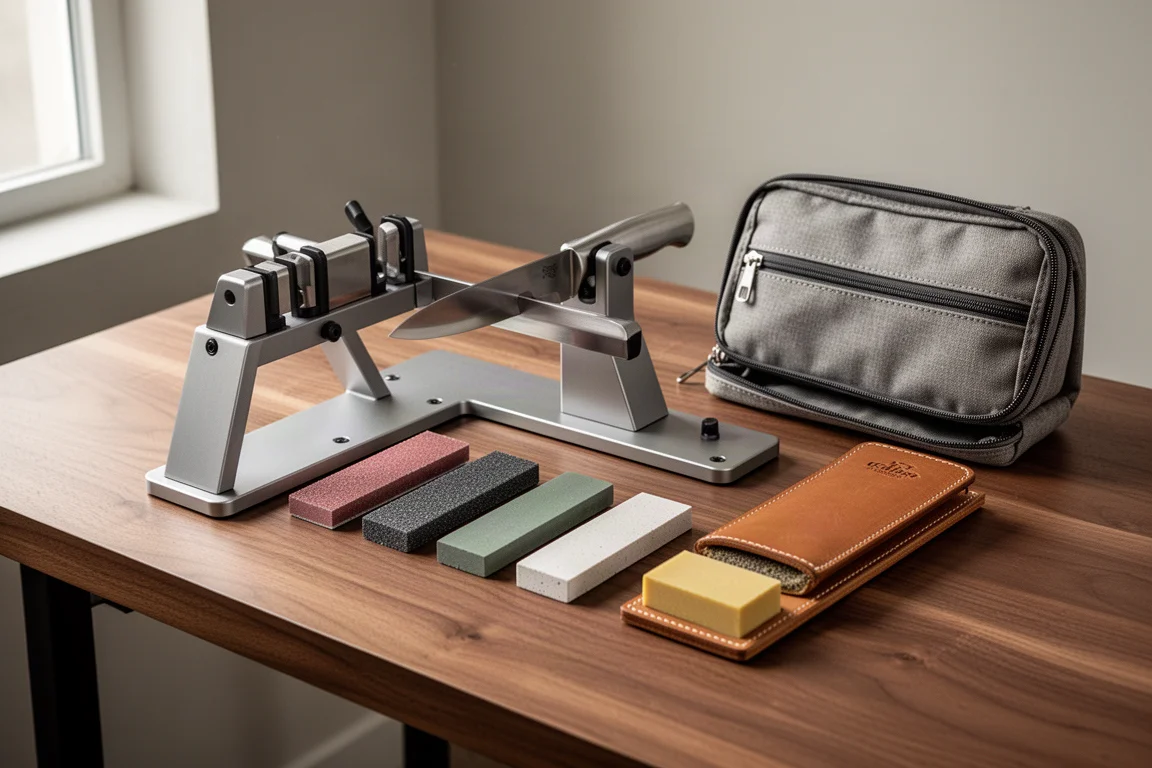
Work Sharp Precision Adjust Upgrade Kit Review: A Wider Grit Range for an Already Great Sharpener
The Upgrade Kit expands the Precision Adjust with extra abrasives, a built-in strop, and a proper carrying case. Here is what changes after months of use.