Tech
Seestar S50 Review: The Smart Telescope That Makes Astrophotography Easy
A portable all-in-one smart telescope that finds, tracks, captures, and stacks deep sky images, with almost no learning curve required.
Introduction
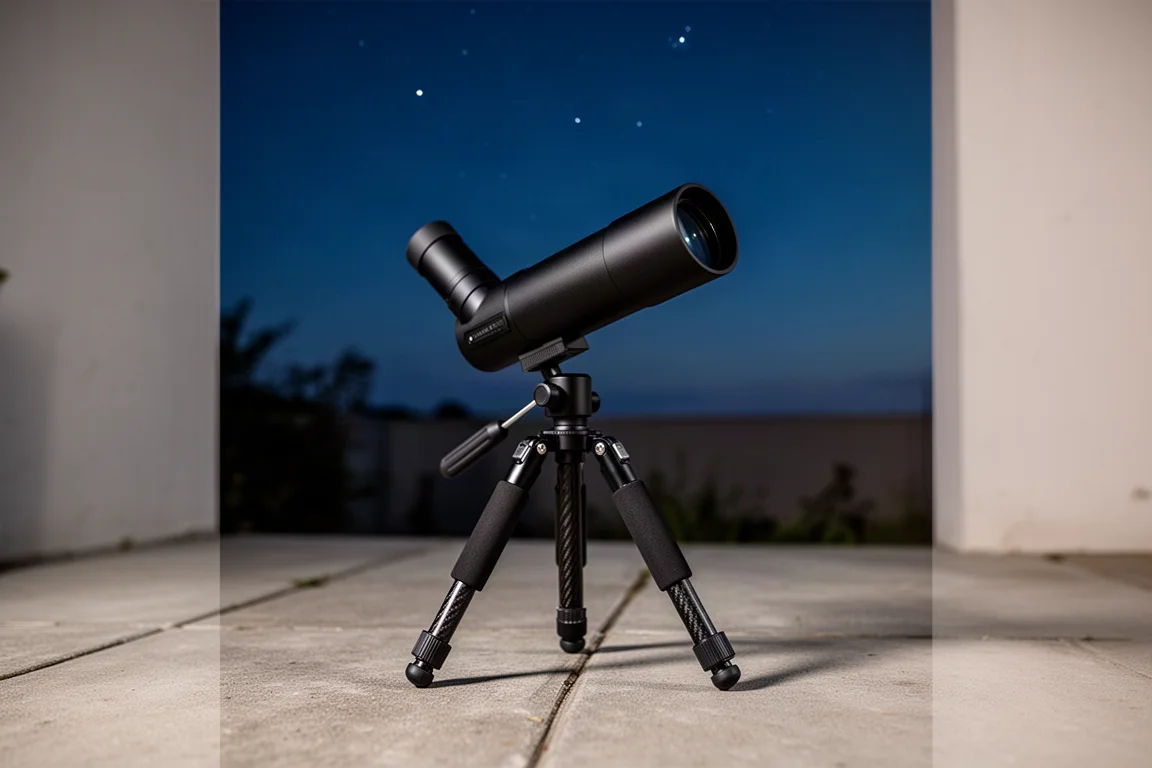
The Seestar S50 is the portable smart telescope that made astrophotography genuinely easy. It finds its target, tracks it, captures it, and stacks the frames, and the pictures it produces straight out of the camera are surprisingly good. If you have assumed smart telescopes are just expensive toys, the images people are posting from this unit may come as a shock.
The idea is simple: take your own astro photos without any previous photography experience. Inside the Seestar S50 you get a 50 mm telescope, a dedicated astronomy camera, a light pollution filter, and a tracking go-to mount. At a current price of $499 in the US, it is one of the cheapest, fastest, and easiest ways to get an impressive photo of the Moon, the Sun, and the brightest deep sky objects.
Who This Product Is For
This is for anyone who wants real astrophotography results without learning the technical side first. If you already own a serious astrophotography kit with a large telescope and an equatorial mount, you can probably take better pictures than the Seestar, since your camera alone may cost twice or three times this entire package.
But that is not the point of the Seestar S50. It is about letting anyone photograph objects in space without knowing what dithering or field rotation means. It is about setting this thing down on the ground, pressing a few buttons, and getting a live view of the Orion Nebula or the Andromeda galaxy.
What You Get in the Box
The little Seestar weighs about 7 lb and comes with an impressive foam carry case, which makes it great for travel. The kit includes a quality carbon fiber tripod base, a charging cable, a solar filter, and of course the dedicated mobile app.
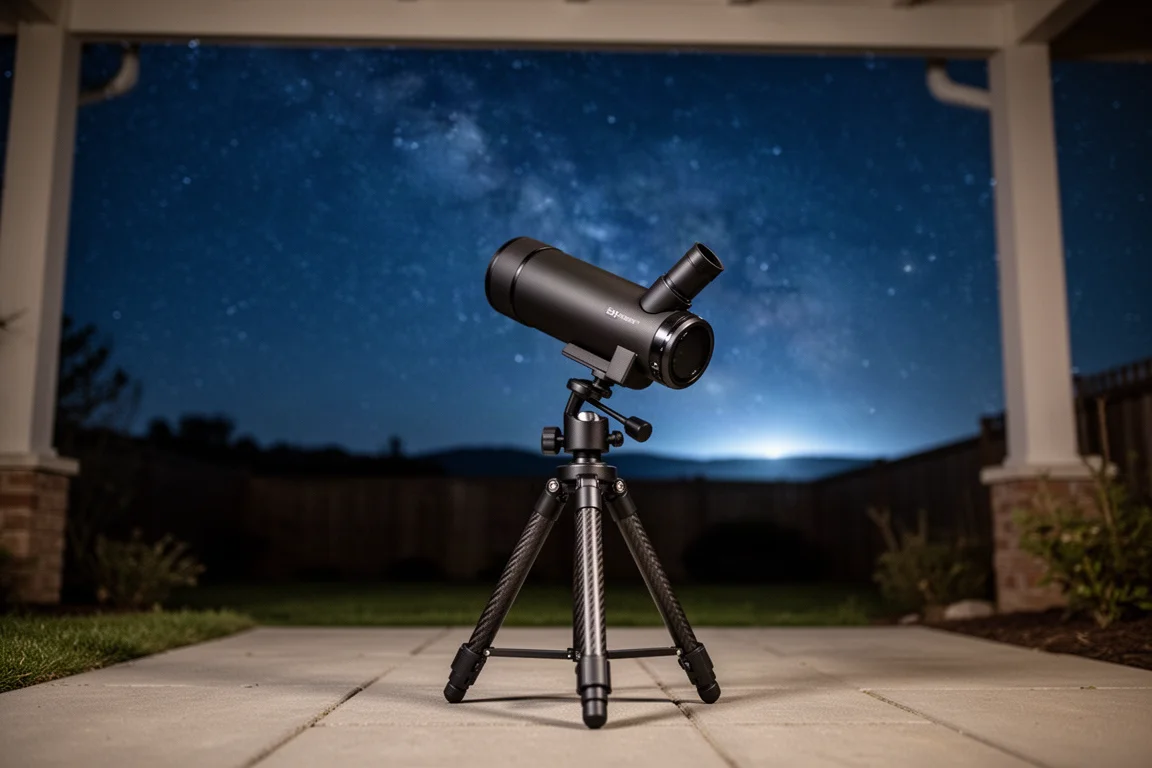
There is no hand controller. You control the telescope wirelessly with your smartphone over Wi-Fi. Once fully charged with the included USB Type-C cable, the listed battery life is up to six hours.
App and Wireless Control
After allowing location settings in the Seestar app, you get handy astronomy weather information including the current Moon phase. You also see the primary modes of the unit: stargazing, solar, and lunar astrophotography. If you need ideas, the Tonight’s Best menu suggests targets, and you can see upcoming celestial events like meteor showers and eclipses.
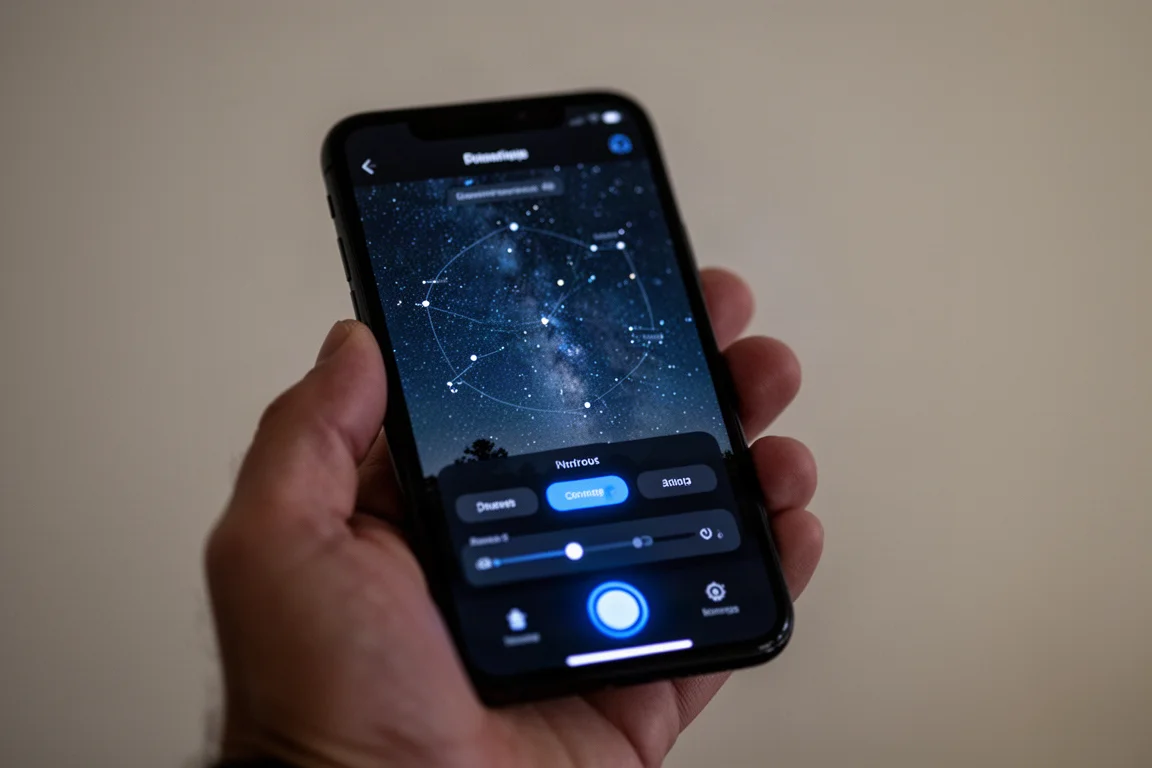
There is also a scenery mode that, while it may look like something your phone camera could do, actually uses the telescope to view terrestrial objects with the advantage of ultra steady, precise movements via the app. It is a feature that turns out to be surprisingly cool.
The listed Wi-Fi range is about 15 feet. Tested from just inside the house during cold weather, the connection stayed stable within that distance.
The Optics and Camera
Inside the Seestar is a 50 mm triplet apochromatic refractor with a focal length of 250 mm and an f-ratio of f/5. A triplet APO at this price is genuinely hard to explain.
Attached to the telescope is a one-shot color astronomy camera using the same sensor as the ZWO ASI 462 MC, a 1936 x 1096 sensor at 2.1 megapixels. That camera is a sensitive, capable workhorse, but it is also the weakest point of the package. It is really small.
Do not expect a wide field of view. You are limited to a specific window of space just over one degree. That is great for the Moon and the Sun, less so for planets, which will appear quite small at this field of view.
Live Stacking and How It Images
In stargazing mode, the default exposure is 10 seconds, and for good reason. Because the Seestar uses an altazimuth mount without polar alignment, exposures are limited to about 10 seconds before field rotation becomes visible. The unit automatically calibrates and stacks the subframes into a final master image, so complete beginners can skip that step entirely.
The technique is called live stacking, part of electronically assisted imaging. The Seestar continuously takes 10-second exposures and stacks them on top of each other to improve the signal to noise ratio. The result is a near-realtime view that keeps getting better and better.
Intermediate users can dig into more advanced settings and stack the individual sub exposures themselves, which would be a real way to push the limits of this unit.
Imaging the Andromeda Galaxy
A first session on Andromeda shows how simple the workflow is. Because a galaxy is a broadband subject, you turn the light pollution filter off, open the Tonight’s Best section, select M31, and start. The Seestar slews to the target, plate solves, and auto-centers.
A quick autofocus follows, which is a genuinely great feature of this unit. You can even fine-tune the framing with the on-screen joystick before hitting capture. The first 10-second exposure of the Andromeda galaxy may not look like much, but after just a few minutes of stacking, one of the spiral arms of dust is already clearly visible.
Built-In Extras
Two nice surprises stand out. First, the Seestar includes an integrated dew heater and is rated to operate down to minus 10 degrees C. Second, there is a built-in light pollution filter that appears to be a duo-band filter similar to the L-Enhance.
You can of course turn the light pollution filter off to shoot broadband targets like galaxies and star clusters, which is exactly what the Andromeda session above did.
Things to Consider Before Buying
The small sensor and narrow field of view are the main limitations. Planets will look tiny, and if you want wide-field imaging, this is not the tool. The altazimuth mount also caps exposures at around 10 seconds, so long-exposure purists will want more traditional gear.
But the Seestar S50 delivers the best parts of astrophotography in a fun and easy way. The words “astrophotography” and “easy” are not often paired together, and this unit has finally pulled it off.
Buying Advice
At $499, the Seestar S50 is one of the cheapest, fastest, and easiest routes to impressive photos of the Moon, the Sun, and the brightest deep sky objects. It suits beginners completely new to the hobby, travelers who appreciate the foam case and 7 lb weight, and anyone curious about the night sky who does not want to learn processing software first. Skip it if you already own serious equipment and want maximum image quality.
Conclusion
The Seestar S50 turns astrophotography into something anyone can do on a whim, and that may matter more than perfect image quality. It means more people pausing to think about our place in the universe and how rare our existence here on Earth really is.
Product link
View more details for Seestar S50
This product is mentioned in the review. Check the specifications, options, and compatibility before buying.
View more details for Seestar S50Further reading
Related Reviews
Tech
Apple MacBook Neo Review: A Surprisingly Capable Budget Laptop
The MacBook Neo brings M1-equivalent performance to a $599 entry-level laptop. We tested it across real workflows to see if it's worth considering over pricier alternatives.

Tech
ASUS ZenBook 16 With Snapdragon and RTX 4060: Can an ARM Laptop Game With an External GPU?
An early look at pairing an Nvidia RTX 4060 with a Snapdragon-powered laptop using a Thunderbolt 5 eGPU dock, including real gaming results.

Tech
GPD G2 eGPU Dock Review: A Sturdy, Future-Ready Boost for Your Handheld or Mini PC
The GPD G2 eGPU dock brings new connectivity standards, a robust build, and desktop-class graphics to laptops, handhelds, and mini PCs.