Backpacking Tents
Sea to Summit Alto 2 and Telos 2 Review: Two Sub-Three-Pound Backpacking Tents Compared
A practical look at the semi-freestanding Sea to Summit Alto 2 and the freestanding Telos 2, covering headroom, pad fit, ventilation, setup, and which one suits your trips.
Introduction
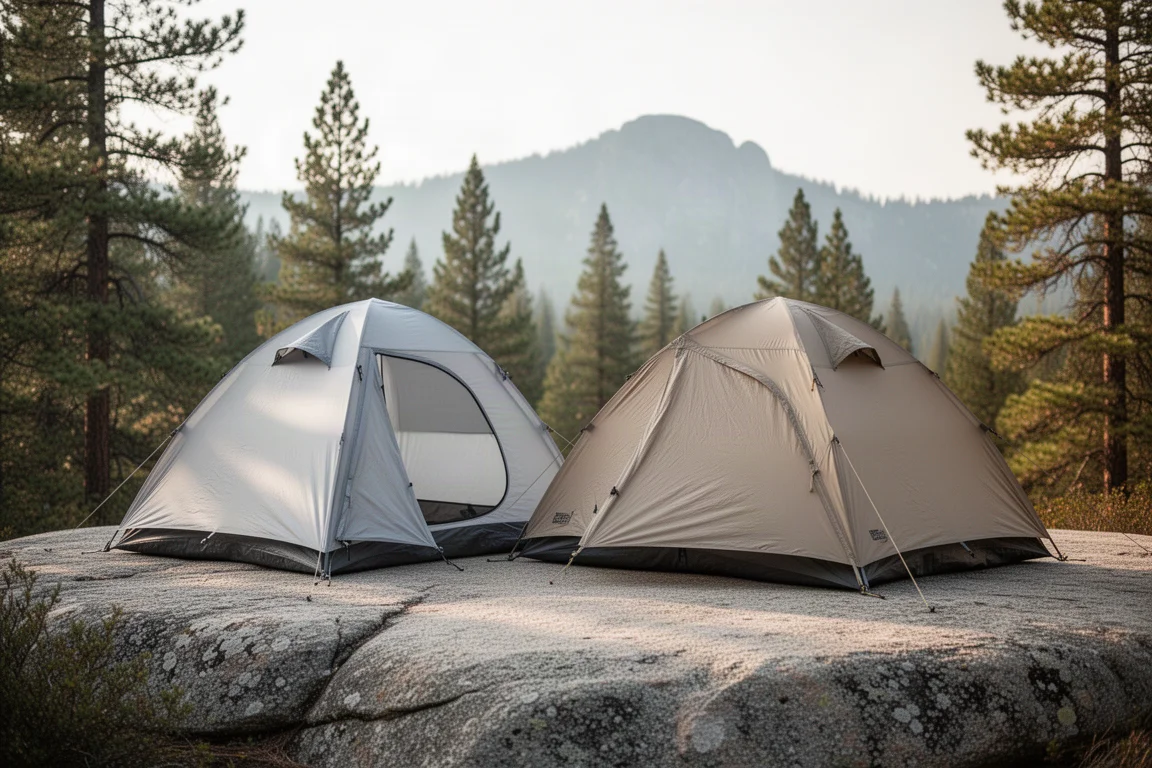
If you are the kind of backpacker who wants a sub-three-pound two-person tent but still expects every feature to be present, the Sea to Summit Alto 2 is built for exactly that brief. It is a semi-freestanding shelter with near-vertical walls, a vented brow pole across the roof, and enough interior height for two adults to sit up at the same time.
The Alto 2 sits at the lighter end of the Sea to Summit two-person lineup, while the Telos 2 is its freestanding sibling. The Telos 2 adds 11 ounces and a wider floor, and it carries over the same wall geometry, ventilation approach, and interior storage ideas. Choosing between them comes down to how you pitch, how you sleep, and how much weight you are willing to carry.
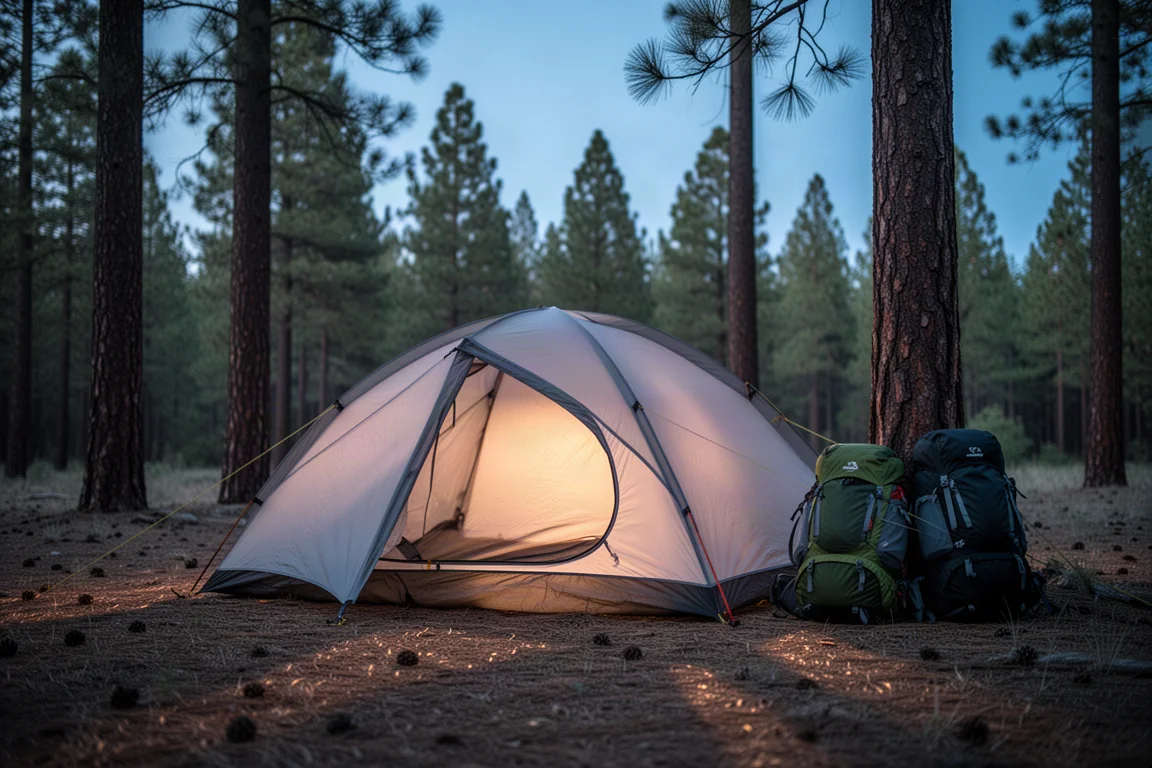
Both tents are aimed at backpackers who treat interior livability as a feature rather than a luxury. The sections below cover what each one does well, where the compromises land, and which trips each tent suits best.
What Matters Most in a Sub-Three-Pound Two-Person Tent
Weight is the headline number, but it is rarely the deciding one. A tent that saves a few ounces and then forces you to sleep curled up, or to leave one pad at home, is a poor trade. Four things matter most in this category.
The first is geometry. Vertical walls and a raised roofline create usable volume, which is what lets two people sit up, change layers, and wait out weather without lying flat. The second is pad compatibility. A narrow foot end can rule out rectangular pads entirely, so tapered mummy-style pads are often the practical choice. The third is ventilation. A vent you can open from inside the tent is the difference between a dry inner tent and a damp sleeping bag after a cold, still night.
Setup style is the fourth consideration. A semi-freestanding tent needs a couple of stake-out points before it stands properly, while a freestanding tent holds its own shape without them. That distinction matters on rock slabs, wooden platforms, and hard-packed ground where pegs are difficult to place.
Sea to Summit Alto 2: Semi-Freestanding Design and Interior Space
The Alto 2 is a semi-freestanding tent, which means two stake-out points are required for a proper pitch. Once those are set, the structure opens into a notably roomy shelter. The front, the back, and both sides run almost completely vertical, so the interior feels closer to a small cabin than a tapered tunnel.
The distinctive detail is the brow pole across the top. It bows upward and creates an open vent that can be zipped or unzipped from inside the tent. On a snowy December trip in northern Wisconsin, that vent kept condensation away entirely, which is unusual for a two-person shelter in those temperatures.
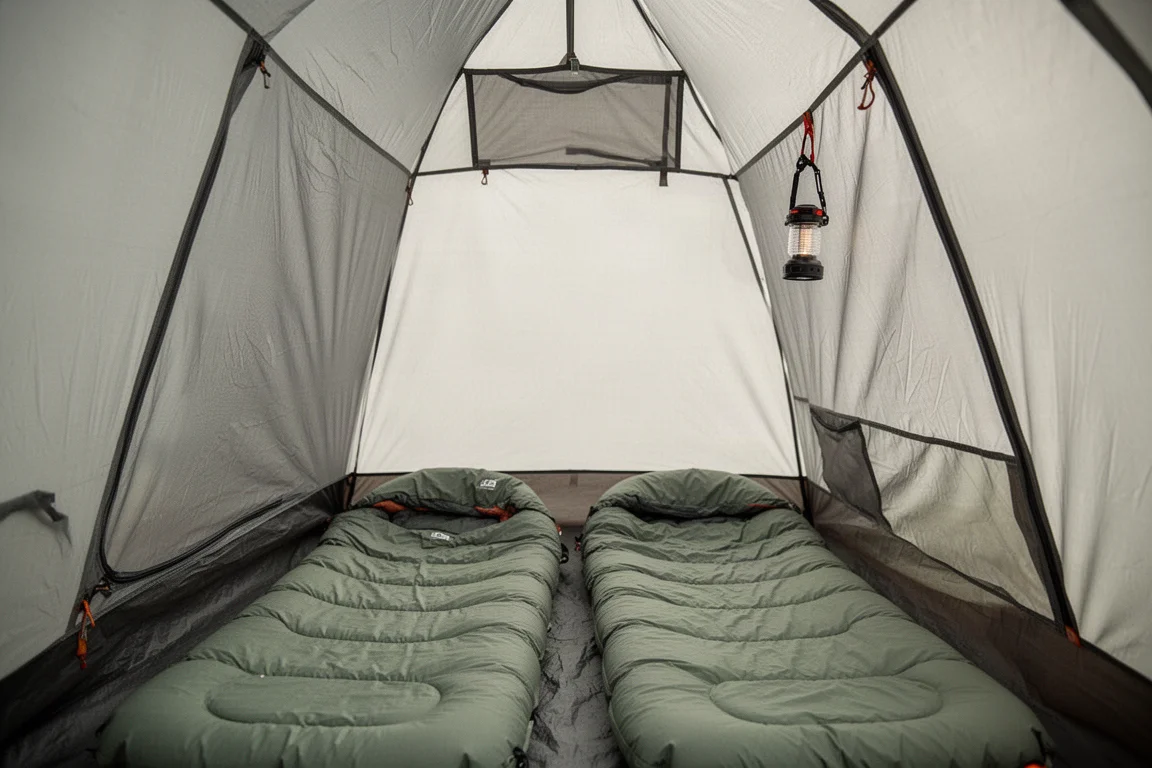
Interior dimensions are generous in length and tighter at the foot: 53 inches across the head end, 38 inches at the foot, and roughly 83 inches from end to end. In practice, two 20-inch tapered pads fit comfortably, while two rectangular pads of the same width do not. If you already own rectangular pads, this is worth checking before you commit.
Headroom is the Alto 2’s strongest argument. Two adults can sit upright facing each other, a six-foot sleeper has clear space above the head and beyond the feet, and the canopy does not press down on a sleeping bag, which helps keep feet warmer on cold nights. The vestibule is adequate for a backpack, boots, and smaller gear, and the doors toggle back so you can open the tent up to the view. The rainbow-style door zips are the one ergonomic compromise, since they often need two hands to run smoothly.
Sea to Summit Alto 2: Storage, Setup, and Ventilation
Setup details are unusually thoughtful. Every corner is color coded, so the head end and the foot end are obvious at a glance. The corner webbing is adjustable, which lets you re-tension the canopy after nylon sags in wet weather, and a rigid insert at each corner squares out the floor and helps preserve usable space.
Sea to Summit also supplies two separate stuff sacks, one for the rain fly and one for the inner tent. That matters on wet mornings, because the fly can ride on the outside of your pack while the dry inner tent stays protected inside. Both bags double as pockets that snap into the corners of the interior, and interior hanging loops are plentiful, which makes it easy to keep a headlamp, a phone, or a damp layer off the floor.
The pole bag doubles as a light bar. A lightweight plastic insert and a white diffusing panel turn the sack into a soft ceiling light when you drop a headlamp inside. It works, but it adds bulk, so it reads as an optional extra rather than a reason to buy the tent. One caveat on the pole sack: it is double ended, so if you loosen both ends, poles can slide straight through and out the bottom. Keep one end cinched.
For context, the Alto 2 offers noticeably more headroom than the Big Agnes Tiger Wall, a tent many backpackers already know well, and that extra interior height is the clearest point of difference in this comparison.
Sea to Summit Telos 2: Freestanding Comfort and Extra Width
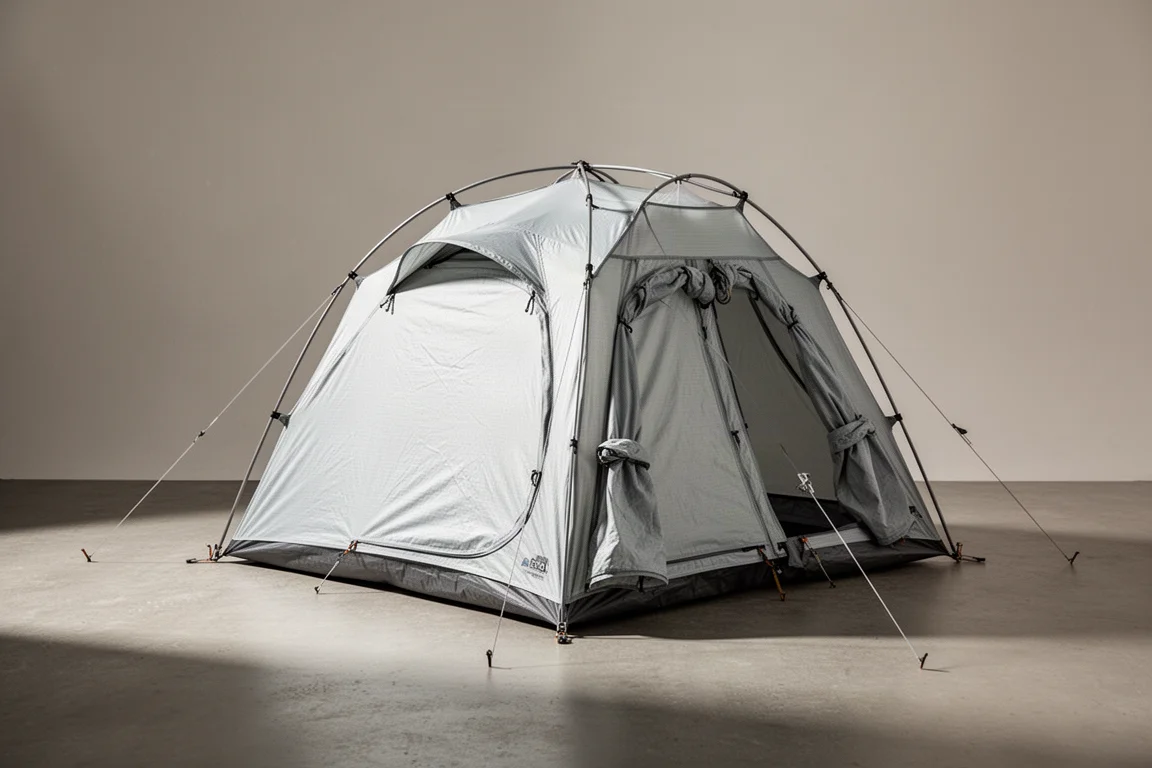
The Telos 2 is the freestanding version of the Alto 2. Its poles are separate and the structure supports itself, so no stake-out is mandatory, which is useful on granite slabs, wooden platforms, and ground too hard for pegs. The cost is weight: the Telos 2 comes in at 3 pounds 10 ounces, 11 ounces more than the Alto 2.
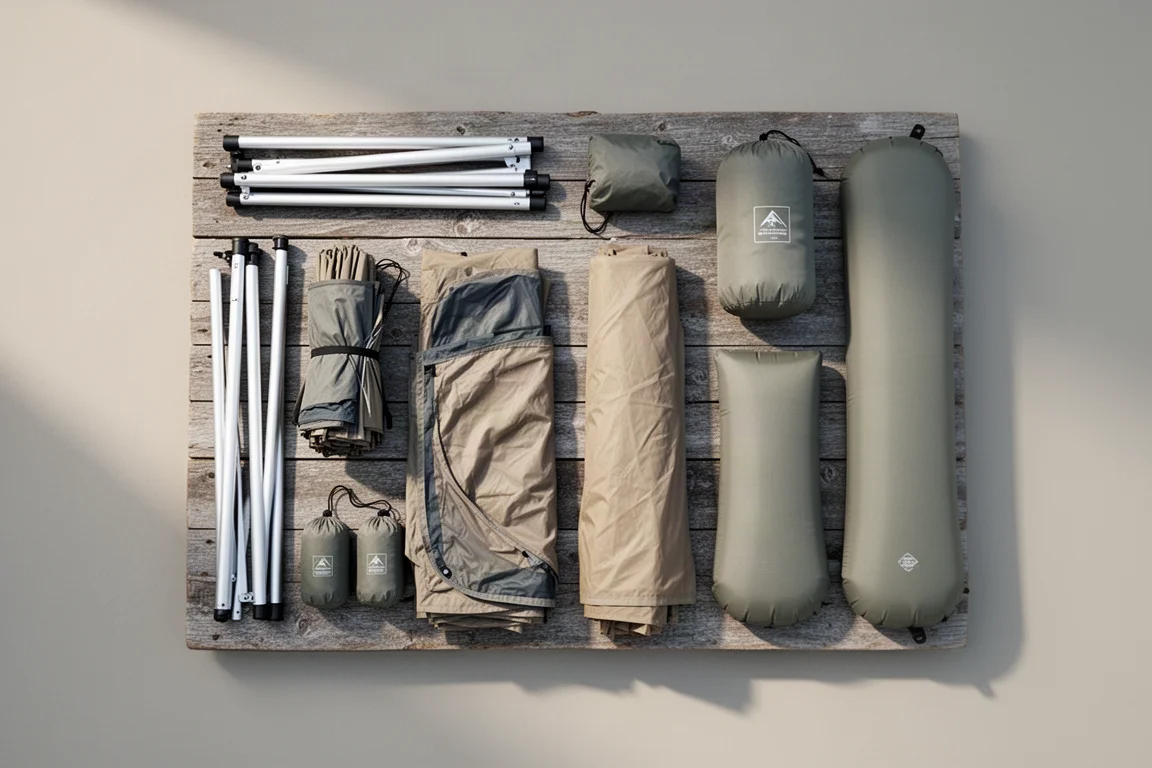
Most of the Alto 2 design carries over. The Telos 2 uses the same brow pole and tension ridge to lift the roofline, the same near-vertical walls, the same interior ventilation, and the same light-bar pole sack. It can also be separated into poles, rain fly, and inner tent so two people can split the load between packs.
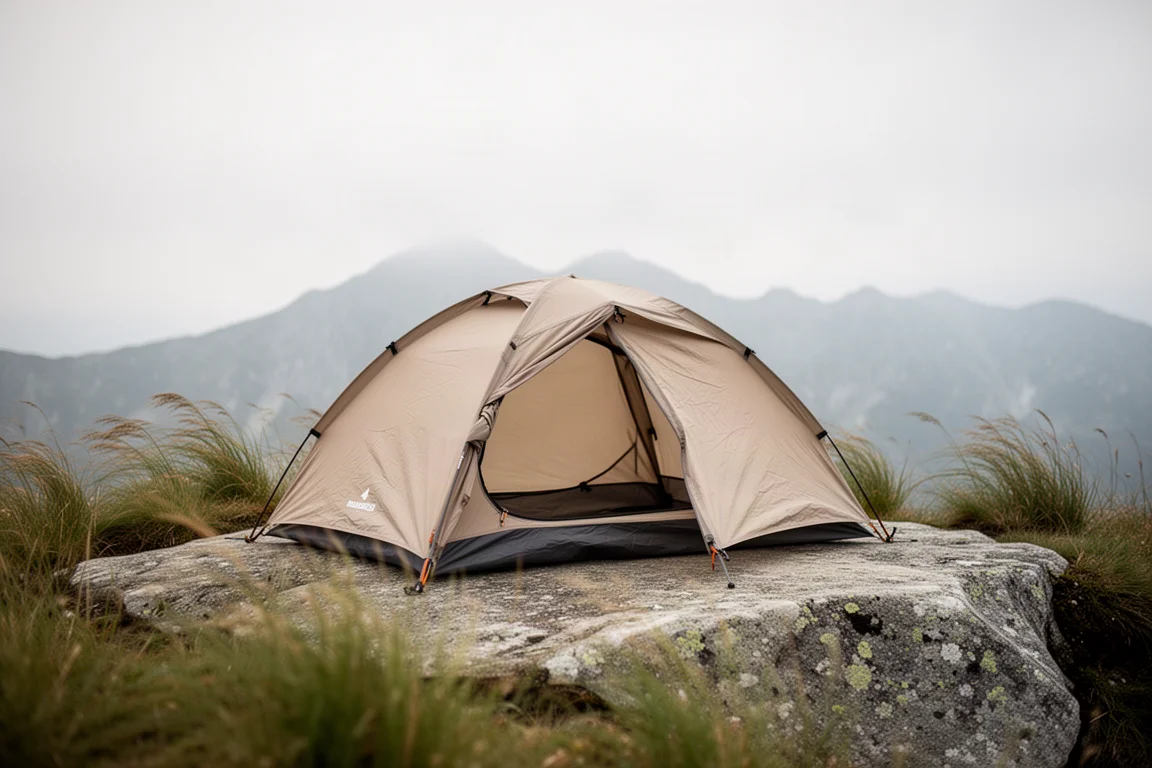
The meaningful difference is floor space. The Telos 2 fits a 25-inch wide pad alongside a 20-inch pad, so couples with mismatched pads, or anyone who simply wants a wider sleeping surface, have far more flexibility. Packed size stays compact despite the extra interior volume. Within the ultralight category, the Telos 2 sits in the same conversation as long-established freestanding designs such as the Copper Spur and the Tiger Wall, and it leans toward more interior space at the cost of a little more weight in your pack.
For backpackers who are happy to carry a bit more for a more comfortable camp, the Telos 2 is the more forgiving tent of the two.
How the Alto 2 and Telos 2 Compare
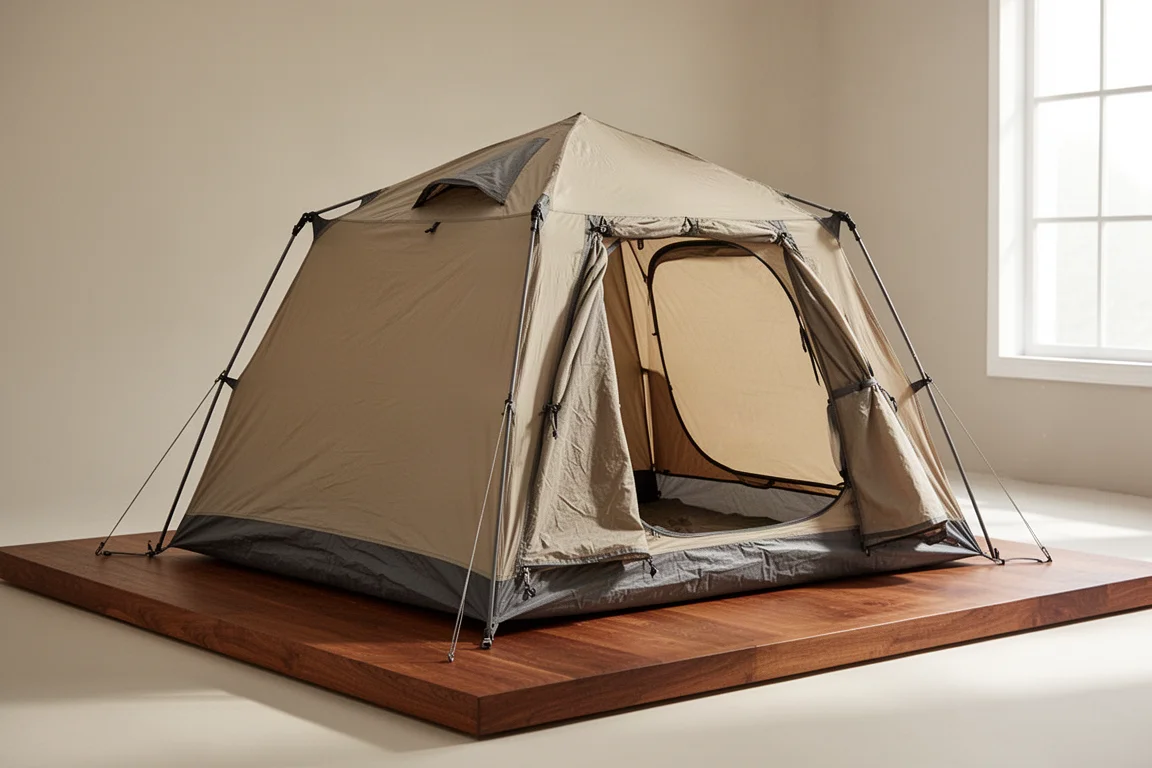
- Setup: the Alto 2 is semi-freestanding and needs two stake-out points, while the Telos 2 is fully freestanding and stands without them.
- Weight: the Alto 2 stays under three pounds, while the Telos 2 adds 11 ounces to reach 3 pounds 10 ounces.
- Interior width: the Alto 2 fits two tapered 20-inch pads, while the Telos 2 fits a 25-inch pad plus a 20-inch pad.
- Shared design: near-vertical walls, a vented brow pole, interior ventilation, a light-bar pole sack, and a fly and inner tent that pack separately.
The practical summary is that both tents prioritize livable interior space, and the decision rests on whether freestanding pitching and a wider floor are worth 11 ounces to you.
Buying Advice: Choosing Between the Alto 2 and Telos 2
Choose the Alto 2 if minimum weight is the priority and you are comfortable staking out two points at every pitch. Plan on tapered mummy-style pads so that two people can sleep side by side, and expect a genuinely roomy interior for a shelter in this weight class. It suits solo backpackers who want space to spread out as much as it suits couples.
Choose the Telos 2 if you pitch on rock, platforms, or hard ground often, or if you want the freedom to place a wider pad next to a standard one. The extra 11 ounces buy a self-supporting structure and more floor width, and the load can be split between two packs, which softens the weight penalty on shared trips.
Neither tent is a stripped-down shelter. Both are built around the idea that headroom, ventilation, and pad fit matter as much as the number on the scale, so the right choice depends on your terrain and your sleeping setup rather than on features alone.
Conclusion
The Sea to Summit Alto 2 makes a strong case for backpackers who want to stay under three pounds without giving up interior space, thanks to near-vertical walls, a vented brow pole, and sit-up headroom for two. The Telos 2 keeps that same livable design and trades 11 ounces for freestanding pitching and a wider floor that accommodates mismatched pads. Pick the Alto 2 for the lightest carry, and pick the Telos 2 for the easiest pitch and the most flexible sleeping arrangement.
Further reading
Related Reviews
Backpacking Tents
3F UL Lanchan Pro 1 Review: A 1 lb 8 oz Single-Wall Trekking Pole Tent
A practical look at the 3F UL Lanchan Pro 1, a single-wall trekking pole shelter with a 1 lb 8 oz weight, 20D silnylon fabrics, and a roomy 90 x 31 x 49 inch interior.
Backpacking Tents
3F UL Taiji 2-Person Tent: A Convertible Backpacking Shelter Worth a Closer Look
A practical look at the 3F UL Taiji two-person tent, covering its materials, true two-person interior, fly-first pitching, and the seasonal inner swap that lets one shelter cover more of the year.
Backpacking Tents
3FUL Lanshan Twoerson Pro Review: A Light Trekking Pole Shelter That Struggled in Rain
A two-person trekking pole shelter with a 2026 redesign, pitched with sticks and put through a night of steady rain. Here is what worked, what did not, and what to check before buying.