Camping Gear
Sea to Summit Aeros Down Pillow Review: Ultralight Comfort for Campers
A detailed look at the Sea to Summit Aeros Down Pillow, covering comfort, packability, the three-way valve, and the trade-offs to weigh before spending $60 on a camping pillow.
Introduction
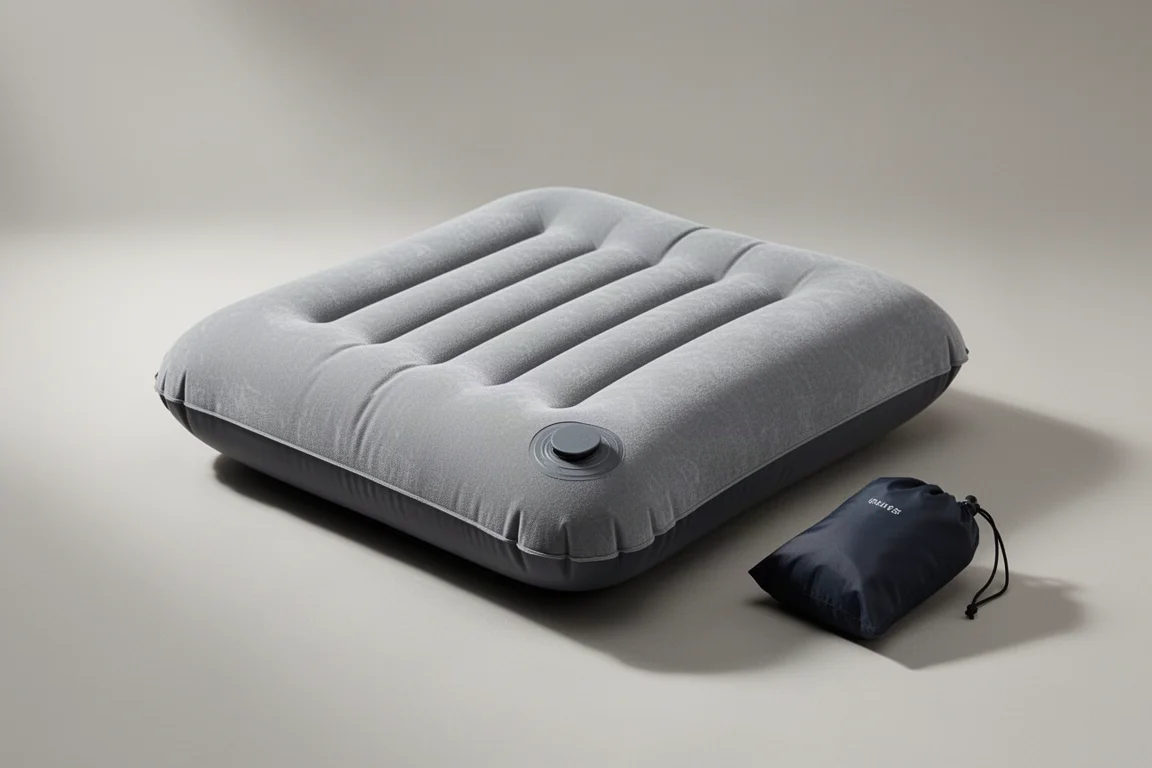
A good night’s sleep outdoors usually comes down to a few small decisions, and the pillow is one of them. The Sea to Summit Aeros Down Pillow is an inflatable camping pillow built for people who want that comfort without giving up space or weight in a pack. It is a lightweight, highly compressible option that aims to make the difference between a restless night and a proper one.
Who This Pillow Is For
This pillow suits backpackers, bikepackers, and campers who count every ounce and every cubic inch. In its compressed form it measures roughly 3.2 by 2.5 inches, so it fits into a corner of a pack alongside a sleeping bag or a cook kit. Once inflated, the regular size measures about 13.5 by 9.5 inches and stands 4.7 inches thick, which is enough surface area for most sleepers to rest their head without chasing the pillow around the tent.
It is also a reasonable choice for travellers and car campers who want a pillow that takes up almost no room in a bag but still feels like a pillow rather than a folded jacket.
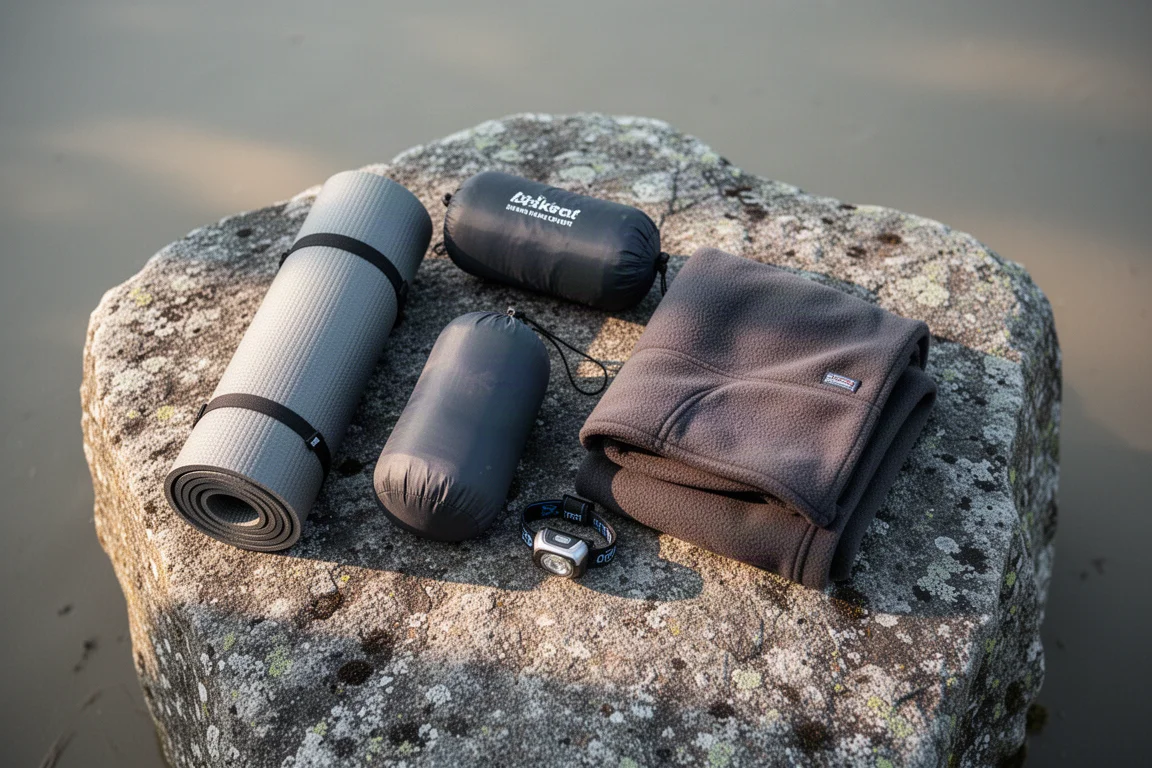
Anyone who has tried to sleep on a bundled fleece knows the trade-off: soft, but shapeless and quick to flatten. The appeal here is a product that behaves like a pillow in use and like a small stuff sack in transit.
Main Strengths
Construction and Comfort
Build quality is the first thing that stands out. The stitching is clean, there are no loose threads, and the seams hold up without leaking air over months of use. That reliability matters more than it sounds, because a slow leak is the fastest way to ruin an inflatable pillow.
Comfort is the strongest argument for this pillow. The three-way valve allows firmness to be dialled in precisely, so the pillow can be firm for side sleeping or softer for back sleeping. The down-filled top surface feels good against the skin, and the reverse side has a felt-like texture that is equally pleasant. For anyone who has cycled through a stack of camping pillows and quietly stopped using them, this is the one that tends to stay in the pack.
Valve System and Packability
The flat valve sits in the corner, where it is barely noticeable while sleeping. It is a three-way design: one layer opens for inflation, a centre push releases air in small amounts to soften the pillow, and a deflation valve empties it quickly when packing up. Inflation takes about two breaths, which is fast enough to manage in the dark.
Packed weight is 2.6 ounces with the included storage bag and 2.4 ounces without it. The bag itself is a 210 denier sil nylon stuff sack with a side loop and a drawcord top, so the pillow pulls out easily and stuffs back in without a fight.
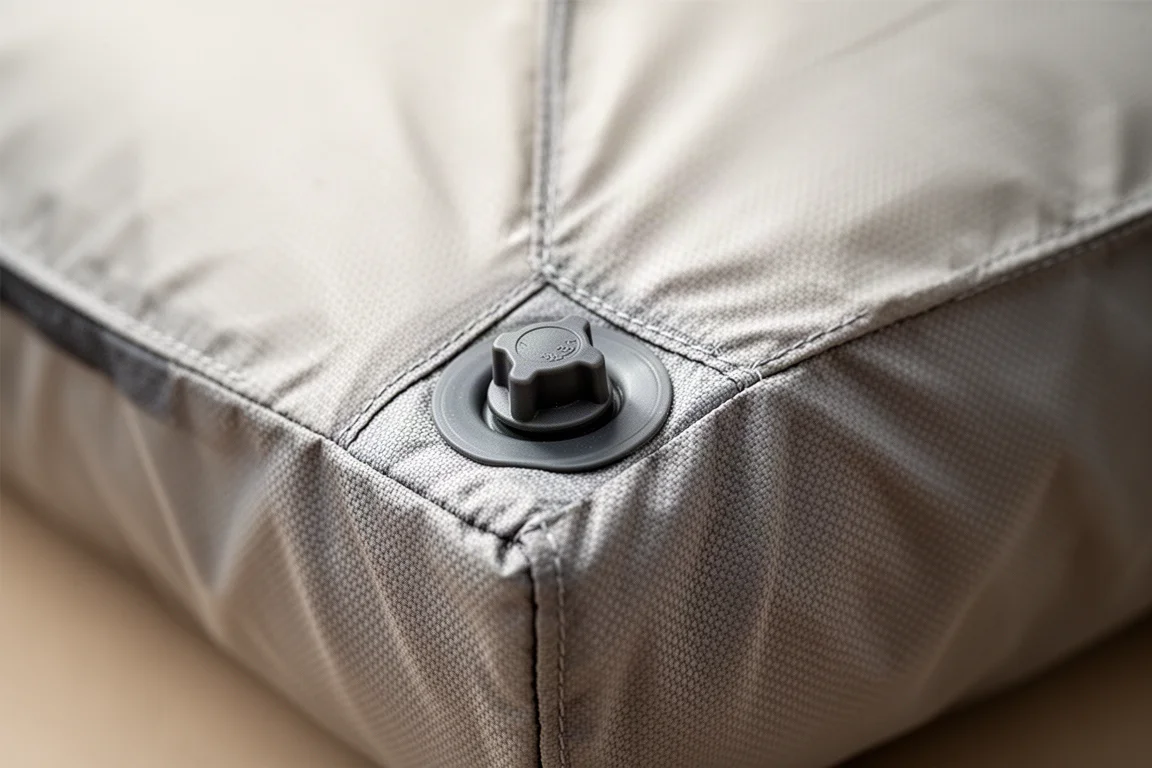
That combination of low weight and small packed size is what makes the pillow easy to justify bringing along. It adds very little to a pack and takes up very little space, so there is rarely a reason to leave it behind.
Materials and Stability
The air chamber is a thermoplastic polyurethane bladder wrapped in a 10 denier nylon top and a 20 denier nylon base. Underneath the top nylon is a layer of down, held in place by vertical baffles so it stays evenly distributed instead of sliding to one end.
Stability is better than expected for an inflatable. The base is not slick, so the pillow mostly stays where it is placed. It will shift a little with movement, but it does not shoot across the tent the moment a head lands on it.
Sizes, Versions, and Colors
The down version comes in three sizes: regular at 13.5 by 9.5 inches, large at 16.5 by 11 inches, and deluxe at 23 by 15 inches. All three are 4.7 inches thick. Two colors are available, a grey and a lime green.
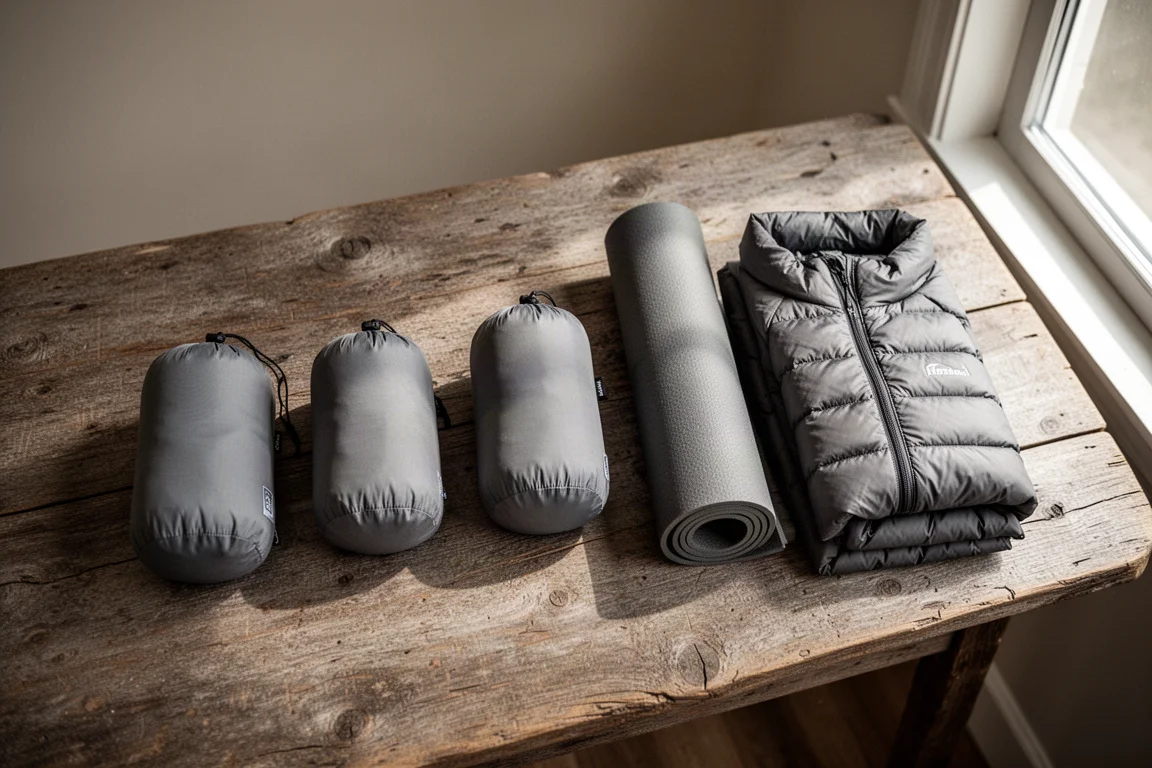
Sea to Summit also offers versions without the down top. Those are lighter and less expensive, which makes them worth a look for anyone who does not care about the fabric surface and simply wants the smallest, lightest option.
Things to Consider Before Buying
Price is the most obvious hurdle. The regular down version runs about $60, and cheaper inflatable pillows can be found for around $17. Whether that gap is worth it depends on priorities: the money goes toward construction quality, comfort, low weight, and a compact packed size, and the pricing sits in the same range as comparable pillows from other established outdoor brands. It is not an outlier, but it is not a budget purchase either.
Noise is worth flagging for very light sleepers. The fabric makes some crinkle as you move, and in a quiet tent that can be noticeable. Many sleepers will never register it, but it is a real consideration for anyone who wakes easily.
Thickness is the other trade-off. At 4.7 inches the pillow has real substance, but some sleepers will still want more lift. A common fix is to slide a folded jacket underneath to raise the height, which works well but means the pillow is not quite a standalone solution for everyone. Comfort preferences vary widely here, so it is worth testing on a shorter trip before relying on it for a long one.
Finally, the down top is a nice touch rather than a transformation. It feels good against the skin, but the felt-like reverse side is just as comfortable, so nobody should buy this purely for the down layer.
Buying Advice
For backpackers and campers who value a balance of weight, packed size, and comfort, this pillow is easy to recommend. It weighs almost nothing, compresses down to roughly the size of a fist, and is comfortable enough that it stays in the pack trip after trip rather than being left at home.
Choose the regular size for most backpacking setups, since it offers enough surface area without extra bulk. Step up to the large or deluxe only if you sleep on a wider pad or prefer more room to move. If price is the deciding factor, the non-down versions deliver the same inflation system and packability at a lower cost and a slightly lower weight.

It also helps that the pillow comes from an established outdoor brand with a warranty behind it, which softens the $60 outlay for anyone planning to use it for years rather than a single season.
Conclusion
The Sea to Summit Aeros Down Pillow earns its place in a pack through the details: a fast three-way valve, a genuinely comfortable surface, a tiny packed footprint, and construction that holds air trip after trip. The $60 price and the light crinkle of the fabric are the main things to weigh up, and a light sleeper who needs extra height may want to test it first. For most campers who want a pillow they will actually carry and actually use, it is a confident choice.
Product link
View more details for Sea to Summit Aeros Down Pillow
This product is mentioned in the review. Check the specifications, options, and compatibility before buying.
View more details for Sea to Summit Aeros Down PillowFurther reading
Related Reviews
Camping Gear
3FUL Ultralight Ground Sheet Review: A Two-Person Footprint Worth Packing
A 6.7 oz two-person ground sheet in ripstop silnylon, priced around $30. Here is what it protects, what it does not do, and who should pack it.
Camping Gear
Backcountry Light Dual-Function Tarp and Floor Review: A Footprint First
A dual-purpose tent floor and tarp that keeps falling rain off you, but cannot block wind. Here is where it works and where it does not.
Camping Gear
Best 2-Person Camping Mattresses for Couples: 10 Options Compared
A practical comparison of ten two-person camping mattresses, covering self-inflating pads, air pads and air mattresses for couples.