Hi-Fi Components
Schiit Syn Review: A Surround Processor, DAC, and Headphone Amp in One Box
The Schiit Syn blends a DAC, headphone amp, preamp, and matrix surround processor into one HDMI-free component. Here is what it does well and where it asks for compromise.
Introduction
The Schiit Syn is one of the more unusual components to appear in desktop Hi-Fi. It is a DAC, a headphone amplifier, a preamplifier, and a matrix surround processor inside a single chassis, and it manages all of that without a single HDMI port. The design has been in development for roughly two years, and that patience shows in how deliberately the feature set is arranged.
At around $400, the Syn sits in a bracket where most buyers are choosing between a stereo DAC and a soundbar. The Syn asks a different question: what if you kept your own speakers and amplifiers, added genuine center and rear channels, and never had to open an AVR menu again?
What the Schiit Syn Actually Is
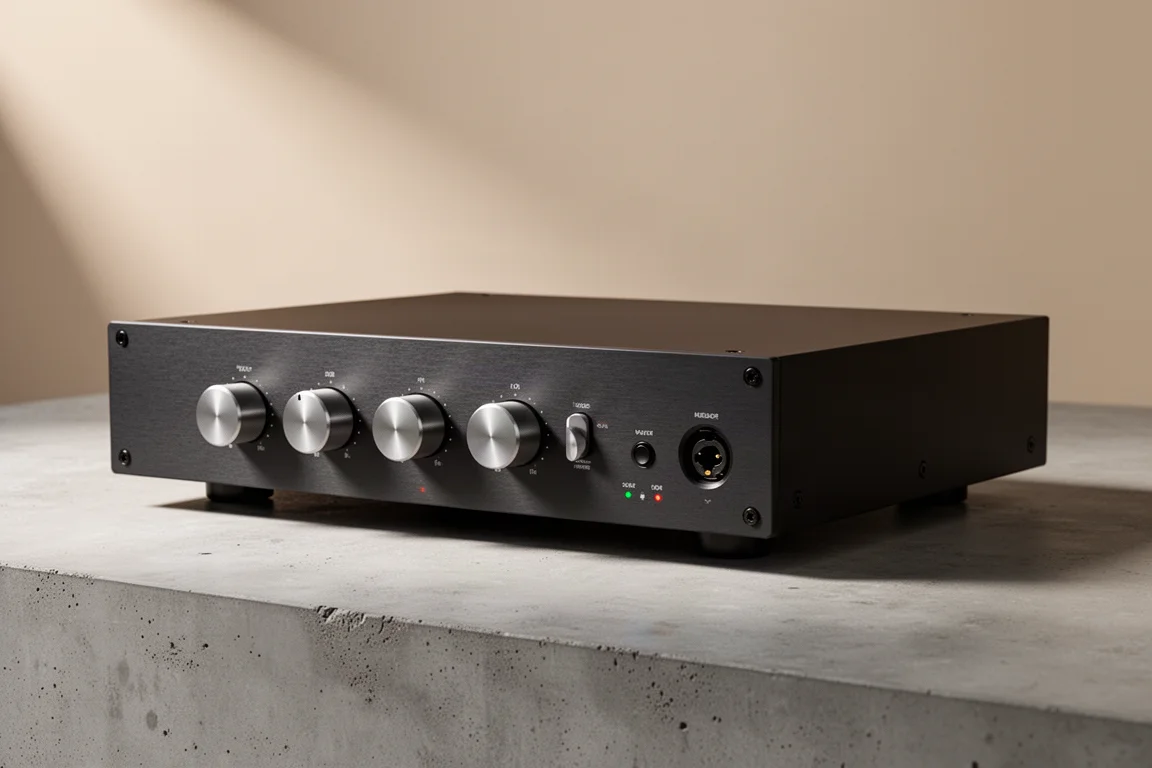
The front panel carries five knobs, a headphone output, a microphone input, and two buttons. The first button selects between two digital inputs, USB and optical, and one analog input, with an LED beneath each position so the active source is always obvious.
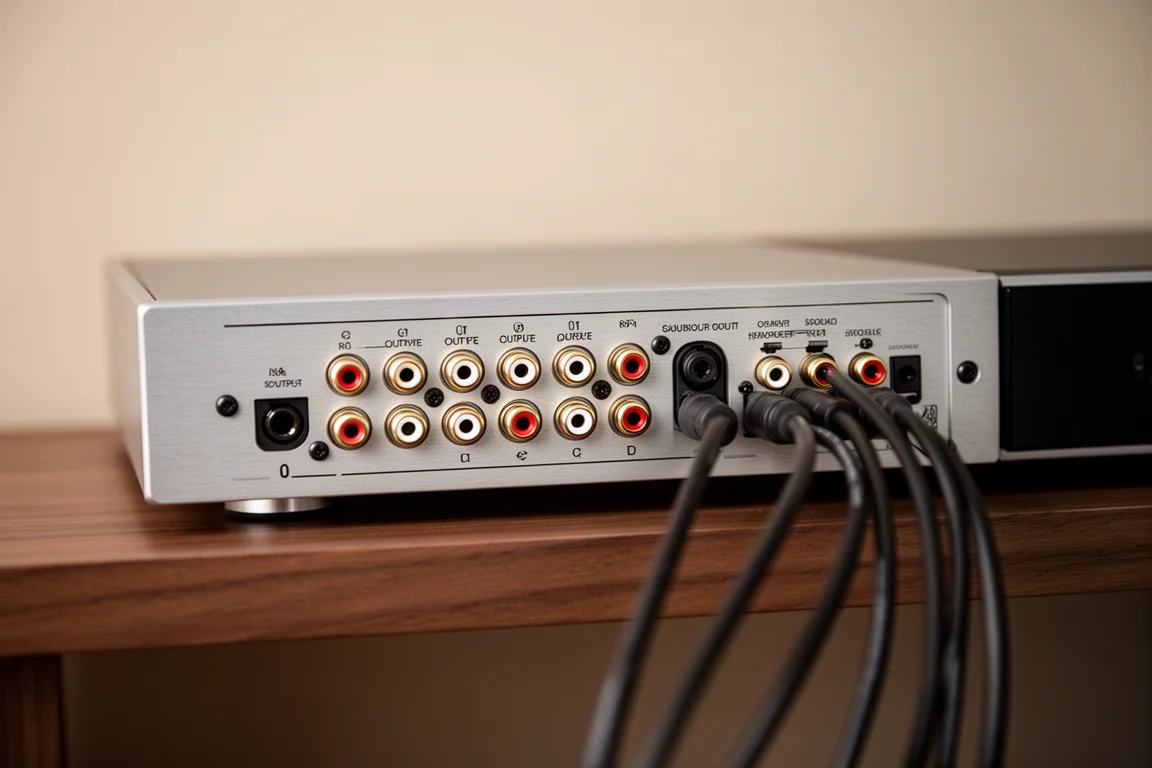
The back panel splits into a DAC section with USB C, optical, and analog inputs, followed by the outputs: main left and right, surround left and right, center, and subwoofer, plus a power toggle.
Because the Syn is a preamplifier rather than an integrated amplifier, it needs external amplification for every channel. Those amplifiers do not have to be bare power amplifiers. Integrated amplifiers with their own volume controls work perfectly well, since you can set their volume once and then run the whole system from the Syn.
Controls and Listening Modes
The five knobs cover surround level, center channel level, master volume, width, and presence. Surround level sets the gain of the rear channels, center level sets the gain of the center channel, and width narrows or widens the soundstage. Presence is not simply a second center gain, it pushes vocals forward or pulls them back in the mix.
The mode button cycles through a handful of genuinely useful states. With no lights lit, the Syn outputs stereo only, with the surround channels off and no processing. With only the left light lit, the surround channels are active and the main channels are left untouched. With only the right light lit, the surround channels are off and the width and presence controls act on the main channels, a mode reached through the remote. With both lights lit, the surround channels are on and width and presence affect both the main channels and the surrounds.
The headphone jack deserves its own note: plugging in headphones mutes everything else, which keeps listening sessions private without touching the rest of the system.
The supplied remote covers volume up and down, input selection, the process button that activates the surround channels, a shape button that enables width and presence shaping across the main channels, the surrounds, and the headphone output, and mute. It works reliably, though it is a basic handset rather than a premium one.
Who the Schiit Syn Is For
The Syn suits listeners who want more immersion than a stereo system delivers but do not want the complexity of an AVR. It is a strong fit for a television and movie setup where simplicity matters, and it works well for music because it is a preamp at heart, so the character of the sound follows the amplifiers you pair with it.
Gamers get a useful extra here thanks to the microphone input, which makes the Syn a plausible single hub for a desktop or living room system. Headphone listeners also get a capable amplifier built in, so a late-night session does not require a separate box.
It is not aimed at home theater purists chasing exact spatial placement of every effect. Anyone who needs Dolby Atmos object positioning should look elsewhere, because the Syn deliberately takes a different path.
Main Strengths
The surround processing is the headline, and it performs better than its modest approach suggests. It uses a matrix surround technique that predates Dolby Pro Logic, and one of the most striking things about it is that voices stay out of the rear channels. The result is a wide, enveloping presentation without dialogue bleeding behind the listener.
Removing HDMI is a real benefit. There is no licensing to negotiate and none of the handshake trouble that so often makes an AVR frustrating. Setup stays short, and the system is easy enough that a family member can get a show playing without a walkthrough.
Level adjustments are refreshingly direct. Instead of digging through layered menus, you reach for a knob and hear the change immediately, which makes tuning far quicker than on a typical receiver. Music in particular is easier to get sounding right here than on an AVR, where channel levels and modes usually need extensive tweaking.
The built-in headphone amplifier and DAC are solid rather than flagship. They sit a step below Schiit’s dedicated Magni and Modi separates, yet they still sound good enough that most listeners will not feel shortchanged.
Setup and Amplifier Pairing
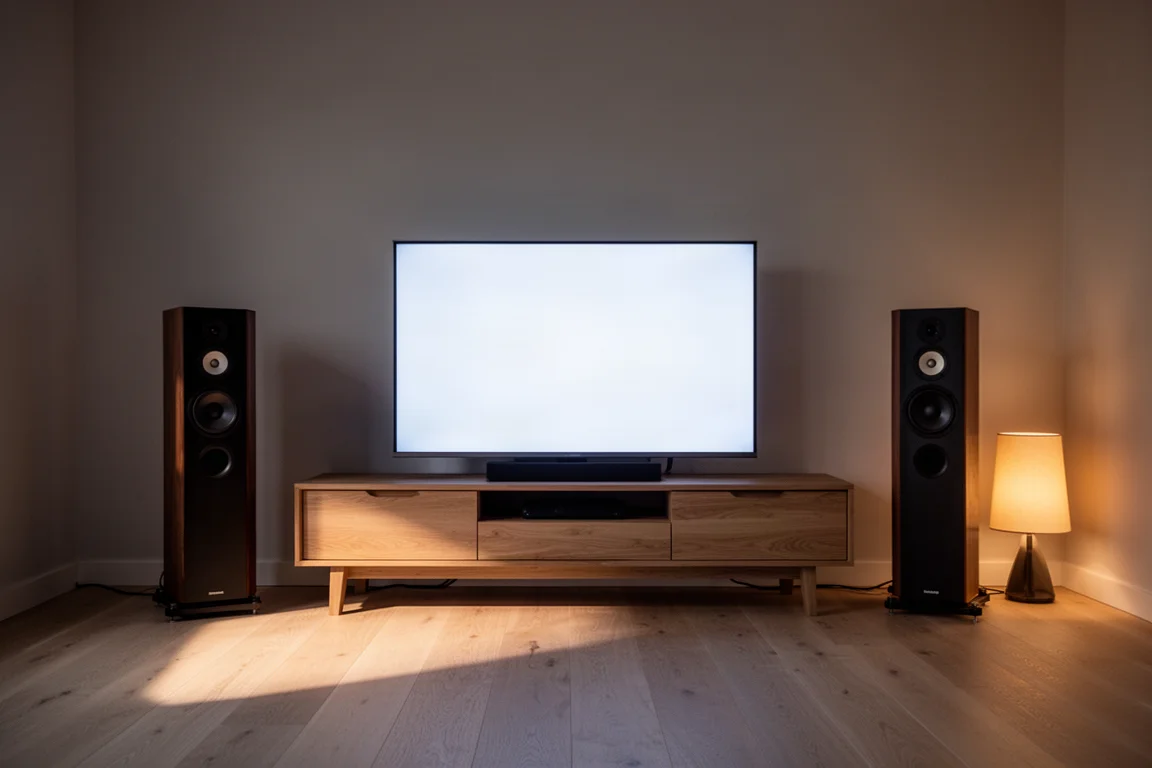
The Syn is a hub, so the system you build around it matters as much as the Syn itself. A typical arrangement uses a dedicated amplifier for the main left and right channels, a second amplifier for the center, and a third for the surrounds, with a powered subwoofer handling low frequencies.
Because every channel can be driven by a different amplifier, the Syn lets you mix price points. A refined amplifier up front and a modest one at the rear is a practical compromise, though the difference in character between those amplifiers is audible, particularly when sound moves across channels.
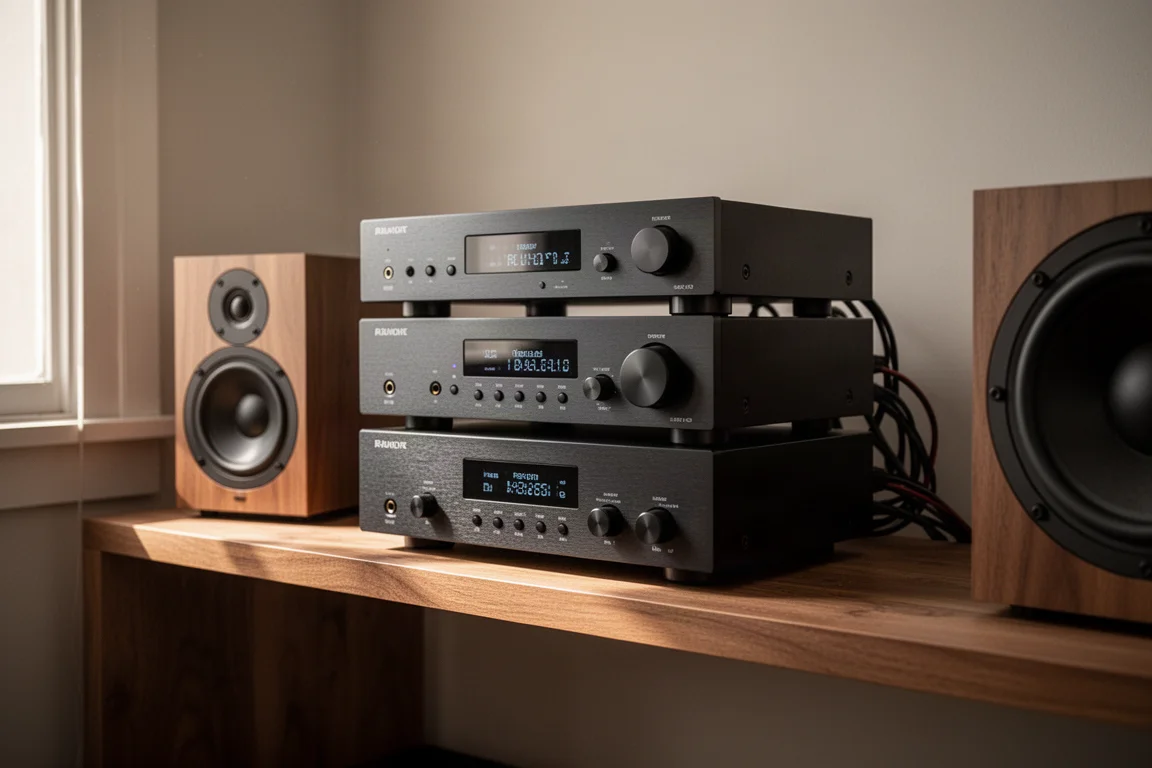
Setting up is straightforward: match the amplifier gains roughly by ear, then leave those dials alone and control everything from the master volume on the Syn. That single point of control is a large part of why the system feels simpler than a receiver.
Things to Consider Before Buying
Filtering is limited. There is a high pass filter on the subwoofer output, but the low pass work happens on the subwoofer itself, and there is no way to apply a high pass filter to the main speakers. Buyers who want fine-grained bass management should plan around that.
The Syn will not replace a properly configured Atmos system, and it is not trying to. Its surround effect is immersive rather than precisely placed, which is a different goal from object-based home theater.
Budget for amplification. The $400 price covers the processor, DAC, preamp, and headphone amp, but you still need an amplifier for every channel you intend to run, which can easily cost more than the Syn itself.
Finally, the remote is the weakest part of the package. It is functional and it will not be confused with other remotes in a drawer, but it does not feel as considered as the component it controls.
Buying Advice
At around $400, the Syn is fairly priced for what it bundles together, provided you already own speakers and can source amplifiers. Think of it as an unusually flexible soundbar replacement: instead of a single bar and a pair of wireless rears, you get dedicated front speakers, a dedicated center, dedicated surrounds, and a real subwoofer output.
There are alternatives worth weighing. A stereo expander from another brand costs a little more and offers a different feature set, but it is not a multichannel processor, so it solves a different problem. If your priority is object-based surround with exact placement, put the money toward an AVR instead.

The strongest case for the Syn is a system that has to be quick and easy. If you want music to sound good without a tuning project, and you want movies and shows to feel bigger without HDMI in the chain, this is a component that earns its place. Buyers who enjoy tweaking every parameter may find it too simple, and that simplicity is exactly the point.
Conclusion
The Schiit Syn is a niche idea executed with care. It combines a DAC, headphone amp, preamp, and matrix surround processor into one box, skips HDMI entirely, and keeps adjustment refreshingly hands-on. It will not satisfy home theater purists, and it asks you to bring your own amplifiers, but for anyone bridging a two-channel system into something more immersive, it is a convincing answer at a reasonable price.
Product link
View more details for Schiit Syn
This product is mentioned in the review. Check the specifications, options, and compatibility before buying.
View more details for Schiit SynFurther reading
Related Reviews
Hi-Fi Components
Best Hi-Fi Components Under $500: Nine Standout Picks Worth Buying
Nine hi-fi components under $500 that earn their place, covering bookshelf speakers, a streaming preamp, a turntable, a CD player, two DACs, an integrated amplifier, and a value subwoofer.
Hi-Fi Components
Leak Stereo 230, Stereo 130 and CDT: Vintage Hi-Fi With Modern Features
A practical look at the Leak Stereo 230 and Stereo 130 integrated amplifiers and the CDT CD transport, covering power, DACs, connections and who each one suits.
Hi-Fi Components
Pretty Hi-Fi: Six Components That Make You Want to Listen Longer
Six hi-fi components that pair real capability with a look worth keeping in the room, plus affordable ways to add visual interest to a modest system.