Stereo Amplifiers
Schiit Gjallarhorn vs Fosi Audio ZA3: Does 15 Watts Beat 180 Watts?
A 15-watt stereo amplifier and a 180-watt one, both driving an 86 dB, 4-ohm speaker in a large room. Here is where each holds up and where it runs out of headroom.
Introduction
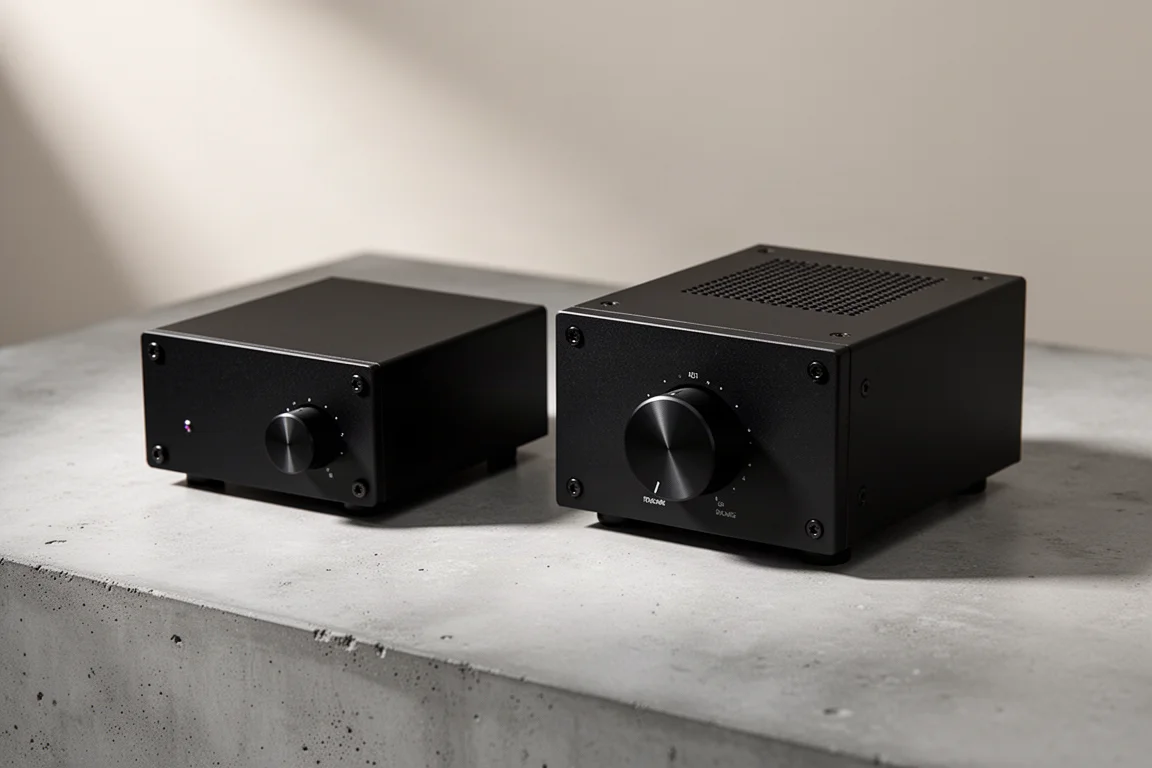
Two stereo amplifiers, one rated at 15 watts per channel into 4 ohms and the other at 180 watts per channel into 4 ohms. On paper that is a gap of more than ten times, and the usual assumption is that the bigger number wins. The more interesting question is whether the smaller one can still drive a demanding speaker to satisfying levels in a real room.
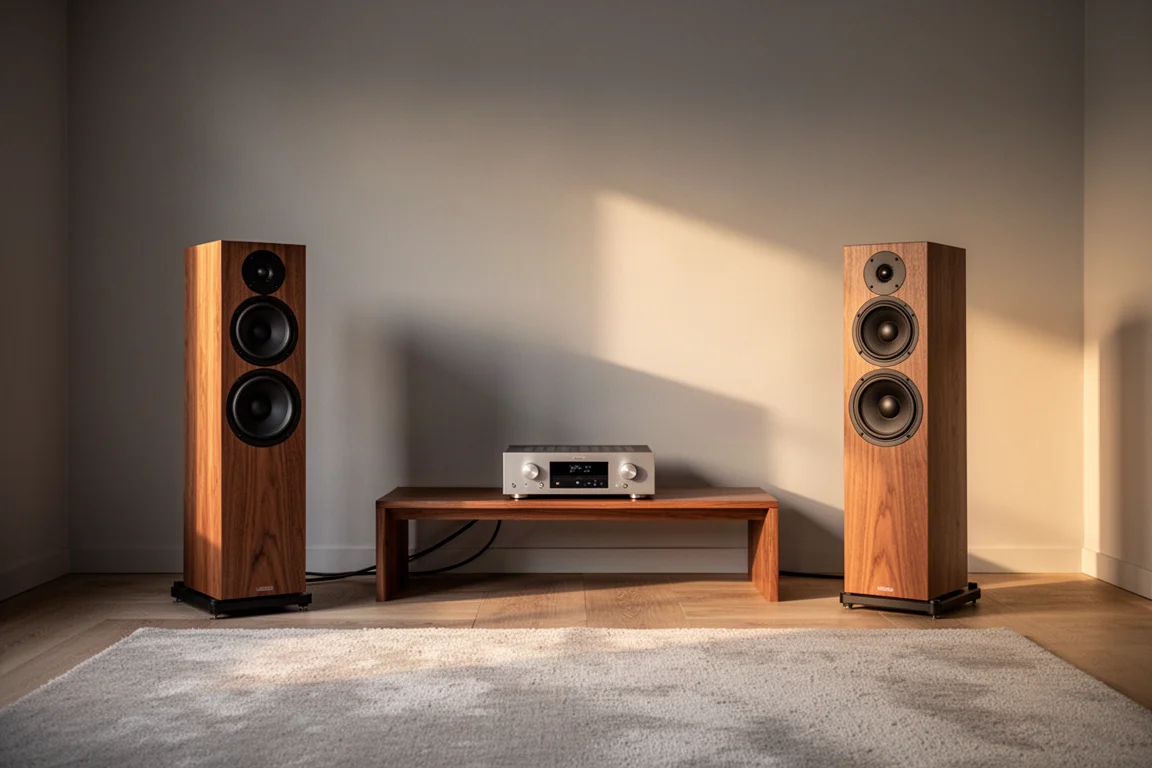
Both amplifiers were used with the same speaker: an Emotiva XB2 rated at 86 dB sensitivity with a nominal 4-ohm impedance. That is not an easy load, and the manufacturer’s own published guidance suggests a minimum of 50 watts per channel. The room was large, with the listening position roughly 12 feet from the speakers. It is close to a worst-case scenario for a low-power amplifier, which is exactly what makes the result worth reading.
What Wattage Ratings Actually Tell You
Power ratings are a starting point, not a guarantee. A published figure may not be the power an amplifier actually delivers under real conditions, and optimistic specifications have been part of audio marketing for decades, in car audio as much as in home hi-fi. Manufacturers publish what the market responds to, and the market responds to large numbers.
The textbook math is simple enough: one watt at one meter should produce the speaker’s rated sensitivity, so an 86 dB speaker should reach 86 dB at one meter with a single watt. In practice that almost never happens. With a steady sine wave you might get close, but dynamic music rarely delivers what the paper calculation promises.
There is a measurement wrinkle worth knowing about as well. Phone sound level apps tend to read a few decibels lower than a dedicated sound pressure level meter, so the number on a screen can understate how loud a room actually is by roughly 3 to 5 dB. In other words, the levels reached during a demanding listening session are often a little higher than the figures suggest.
Schiit Gjallarhorn: 15 Watts per Channel
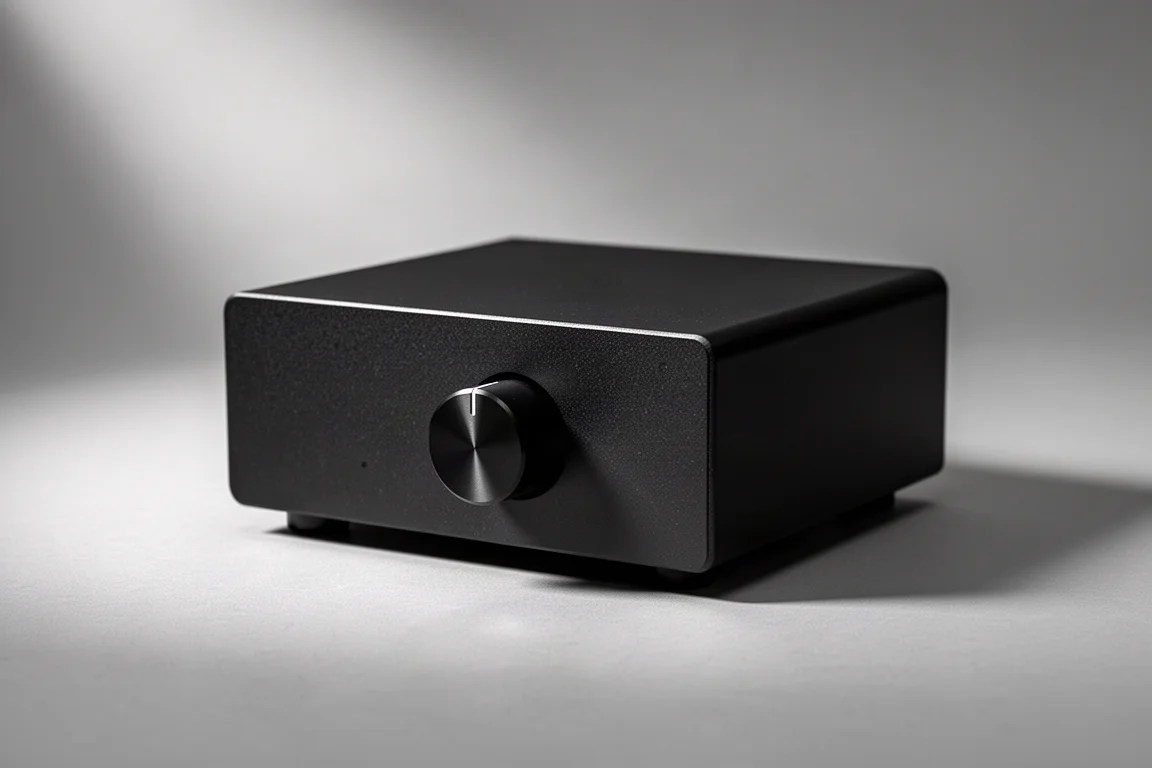
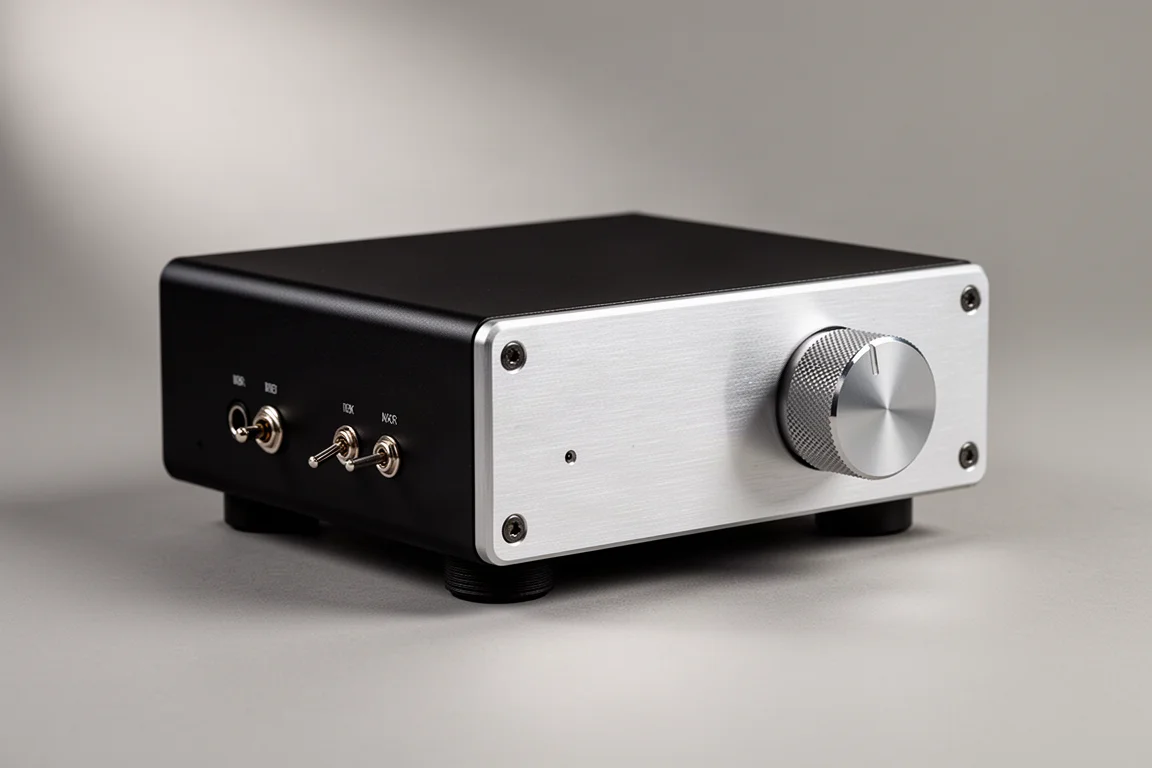
The Schiit Gjallarhorn is a two-channel amplifier rated at 15 watts per channel into 4 ohms and 10 watts per channel into 8 ohms. Those numbers look modest next to almost anything else on a spec sheet, but the design has one practical advantage: the power supply is internal, so there is no external brick to hide behind the desk.
Its character sits on the relaxed side. Below about 70 dB the vocals are a touch laid back, and the overall presentation stays neutral rather than forward. What stands out most is the bottom end, which is richer and fuller than the rating would suggest. That matters for desktop listening, where warmth and a bit of bass at close range and low volume are usually welcome.
Driving the 86 dB, 4-ohm speaker in a large room from about 12 feet away, the Gjallarhorn had no trouble at 73 dB and was still comfortable at 80 dB. Push it harder with bass-heavy material, though, and the limits arrive quickly. One demanding track caused clipping in both the bass and parts of the midrange, and once it was pushed past that point the whole presentation came apart at once rather than in stages.
Fosi Audio ZA3: 180 Watts per Channel
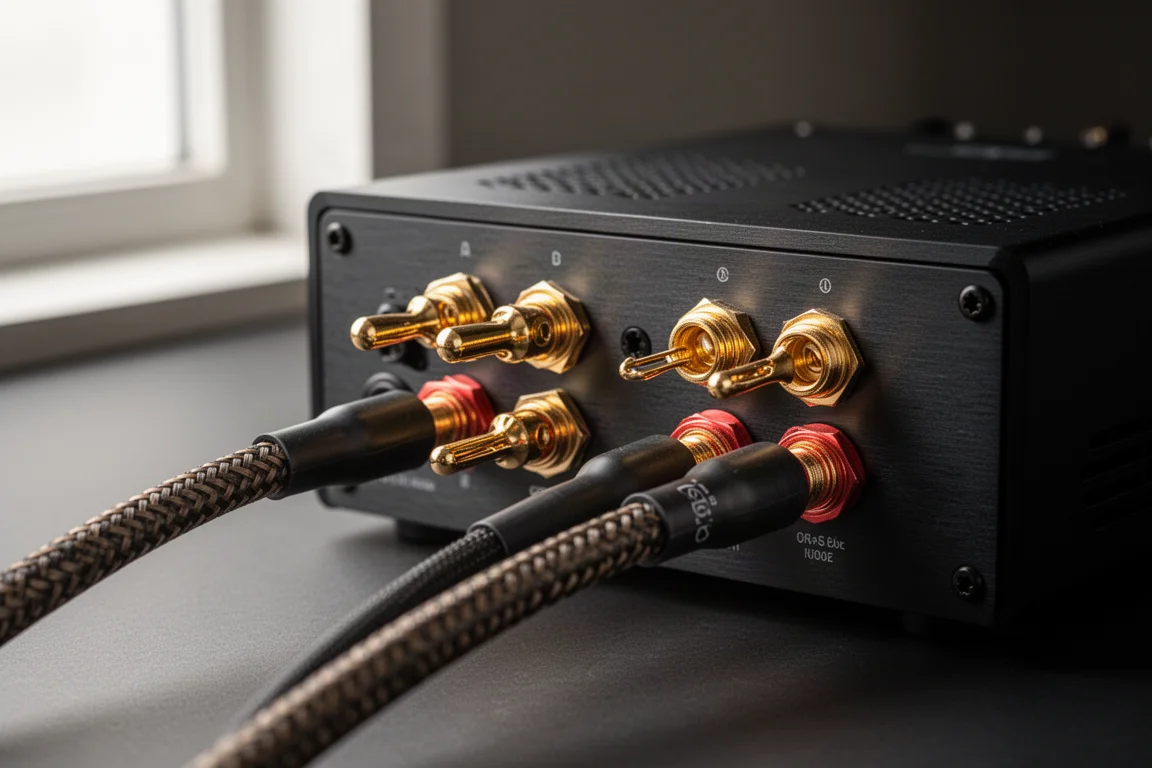
The Fosi Audio ZA3 is rated at 180 watts into 4 ohms, more than ten times the Gjallarhorn’s figure, and it is offered with two different power supply options. The higher-output 48V 5A supply is the one used here, and which supply you choose has a direct bearing on what the amplifier can deliver.
Sound-wise, the ZA3 leans forward. Below 70 dB the vocals sit a little ahead of the Gjallarhorn’s, and as the volume rises that forward character becomes more pronounced at the top end. Percussion and snappy transients come through with more bite and more apparent detail, which gives livelier material a sharper edge.
Where the ZA3 clearly separates itself is headroom. It plays louder than the Gjallarhorn and, just as importantly, it keeps its composure while doing so. On the material that pushed the 15-watt amplifier into clipping, the ZA3 stayed controlled and held its shape.
Listening Notes at Real Volumes
At low levels, around 70 dB and below, the two amplifiers sound more alike than their ratings would suggest. The Gjallarhorn is slightly relaxed in the vocals, the ZA3 slightly forward, but both remain perfectly listenable and neither sounds strained.
At 73 dB and again at 80 dB, in a room this large and at this listening distance, the Gjallarhorn was still doing its job. That is a genuinely useful result for a 15-watt amplifier paired with an 86 dB, 4-ohm speaker, and it is the kind of pairing many listeners would assume is impossible.
The differences become much more obvious as the volume climbs. The Gjallarhorn continues its laid-back approach and holds a neutral balance, with a warmth that recalls some of the sweeter sounding integrated amplifiers in the Cambridge range, though the Gjallarhorn stays closer to neutral than those do. The ZA3 heads in the opposite direction, with a more forward top end and more prominent percussion. Which one you prefer is largely a matter of taste, and it is worth noting that the Gjallarhorn’s fuller low end may suit nearfield desktop listening better than the more forward alternative, particularly at lower volumes.
How Loud Do You Actually Need to Go?
The Gjallarhorn was happy well above 80 dB until a bass-heavy track pushed it into clipping. The ZA3 stayed composed at levels beyond that. So the idea that more power plays louder is not a myth at all: an amplifier rated at ten times the power does go louder, and it holds together while it does.
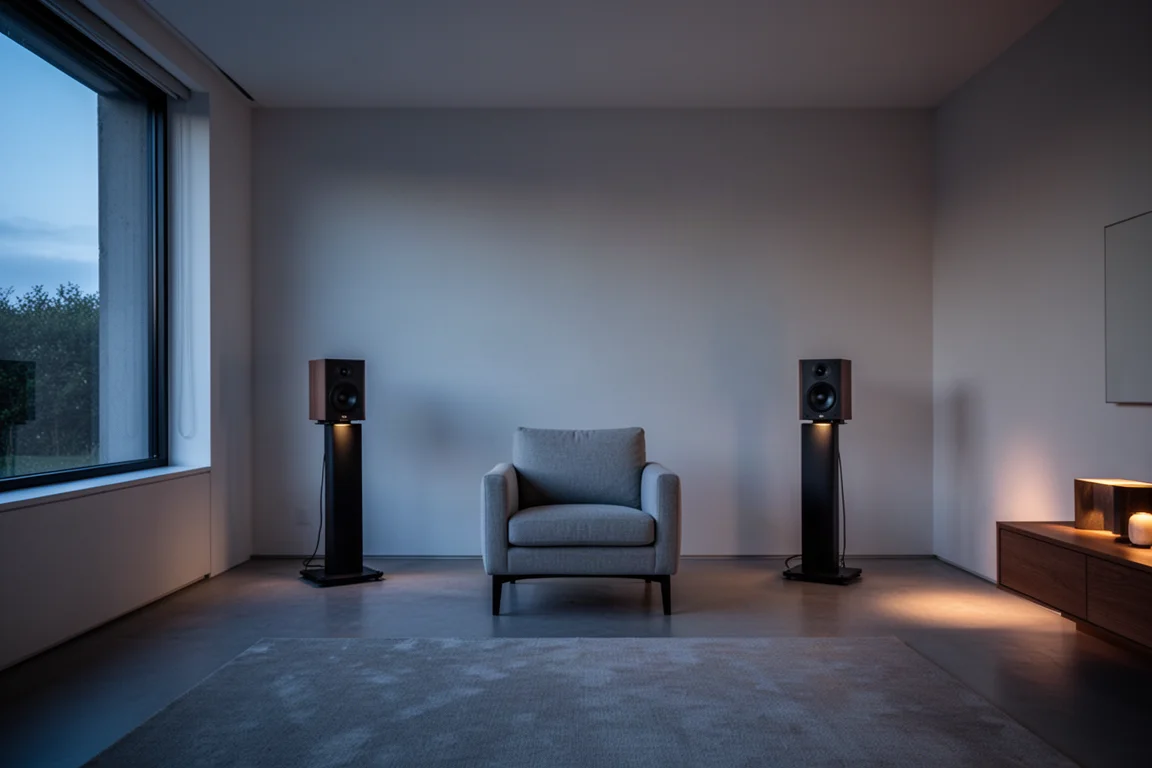
The more useful question is how loud anyone actually needs to go, and in what scenario a desktop amplifier ends up in a large living room in the first place. For sustained levels above 80 dB, extra power stops being a luxury and starts being a requirement rather than a preference.
Desktop or Living Room: Which Amplifier Fits
The Gjallarhorn makes most sense on a desk. Its internal supply, relaxed voicing and fuller low end are all qualities that pay off at close range and modest volumes, and in that setting 15 watts is far more than it sounds like.
Set it up in a large room, 12 feet from a low-sensitivity speaker, and you are asking a small amplifier to do something it was not designed for. It still manages surprisingly well, but the ceiling is real and it arrives suddenly rather than gradually.
The ZA3 is the better fit when headroom matters: bigger rooms, longer listening distances, lower-sensitivity speakers, or a preference for sustained high volumes. Its forward character is also a matter of taste, and listeners who value a calmer top end may prefer the smaller amplifier even where the ZA3 has the advantage in output.
Buying Advice
The right choice depends on the speaker and the room rather than the number on the box. A 15-watt rating is only a problem when it is paired with a demanding load and high sustained levels at the same time.
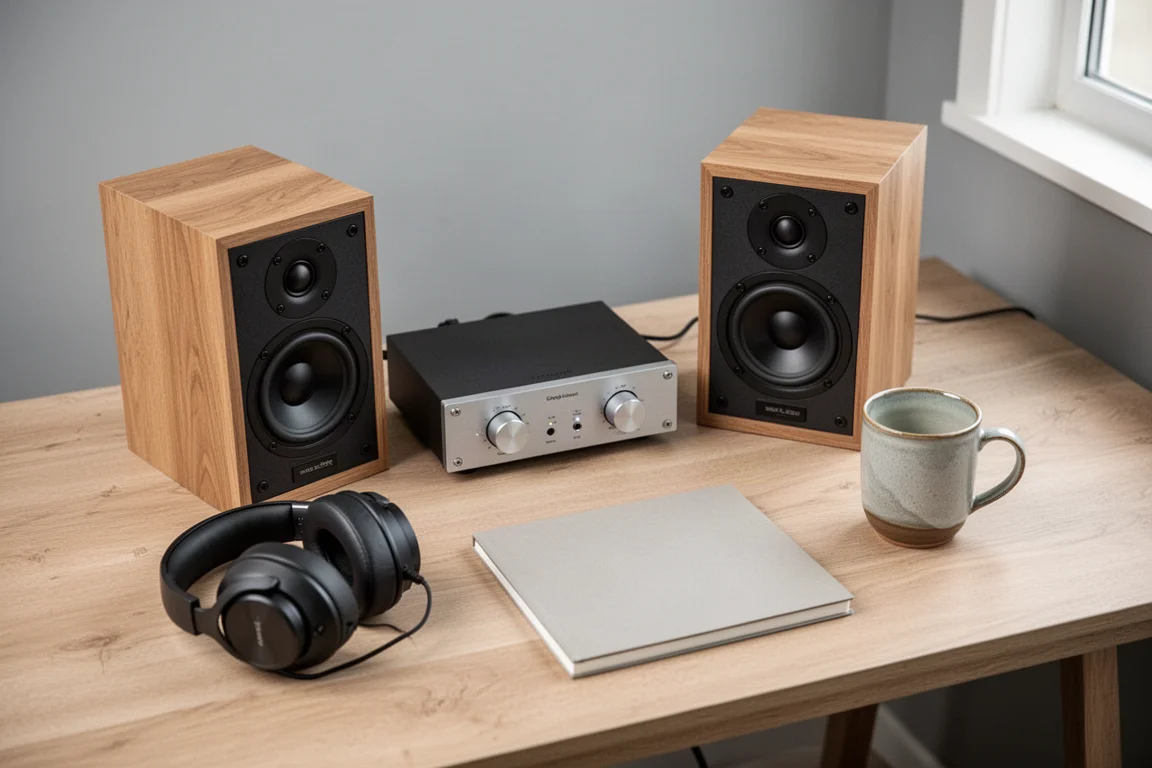
For a desktop system with reasonably efficient speakers, the Gjallarhorn’s internal power supply, neutral balance and fuller bass make it an easy recommendation. It needs no external brick, and it delivers more than enough level for nearfield listening.
If your setup involves a large room, an 86 dB or lower sensitivity speaker with a 4-ohm nominal load, or regular listening above 80 dB, the ZA3’s extra power and composure are worth having. Keep in mind that its output depends on which of the two power supplies you use, so factor that into the decision rather than assuming the top figure applies automatically.
Either way, treat published wattage as one data point among several. Sensitivity, impedance, room size and listening distance all shape how much power you actually need, and they matter more than the largest number on the specification sheet.
Conclusion
Is the idea that you need an enormous amount of power busted or confirmed? Closer to confirmed. A well-built 15-watt amplifier can drive an 86 dB, 4-ohm speaker to satisfying levels in a large room and hold together well above 80 dB, which is more than most listeners would expect. But an amplifier rated at more than ten times that power plays louder and stays composed when the smaller one runs out of headroom. For most people, in most rooms, with most speakers, 15 honest watts are enough. If you want sustained high levels, budget for the bigger number.
Further reading
Related Reviews
Stereo Amplifiers
Aiyima A01 Pro Review: A Compact Bluetooth Amplifier With a Full Tone Stack
A practical look at the Aiyima A01 Pro, a budget Class D amplifier with bass, middle, and treble controls, LDAC Bluetooth, and a clear set of trade-offs.
Stereo Amplifiers
Audiolab 7000A Review: The Flexible Modern All-in-One Integrated Amplifier
A Class AB integrated amplifier with HDMI ARC, a built-in DAC and three operating modes, priced under $2,000. Here is what it does well and what to check first.
Stereo Amplifiers
Best Amplifiers at Every Price Level: 12 Picks From Budget to Audiophile
A practical roundup of twelve stereo amplifiers at increasing price points, from sub-$100 class D mini amps to integrated models with DACs, phono stages, and HDMI ARC.