Water Filters
Sawyer Micro Squeeze Review: A Compact Inline Water Filter for Weekend Backpacking
A close look at the Sawyer Micro Squeeze, a compact hollow fiber filter with an inline-ready inlet, a 32-ounce bag, and a reputation worth examining before you buy.
Introduction
Water treatment is one piece of backpacking kit where reliability matters more than almost anything else, and the Sawyer Micro Squeeze sits right in the middle of that conversation. It is a compact hollow fiber filter, and it carries a reputation problem: it is widely described as one of the least dependable squeeze filters on the market.
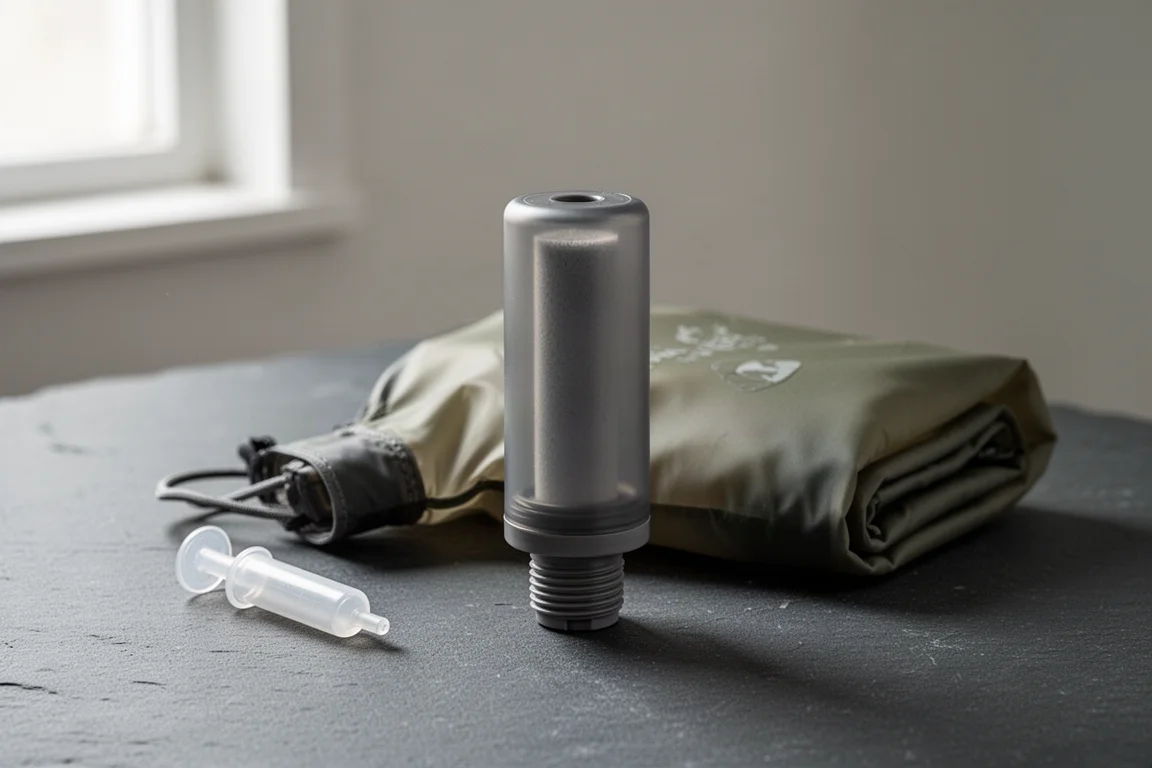
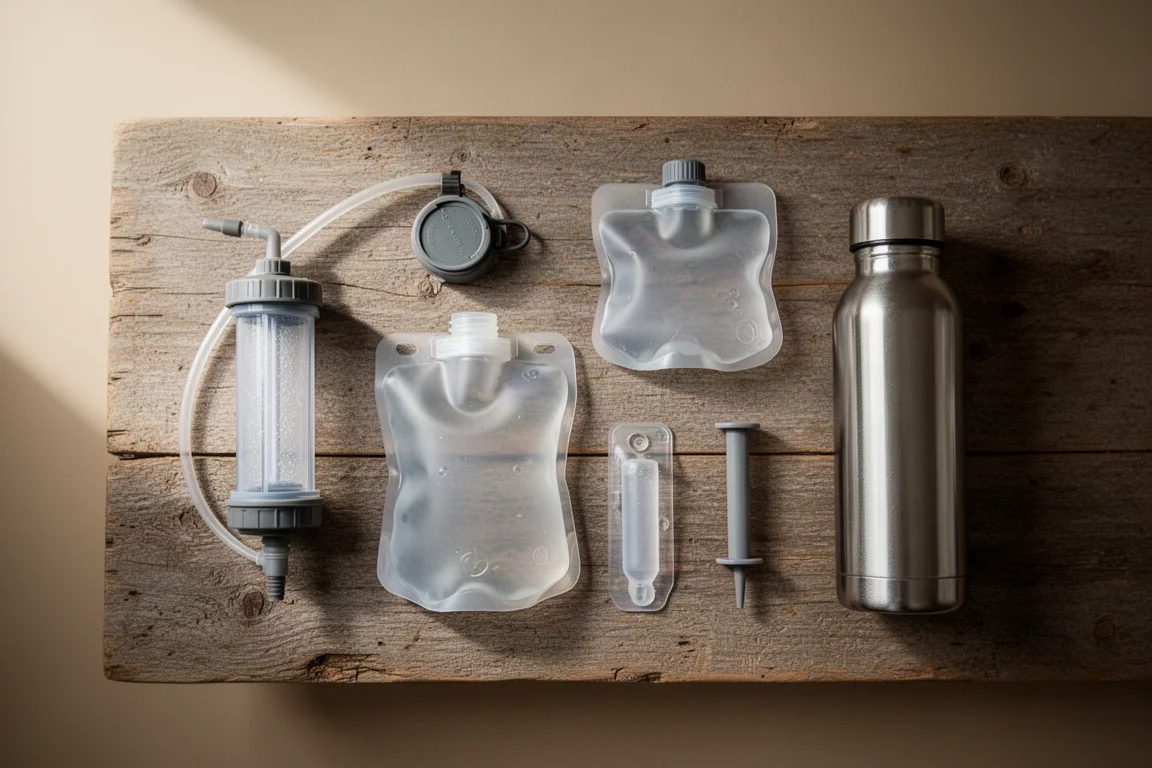
The case for it is straightforward. It is small, the inlet side ends in a stubbed fitting that makes a true inline setup possible without extra adapters, and it ships with a larger bag than the Sawyer Mini’s 16-ounce reservoir. The kit itself is minimal, just the bag, a plunger, and the filter.

What makes the Micro Squeeze interesting is the gap between that spec sheet and the reputation. Hollow fiber filters of this type are simple devices, and the Micro has been around long enough, in more than one kit configuration, that most of the criticism is about long-term behaviour rather than the design itself. That is the question this review focuses on: what the Micro Squeeze does well, where it asks you to compromise, and which backpackers it genuinely suits.
Who the Sawyer Micro Squeeze Is For
The Micro Squeeze makes the most sense for weekend backpackers and shorter trips, where a filter has to work well for a few days at a time rather than for months on end. If your trips involve alpine lakes, streams, and the occasional silty desert source, the Micro is the kind of filter you can carry without adding much weight or bulk.
It is also a natural fit for anyone who prefers a modular setup. The Micro can run inline in a hydration line, and it can also be drunk from directly, in the same way a squeeze filter doubles as a straw. Both approaches keep the overall kit small.
It is less suited to long-distance hiking. On a thru-hike a filter has to perform every single day for months, and the established choice for that job is the Sawyer Squeeze, which many distance hikers rely on. Some hikers use the Katadyn BeFree instead. For daily, non-negotiable dependability, the Micro is not the filter most experienced long-distance hikers reach for.
Main Strengths of the Sawyer Micro Squeeze
The core of the filter is a small hollow fiber element. Hollow fiber media handles bacteria and protozoa, and the Micro shares its heritage with the Sawyer S series, where the S3 version extended filtration to viruses as well, with the hollow fiber element covering the bacteria and protozoa stage.
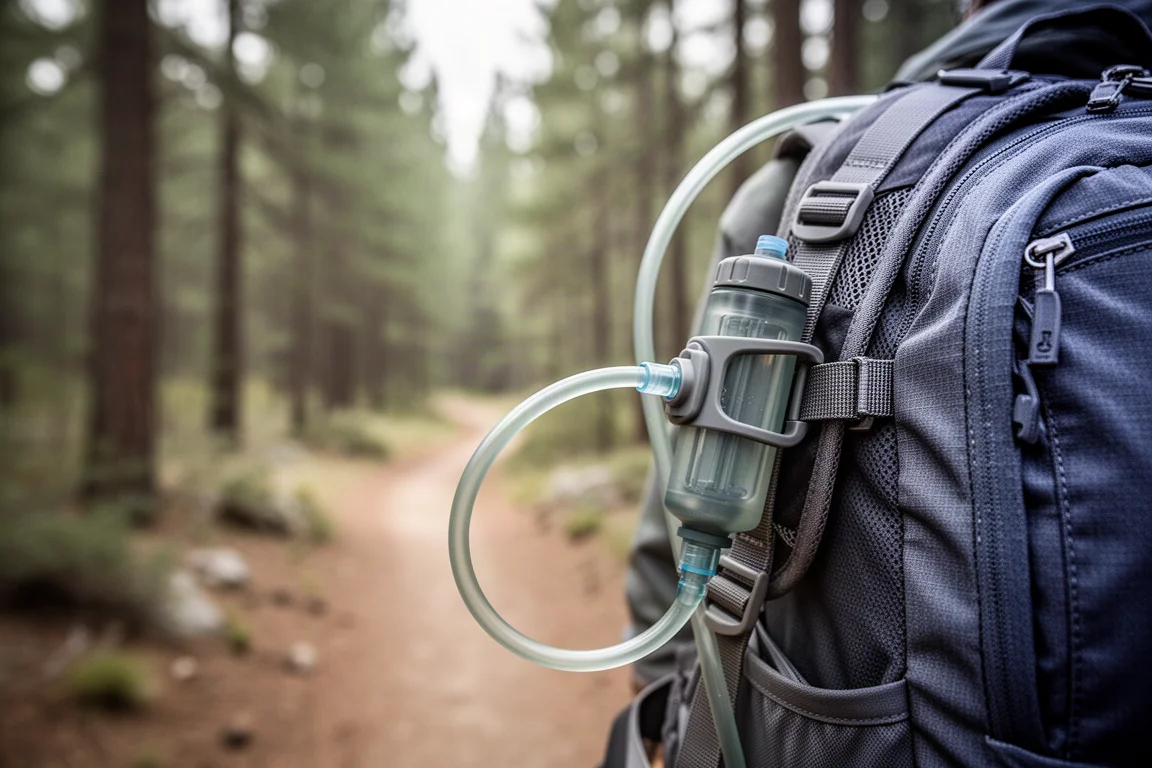
The result is a very small filter for what it does, and most of its practical advantages live in the fittings rather than in the media itself.
A Stubbed Inlet Built for Inline Setups
The inlet side of the Micro Squeeze ends in a stubbed fitting, which means you can attach it directly into a hydration line as a true inline filter without buying additional attachments. That is a real advantage over the Sawyer Squeeze, which needs extra parts to do the same job. If you like the idea of filtering water as you drink, the Micro is the simpler starting point.
A Larger Included Bag Than the Mini
The Micro ships with a 32-ounce squeeze bag, double the 16-ounce bag that comes with the Sawyer Mini. The bag is a newer design as well, made from a different material than the crinkly bags many hikers associate with older squeeze kits. More capacity per fill means fewer trips back to the water source, which adds up over a long day.
Things to Consider Before Buying
Two compromises are worth knowing about before you commit to the Micro Squeeze: the bag it comes with, and the reliability question that follows it around.

Neither is a dealbreaker on its own, but both shape how the filter fits into a real kit and how much you will need to test it.
The Included Bag Is Not the Favourite
The included bag is not the most popular option on the market. Many backpackers replace it with a third-party squeeze bag such as the CNOC Vecto or an Evernew reservoir, and if you already own one of those, the Micro’s own bag may end up as a backup rather than your primary. That is worth factoring in if you are comparing the Micro against kits that let you choose your own reservoir from the start.
Reliability Over the Long Term
The most common criticism of the Micro Squeeze is reliability. Long-running discussion in the backpacking community regularly describes it as a filter that cannot be counted on, and that reputation is the main reason long-distance hikers avoid it. For weekend use the stakes are lower, but the honest position is that the Micro’s long-term behaviour in the field is the thing to verify for yourself, across the water sources you actually encounter.
Buying Advice
If you are a weekend backpacker who wants a compact filter that can run inline or be drunk from directly, the Sawyer Micro Squeeze is a sensible way to get there. Its fittings are genuinely useful, the included 32-ounce bag gives you real capacity, and the hollow fiber element covers bacteria and protozoa.
Buy it with a plan to test it. Carry it on your normal trips, run it against the water you actually filter, and give it a full season before you decide whether it belongs in your permanent kit. If your trips are long, or if you cannot afford a filter that might need attention, the Sawyer Squeeze remains the safer choice, and the Katadyn BeFree is another option that some hikers use for the same purpose.
Conclusion
The Sawyer Micro Squeeze is a compact, well-conceived hollow fiber filter with an inline-ready inlet and a bigger included bag than the Sawyer Mini. Its reputation for unreliability is the one thing that keeps it out of many thru-hikers’ packs, and for months of daily use the Sawyer Squeeze is the more established answer.
For weekend backpackers the picture is different. The Micro does the job it was designed for, and the practical features are real rather than marketing. If you want a small filter you can run inline, drink from directly, and carry on every trip, the Micro Squeeze deserves a place on your shortlist, provided you test it on your own water and your own trips.
Product link
View more details for Sawyer Micro Squeeze
This product is mentioned in the review. Check the specifications, options, and compatibility before buying.
View more details for Sawyer Micro SqueezeFurther reading
Related Reviews

Water Filters
Berkey Travel Water Filter Review: Large Capacity, But Is It Worth It?
A detailed look at the Berkey Travel water filter, covering its large stainless steel reservoir, filter performance, and overall value.

Water Filters
Best Water Filters 2026: A Practical Comparison of 12 Pitchers and Systems
We compare 12 water filters and purification systems across copper, fluoride, chlorine, and clarity tests to help you choose the right one for your home.
Water Filters
GRAYL GeoPress Review: Broad-Spectrum Water Purification for Travel and Trail
The GRAYL GeoPress purifies viruses, chemicals, and heavy metals in a single press. Here is where it earns its price, and where its weight, capacity, and cartridge life get in the way.