Fountain Pens
Santini Vacuum Filled Fountain Pen Review: An Italian Pen That Gets Almost Everything Right
A large faceted vacuum-filler with an in-house 14k gold nib, ebonite feed, and a seriously wet writing experience. Here is what works and what to check before spending €790.
Introduction
Every so often a pen arrives that genuinely surprises. The Santini vacuum filled fountain pen did exactly that. Santini is a smaller Italian brand that designs and manufactures nearly everything in-house: the filling system, the 14k gold nib, and the ebonite feed. That level of vertical integration is rare today, and it shows in the finished product.
After extended use, this has become one of the most enjoyable writers we have handled, and one of the hardest pens to put down. Here is a full breakdown of what you get for the €790 asking price.
Unboxing and First Impressions
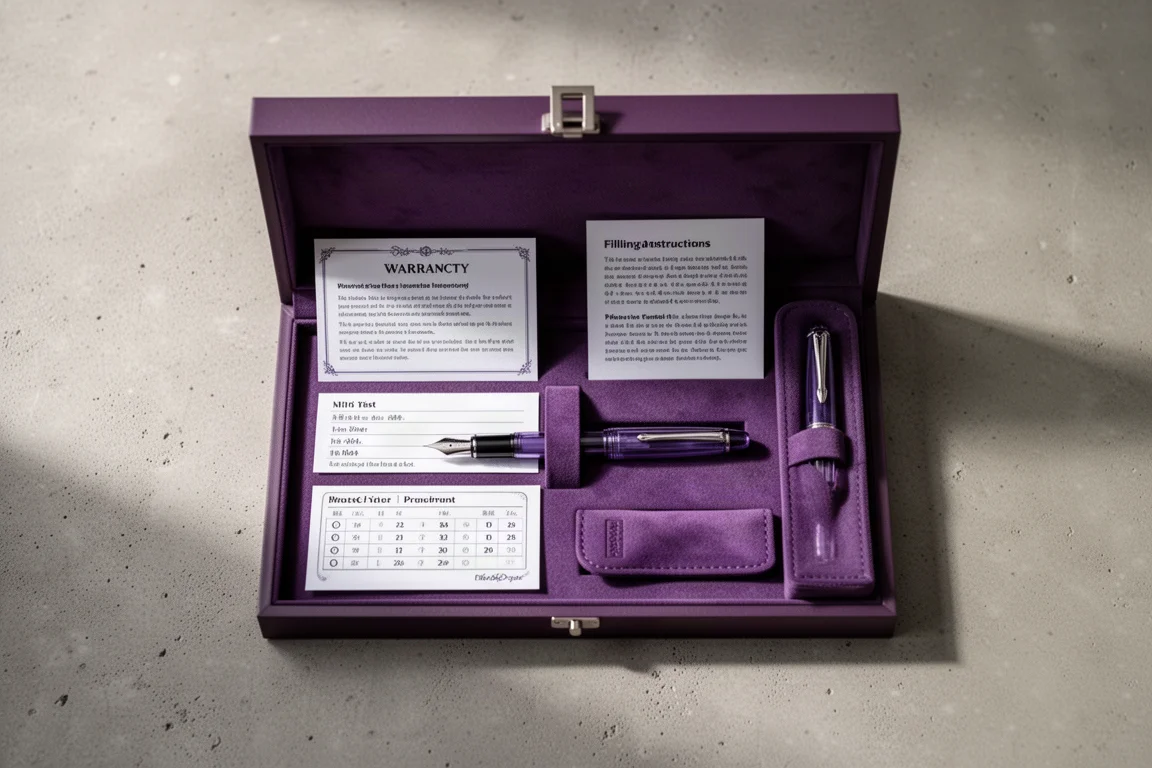
The pen ships in a box with a magnetic closure, and the packaging feels thoughtfully assembled. Inside you get a warranty card, paperwork including a nib test showing the pen has been checked for writing before it left the factory, a congratulations card, a protective pen sleeve, and a set of vacuum filling instructions on genuinely luxurious, smooth stock.
The pre-shipped nib test is a small detail worth appreciating: you know your specific nib works before it ever reaches your desk. Two finishes are offered, a purple and a brown, and both are attractive. The review unit is the purple, and it is the one we would pick again.
Design and Materials
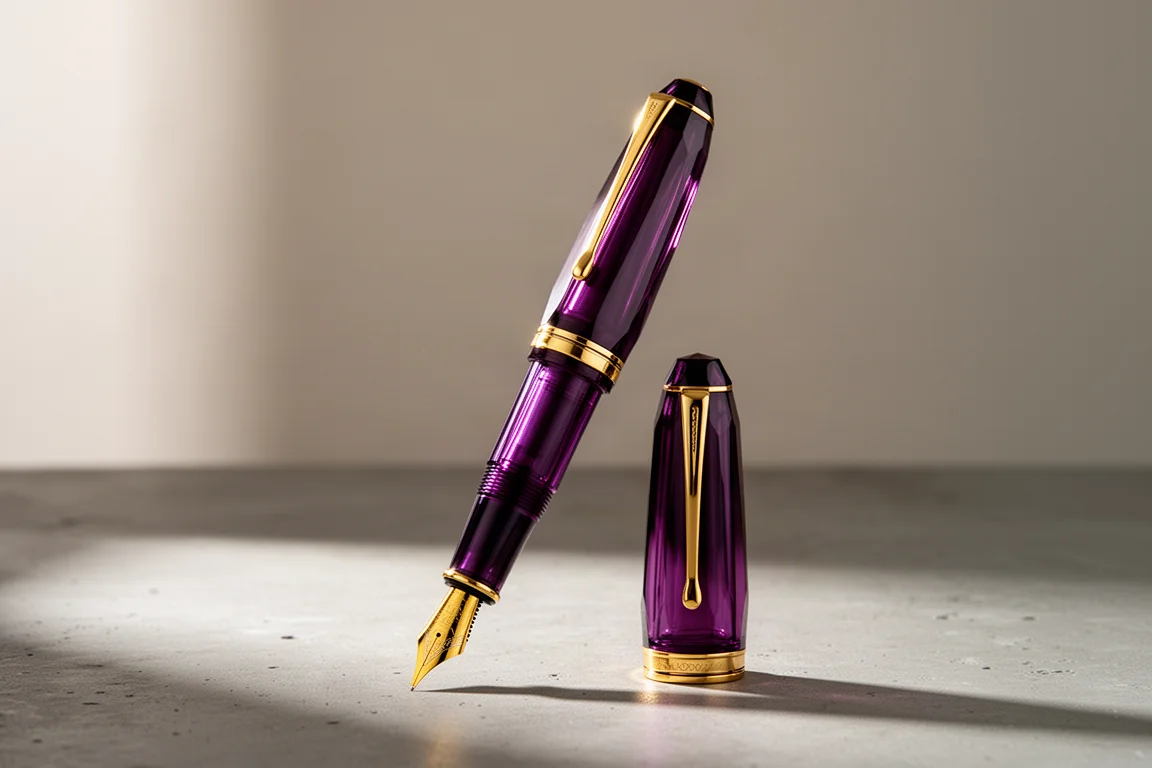
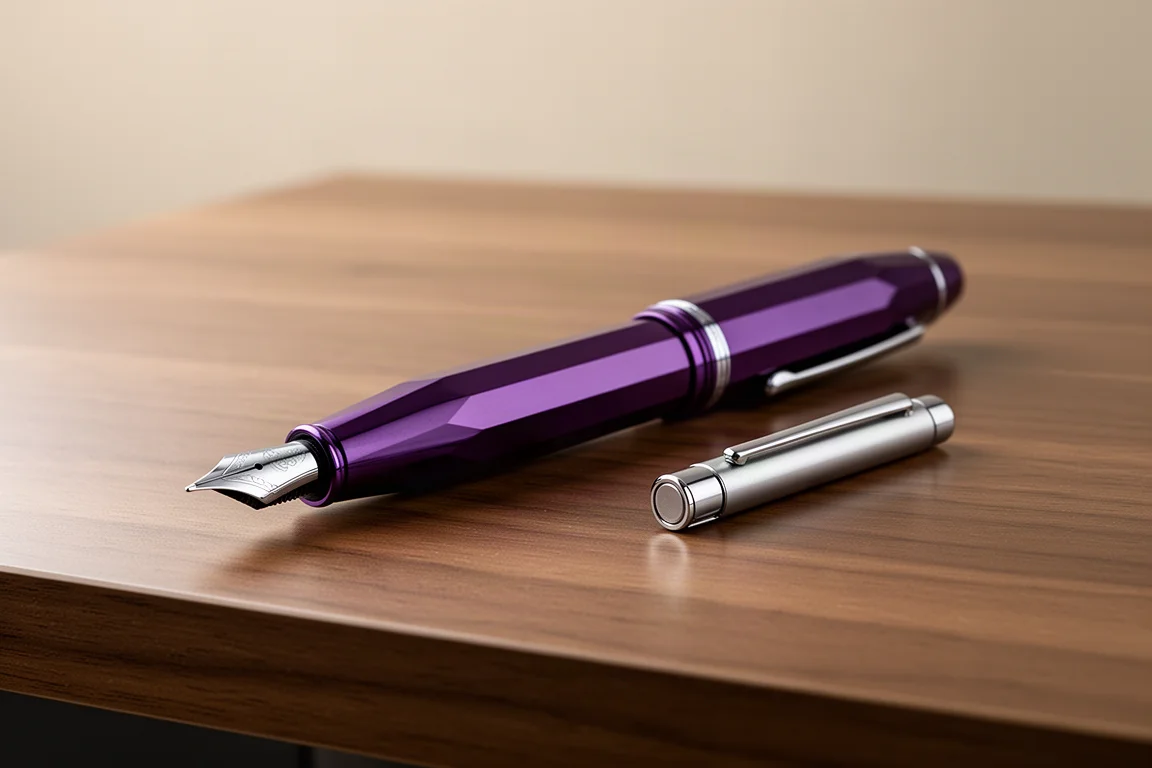
This is a large, faceted pen, and the faceting is not decorative for its own sake. It exists to show off the material, which catches light beautifully as you turn the pen in your hand. The body is a deep, dark purple, closer to an amethyst tone than solid black, with translucent sections in the barrel that let you see your ink level. For scale, it is significantly larger than a typical compact metal pen, and posting the cap makes it enormous, though it is quite sizable uncapped and does not need posting.
Details include a broad clip with a small wheel, a gold center band, a textured gold band near the blind cap that gives you something to grip when filling, and a blind engraving reading Santini, Italy along with the edition number. These pens are limited to 98 pieces per finish. The section is round rather than faceted, with another gold ring where the section meets the barrel.
The Vacuum Filling System
The filling system is the most interesting engineering here. Parker pioneered the Vacumatic concept decades ago, but those pens used a rubber diaphragm in constant contact with the ink, which could dry out and crack over time. Santini has modified the design with something closer to a telescoping piston, and the seal sits sealed away in its own chamber so it never touches the ink. In theory, that means it should not dry out or degrade the way older vacuum fillers did.
In use, you unscrew the back section, submerge the nib in a bottle of ink, and push the plunger repeatedly. Burps of ink flow into the barrel with each push until it fills. Santini claims about 3.5 ml of capacity; in practice we landed around 2.8 ml, which is still a generous tank. One practical tip: use a reasonably tall ink bottle, because you push the mechanism fairly firmly and you do not want the nib pressing against the bottom of the bottle.
Writing Performance
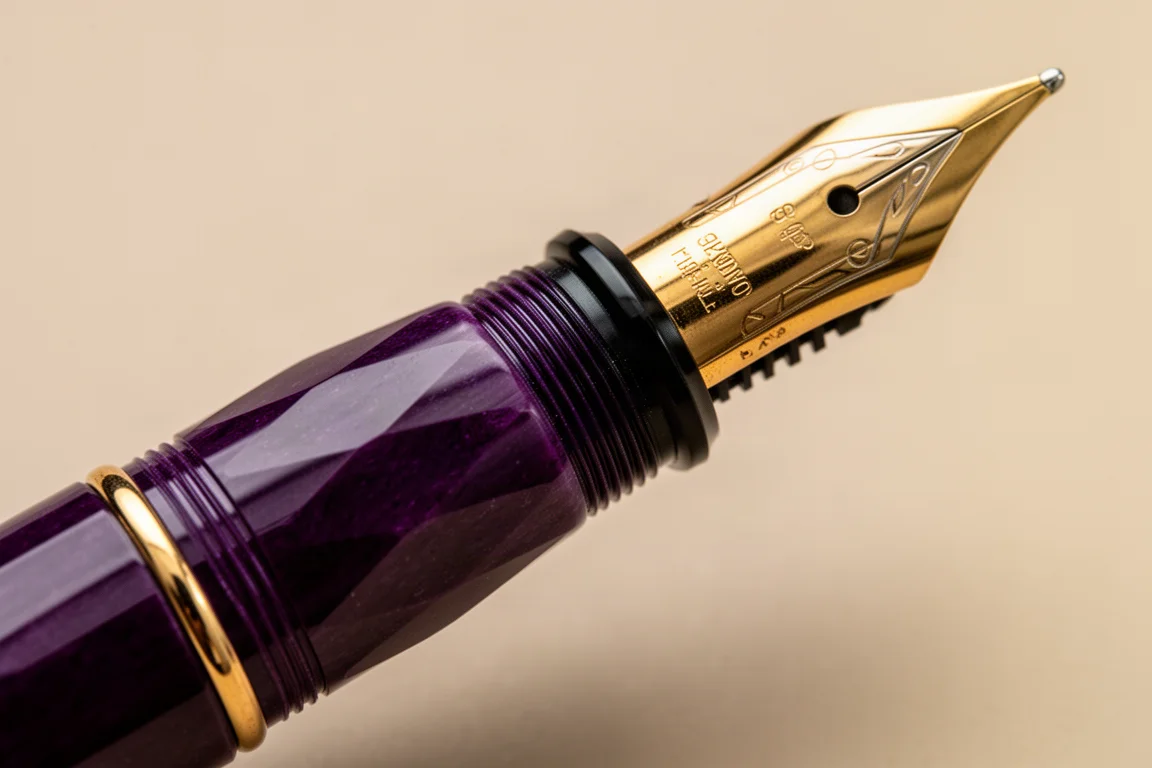
The nib is a number 8 solid gold 14k nib made entirely in-house, available in fine, medium, broad, stub, and flex variants, with a two-tone option by request. The feed is a large ebonite feed, also made in-house. The review unit has a broad nib, and paired with Santini’s own royal blue ink, it is an exceptionally wet writer.

On moderately absorbent paper it still lays down a rich, generous line, and on better paper it is a joy. It has not skipped once in everyday use. The nib is very smooth and soft, with a slight roundness and maybe a hint of stubbiness to the line. This is not a flex nib, so it should not be flexed, though careful pressure does produce a little line variation. Reverse writing works cleanly too, which is a good sign of how well the nib is ground.
If you prefer dry, crisp nibs, this pen is not for you. If you want a gusher, a smooth and cushioned writing experience, it is close to perfect.
Things to Consider Before Buying
The price is the first consideration. At €790, this is unambiguously an expensive pen. That said, you get a lot for it: an innovative in-house filling system, a striking faceted material, an in-house gold nib, and an in-house ebonite feed, all manufactured in Italy. Against hundreds of other fountain pens at every price level, this is one of the finest writers we have used.
The second consideration is the gold ring on the section. Aesthetically it looks balanced with the other gold trim, but we tend to grip the pen slightly higher, so a finger rests half on metal and half on resin. It is not sharp, and the metal warms quickly, but an all-resin section would feel slightly more pleasant. There is also engraving near the section that can collect residue, so it needs an occasional wipe with a soft cloth.
Buying Advice
This pen makes sense for a specific kind of buyer: someone who values writing experience and in-house craftsmanship over a famous name. Santini makes its own nibs, feeds, and filling systems, something very few companies still do, and the quality of execution justifies a meaningful part of the price.
If you want a wet, smooth, large pen with an unusual filling mechanism and a limited edition feel, this is an easy recommendation. If you prefer dry nibs, dislike metal sections, or find €790 hard to justify, look elsewhere or at Santini’s less expensive models first.
Conclusion
The Santini vacuum filled fountain pen is a standout from a smaller brand doing genuinely impressive work. The faceted amethyst purple material is beautiful, the modified vacuum filler is clever and should age better than the old diaphragm designs, and the in-house 14k gold nib delivers one of the best writing experiences available at any price. The minor section ring quirk and the high price are the only real caveats. If you are considering your next fountain pen purchase, Santini deserves a very close look.
Product link
View more details for Santini Vacuum Filled Fountain Pen
This product is mentioned in the review. Check the specifications, options, and compatibility before buying.
View more details for Santini Vacuum Filled Fountain PenFurther reading
Related Reviews
Fountain Pens
Best Budget Fountain Pens Tested: 9 Pens, One Clear Winner
A hands-on comparison of nine affordable fountain pens for everyday writing, calligraphy, and sketching, with a clear standout for flexible nib fans.
Fountain Pens
Aurora Optima Review: An Italian Piston Filler That Punches Above Its Price
A 14k gold nib, ebonite feed, and a beautifully deep oraloid body make the Aurora Optima one of the most rewarding piston fillers around.
Fountain Pens
Cross Bailey Light Review: The Entry-Level Fountain Pen Worth Keeping at the Office
A plastic-bodied Cross with a metal clip, snap cap, and famously smooth extra fine steel nib. Around $15, available almost everywhere, and easy to recommend.