Snowboards
Salomon Ultimate Ride Review: A Reactive Freeride-Leaning All-Mountain Snowboard
A close look at the Salomon Ultimate Ride, its Quad Camber profile, snappy pop, edge grip trade-offs, and who it actually suits on the mountain.
Introduction
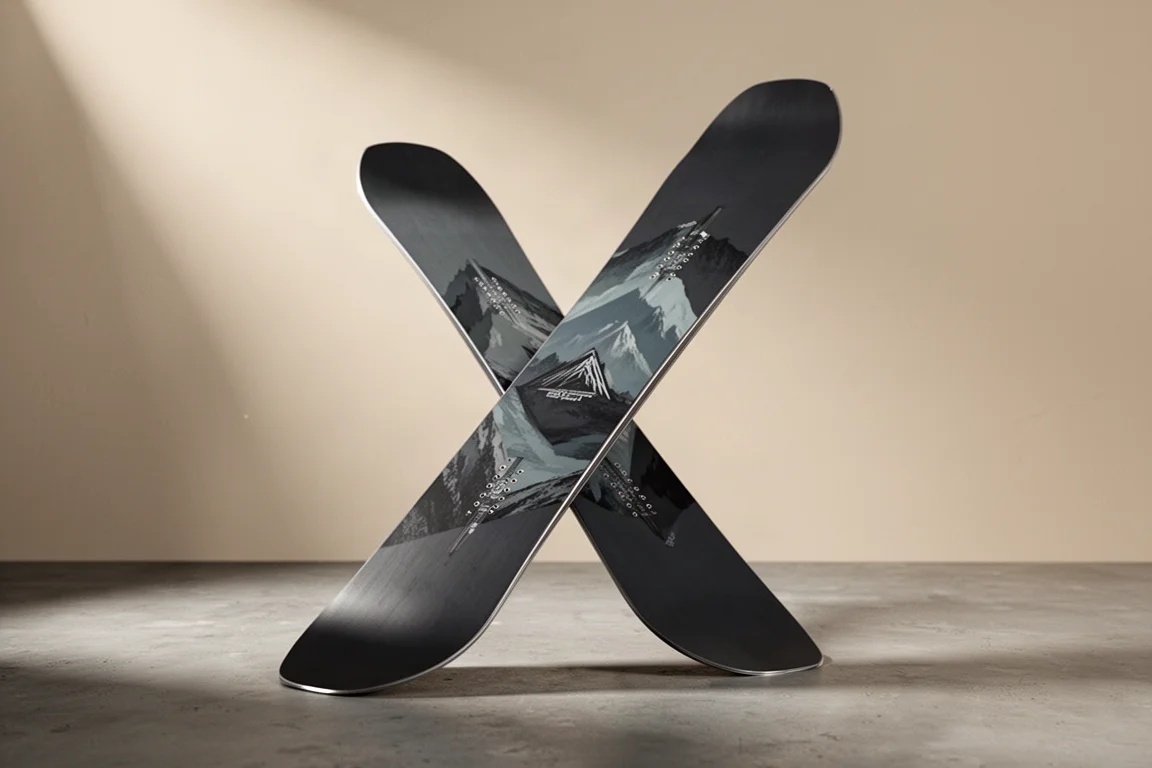
The Salomon Ultimate Ride is an all-mountain snowboard that sits between freeride and freestyle without fully committing to either. Its defining feature is Quad Camber, a profile that runs traditional camber through the middle and transitions into a small amount of micro rocker in the tip and tail, just before the upkick. In practice it rides much like a classic camber board, with slightly less edge bite out at the contact points.
It is offered in five lengths: 153, 155, 158, 161 and 164.
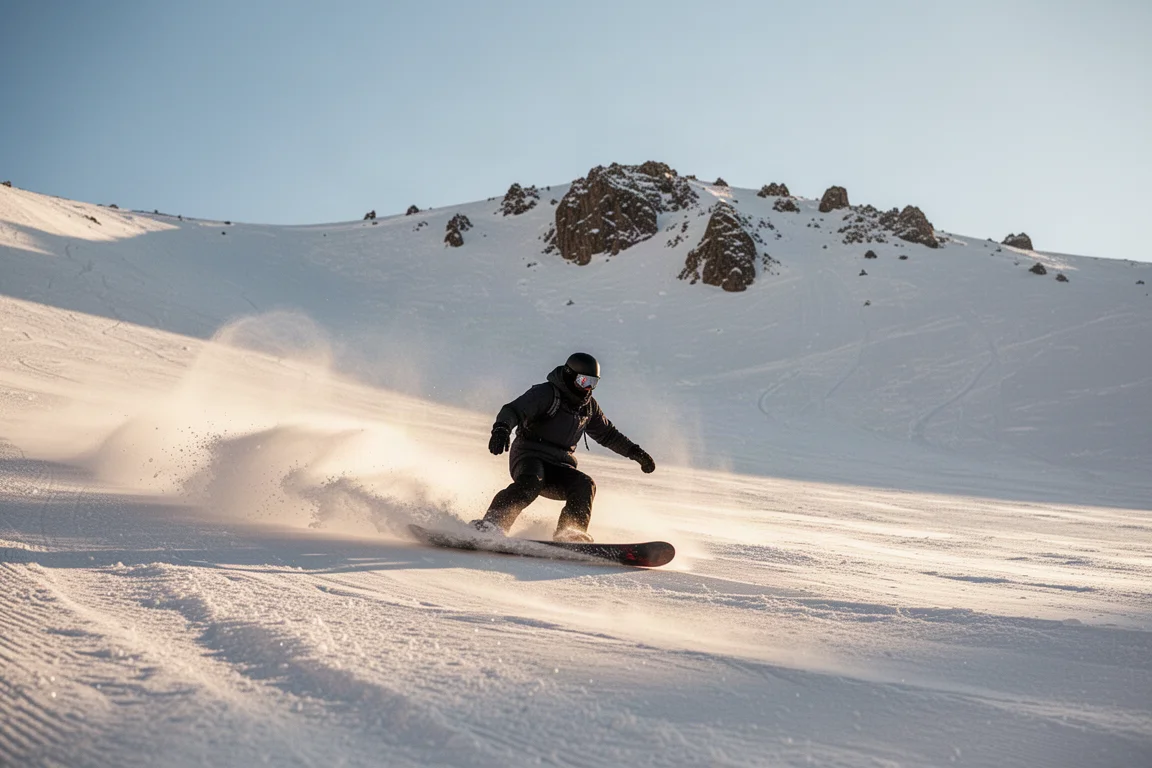
Spring testing at Arapahoe Basin took place on a warm, sunny bluebird day, with Rome Black Label bindings and K2 Thraxis boots. Conditions covered creamy groomers, chunder, hot powder and slush on the lower mountain, which is a useful mix for judging a board meant to handle variable terrain.
Who the Salomon Ultimate Ride Is For
This is a board for the hard-charging all-around rider, whether the focus is freestyle or freeride, with a little more emphasis on the freeride side. It rewards riders who stay on top of it and who already have solid edge control.
It is not a natural fit for someone learning to jib, for slow-speed park laps, or for a die-hard east coast rider who spends the season on boilerplate ice. Riders who mostly see variable, softer or well-groomed snow will get far more out of it.
Main Strengths: Snappy Pop and Smooth Power Transmission
The flex profile is deliberately uneven. The tips start slightly softer and stiffen up about a third of the way back to the insert pack, staying stiffer through the middle before going a hair softer exactly where the torsional flex twists.
Pop is the standout quality. Because Quad Camber behaves like traditional camber, you have to load it up, and when you do, the board reacts with real force. It is very snappy, it wants to get into the air, and it pops off anything with ease. Even when ridden in a laid-back way it still loads and rebounds. It is a pro model built for larger features, and it responds to anything that could count as a lip.
Edge-to-edge power transmission is smooth and fluid. In soft snow you can lay it over, flex the back knee into the centre of the board, and get all that power back out through the tail to push through the turn.
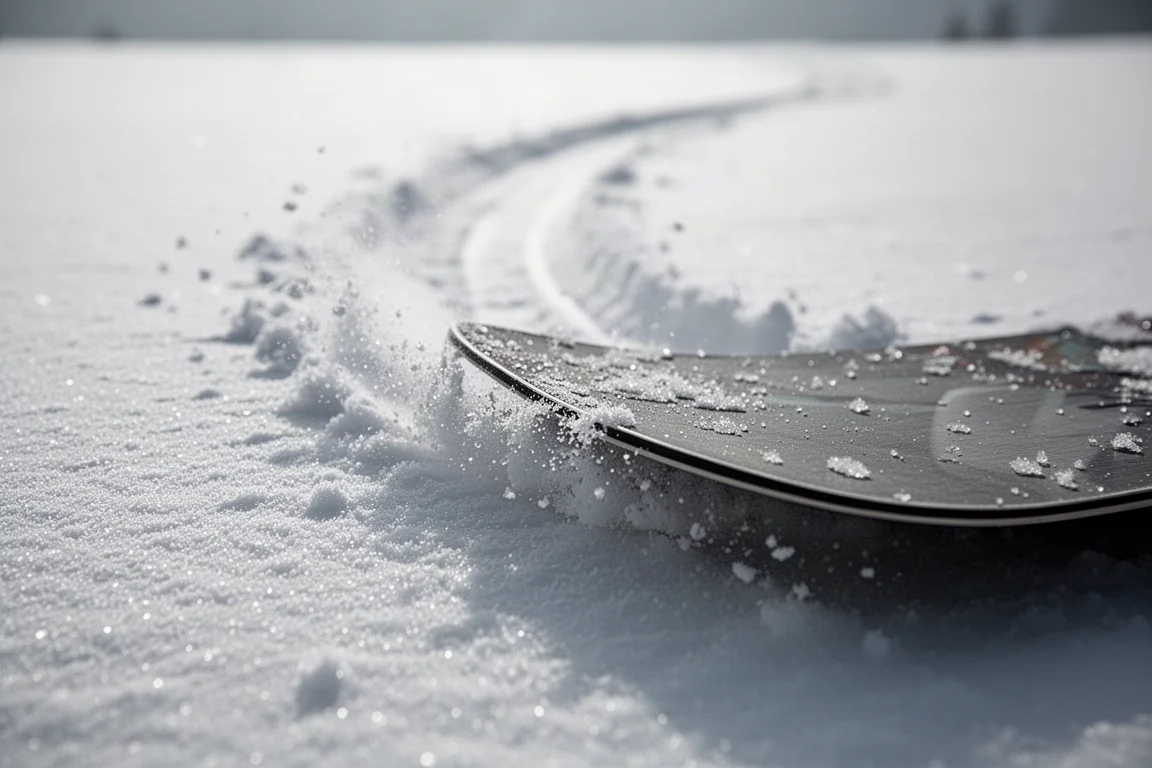
The board drives much like a traditional camber deck, with a little more ankle flex underfoot than that comparison might suggest. That combination is what makes it feel lively rather than locked in.
Stability, Flex, and Terrain Feel
Stability is best described as stable where it counts and lively everywhere else. There is a small amount of chatter in the nose and tail, and you feel a touch of it underfoot. In rutted-out terrain the nose flexes with everything while the body can get jarred right underfoot.
On edge, the ride does not feel as locked in as some other sidecuts. In hero snow and soft piled-up conditions that is not an issue. On firm, rock-hard snow the connection feels less planted, which is the main reason this board is not aimed at riders who live on ice.
Buttering, Jibbing, and Pressing
Buttering this board takes a lot of effort. Speed and muscling are the keys. You need to leverage your weight right into the point where the camber section comes down to the rocker and push it outside that zone, and even then it fights you the whole time. Deep butters are not realistic. High-speed power butters are the realistic option, and anything slower feels throttled.
Jibbing follows the same logic. Speed is essential, and this is not a board designed for slow-speed jibbers or for riders just learning. To press, you want to end up sitting outside the contact point on the nose or tail, and the camber through the middle will still resist. For a board slide you want to be dead centre where the flex point is, otherwise the board turns into a teeter-totter and you end up balancing from one side to the other. The pop out of a feature, though, is immense.
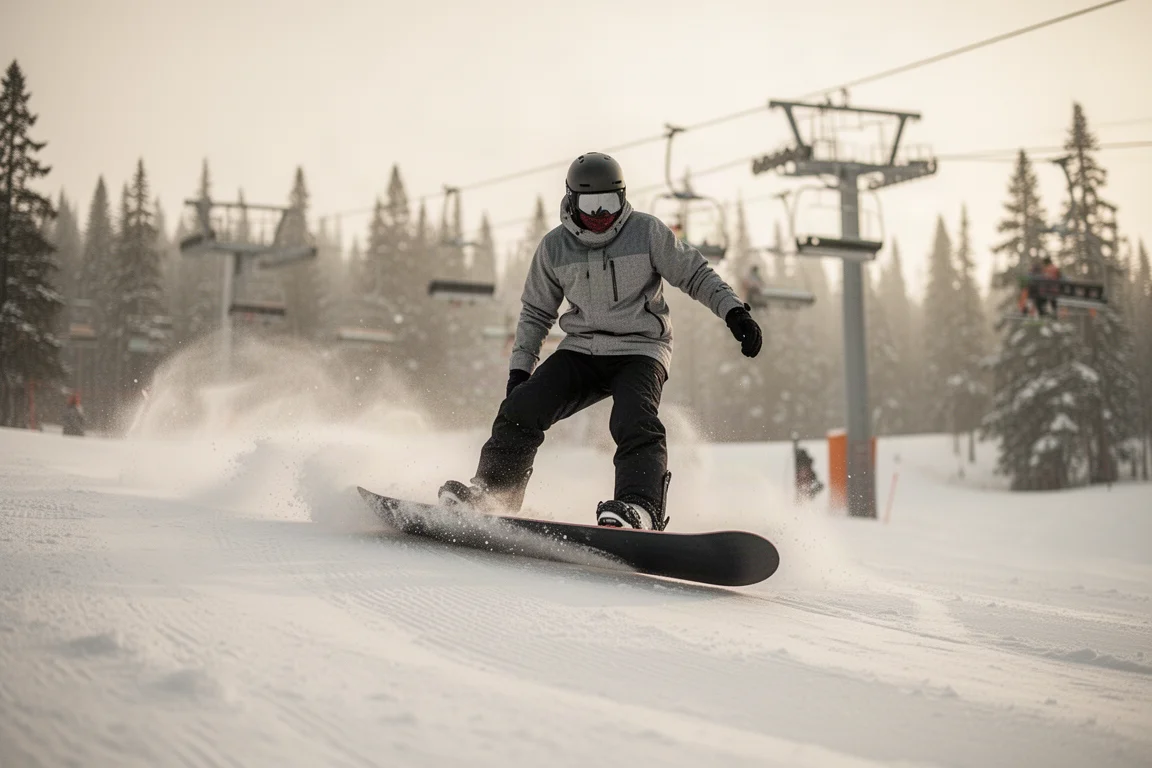
Put simply, riders whose sessions revolve around pressing and butters will find this the wrong tool. It can be done, but the board makes you work for every bit of it.
Things to Consider Before Buying
- Edge grip is the clearest compromise. The Quadralizer sidecut sits just inside the insert pack, which makes it feel a little hooky there, and on edge it does not feel as locked in as other sidecuts unless the snow is soft.
- Firm and icy conditions are the weak point. Hardpack does not flatter this board, and riders who spend most of their season on ice should look elsewhere.
- It demands attention. You have to stay on top of it, and it is not a forgiving, relaxed cruiser.
- Buttering and jibbing require speed. Slower attempts get resisted by the camber section through the middle.
- The softer flex and new shape are a change from the previous version. Riders who preferred the older, firmer build should note that the current board has been softened slightly.
Buying Advice
The direction this board has taken is solid. Compared with the previous version it feels a little softer and more manageable, and the new shape suits it. It is highly reactive with a lot of snap, and it makes sense for riders who want an all-mountain deck that leans freeride and can still handle freestyle.
For bindings, the Salomon Quantum, Burton Cartel X and Nitro Team Pro are all sensible pairings. If you are cross-shopping, the Nitro Super Team, Jones Aviator 2.0 and Rome Ravine Select are the closest alternatives to weigh against it.
Length choice matters more than usual here. Sizes run from 153 up to 164, so match the board to your weight, boot size and the terrain you actually ride most, rather than to the biggest features you hope to hit. If your seasons are built around soft snow, groomers and variable conditions, this is a straightforward and rewarding pick.
Conclusion
The Salomon Ultimate Ride is a hard-charging, reactive snowboard with genuine pop, smooth power transmission and a freeride-leaning personality. It rewards confident riders who stay on top of it, and it gives back a lot in soft and variable snow. The trade-offs are real, though: grip on firm snow is modest, it can feel hooky on edge, and buttering or jibbing takes speed and muscle. Riders who match those conditions and that riding style will find a lot to like in the current shape.
Product link
View more details for Salomon Ultimate Ride
This product is mentioned in the review. Check the specifications, options, and compatibility before buying.
View more details for Salomon Ultimate RideFurther reading
Related Reviews

Snowboards
32 Middle Earth Scott Stevens Pro Model Snowboard Review: A Park Board With a Reversed Flex
A medium traditional camber park board with carbon V reinforcement that is stiffer in the tips and more playful between the feet. Here is how it rides and who it suits.

Snowboards
32 Snafu Review: A Directional All-Mountain Freestyle Board with Serious Pop
The 32 Snafu pairs a directional camber-rocker profile with a stiffening tail for powerful carves, big ollies, and a surprisingly damp ride.

Snowboards
32 XXX Pat Fava Pro Snowboard Review: A Stiff Camber Beast for Hard-Charging Riders
A full-width traditional camber deck that rewards aggression with stability and edge power, but demands effort everywhere else.