Snowboard Bindings
Salomon Response Pad Review: What It Does and Whether You Need It
A focused look at the Salomon Response Pad, how its post-based design adds power and drive into a Shadow Fit binding base, and which riders actually benefit.
Introduction
The Salomon Response Pad is a small component with a narrow, specific job: it sits in the base of a snowboard binding and pushes more of your input straight into the board. It is not a dramatic reinvention of binding hardware, and it does not try to be. It is a refinement aimed at riders who already like how their bindings fit and want a firmer, more direct connection underfoot.

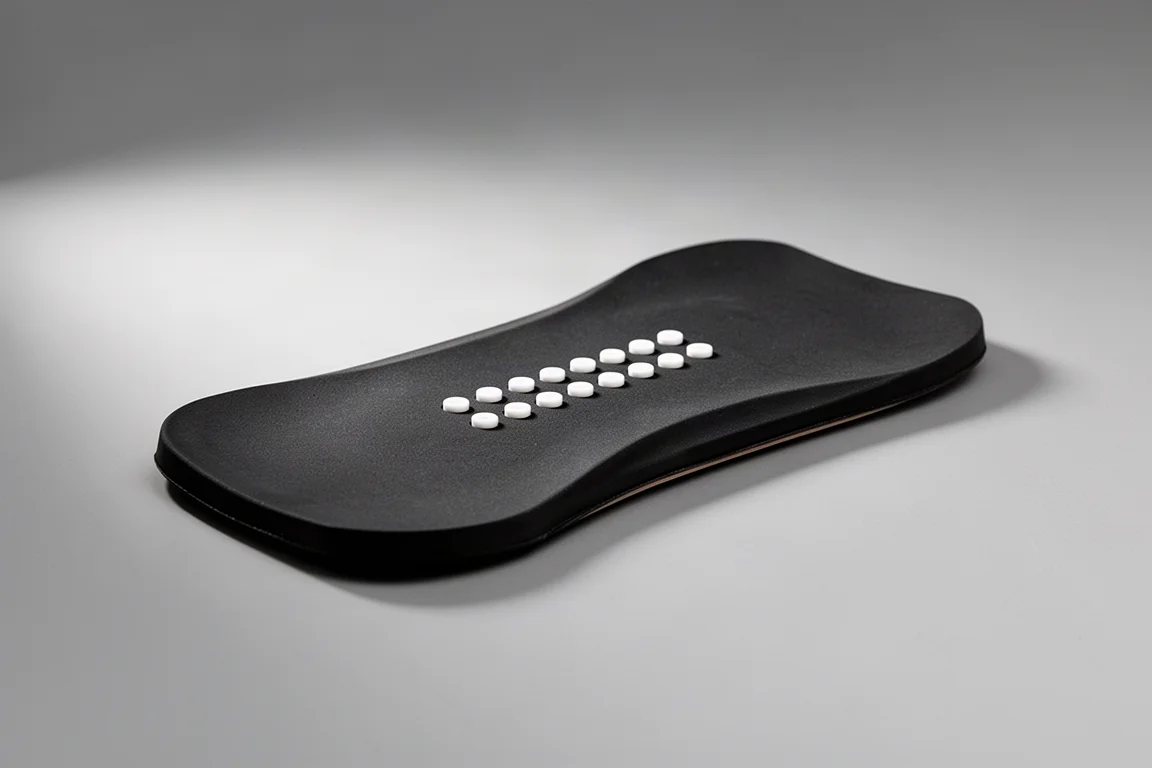
If you have ever cinched a binding strap down and still felt a slight delay between your foot moving and the board answering, that gap is exactly what a footpad like this is built to close. The Response Pad is Salomon’s version of that idea, and it is built around a row of small white posts rather than a flat, uniform pad surface.
How the Salomon Response Pad Works
The white dots on the pad are the whole story. Each one is a post that presses down into the base of the binding, creating a series of contact points instead of a single flat interface. That structure transfers more power and drive into the binding base, which in turn makes the binding feel more responsive.
It matters most on bindings that use Shadow Fit technology. Shadow Fit is designed to let the heel cup move and flex laterally, which gives the ride a looser, more forgiving feel at the heel. That flexibility is a feature rather than a flaw, but it does mean the binding can benefit from extra power coming through the footbed. The Response Pad supplies that power without removing the lateral play the heel cup is built to provide.
Main Strengths
The clearest strength is power transfer. Because the posts push directly into the base, the pad gives the binding a firmer, more immediate feel underfoot, and that firmness shows up as quicker response when you are riding.

The second strength is that this does not come at the cost of fit. Shadow Fit bindings appeal partly because the heel cup flexes with your movement, and the Response Pad leaves that lateral play intact. You get a more responsive binding while keeping the looser heel feel the fit system is known for. Compared with an earlier generation of the same binding platform, the newer setup with the Response Pad is the more responsive of the two.
Who This Product Is For
This pad makes the most sense for riders who already own, or are considering, a Salomon binding with Shadow Fit and who want a firmer, more driven ride. If your priority is a soft, surfy feel with maximum lateral give, the extra power transfer works against your preference rather than for it.
It is also worth setting the baseline expectation. Nearly every binding on the market includes a footpad, and a binding without one is worth questioning. The Response Pad is not filling a gap that most bindings leave open. It is an upgrade to a part that already exists, which means the decision is about feel rather than necessity.
Things to Consider Before Buying
Responsiveness is a preference, not a universal good. A more direct connection between boot and board gives you faster feedback, but it also transmits more of the terrain through the binding. Riders who like a damped, relaxed ride may find they prefer the softer feel of a standard pad.
It is also a component-level upgrade, so the gains are proportional. Expect a noticeable difference in how planted and driven the binding feels, not a transformation of the binding itself. If the rest of your setup is not already dialled in, this is a refinement rather than a fix.
Compatibility and Setup Notes
The Response Pad is built around Salomon’s own binding base, and its posts are shaped to seat into that base. That makes it a natural fit for Salomon bindings, particularly those using Shadow Fit, and a poor candidate for other binding platforms where the pad geometry will not match the base it is meant to press into.
Setup is straightforward because there is nothing to adjust. The pad drops into place and the posts do the work. There are no settings to tune, which also means there is no way to dial the effect up or down. You either want the firmer feel or you do not.
Buying Advice
The simplest way to decide is to ask what you want more of. If you want more power and drive through the base of a Shadow Fit binding, and you are happy to keep the lateral heel movement that comes with it, the Response Pad is a sensible addition.

If you are chasing a softer, more forgiving ride, or you ride a binding from a different brand, there is little here for you. The pad is a targeted answer to a specific feel, and it is best judged on that basis rather than as a general upgrade.
Conclusion
The Salomon Response Pad does one thing: it adds power and drive into the base of the binding, using a set of posts that press into the base rather than a flat pad surface. For riders on Shadow Fit bindings who want a more responsive ride without giving up lateral heel play, that is a meaningful improvement. For everyone else, it is an optional refinement rather than a required part.
Product link
View more details for Salomon Response Pad
This product is mentioned in the review. Check the specifications, options, and compatibility before buying.
View more details for Salomon Response PadFurther reading
Related Reviews

Snowboard Bindings
2024 Union Ultra Snowboard Bindings Review: A Cushy, Freestyle-Focused Favorite
Two seasons on the 2024 Union Ultra: a lightweight, tweakable freestyle binding with standout comfort, a damp molecular bushing, and thoughtful hardware fixes.

Snowboard Bindings
32 Team Phase Binding Review: A Fast Entry Binding Built for Freestyle Laps
The first binding from 32 uses the Phase chassis for quick step-in entry with a softer, freestyle-leaning flex. Here's how it performed on the snow.

Snowboard Bindings
Arbor Cypress Snowboard Binding Review: A Laid-Back Cruiser That Can Charge
A closer look at the Arbor Cypress binding's adjustability, strap feel, and that oddly tall highback before you decide to buy.