Ski Gear
Salomon QST 98 vs Atomic Bent 100: Two 100mm All-Mountain Skis Compared
A practical comparison of two 100mm all-mountain skis: what the Salomon QST 98 does well in trees and powder, where its damping falls short, and why the Atomic Bent 100 splits opinion.
Introduction
Few purchases in skiing involve as much homework as building a one-ski quiver. The 100mm all-mountain category exists for riders who want a single pair that can carve groomers, float through powder, and still feel manageable in tight trees. Two names that come up constantly in that conversation are the Salomon QST 98 and the Atomic Bent 100, and they arrive with very different reputations.
This guide looks at both skis on the terms that matter most: how they turn, how they float, how they feel underfoot, and which rider each one actually suits. Neither is a bad ski. They simply reward different priorities, and understanding those differences is the fastest way to buy with confidence.
How to Evaluate a 100mm All-Mountain Ski
A ski in this class is a compromise by design. At roughly 98 to 100mm underfoot you get enough surface area to stay on top of soft snow without the sluggish edge-to-edge feel of a dedicated powder ski.
Three things shape how a ski like this behaves. Sidecut and turn radius determine how eagerly it engages once you roll it on edge. Rocker profile and taper decide how much flotation you get and how easily the ski releases in variable snow. Core construction, meaning the wood layup, any composite or metal layers, and the sidewall, controls the balance between energy, weight, and damping.
Damping deserves its own note, because it is the most oversold term in ski marketing. A damp ski absorbs vibration and stays planted through chopped snow, and that quality usually comes from mass and metal. Lighter constructions can manage vibration in other ways, but they rarely feel identical to a heavy metal-laminate ski.
Salomon QST 98: Built for Trees and Quick Turns
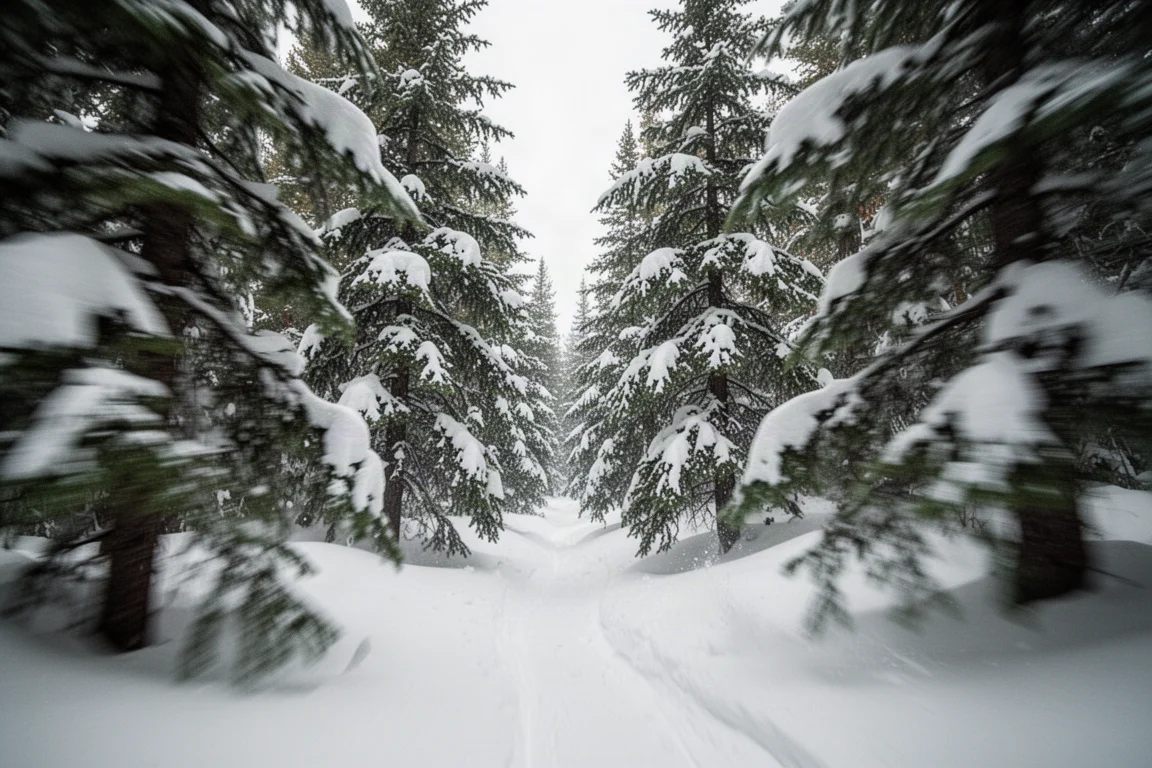
The QST 98 is built around a deep sidecut positioned right around the toe and heel of the binding. Roll it on edge and it engages quickly, which makes short-radius turns feel immediate rather than laboured. The result is a ski that sits you in a sweet spot at the apex of the turn.
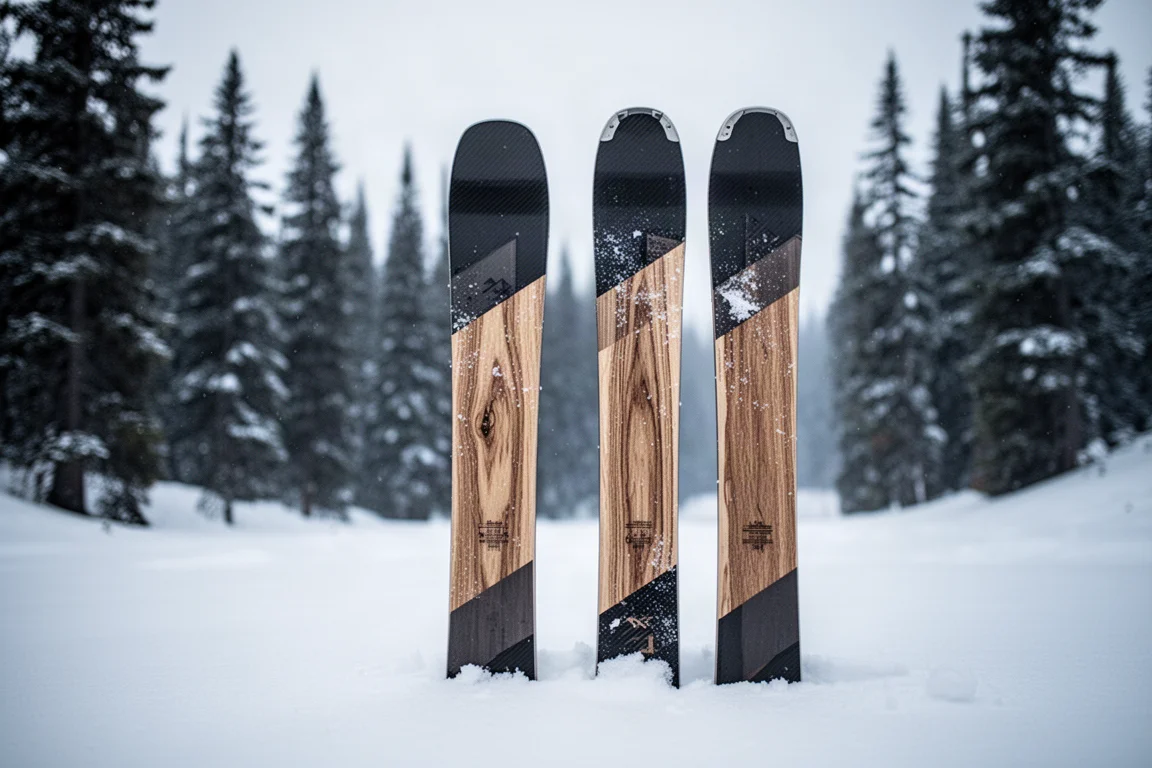
Construction is where this ski gets interesting. The core is wood, and the graphic is open enough to show the layup, including a thicker section of wood through the middle that runs in a tuning-fork shape. Carbon and flax layers sit in the tip and tail, which keeps the ski light while preserving energy and liveliness at both ends. Cork inserts at the very tip and tail are there to manage vibration. A double sidewall adds grip and durability along the edge, and notably there is no titanal in the build.
That combination produces a ski that feels firmer and more stable than its lack of metal would suggest. It holds a clean turn, it stays locked in through the arc, and in soft snow it floats well and moves edge to edge easily through the trees. For riders whose priority is tight lines and powder, that mix is hard to beat.
The trade-off is that the QST 98 does not like to be interrupted. Once it is locked into a turn it resists being altered or doubled up, so you need to look ahead and commit to your line when you are carving at speed. It is also worth being realistic about damping. The cork helps control vibration from hard spots, but this is a reactive ski that you will feel, and it is not the planted, crud-cutting platform that a heavy metal-laminate ski such as the Volkl M6 Mantra provides.
Atomic Bent 100: A Ski That Divides Opinion
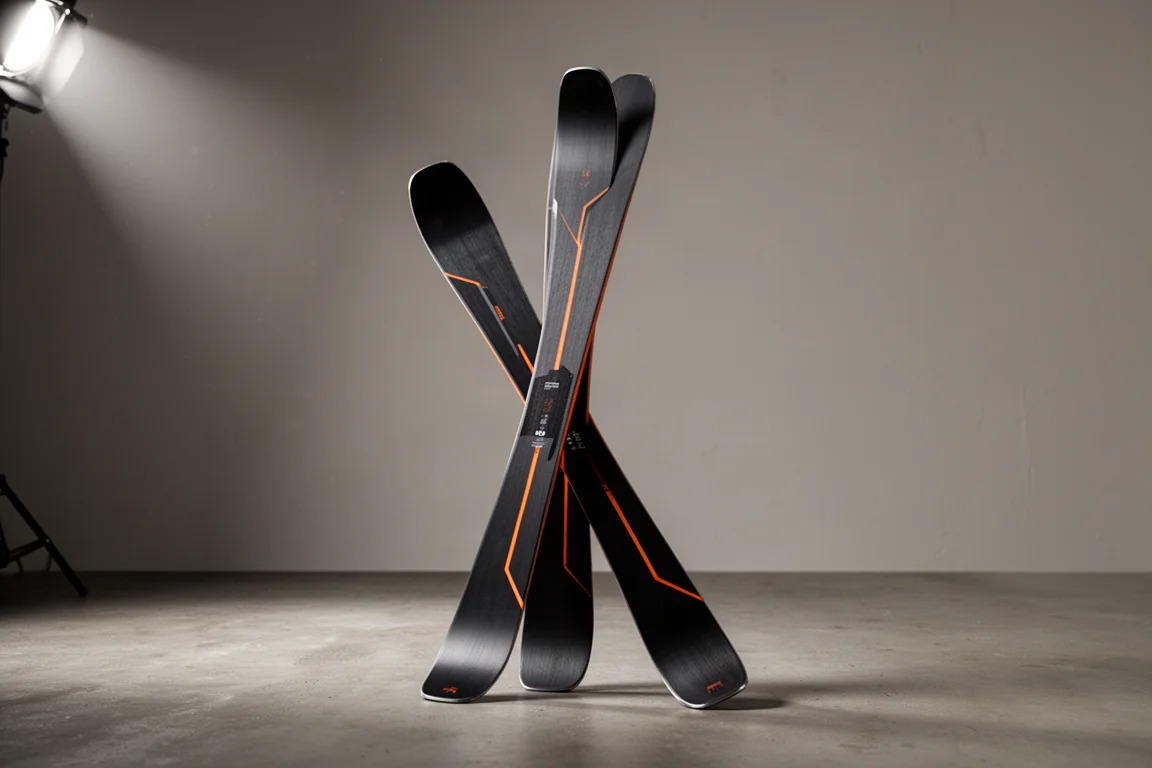
The Atomic Bent 100 sits in the same 100mm all-mountain space and belongs in the same one-ski quiver conversation, but it is a far more polarizing design. Riders tend to either get along with it or bounce off it, and there is not much middle ground.
That kind of split is useful information rather than a reason to dismiss the ski. A model that provokes strong opinions usually has a distinct character, and distinct character is exactly what some riders are looking for. It also means the Bent 100 is a poor candidate for a blind purchase. If it is on your shortlist, treat a demo as part of the cost of the ski rather than an optional extra.
If you cannot get on a pair before buying, the safer path is to choose the option whose behaviour is easiest to predict from its design.
View more details for Atomic Bent 100
How the Two Skis Compare
On paper both skis cover the same brief: a wide-ish all-mountain ski that can handle a full season of mixed conditions. In practice the QST 98 is the more predictable of the two. Its deep sidecut, wood core, carbon and flax tip and tail layers, and cork inserts add up to a ski that turns quickly, floats well in soft snow, and holds a clean carve. The main caveats are that it resists mid-turn changes and that it is not especially damp.
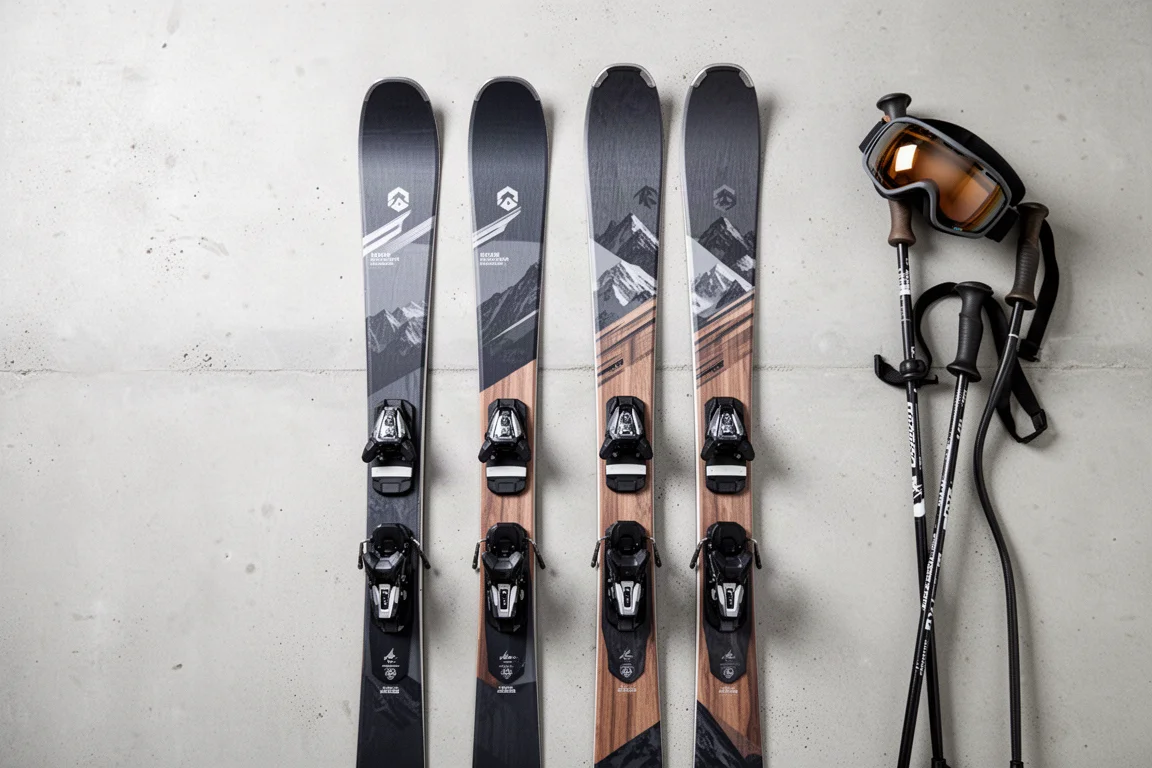
The Bent 100 is the wildcard. It has a following and it has detractors, and the deciding factor is riding style and personal preference rather than any single specification. Riders who already know they like its character will not need convincing. Everyone else should compare it back to back with the QST 98 on the terrain they actually ski.
Setup and Sizing Considerations
Two skis in the same width class can feel completely different depending on how they are set up, so it is worth sorting the details before you commit.
Length matters more than most buyers expect. A shorter length feels quicker in trees and easier to pivot, while a longer one adds stability and float. If you are between sizes and your priority is tight terrain, the shorter option is usually the more comfortable choice. If you spend your time on open, faster lines, the longer one gives you more ski to work with.
Mount point changes the balance of a ski considerably. The factory recommendation is the sensible starting point for most riders, and moving a binding forward or back should be a deliberate decision rather than a shop default. Boot fit matters just as much as the ski itself, since a well-fitted boot will do more for your control than any change of topsheet. Finally, make sure the edges are sharp and the base is properly waxed before your first day out, because a badly tuned ski will not show you what it can do.
Buying Advice
If your season is mostly tight trees, soft snow, and short to medium turns, the Salomon QST 98 is the straightforward recommendation. It engages quickly, floats well, and holds a clean carve, and its limitations, a reluctance to release mid-turn and moderate damping, are unlikely to bother riders who spend their time in the woods.
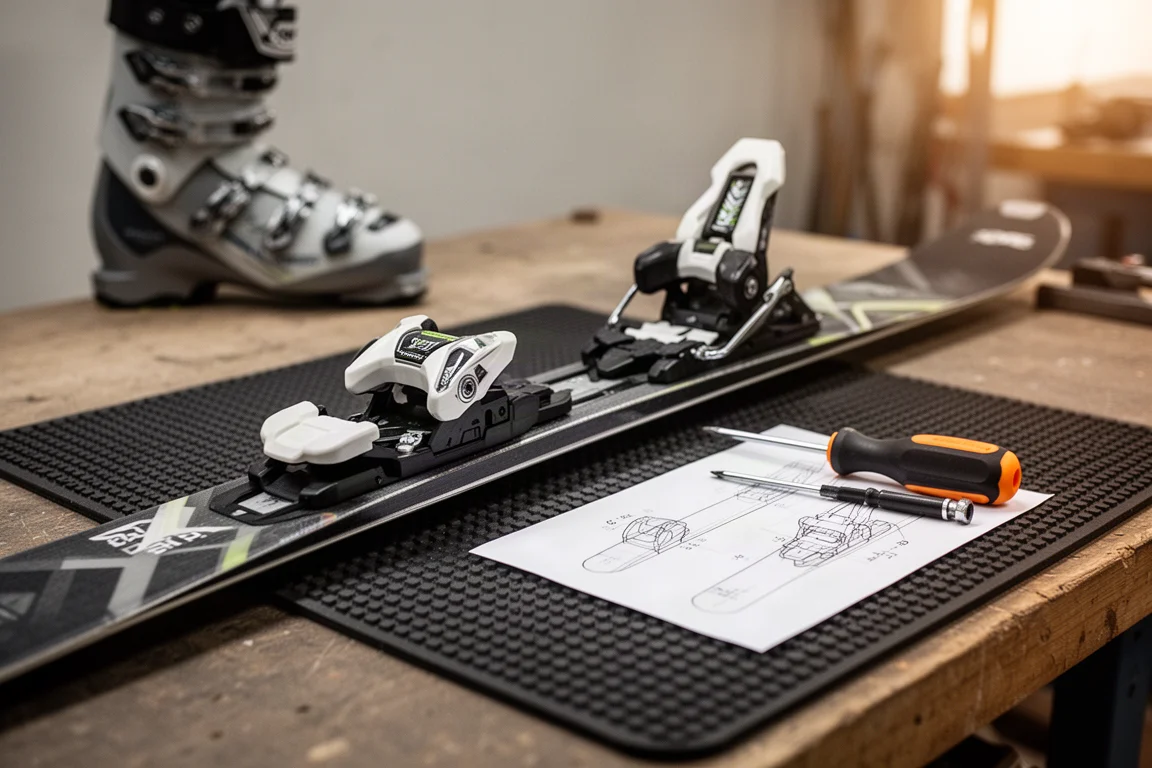
If you are drawn to the Atomic Bent 100, buy it with your eyes open. The ski has a strong point of view and a divided following, which makes a demo the most valuable money you can spend before purchase. If a demo is not possible, weigh how much you value predictability against how much you value a ski with real character, and choose accordingly.
Whichever way you go, buy for the terrain you ride most rather than the terrain you ride occasionally. A 100mm all-mountain ski is a long-term purchase, and the best one is the one that matches the days you actually ski.
Conclusion
The Salomon QST 98 and the Atomic Bent 100 both belong in the 100mm all-mountain conversation, but they ask different things of their riders. The QST 98 is the quicker and more forgiving option in soft snow and trees, with a carve that locks in and a damping profile that stays lively rather than planted. The Bent 100 is the more divisive choice, and one that rewards a demo before you commit.
If your priority is a light, quick, floaty ski that still carves, the QST 98 is the safer bet. If you want a ski with a distinct personality and you can try before you buy, the Bent 100 deserves a place on the shortlist.
Further reading
Related Reviews

Ski Gear
2023 Blizzard Hustle vs Rustler: Six Freeride Skis Compared
Blizzard's 2023 Hustle collection rebuilds the Rustler shape with a lighter core and no metal. Here is how all six skis differ, and which one suits your riding.

Ski Gear
2023 Skis of the Year: Atomic Maverick 88 TI, Salomon QST 106, and Look SPX 12 Pro
Three standout ski picks for all-mountain carving, powder days, and reliable binding performance, with practical buying notes for 2023 models.

Ski Gear
2025 Nordica Enforcer 104 Review: A Directional Charger Replaces the 104 Free
The 2025 Nordica Enforcer 104 drops the Free name and the twin-tip personality, gaining weight, stiffness and composure in rough snow. Here is what changed and who it suits.