Trail Running Shoes
Salomon Pulsar Trail Pro Review: Great Midsole, Frustrating Upper
A lightweight plated trail shoe with a genuinely impressive midsole, let down by comfort issues on longer runs and questionable traction on dry trails.
Introduction
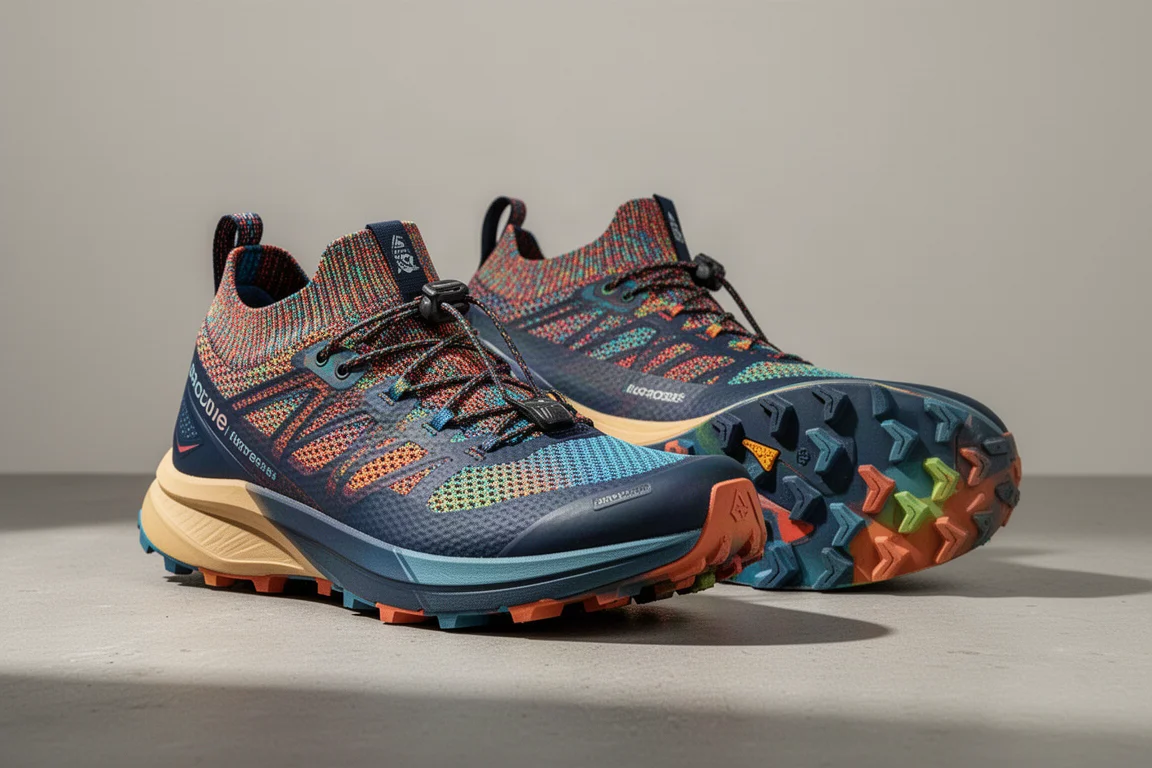
The Salomon Pulsar Trail Pro is a significant shoe for Salomon: their first performance-based plated trail running shoe. I have never been the biggest fan of carbon plated trail shoes, which is exactly why the midsole design here drew me to it in the first place. The plate Salomon uses is TPU rather than carbon, which promised a more forgiving ride on uneven ground.
My first outing was a relay leg at the South West Traverse in Cornwall, a challenging race from Lizard Point to the iconic finish at Land’s End. My section ran from Penzance to Land’s End along one of the most beautiful and demanding stretches of coast path I know. Since then, I have put good miles into these shoes, and the picture that has emerged is a mixed bag: some real standout features, alongside a few issues that genuinely annoyed me.
First Impressions and Specifications
The Pulsar Trail Pro retails in the UK for £160. In a UK size 10 it comes in at 270 grams, with a 6mm heel offset: 33mm of stack under the heel and 27mm under the forefoot. My pair is from a fairly bold collaboration colorway, each shoe slightly different with its own colored toe bumper. If that is not your taste, more subtle options exist.

On sizing, I would say this shoe runs a little short. I went up from my usual UK 9.5 to a UK 10, and the length now feels just right. Width in the toe box is about average.
Upper and Quick Lace System
The upper is a bootie-style engineered mesh, meaning there is no traditional tongue. One piece of material wraps around the foot, giving a very precise, connected feel. Because this is a performance-driven shoe, the upper is quite stripped back: not much padding across the top of the foot, around the ankle collar, or in the heel cup, though Salomon has worked small internal padding zones into the ankle for a little extra comfort. Structural overlays run from the heel down to the midfoot and around the lace eyelets to add substance and durability, and a substantial toe bumper provides good toe protection.
Salomon’s Quicklace system replaces traditional laces entirely. Pull the cord down tight, get a good lockdown around the midfoot, slide down the small plastic locking mechanism, and you are set. A handy pocket in the tongue stows the excess lace so it cannot snag on the trail.
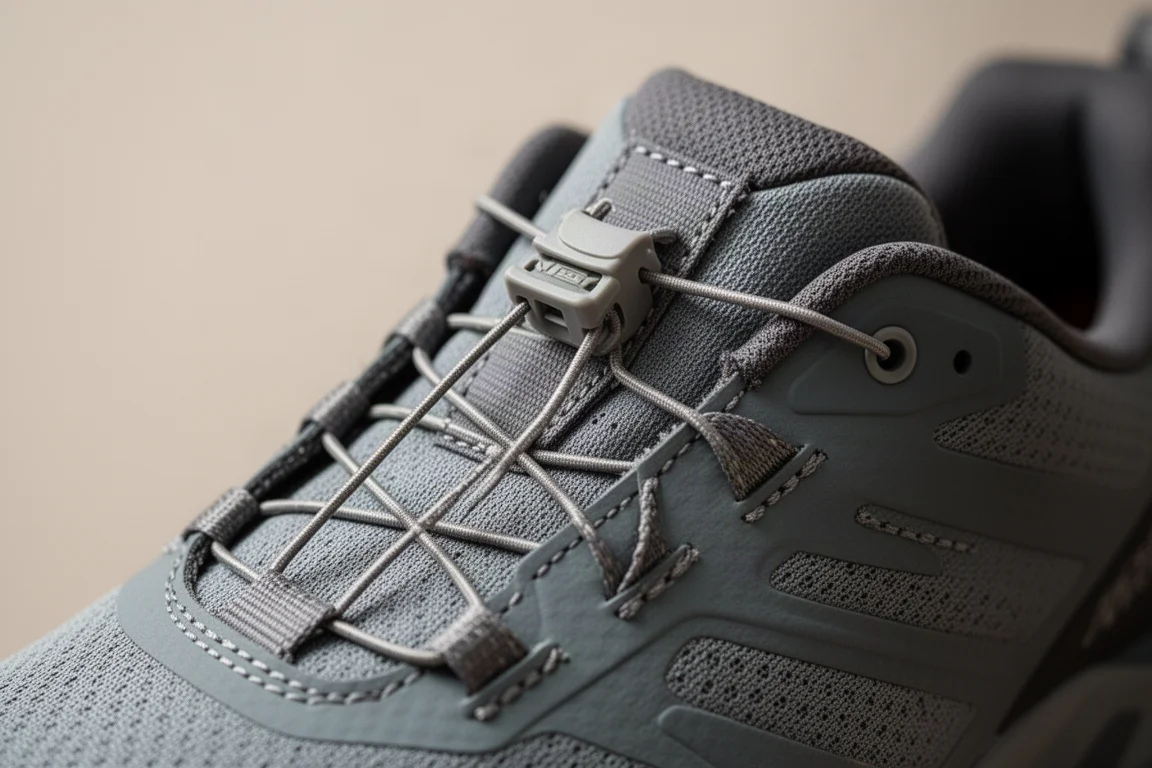
The bootie design makes you feel very secure, and although it can be a little tricky to get the shoe on, once you are in, you are in. The heel felt comfortable and nicely locked in. The problem is the midfoot. Because the upper is so stripped back, there is no padding at all across the top of the foot, and the stitching Salomon used to reinforce the Quicklace eyelets is surprisingly pronounced and rough when you feel inside the shoe. On runs beyond around 10K, that stitching caused irritation on both feet, every time. Once it starts digging in, I have to loosen the Quicklace to take pressure off the top of my foot, which then leaves me feeling like I am slipping around inside the upper. A little internal padding would almost certainly fix it, which makes the oversight feel a bit silly for a shoe aimed at long-distance trail running.
Midsole and Energy Blade
This is where the shoe shines. The plate Salomon calls the Energy Blade is made of TPU rather than carbon fiber, and it shows. It delivers a helpful nudge of propulsion without compromising flexibility at the midfoot, the way so many carbon plated trail shoes do. On technical trails, it feels more forgiving than a stiffer carbon plate, and I genuinely think it is better suited to the trail environment.
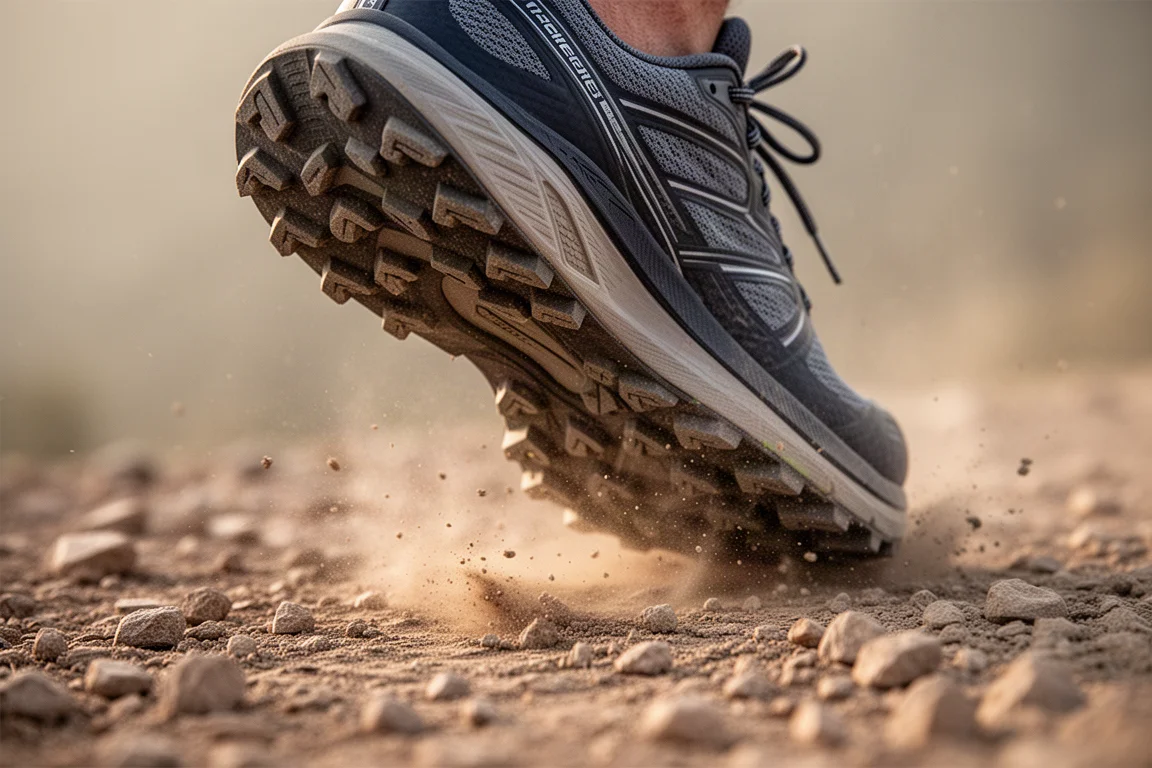
The compound housing the blade is Salomon’s Energy Surge, a blend of EVA and olefin that provides long-lasting cushioning with a lively, bouncy feel. I have been a fan of this compound since testing the Ultra Glides, and here the blend feels just right. Comfort is consistent across terrain types, and the ride becomes noticeably lively and responsive when you pick up the tempo, particularly on flatter, more compacted trails or tarmac. The geometry feels efficient at an easy cruise and energetic when pushed. The midsole is the standout feature of this shoe, and if I were scoring it alone, it would sit very high indeed.
Traction and Outsole Performance
The outsole uses a 3.5mm multi-directional lug pattern in Salomon’s all-terrain Contagrip rubber, intended to give good traction across a mix of terrain and conditions. In practice, I was not fully convinced.

To be clear, my doubts came on dry, loose, dusty trails rather than mud or especially tricky conditions. It has been a warm summer in the UK, and on those dry trails the grip levels did not inspire confidence, particularly when descending steep, technical ground. Whether it is the lug depth or the lug layout, the outsole could use a rethink. That is not a feeling you want on a fast descent.
Durability
After roughly 40-plus miles, durability looks encouraging. No early signs of wear, no overlays peeling, no breakdown at the flex point of the upper, and the outsole is holding up to mileage well. It is early days for a definitive verdict, but nothing here raises alarm.
Scores and Comparisons
At £160, the Pulsar Trail Pro is an expensive trail shoe. Against other plated options, though, it looks more reasonable: the Hoka Tecton X sits at £170, The North Face Flight Vectiv at £180, and the Speedland trail shoe comes in at a wild £330. Price score: 6 out of 10.
Comfort and performance is the bittersweet category. Judged on the midsole alone, this would be close to a 9 out of 10. But a great midsole attached to an upper that irritates after 10 to 12 miles drags things down, so this lands at 6 out of 10. Durability earns a solid 8 out of 10 based on the miles so far. That tallies to a total of 20 out of 30.
For context, The North Face Flight Vectiv is another performance-driven carbon plated trail shoe, though you get a bit more depth of cushioning from the Salomon. The Hoka Tecton X is another lightweight plated option worth a look. Salomon also makes a non-Pro version of the Pulsar Trail: a little heavier, but with a differently constructed upper and more padding, while keeping a very similar midsole. That could be the sweet spot for anyone worried about the upper comfort issues here.
Buying Advice
If you want a lightweight, responsive plated trail shoe for shorter, quicker training sessions or shorter races, the Pulsar Trail Pro does that really well. The midsole alone makes it worth considering, and shorter runs around 10K never gave me any trouble.
If you need a long-distance trail shoe that is supremely comfortable across a big mix of terrain, I would look elsewhere, because several options on the market handle that better. The midfoot stitching issue on longer runs, combined with underwhelming traction on dry loose trails, are real deal-breakers at this price point for high-mileage use.
Conclusion
The Salomon Pulsar Trail Pro gets the fundamentals of a great plated trail shoe right where it counts most dynamically: the midsole and TPU energy blade deliver a cushioned, lively, forgiving ride that outperforms expectations on both trail and tarmac. But the execution has some easily fixable flaws. Rough, unpadded eyelet stitching causes irritation on runs beyond 10K, and the Contagrip outsole left me unconvinced on dry, loose ground. For shorter, faster days out, it is a strong pick. For long-distance comfort, there are better choices.
Product link
View more details for Salomon Pulsar Trail Pro
This product is mentioned in the review. Check the specifications, options, and compatibility before buying.
View more details for Salomon Pulsar Trail ProFurther reading
Related Reviews
Trail Running Shoes
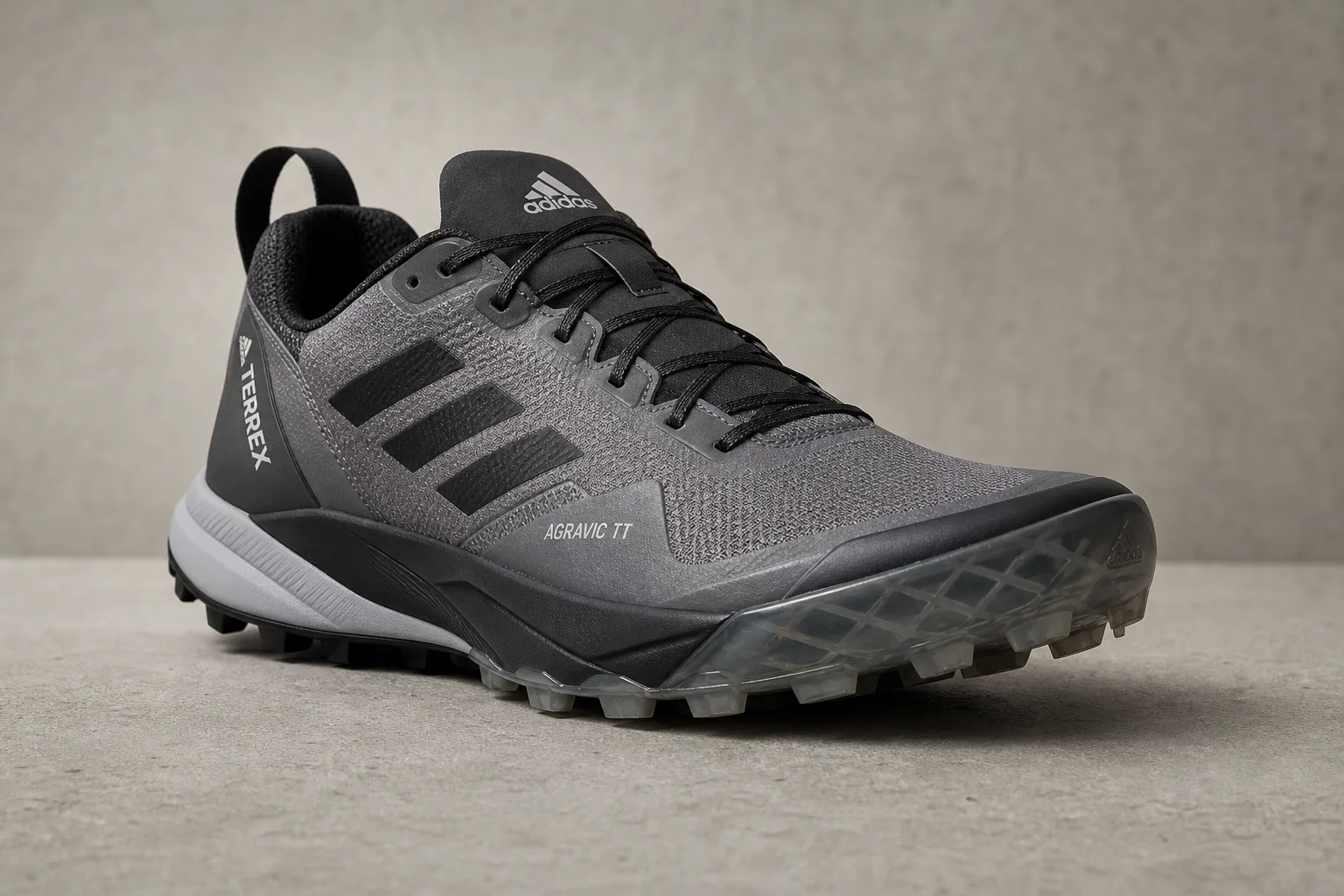
Adidas Terrex Agravic TT Review: A Technical Trail Shoe Built for Rocky Terrain
The Adidas Terrex Agravic TT combines a full-coverage rock plate with a firmer midsole to deliver protection and stability on technical, rocky trails. A capable choice for runners who prioritize underfoot defense over lightweight cushioning.
Trail Running Shoes
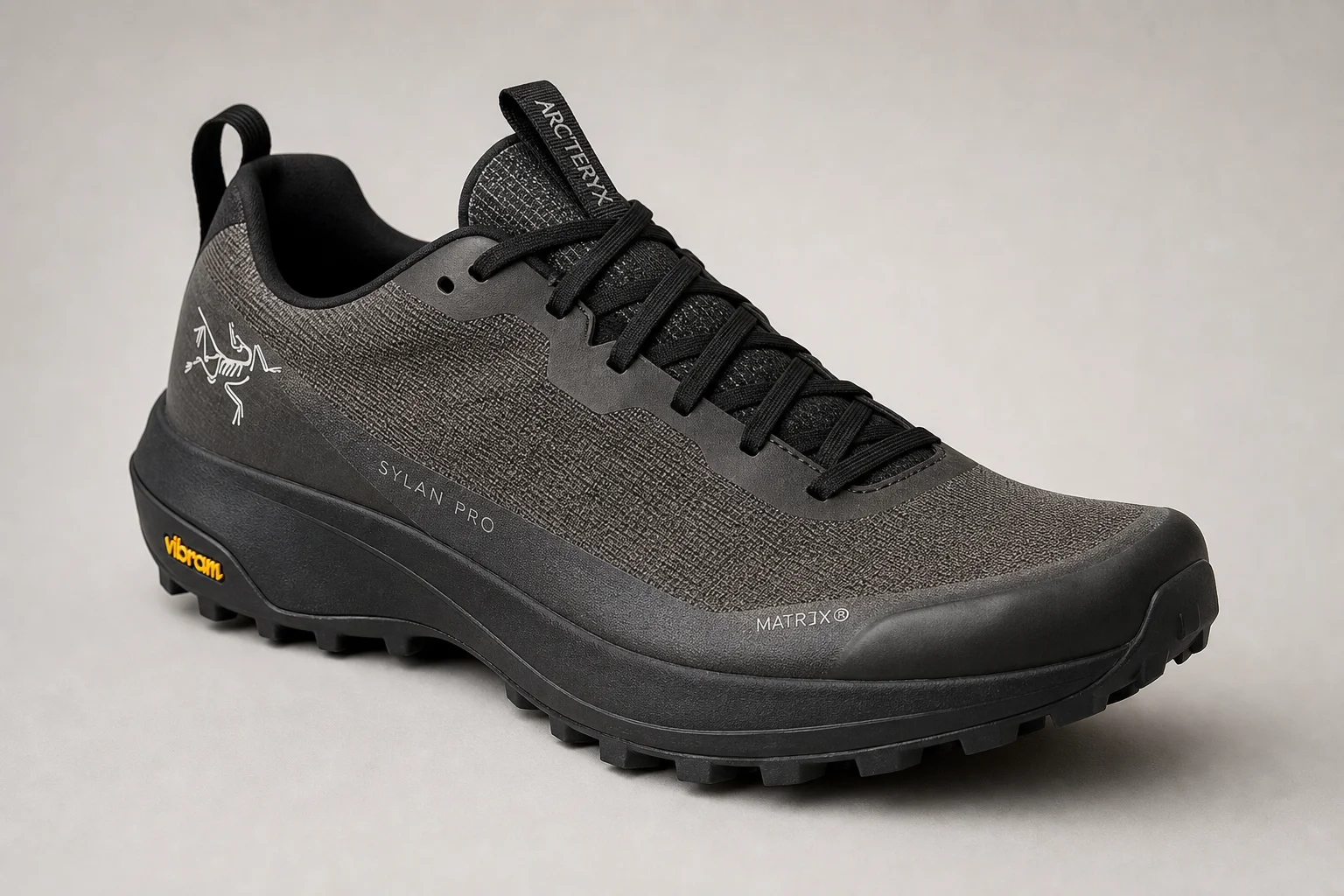
Arc'teryx Sylan Pro Review: A Rocker-Focused Mountain Running Shoe Tested on 20 Miles
The Arc'teryx Sylan Pro brings a pronounced rocker geometry and secure fit to mountain terrain. We tested it on a 20-mile Sawtooth loop to evaluate its climbing efficiency, protection, and handling of technical descents.
Trail Running Shoes
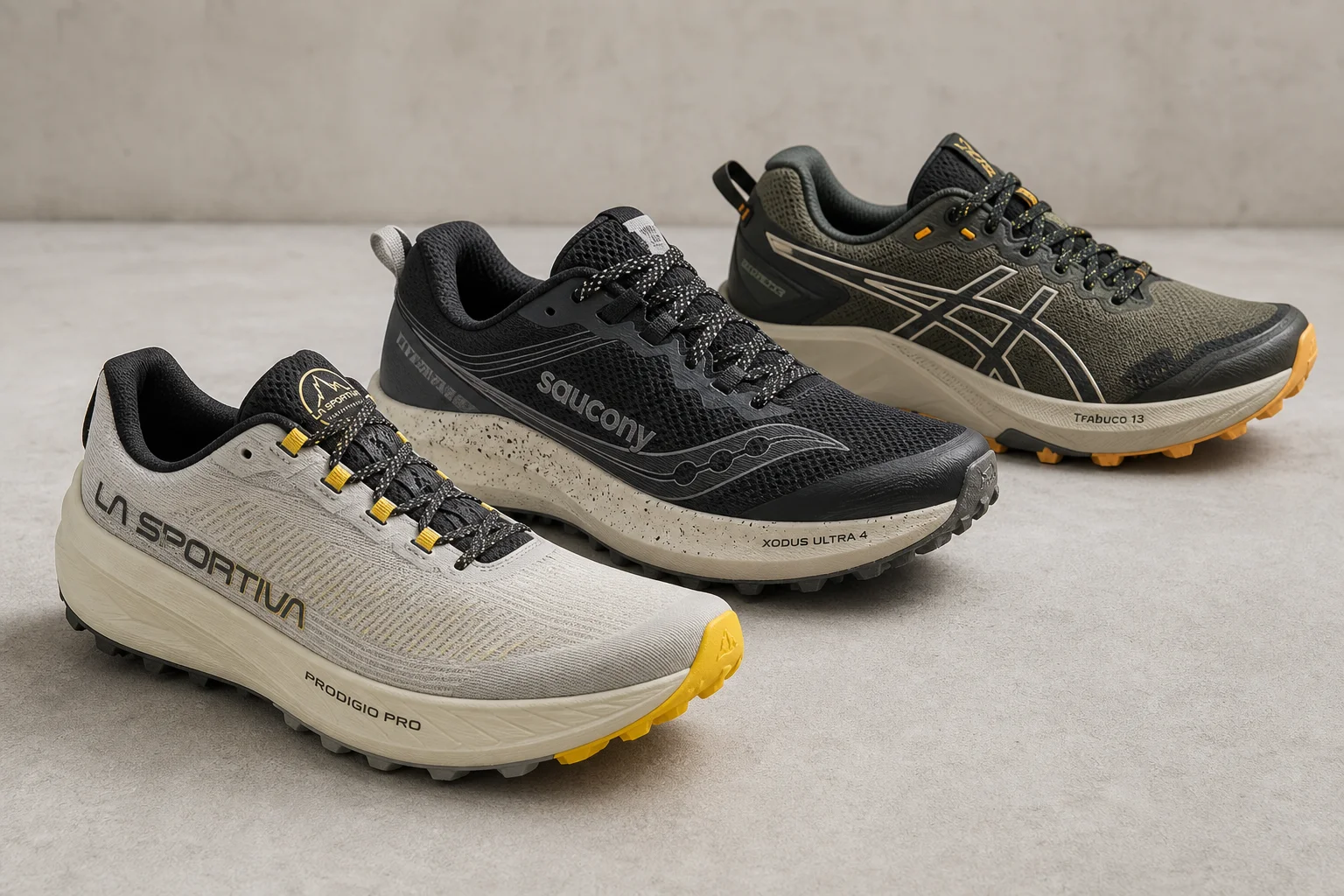
Best All-Mountain Trail Running Shoes: Three Versatile Options for Any Trail
A focused roundup of three all-mountain trail running shoes that handle technical terrain, long distances, and variable conditions with real strengths and practical trade-offs.