Snowboard Bindings
Salomon District Pro Review: A Surfy Freestyle Binding Built on Lateral Give
A close look at the Salomon District Pro snowboard binding, covering its Shadow Fit heel cup, strap and ratchet hardware, setup limits, and who should buy it.
Introduction
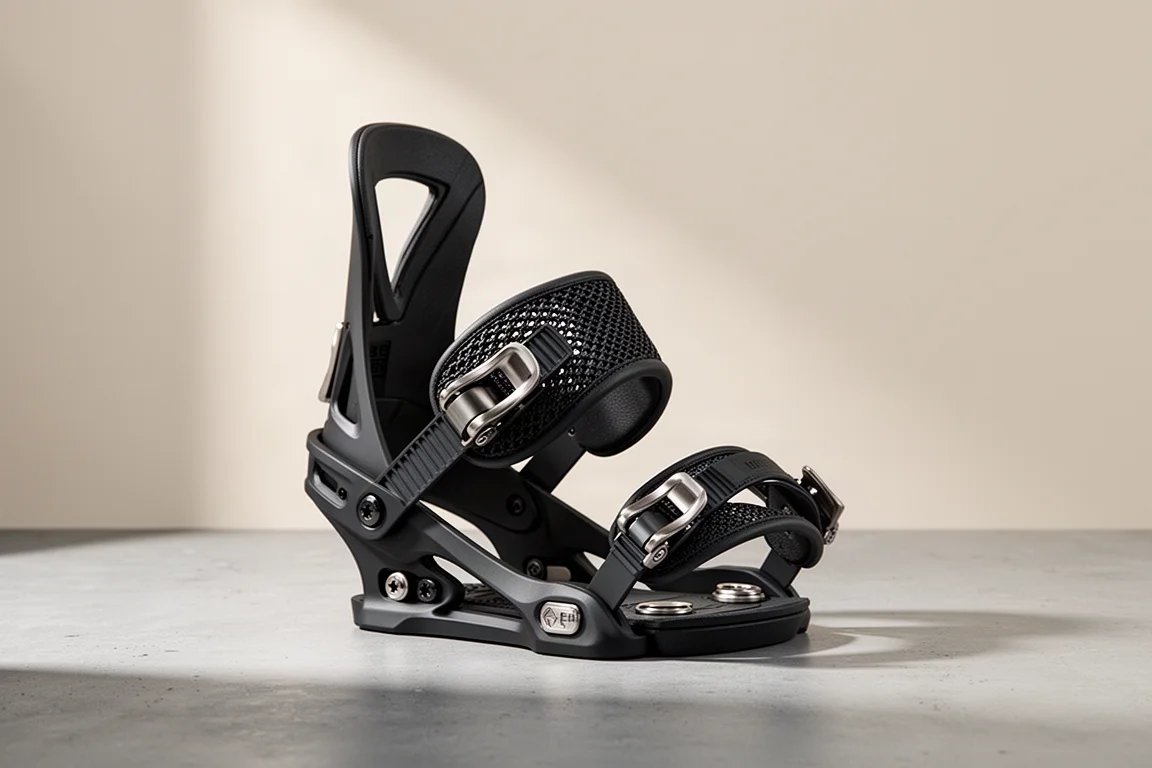
The Salomon District Pro is a freestyle snowboard binding built around Shadow Fit, a chassis and heel cup design that deliberately allows more lateral movement than a conventional fixed heel cup. That single design decision shapes almost everything about the way the binding rides, from its flex profile to how it responds when a rider moves from toe edge to heel edge.
On-snow testing at Arapahoe Basin covered an unusually wide spread of conditions: blue skies with high layered clouds, moderate winds and cold temperatures, fresh powder, choppy powder, and freshly groomed corduroy. That range matters here, because a binding built around lateral give behaves very differently in soft snow than it does on hardpack.
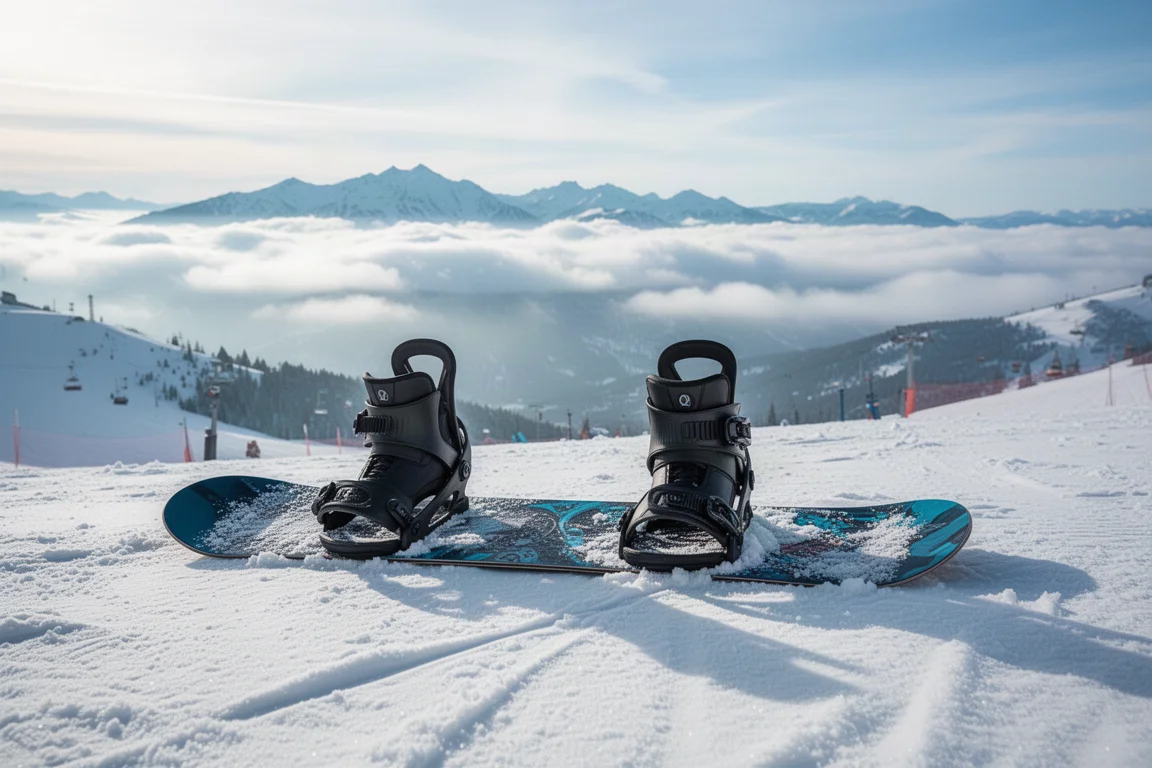
The short version is that this is not a binding designed for maximum power transfer. It is designed for a looser, more playful feel, and it delivers that feel consistently across terrain and snow conditions.
Who the Salomon District Pro Is For
This binding is aimed squarely at the surfy freestyle rider. It suits snowboarders who want a little more lateral play underfoot, who favor slashy turns over precise carved turns, and who spend their time jibbing, riding powder, or generally treating the mountain as a playground.
If precision and power are the priority, the District Pro is likely to feel vague rather than lively. The softer flex and the extra movement in the heel cup work against the direct, immediate response that a stiffer binding provides.
Adjustability and Setup: Simple, Not On the Fly
Setup is deliberately basic. Twist cams on the toe strap and the heel strap can be unscrewed so both straps can be lengthened or shortened, which makes it possible to center them properly on the boot. At the base of the heel cup, two set screws handle forward lean and high back rotation.
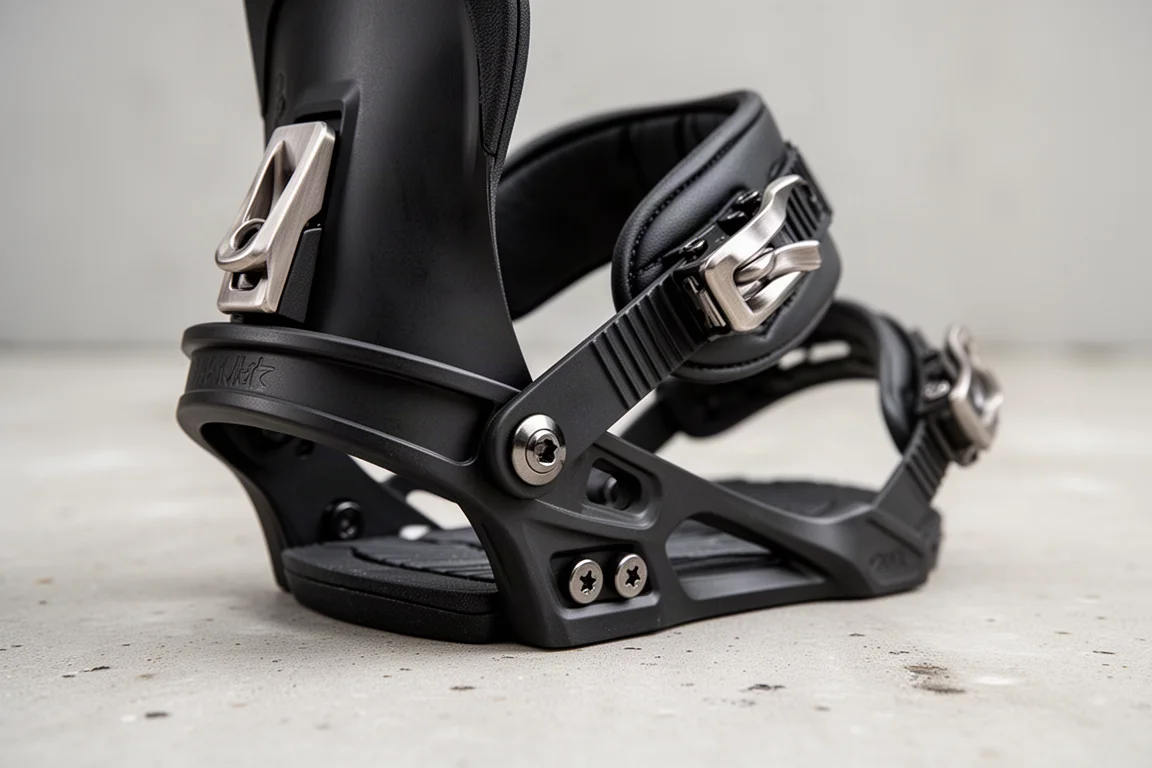
That is the complete adjustment range, and there is one practical consequence worth understanding before buying. Because forward lean and high back rotation share the same two screws, on-the-fly forward lean adjustment is not part of the design. Lean is set before the first run and stays where it is set.
Main Strengths: Straps, Ratchets, and Damping
The toe strap uses a multiple cutout design that grips a wide range of boot shapes, though very bulky boots can be a tighter fit. The heel strap takes a different approach, using minimal material so the padding comes from the boot itself. A small cutout sits over the instep, and once closed the foot is held securely with no real concern about it working loose.
The ratchets perform well in both directions. They climb cleanly, release cleanly, and do not engage or release prematurely. A one-finger quick release tab sits on the heel strap, which is genuinely handy. The toe strap does not get one, and that is the one notable gap in an otherwise tidy hardware package.
The high back is slightly wider than a standard design, which helps riders with bulkier boots. Damping underfoot is decent rather than exceptional.
How Shadow Fit Changes the Ride Character
Shadow Fit is the reason the District Pro rides the way it does. The chassis has more give, so the heel can move laterally instead of being locked in place. The practical effect is reduced drive on the inside and outside of the binding: pushing hard into an edge does not translate quite as directly into the board.
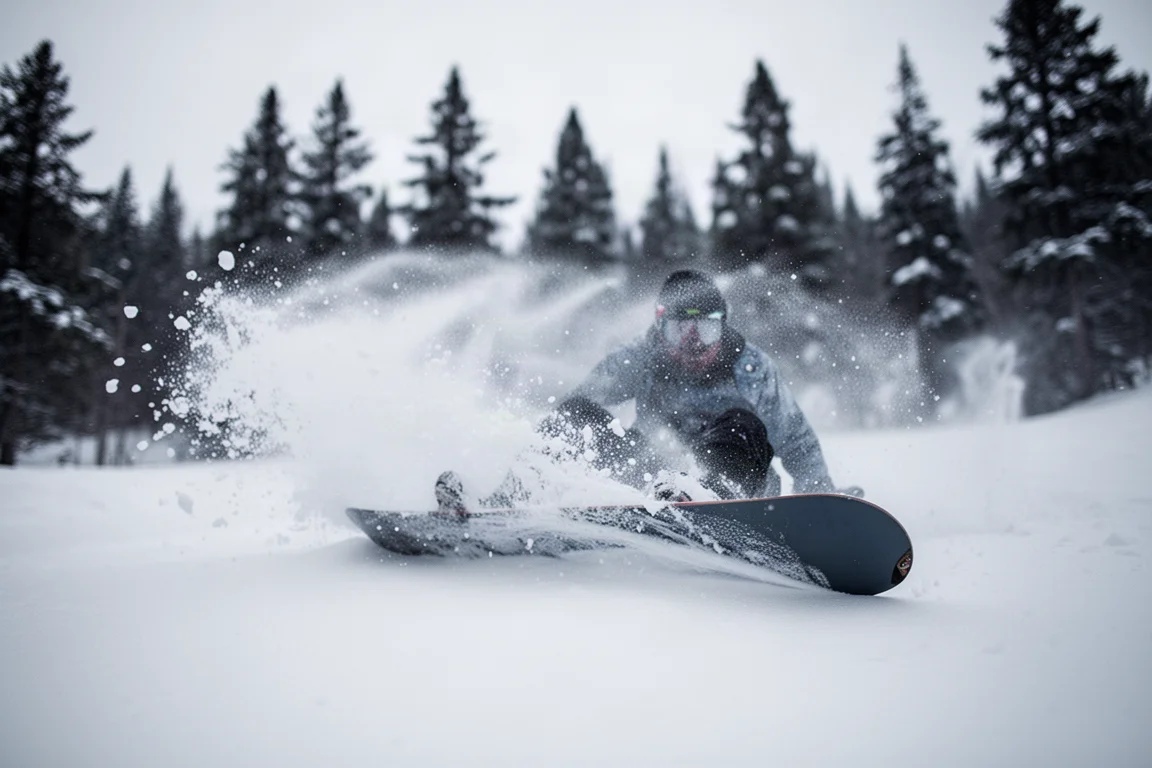
Overall flex sits just below the middle of the road. The District Pro is a step stiffer than the standard District, and the straps still transmit drive when a rider pushes into them, so the binding is not soft in every direction. The high back itself stays soft. The net character is surfy: loose, slashy, and comfortable being thrown around rather than driven hard.
Things to Consider Before Buying
The main trade-off is precision. The lateral give that makes this binding playful in powder and fun on jibs also costs it the planted, direct feel that aggressive riders look for. If you want every input to translate straight into the edge, the movement in the heel cup will read as slop rather than surf.
Setup is another consideration. Forward lean cannot be changed on the fly, the toe strap lacks the heel strap’s quick release tab, and the multiple cutout toe strap can be a snug fit on very bulky boots. None of these are dealbreakers, but they are the details that separate this binding from a more adjustable, more rigid alternative.
Buying Advice
Buy this binding for the ride it is designed to give, not for the ride you wish it gave. Riders who spend their days jibbing, slashing, and hunting powder will find the Shadow Fit feel intuitive and genuinely fun. Riders who want to charge hard, hold a precise line at speed, and feel maximum power transfer should look at stiffer options instead.
The clearest way to decide is to think about the last five days you rode. If most of them were soft, playful, and low-consequence, the District Pro fits. If most of them were fast, firm, and demanding, the softer heel cup will likely frustrate more than it delights.
Conclusion
The Salomon District Pro is a well-executed binding with a clear point of view. Shadow Fit gives it a surfy, lateral-flex character that is genuinely enjoyable in powder and on jibs, and the straps, ratchets, and high back are all competent. What it does not offer is precision, and buyers who expect that from a binding carrying a Pro label should adjust their expectations before ordering.
Match it to freestyle riding and soft conditions, and it does exactly what it promises.
Product link
View more details for Salomon District Pro
This product is mentioned in the review. Check the specifications, options, and compatibility before buying.
View more details for Salomon District ProFurther reading
Related Reviews

Snowboard Bindings
2024 Union Ultra Snowboard Bindings Review: A Cushy, Freestyle-Focused Favorite
Two seasons on the 2024 Union Ultra: a lightweight, tweakable freestyle binding with standout comfort, a damp molecular bushing, and thoughtful hardware fixes.

Snowboard Bindings
32 Team Phase Binding Review: A Fast Entry Binding Built for Freestyle Laps
The first binding from 32 uses the Phase chassis for quick step-in entry with a softer, freestyle-leaning flex. Here's how it performed on the snow.

Snowboard Bindings
Arbor Cypress Snowboard Binding Review: A Laid-Back Cruiser That Can Charge
A closer look at the Arbor Cypress binding's adjustability, strap feel, and that oddly tall highback before you decide to buy.