Snowboard Boots
Salomon Dialogue Lace Review: A Mid-Flex Boot Built for Weekend Warriors
A close look at the Salomon Dialogue Lace snowboard boot, covering its shell construction, dual internal harnesses, liner, fit measurements, and who it actually suits.
Introduction
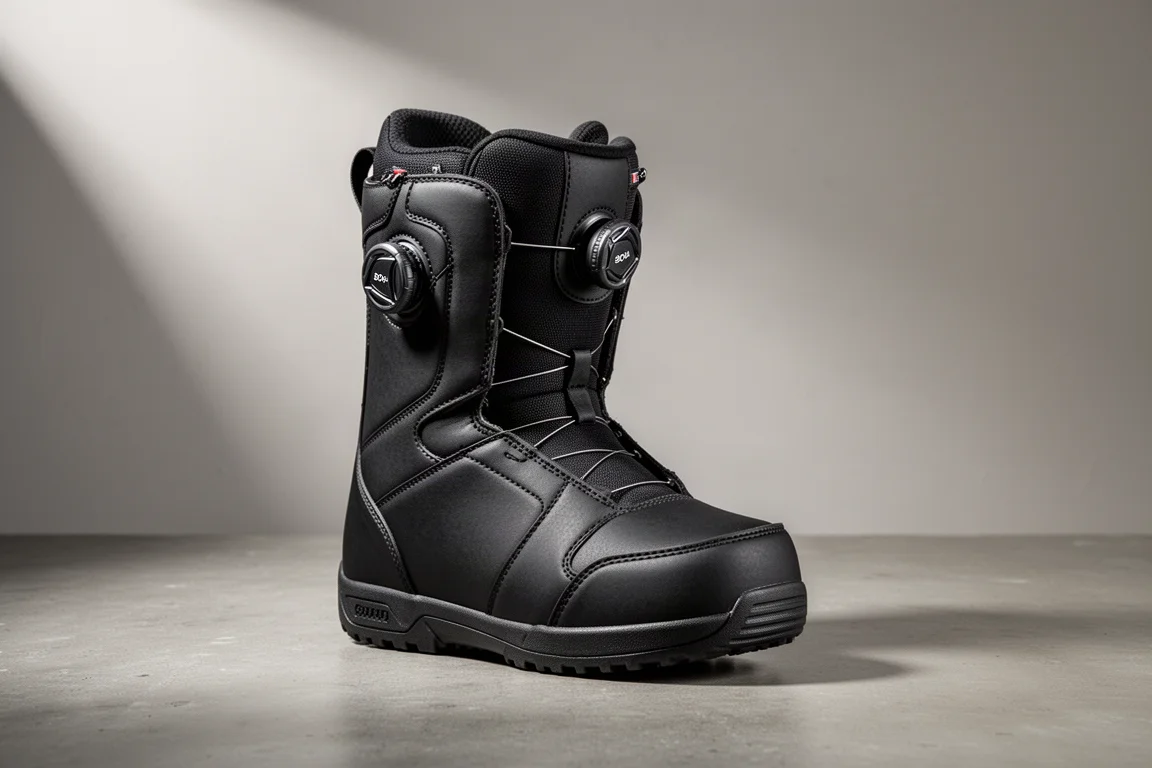
The Salomon Dialogue Lace sits firmly in the middle of the snowboard boot spectrum. It is a mid-flexing boot with traditional laces on the shell and a side BOA dial inside, aimed at riders who want a comfortable, forgiving boot they can rely on for years. This breakdown covers the construction, fit, and real-world strengths and compromises, so you can decide whether it belongs on your feet this season.
One thing worth saying up front: the best boot is the one that fits your foot and your needs. Sizing matters more than any feature list, and trying boots on in person at a local shop is still the smartest way to buy.
Shell Construction and Toe Detailing
The toe area of the Dialogue uses welded seams instead of stitched ones. That creates a more uniform fit and removes the hard seam edge that would otherwise sit right where your board’s edge can rest against the boot. It also changes the flex point at the toe: when you crank your toe strap down, the area that would normally break down over time simply is not there, which helps rigidity and long-term durability.
There is a rubber toe piece for hiking, so you can kick it into approaches without worrying about the boot, and it extends further back than usual, which adds lateral support. The material across the top of the cuff does similar work, helping the boot keep its lateral stability as it ages.
Backspine and Flex Profile
The backspine is a multi-piece design. The lower section is hard rubber, which is where most of the rebound comes from. The black section above it is more malleable, and the top portion is neoprene, so riders with larger calves get some give and push-out at the top rather than pressure.
The tongue is on the softer side with a lot of give, which means the boot has a bit of play. Ankle articulation along the side is minor at first and feels more rigid until the boot breaks in, after which forward flex increases noticeably. Keep in mind that a boot is never stiffer than the day you try it on: unless you add tongue stiffeners, this one will progressively soften over its life.
Sole and Underfoot Feel
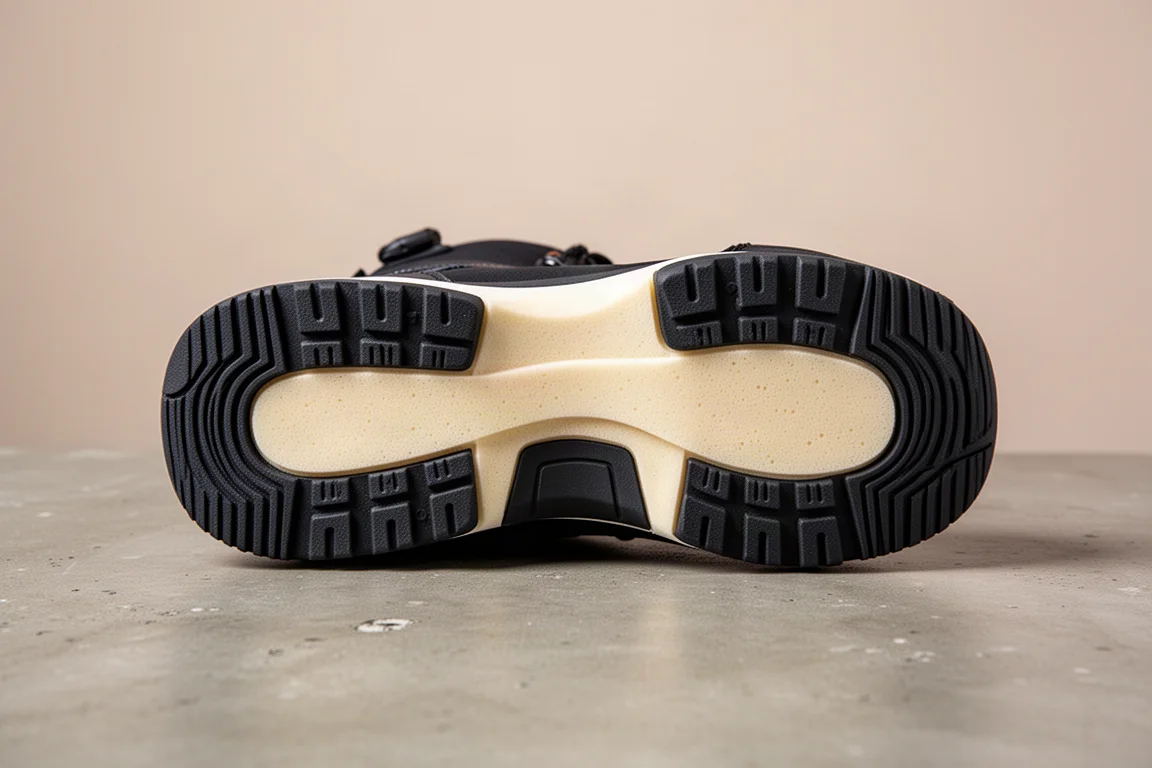
The outsole uses Salomon’s Damp Light Contragrip rubber. The rubber sections are solid and durable, while the foam down the middle has more give, so stepping on a rock or something hard may be more noticeable in that zone.
The heel is the standout here. There is a lot of foam packed into it, which deadens underfoot feel and absorbs kinetic energy well. Riders who spend time on rough or icy terrain will appreciate how much chatter gets filtered out.
Lacing and Internal Harnesses
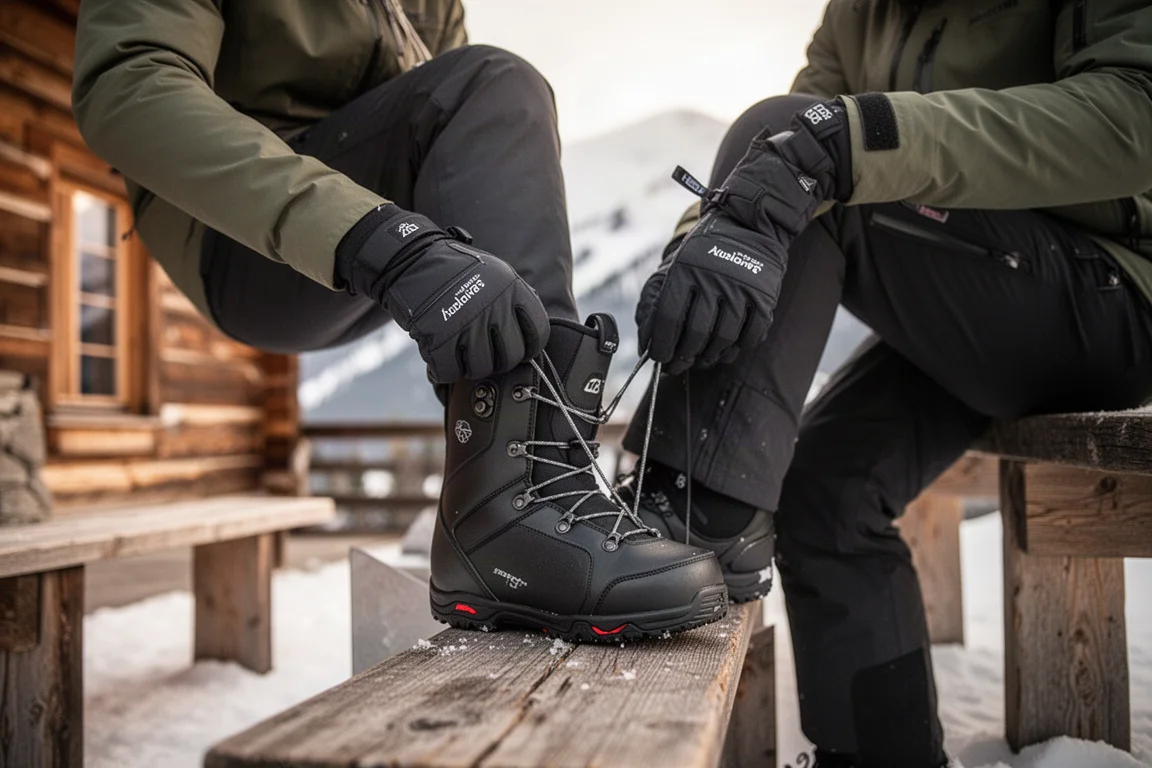
The shell uses traditional laces, with locking cleats at the bottom and top eyelets so the lace locks into place as you pull it through. That leaves plenty of room to customize tension zones however you like.
Inside, the boot gets a straight jacket powered by an M2 BOA knob. Clicking and tightening it holds the liner tight against the shell for a more locked-down fit. If you have heel lift issues and prefer a slightly softer boot, this combination is worth a close look.
On top of that, there is a separate liner harness. It does not cinch as deep as the straight jacket, but it locks you in across the top. In total, you get two internal harnesses working together, and the side BOA adds extra heel hold. Traditional laces also mean fewer failure points: no speed zone, no external BOA to worry about.
The Response Liner
The Dialogue comes with Salomon’s Response liner, built from multi-density foam. There is more play and cushioning around the top, tapering to a firmer feel down the backspine. It is not the most rigid liner, with a little more ankle play in the lower area.
The liner can be heat molded, but if you ride more than 5 to 10 days a year, it is arguably better left stock, since heat molding can accelerate breakdown. The seam across the top does not come down the sides, which reduces the pressure point some riders feel on their pinky toe. The rear seam sits a little further back; some people feel it, some do not.
Opening the liner reveals different fabric densities and a larger J-bar that sits a bit higher. If you have a narrower heel, this J-bar should help hold it down, though the foam is on the softer side and may break down a touch over time. At the instep, the seam pairs with thicker, multi-density foam, so even with the straight jacket and internal harness cranked down, the crushing feeling across the instep should be minimal.
One honest note: the stock Ortholite insole is essentially three pieces of foam glued into a footbed shape. It is the weakest part of the package, and replacing it with an aftermarket insole is an easy, worthwhile upgrade.
Fit and Measurements
Measured on a US 10.5 (28.5 Mondo), with the liner in, the boot stands 11 and 3/4 inches at the back to the top of the liner and just under 11 and 1/2 inches at the front. Without the liner, it measures just under 11 inches at the back and about 10 and 3/4 inches at the tongue.
The shell on this size is just over 12 inches long. At the widest portion of the forefoot, it measures about 4 and 1/4 inches, so the forefoot runs a little wider. This is not the Dialogue Wide, which is a separate version. The heel feels slightly wider than in other Salomon boots, but Salomon still tends to run narrow overall, so narrow-heeled riders should feel at home.
Who This Boot Is For
The Dialogue Lace is a weekend warrior boot. It suits riders getting out 10 to 15 days a year who want a boot that lasts multiple seasons and does not demand fussing. Because it uses traditional laces, almost everyone already knows how to use it, and the internal BOA and harnesses add modern convenience without complicating the package.
Things to Consider Before Buying
The tongue is softer than some riders will like, and the flex will only get softer with time. The Response liner is decent but is not quite at the level of the best liners from other brands. The stock insole should be replaced. And if your feet run wide, remember this is the standard fit, not the Wide version.
Buying Advice
If you want a mid-flex, do-everything boot for resort laps, occasional side hits, and the odd hike, the Dialogue Lace makes a lot of sense. Try it on locally, size it properly, budget for a better insole, and it should serve you well for several seasons.
Conclusion
The Salomon Dialogue Lace is not the stiffest boot on the shelf and it is not the softest. It sits in that comfortable middle realm, fits a wide range of riders, and pairs old-school lace reliability with a smart dual-harness internal fit system. For weekend warriors who want dependable comfort without overthinking it, it is an easy boot to recommend.
Product link
View more details for Salomon Dialogue Lace
This product is mentioned in the review. Check the specifications, options, and compatibility before buying.
View more details for Salomon Dialogue LaceFurther reading
Related Reviews

Snowboard Boots
32 Team Two Double Boa Review: 32's Highest-End Women's Snowboard Boot
A closer look at 32's top-tier women's snowboard boot, from the 3D molded toe box and double Boa lacing to the Performance Fit liner and heat-reflective footbed.

Snowboard Boots
Bataleon Acid BOA Snowboard Boot Review: A Serious First Entry from a Board Brand
Bataleon's first snowboard boot, designed by a former Burton boot designer, brings a stiff flex, dual BOA closure, and a heel hold system worth a closer look.

Snowboard Boots
Battalion Acid Boot Review: A Stiff, Aggressive Boot Built to Last
The Battalion Acid Boot is the brand's highest-end offering, built with seamless construction, TPU reinforcement, dual BOA lacing, and a heat-moldable liner. Here is what to know before buying.