Fountain Pens
Sailor Pro Gear vs Pro Gear Slim Blue Cobra: Two Exclusive Fountain Pens Compared
A side-by-side look at the Sailor Pro Gear and Pro Gear Slim Blue Cobra, two retailer-exclusive fountain pens inspired by the Shelby Cobra.
Introduction
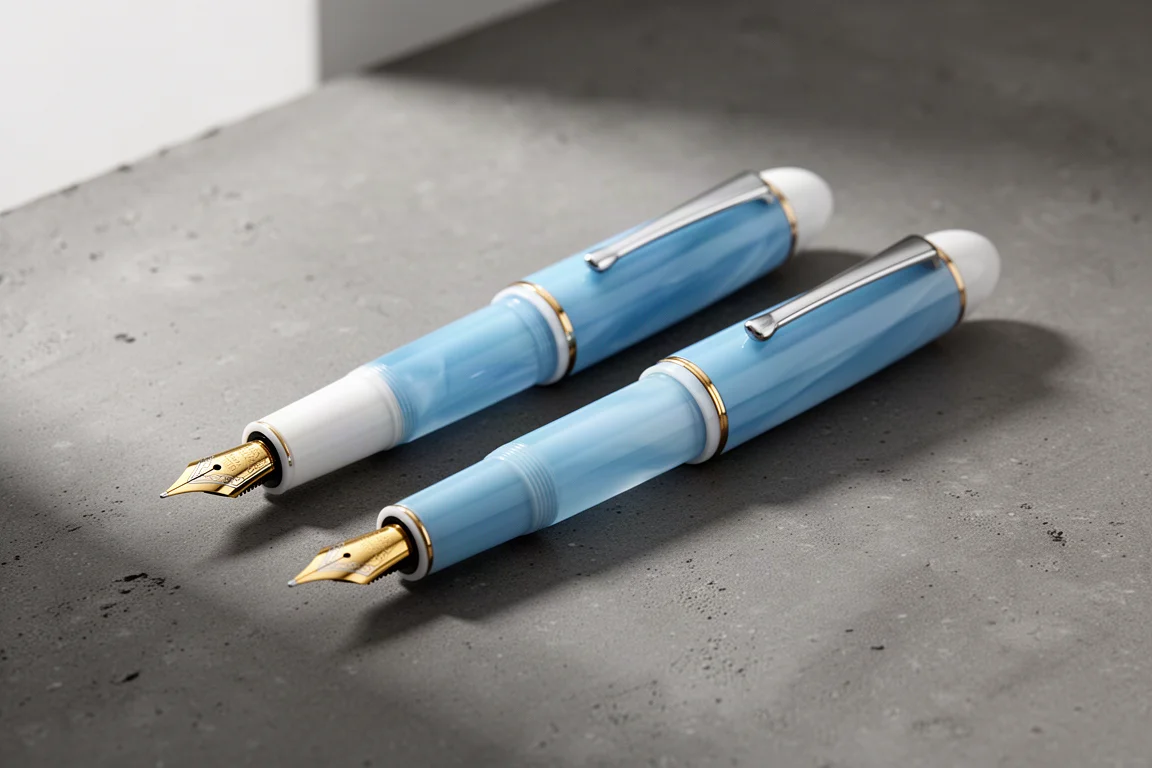
Sailor sits near the top of most fountain pen collections for good reason, and the nibs are usually the part that keeps people coming back. The Blue Cobra editions take that familiar formula and wrap it in one of the more striking color schemes Sailor has offered: a light blue resin paired with crisp white accents, translated from the iconic look of the Shelby Cobra roadster.
Both the Pro Gear and the Pro Gear Slim in this finish are retailer exclusives sold through Goldspot Pens, and both carry a small premium over the standard Pro Gear lineup. Here is how the two models differ, what they do well, and where each one makes the most sense.
The Blue Cobra Design Story
The inspiration here is the Shelby Cobra, the two-seat roadster developed from 1962 through a collaboration between driver and designer Carroll Shelby and the British company AC Cars, built around a large Ford V8 engine. Early examples are highly sought after by collectors, and an original unrestored car can sell for well over a million dollars.
The pen borrows the car’s most iconic colorway: light blue with dual white stripes running the length of the body. On the pen, that becomes a light blue resin body with white accents at the top of the cap and the bottom of the barrel. A pair of lengthwise white stripes on the barrel would have been a fun extra touch, but the contrast between the light blue and white still reads sharp in person. The cap finial carries the traditional Sailor anchor logo in black and gunmetal, which pops nicely against the white.
Pro Gear Blue Cobra: The Standard Model
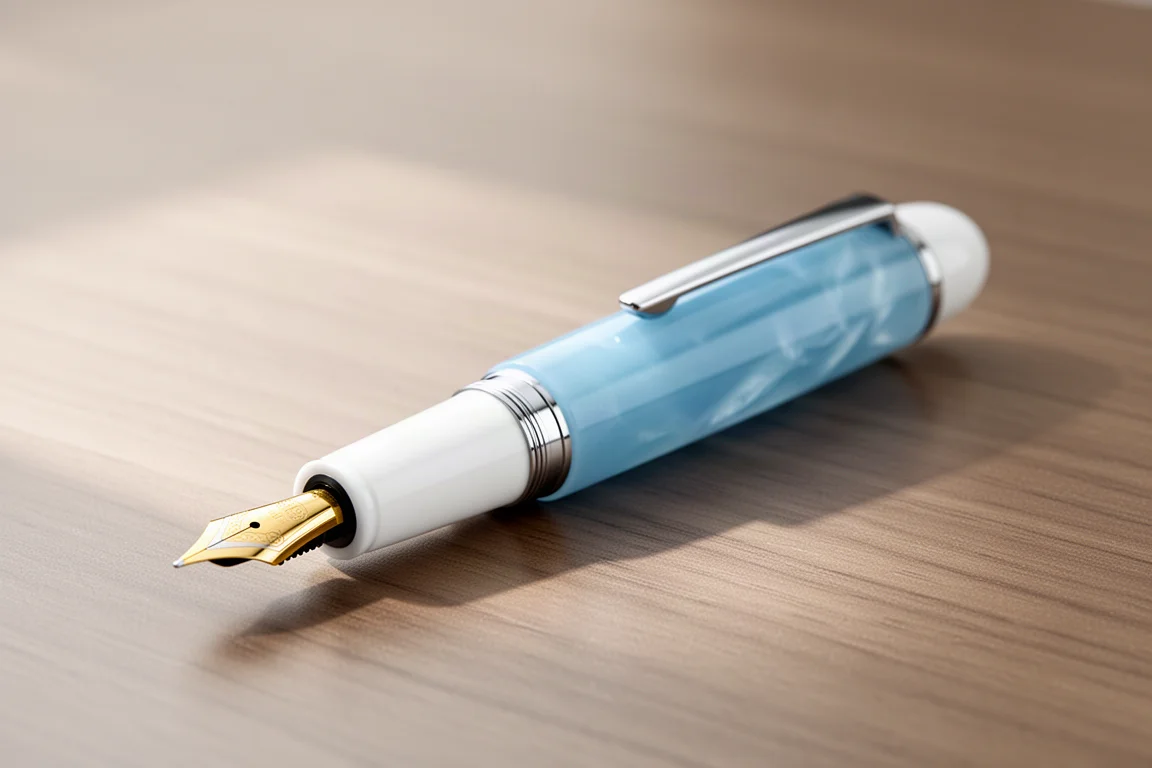
The standard Pro Gear Blue Cobra is the larger of the two, and it is functionally the same pen as the 1911 Large, with flat ends instead of tapered ones. The cap unscrews in about one and a half rotations to reveal a 21 karat gold nib, and a plastic feed sits beneath it. The stacked Sailor clip, the stepped cap bands stamped with “Sailor Japan Founded 1911”, and the angled step into the barrel are all present and neatly finished.
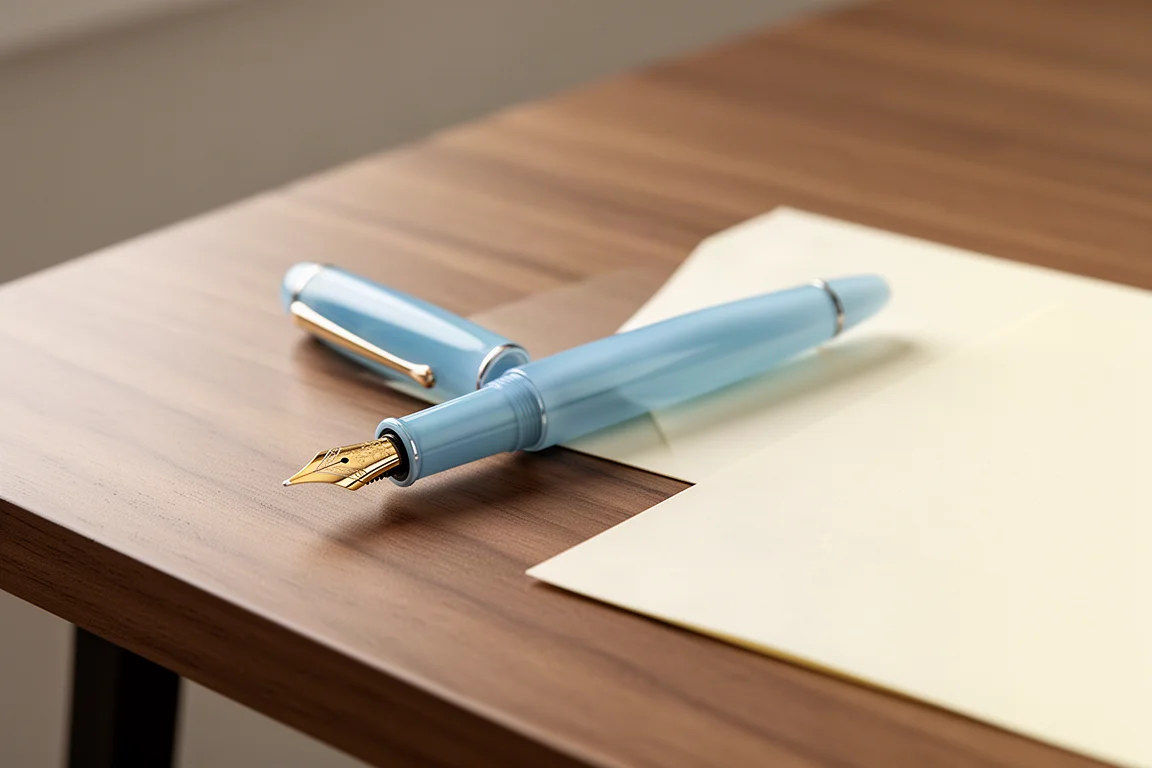
The section has a slight flare at the front and a comfortable thickness that suits a wide range of grips. The barrel is long enough to use unposted without any cramping, though the cap is light enough that posting does not back-weight the pen or upset the balance. The transition from barrel to posted cap is smooth rather than sharp, which matters more than people expect for longer writing sessions. It ships in a standard Sailor box with a use and care guide, warranty information, and two proprietary ink cartridges.
Pro Gear Slim Blue Cobra: The Compact Option
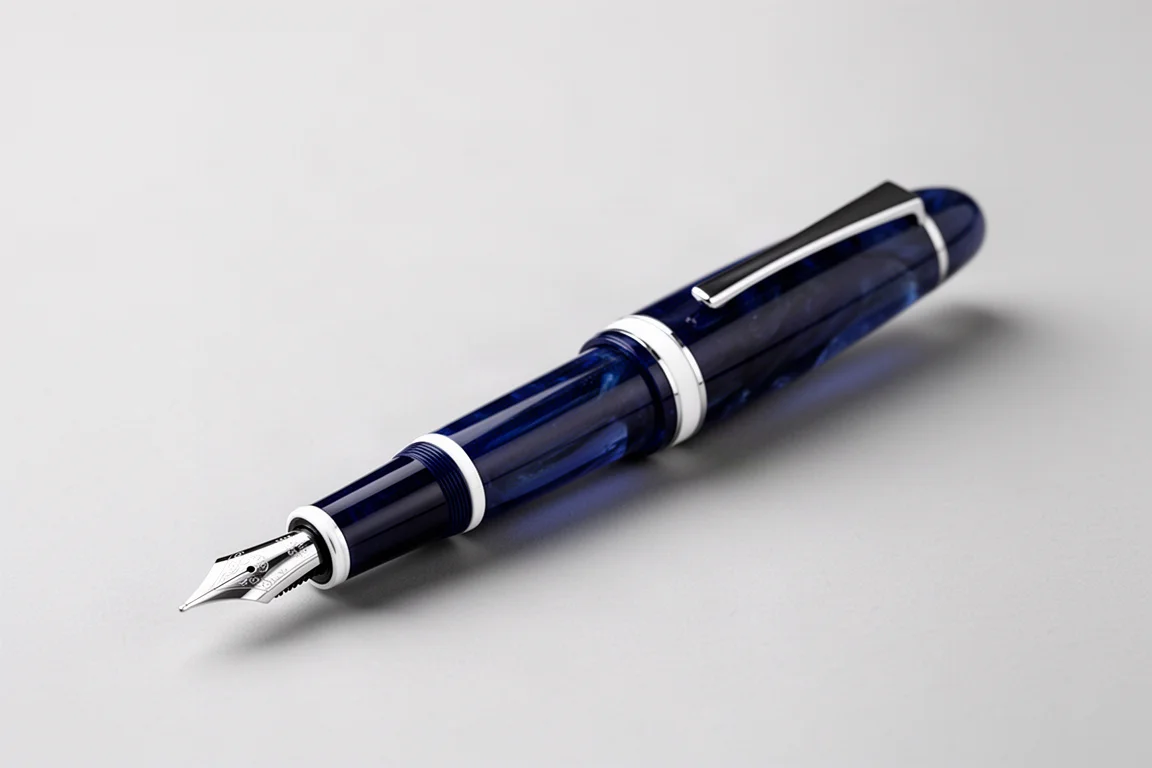
The Slim is essentially the same pen scaled down, and it corresponds to the 1911 Standard in size, again differing only in the flat versus tapered ends. The biggest mechanical difference is the nib: the Slim uses a slightly smaller 14 karat gold nib instead of the standard model’s 21 karat gold.
Everything else carries over: the same cartridge-converter filling system with a proprietary converter, the same two included cartridges, the same design language. At $280 it sits noticeably below the standard model’s $392, and for writers with smaller hands or a preference for a more compact pen, it is the easier daily carry of the two.
Nibs and Writing Performance
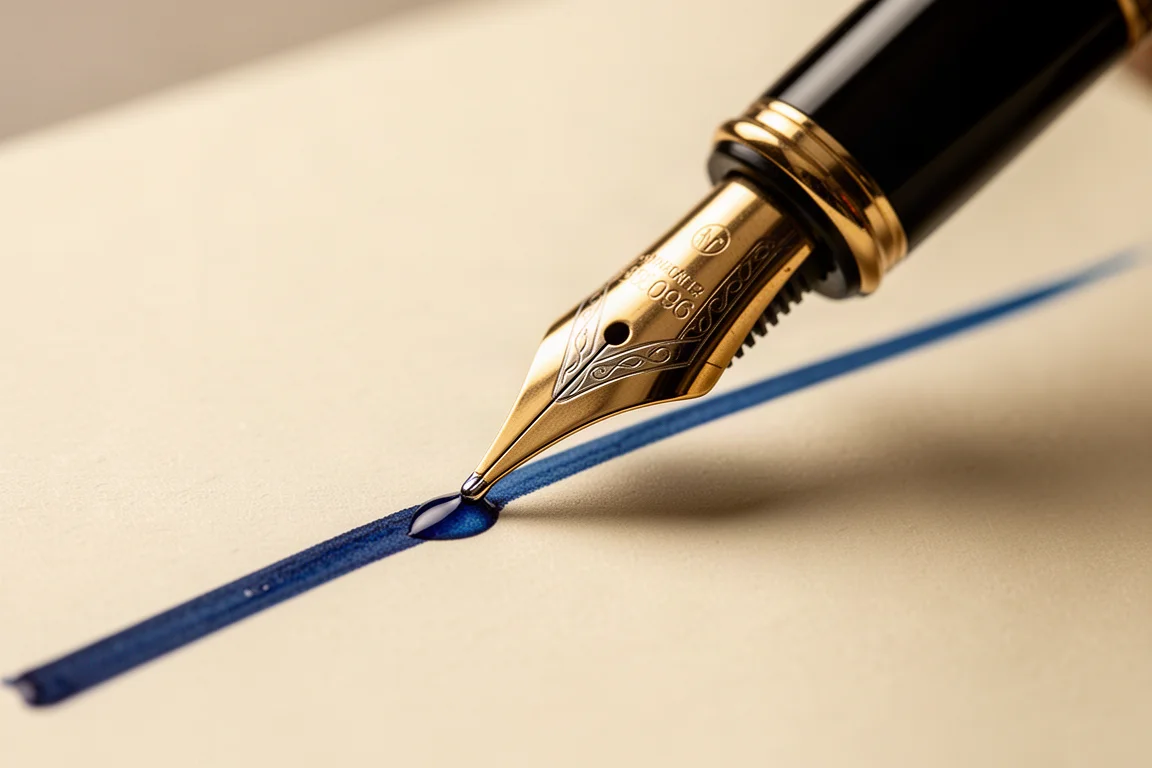
Both nibs are available in extra fine, fine, medium, broad, zoom, and music grades. The review pens came with a broad on the standard model and a medium on the Slim, inked with Private Reserve American Blue, a vibrant blue with noticeable sheening and shading.
The broad nib lays down a generous amount of ink with a fair amount of line variation, and the ink flow is very consistent. Reverse writing produces an extra-extra-fine line without feeling scratchy, and the feed keeps up fine during fast writing. Sailor’s zoom nibs are worth a look too, since you can vary the line width by changing the angle at which you hold the pen, and the music nibs are similarly playful.
The Slim’s medium nib draws a slightly narrower line and is a reminder of why Sailor mediums are so well regarded. Across nearly all of Sailor’s nib sizes, the medium is a favorite for its smooth, reliable performance.
Size and Handling
For reference, the Pro Gear matches the 1911 Large in dimensions and the Pro Gear Slim matches the 1911 Standard. If you have handled either of those pens, you already know how these will feel.
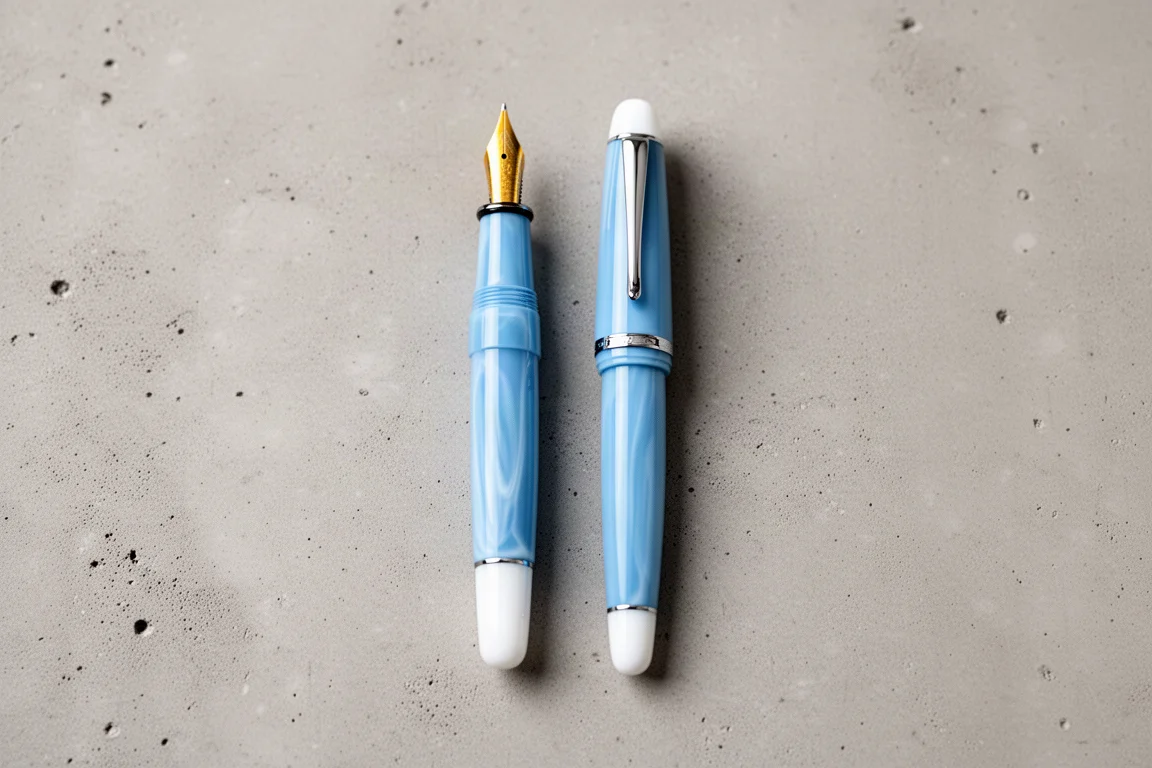
Posted, the cap sits securely and the soft transition at the barrel-to-cap junction keeps the pen comfortable against the hand. Unposted, the barrel still offers plenty of length. One practical note on filling: because these are cartridge-converter pens with metal involved near the section, eyedroppering them is not recommended. Sailor’s proprietary converter works fine, though a larger-capacity option would be welcome.
Buying Advice: Which One Should You Choose
Both pens share the same standout color scheme, the same filling system, and the same core writing experience. The decision comes down to size and nib metal.

Choose the Pro Gear if you want the larger body, the 21 karat gold nib, and maximum presence on the desk. Choose the Slim if you prefer a smaller pen, want the lower $280 price, or find the standard size slightly too much for your hand. Both are exclusive to Goldspot Pens, and as retailer exclusives they do carry a premium over the standard Pro Gear finishes, so it is worth deciding whether the colorway is worth that to you. If you love Sailor’s nib work, it almost certainly is.
Conclusion
The Blue Cobra editions are a well-executed addition to the Sailor lineup, pairing a genuinely iconic automotive colorway with the nib quality Sailor is known for. The Pro Gear delivers the full-size experience with a 21k gold nib, while the Slim offers the same character in a more compact, less expensive package. Either way, you are getting one of the most distinctive looks Sailor has released in recent memory.
Further reading
Related Reviews
Fountain Pens
Best Budget Fountain Pens Tested: 9 Pens, One Clear Winner
A hands-on comparison of nine affordable fountain pens for everyday writing, calligraphy, and sketching, with a clear standout for flexible nib fans.
Fountain Pens
Aurora Optima Review: An Italian Piston Filler That Punches Above Its Price
A 14k gold nib, ebonite feed, and a beautifully deep oraloid body make the Aurora Optima one of the most rewarding piston fillers around.
Fountain Pens
Cross Bailey Light Review: The Entry-Level Fountain Pen Worth Keeping at the Office
A plastic-bodied Cross with a metal clip, snap cap, and famously smooth extra fine steel nib. Around $15, available almost everywhere, and easy to recommend.