Fountain Pens
Sailor King of Pen Ebonite with Urushi Raden Work: A Pen Transformed
A hand-finished Sailor King of Pen Ebonite decorated by a Tokyo urushi studio, and what the year-long commission process is really like.
Introduction
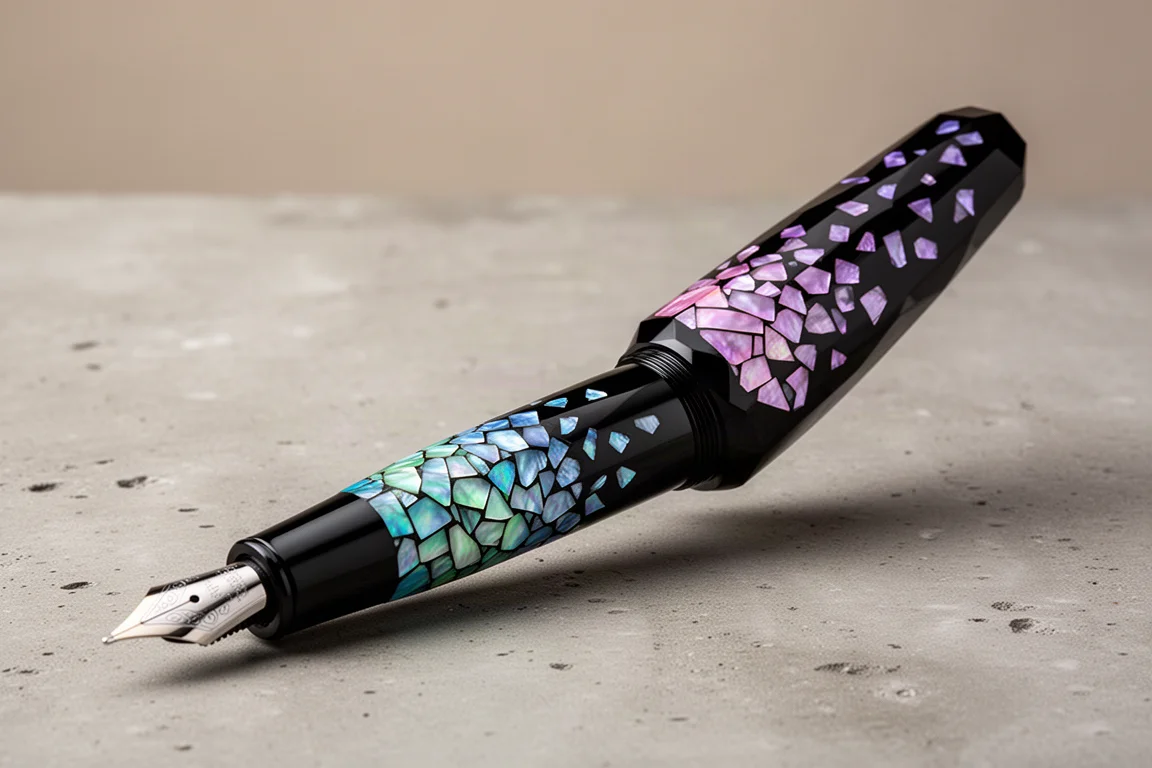
Sometimes the most interesting pens are not bought, they are made for you. This is the story of a Sailor King of Pen Ebonite that left its owner’s collection as a clean, understated black pen and came back months later as a one-of-a-kind lacquered creation, decorated by hand with urushi lacquer and raden shell inlay by Bokumondo, a small urushi studio in Tokyo.
This is less a product review in the usual sense and more a look at what it is like to hand a beloved pen over to an artisan, wait a year, and get something back that exceeds expectations.
The Studio Behind the Finish
Bokumondo is located in Setagaya City in Tokyo, and the artisan behind it is Hiroko Mao. Her background is unusual for a lacquer artist: she graduated from fashion college in Tokyo, lived in both the UK and Italy, then returned to Japan to study the traditional urushi style of lacquering under a prominent master artisan.
The studio name carries real family weight. An ancestor of hers was a disciple of the famous military strategist Yamaga Soko, and a later descendant ran a school teaching Yamaga’s strategy. Hiroko chose the name as a way of honoring the bushido philosophy her ancestors taught, hoping to carry that passion into her work.
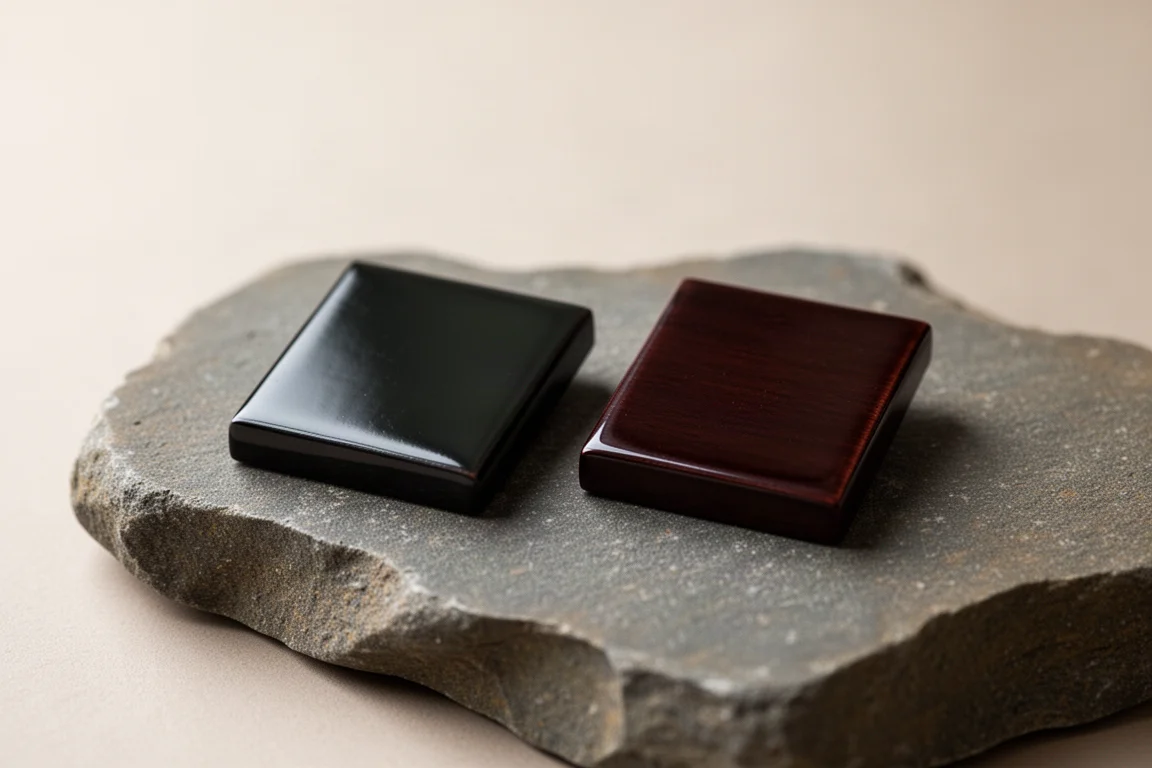
One detail worth knowing about urushi: it is cured, not dried. Drying simply removes moisture quickly; curing removes it slowly under controlled conditions and humidity. Even the environment matters. Two lacquer samples of the same color cured at different humidity levels will come out noticeably different, which means a pen finished in summer heat and humidity can look different from one finished at another time of year. Nothing here is a production-line process. Every pen will be different.
What the Finished Pen Looks Like
The pen that went to Tokyo was a Sailor King of Pen Ebonite, chosen precisely because its simple, sleek black finish made a good blank palette. The owner admitted to real hesitation beforehand: it was already a favorite, and there was a genuine fear of regret, of wondering why a perfectly good pen had been “ruined.” Those concerns disappeared the moment the pen came back.
The finish uses raden, inlaid mother-of-pearl shell, applied over many layers of urushi lacquer. The raden pieces shrink as they wrap toward the end of the barrel, and the color transitions in a gradient: more blue and green at the bottom, shifting into purples and pinks as it rises up the pen. Near the top, the shell fragments flake away and float upward like particles drifting into the sky, with just a few small flakes on the cap itself.
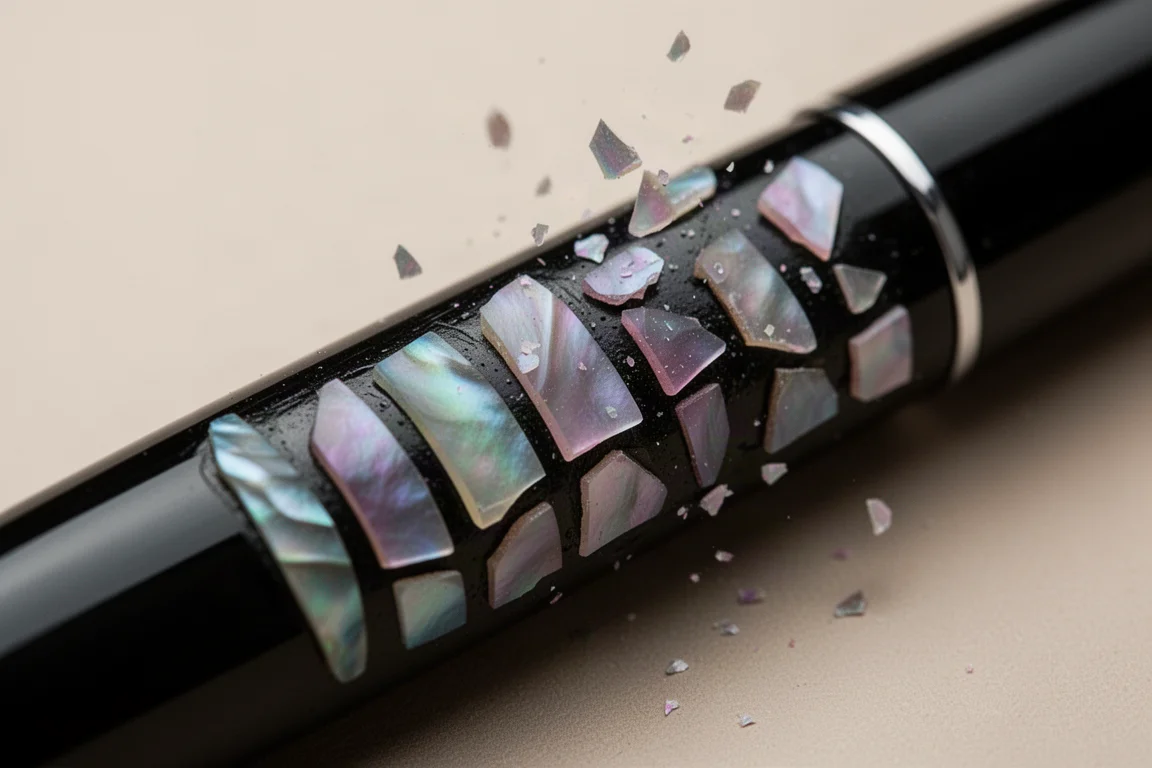
The name raden is worth unpacking: the kanji literally mean “inlaid shell,” with “ra” meaning shell and “den” meaning inlaid. The application here is less about mechanical precision than artistic interpretation. The pieces are laid in straight lines, but not perfectly straight, and the material matches up convincingly between the cap and the barrel. Nothing about it looks haphazard or homemade.
The Quality of the Craftsmanship
Small details are where the work really shows its caliber. The exterior is no longer perfectly smooth; it has a slight faceted, tactile feel while still feeling refined, and it never comes across as under-layered. The raden runs right up to the edge of the cap, yet the edge is so well polished and rounded that you cannot feel where the decoration begins.
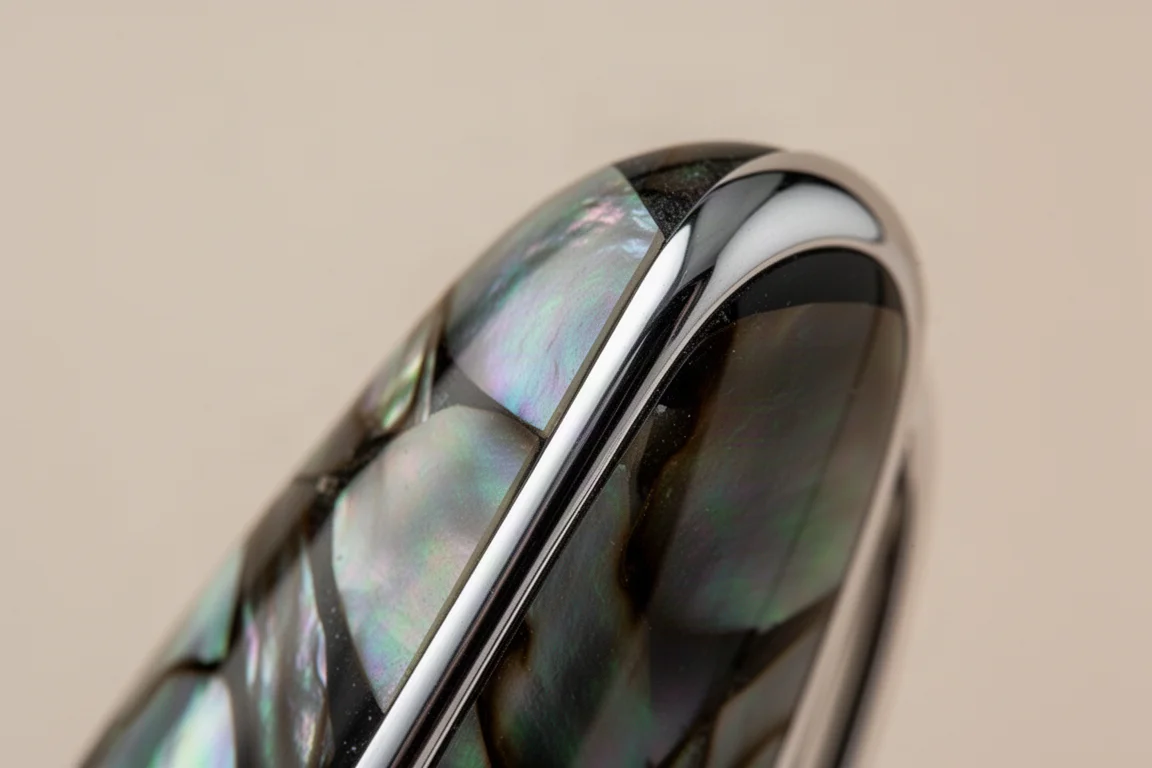
The King of Pen has dual cap threads, and the signature placement accounts for this: in one cap orientation the artisan’s mark aligns perfectly with the clip, and in the other orientation it sits perfectly on the opposite side. The owner also opted to leave the section untreated, judging that solid material there would not have matched the cap, and that decision reads well in person.
Commissioning the Work
The process starts with a simple form on the studio’s website. First-time customers are asked to browse the site and Instagram feed and pick a design they like, then request tweaks. In this case the reference design was a pen commissioned by another customer, with adjustments: more solid lacquer extending further onto the cap, and no solid shell top on the cap.
A key requirement: the pen must have a removable clip or roll stop. The studio’s site includes a list of popular models and whether the clip can be removed. As a rough guide from what was shown: the Montblanc 149, Platinum Izumo, Pilot Vanishing Point (which you are asked to remove yourself), Pelikan M800 and M1000, and Pilot Custom 843-era variants vary; the Visconti Homo Sapiens, Platinum 3776, and Pilot Custom 843 cannot be removed, while the Montblanc 149, Platinum Izumo, Pelikan M800 and M1000, and Vanishing Point can.
Once the pen is chosen, the studio’s assistant reaches out, the work is agreed, and an approximate price quote is given. A high-quality rendering of the finished pen is provided before anything ships. Only then do you join the waiting list; you do not send the pen right away. The wait at the time of writing was about a year, and the notice that the queue had arrived came after almost exactly one year and one day.
Shipping the pen off starts the actual work, which took around two months in this case. When it is finished, you receive a photo, make payment, and the pen returns wrapped in bubble wrap with washi tape, a thank-you postcard, and a small notebook included.
The Nib and a Writing Sample
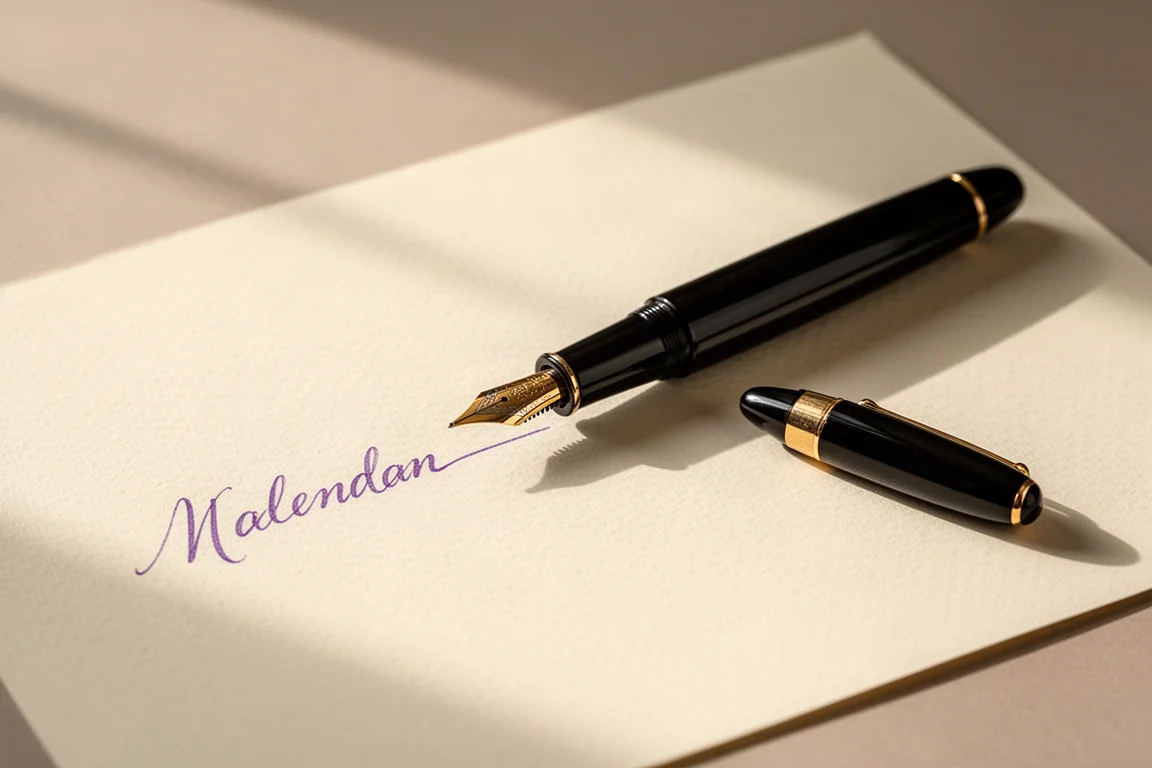
The lacquer work does not touch what makes the King of Pen special underneath. The Sailor 21-karat gold medium nib is one of the standout nibs in any collection: precise, with a distinctive hint of feedback that makes it instantly recognizable. Paired with a light purple ink in the vein of Pilot Iroshizuku’s purple shades, the pen writes beautifully.
Was It Worth the Price and the Wait
The cost of this particular commission was around $500, though pricing varies with the work requested. That is not inexpensive for a decoration service, but the result transformed a pen the owner already liked into a cherished, truly one-of-a-kind possession. The process is long, roughly a year on the waitlist plus the finishing time, but patience here is genuinely rewarded. For anyone considering it, the recommendation is simple: look through the studio’s past work, pick a design, and get back in the queue.
Conclusion
The Sailor King of Pen Ebonite was already an excellent pen, but the urushi and raden work elevated it into something personal and irreplaceable. If you own a pen with a removable clip that you love but suspect could become something more, a commission like this is one of the most rewarding upgrades a collector can make.
Product link
View more details for Sailor King of Pen Ebonite
This product is mentioned in the review. Check the specifications, options, and compatibility before buying.
View more details for Sailor King of Pen EboniteFurther reading
Related Reviews
Fountain Pens
Best Budget Fountain Pens Tested: 9 Pens, One Clear Winner
A hands-on comparison of nine affordable fountain pens for everyday writing, calligraphy, and sketching, with a clear standout for flexible nib fans.
Fountain Pens
Aurora Optima Review: An Italian Piston Filler That Punches Above Its Price
A 14k gold nib, ebonite feed, and a beautifully deep oraloid body make the Aurora Optima one of the most rewarding piston fillers around.
Fountain Pens
Cross Bailey Light Review: The Entry-Level Fountain Pen Worth Keeping at the Office
A plastic-bodied Cross with a metal clip, snap cap, and famously smooth extra fine steel nib. Around $15, available almost everywhere, and easy to recommend.