Outdoor Power Equipment
Ryobi 40V Kinetic Log Splitter Review: Battery-Powered Splitting Without the Hassle
A hands-on look at the Ryobi 40V kinetic log splitter, a compact battery-powered machine that splits logs by ramming them into a solid steel wedge.
Introduction
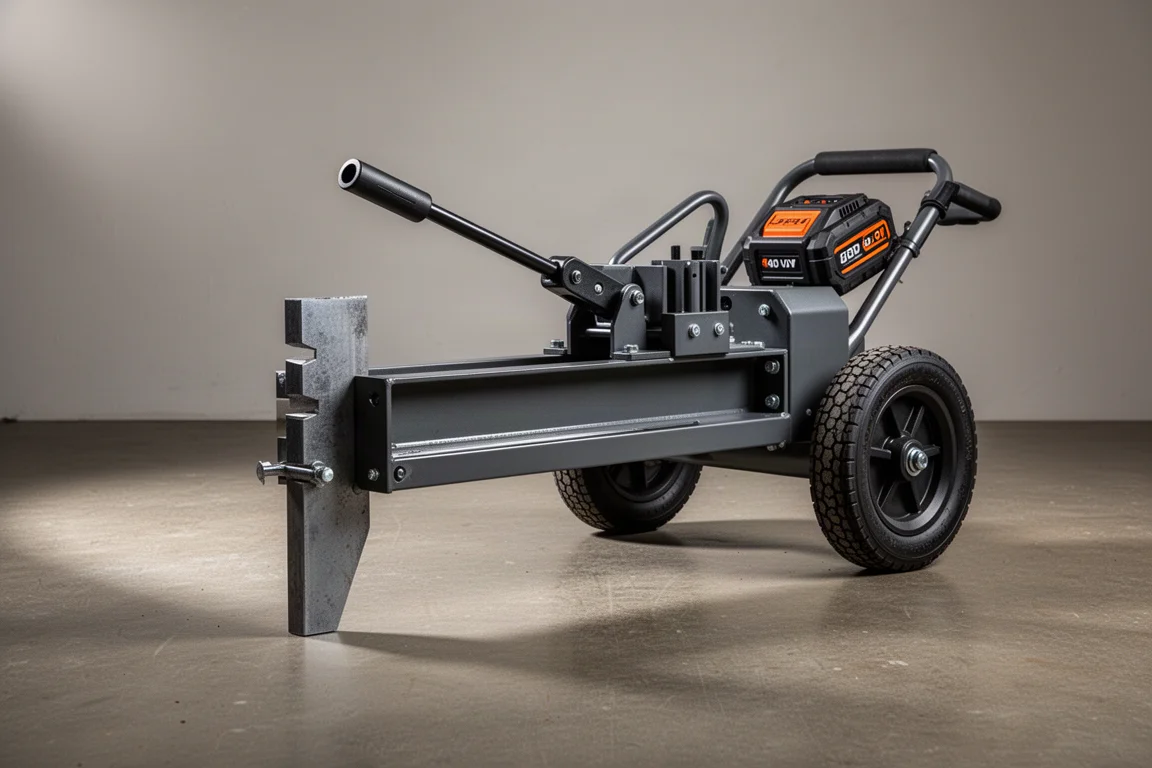
Most people picture log splitting as either a noisy gas hydraulic machine towed behind a truck or a maul and a lot of swinging. The Ryobi 40V kinetic log splitter takes a different route: it is a compact, battery-powered machine that rams wood into a fixed steel wedge, and it turned out to be noticeably more capable than the “40V” label suggests.
This hands-on session lasted only a few hours, so treat it as a first-impression review rather than a long-term verdict. Even so, the machine made a strong case for itself in that short window.
Who This Product Is For
This splitter is aimed at homeowners who split occasional firewood rather than volume loggers. If your typical load is pine, cherry, or other common yard wood, aged about a year, this is squarely the kind of work it handles well. It is also a natural fit if you want to avoid gas entirely, or if you spend time off grid and already own a solar generator you can recharge the battery from.
Ryobi claims the machine is equivalent to an 80cc gas splitter. That comparison may sound optimistic at first, but 80cc gas units are not huge machines, and in practice the splitting action felt stronger than expected.
How the Kinetic Splitting Design Works
Instead of a hydraulic ram pushing against the wood, a kinetic splitter works the other way around. You place the piece of wood on the machine and the ram drives it forward into a solid piece of steel mounted at the front. The split happens against that fixed wedge, which is why the action is quick rather than slow and grinding.
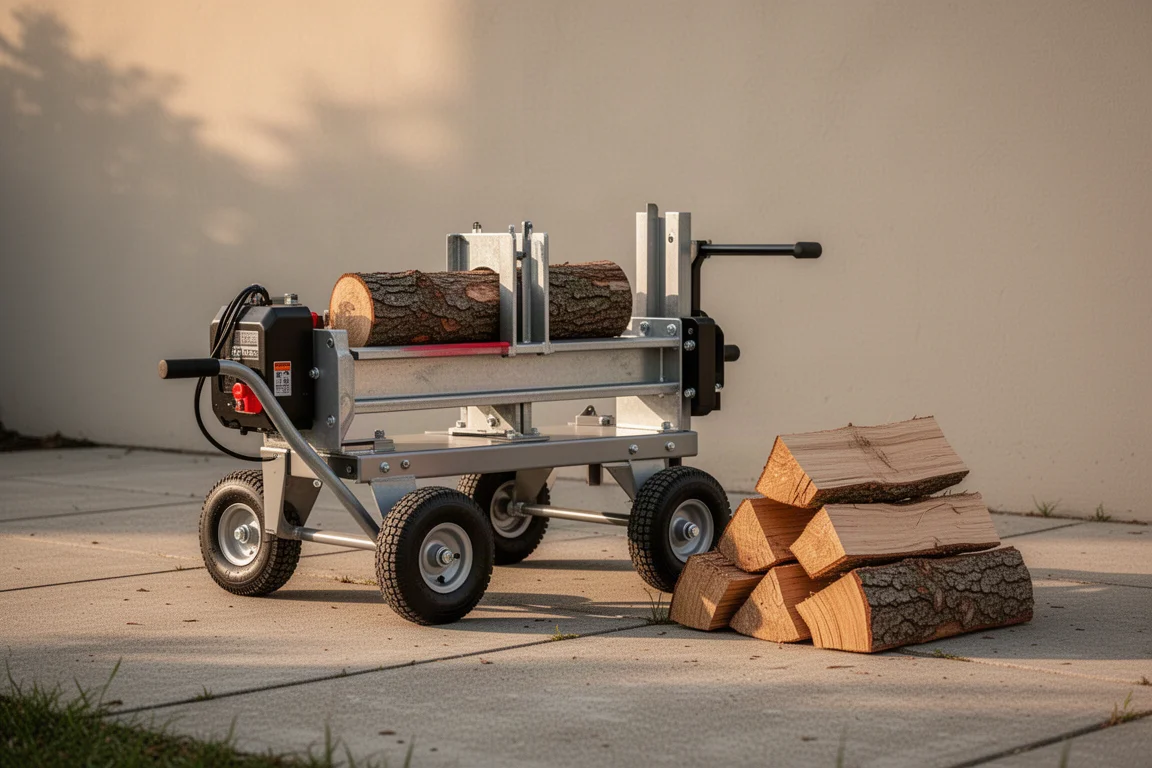
The result is a fast cycle: load the wood, work the levers, and the piece is split in a beat. It is a fundamentally simple mechanism, which helps keep both the weight and the price down.
Design, Weight, and Everyday Handling
The unit is compact enough to kneel beside comfortably while working, and it is far lighter than a larger hydraulic splitter you would need to pull behind a vehicle. In practice, two people lifted it into the back of a hatchback and back out again without much trouble.
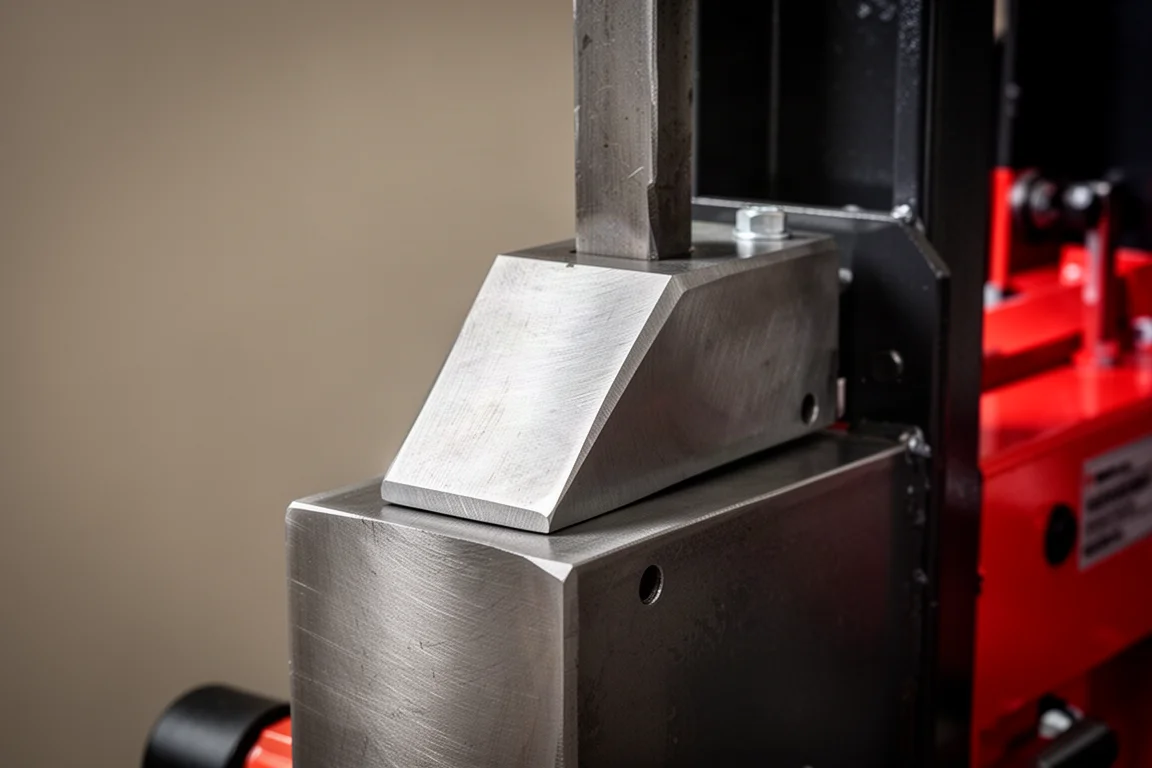
Ryobi deliberately chose a 40V platform rather than 80V to keep the price down. The rear wheels are larger than the front, which makes the machine easy to push forward or pull backward across a range of terrain. It is not waterproof, but it is water resistant, so damp outdoor use is fine within reason.
Everyday Use: Controls, Noise, and Splitting Performance
Operation is about as simple as it gets. Press the on button once to start the unit, slide the safety release lever to the right, then push the top lever forward to split. A reset button is available in case anything trips. One practical note: you only need to press the power button once, not hold it down.
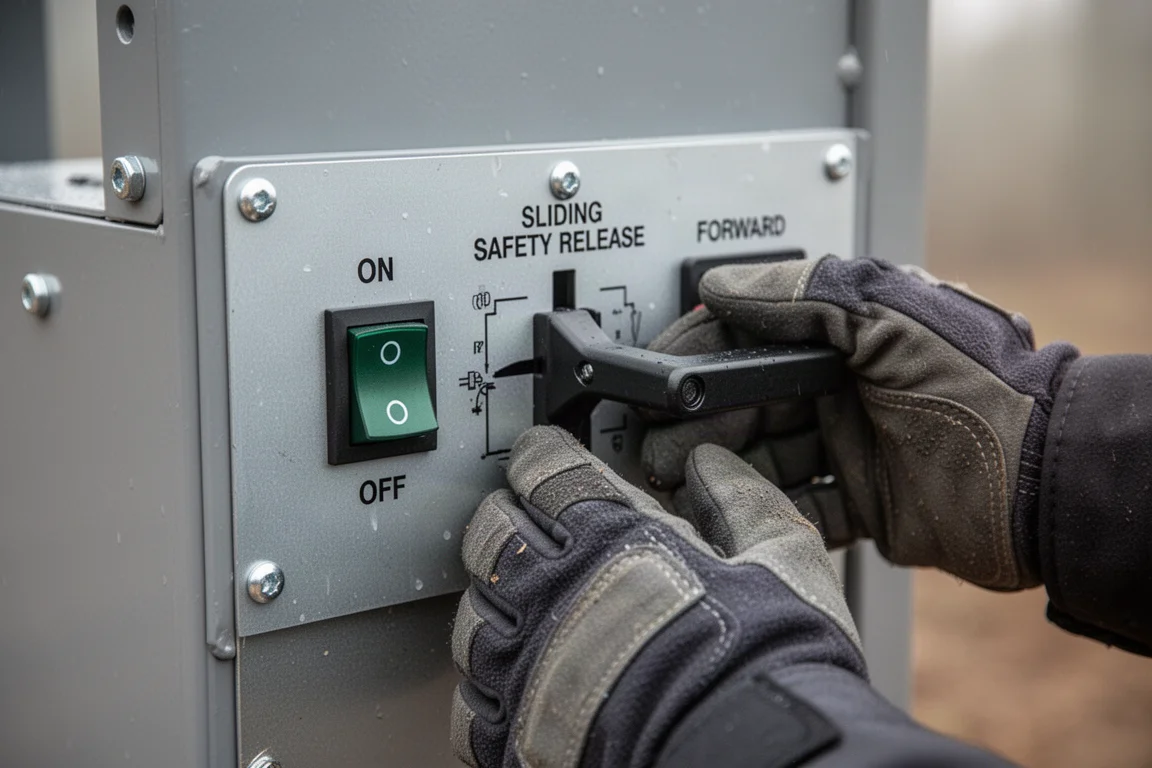
Noise is the standout surprise. The machine is quiet enough that hearing protection is barely a consideration, and there are no fumes at all, which makes it usable in enclosed yards where a gas splitter would be unwelcome.
Performance matched the hype. Pine and cherry, some with knots and some without, split quickly and cleanly, and the wood used was aged roughly a year. Fresh-cut wood should not present problems either; the kinetic ram has plenty of punch for typical home firewood.
Battery, Portability, and Off-Grid Use
The 40V battery mounts on the back of the unit and is the same family of batteries many Ryobi outdoor tools already use, so existing owners may already have compatible packs. Charging is straightforward, and because there is no gas involved, storage and maintenance stay simple.
For off-grid or remote use, the battery can be topped up from a solar-powered generator, which means you can keep splitting without worrying about fuel runs. That combination of quiet operation, no fumes, and rechargeable power is where this machine makes the most sense.
Things to Consider Before Buying
- The hands-on time here was short, so long-term durability and battery runtime per charge remain open questions.
- It is somewhat heavy, though far more manageable than a towed hydraulic splitter.
- It is water resistant, not waterproof, so it should not be left out in heavy rain.
- Volume splitters processing many cords a season will still be better served by a gas hydraulic machine.
Buying Advice
If you split a few face cords a year and want something quiet, fume-free, and easy to load into a hatchback, this is a genuinely practical choice. It delivers a splitting action that feels stronger than the battery label implies, and the simple lever operation means nearly anyone in the household can use it safely.
If you regularly split large volumes or dense hardwood rounds bigger than typical yard wood, a larger hydraulic splitter still makes more sense. For everyone else, the convenience and low running hassle here are hard to argue with.
Conclusion
The Ryobi 40V kinetic log splitter impressed more than expected in a short test window: quick splitting, quiet running, no fumes, and easy two-person transport. It is a well-judged design for homeowners who want real splitting capability without owning a gas machine, and the 40V platform keeps it affordable within Ryobi’s outdoor tool ecosystem.
Product link
View more details for Ryobi 40V Kinetic Log Splitter
This product is mentioned in the review. Check the specifications, options, and compatibility before buying.
View more details for Ryobi 40V Kinetic Log SplitterFurther reading
Related Reviews

Outdoor Power Equipment
Best Cordless Chainsaws 2026: EGO, Milwaukee, and Stihl Compared
Three flagship battery-powered chainsaws from EGO, Milwaukee, and Stihl go head to head in cutting speed, power, weight, and price.

Outdoor Power Equipment
Best Cordless Leaf Blowers 2026: Nine Models Put to the Test
We tested nine leading cordless leaf blowers from Ryobi, STIHL, Toro, EGO, Husqvarna, DeWalt, Makita, Milwaukee, and Echo to find the best blowing force, run time, and value.
Outdoor Power Equipment
Amazon Big Spring Sale 2026: Best Outdoor Power Equipment and Backyard Deals
Cordless mowers, blowers, grills, and portable power on sale this spring, with practical advice on which packages are actually worth buying.