Outdoor Power Equipment
Ryobi 40V HP Brushless Rear Tine Tiller Review: Battery Power That Can Replace Gas
Ryobi's first battery-powered rear tine tiller brings gas-style capability with counter-rotating tines, four 6Ah batteries, and none of the engine maintenance.
Introduction
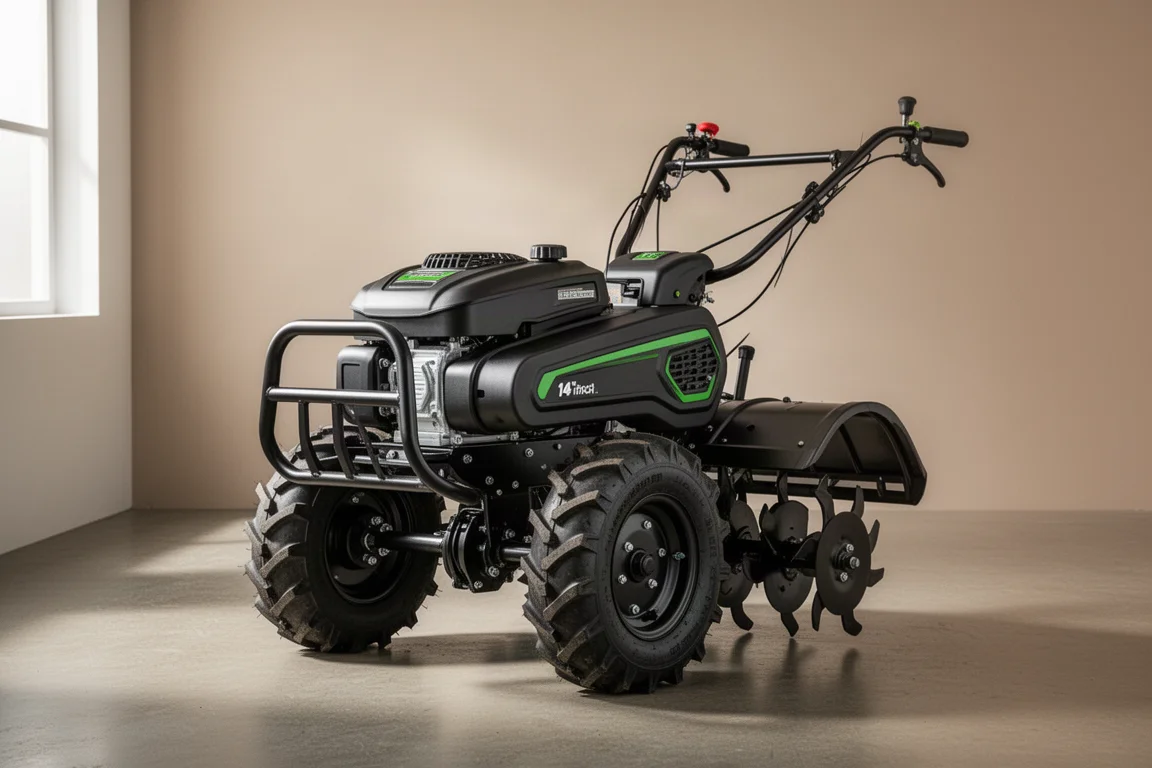
Rear tine tillers have traditionally been the domain of gas engines, fumes, pull cords, and annual carburetor headaches. Ryobi’s 40V HP Brushless Rear Tine Tiller challenges that assumption as the first battery-powered machine in this class, and it does not look like a compromise. From a distance, it could easily pass for a gas model, and in use it delivers enough power to take completely unprepared ground and turn it into something ready to plant.
This review walks through what the machine offers, how it behaves on tough soil, and what trade-offs you should weigh before buying.
What Ryobi Built Here
The tiller looks very much like a traditional gas-powered rear tine machine, but the details reveal a thoughtful design. At the front there is a removable bull bar for pushing through vegetation, plus a sand ballast compartment where you can add extra weight for better traction. The 14-inch pneumatic tires have an aggressive tread that grips soil well, and if you find the tires slipping, packing sand into the compartments helps keep the machine planted.
The handlebar adjusts across three positions, with lower settings for comfortable operation and higher positions that make storage easier by keeping the machine from extending too far back.
Four Batteries and a Manual Switchover
Power comes from four 40V 6Ah batteries, two working at a time, with the pairs clearly marked on each side of the machine. When the first pair runs out, a key lets you manually switch over to the second set, a simple process that keeps you moving without tools.
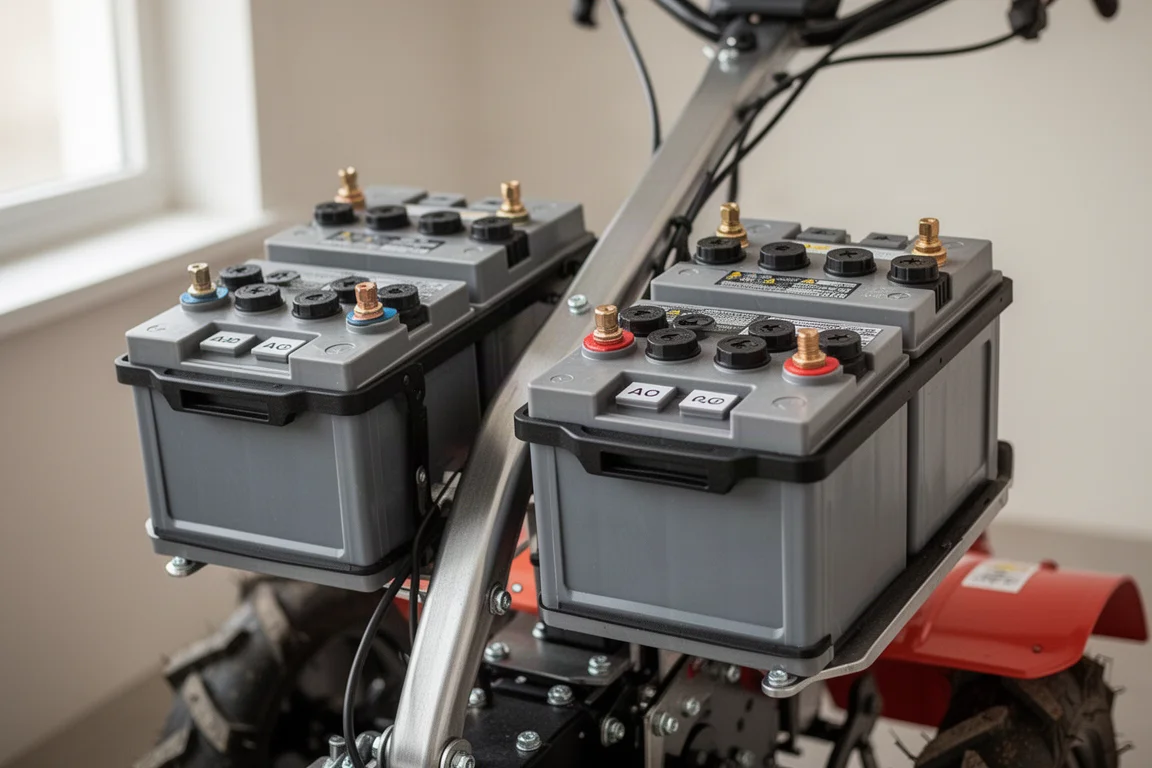
The tiller works with any Ryobi 40V battery, which matters if you already own other tools in that platform. In testing, one set of batteries covered the entire job without ever dipping into the second pair, and a dual-port rapid charger gets batteries back to full in about an hour per charge cycle.
Tines, Width, and Depth Adjustment
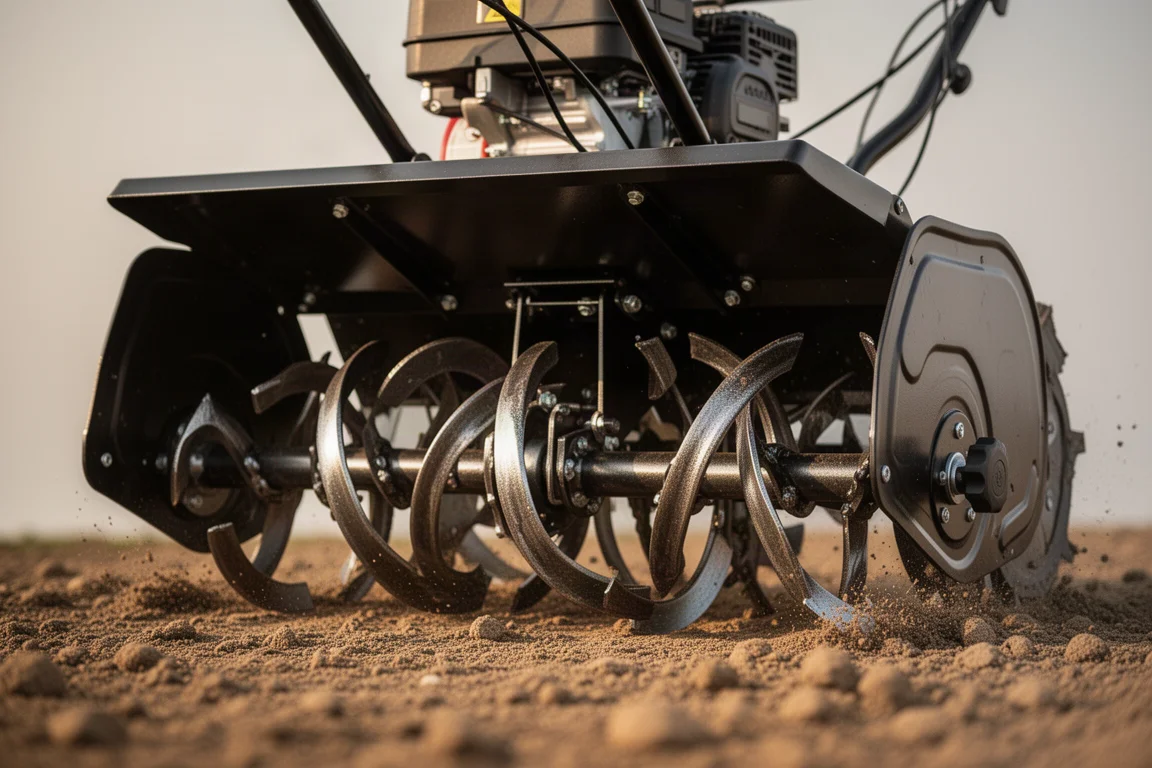
At the business end, counter-rotating tines provide an 18-inch tilling width and up to 10 inches of tilling depth. Adjustable side shields, set with a simple knob, let you control how much soil is thrown around so dirt does not spray all over you. A depth stake behind the machine adjusts across nine positions with a simple pull-and-adjust mechanism.
Controls and Safety
This is a heavy, powerful machine, and the controls reflect that. An independent power switch must be pressed before anything else works, and the presence bar alone does nothing until you power on with a red button. Drive works like the self-propel on a lawn mower: the further forward you push the lever, the faster you go. Reverse is self-propelled too, and the tines automatically shut off whenever you shift into reverse, which is a genuinely useful safety behavior since the tines sit against the ground.
There is also a dedicated transport mode that disengages the tines while you move the machine around. That matters because at full drive speed this tiller moves surprisingly quickly for a rear tine machine, faster than most gas models, and you do not want tines churning while you are repositioning it.
Real-World Power and Results
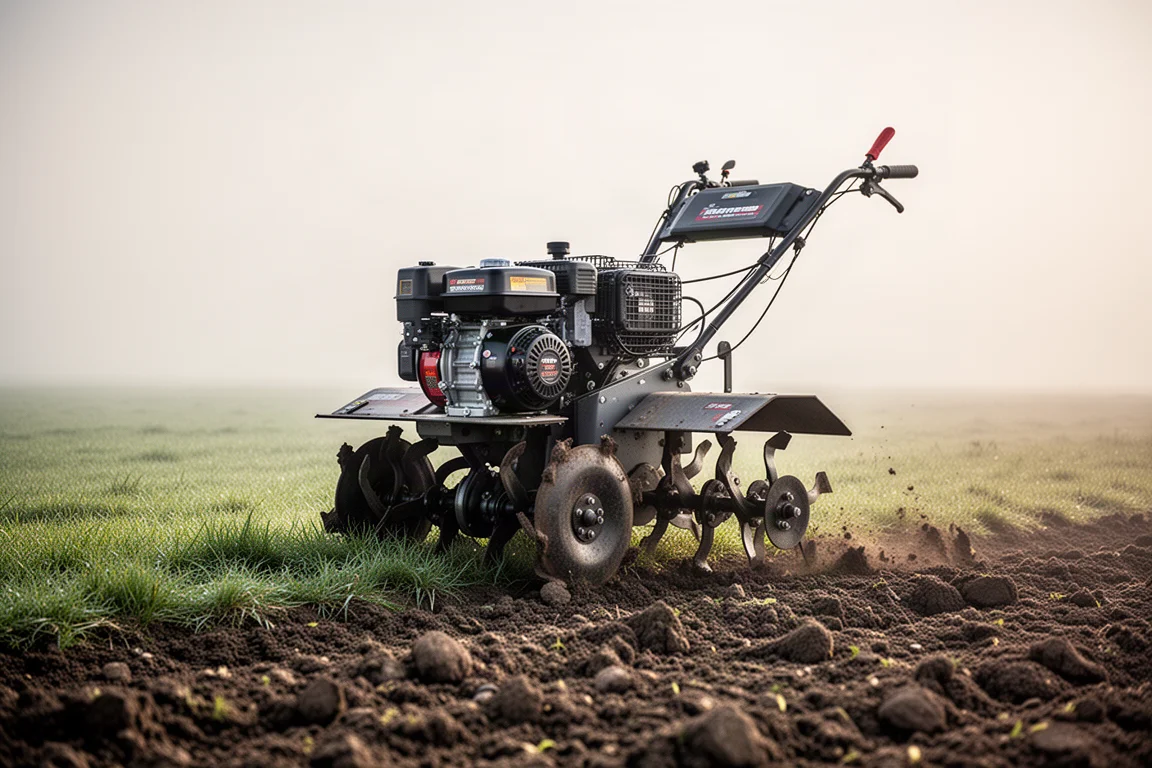
The real question for a battery tiller is whether it can handle unprepared ground. Put to work on rough, grassy soil that was only trimmed to a reasonable height first, the machine tore through it impressively. After the first pass, working in half passes so most ground got tilled twice was all it took to leave soil ready for planting.

For context, the test plot was roughly 20 feet long and 15 feet wide, and one set of batteries was enough for the entire job. It is still hard physical work in hot weather, but the machine does the heavy lifting and you mostly steer it, with multiple hand positions letting you find whatever grip is most comfortable.
Price, Value, and Buying Advice
The tiller is priced at $1,399 and sold through Home Depot, coming with four 6Ah batteries and a dual-port rapid charger. The main limitation is familiar to anyone who has moved to battery outdoor equipment: recharging takes longer than refilling a gas tank. If you accept that, the advantages stack up nicely. No gas hassles, no engine maintenance, no fumes, and far less noise, plus long-term savings on fuel and upkeep. For a first battery-powered rear tine tiller, Ryobi did not phone it in; this is a machine genuinely capable of replacing a gas model.
Conclusion
The Ryobi 40V HP Brushless Rear Tine Tiller is an easy recommendation for anyone with a garden bed or small plot who wants gas-class tilling without gas-class ownership. Counter-rotating tines, generous battery capacity, smart safety controls, and real-world power on unprepared ground make it a serious tool rather than a novelty. Just plan around charge times, and it will reward you with easier seasons ahead.
Product link
View more details for Ryobi 40V HP Brushless Rear Tine Tiller
This product is mentioned in the review. Check the specifications, options, and compatibility before buying.
View more details for Ryobi 40V HP Brushless Rear Tine TillerFurther reading
Related Reviews

Outdoor Power Equipment
Best Cordless Chainsaws 2026: EGO, Milwaukee, and Stihl Compared
Three flagship battery-powered chainsaws from EGO, Milwaukee, and Stihl go head to head in cutting speed, power, weight, and price.

Outdoor Power Equipment
Best Cordless Leaf Blowers 2026: Nine Models Put to the Test
We tested nine leading cordless leaf blowers from Ryobi, STIHL, Toro, EGO, Husqvarna, DeWalt, Makita, Milwaukee, and Echo to find the best blowing force, run time, and value.
Outdoor Power Equipment
Amazon Big Spring Sale 2026: Best Outdoor Power Equipment and Backyard Deals
Cordless mowers, blowers, grills, and portable power on sale this spring, with practical advice on which packages are actually worth buying.