Multi-Tools
Roxon Flex Titan Review: A Modular Multi-Tool With Serious Upgrades
The Flex Titan replaces the Phantom with better steel, bearing-based blade swaps, a ballpoint pen, and a fully modular design you can build à la carte.
Introduction
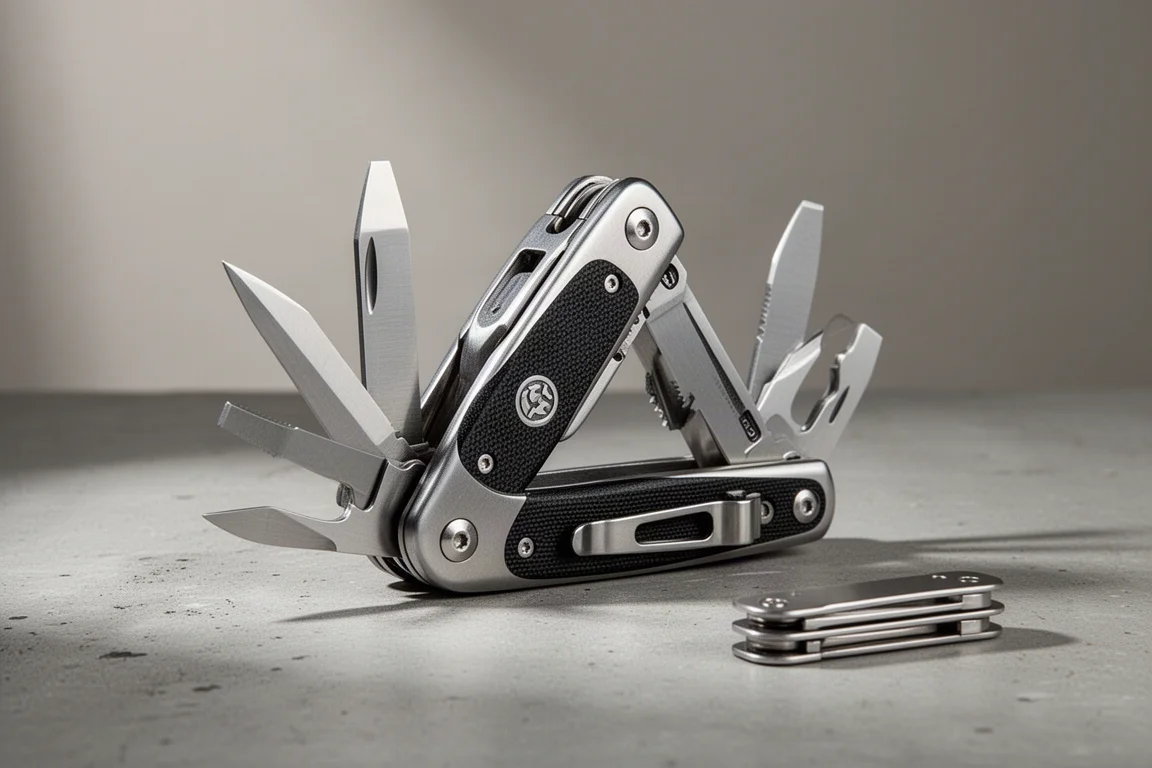
Roxon has been quietly building one of the more interesting ideas in the multi-tool space: the Flex system, a modular platform where every implement shares the same slot standard and all the components work together across tools. The Flex Titan is the fifth platform in that system, and it is designed to replace the earlier Phantom. Based on what is included here, it is a substantial step up in fit, finish, and overall quality control.
This review walks through what the Titan brings, where it fits in the Flex lineup, and a few things you should know before buying.
What the Flex Titan Is
The Titan is essentially a rebuilt Phantom. The Phantom earned a following for its beefy pair of scissors hidden under the pliers, but it always felt like a proof of concept, with compromises in materials and quality control. The Titan keeps the same basic functionality while addressing nearly all of those weak points.
If you are new to the Flex platform: there are long tools and short tools, all roughly 2 mm per slot, and every component is cross-compatible across the different Roxon platforms. Roxon is also one of the few companies making modular tools that let you buy à la carte. You can start with a Flex frame for around $40 and add specific implements later, rather than buying a complete tool first.
Scissors and Pliers: The Core Upgrades
The scissors are the headline feature, just as they were on the Phantom, but now they are made from 416 stainless instead of the 3CR used previously. That means a much better edge retention, and the blade is slightly shorter than before while keeping the same thickness, which makes it more rigid when cutting. In testing with paracord and even copper-wire material, it performed exceptionally well; it may be among the best multi-tool scissors available.
The pliers are sprung and are the same pair found in the Flash and the base Flex, now with a subtle Roxon imprint. That consistency across platforms is part of what makes the system practical: one plier design, everywhere.

Swappable Blades and the T-Shank Advantage
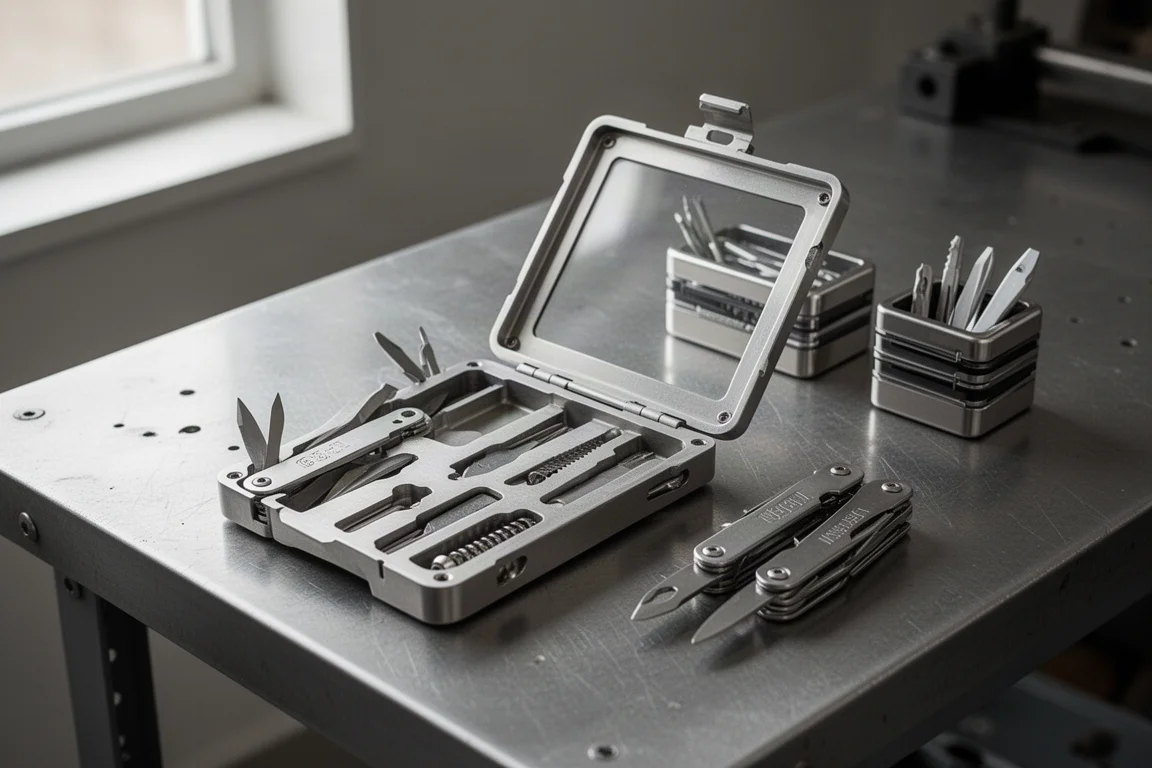
The outside of the tool is where the Titan gets interesting. This is Roxon’s first D2 blade in this platform family, and the mounting system now uses bearings instead of nylon washers, so blades swap readily and smoothly. Available blade options include a sheepfoot, a comb, a curved serrated rescue-style blade, an electrician’s blade, a utility knife, and a diamond file, each supplied in small cases that stack magnetically.
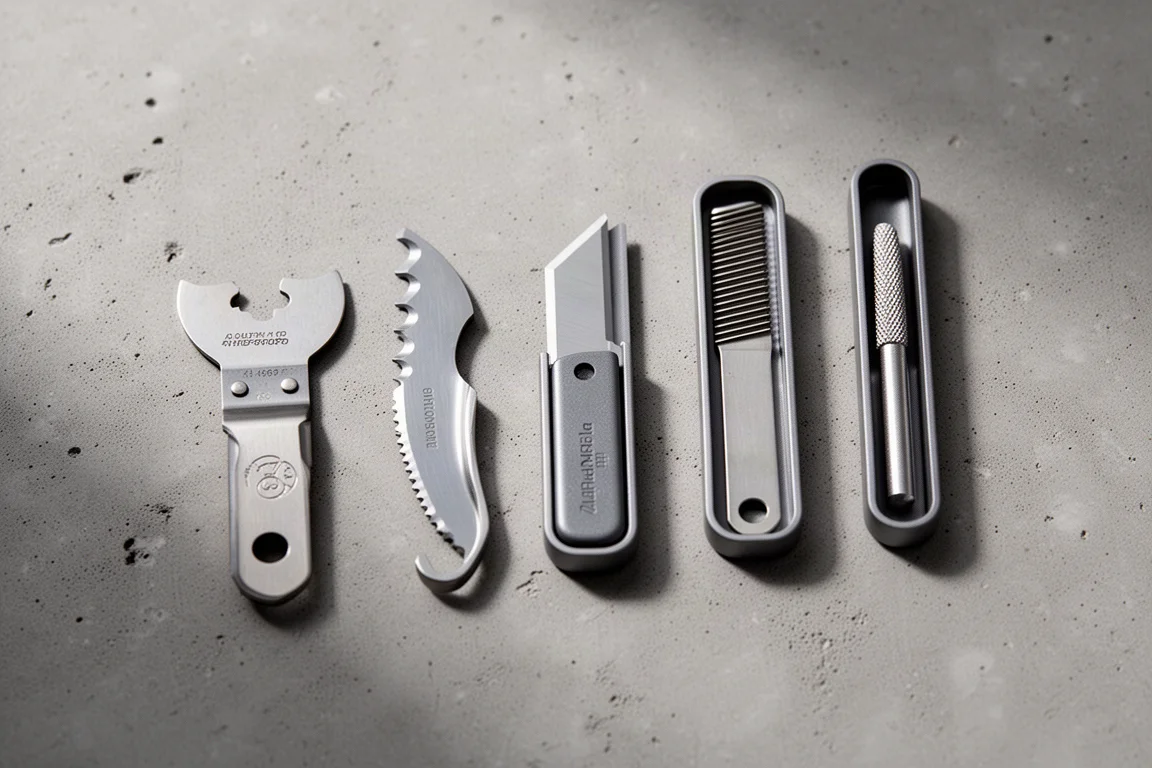
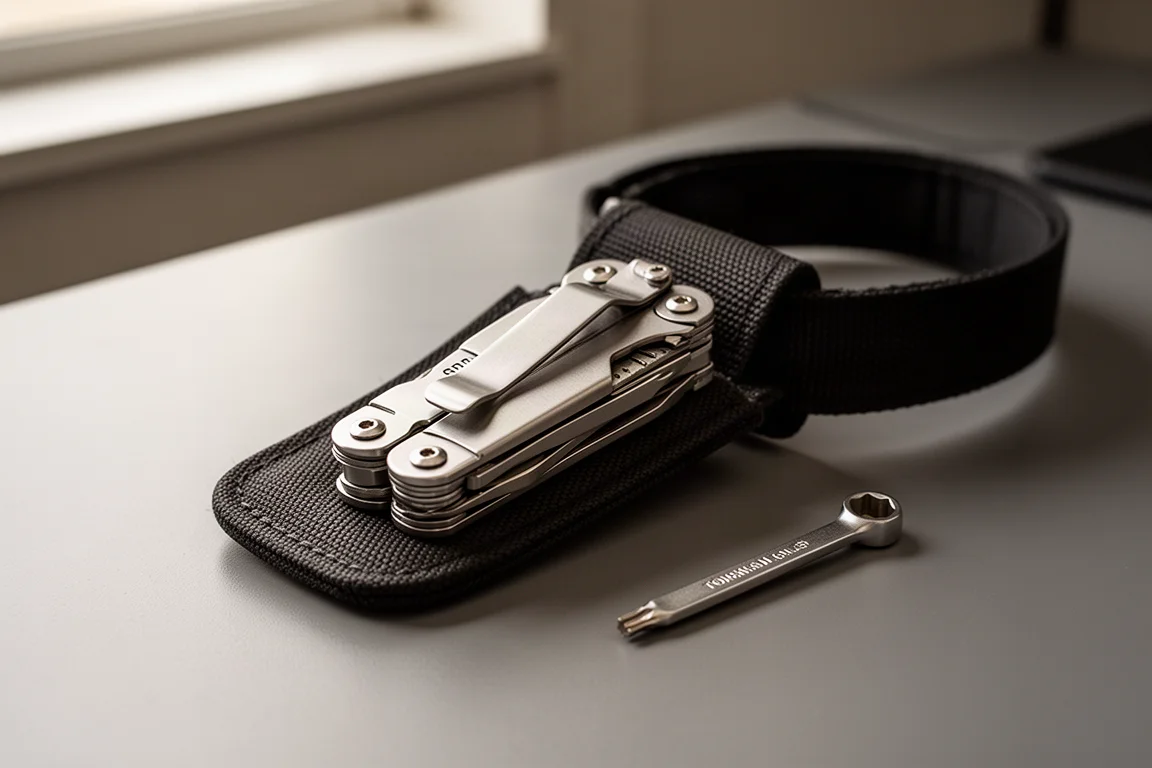
The utility knife conversion is a genuine standout: few multi-tools on the market let you turn the tool into a utility knife this easily, and it still opens one-handed with no interference. One small note: the utility blade is slightly thicker than the stock blade, so you will need the included Torx wrench to loosen the lock screw a touch so it locks fully. The same wrench lets you tune pivot tension to your preference.
The tool side uses six slots on a single side, two long and four short, which is more long-slot space than even the original Flex. That extra depth means longer T-shank blades from a hardware store can fit while the frame stays closed. The Flex Titan also adds G10 handle scales, a metal release button, a pocket clip, and a built-in ballpoint pen.
The Included Tool Set and Flex System Compatibility
The six installed implements are a crosscut and straight cut file, a new saw form, a chisel with wire stripping notches, a pull cutter, a can opener and bottle opener combo, and a small serrated blade. The remaining five implements are 416 stainless, which offers good corrosion resistance and decent edge retention, if not standout toughness.
Combined with a Flex Companion, there is essentially no overlap between the tool sets, aside from a saw of an entirely different shape. The Titan deliberately does not include the Companion’s extra components, so buying both means a genuinely complementary pair.
What I Would Change
Two things worth knowing before you buy. First, the straight cut file is the weakest inclusion; a diamond file, which Roxon sells separately in two grits, is a far more practical multi-tool file. Second, because of its width and what it comes with, the Titan will not fit every sheath, so plan to use the included one.
There is also a compatibility caveat if you collect Flex system accessories: the newly announced nail clipper prototype, a long-requested two-slot (about 4 mm) implement, sits slightly too proud in the Titan’s small slots due to its shape, so it currently only works in the Companion, the Mini Flex Companion, or the Shears.
Pricing, Warranty, and Buying Advice
The Titan comes in at $110, making it the most expensive package Roxon has sold on its website, though the D2 steel, G10 scales, and included components make the price reasonable. Roxon has also extended its manufacturer’s warranty across all tools from 10 years to 25 years, which adds real confidence for a tool at this price.
If you order from the Roxon website, discount codes have historically applied to full-price items sitewide, so it is worth checking before checkout. A frame-only version of the Titan, with the D2 blade and an empty implement side, is planned for the future as well.
Conclusion
The Flex Titan is a well-executed replacement for the Phantom and a strong showing for the Flex platform overall. The 416 stainless scissors, bearing-based blade swapping, D2 blade, G10 handles, pen, and pocket clip make it one of the more distinctive multi-tools available. It will not replace a slimmer, more versatile setup for every carry style, but for anyone who wants heavy scissors and modular flexibility in one tool, it deserves a close look.
Product link
View more details for Roxon Flex Titan
This product is mentioned in the review. Check the specifications, options, and compatibility before buying.
View more details for Roxon Flex TitanFurther reading
Related Reviews
Multi-Tools
Leatherman Wave Plus Review: A Pliers-First Multitool for Bike Trips
Why a pliers-first multitool earns permanent space in a touring kit, and what to weigh before paying for the Leatherman Wave Plus.
Multi-Tools
Best Budget Multi-Tools Under $50: Four Picks Worth Considering
A compact SOG original and three value-focused clones, with honest notes on which ones deliver real value and where to draw the price line.
Multi-Tools
Best Multitools for Hard Wire Cutting: Which Pliers Actually Survive the Test
We put a lineup of classic and modern multitools up against a simple challenge: cutting coat hanger wire cleanly without damaging the cutters.