Multitools
Roxon Flex Modular Multitool Guide: Build It Your Way, Plus the Phantom S802 Pliers
A modular multitool that lets you pick every implement, with a strong plier-based frame, smart bit driver, and a few quirks to know before buying.
Introduction
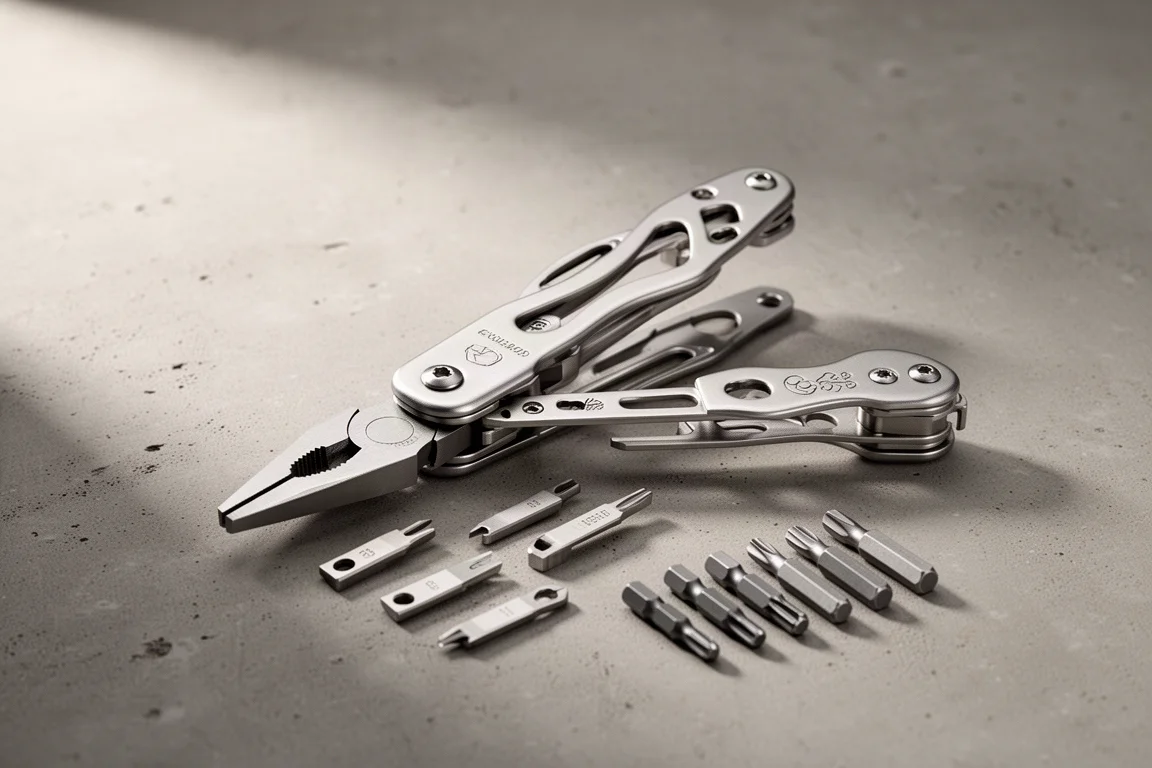
If you have ever wanted to design your own multitool with only the components you actually need, the Roxon Flex is built for exactly that. Instead of a fixed implement layout, you choose a frame and then fill its slots with the blades, drivers, files, and specialized tools you want, ordering each one separately.
This guide covers who the tool is for, how the implement selection works, and the practical tips that make daily use smoother. We also look at the plier head that Roxon shares with the Phantom S802, since the frame’s plier performance is one of its strongest selling points.
What the Roxon Flex Is and Is Not
The Flex is a mid-sized multitool, similar in weight and dimension to tools like the Leatherman Arc, FREE P4, and Leatherman Wave, though slightly shorter. It is not a compact, one-handed-openable carry tool in the style of the Leatherman Curl, Wingman, or Swiss Tool MX Clip. As of now there is no one-hand-openable blade option, though Roxon is working on a solution and one may arrive after purchase.
Price depends entirely on the inserts you pick. The cheapest configurations land around $60, and a fully loaded build with the most expensive implements reaches roughly $100. Roxon also offers a permanent 10% discount on the Flex and all components through promotional links.
How the Flex Carries and Deploys
The frame ships with a pocket clip, so you can absolutely carry it in your pocket as your only cutting implement, but you will usually need two hands to deploy the long implements, including the main blade. The trick is the locking switch: sliding it in the opposite direction fans out all the internal implements, which makes the smaller tools accessible with one hand even in a reverse grip. You select the one you want, push it out, then disengage the lock and close it again.
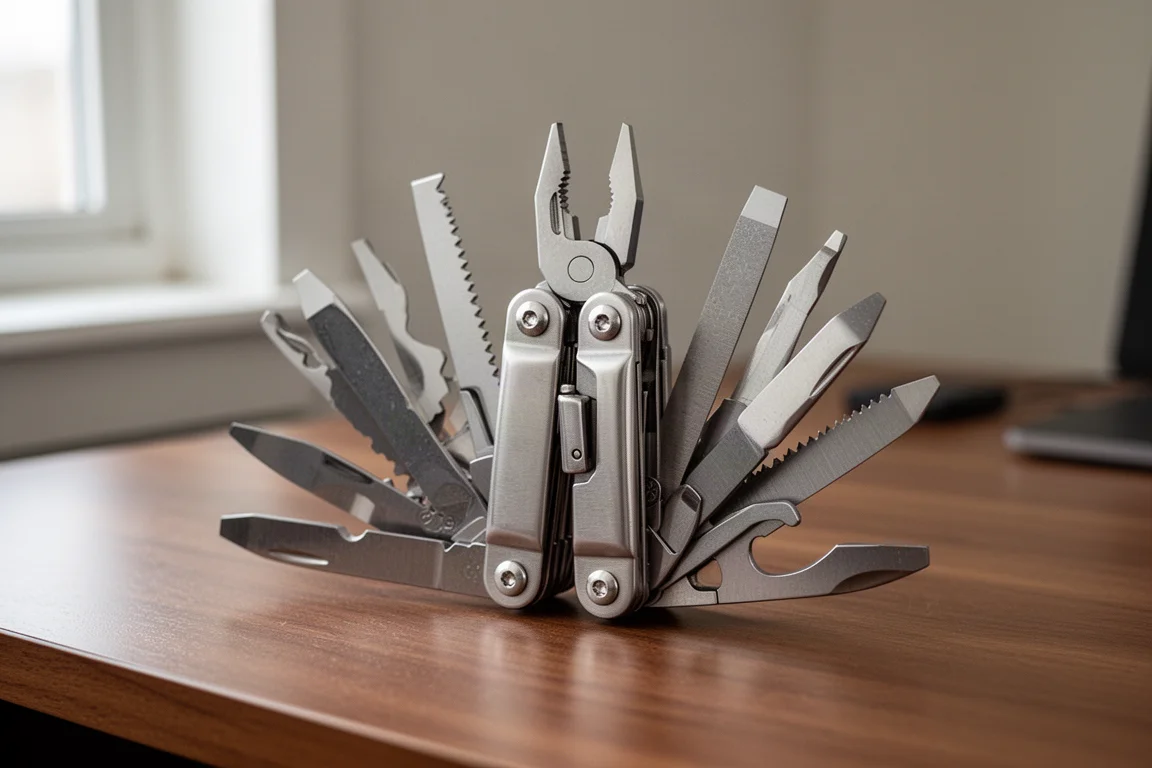
Think of it like a Swiss Tool Spirit without one-hand-openable blades, for now. The lack of spacers between implements means they can clump together, and Roxon is working on a fix for that as well.
The Frame: Pliers, Spacers, and Extras
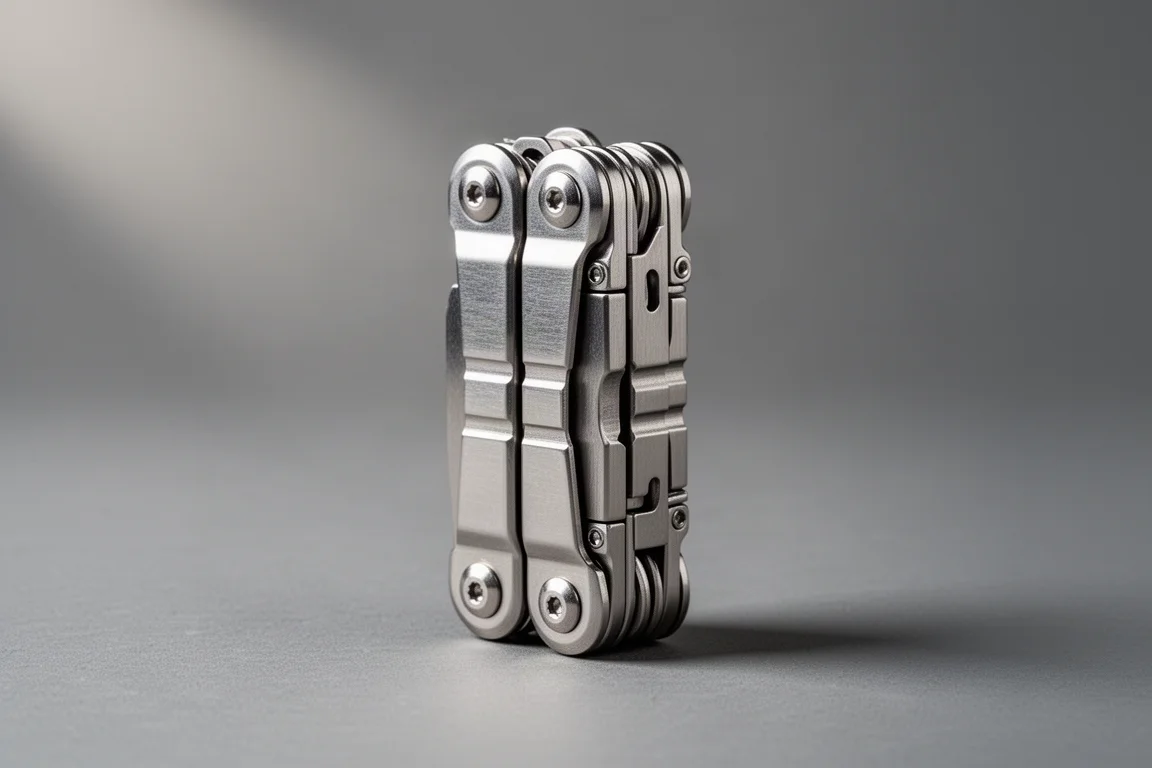
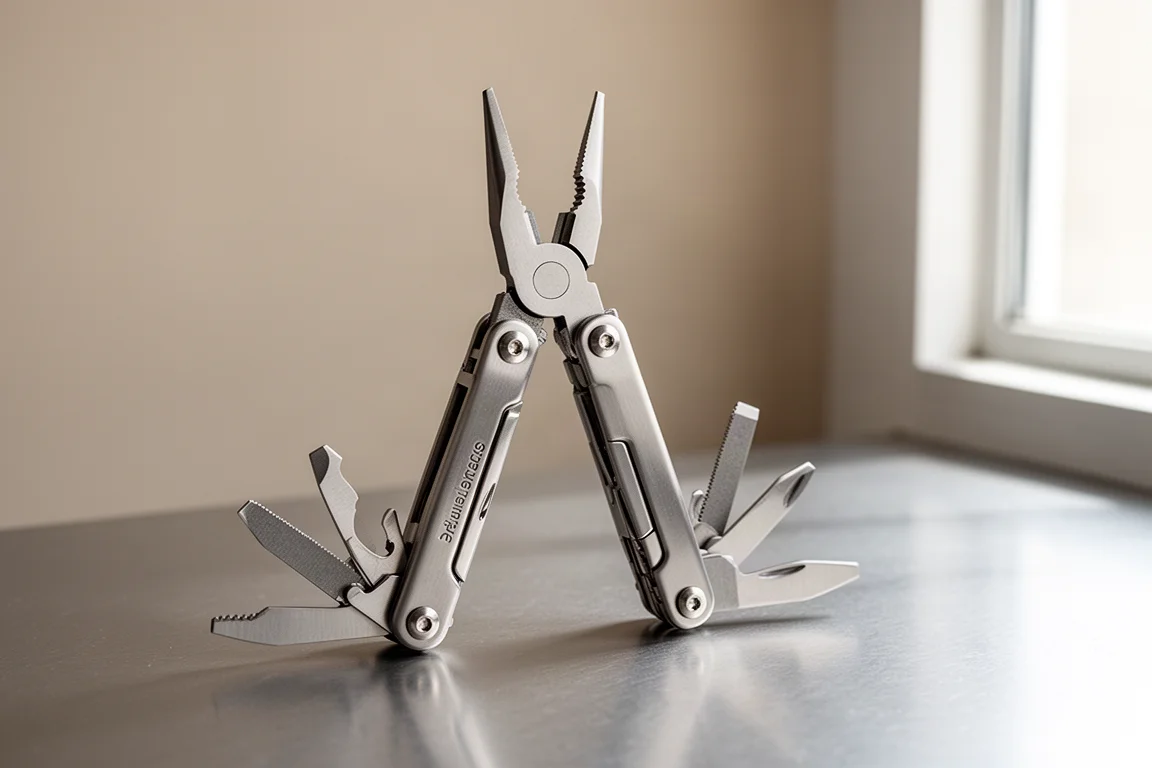
The plier-based frame is spring-loaded with replaceable wire cutters, a gripping section up front, and a fine-tooth section above it. It performs very well and shares the same plier head found in the Roxon Phantom S802, which benefits from an upgraded double detent system with a small ball detent that locks the head in and out more positively than a simple rear spring.
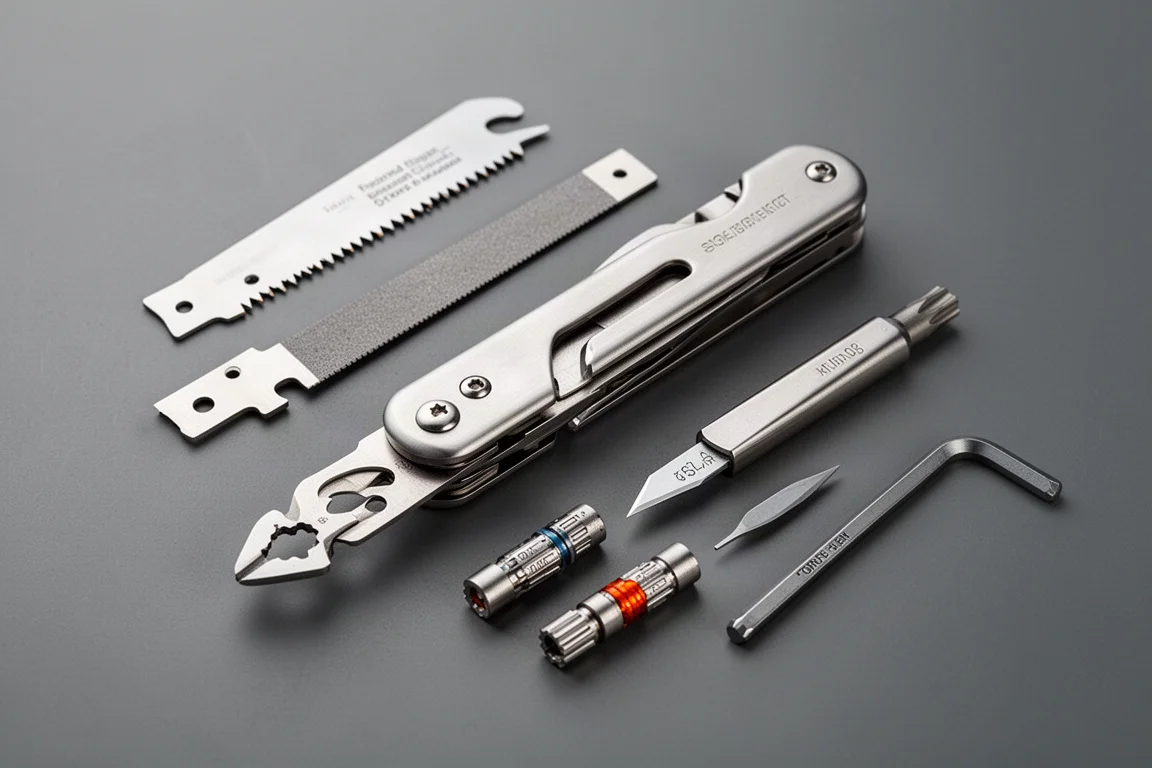
For around $40, the package is generous: the frame comes with five spacers installed, a T8 Torx wrench for adjusting pivot tension, a spare set of wire cutters, and a small holder for safely swapping sharp inserts. Including spare cutters and the tool to install them is something more brands should copy.
Roxon Flex
The Flex system is the heart of this story. Long implements occupy one long slot per side, while short implements fill the remaining slots, and Roxon offers both long and short versions of several tools so you can mix and match. Available long implements include straight and serrated blades in German 4116 stainless, a saw, two files, and a scissor, with more on the way. Short implements cover a reamer/awl, scalpel holder, small serrated blade, chisel with wire strippers, pull cutter, can opener, fish scaler with hook puller, hex and Torx keys, flathead drivers, a Ferrocerium rod, and more.
The standout choice is the bit driver, which takes standard quarter-inch bits and, unusually, long bits that it stores inside the frame. Pairing the flathead with crosscut file and depth gauge alongside the diamond file gives two grits and a surprisingly capable toolkit. For the long slot, the saw is the highest priority pick, with diamond file as a strong alternative, and the scissor is serviceable though not ideal for precision cuts.
Roxon Phantom S802
The plier head in the Flex frame is the same one you will find in the Roxon Phantom S802, and it is one of the better plier implementations at this price. The spring-loaded action, replaceable cutter cartridges, and the double detent locking mechanism all work together to make the plier feel precise rather than loose.
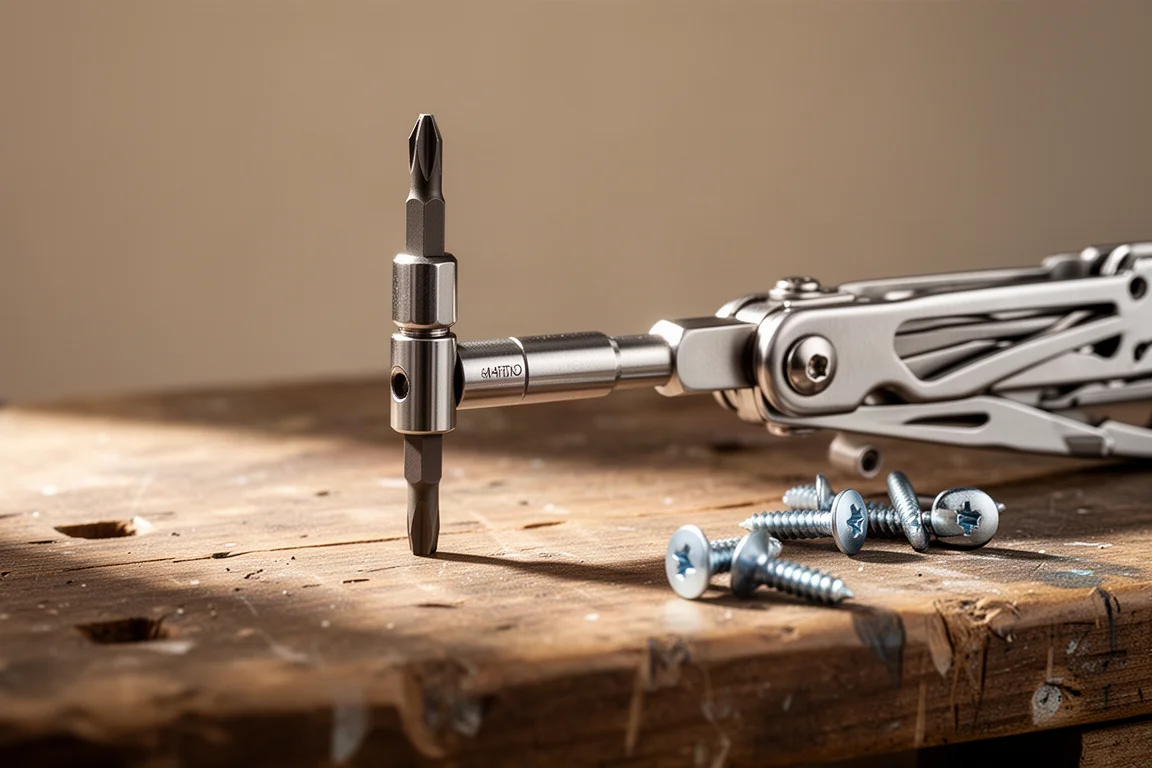
If pliers are the main reason you would carry a multitool, this head alone justifies the frame. The gripping section handles everyday jobs well, the fine-tooth section above it adds utility, and knowing spare cutters are cheap and easy to swap removes the usual anxiety about dulling them.
Recommended Starting Setups
For everyday carry, start with the bit driver in its four slots, one long implement (the scissor is the popular pick, though a serrated or straight blade makes more sense if you carry a separate knife), then the flathead with crosscut file and depth gauge, the diamond file, and two slots of your choice. That combination gives you drivers, two file grits, a blade, and flexibility at the lowest reasonable price.
For outdoors use, the saw, reamer/awl, and a blade are essential for woodcraft tasks, with the pliers rounding things out. Add the chisel for notching, the small diamond file to free up the long slot, and the flathead. For hunting contexts, consider a gut hook or pull cutter, the scalpel holder, and a can opener.
There is also a bladeless TSA-friendly angle: a build with the bit driver, scissor, scalpel holder, diamond file, Torx bits, and flathead offers plenty of value while complementing a separate folding knife. The scalpel blades are widely available in craft stores, so a confiscated blade is easy to replace, and the tool itself remains legal. Skip the Ferrocerium rod, though; it costs three slots when a lanyard bead or a larger dedicated rod does the job better.
Tips and Tricks Worth Knowing
First, the most important tip: do not push the lock switch all the way when closing a tool. The lock disengages at the first stopping point, and you can feel it. Pushing further can let the implement fall out accidentally and makes the tool feel far fiddlier than it is.
Second, you can fit more than two long implements. By positioning a second long insert next to the saw on one side, using the straight blade rather than the serrated, and pairing the diamond file on the other side, you can get four long implements into a frame designed for two. The blade’s thinner lower portion passes cleanly by the plier head, and with careful filing of one small edge the fit becomes even smoother.
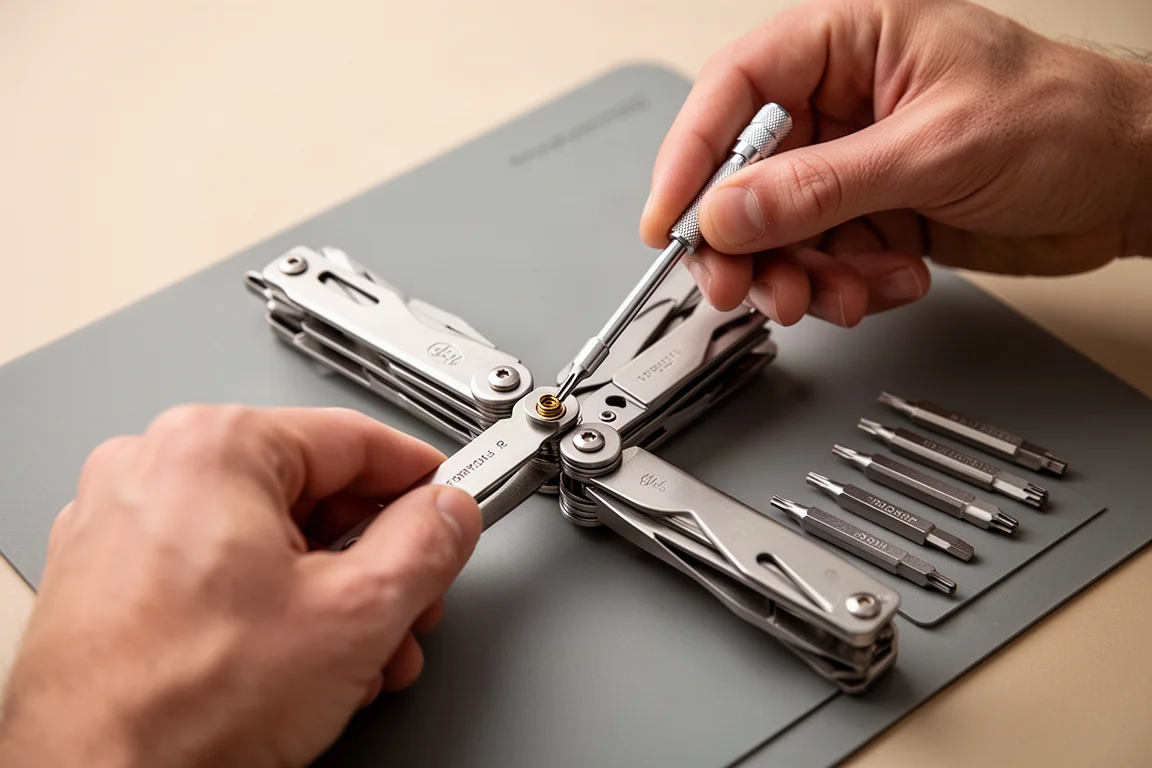
Finally, adjust your tool. One pivot side is security Torx and the other is captured, so a single T8 wrench is enough to set the tension once your layout is finalized. Loose pivots make deployment feel sloppy; a quick tighten transforms the experience.
Conclusion
The Roxon Flex is genuinely one of the most interesting multitools available right now because customization is the whole point. The bit driver alone, with its support for long bits, is a strong reason to consider it, and the shared plier head with the Phantom S802 delivers quality where it matters most. Know its limits, mainly the two-handed blade deployment and the clumping implements, build your insert selection around your actual tasks, and you end up with a tool that fits your life better than almost any fixed-layout competitor.
Further reading
Related Reviews
Multitools
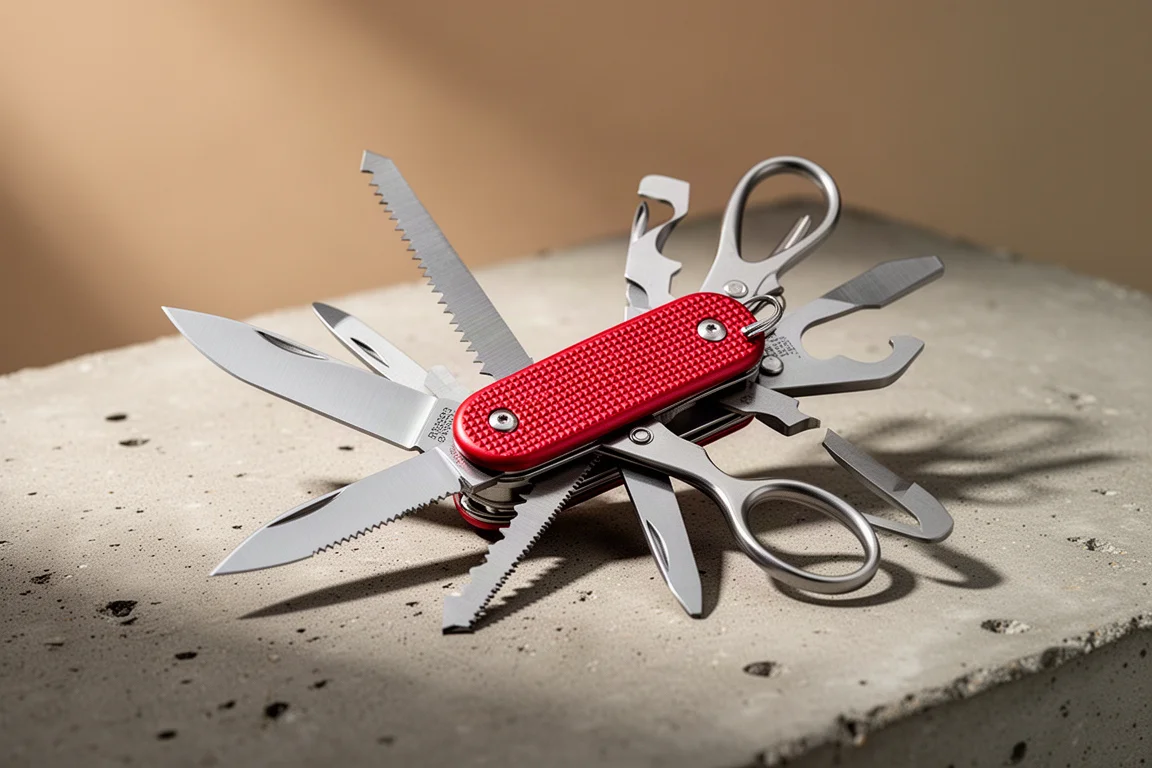
Victorinox Huntsman Swiss Army Knife Review: 15 Functions for Camp and Everyday Carry
A long-term look at the Victorinox Huntsman, covering what each of its 15 functions does, how the blades and saw perform, and the trade-offs to know before buying.
Multitools
Multitool Cutter Test: Leatherman Arc, Surge, Super Tool 300 and Gerber Center Drive Put to Work
We stress-tested four popular multitools on coat hangers, nails and screws, and found where replacement high-hardness cutters genuinely pay off.
Multitools
Harbor Freight 20-in-1 Multitool vs Leatherman Wave: A $40 Wave Clone Worth a Look
Harbor Freight's new 20-in-1 multitool copies the Leatherman Wave formula closely, and in some areas it improves on it. Here is how the two compare.