Multi-Tools
Roxon Flash vs Leatherman Signal: Can a $30 Multi-Tool Hang With a $140 Icon?
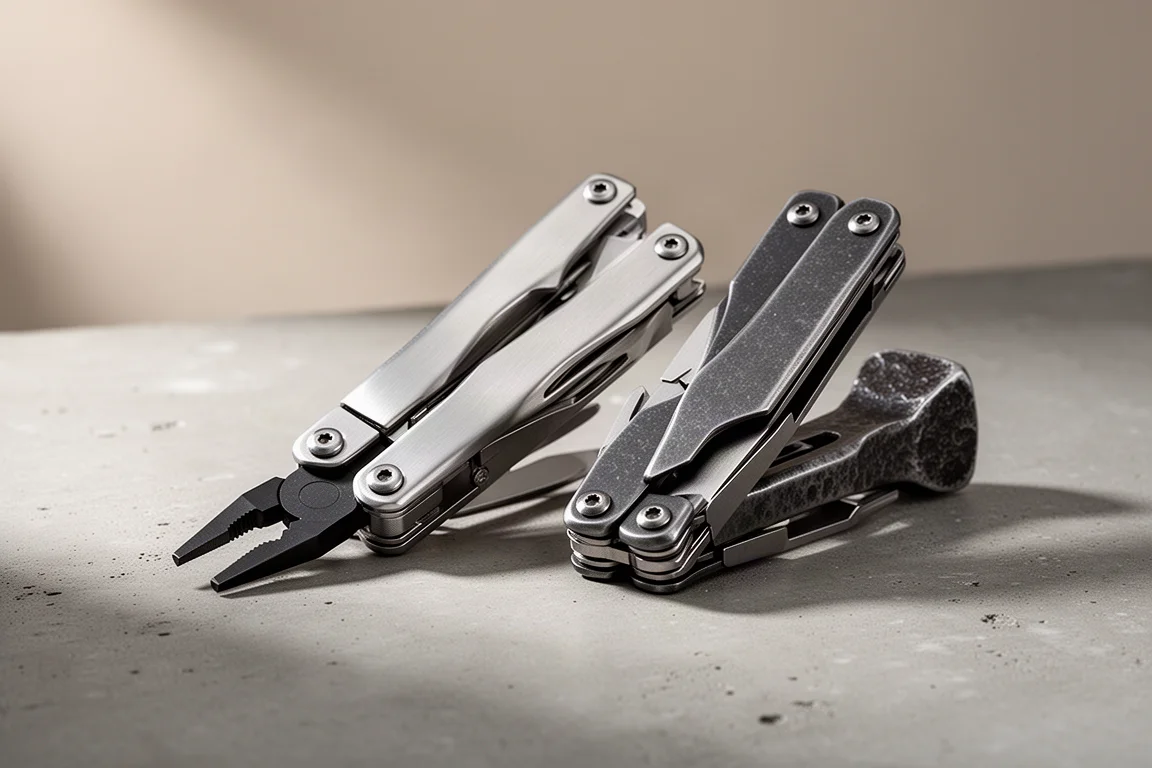
The Roxon Flash packs a spring-loaded plier head, locking implements, a spare cutter set, and a whistle-ferro rod combo for $30. We stack it against the Leatherman Signal at $140 to see where the money actually goes.
Introduction
Budget multi-tools rarely feel like a direct challenge to an established model. The Roxon Flash is the exception. It shows up on Amazon at $30 with a feature set aimed squarely at the outdoors crowd, the same crowd the Leatherman Signal courts at $140. That price gap is worth stating up front: one of these tools costs less than a quarter of the other, and the comparison is admittedly a lopsided one. Still, it is a genuinely interesting matchup, because the Flash gets surprisingly close to doing the Signal’s job.
Pricing Context and Materials
Roxon has been transparent about materials on this tool, and it shows. The Flash uses a 5Cr15MoV blade and 440A cutters distributed across its components. Those steels are, in practical terms, very close to what Leatherman uses in the Signal: 420HC and 5Cr15MoV land in roughly the same territory for hardness and edge performance, assuming equal heat treatment. That is a big assumption, but it means the raw material story is closer than the price tags suggest.
Roxon also backs the tool with a 10-year warranty, and there is actual contact information printed on the packaging, including a telephone number. That is not something every budget brand bothers with.
Pliers and Locking System
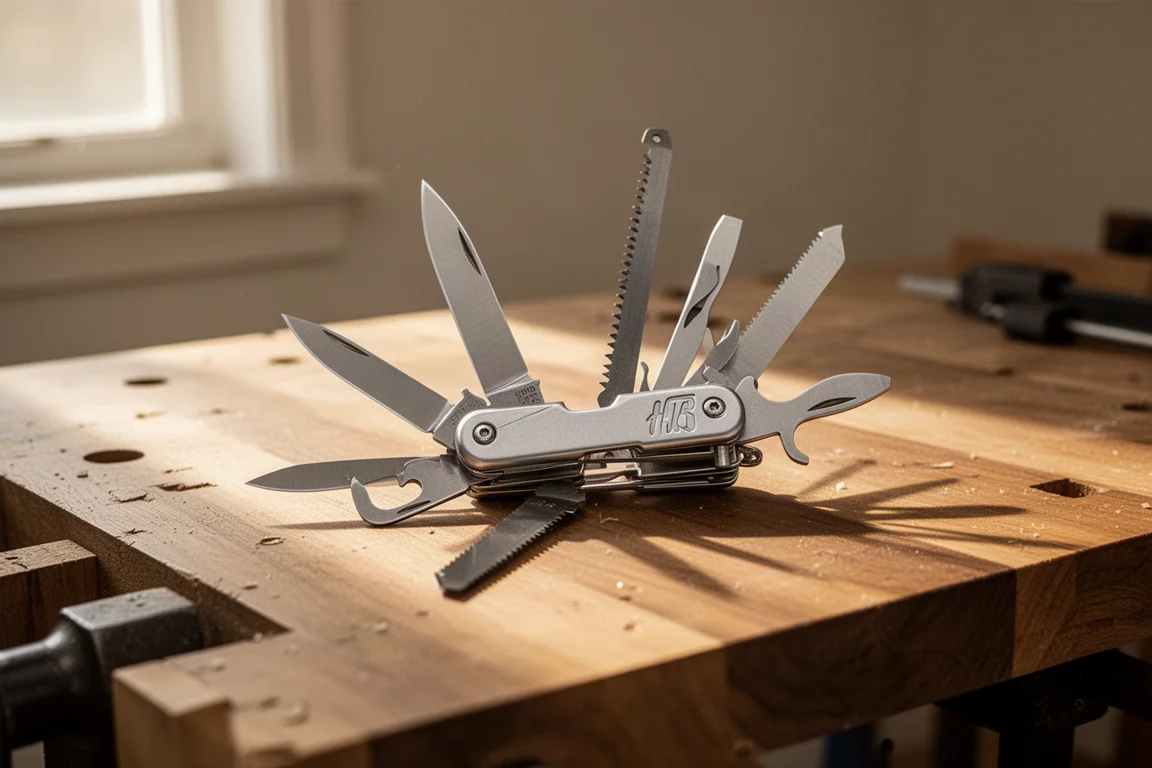
The Flash uses the same plier head design Roxon introduced with the Phantom, and it works well right out of the box. The jaws are comparable in size to what you find on the Wave or Signal, and unlike either of those, the Flash pliers are spring-loaded. There is no side-to-side play and no lockup when squeezed hard. For a $30 tool, that is an excellent showing.
The locking system is the standout. Press a lever and all three of the smaller outside implements open at once, then each locks in place when selected. Press backwards to unlock. It is one-handed, intuitive, and shared with the Phantom. Everything on the tool locks except the plier head itself.
Blade and Saw Comparison
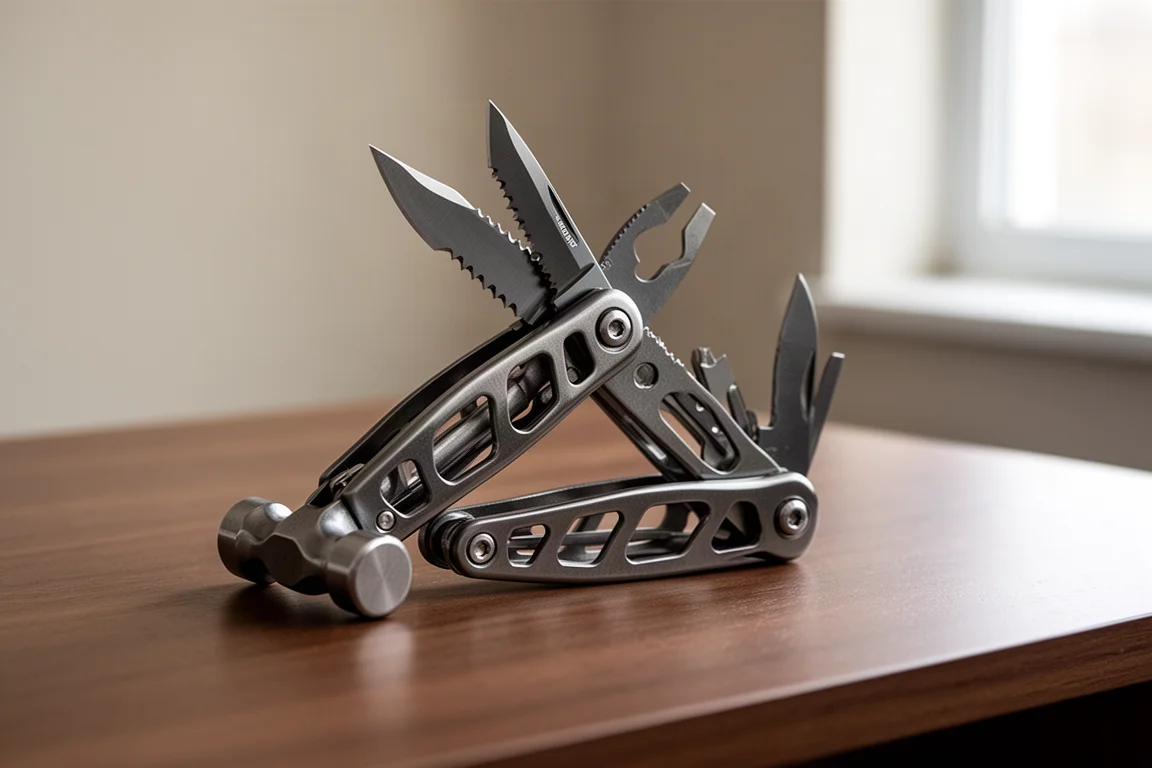
The Signal’s blade is a genuinely good one, with a stout profile and useful draw-cutting capability from its partial serration. The Flash answers with a taller, plain-edged blade, which some riders of the serration debate will prefer, and a 90-degree spine for scraping tinder, something the Signal reserves for its saw. Out of the box sharpness on the Flash is decent rather than exceptional, with a slightly uneven grind, but both blades use functionally similar steel.
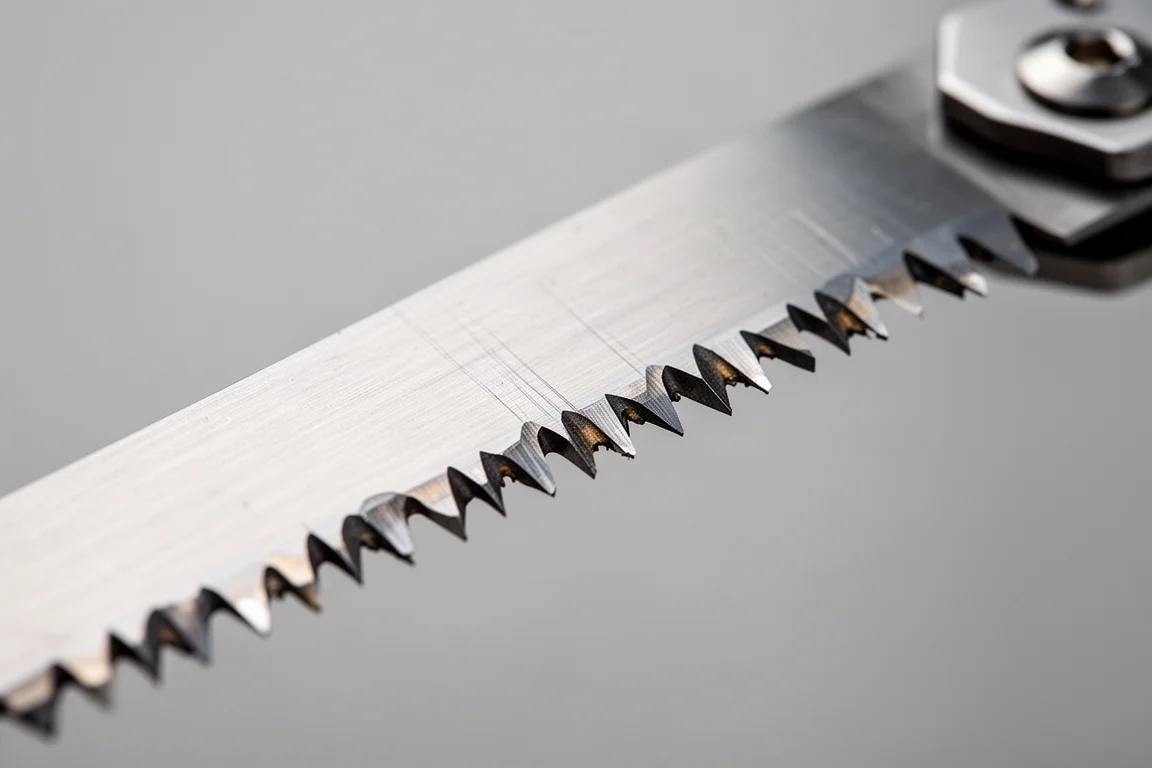
The saws are near-identical in cutting length at around 65 millimeters. The difference is tooth size: the Flash runs noticeably larger and very sharp teeth, which cut faster but grab a bit more. Neither saw is clearly better; it is a trade-off between speed and control.
Whistle and Ferro Rod Combo
This is where the Flash pulls ahead on its own terms. Tucked in the handle is a whistle and ferrocerium rod combo. Unscrew the cap, reverse the rod, screw it back in, and you have a proper striking handle. The Signal’s ferro rod is emergency-grade at best: a very short strike surface that runs into plastic quickly and can be damaged if you are careless. The Flash’s rod is far more usable, and the whistle is considerably louder too.
Getting the capsule out can be fiddly; the detent sits along the side and it helps to push from an exposed inner area. But the implementation itself is better thought out than the Signal’s, and the whole unit would be a welcome addition to small kits if Roxon sold it separately.
What the Signal Still Does Better
The Signal is the more refined tool. It is lighter at 7.6 ounces versus the Flash’s 8.5, and its aggressive skeletonization, inside and out, is part of how it gets there. The Flash has few cutouts on its flat surfaces, so there is real weight left on the table.
The Signal also brings a hammering end, an outside bottle opener, and a hex hole that accepts paracord to build serious torque with a bit. Its partially serrated blade suits draw cuts. These are genuine, useful outdoors features that the Flash simply does not attempt.
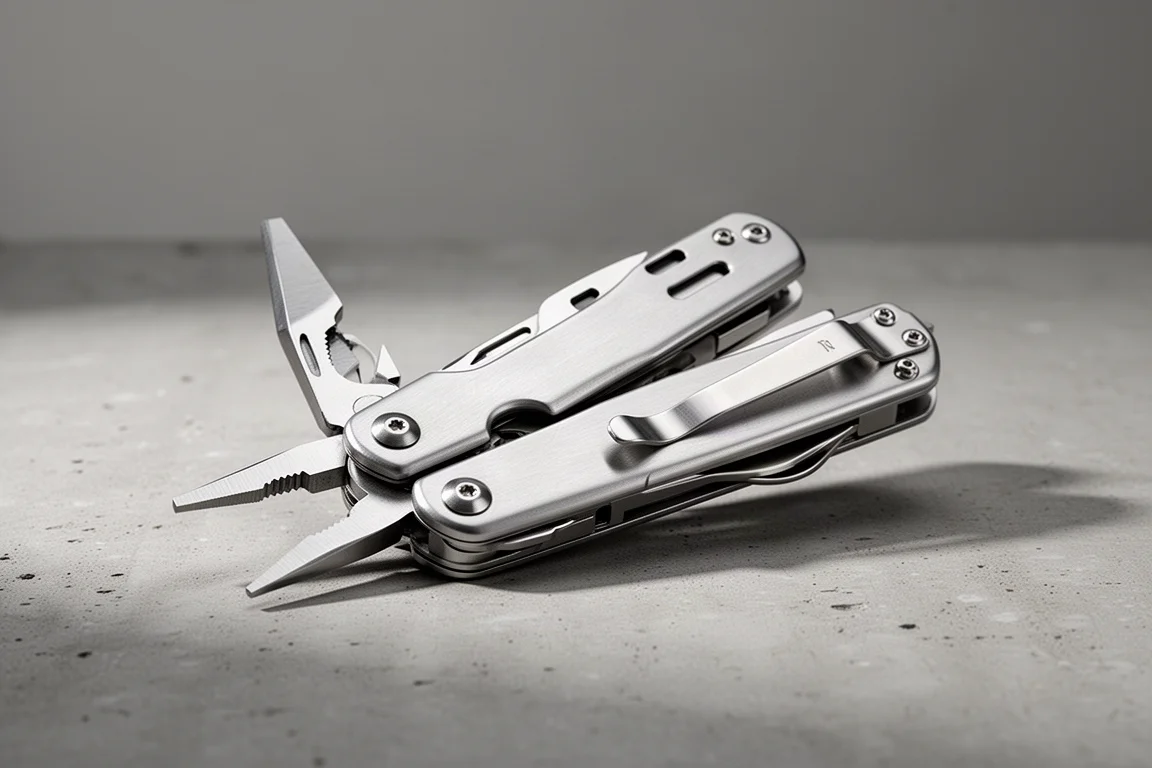
On the flip side, the Flash includes a spare set of cutters in the box, which is smart because replacement cutters are not easy to find separately. It also ships with a sheath that supports both horizontal and vertical belt carry, sits tight against the body, and includes a pocket clip that retains very securely.
Buying Advice
At $30 versus $140, the math is hard to argue with: you could buy four Flash units and still have money left over for breakfast. Neither the Flash nor comparable budget brands are quite at the level of the established players yet, and consistency across units remains a question. But the gap is narrowing fast, and tools like this one make the value case difficult to ignore.
If you want a complete, locking, one-handed outdoor tool set with replaceable cutters, a spare set included, a good sheath, and a pocket clip, the Flash delivers an unusual amount of function per dollar.
If you want the lightest option, a hammering end, and the polish of a mature design ecosystem, the Signal remains the benchmark, provided the premium fits your budget.
Conclusion
The Roxon Flash may be the best tool Roxon has made yet. It is thoughtfully designed, it locks, it opens one-handed, and it covers the outdoor essentials with a couple of clever touches the Signal does not match. It is not a full replacement for a $140 tool, but as a budget outdoors multi-tool it is an easy recommendation, and it signals where budget brands are heading.
Further reading
Related Reviews
Multi-Tools
Leatherman Wave Plus Review: A Pliers-First Multitool for Bike Trips
Why a pliers-first multitool earns permanent space in a touring kit, and what to weigh before paying for the Leatherman Wave Plus.
Multi-Tools
Best Budget Multi-Tools Under $50: Four Picks Worth Considering
A compact SOG original and three value-focused clones, with honest notes on which ones deliver real value and where to draw the price line.
Multi-Tools
Best Multitools for Hard Wire Cutting: Which Pliers Actually Survive the Test
We put a lineup of classic and modern multitools up against a simple challenge: cutting coat hanger wire cleanly without damaging the cutters.