Ski Gear
Rossignol Sender Free 100 vs Dynastar M-Free 100: Two 100mm Freeride Twin Tips Compared
A side-by-side look at two new 100mm freeride twin tips, covering how the Rossignol Sender Free 100 and Dynastar M-Free 100 differ in flex, mount point, and on-snow feel.
Introduction
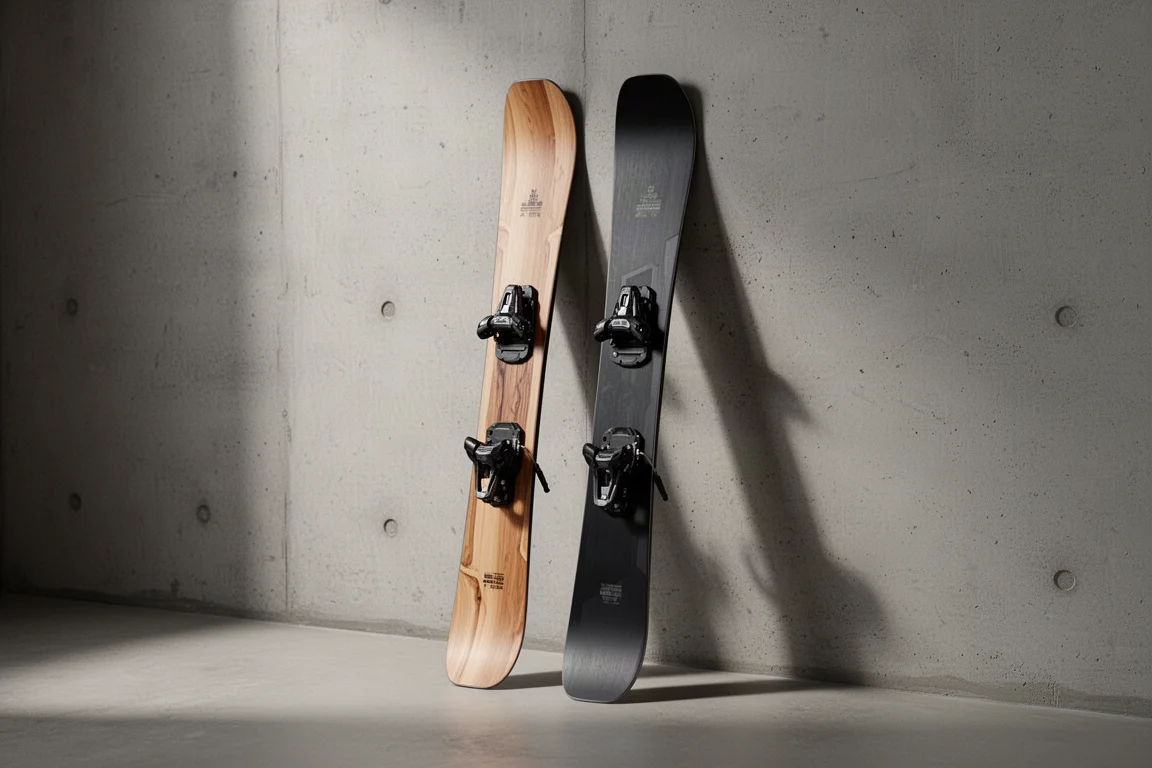
Two new 100mm freeride twin tips arrived for the season from sister brands, and they invite a direct comparison. The Rossignol Sender Free 100 takes the shape and character of the Sender Free 110 and trims it down to a narrower waist, while the Dynastar M-Free 100 replaces the long-running M-Free 99 and brings the newer hybrid core construction into a 100mm footprint.
Both are twin tip freeride skis built around a roughly 100mm waist, and both are aimed at skiers who want one ski that can handle soft snow, park laps, and everyday resort terrain. They are not the same ski, though, and the differences show up quickly once you are on them.
On snow, the two diverge in ways that matter more than the numbers suggest. One leans loose and playful, the other leans composed and directional. This comparison covers what separates them, how they are meant to be mounted, and which kind of skier each one suits.
How These Two Skis Compare
The Sender Free 100 follows the Sender Free 110 recipe closely, with one notable change: the metal sheet underfoot is dropped, which lightens the feel and keeps the ski easier to manage at a narrower width. Lengths run across a broad range, and the model was skied in both 178 and 184.
The M-Free 100 takes the hybrid core introduced on the M-Free 108 and carries it into a 100mm waist. It arrives in five new lengths, replacing the M-Free 99 in the lineup. The outgoing 99 was the more flexible, mobile ski; the new 100 is stouter and adds cambered energy.
Both are twin tips with freeride geometry, both use demo bindings that need a screwdriver to adjust, and both sit in the same general category. The rest comes down to flex, mount point, and how each one wants to be skied.
Rossignol Sender Free 100: Loose, Floaty, and Freestyle-Friendly
The Sender Free 100 is the more playful of the two. It feels floaty and loose underfoot, and it reads more like a narrow powder ski than a carving-oriented freeride ski. The shovel engages easily, the ski pivots without much effort, and it can be thrown sideways without a fight, which makes it a natural fit for riders who spend time in the park or who want a freeride ski they can also use as a daily driver.
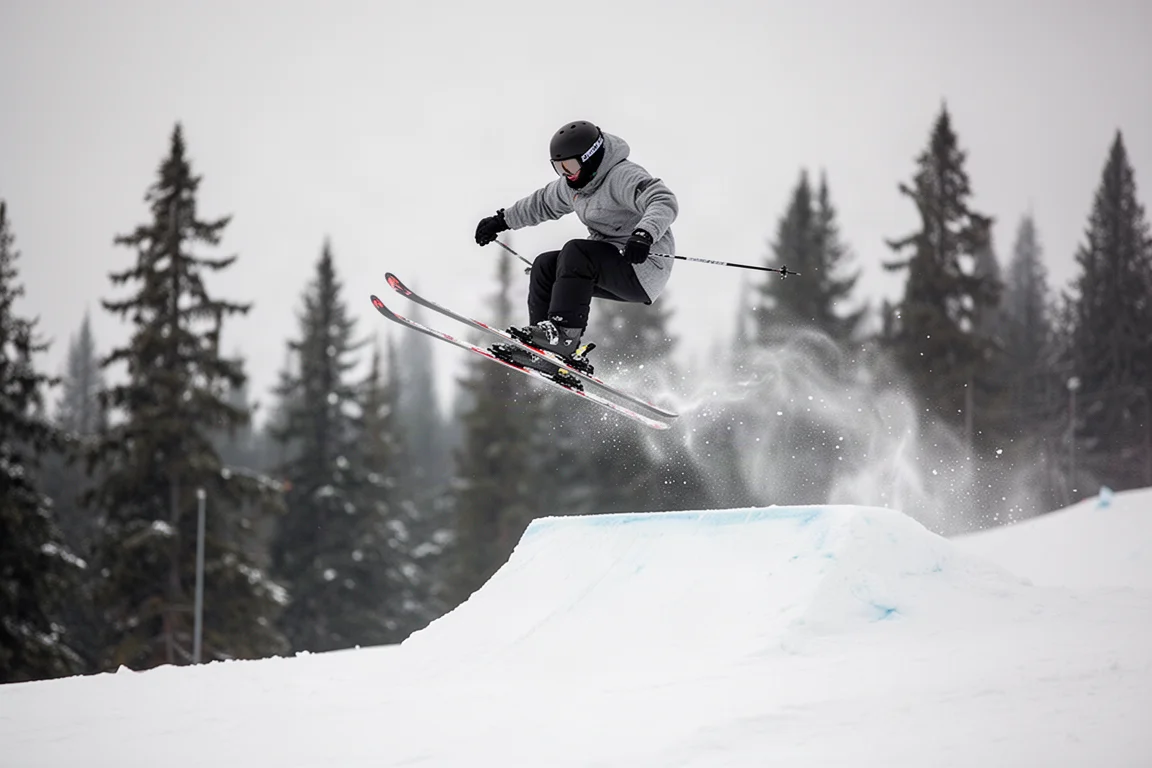
The trade-off is in the stance. Because the mount sits forward, the tail washes out when the ski is driven from a traditional forward position. Skiing it more centered settles everything down and lets the shape do the work. Skiers coming from the Sender Free 110 will recognize the feel immediately, just in a narrower package with a lighter build.
Dynastar M-Free 100: Quiet, Directional, and Composed
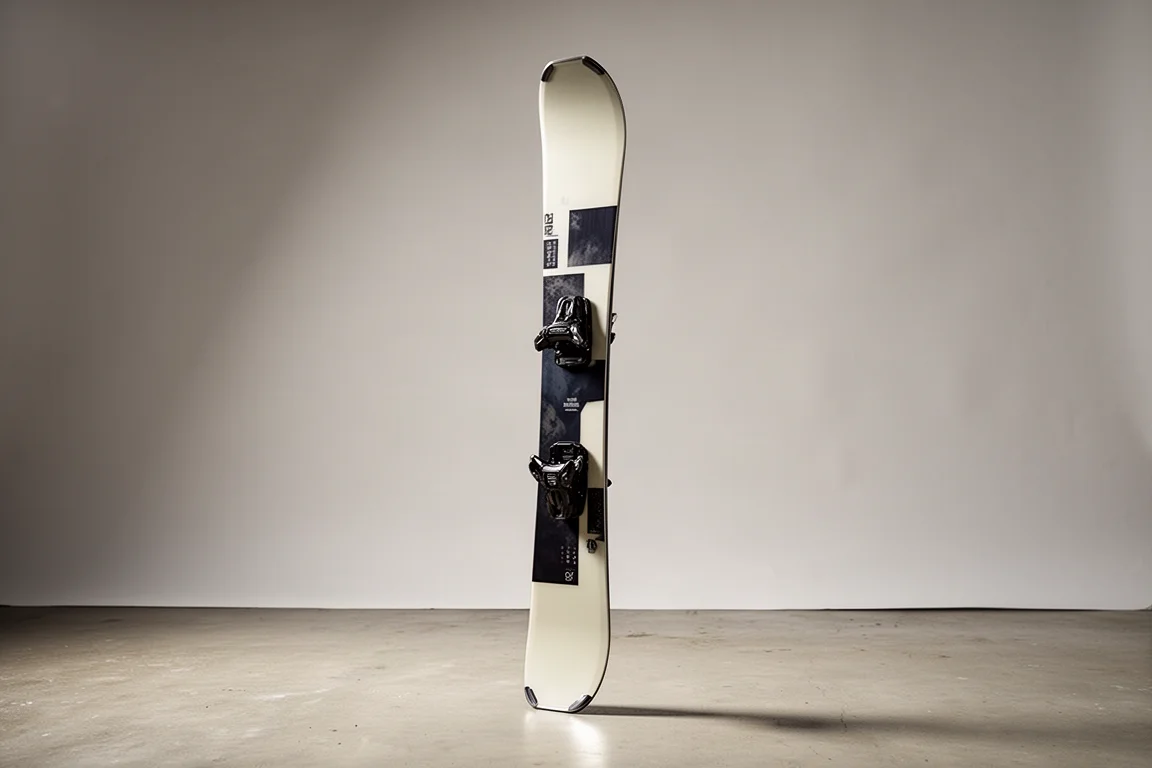
The M-Free 100 is the more planted ski. It feels stiffer and smoother at the same time, with a quiet ride that comes from the polyurethane construction, and it carries more cambered energy than the M-Free 99 it replaces. The result is a ski that feels more directional and less smeary than its predecessor, with a locked-in feel once it is put on edge.
Underfoot it is the stouter of the two, and it holds that composure without feeling harsh. The balance of suppleness and stiffness is what stands out most, and it makes the ski feel immediately comfortable across a range of turn shapes, including switch. Riders who want a 100mm freeride twin tip with a calmer, more directional personality will find a lot to like here.
Mounting, Length, and Setup Notes
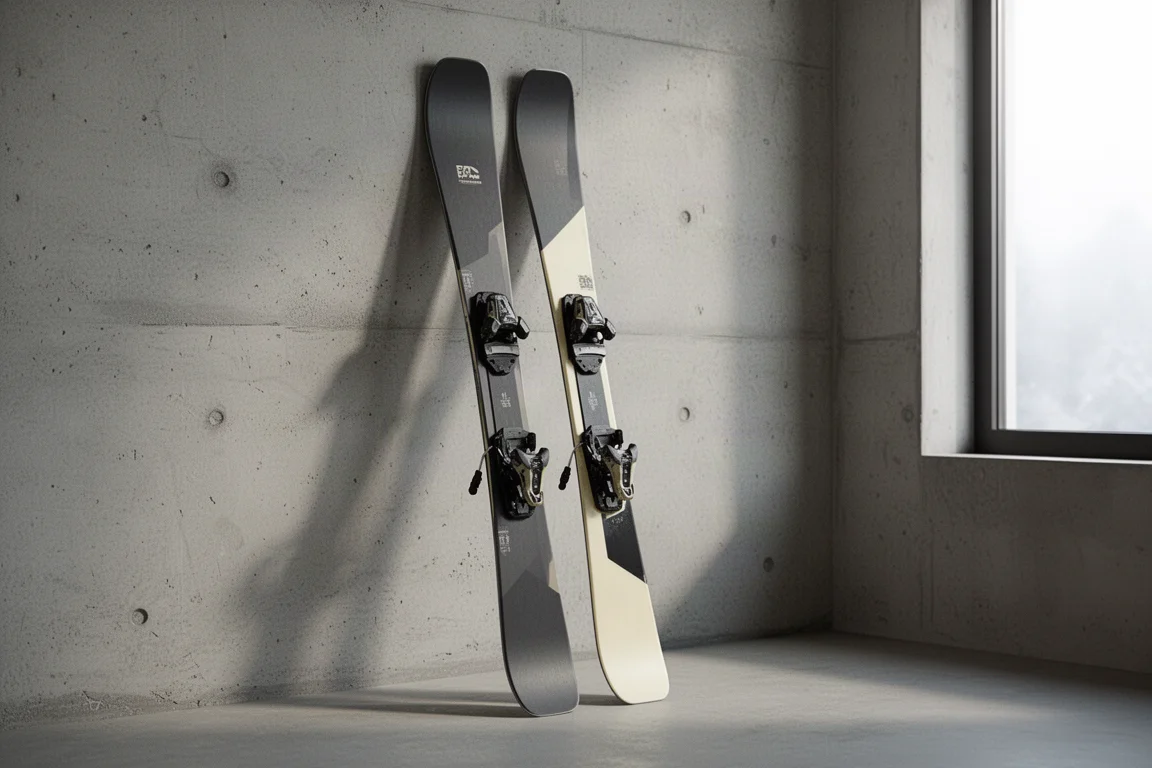
Mount point matters more than usual on these two, and it is worth deciding deliberately rather than defaulting. The Sender Free 100 offers three mount points. The pair used here sat at the zero position, which is a sensible starting place, with plus two worth trying for skiers who want a bit more of the ski’s forward-drive character. The M-Free 100 appeared centered at zero, and that position felt right.
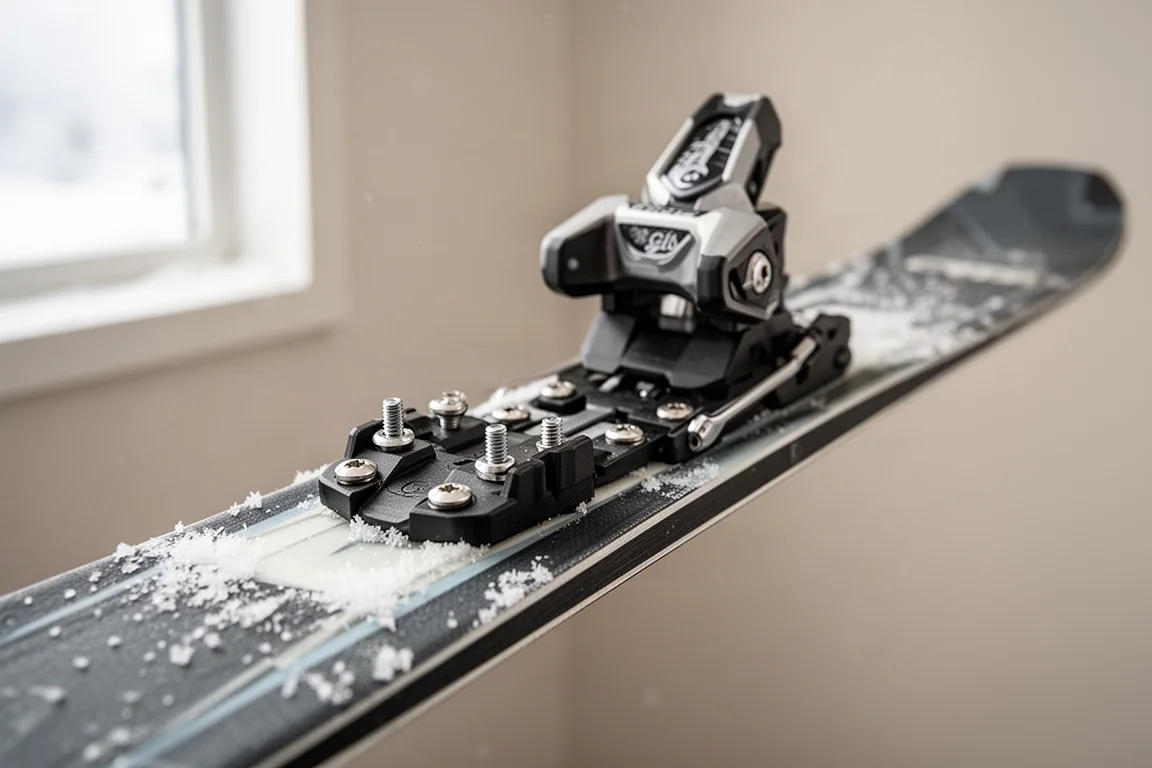
Length selection follows the usual logic: the Sender Free 100 was skied in 178 and 184, and the M-Free 100 in 185. The M-Free 100 is available in five lengths, so most skiers should be able to find a fit. Because both are twin tips with forward-oriented mounts, going up a size is not automatic; match the length to how much switch and park skiing you plan to do.
Where Each Ski Shines
The Sender Free 100 makes the most sense for skiers who prioritize playfulness. It suits park laps, soft-snow days, and travel setups where one ski has to cover a lot of ground. Anyone who already enjoys the Sender Free 110 and wants a narrower version of that feel will be comfortable right away.
The M-Free 100 suits a different brief. It is the better choice for skiers who want a directional 100mm freeride twin tip that holds an edge confidently on firmer snow, stays quiet at speed, and rewards a more centered, modern stance. It is also the pick for anyone who liked the idea of the M-Free 99 but wanted more backbone.
Buying Advice
Choosing between these two comes down to how you want the ski to feel, not which one is better built. If you want a loose, floaty, easy-to-pivot ski that doubles as a park and soft-snow tool, the Sender Free 100 is the more natural match. If you want a quiet, stout, directional ski that locks in on edge and stays composed, the M-Free 100 is the stronger pick.
Neither ski needs a heroic adjustment period, but both ask for a centered stance. If you are moving from a more traditional directional ski, expect a short learning curve on either. If you already ski a freeride twin tip, both will feel familiar from the first run, and the deciding factor will be whether you want the looser feel of the Sender Free 100 or the more planted feel of the M-Free 100.
Conclusion
Two sister-brand 100mm freeride twin tips, two clearly different personalities. The Rossignol Sender Free 100 is loose, floaty, and freestyle-friendly, with a forward mount that rewards a centered stance. The Dynastar M-Free 100 is quieter, stouter, and more directional, with the hybrid core from the M-Free 108 giving it a composed feel that holds up on edge. Both are easy to ski and both cover a wide range of terrain, so the right answer depends on whether you value playfulness or composure more.
Further reading
Related Reviews

Ski Gear
2023 Blizzard Hustle vs Rustler: Six Freeride Skis Compared
Blizzard's 2023 Hustle collection rebuilds the Rustler shape with a lighter core and no metal. Here is how all six skis differ, and which one suits your riding.

Ski Gear
2023 Skis of the Year: Atomic Maverick 88 TI, Salomon QST 106, and Look SPX 12 Pro
Three standout ski picks for all-mountain carving, powder days, and reliable binding performance, with practical buying notes for 2023 models.

Ski Gear
2025 Nordica Enforcer 104 Review: A Directional Charger Replaces the 104 Free
The 2025 Nordica Enforcer 104 drops the Free name and the twin-tip personality, gaining weight, stiffness and composure in rough snow. Here is what changed and who it suits.