Books & Learning
Roof Cutter Secrets Review: Two Roof Framing Books Every Carpenter Should Own
Will Holladay's Roof Cutter Secrets and its companion workbook The Complicated Roof are a complete roof framing education, from basics to dog-leg bastard hips.
Introduction
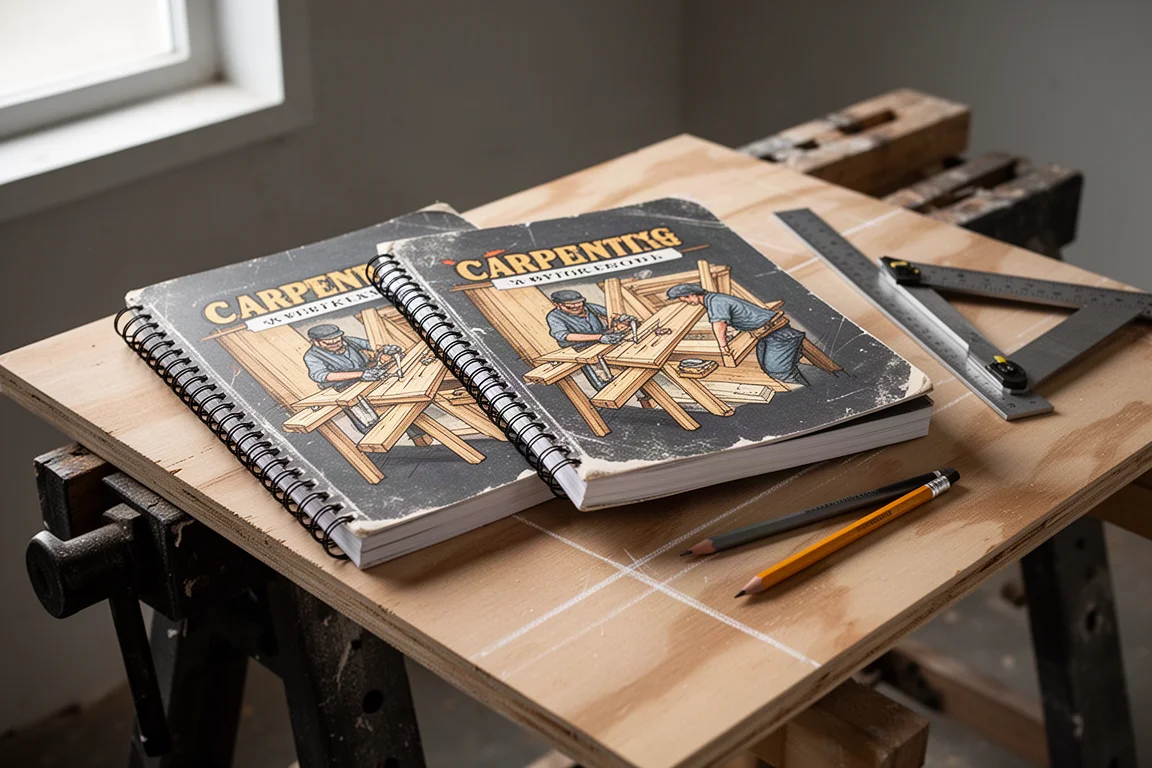
Some books teach. A very few books change how you work. Will Holladay’s Roof Cutter Secrets and its companion workbook The Complicated Roof belong firmly in the second camp, and they have quietly done so for decades. Roof Cutter Secrets has been a mainstay roof framing resource since 1988, and its principles are now used by nearly all framers, whether or not they know where those ideas originally came from.
The pitch is simple: a roof that fewer than one in a hundred carpenters could cut on the ground, stack in the air, and expect to fit is exactly the kind of roof that, once you can build it, lets you make more money. These two books, one around 40 dollars and the other around 22, are the travel guide to that road.
Why Holladay Speaks a Framer’s Language
The first thing to know before spending money on these books is that Will Holladay talks like a framer. He does not waste words, and he writes in the language of the job site. One of the most telling examples is his drawing of plumbing up a bay window, a job anyone who has done it knows is a trick with all those walls fighting to plumb up. His entire instruction reads: “To plumb a bay window section, pre-cut a plywood top with the exact side angles as on the floor. Rack the bay around until it matches and nail off the braces.” That is exactly what a person on the ground would do, described perfectly and with brevity.
Do not skip the preface, the acknowledgements, or the about-the-author pages before flipping to the technical content. Holladay explains why he wrote the book the way he did, and that context makes everything that follows easier to absorb. He also published the first edition in 1989, and that vintage matters in some places, though far less than you might expect.
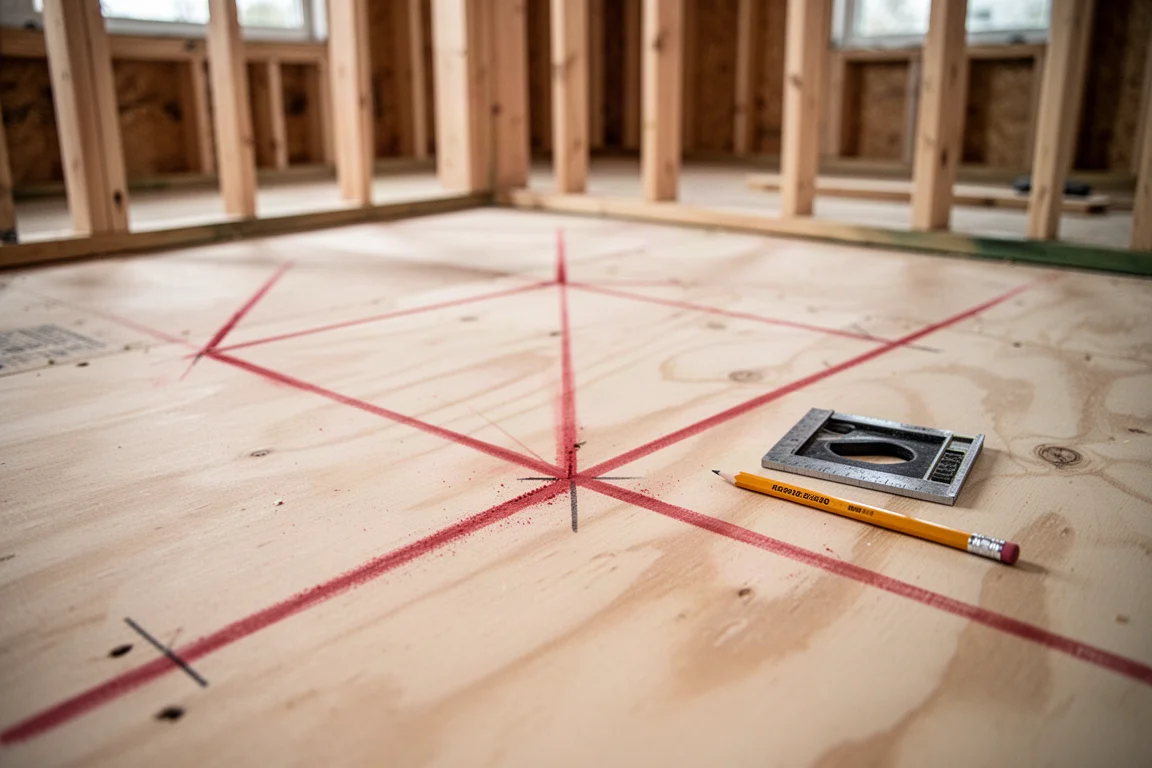
Roof Cutter Secrets by Will Holladay
Roof Cutter Secrets is not just a framing manual. It is a treasure trove of unexpected information, including how to build jigs and homemade tools that were later mass-produced by others. Page 12 shows a quick layout stick for laying out studs, something you can now buy for 30 or 40 dollars but can build yourself using his design. There is also a corner marking tool with the same story. He was making and using these things before the rest of the industry figured it could not work without them.
Nail tricks fill page 43, illustrated beautifully: using a backing nail when toenailing a block so it does not slide sideways, driving and bending a 16-penny nail at the top of a joist to hold it flush, hanging a block from a nail in the wall. Skill saw tricks are in here too, including a freehand cheek cut to get maximum depth when you cannot tip your saw past 45 degrees, then finishing with a handsaw. Holladay extols the virtue of a sharp handsaw, and a handsaw hanging on a nail at the ridge can be handier than climbing down for a reciprocating saw.
The book also covers the basics, so even if you do not consider yourself in the top tier of framers, there is a ton of information that will either teach you something new or reinforce what you half-knew. It is a tool for foremen as well: if you have an apprentice who is not getting it, this book gives you somewhere to send them.
Built for Every Level, Ground Zero to Zenith
What impresses most about Holladay’s writing is its range. The first third of the book starts just above ground zero, with a beautiful drawing showing how to build a safe, fast, inexpensive sawhorse on site from material you will already have, then how to rack up boards so you can cut common rafters with exposed bird’s mouths, meaning cuts that have to be tight. Many framers simply do not know how to do that, and the ones who do will leave the rest behind.
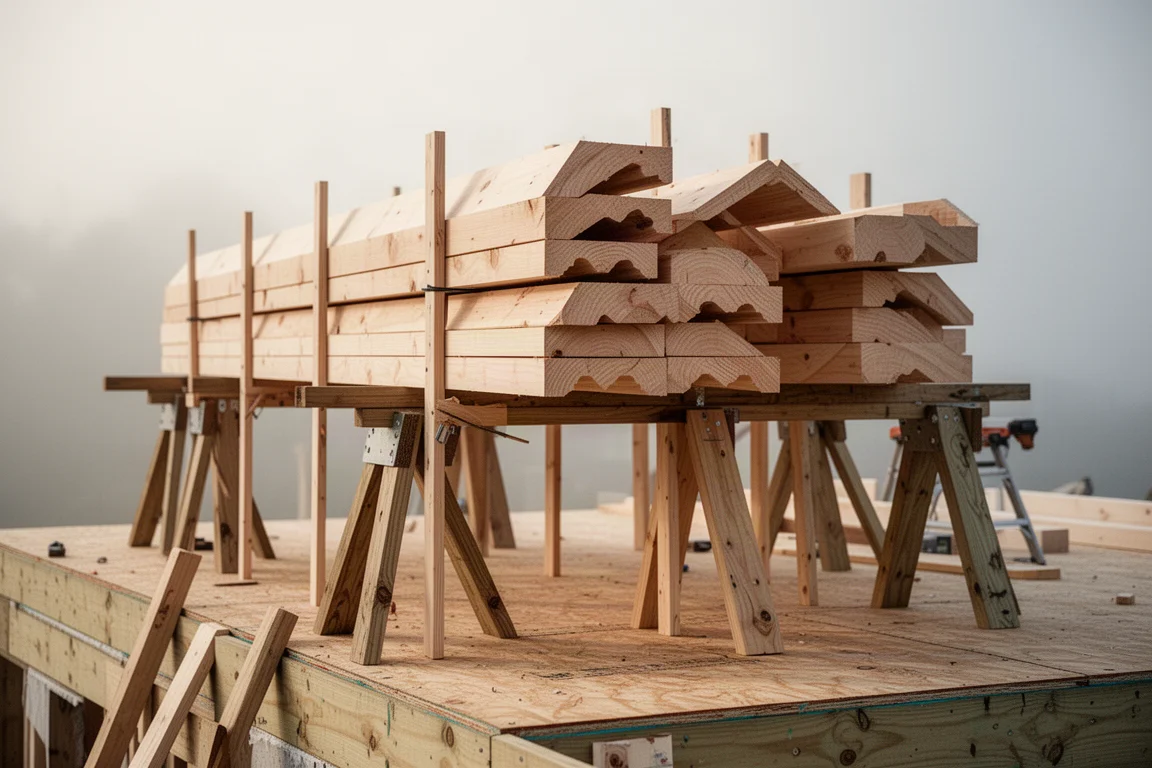
From there the book climbs in an orderly, coherent fashion all the way to advanced territory. The chapter on eaves, plywood and fascia board shows the value of snapping your hip and valley layout lines full size on the subfloor, using your unit of rise to work out fascia, hip and valley miter cuts on the ground before you ever climb up. In dry climates this works beautifully; in rainy country you would need to keep the subfloor dry enough to hold your chalk lines.
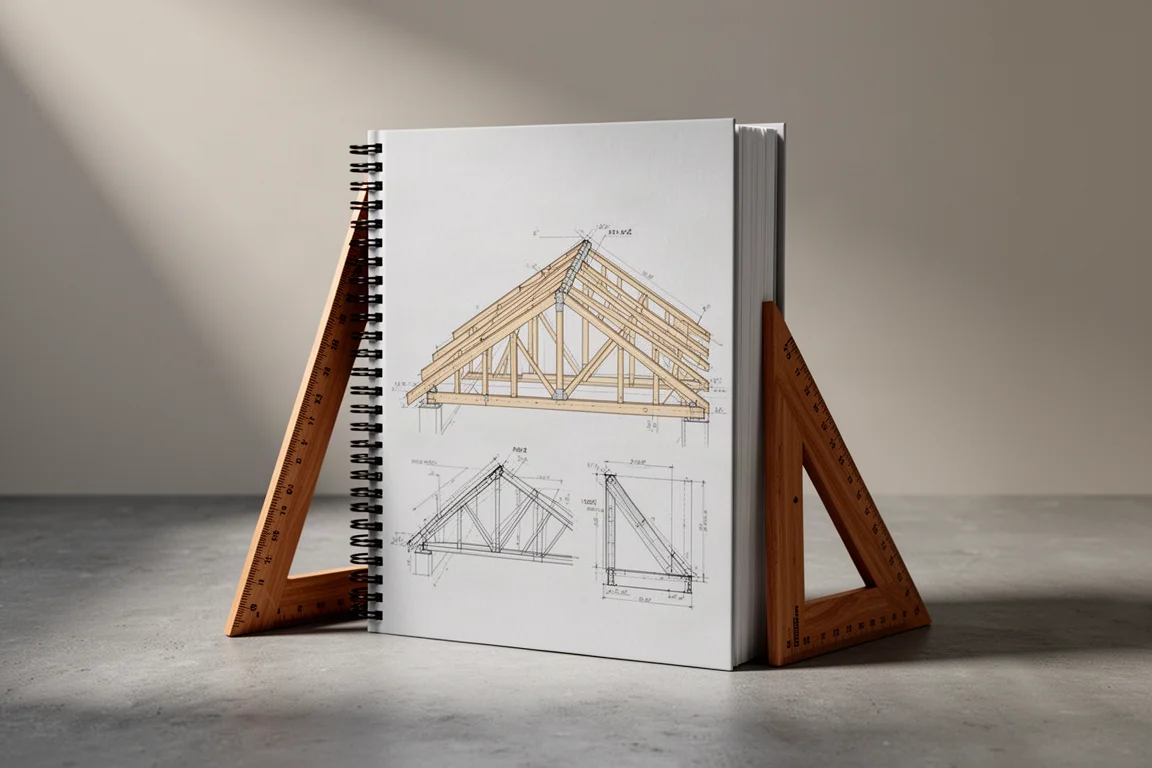
And then there is the dog-leg bastard broken hip, a term many experienced carpenters had never even heard. Holladay provides a blueprint-type drawing with dimensions and equations, plus a picture of a 22-and-a-half-degree dog-leg bastard valley with square-cut jack rafters, and points you to the appendix for the calculator moves that solve it.

The Appendices Are a Gold Mine on Their Own
The back of the book is worth the price by itself. Appendix A is a set of reference charts covering roof pitch and its degree equivalents, roof rise ratios, and regular hip and valley backing angles, along with side and bevel cuts on hip and valley rafter tails with square-cut, square-hung fascia. You could derive those from other sources, but having them in one place is worth a lot.
Appendix B shows exactly how to enter questions into a Construction Master calculator to get the answers you need, including the moves for a dog-leg bastard broken hip. There is also a tool resources section, a list of figures and photos so you are not flipping back and forth, and a full index covering everything from anchor bolts to barrel vault ceilings.
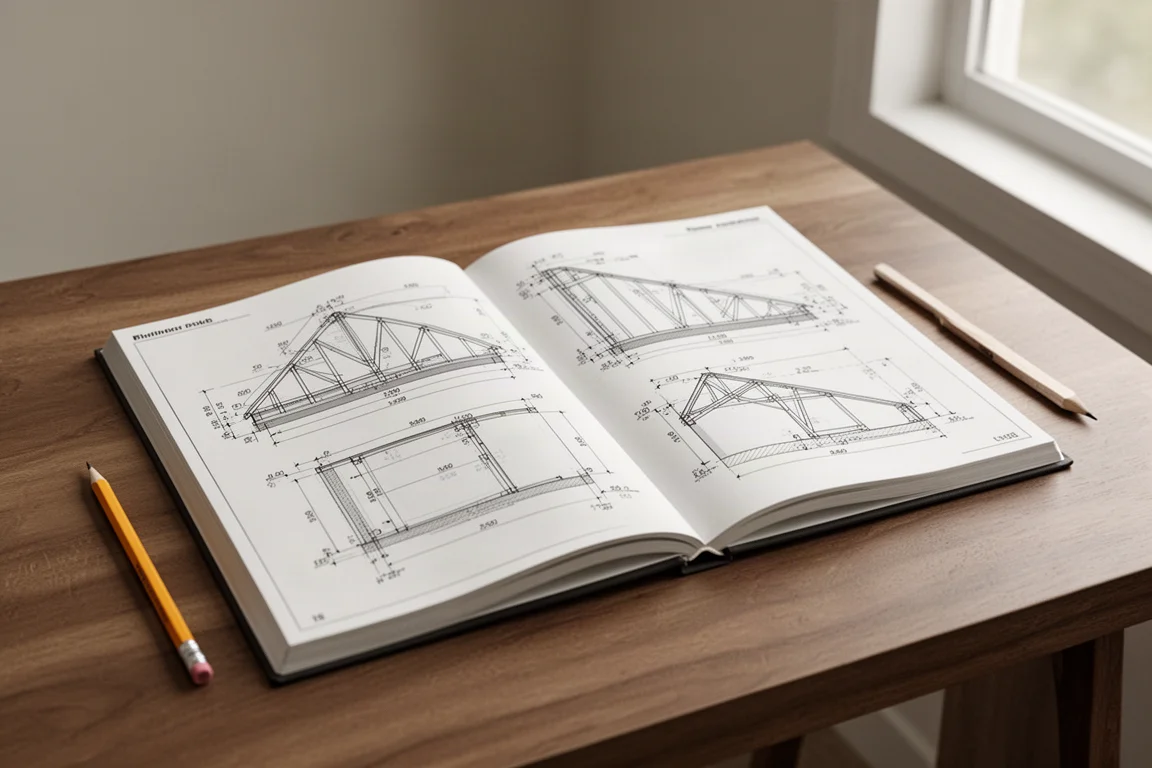
The Complicated Roof: The Cut and Stack Workbook
The Complicated Roof is the hands-on companion, and the two books work together like peas and carrots. It presents two complex roofs: a big, bad multi-phase roof broken into phase one and phase two segments, and a smaller, more approachable roof set out on a single page. The back of the book includes cutout roof copies meant to be enlarged at a copy shop, blown up big enough to sit on your desk, so you can apply specific instances, figures, calculations and tricks without flipping back and forth. Do not cut them out of the book itself.
Read the book guidelines and preface before jumping in. They explain the philosophy behind the workbook and why it uses the language it uses. One practical difference: the workbook is available only in imperial measurements, while the main book is also available in metric.
Old School Combined With New School
Holladay wrote this before nail guns were everywhere, and it shows in places. He says almost nothing about reciprocating saws, and his soffit tricks on page 42 do not exploit everything framers now do with plywood soffits. Some of it is old school, and he would be the first to tell you: if you find a better way, do not hesitate.
But knowing how work can be done by hand, then adding hangers, nail guns and cordless tools on top, puts you light-years ahead. It is knowing the why. Holladay’s own framing philosophy was a contrarian slap at the roof math wizards: he is not exercising math because he loves math, he is showing you only the math you need to get the job done in the quickest possible way, built around his KISS system, including the snapped-out full-size plan view on the floor for run and travel distances and special cheek cut angles.
Conclusion
For roughly 40 dollars for Roof Cutter Secrets and around 22 dollars for The Complicated Roof, you get a complete roof framing education that runs from racking your first common rafters to cutting dog-leg bastard hips on the ground and expecting them to fit in the air. One longtime carpenter put it plainly: having these books in his twenties would probably have altered his career path. If roof framing is part of your living, or you want it to be, these belong on the shelf within reach of your workbench.
Further reading
Related Reviews
Tools
Stiletto T-Bone Hammer and Nail Bar: A Working Carpenter's Take
A practical look at the Stiletto T-Bone framing hammer and Stiletto nail bar, covering what makes them useful on the job and what to consider before buying.

Books
A Top 5 Books Reading List: Strategy, Stoicism, and a Chef Who Walked Away
Five books worth reading, from Sun Tzu and Miyamoto Musashi to Marcus Aurelius, Epictetus, and Marco Pierre White's striking autobiography.
Tools
5 Tools Worth Adopting Later in Your Carpentry Career
Five tools that outperformed long-held habits: a cordless Makita chainsaw, a multifunction squangle, a gear-drive chalk box, a comfort-first tool belt, and a podium ladder.