Snowboards
Rome Warden 2026 Review: The Quintessential Do-Everything Intermediate Board
Rome's Warden returns for 2026 with a reshaped profile and slightly stiffer tips. Here's how it rides on groomers, jumps, butters, and carves.
Introduction
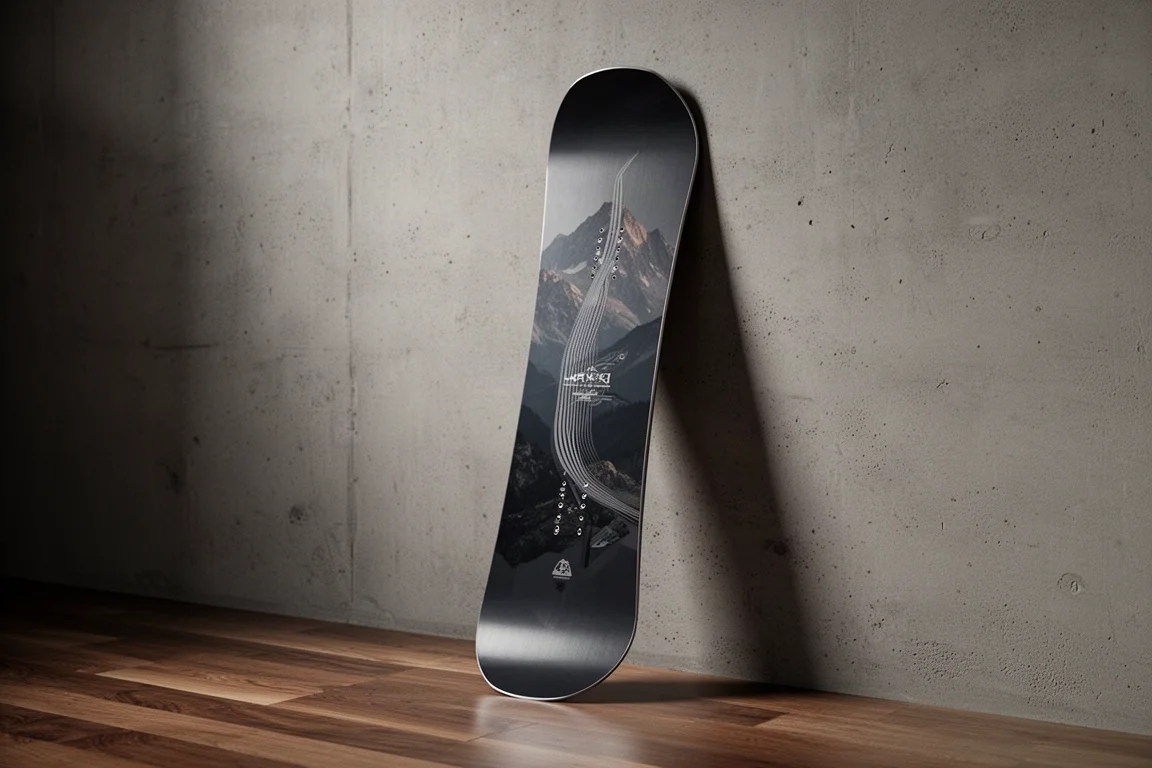
The Rome Warden gets a bit of a shape change for 2026, and after riding it on everything from firm groomers to leftover pockets of powder, it remains one of the easiest boards in Rome’s lineup to recommend. This is a predominantly camber board built around Rome’s Fusion Camber profile: camber through the middle of the board with rocker in the tip and tail. That camber section delivers the load, pop, snap, and drive, while the rocker sections make turn entry and exit easier, give you a better sweet spot to press into, and help the board float a little when you find soft snow.
It is available in 151, 154, 157, 160, 158 wide, 161 wide, and 164 wide, so most riders should find a size that fits. Testing took place on a mixed day: overcast skies with pockets of blue and haze, low to moderate winds, firm and fast groomers that turned super crunchy and crusty in spots, and the occasional stash of leftover pow if you went looking for it.
Flex and Dampness
Compared to last season’s version, the 2026 Warden has gotten a little more stiff, especially out in the tips, which feel noticeably more rigid. The overall flex is still middle of the road, though. It is not overpowering or demanding, just a touch more composed than before. There is a nice sweet spot right at the end of the rods where you can press into, and the flex stays consistent through the middle. The torsional flex matches up, making the board easy to engage without being overly snappy on the rebound.
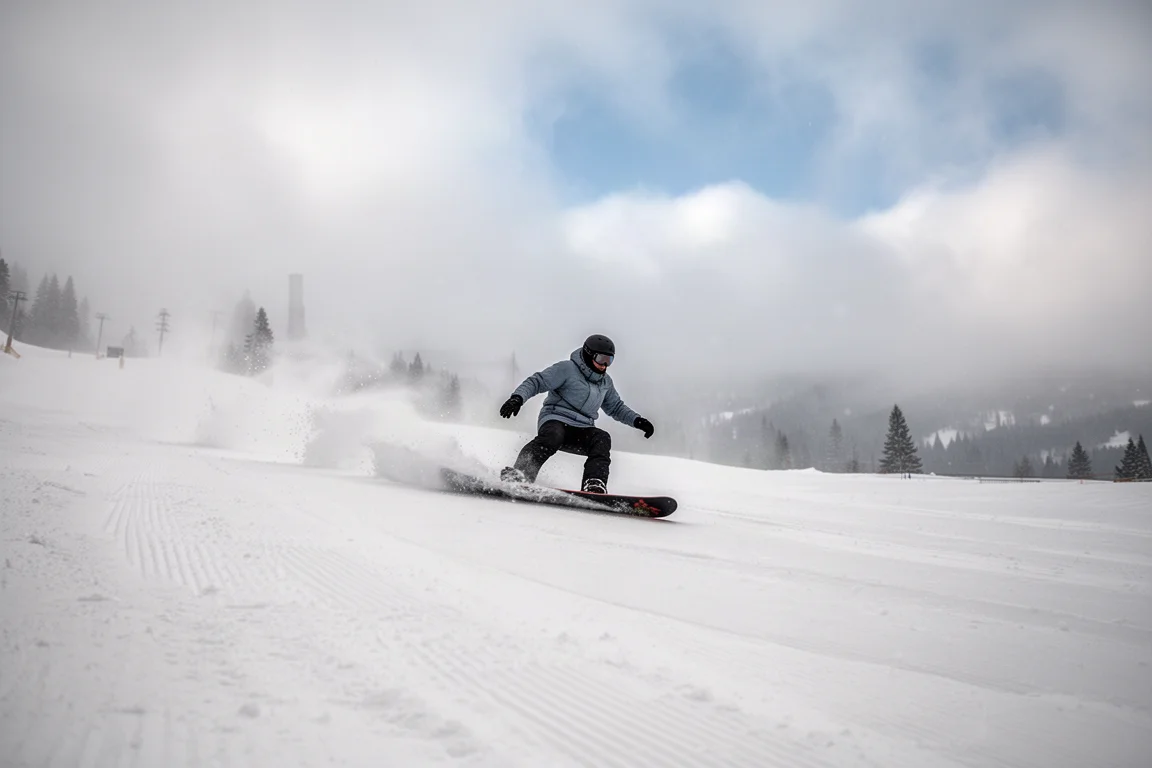
Those slightly more rigid tips do a good job of decreasing chatter at speed. This is not the dampest board out there, and you will feel some vibration underfoot when a groomer gets crusty, but it is not enough to fatigue you. In really beaten-up terrain, bent knees are all it takes to push through comfortably. One trade-off: it is not as lively as previous versions, so you lose some of that kinetic energy feeding back into your feet.
Jumps and Pop
Since this board is predominantly camber, you have to load it up, roll back on the tail, and engage a fairly long rod before it snaps. It will not boost you to the moon, but the pop is consistent and predictable. You do not have to overthink it, though a little calculation helps when loading up for a side hit or a roller.
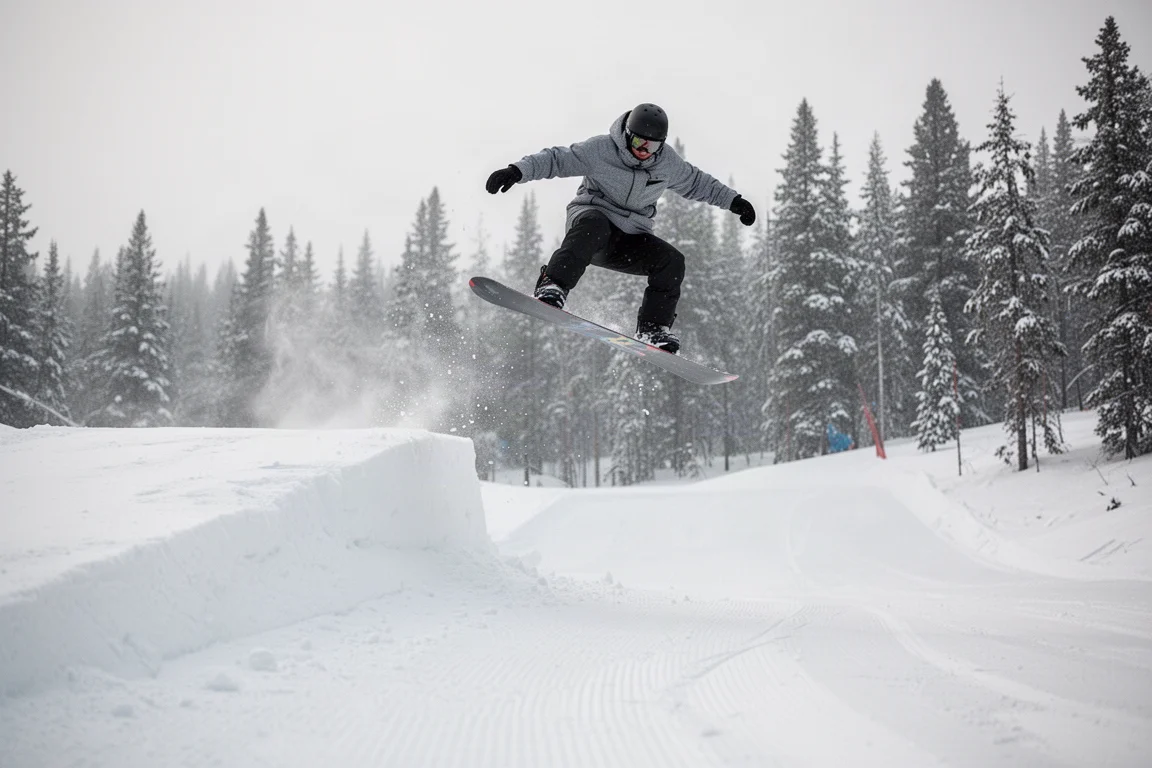
For jumps, small to medium features are where you want to push this board. Anything over about 25 to 30 feet and you are really pushing it. It can handle it, but smaller features suit it better. For a progressing rider, the consistency is the selling point: you can get it up in the air reliably, and even if you are laid back on a takeoff, the lip will throw you through.
Butters and Jibs
This is where the stiffer tips change the character of the board. The sweet spot is now super small, so you have to be more calculated with how you press into it and how you leverage your weight. Do it right and you will feel rebound from those rods, which adds pop out of just about any butter variation. It keeps you honest and makes you work a little harder, which in turn makes your butters look a little better. If you want soggy, effortless butters, look elsewhere.
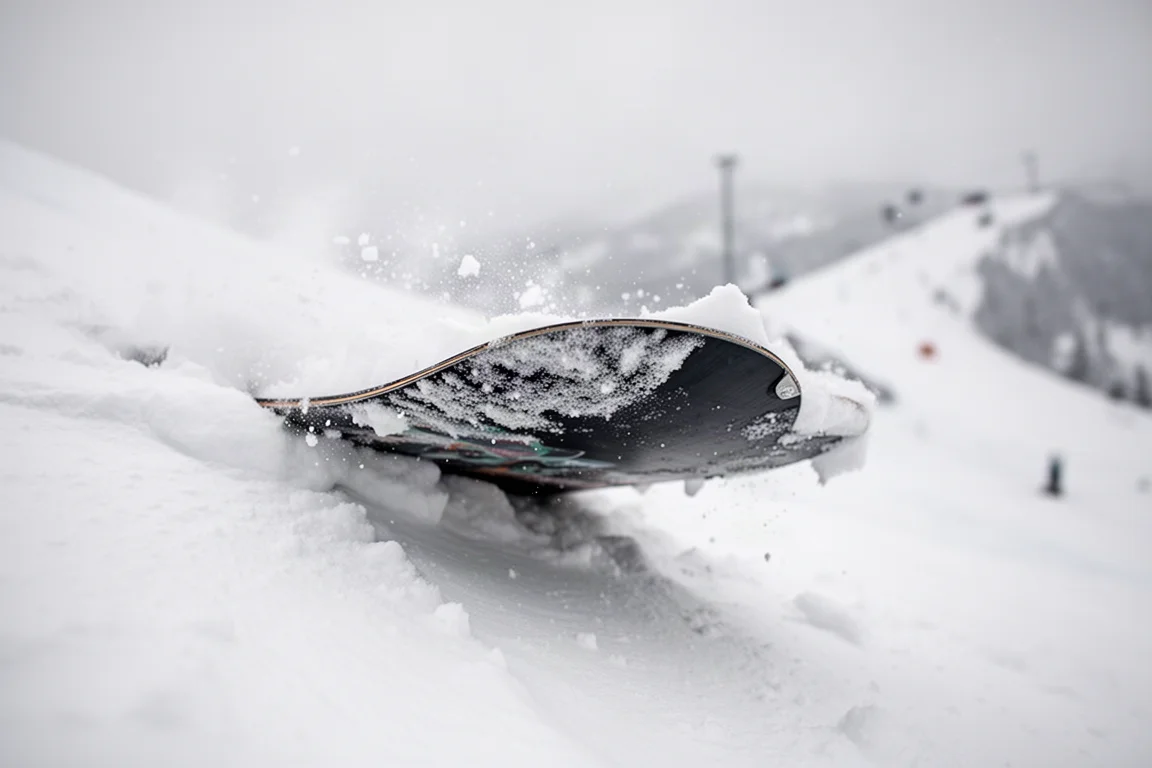
Jibbing follows the same logic. You will need to put your weight way out on the nose or tail to lock into a press, and when you hit the end of that rod, it engages and snaps. Going sideways, there is enough flex for the board to contour around a feature and slide through a kink or to the end of a rail without trouble.
Carving and Turning
The 2026 Warden has a bit more power in a carve. When you lay it over and drive hard from the back foot through the tail, you get extra spring out of the turn. Turn initiation is smooth and fluid, and the board is fast edge to edge with little fight in it. On edge it locks in, but not so much that you are forced to drive the whole carve; you can disengage whenever you want.
Short, tight, quick carves and medium mellow carves are its strong suit. But if you feel like laying it all the way over, it will let you flex from the center, feel that added tail power, and slingshot hard out of a turn. The board works whether you want to be laid back or assertive, and that versatility is one of its best qualities.
Who This Board Is For
The Warden is aimed squarely at the progressing intermediate rider, and it may be the quintessential intermediate do-everything board. It is well balanced, does not break the bank, and handles a bit of everything: cruising groomers, riding park, and even floating through pow. The stiffer tips make it feel more stable and less loose, and while you give up a little of the press sweet spot, it will probably make you a more honest rider.
If you are building a setup around it, it pairs naturally with bindings like the Rome 390 Boss Asym Wrap, Union Force, or Ride C6. Comparable boards worth a look include the Ride Shadowban, Yes Standard, and Salomon Assassin.
Buying Advice
If you are a progressing intermediate who wants one board that can genuinely do everything without demanding expert input, the Warden deserves a spot at the top of your list. It is consistent, versatile, and forgiving of the occasional lazy turn, while the new shape rewards riders who put in a bit of effort. Just be honest with yourself about your butter expectations: this is a board that makes you work for style, not one that hands it to you.
Conclusion
Rome took a good thing and made it slightly more stable for 2026. The Warden keeps its easygoing all-mountain character, adds a bit of carve power and chatter control through stiffer tips, and remains a fantastic value for progressing riders. It is a board you can take all over the mountain and always have a good time on.
Product link
View more details for Rome Warden
This product is mentioned in the review. Check the specifications, options, and compatibility before buying.
View more details for Rome WardenFurther reading
Related Reviews

Snowboards
32 Middle Earth Scott Stevens Pro Model Snowboard Review: A Park Board With a Reversed Flex
A medium traditional camber park board with carbon V reinforcement that is stiffer in the tips and more playful between the feet. Here is how it rides and who it suits.

Snowboards
32 Snafu Review: A Directional All-Mountain Freestyle Board with Serious Pop
The 32 Snafu pairs a directional camber-rocker profile with a stiffening tail for powerful carves, big ollies, and a surprisingly damp ride.

Snowboards
32 XXX Pat Fava Pro Snowboard Review: A Stiff Camber Beast for Hard-Charging Riders
A full-width traditional camber deck that rewards aggression with stability and edge power, but demands effort everywhere else.