Snowboard Bindings
Rome Katana Pro Review: A Stiff, Damp Binding Built for Charging
The Rome Katana Pro is a highly adjustable, carver-focused binding with a carbon chassis and highback, serious vibration damping, and a locked-in feel that suits aggressive riders.
Introduction
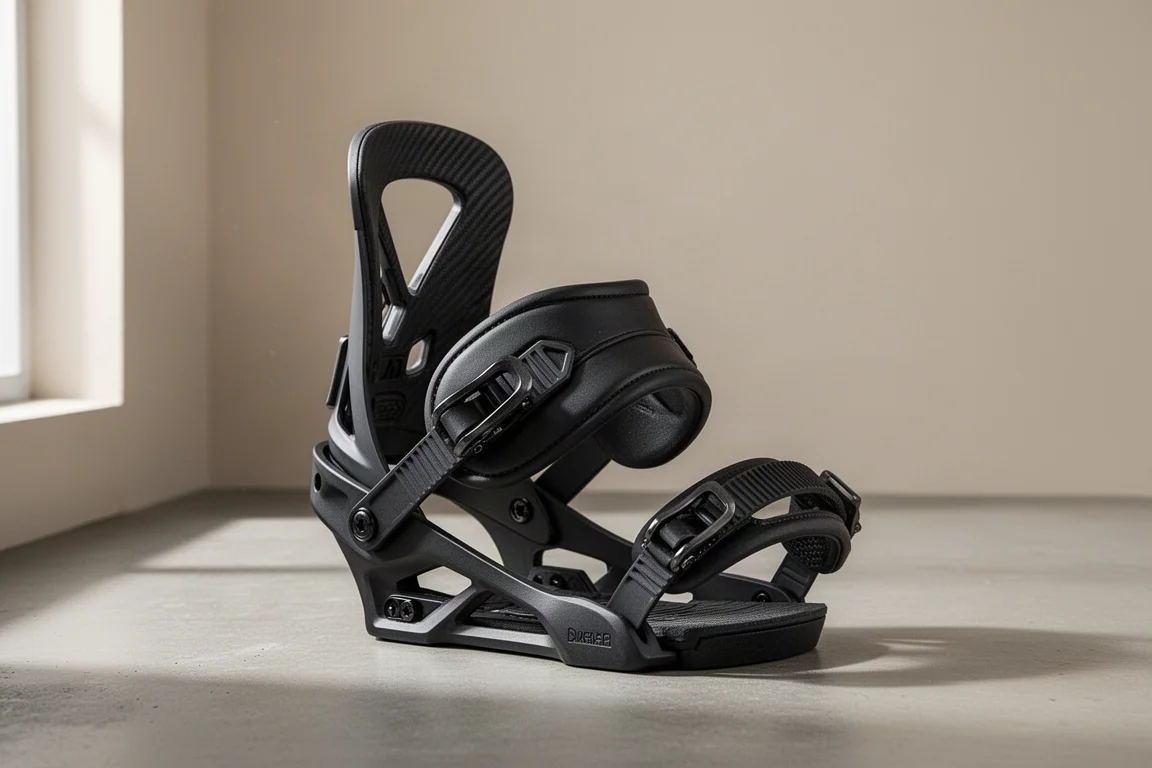
Some bindings try to do a bit of everything. The Rome Katana Pro does not pretend to be one of them. It is stiff, responsive and unapologetically built for riders who want a locked-in connection to the board, and it backs that up with an unusual amount of fit adjustability.
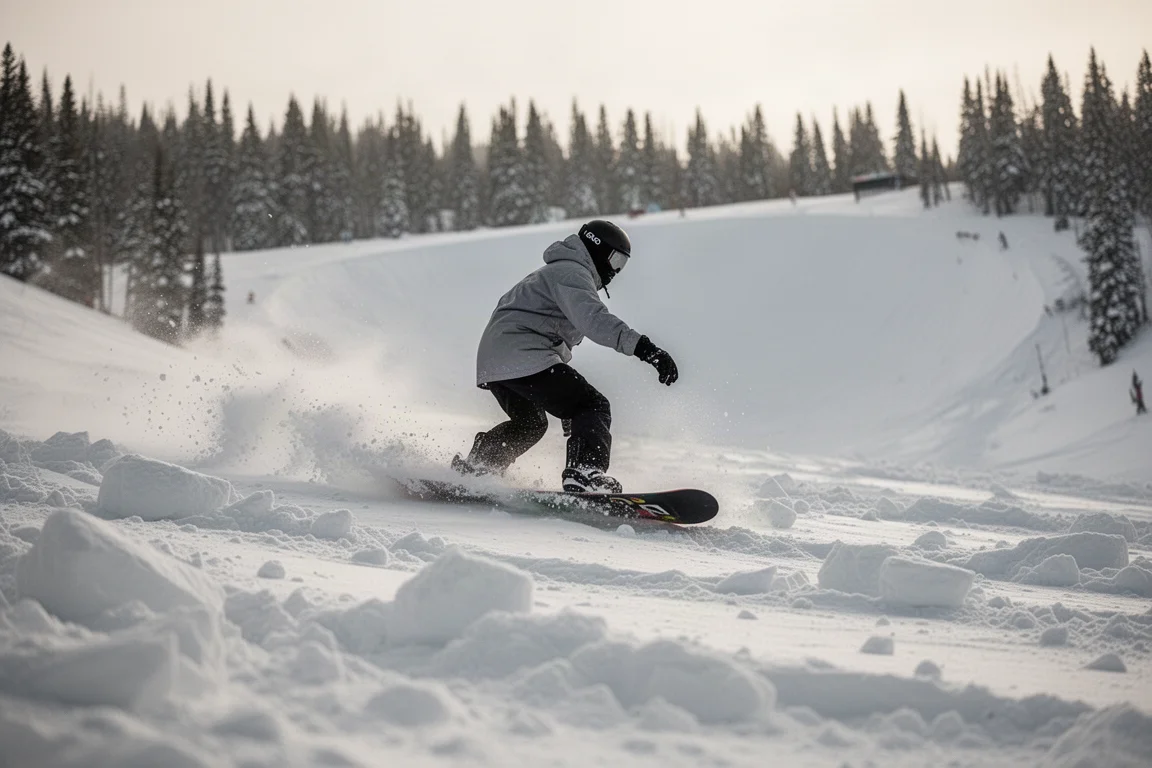
We put it to work on a bright, sunny spring day at Copper Mountain, paired with Ride Fuse boots and a Jones Strato snowboard. Conditions started firm in the morning, softened through the day and still held some stubborn firmer patches, which turned out to be a good test bed for both the response and the damping claims.
Who This Binding Is For
The Katana Pro is made for the straight-up charger. The target rider is already on a stiffer board and a stiffer boot and needs a binding that complements that setup, or is riding something lively that needs to be dampened down a little. Whether the day involves a big park line or the most technical freeride terrain, this binding is aimed at people who want responsiveness and a genuinely locked-in feel.
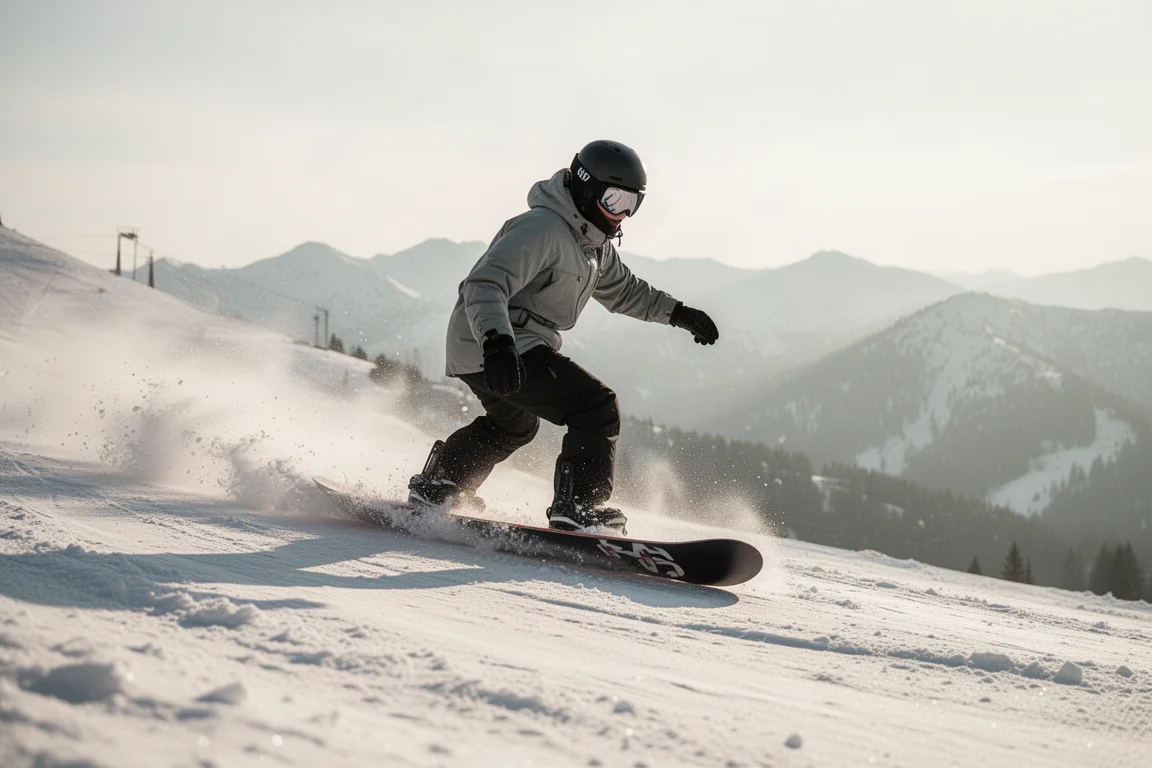
If your riding style leans playful and tweaky, this is probably not your binding. But if you charge hard and want your edges to hold without second-guessing, it fits the brief well.
Adjustability: A LOT of It
Fit customization is where this binding genuinely stands out. Working from the top down, there is a flip tab on the highback for forward lean adjustment, a familiar system that is quick to flip, slide and reset.
The straps get flip tabs on both the ankle and the toe side, each with position markers so you can count clicks and reproduce your settings once dialed in. There are also multiple points of articulation around the strap mounting: two adjustable screws let you raise or lower where the strap sits on your ankle, and the housing piece can be flipped around for extra rotation. The binding rode comfortably straight out of the box, but the system exists for riders whose feet need something different.
Down at the chassis, there are two side screws plus one under the footbed, all serving the same goal: sliding the binding forward or back so it centers properly over your boot. The push-pull toe system lets you drop the toe strap mount, slide it, and lock it back down, positioning it over or on top of the toe as needed. The footbed itself has three clip positions, with markings on the toe showing exactly where they engage.
The Schmedium disc adds micro-adjustment for stance width, and the best part is that all of this chassis adjustment can be done while the binding is still mounted on the board. No unbolting, no guess-and-check remounting.
Straps and Ratchets
The oversized toe strap is the first thing you notice. Out of the box it looks big, and once strapped over a boot it stretches and covers the entire toe. That translated to zero foot movement and a consistently secure hold, with no pressure points despite concerns about the ratchet cranking that far.
The ankle strap is new this year and fully molded rather than padded. It is comfortable in an unexpected way: there is a little play at the top so it can mold to your leg, but through the middle where it grips the boot it stays tight and responsive. It allows a hint of lateral flex while keeping you feeling locked in. Removing the old teeth-heavy construction also seems like a durability win, since that style is more prone to tearing after a couple of seasons.
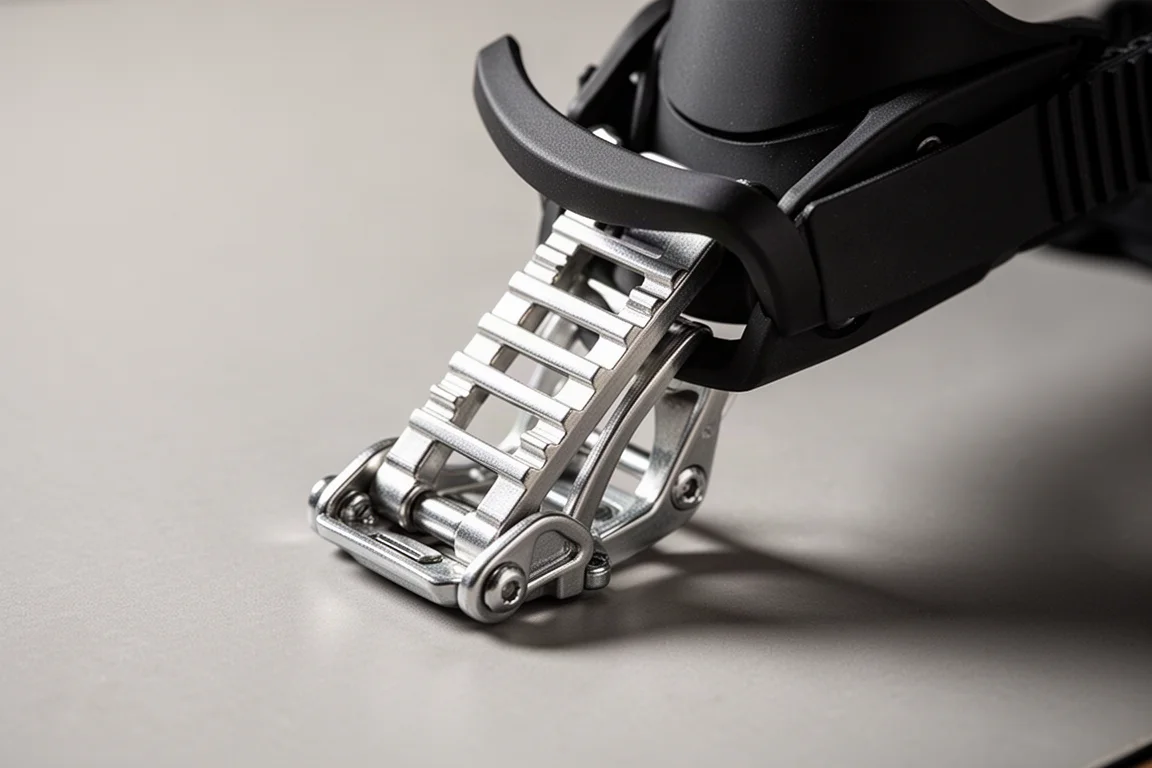
The ratchets themselves are solid and unchanged from last year. They engage and release easily and just work. Some minor teeth wear showed up on the ladders during aggressive testing with over-cranked ratcheting, which is why the bindings ship with a spare set of ladders, but in normal use that should not be an issue.
Response, Flex and Damping
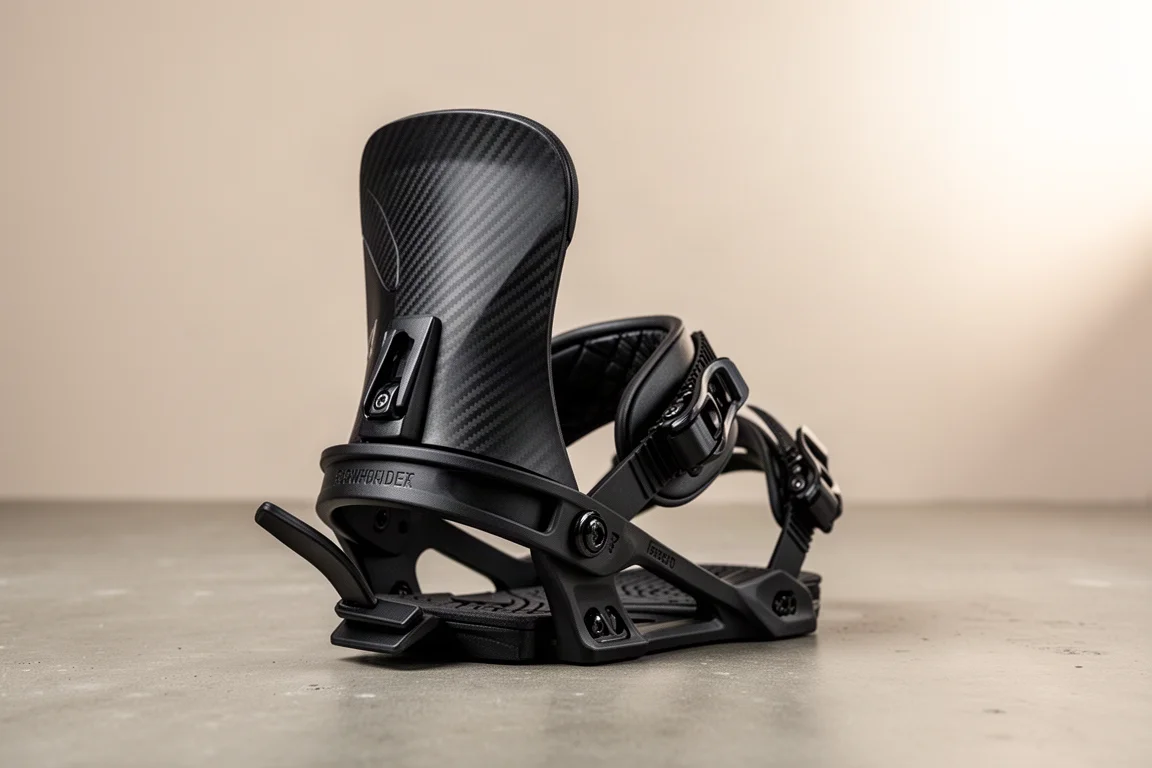
This is a stiff binding, full stop. Lateral flex fights you the whole way, and heel-toe response is excellent: getting on the heel edge is immediate and trustworthy. The carbon highback is stiff and responsive for carving, with the flip tab forward lean system ready when you want more.
There is a large foam section under the foot and beneath the whole binding, but it does not translate into the roll or play you might expect. The stack sits on a carbon chassis with an aluminum heel cup and carbon highback, so play is limited almost entirely to what the ankle and toe straps allow. The chassis sits high and, even as an asymmetrical design, gives slightly more give on the outside than the inside. This is a locked-in, power-focused binding, not a playful one.
The damping, though, deserves special mention. It is exceptionally good. Paired with a Strato, which is not the most damp board, riding over icy morning chunks meant hearing the board hit hard snow without feeling anything through the binding. A faint bit of vibration came through, just enough to read the snow conditions, but no shock or buzz reached the legs. On uneven, chunky terrain that usually makes feet fall asleep, that simply was not a problem here.
Buying Advice
If you want a binding to charge on, go fast and stay locked in, the Katana Pro delivers. It is comfortable for a stiff binding, responsive enough that it could plausibly be raced, and the damping alone justifies a look if you ride firm or choppy conditions regularly. The trade-off is tweakability: if you love pressing, flexing and playing around, you will be fighting this binding rather than enjoying it.
Before buying, honestly assess your setup. This binding shines on stiff, lively boards that need damping and control. Comparable options in the same aggressive category include the Jones Apollo, the Ride A-10 and the Nitro Phantom Plus, all worth cross-checking if you want to be sure you have the right binding for your situation.
Conclusion
The Rome Katana Pro is a confidence-inspiring binding for aggressive riders. Exceptional damping, a huge amount of fit adjustability, a comfortable new ankle strap and a rock-solid locked-in feel make it an easy recommendation for chargers. Just know what you are buying: it is built for power, not play, and it is all the better for it.
Product link
View more details for Rome Katana Pro
This product is mentioned in the review. Check the specifications, options, and compatibility before buying.
View more details for Rome Katana ProFurther reading
Related Reviews

Snowboard Bindings
2024 Union Ultra Snowboard Bindings Review: A Cushy, Freestyle-Focused Favorite
Two seasons on the 2024 Union Ultra: a lightweight, tweakable freestyle binding with standout comfort, a damp molecular bushing, and thoughtful hardware fixes.

Snowboard Bindings
32 Team Phase Binding Review: A Fast Entry Binding Built for Freestyle Laps
The first binding from 32 uses the Phase chassis for quick step-in entry with a softer, freestyle-leaning flex. Here's how it performed on the snow.

Snowboard Bindings
Arbor Cypress Snowboard Binding Review: A Laid-Back Cruiser That Can Charge
A closer look at the Arbor Cypress binding's adjustability, strap feel, and that oddly tall highback before you decide to buy.