Snowboard Bindings
Rome Katana Asym Wrap Phase Review: Fast Entry Straps That Don't Give Up Performance
A full season of mixed-condition testing on Rome's Phase-equipped Katana binding: what works, what to watch for, and who it really fits.
Introduction
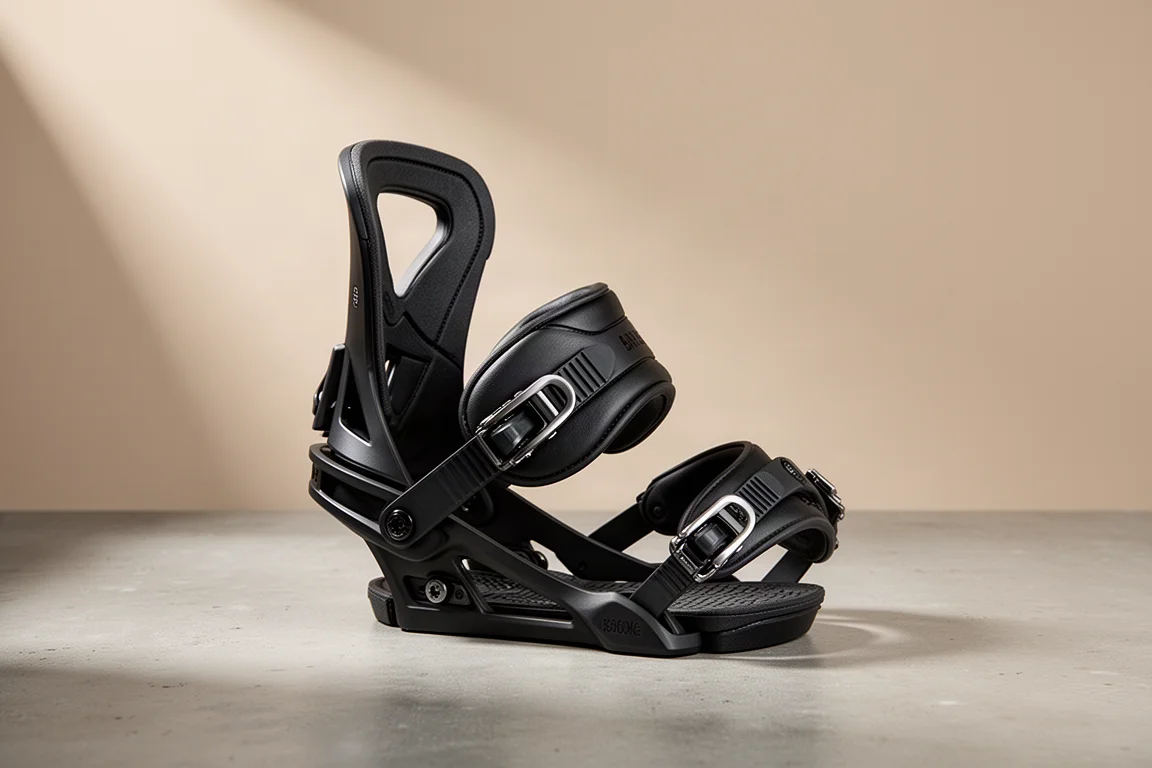
The Rome Katana Asym Wrap Phase is a brand new binding from Rome built around its Phase fast-entry system. It keeps the familiar strap-in feel that most riders already know, but the highback drops open so you can slide your foot in, ratchet down, and go. I rode it on a Ride Shadowban with K2 Thraxis boots across a wide mix of conditions at Ski Cooper and Copper Mountain: leftover powder in flat light, firm fast corduroy, death cookies, chop, and chunder on bluebird days. Here’s how it held up.
How the Phase System Works
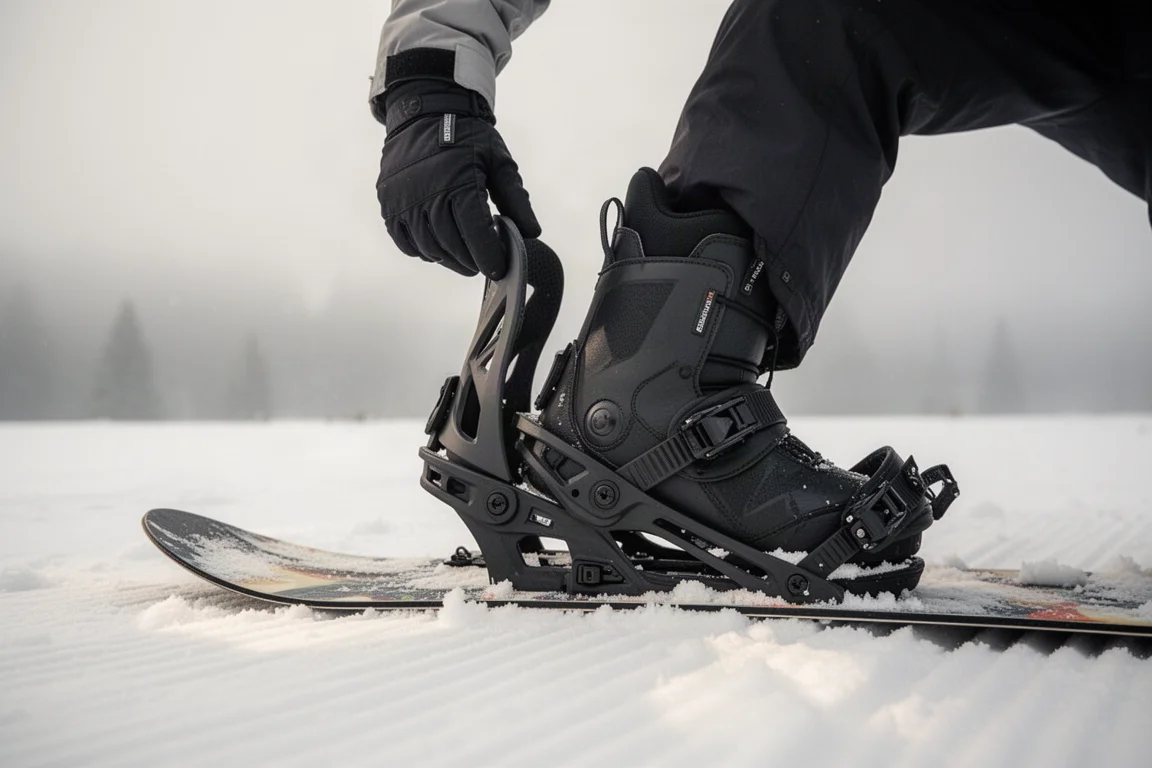
The Phase highback opens to let you slide your foot in, then a lever pops the highback back upright and locks it in place once your boot is seated. There’s a small amount of play when there’s no boot in the binding, but with a boot in there it rests against it and it’s a non-issue. The one-finger quick release works exactly as you’d expect: it opens the heel strap up wide so you can step out and reset in seconds.
You do still have to bend down to ratchet the heel strap, but in practice you grab the strap, slam it in, and one click locks it down. Compared to other fast-entry approaches, this keeps a heel cup, keeps straps, and keeps most of the adjustments you’d expect. Once you understand the system, there’s nothing tricky about it.
Straps and Adjustability
The Phase version trades some adjustability compared to the regular Katana Asym Wrap, but what’s here works well. Starting at the top, there’s a forward lean adjustment that takes a bit of effort to dial in: you flip it up and untwist it. This is the weakest piece on the binding, so it’s reassuring that Rome includes a replacement in the box.
The heel strap uses a pivot mount system with 64 points of articulation, so you can set it higher or lower, or run one side up and one side down, to change how it flexes and contours around your boot. The newest version of the Rome Oxtech heel strap is noticeably beefier than previous iterations, with more material and a better contour. It grips boots really well, and it feels like the direction Rome has been pushing their heel straps for the last few years.
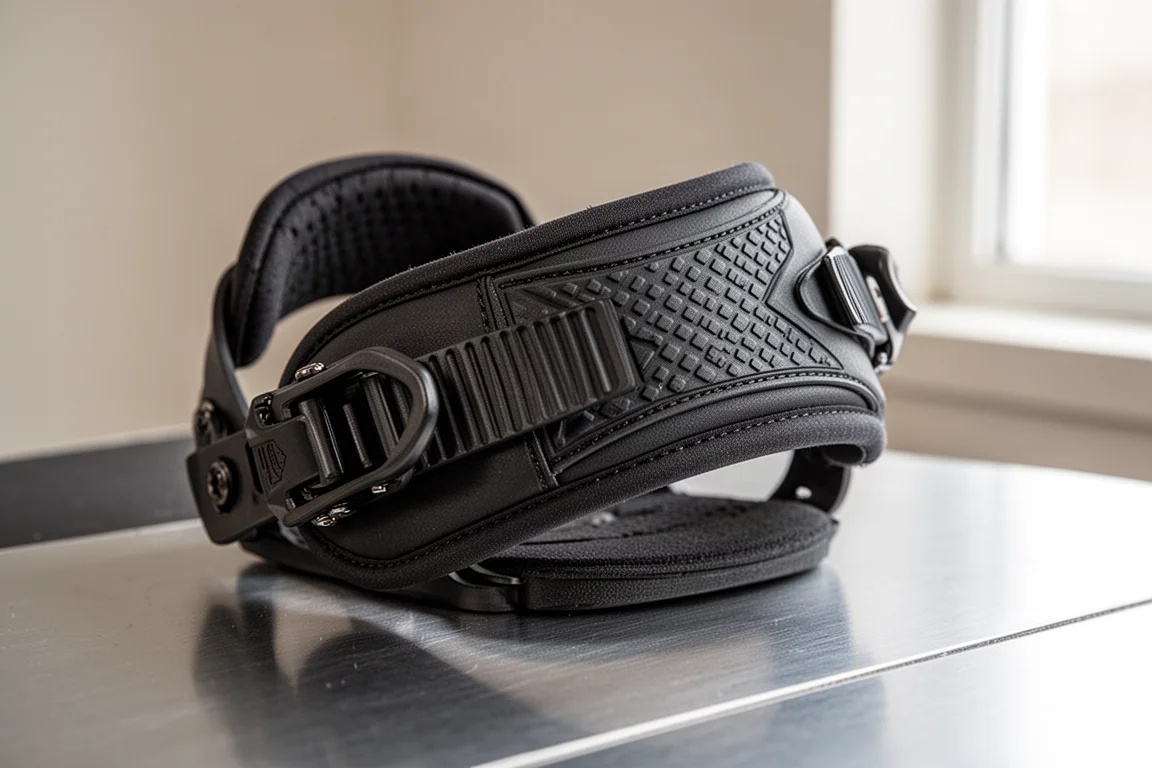
The toe strap is the standard Rome Oxtech design, slightly oval on the bottom and straight on top, meant to grip a multitude of boot shapes. It uses a flip tab for length adjustment and a push pin system to slide it forward or back. Some riders report the toe strap slipping; Rome’s suggested fix is to swap the left strap to the right and vice versa so the straight section sits on the bottom. I didn’t find it a major issue, but the strap is also interchangeable with the Battalion’s toe strap, which is worth trying if it bothers you.
Elsewhere on the chassis, there’s a heel cup adjustment at three points, two at the back and one under the foot pad, so you can slide the heel cup in or out. The toe ramp has three positions to center it under your boot. The heel ratchet itself delivers a good click per pull with solid torque, and it’s a little sticky out of the box before breaking in. Rome knows what they’re doing with ratchets, and these prove it.
Ride Feel and Performance
Underfoot, the Phase version of the Katana is a touch more rigid than the regular Katana Asym Wrap, though not as stiff as the Katana Pro. The carbon-equipped Katana Stala sits above both. The Asym Wrap chassis leaves a bit of lateral play, but the beefier heel strap diminishes that compared to the older Katana if you’re used to it. Overall it lands around the middle of the road depending on where you set the pivot mount, and I found the added underfoot stiffness helps with toe-to-heel response.
It’s a damp binding, more damp than the regular Katana Asym Wrap, and it noticeably cuts down on chatter and kinetic energy. The ride is smooth and stable. One thing to note: the foot pad sits at 2 degrees, and I don’t believe you can change it, because the heel pad is attached to the chassis differently than on the regular Katana. If that cant isn’t your preference, this could be a sticking point.

What to Watch For
The locking tab on the highback is the real weak point. It’s the first thing likely to break, especially on a cold day with someone stepping on it. The good news is a replacement comes in the box, and even if the tab breaks, the binding still functions, just without locking in fully. Also worth knowing: the highback flipping down when you lean on it isn’t a break. It’s designed to fold so a low-swinging chairlift won’t crack it in the lift line.
Beyond that, the gripes are minor. The toe strap can slip for some riders, and there’s less adjustability than the regular Katana, though the same toe strap problem can be solved by flipping or swapping straps.
Who This Binding Is For
This is a binding for riders who want performance plus ease of entry, and the clearest use case is hot laps: someone in and out of their binding constantly, doing 40 to 60 runs a day rather than 20 long ones, riding small hills, cat tracks, and long skates back to the base. If you’ve ever pushed a quarter mile across a cat track only to unstrap and skate again at the uphill, this solves exactly that problem. Unstrap the back foot with one ratchet, give two pushes, kick your foot back in, click it down, and go.
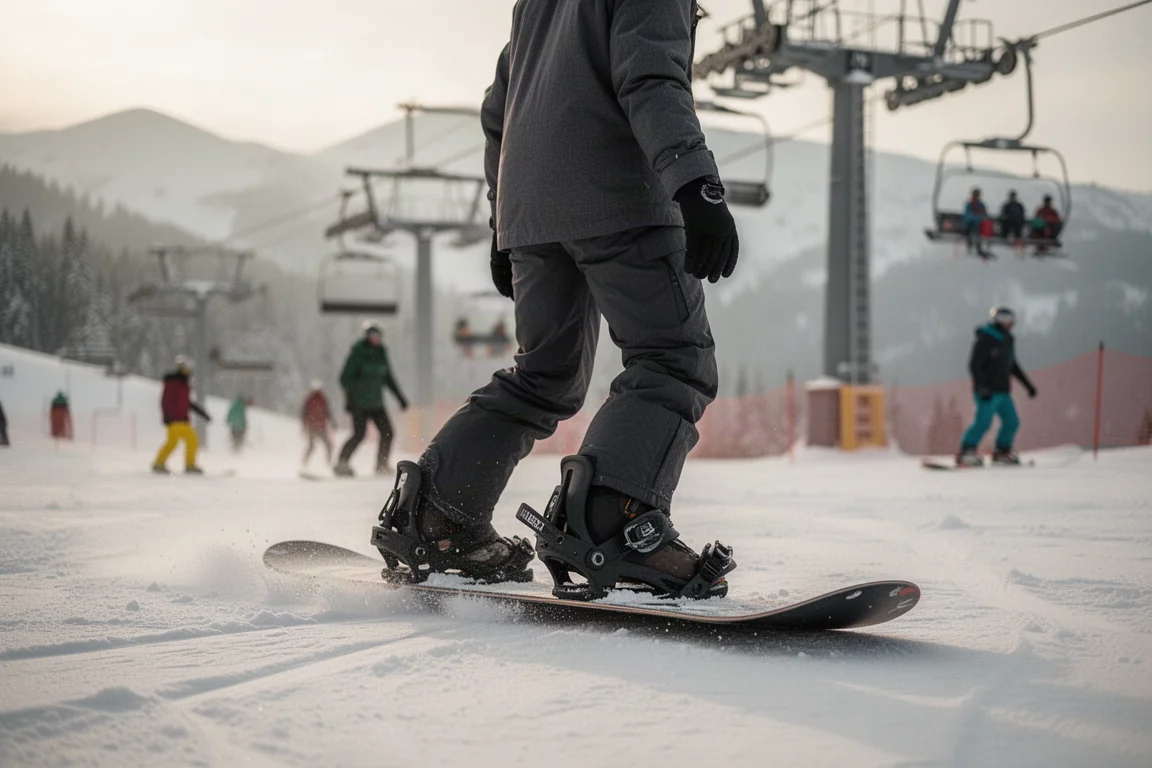
Is it for everyone? No. It rides differently than a Flow and differently than a Supermatic; each of those fast-entry approaches has its own pros and cons. But compared to a step-on system, you keep straps and that strap feel. And the performance is genuinely there: at a demo event I watched roughly 40 people step into this binding, and the consensus was that once you’re in, it feels like a regular binding, with no lost power or weird play.
Buying Advice
If you want even more rigidity and response, look at the Katana Stala version, which adds a carbon-infused base and rides more like the Katana Pro; it’s a real construction difference, not just a colorway. Comparable Phase and fast-entry options include the Battalion Blaster Phase, the Jones Mercury Phase, and the Nidecker Carbon Supermatic. Rome spent seven years developing the Phase system before bringing it to market, and it shows: it works, and I’d happily ride these as an everyday binding.
Conclusion
The Rome Katana Asym Wrap Phase proves you can add fast entry without giving up heel cup, strap feel, or underfoot performance. The highback locking tab and the occasionally slippery toe strap are the two things to keep an eye on, but replacements are included and workarounds are simple. For riders doing high-volume laps on smaller hills, this is exactly the binding they’ve been waiting for.
Product link
View more details for Rome Katana Asym Wrap Phase
This product is mentioned in the review. Check the specifications, options, and compatibility before buying.
View more details for Rome Katana Asym Wrap PhaseFurther reading
Related Reviews

Snowboard Bindings
2024 Union Ultra Snowboard Bindings Review: A Cushy, Freestyle-Focused Favorite
Two seasons on the 2024 Union Ultra: a lightweight, tweakable freestyle binding with standout comfort, a damp molecular bushing, and thoughtful hardware fixes.

Snowboard Bindings
32 Team Phase Binding Review: A Fast Entry Binding Built for Freestyle Laps
The first binding from 32 uses the Phase chassis for quick step-in entry with a softer, freestyle-leaning flex. Here's how it performed on the snow.

Snowboard Bindings
Arbor Cypress Snowboard Binding Review: A Laid-Back Cruiser That Can Charge
A closer look at the Arbor Cypress binding's adjustability, strap feel, and that oddly tall highback before you decide to buy.