Snowboard Bindings
Rome DuraCush Review: What the Binding Damping Foam Actually Does
Rome DuraCush replaces the brand's older D3O damping foam with a non-Newtonian pad. Here is what it does, who benefits, and where the honest trade-offs sit.
Introduction
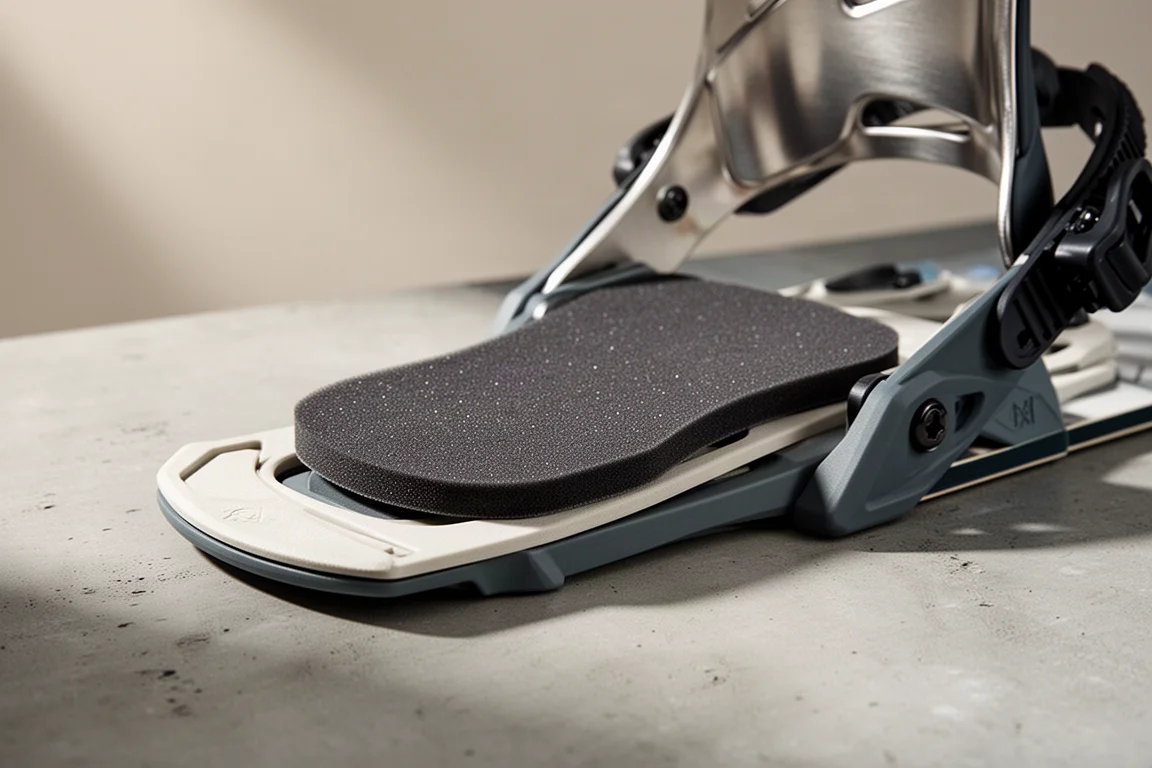
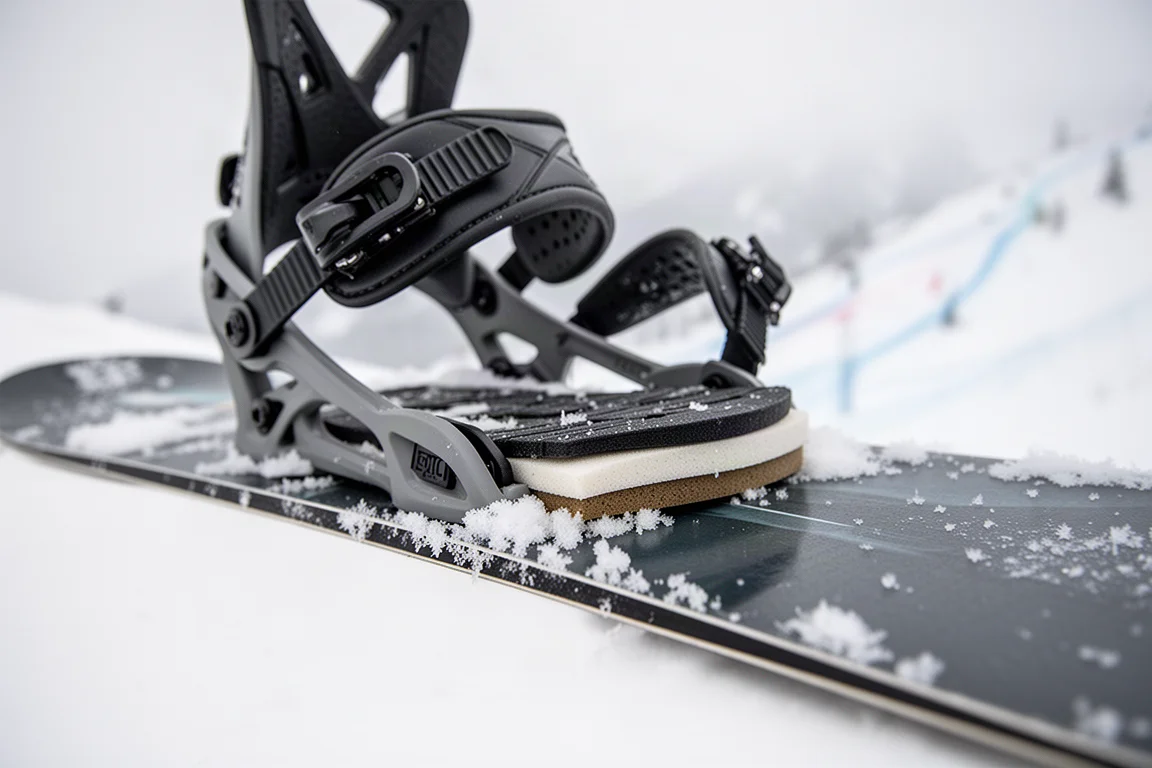
Rome DuraCush is a sub-base pad, a thin foam layer that sits between the base of the binding chassis and the board itself. Its job is damping: it absorbs the kinetic energy travelling up from the board, softening the chatter and vibration that reach your feet, knees and ankles over the course of a long day.

It replaces the D3O foam Rome used on previous binding models. The headline change is material rather than structure. DuraCush is a non-Newtonian compound, and the practical consequence is that it keeps its damping behaviour instead of firming up when temperatures drop. For riders, that is the difference between a pad that behaves one way on a mild spring afternoon and another way on a cold midwinter morning.
That distinction matters because damping is only useful if it is consistent. A pad that stiffens in the cold stops doing the job precisely when hard, chattery snow makes it most valuable.
Who This Product Is For
Two groups get the most from DuraCush. The first is anyone buying a Rome binding, because the pad is part of the package rather than an optional add-on. The second is riders who deal with knee or ankle discomfort and want a calmer, less punishing ride underfoot.
If you ride for a livelier, more connected feel and want to sense every ripple in the snow, the damping works against you. This is a comfort and stability feature, not a route to maximum board feel.
Main Strengths
The core strength is straightforward. DuraCush dissipates the kinetic energy that travels up through the board, which in practice means less chatter underfoot and a more stable, smoother ride. That adds up over a full day on hard or chopped-up snow, where small vibrations accumulate into tired legs.
The second strength is consistency across conditions. Because the material is designed not to stiffen in the cold, its damping character stays broadly the same whether you are riding deep winter or late-season slush. That removes one of the variables riders previously had to think about as the mercury dropped.
How DuraCush Differs From the Foam It Replaces
The change is in the material, not the placement. DuraCush occupies the same role as the D3O pad it replaces, sitting between chassis and board and soaking up vibration, but it does so with a non-Newtonian compound that behaves more predictably as temperatures fall.
The distinction is worth knowing if you are coming from an older Rome binding or comparing a current model against a previous season. The design intent is identical. Cold-weather behaviour is where the two genuinely diverge.
Things to Consider Before Buying
DuraCush is currently proprietary to Rome bindings, so it is not a standalone upgrade you can add to another brand’s setup. If you ride a different binding, this technology is not available to you right now, and there is no firm indication of when that might change.

It is also worth keeping expectations realistic. Ridden alongside the older D3O foam, the difference is subtle, and it becomes harder to detect if you are not riding in genuinely cold conditions. Riders who never noticed their D3O pad firming up in the first place may not notice much of a change at all.
Real-World Riding Notes
On snow, the pad does what it claims at a basic level. The damping is present, the ride is calm, and nothing about the material feels fragile or unpredictable when the temperature falls.
Where the honest picture gets more nuanced is in the comparison. Without a properly cold day to test against, the gap between DuraCush and the foam it replaces is difficult to feel. That is less a criticism of the new material than a reflection of how well the old one already performed for many riders.
Buying Advice
The simplest way to think about it: if you are buying a Rome binding, DuraCush comes with it, and there is no reason to avoid it. It is a sensible piece of damping that holds its properties in cold weather.
If comfort matters when you are choosing between models, a binding with DuraCush is a reasonable pick, particularly if you have knee or ankle issues that worsen on firm, chattery snow. If you prioritise maximum board feel and want every surface detail to come through, the damping is working against your preference, and a firmer setup may suit you better.
Conclusion
Rome DuraCush is a small, functional piece of engineering: a non-Newtonian damping pad that replaces D3O, keeps its properties in the cold, and takes the edge off chatter underfoot. It is not a dramatic transformation, and the difference next to the previous foam is subtle. But it works, it comes fitted to Rome bindings, and for riders who value a smoother, less punishing ride, that is enough to make it worth having.
Product link
View more details for Rome DuraCush
This product is mentioned in the review. Check the specifications, options, and compatibility before buying.
View more details for Rome DuraCushFurther reading
Related Reviews

Snowboard Bindings
2024 Union Ultra Snowboard Bindings Review: A Cushy, Freestyle-Focused Favorite
Two seasons on the 2024 Union Ultra: a lightweight, tweakable freestyle binding with standout comfort, a damp molecular bushing, and thoughtful hardware fixes.

Snowboard Bindings
32 Team Phase Binding Review: A Fast Entry Binding Built for Freestyle Laps
The first binding from 32 uses the Phase chassis for quick step-in entry with a softer, freestyle-leaning flex. Here's how it performed on the snow.

Snowboard Bindings
Arbor Cypress Snowboard Binding Review: A Laid-Back Cruiser That Can Charge
A closer look at the Arbor Cypress binding's adjustability, strap feel, and that oddly tall highback before you decide to buy.