Snowboard Bindings
Rome Cleaver Stalli Review: Predictable Power in Rome's Stiffest Binding
A detailed look at the Rome Cleaver Stalli snowboard binding, covering its adjustability, AUX Tech straps, carbon highback, and who it actually suits.
Introduction
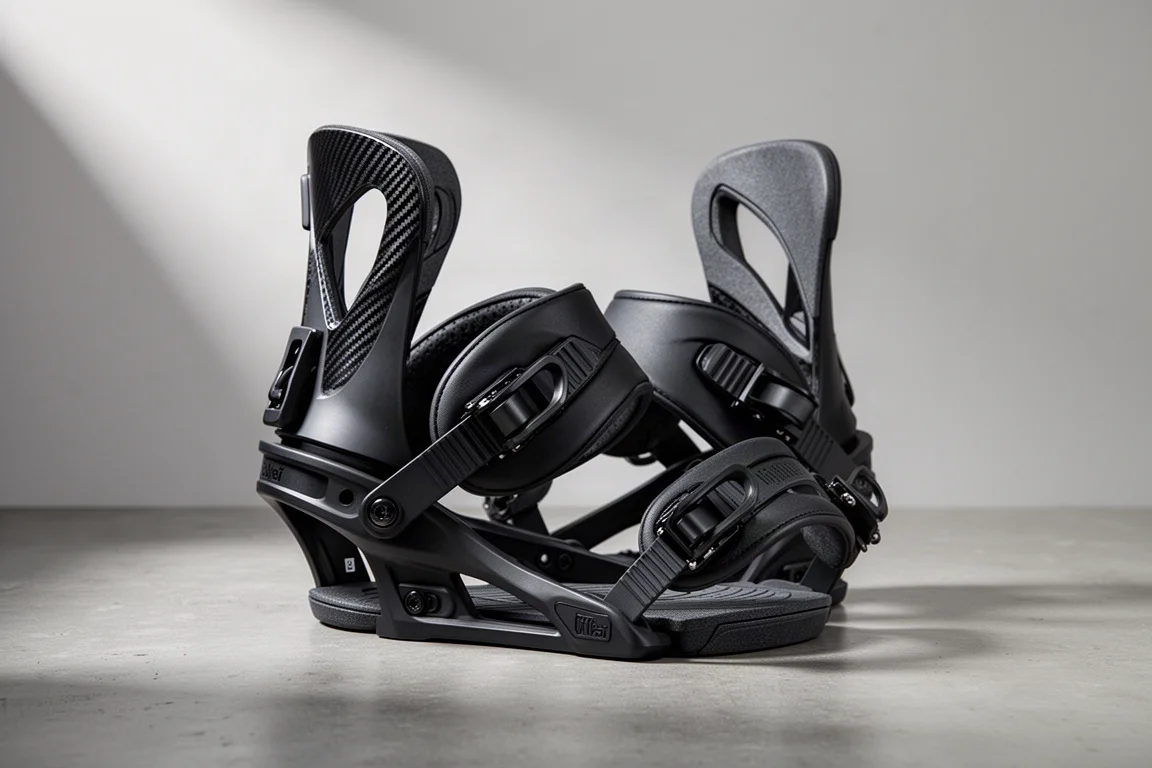
The Rome Cleaver Stalli is the stiffest binding in Rome’s lineup, and it arrives with a specific promise: high performance and precision without the punishing, unforgiving feel that some stiff bindings carry. It is built around a carbon-reinforced highback, a full wrap heel cup, and Rome’s minimalist AUX Tech straps.
It was ridden at Arapahoe Basin in preseason conditions that covered a wide range, including blue and grey skies, moderate sustained wind at the top, icy chop, firm corduroy, soft snow, and a little slush on the lower mountain. That mix is a useful test bed, because it exposes how a binding behaves when the surface underfoot changes from run to run.
The short version: this is a binding that feels familiar immediately. It has plenty of power on tap, but it never feels like it is fighting you.
Who the Rome Cleaver Stalli Is For
Rome positions the Cleaver as the replacement for the Targa, and the target rider is fairly clear. This is for someone who demands a lot of performance and precision from a binding but does not want to be overwhelmed by stiffness alone.
If your riding leans toward aggressive all-mountain and freeride terrain, and you want a binding that transmits input cleanly rather than softening it, this is the category it belongs to. It sits past the middle of the road in terms of flex, but it is not the stiffest binding available on the market in this price range, which matters if you have heard otherwise.

It also suits riders who like to fine-tune their setup. There is a long list of adjustment points here, and the binding rewards the time spent dialing it in.
Adjustability and Fit
The adjustment range is one of the strongest arguments for this binding. Four screws hold the heel cup to the base tray, so you can move it wider for a longer boot or push it in for a shorter one. The toe ramp pops off from the back and slides forward or back to sit where you need it.
The toe strap uses push pins, so you press down and line it up where it belongs. The heel strap has a pivot mount that can be set higher or lower depending on where your instep sits, and it helps move the strap around as needed.
The highback rotates in a track so you can angle it square with the heel edge, and there is a canting option at three and six degrees to adjust the offset of the highback. Forward lean is adjustable as well, and the toe and heel straps have flip tabs for lengthening or shortening them. Most of these are standard features, but the point is how many of them are present on a single binding.
AUX Tech Straps and Ratchets
Rome’s AUX Tech straps are deliberately minimal. There is no padding, which reduces the chance of pinch points and lets the strap contour across a wide range of boot shapes, particularly at the instep and the toe. The padding comes from the boot instead, and the boot and strap flex together as a unit. The tighter you set them, the stronger the connection feels.
The toe strap fits across just about any boot shape, locks in, and stays locked in. The ratchets are a little wider than average, feed easily onto the strap, and climb well. The one-finger quick release does its job, and there was no slipping and no trouble releasing them.
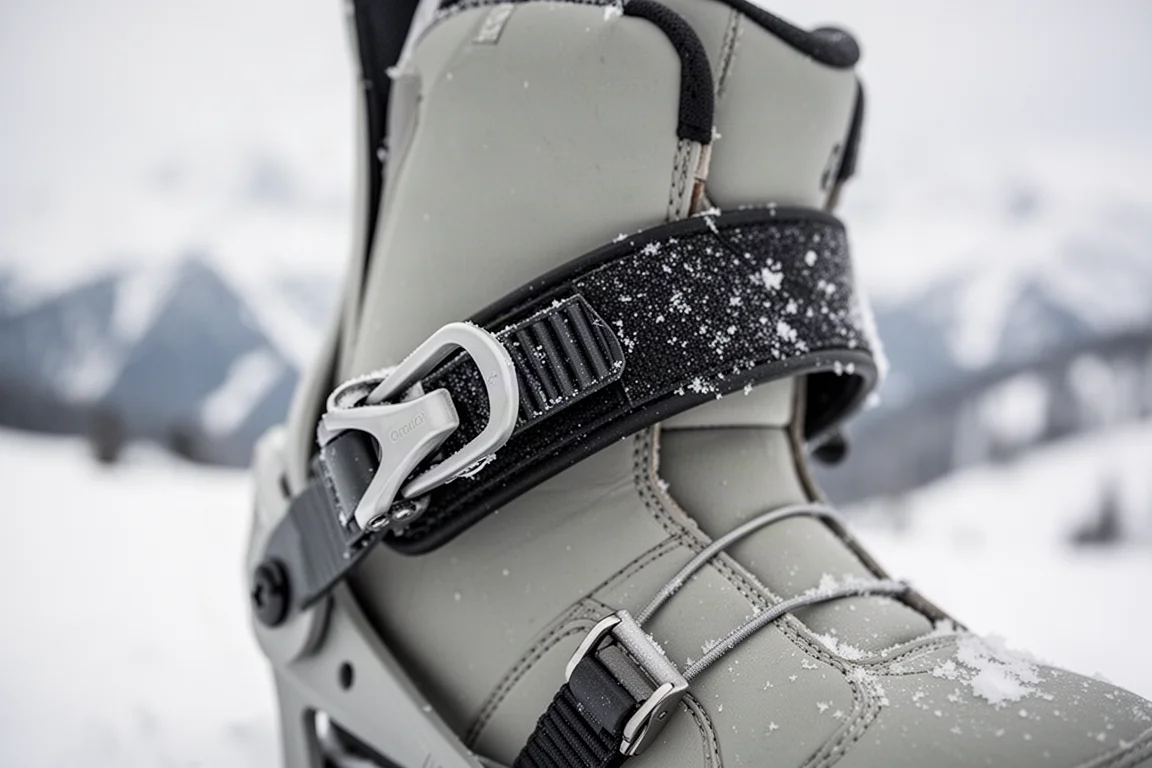
That combination matters more than it sounds. Straps that hold evenly and release cleanly remove a lot of small friction from a day on the hill.
Highback Stiffness and Power Transfer
This is one of the stiffest highbacks Rome makes, if not the stiffest, and it uses carbon in its construction. You notice it right away when you push into it: there is more rebound, and it does a good job of letting you drive through the binding and put your input into the board.
The full wrap heel cup is the other half of that story. Because it wraps fully rather than leaving the inside open, you get lateral power instead of lateral play. That lets you push power out into the tail of the board and move forward from there.
Forward lean is easy to dial in on the fly, which is useful when you want to change your stance without tools or a long stop.
Ride Feel and Dampening
What stands out most about the ride is predictability. It feels like a binding you have ridden a hundred times the moment you step into it, and once it is adjusted, there is nothing to think about.
There is a new dampening pad on this model. In practice, it does its job well, and there is no noticeable difference between it and the previous D3O foam. The benefit shows up on impact: this binding carries a lot of power, but when you come down on something, you do not feel it as much as you do with some other bindings on the market. That is a meaningful trait for riders who spend long days on firm or variable snow.

The overall character is stiff but predictable. It is not the softest or most playful option out there, and it is not trying to be.
Things to Consider Before Buying
The first thing to be honest about is stiffness. This is a stiff binding, and while it is not as extreme as its reputation sometimes suggests, riders who prefer a softer, more forgiving or more playful feel will likely be happier elsewhere.
Second, if your goal is the absolute stiffest, hardest-charging freeride binding available, there are other options that go further in that direction. The Cleaver’s appeal is that it delivers strong performance without going all the way to the extreme.
Third, the unpadded AUX Tech straps mean the fit is closely tied to your boot. That is usually an advantage, since the straps contour to the boot, but it does put more emphasis on having a boot that matches the binding well.
If you are comparing options, the Union Atlas, the Now Drive, and the Ride C10 sit in the same conversation as this binding.
Buying Advice
Buy the Rome Cleaver Stalli if you want a binding that converts your input into board response with very little wasted movement, and you want that in a package that stays comfortable and predictable over a full day.
Budget time for setup. The heel cup, toe ramp, heel strap pivot, highback rotation, canting, and forward lean all interact, and a careful initial fit is what makes the binding feel as natural as it does on the first run.
Match it to your boot first and your riding style second. A binding this adjustable can accommodate a wide range of setups, but the straps work best when the boot underneath them is the right shape and size.
If your riding is mostly relaxed and surfy, or you want maximum softness underfoot, look at a softer model instead. There is no reason to buy stiffness you do not want.
Conclusion
The Rome Cleaver Stalli is Rome’s stiffest binding, and it earns that position with a carbon highback, a full wrap heel cup, and a strap design that keeps pressure even across the boot. It is powerful and laterally direct, yet it stays predictable and comfortable rather than punishing. For riders who want precision and power transfer without an overwhelming feel, it is a strong and well-rounded choice, and the extensive adjustability means it can be tuned to suit a wide range of boots and stances.
Product link
View more details for Rome Cleaver Stalli
This product is mentioned in the review. Check the specifications, options, and compatibility before buying.
View more details for Rome Cleaver StalliFurther reading
Related Reviews

Snowboard Bindings
2024 Union Ultra Snowboard Bindings Review: A Cushy, Freestyle-Focused Favorite
Two seasons on the 2024 Union Ultra: a lightweight, tweakable freestyle binding with standout comfort, a damp molecular bushing, and thoughtful hardware fixes.

Snowboard Bindings
32 Team Phase Binding Review: A Fast Entry Binding Built for Freestyle Laps
The first binding from 32 uses the Phase chassis for quick step-in entry with a softer, freestyle-leaning flex. Here's how it performed on the snow.

Snowboard Bindings
Arbor Cypress Snowboard Binding Review: A Laid-Back Cruiser That Can Charge
A closer look at the Arbor Cypress binding's adjustability, strap feel, and that oddly tall highback before you decide to buy.