Garage Tools
RoadTech Shop Max Electric Floor Jack Review: Effortless Lifting at a Premium
A battery-powered electric floor jack that trades pumping effort for precision and safety, at a price well above comparable manual jacks.
Introduction
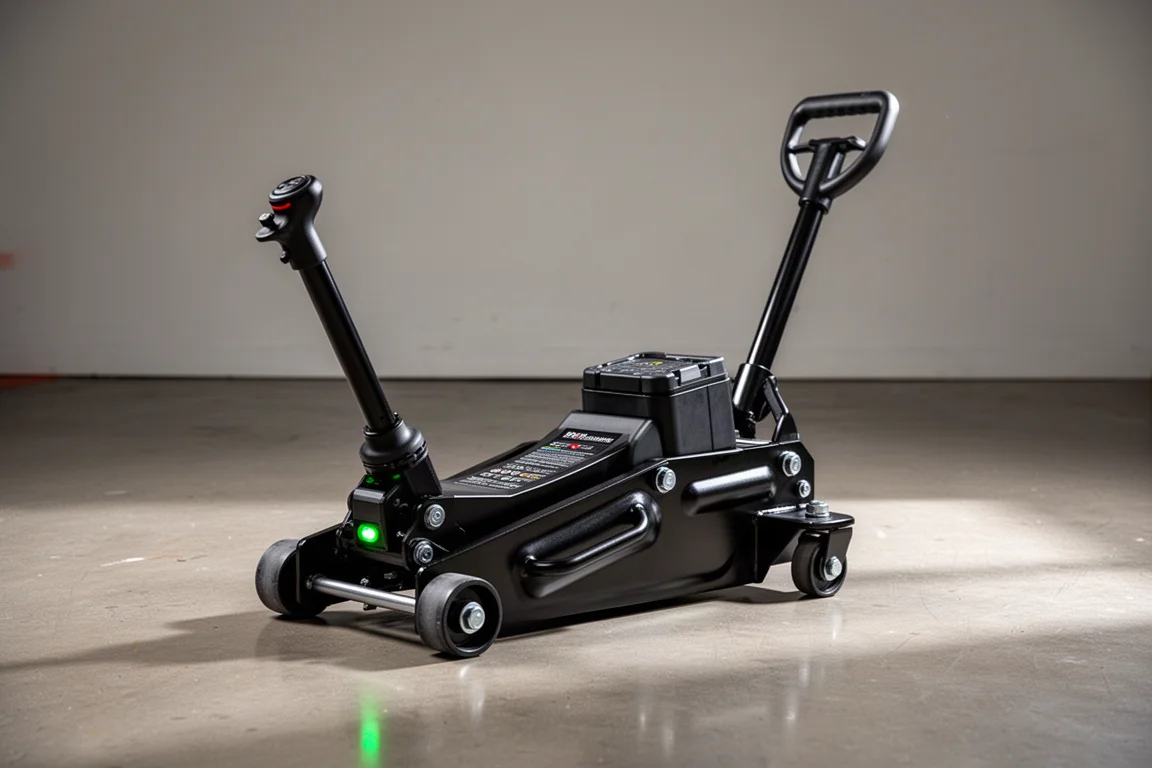
The first reaction most people have to an electric floor jack is skepticism. Do jacks really need to be electrified? That was our initial take when the RoadTech Shop Max arrived: an electric hydraulic jack with an onboard battery and electronic controls. After several weeks of regular use, the verdict softened considerably. It does not save much time, but it saves a remarkable amount of effort, and it changes where and how you can use a floor jack.
What Makes an Electric Floor Jack Different
The Shop Max does the same core job as any hydraulic floor jack: it lifts a vehicle. The difference is control. Instead of pumping a long handle, you operate a joystick-style lever, so you can position the jack, watch the lifting pad as it meets the frame, and raise the vehicle with the push of a button. You can stand directly beside the jack point instead of leaning over the handle and guessing whether the pad is actually where it should be.
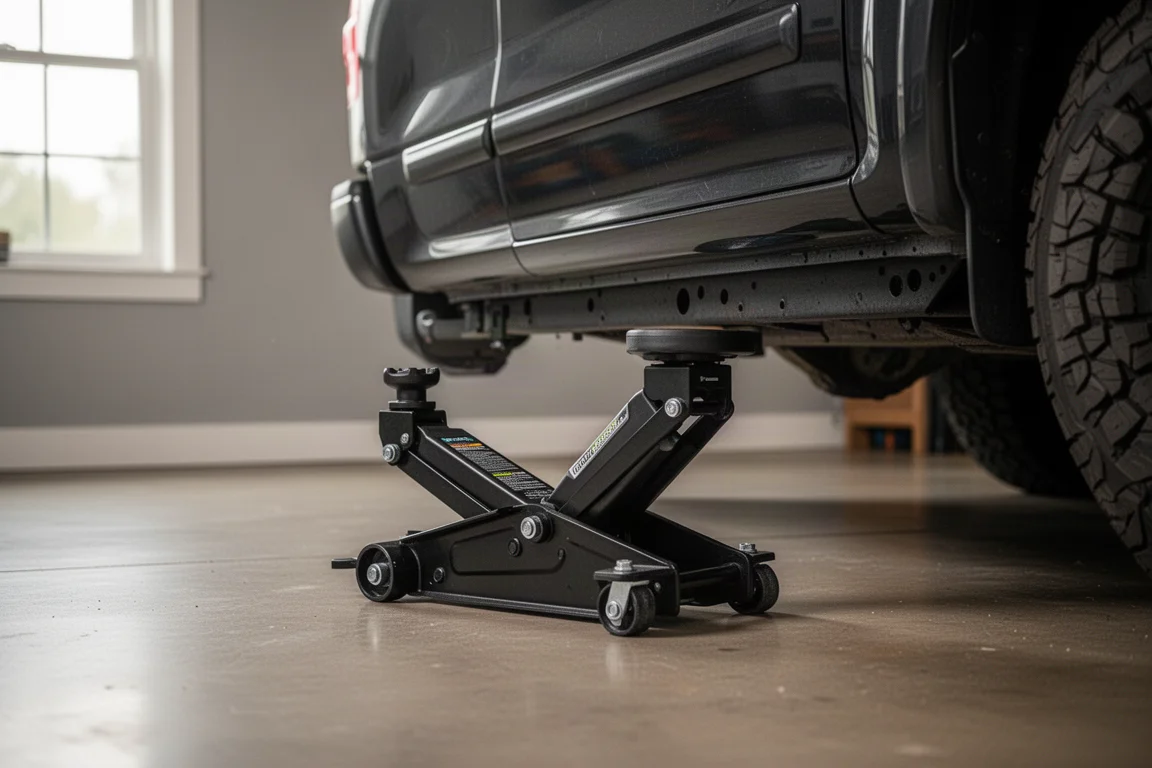
The practical benefits show up in tight spaces. Because there is no sweeping handle to swing, the jack can be used up close against the vehicle or even from underneath it. That also means one person can do what might otherwise take two: one person to guide placement and one to pump.
Real-World Use and Battery Life
Battery life has been genuinely impressive during several weeks of use, roughly five sessions per week. In that period the battery indicator dropped only a single bar. Charging is quick, and replacement batteries are priced reasonably rather than at the premium levels common with major tool platforms.
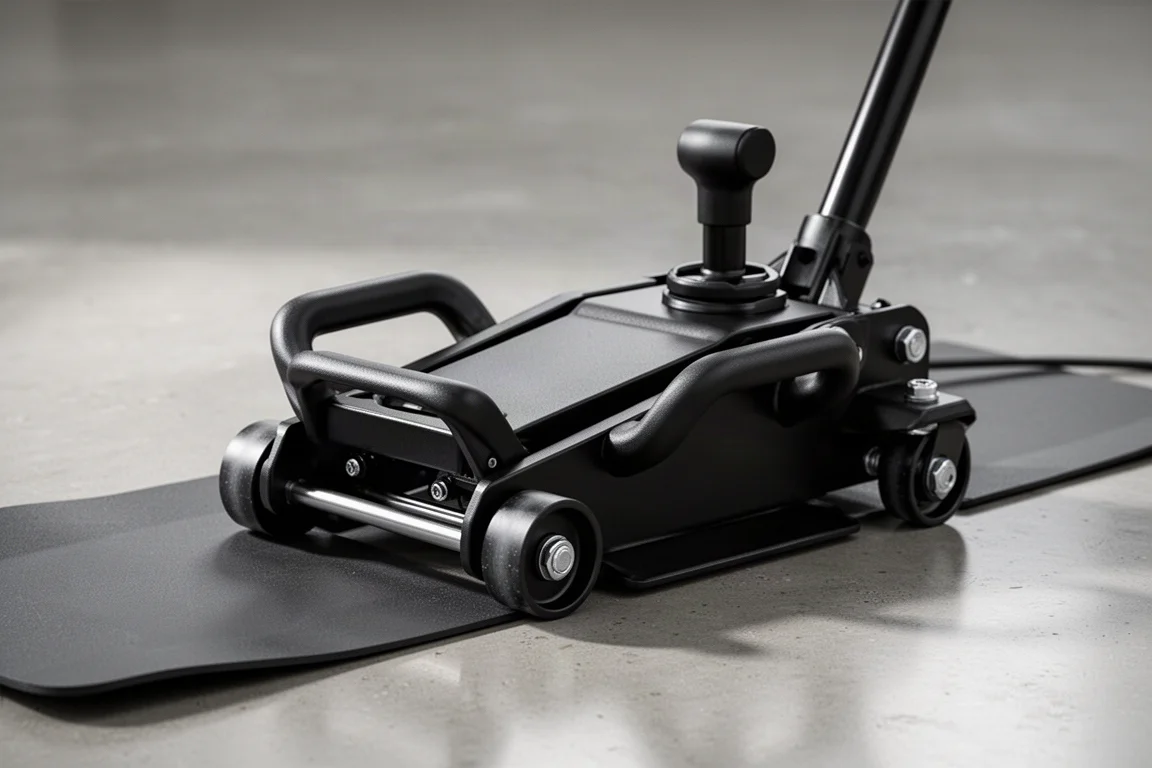
One important limitation: there is no manual backup. The handle is purely a control lever, so if the battery dies, the jack cannot be pumped by hand. RoadTech has anticipated failure modes to some degree, including a pull cable that lowers the jack manually if the battery runs flat, which is a thoughtful safety touch. The battery system is proprietary, though, with no adapters for other tool brands, and discussions with major tool manufacturers about battery partnerships reportedly went nowhere.
Durability and Weather Resistance
Durability concerns were addressed before release. RoadTech tested the jack extensively, sending units to shops around the United States with instructions to try to break them. The jack also carries an IPX4 water-resistance rating and ASME certification.
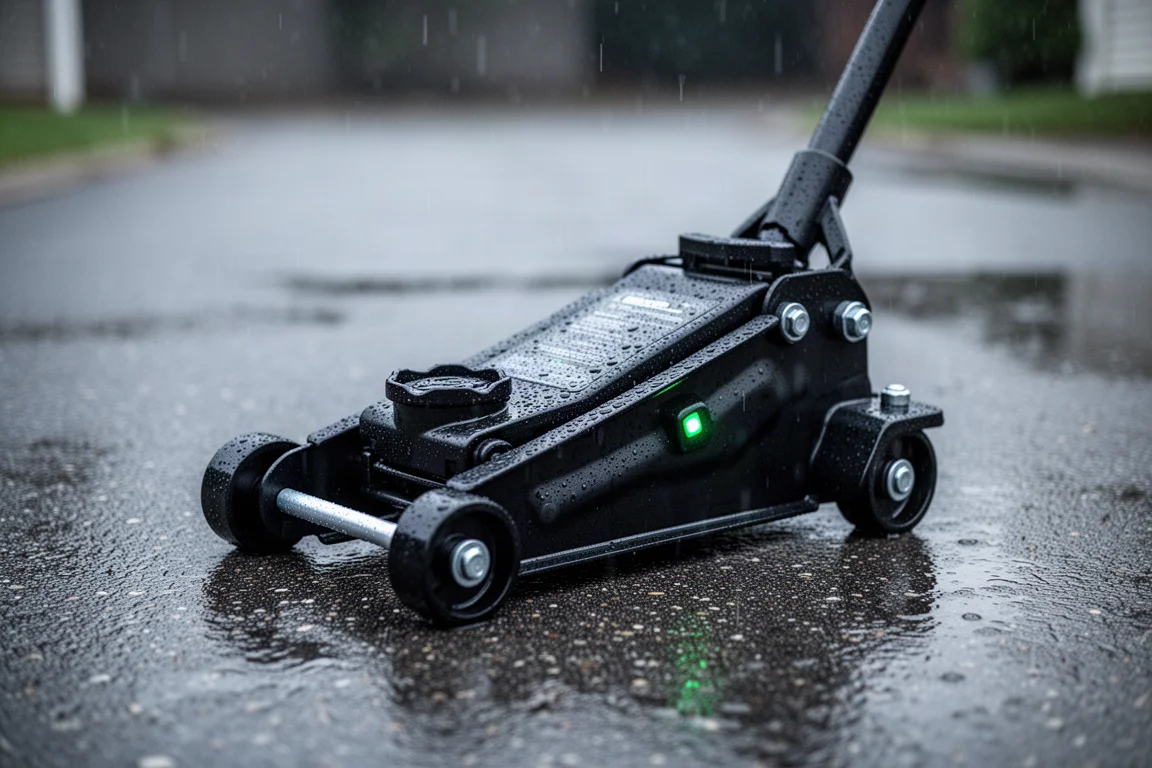
In personal testing, the jack was deliberately left out in pouring rain multiple times, and nothing failed. That does not remove the added complexity: it still uses hydraulics, so a hydraulic leak remains a possibility, but the electronics have held up well so far.
Things to Consider Before Buying
The obvious trade-off is price. The Shop Max costs more than two comparable Daytona manual jacks combined, roughly $200 to $300 more, thanks to the battery, charger, and electronics. It sits between the Daytona low-profile long-reach and the Daytona 4-ton high-performance in terms of size: reasonably low profile with a long reach, though not as low as the dedicated low-profile Daytona.
A few additions would raise the value proposition further, such as a live weight readout showing exactly how much load the jack is supporting. As it stands, the jack is more of a safety and effort-saving tool than a money-saving one.
Buying Advice: Who Should Buy It
For the everyday DIY user working on a truck, the math is hard to justify: two manual jacks for less money do the same lifting job. But for home mechanics with expensive vehicles who want maximum precision at the jack point, or professionals looking to reduce back strain and safely single-person a lift, the Shop Max makes a compelling case. It is less a replacement for manual jacks and more a precision, safety-focused alternative.
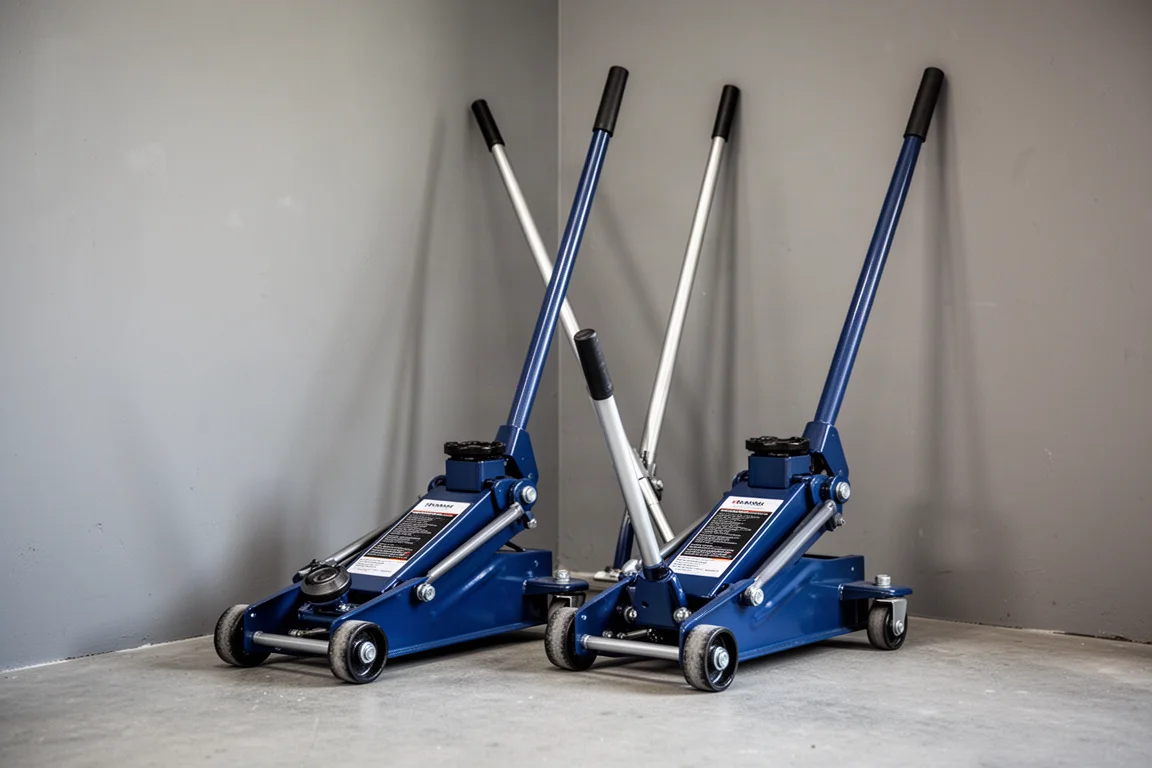
The manual Daytona jacks remain strong value for standard use, but the electric jack has quietly earned a permanent spot in the workflow.
Conclusion
The RoadTech Shop Max electric floor jack is a genuinely useful step forward, not a gimmick. The one-touch lifting, tight-space maneuverability, and constant visibility of the jack point make lifting a vehicle safer and far less physically demanding. At its premium price, it is not for everyone, but for buyers who value precision and safety over budget, it delivers exactly what it promises.
Product link
View more details for RoadTech Shop Max Electric Floor Jack
This product is mentioned in the review. Check the specifications, options, and compatibility before buying.
View more details for RoadTech Shop Max Electric Floor JackFurther reading
Related Reviews
Garage Tools
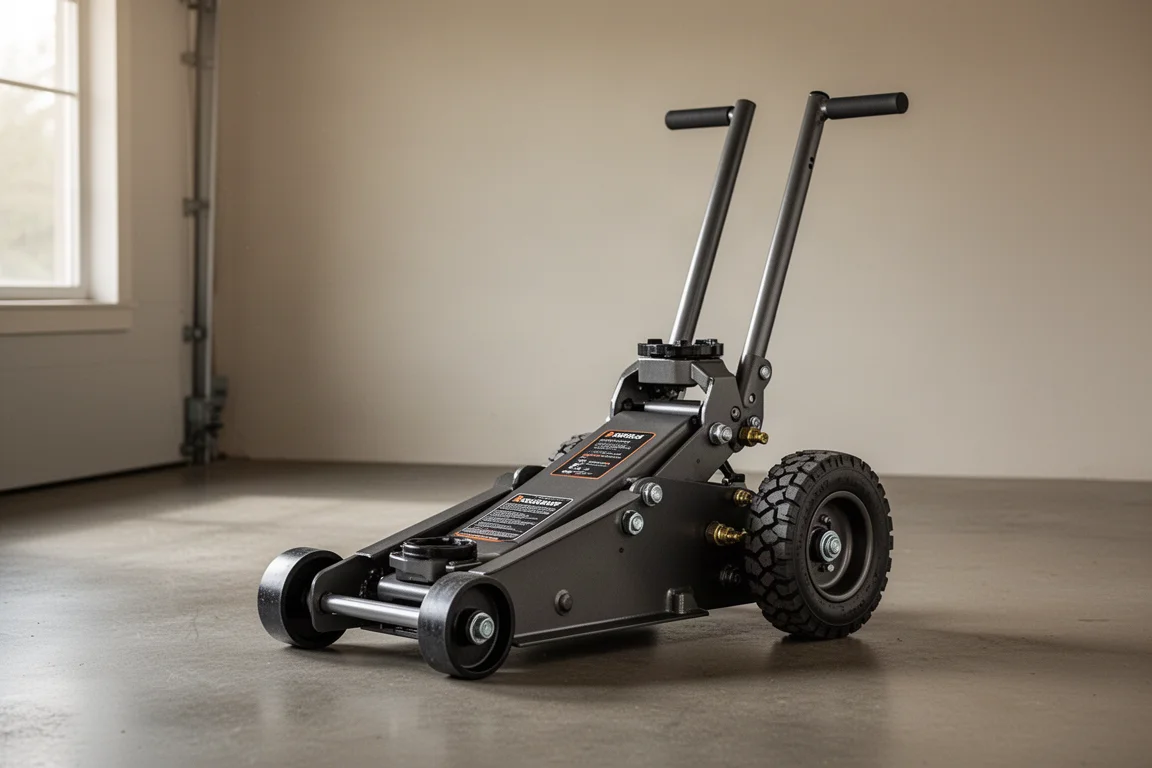
Badland 3-Ton Off-Road Jack Review: A Shop Jack That Handles Dirt Roads
Harbor Freight's SEMA-buzz Badland 3-ton off-road jack promises rugged build quality and easy mobility. We compare it with the 3-ton Long Reach Daytona to see who it really suits.
Garage Tools
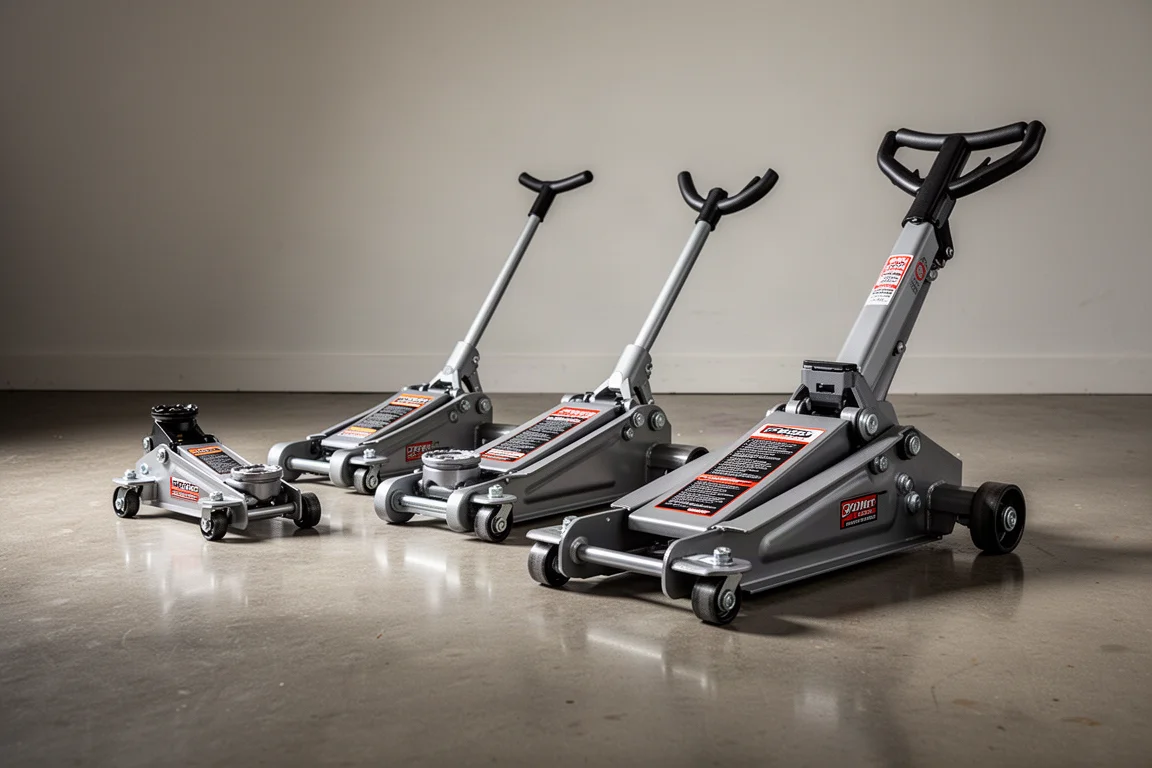
Best 3-Ton Floor Jacks Compared: Four Options for Every Type of Wrencher
A hands-on comparison of the Hyper Tough, Badland, Daytona low-profile long-reach, and Carlisle 3.5-ton floor jacks, with real measurements and buying advice for each type of user.
Garage Tools
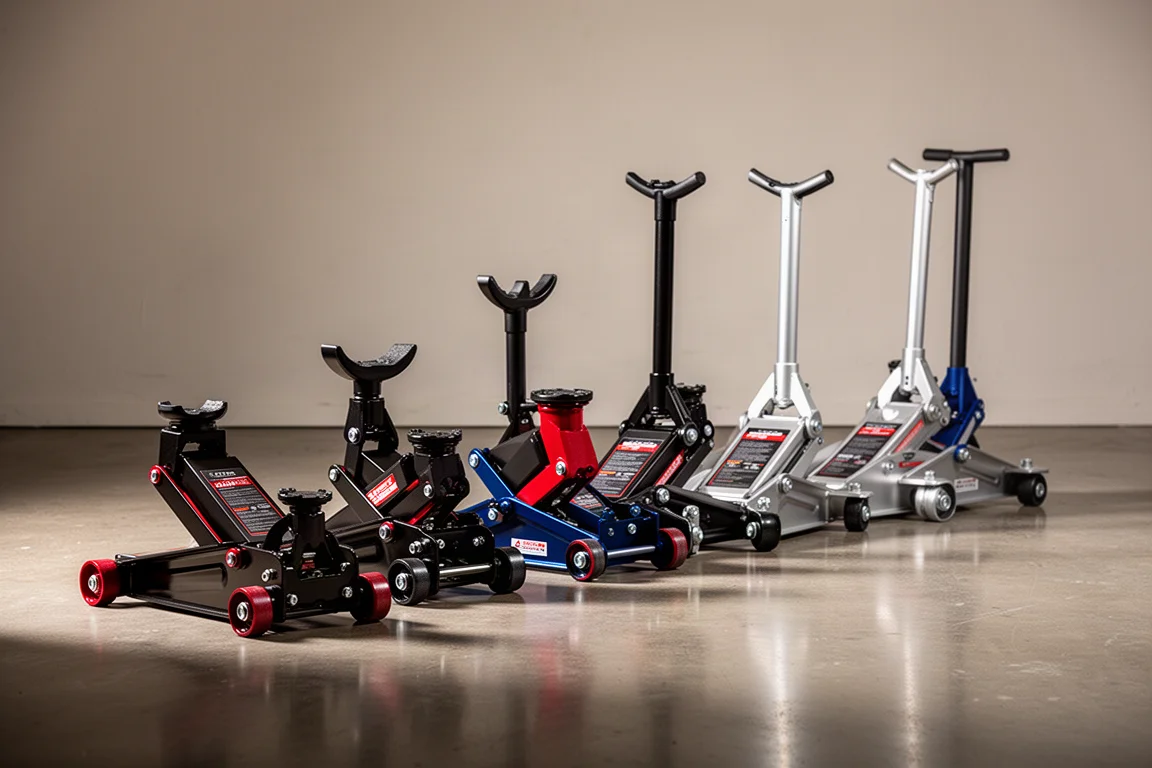
Best 3-Ton Floor Jacks: 8 Models Put Through the Same Tests
Eight 3-ton floor jacks from $93 to $1,000, compared on lift height, pump speed, capacity, rolling resistance, and build quality.