Garage Tools
Best 3-Ton Floor Jacks: 8 Models Put Through the Same Tests
Eight 3-ton floor jacks from $93 to $1,000, compared on lift height, pump speed, capacity, rolling resistance, and build quality.
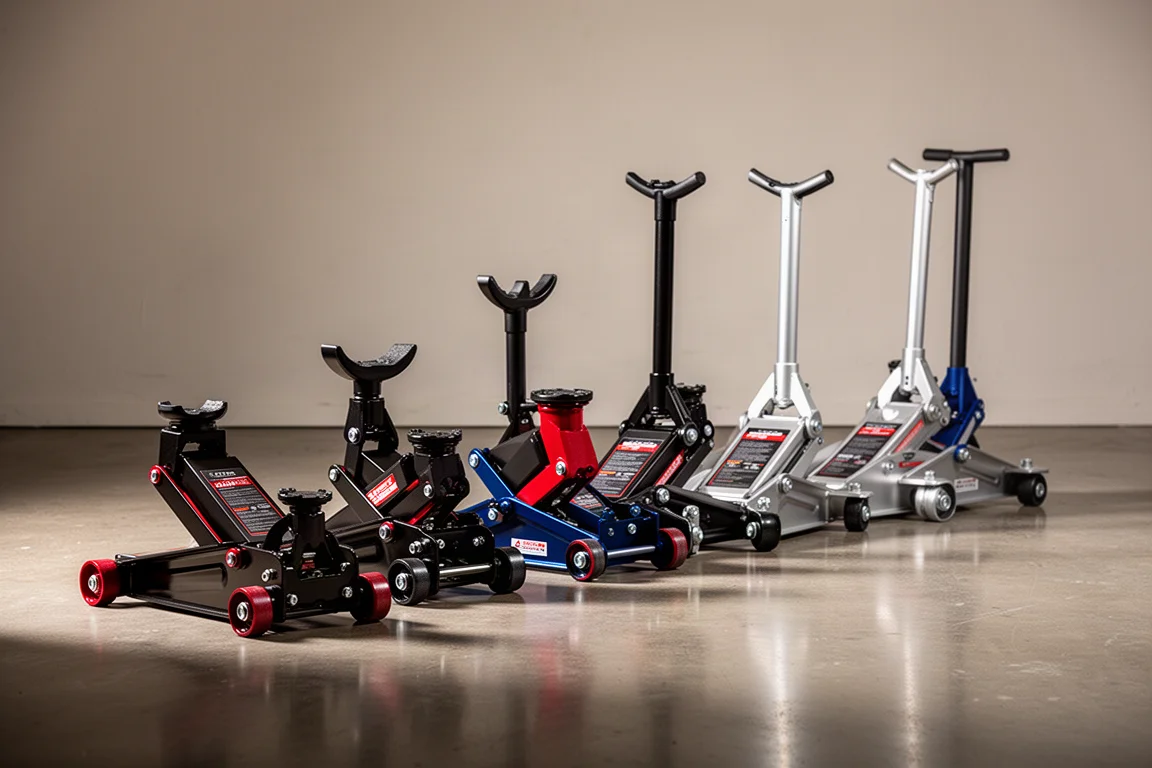
Introduction
If you have ever wondered whether a $100 floor jack is really all that different from one costing $1,000, this comparison should help. Eight 3-ton floor jacks were put through the same series of tests: maximum lifting capacity, pump count to full height, minimum and maximum lift heights, how easily they roll under load, how much pressure they hold over time, and overall build quality. Every jack was tested with the same loads and the same procedure, so the results are directly comparable.
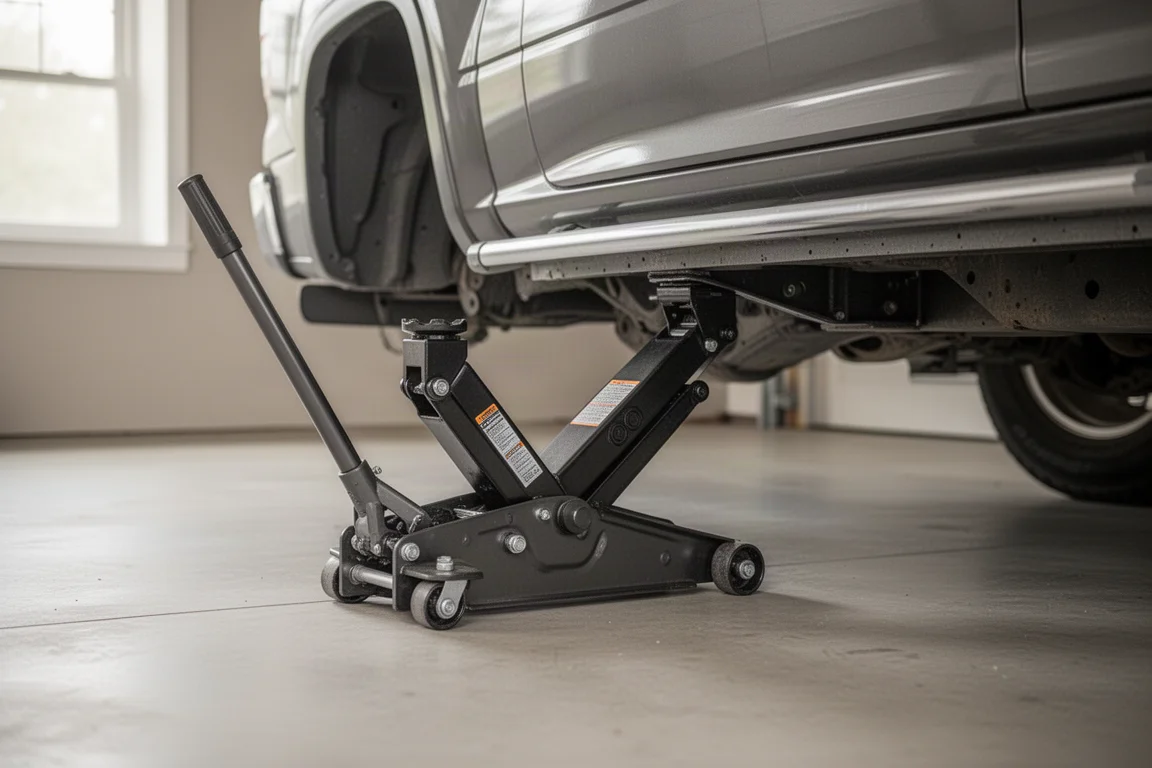
One thing to keep in mind throughout: every jack here comfortably outperforms its rated capacity, which is normal for hydraulics, and all eight survived a 24-hour test holding roughly 3,500 lb each. The differences that matter most are build quality, ease of use, and rolling behavior under load.
Best Budget Pick: Torin Blackjack 3-Ton
At around $93, the Torin Blackjack is the least expensive jack in this comparison. It is also the lightest at just 44 lb, with a 360-degree rotating handle and an easy-to-access oil fill port. Without the extension adapter, it lifted to about 21 in, slightly better than its rated 20 and 7/8 in maximum. With the adapter, which carries only a 2.5-ton rating, it reaches more height but loses some capacity.
The trade-offs are significant. The handle arrived split and very loose, it takes a hefty 47 pumps to reach full height, and the lift arm does not fully return to the home position without help. On the capacity test it topped out at 6,336 lb, the lowest result here, and rolling it under roughly 1,500 lb of load took 141 lb of force with the frame twisting noticeably.
Fast Lift: Masdam 3-Ton Low-Profile
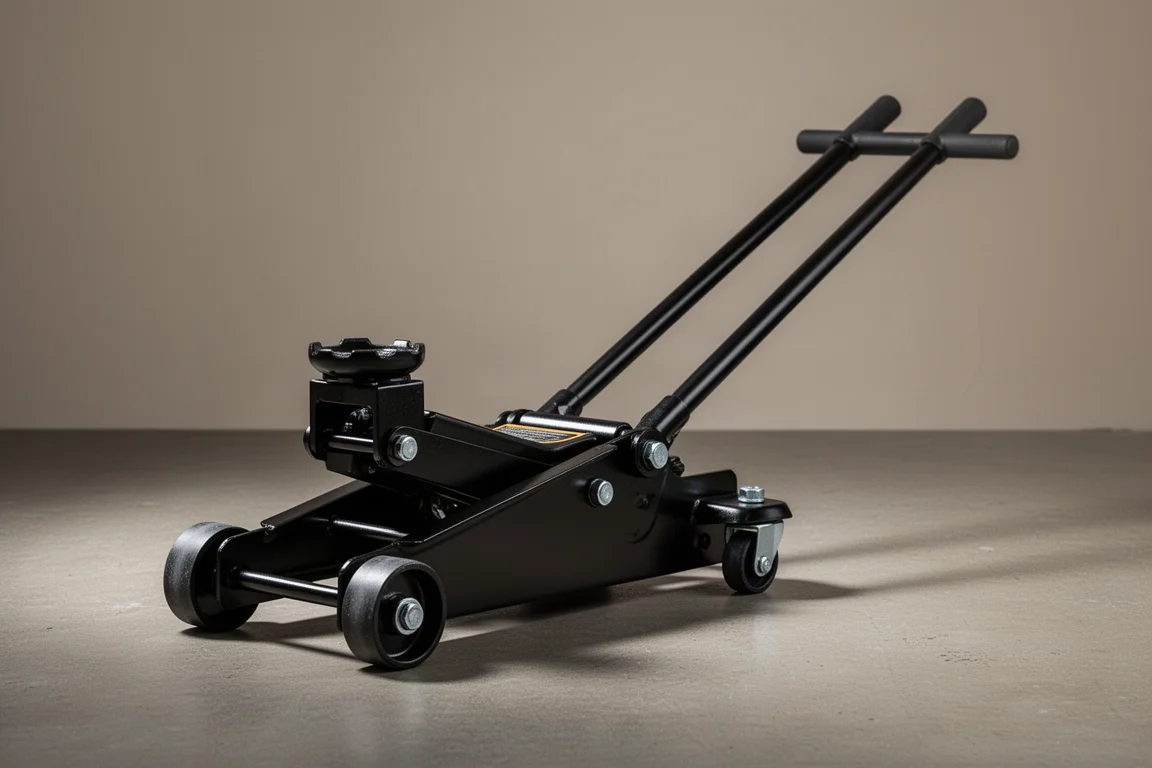
The Masdam is a low-profile 3-ton jack at about $139, and it offers a genuinely speedy lift: just 6.3 pumps to full height, versus 47 for the Blackjack. Its minimum height is right at 3 in, making it easy to slide under lowered vehicles, and it lifts to just under 20 in. It easily beat its rating, topping out at 7,269 lb, and it weighs 75 lb.
Build quality is the main concern here. The lift arm is not properly aligned and badly favors one side, and several welds are incomplete or very sloppy. The welds will probably never fail, but for a tool that lifts dangerous amounts of weight, it is worth asking whether a better-assembled jack is worth a few dollars more.
Best Balanced Value: Pittsburgh 3-Ton
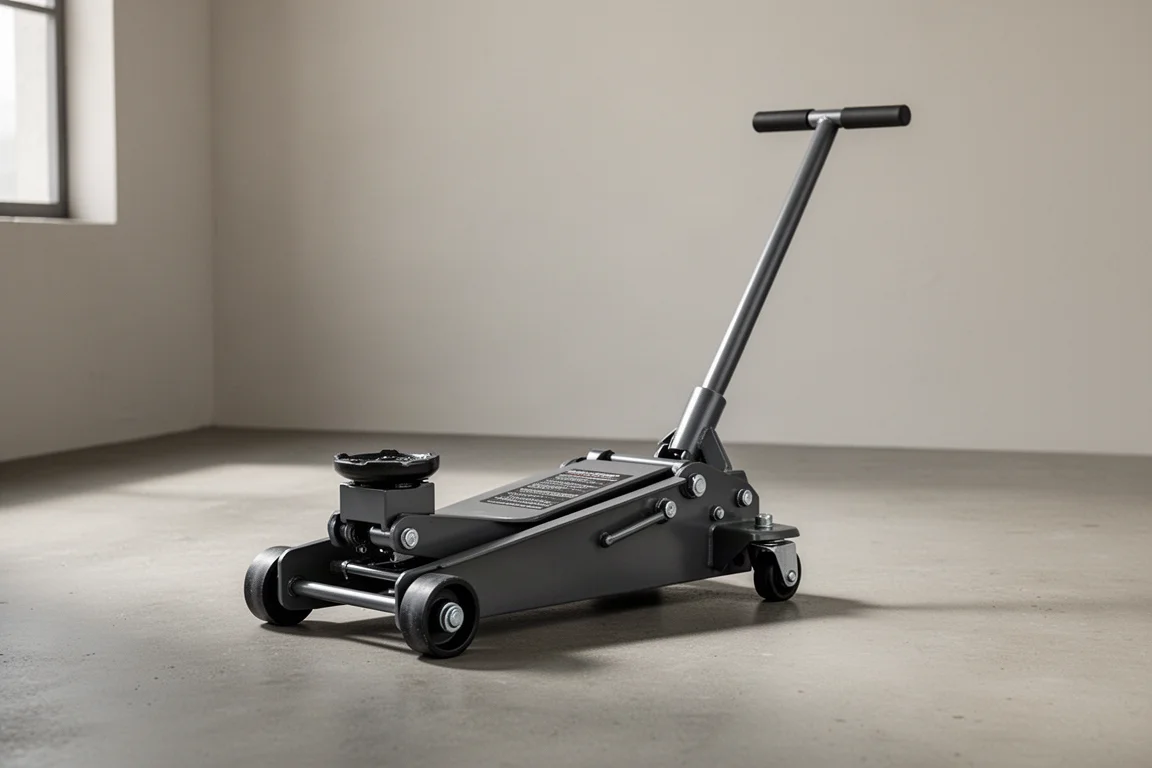
At $160, the Pittsburgh looks almost identical to the Masdam apart from the color and stickers, right down to the grease fitting location above the lift arm shaft. The two may share a factory or parts supplier, but the Pittsburgh appears much better assembled: the lift arm is properly centered and aligned, and the welds are complete and clean with no gaps or seams.
Performance mirrors the Masdam closely. It reaches full height in 6.3 pumps, lifts just under 20 in, returns to home without help, and topped out at 7,301 lb on the capacity test, losing just 319 lb after five minutes. Under load it rolls at 120.5 lb of force, slightly better than the Masdam’s 124.5 lb. At 76 lb it is one pound heavier.
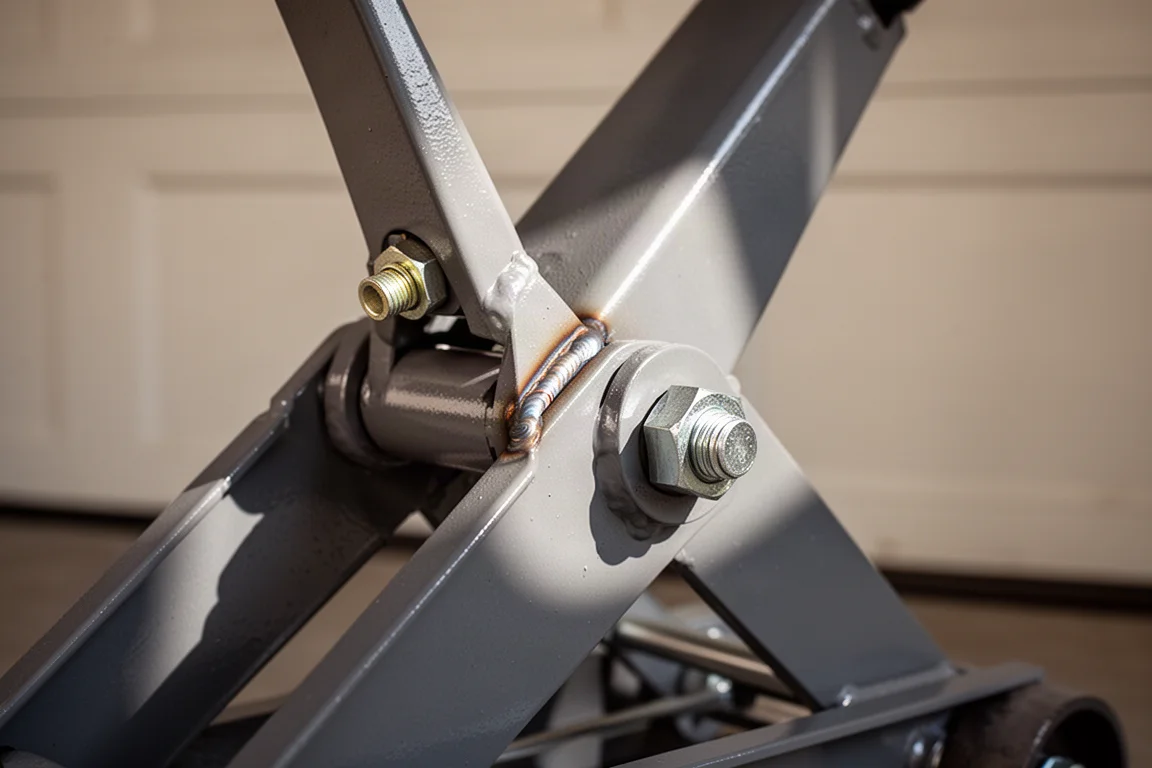
If you buy one of the budget steel jacks, checking the weld quality and lift arm alignment in person before purchase is a sensible step.
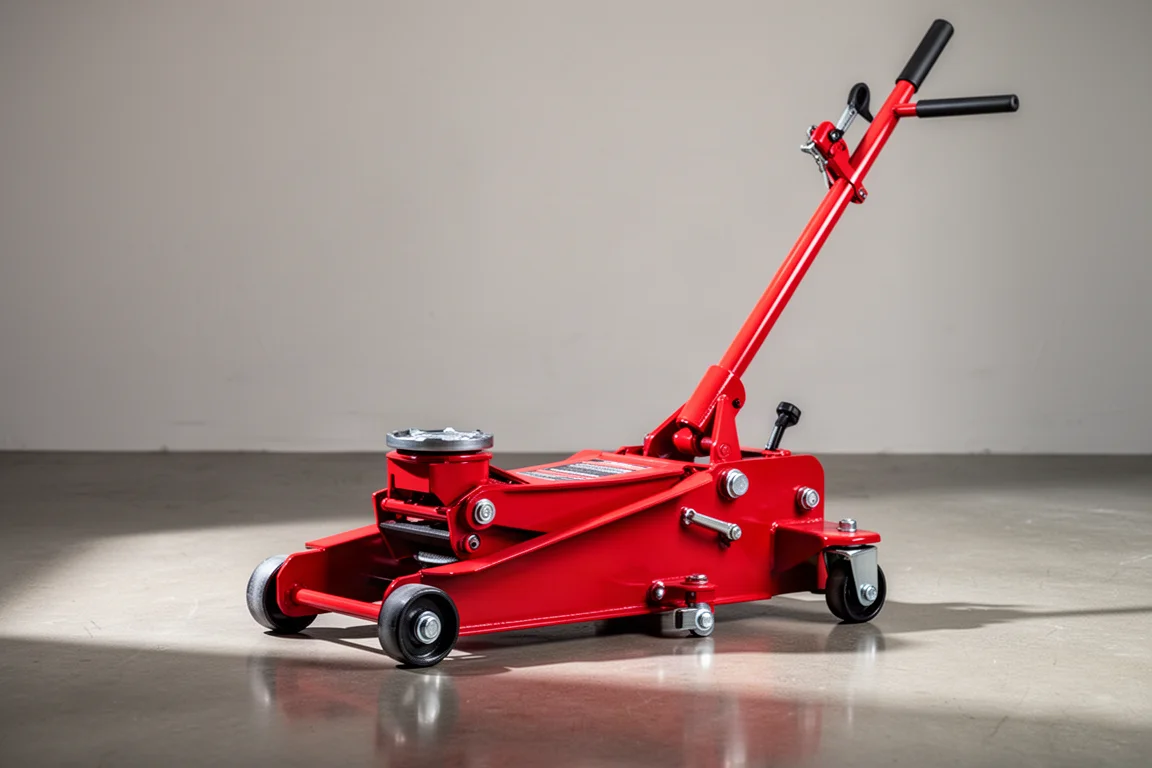
Effort Winner: Husky 3-Ton
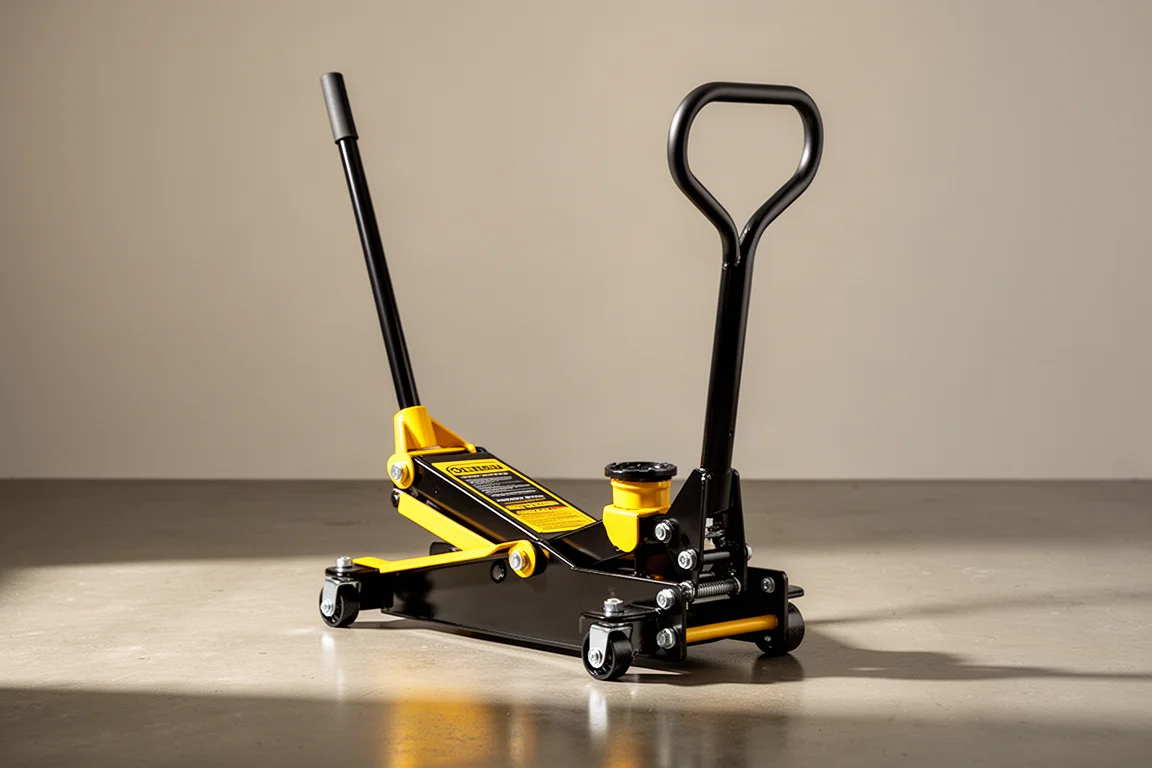
The Husky, at $179, shares the same basic design as the Masdam and Pittsburgh, though its welds are a little sloppy despite being much better than the Masdam’s. It has a 3 in minimum height, right on its claimed figure, lifts to about 20 in, and weighs 76 lb.
Where the Husky shines is effort and pressure retention. It required the least downward handle pressure of any jack tested at 92.5 lb to reach a 6,000 lb lift, and it topped out at 7,042 lb before the bypass engaged. After five minutes it had dropped only 261 lb, the best figure in that test at the time. The downsides are a slightly slower 7.5 pumps to full height and a 105 lb rolling force under load.
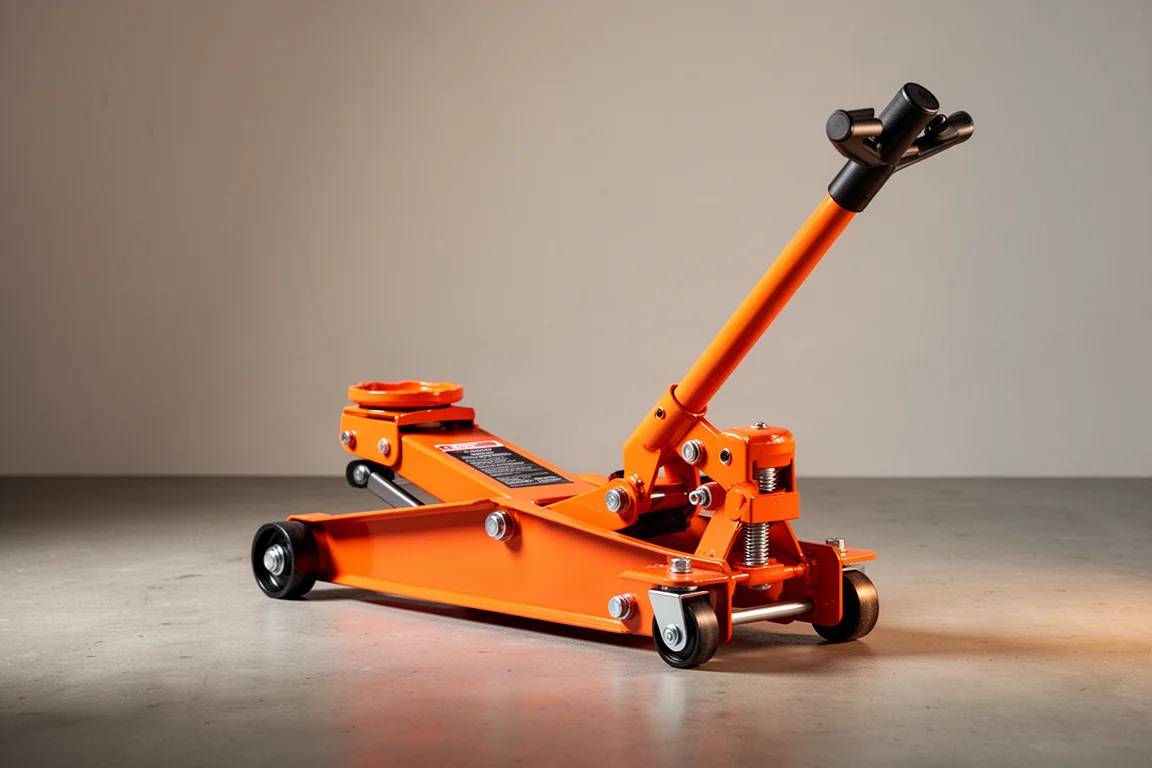
Best Overall Value: Daytona DJ3000
The Daytona DJ3000, sold at Harbor Freight for $280, is a super-duty, professional-grade jack designed to compete directly against Snap-on. It delivers the second-best build quality here, a centered and properly aligned lift arm, and clean, gap-free welds. It also has the most generous lubrication of the group with five grease fittings, and the moving parts arrived thoroughly greased.
Its performance numbers are excellent: the lowest minimum height is 4 in, it lifts to about 23.25 in, higher than any other jack except the Snap-on, and it needs only 4.2 pumps to get there, the fastest in the field. It rolls under load at just 88.5 lb, and lifting a truck to full height took only 28 pumps. At 103 lb it is heavy, and it needs 108.5 lb of handle effort for a 6,000 lb lift, but for the price it is the standout of this comparison.
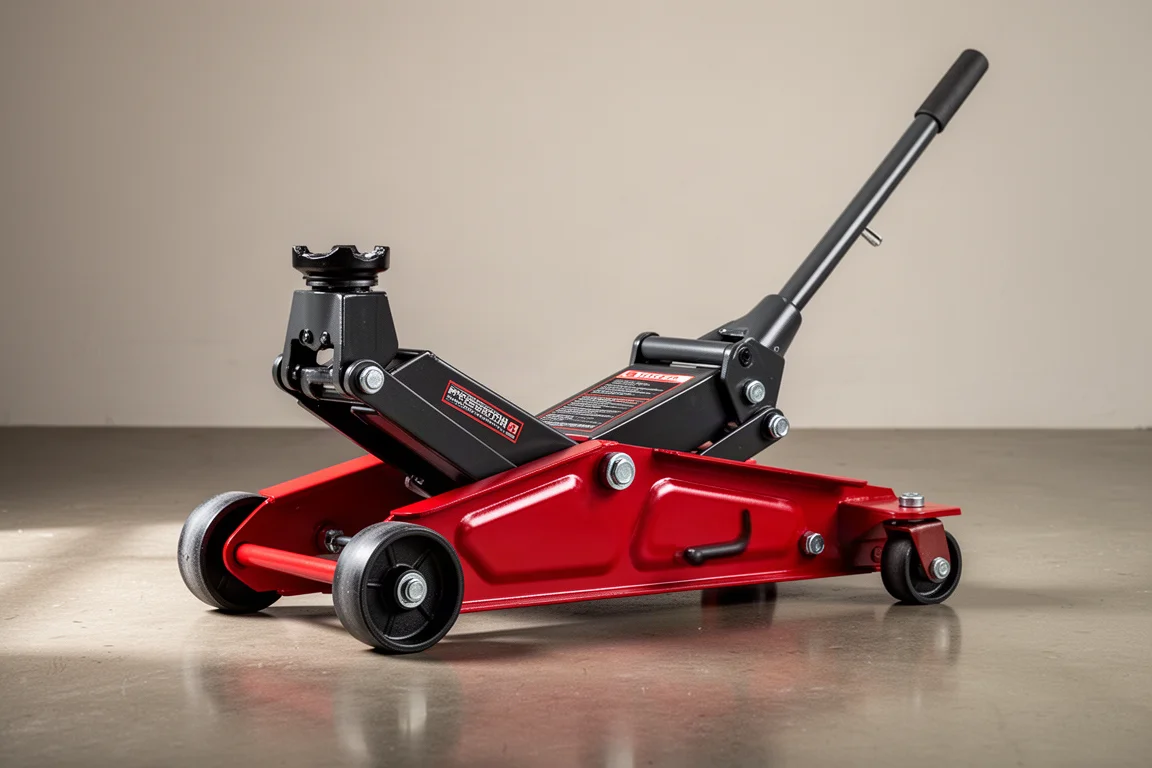
Best Lightweight Pick: Arcan Professional Tools 3-Ton Aluminum
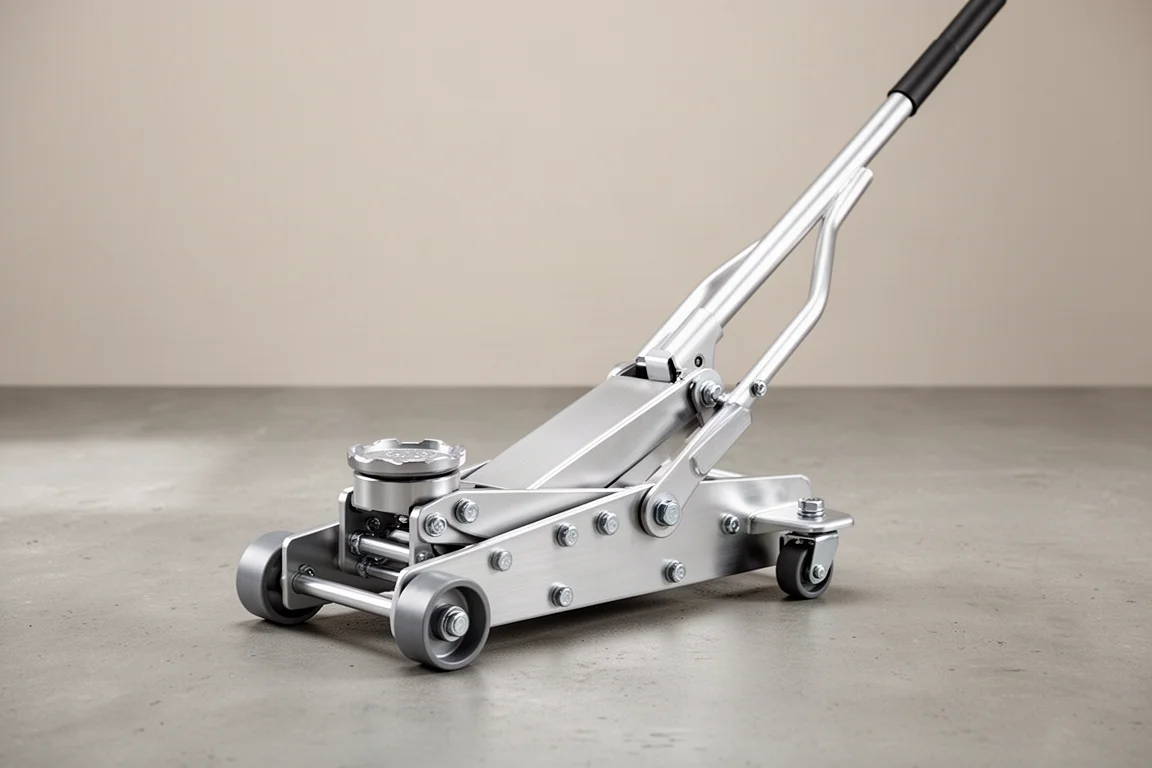
The Arcan, at $280, is the only aluminum jack in the group, and that shows in its weight: just 55 lb, less than half the heaviest jacks here. Instead of welds, it is bolted together, and the build quality is excellent with a centered, properly aligned lift arm. The oil port is reachable without any disassembly, and there are no grease fittings, though most moving parts came greased.
It reaches full height in 6.5 pumps to about 19.5 in, returns home without help, and topped out at 7,029 lb while losing only 195 lb after five minutes, the best pressure retention in the test. It rolls under load at 98 lb, aided by larger front wheels than the Husky. Its minimum height is close to 4 in, so very low vehicles may be a stretch, and handle reach topped out at 49 in on the reach test.
Mixed Bag: Esco 3-Ton
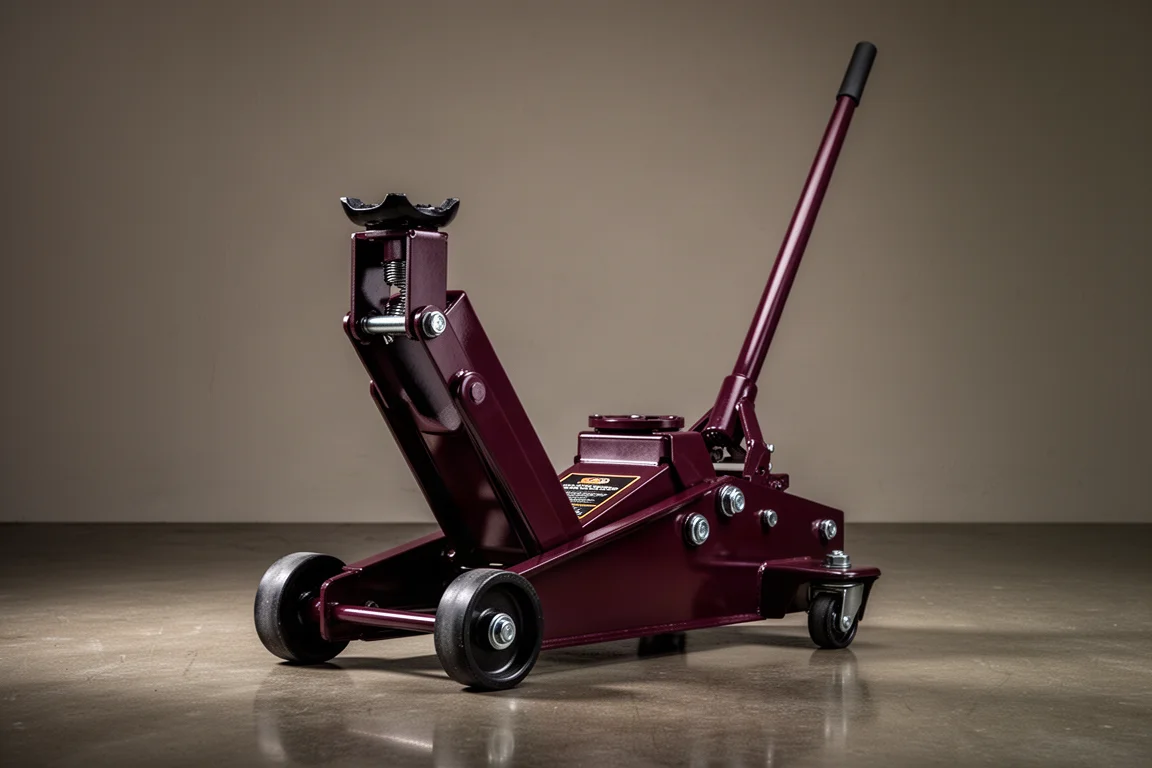
The Esco, at $340, comes with a quick lift pedal and the lowest minimum height here at 3.75 in, along with a maximum height of 20.25 in. The welds look pretty good, the lift arm is properly aligned, and a plastic cover pops off without tools to reach the oil port.
There are real frustrations, though. The handle arrived bent and would not fit together until straightened. The wheels are plastic rather than the metal wheels used on every other jack, and the rear caster is stiff for about half a rotation. It takes 9.5 pumps without a load and 17 with the quick lift pedal to reach full height, and on the truck-lift test it needed 44 pumps, the most of any jack. It required 109 lb of handle effort and topped out at 6,499 lb, about 800 lb below the leader, and its reach at low clearance is limited to just 30 in by an upward-tilting handle.
Premium Benchmark: Snap-on 3-Ton
At $1,000 before taxes and shipping, the Snap-on is the benchmark the Daytona is built to challenge. As expected at this price, the welds look like a professional did them. It shares five grease points with the Daytona, uses the same locking spring pin handle mount for fast install and removal, and mechanically much of it looks the same underneath.
The differences show up in the details: larger 4.2 in front wheels versus the Daytona’s 3.5 in, a larger saddle, a slightly different frame, and the highest lift of the group at 24 in. It reached full height in about 4.2 pumps, rolled under load at just 81 lb, the best result, and nearly hit 7,300 lb on the capacity test. At 110 lb it is the heaviest jack tested.
How They Compare at a Glance
On weight, the Blackjack is lightest at 44 lb, followed by the Arcan at 55 lb, the Masdam at 75 lb, and the Pittsburgh and Husky at 76 lb. On minimum height, the Masdam and Husky are lowest at 3 in, with the Pittsburgh at 3.38 in and the Esco at 3.75 in. Maximum height favors the Snap-on at 24 in, then the Daytona at 23.25 in, the Blackjack at 21 in, the Esco at 20.25 in, and the Husky at 20 in.
For rolling ease under load, the Snap-on leads at 81 lb of force, followed by the Daytona at 88.5 lb, the Arcan at 98 lb, and the Esco at 100.5 lb. On the truck-lift test, the Snap-on and Daytona tied at 28 pumps, with the Masdam third at 30 and the Pittsburgh and Husky at 31. On low-clearance reach at 7.75 in, most jacks managed a full 50 in, but the Arcan, Blackjack, and Esco fell short because of limited handle travel.
Buying Advice: How to Choose
Every jack here held roughly 3,500 lb for 24 hours, so safety at rated loads was never the differentiator. Build quality separates the field: the Arcan and Snap-on earned the highest possible rating, with the Daytona very close behind. The Masdam’s sloppy welds and misaligned lift arm are the biggest red flag in the group, and the Blackjack’s loose, split handle and slow pump count hurt its value case despite the low price.
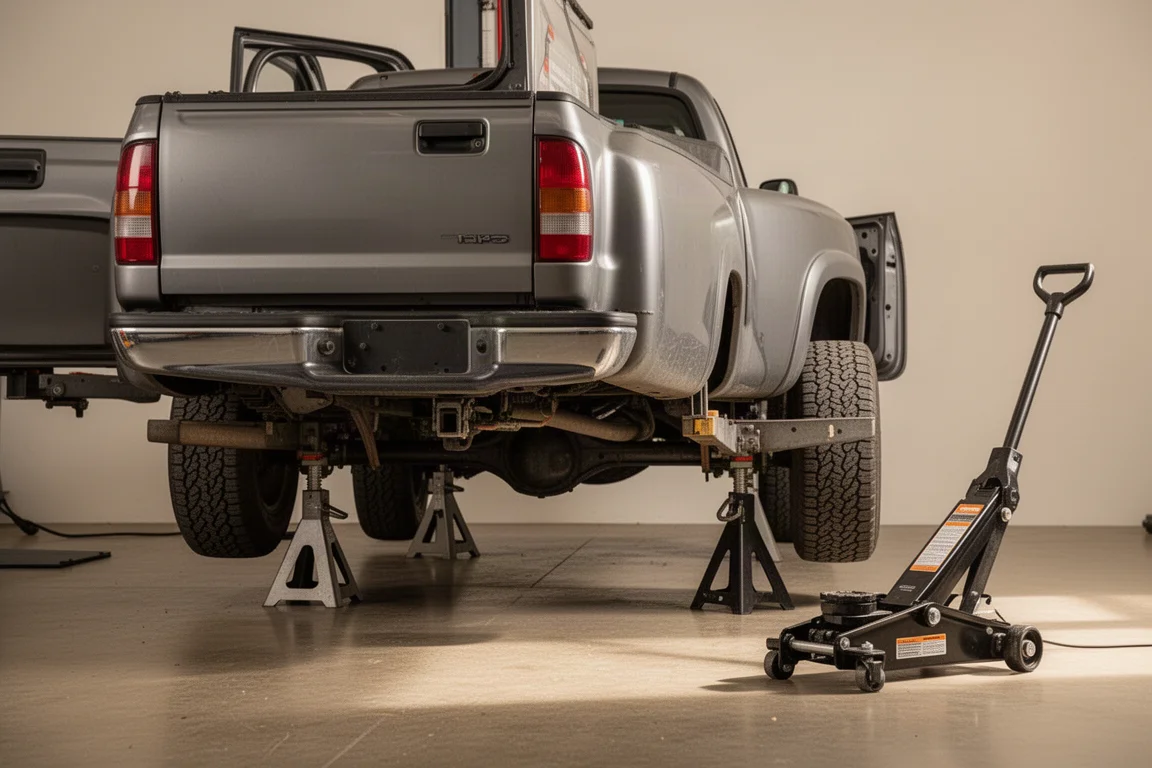
A few practical habits apply to all of these. When a pump stroke feels spongy or the jack will not lift all the way, it is likely low on oil: lower the jack, remove the fill plug, top up with jack-specific hydraulic oil, pump the handle several times with pressure on the saddle, and recheck the level. And no matter which jack you buy, always support the vehicle with jack stands before working underneath it.
Conclusion
If you had to pick just one, the Daytona DJ3000 is the standout: near-premium performance, the fastest lift, near-top build quality, and a $280 price. The Pittsburgh and Husky are strong cheaper alternatives at $160 and $179, with the Husky requiring the least handle effort of any jack tested; check weld quality in person before buying either. For something genuinely light, the aluminum Arcan at 55 lb is a very nice jack, and the Snap-on remains the premium benchmark if budget is no object.
Further reading
Related Reviews
Garage Tools
Badland 3-Ton Off-Road Jack Review: A Shop Jack That Handles Dirt Roads
Harbor Freight's SEMA-buzz Badland 3-ton off-road jack promises rugged build quality and easy mobility. We compare it with the 3-ton Long Reach Daytona to see who it really suits.
Garage Tools
Best 3-Ton Floor Jacks Compared: Four Options for Every Type of Wrencher
A hands-on comparison of the Hyper Tough, Badland, Daytona low-profile long-reach, and Carlisle 3.5-ton floor jacks, with real measurements and buying advice for each type of user.
Garage Tools
Best 3-Ton Jack Stands Compared: 11 Brands Put to the Test
Eleven 3-ton jack stands, from a $31 budget pair to a $227 premium set, tested for stability, handle safety, and load capacity.