Camping Gear
RJVW vs Smart Devil: Two USB Fans for Hot-Weather Camping
Two nearly identical 4-inch USB camping fans, one at roughly half the price. A practical look at airflow, noise, power draw, and the trade-offs worth knowing.
Introduction
Hot-weather camping usually comes down to a single variable: moving air. A small fan will not cool a tent down, but it will keep the air around you circulating, and that is often the difference between a restless night and a comfortable one.
Two compact USB fans do this job well and are close enough in design to be considered siblings: the RJVW USB fan and the Smart Devil USB fan. Both are 4-inch models with three speed settings, a rotating head, and USB power. The meaningful difference is price, with one costing roughly half of the other. Here is how they compare in practice.
Why Airflow Matters for Warm-Weather Camping
Air movement is the whole point. In humid conditions, even a modest breeze across your skin makes a night far more tolerable, whether you are inside a tent, sleeping in a vehicle, or sitting outside at a picnic table. Both fans run from any USB power source, so a power bank, a vehicle outlet, or a wall adapter all work.
Each fan offers three modes: low, medium, and high. Low is the setting most people will live on, because it already moves a surprising amount of air while staying quiet. High is noticeably louder, but it also pushes a serious volume of air when the temperature climbs.
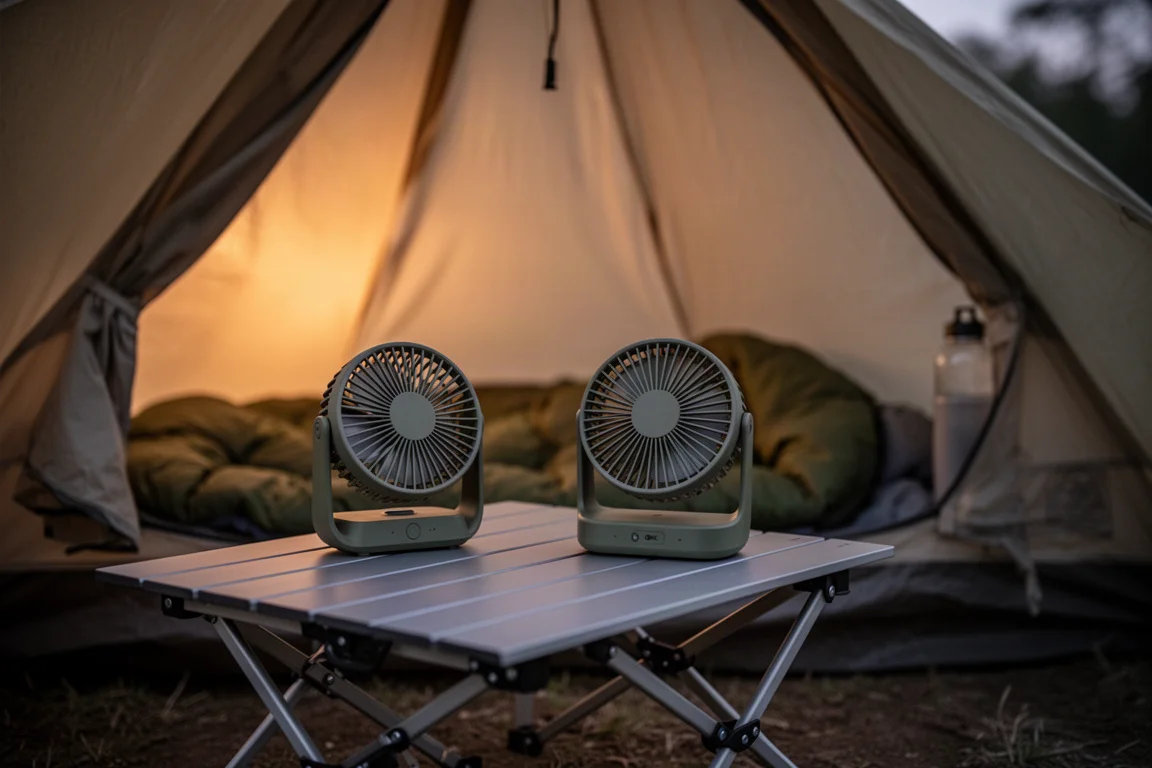
Both fans measure about 4 inches across, which keeps them small enough to pack in a bag without a second thought. That portability is what makes them useful across backpacking trips, overland travel, cabin stays, and everyday use at home when a room gets stuffy.
RJVW USB Fan: The Lower-Cost Option
The RJVW fan is the newer of the two and the cheaper one, selling for roughly $12 to $13 compared with about $23 for the Smart Devil. Physically it measures 4.8 inches by 4.8 inches by 1.7 inches and weighs 5.9 ounces, with a power cord measuring 46.8 inches.
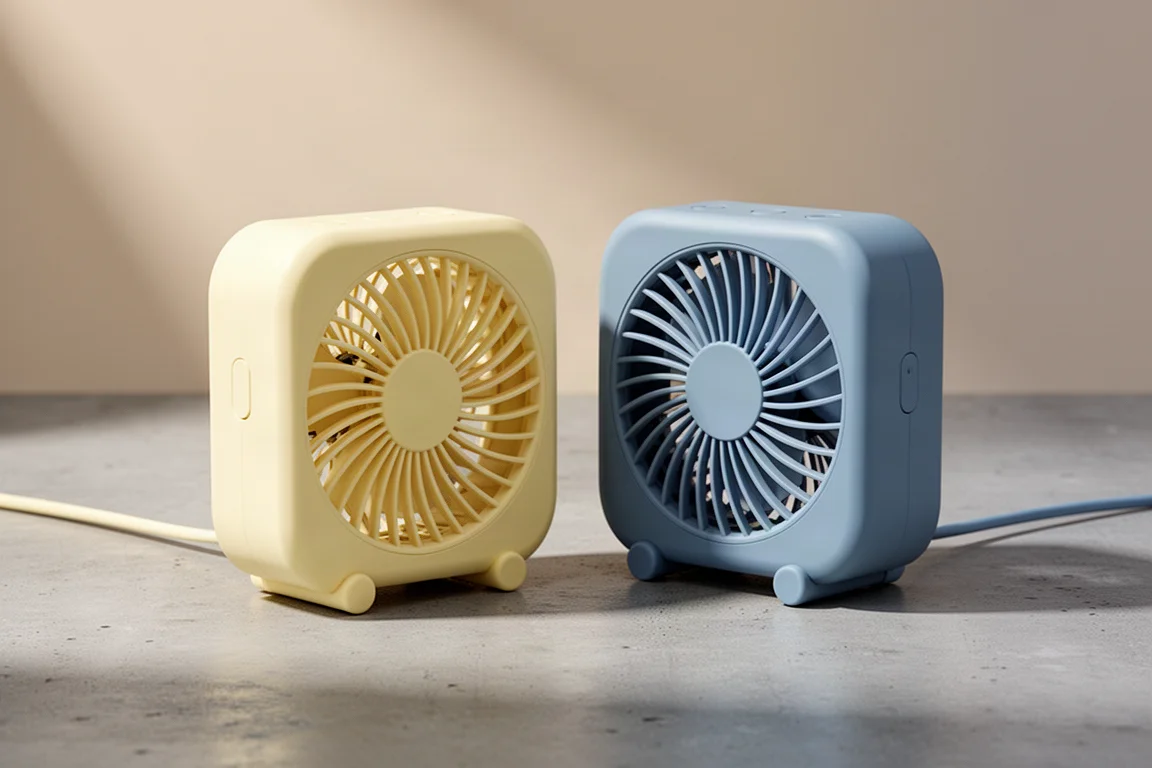
Color availability shifts over time. At various points the RJVW fan has been offered in black, blue, a creamy yellow, and pink, while the green and orange versions have sold out. The blue-and-cream pairing in particular looks sharp on a campsite table.
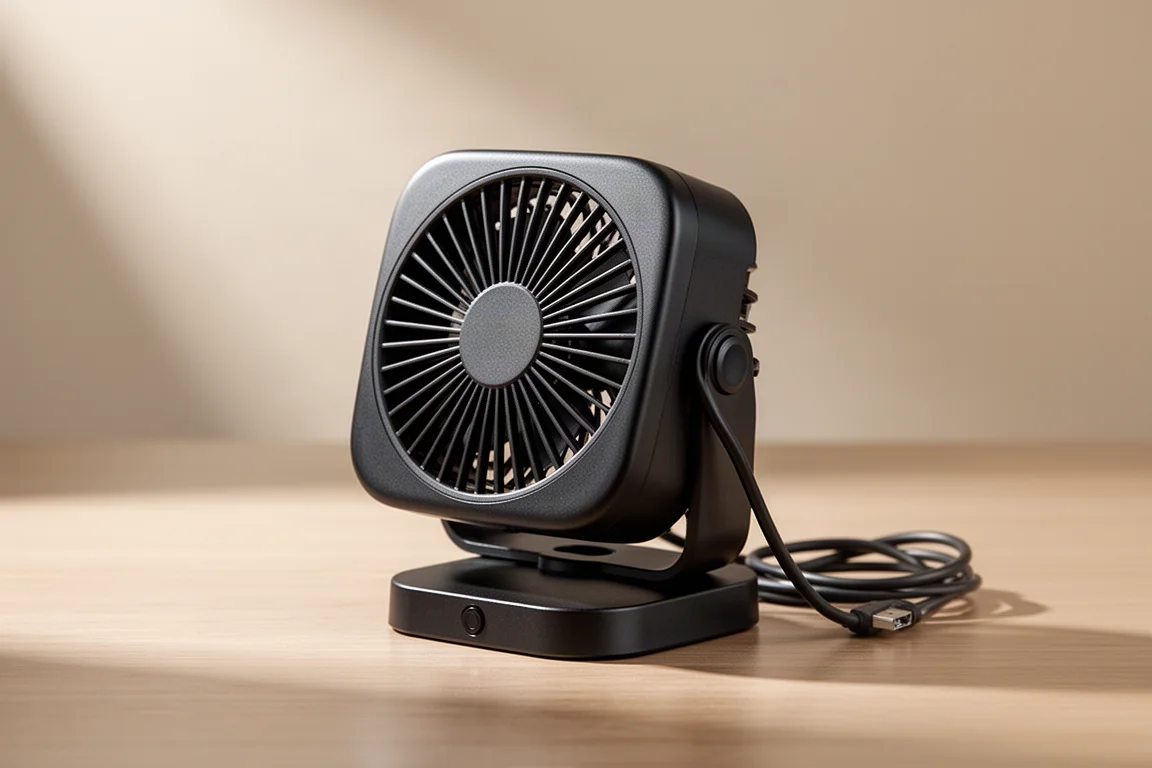
Build quality is a strong point. The housing feels solid, the fan head rotates a full 360 degrees so you can aim the airflow precisely, and silicone feet on the base keep it from sliding across a table or a vehicle surface.
Smart Devil USB Fan: A Five-Year Track Record
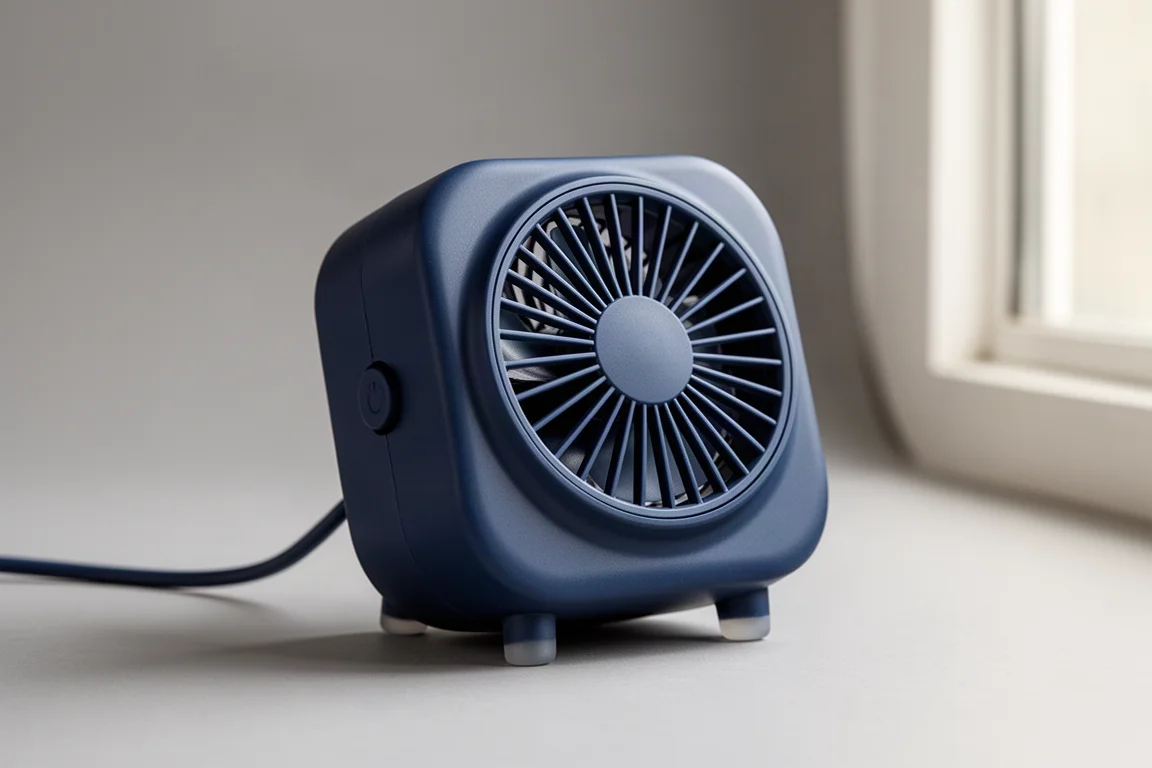
The Smart Devil fan is the older design and the one with the longer service history, having been used across backpacking trips, overland journeys, and off-grid cabin stays for roughly five years. It measures 4.7 inches by 4.7 inches by 1.9 inches and weighs 6 ounces, with a 45-inch power cord. Dimensions and weight are close enough to the RJVW that the two are hard to tell apart in the hand.
Two things show up after years of heavy use. The rotating head has loosened from its original stiffness, though it still holds whatever angle you set. And a small amount of cable shielding has pulled back near the housing, which is cosmetic and does not affect operation.
Finding this fan through a marketplace search can be difficult, since its listings tend to sit low in results. It is generally offered in blue and pink, with other colors appearing intermittently.
What stands out after five years is reliability. It starts every time, runs without rattling, and the motor produces no irritating whine at any of the three speeds.
Build Quality, Noise, and Airflow in Practice
Both fans are well made, and neither shows the flex or hollow feel common in cheap portable fans. Shake either one and nothing rattles inside. The motor noise is a soft hum rather than the high-pitched whine that small fans often produce, which matters when you are trying to sleep a few feet away from it.
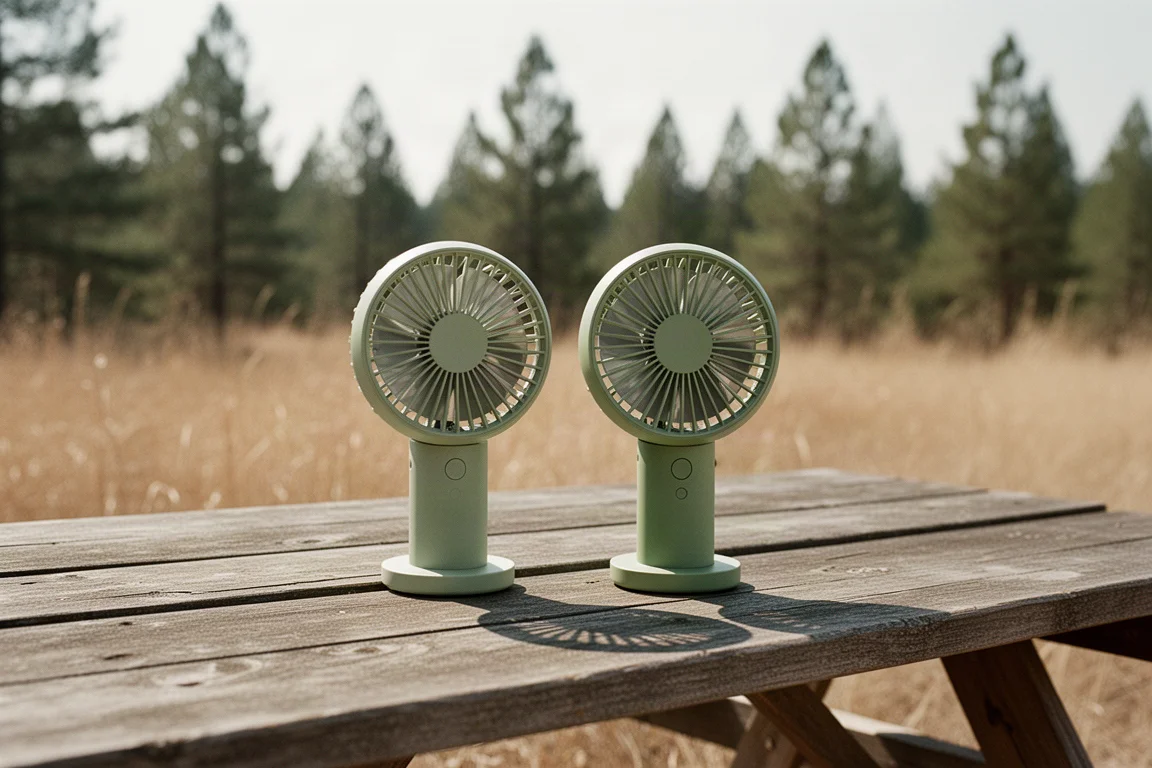
Airflow is the strongest argument for either model. On high, both push enough air to be genuinely comfortable on a hot, humid day, and on low they move just enough to keep you settled without noise becoming a factor. In one memorable stretch of extreme heat at a roadside lunch stop, a pair of these fans made an outdoor table perfectly bearable.
The rotating head is more useful than it sounds. Aiming air directly at your face or chest, or bouncing it off a tent wall, changes how effective a small fan feels, and both models allow that adjustment without tools.
Power, Battery Life, and Mounting Options
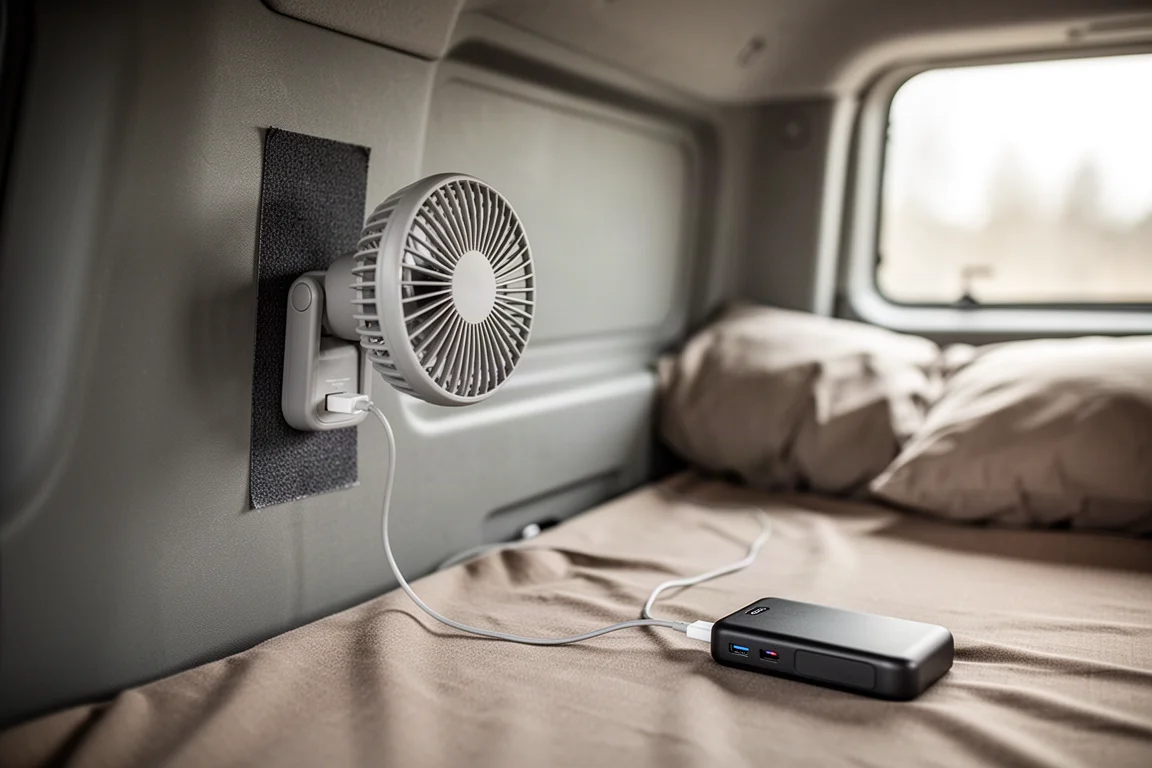
Both fans are powered over USB and will run from essentially any USB source. Estimated draw figures are rough, but the practical takeaway is straightforward: paired with a 10,000 mAh power bank, either fan can run through the night on low and still leave enough capacity to charge a phone. Actual results depend on the phone and battery involved.
Because the fan head rotates fully and the base grips well, mounting options are wider than you might expect. Adding a strip of hook-and-loop tape to the top of the fan and a matching strip inside a vehicle lets you stick the fan to a surface, angle it, and direct air exactly where you need it while car camping.
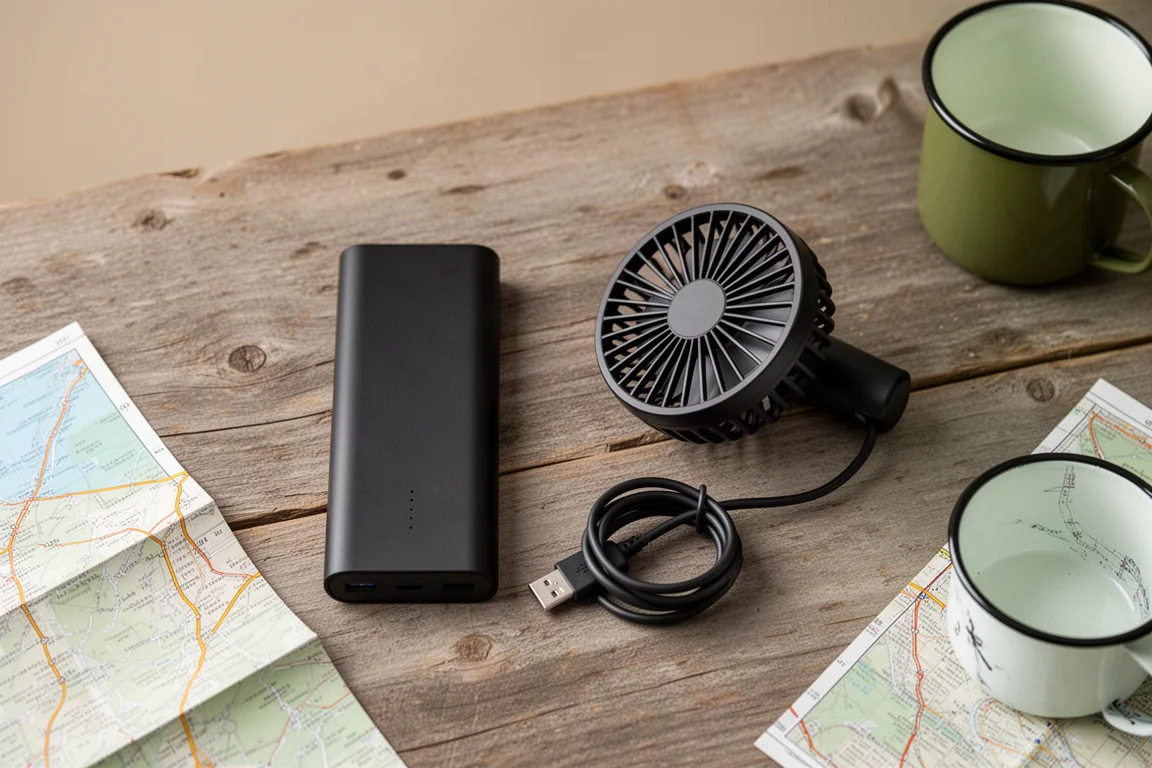
A useful rule of thumb for warm-weather trips is one fan per person. A single 4-inch fan is not enough to keep two sleepers comfortable in a tent, so plan on carrying a second unit if you are traveling with someone else.
Colors, Availability, and Things to Consider
There are a few trade-offs to weigh before buying either fan.
The power cord is permanently attached, so it cannot be unplugged or replaced if it is damaged. A detachable cable with a USB-C or USB-A connection at the fan end would be a better long-term design, particularly for the Smart Devil unit where the cable shielding has started to pull back after years of use.
The connector at the source end is USB-A rather than USB-C. Adapters are widely available, so this is a minor inconvenience rather than a dealbreaker, but it is worth knowing if your power bank or wall charger only offers USB-C ports.
Color availability is also unpredictable. Stock rotates month to month, and specific finishes can disappear for long stretches, so it pays to check what is actually available at the time you order.
Which USB Fan Should You Buy?
The honest answer is that performance is effectively identical. Both move the same amount of air, run at the same three speeds, stay similarly quiet, and share the same 360-degree head and silicone feet. If you can find either one at a good price, you are getting the same experience.
That makes price the deciding factor. The RJVW fan costs roughly $12 to $13 against about $23 for the Smart Devil, and there is no performance penalty for choosing the cheaper option. If the color you want is available, the lower-priced fan is the sensible pick.
The case for the Smart Devil rests on its track record rather than its specification. Five years of continuous seasonal use with nothing worse than a loosened head and a bit of cosmetic cable wear is a meaningful endorsement of long-term durability, and buyers who value that proven history may be willing to pay more for it.
For anyone heading into hot, humid conditions, either fan is a small, light addition to a pack that makes an outsized difference to comfort. Packing one is a low-cost way to make warm-weather trips genuinely enjoyable rather than something to endure.
Conclusion
The RJVW USB fan and the Smart Devil USB fan are close to interchangeable in daily use: same size class, same three speeds, same quiet airflow, same rotating head. Choose the RJVW for the lower price, or the Smart Devil for a design with years of field use behind it. Either way, you are buying airflow, and airflow is what makes camping in the heat work.
Further reading
Related Reviews
Camping Gear
3FUL Ultralight Ground Sheet Review: A Two-Person Footprint Worth Packing
A 6.7 oz two-person ground sheet in ripstop silnylon, priced around $30. Here is what it protects, what it does not do, and who should pack it.
Camping Gear
Backcountry Light Dual-Function Tarp and Floor Review: A Footprint First
A dual-purpose tent floor and tarp that keeps falling rain off you, but cannot block wind. Here is where it works and where it does not.
Camping Gear
Best 2-Person Camping Mattresses for Couples: 10 Options Compared
A practical comparison of ten two-person camping mattresses, covering self-inflating pads, air pads and air mattresses for couples.