Camping Gear
RJVW vs Smart Devil USB Fan: Two Nearly Identical Camping Fans Compared
Two four-inch USB fans with the same airflow, the same three speeds, and a roughly ten-dollar gap between them. Here is how to choose.
Introduction
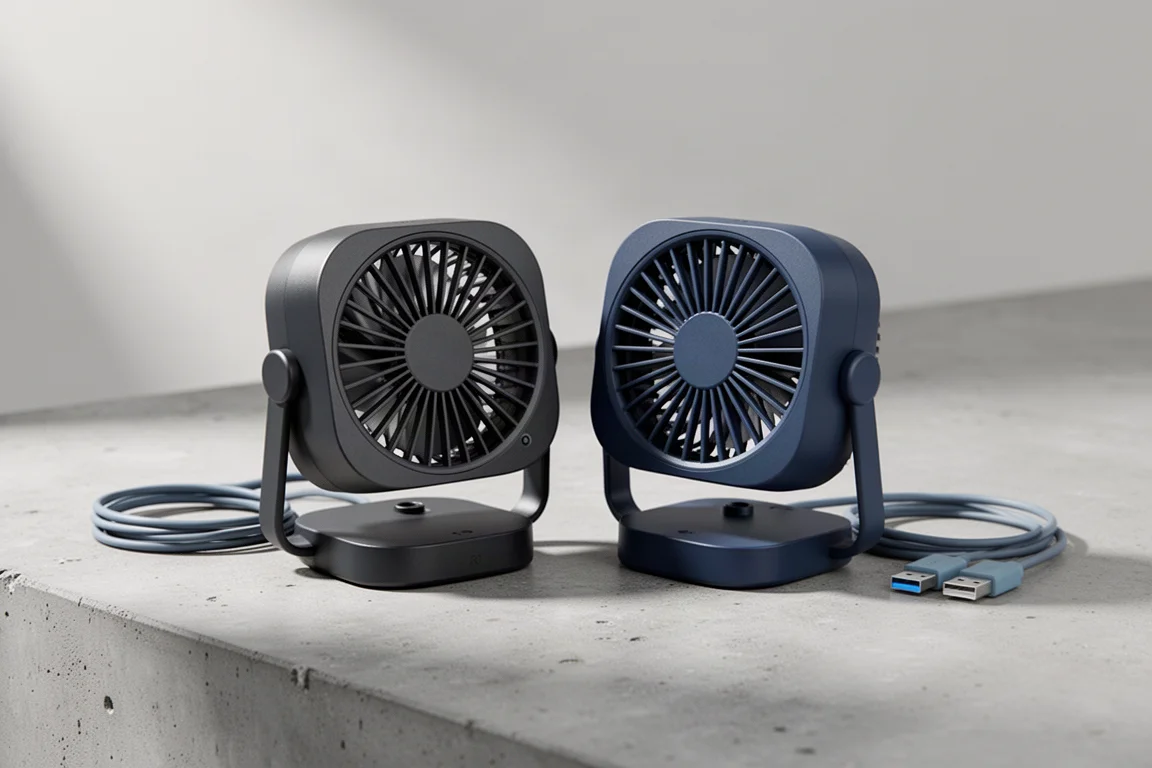
A small USB fan looks like an optional extra right up until the first genuinely hot night in a tent. Two models have earned a place in warm-weather camping kits by doing the same job almost identically: the RJVW USB fan and the Smart Devil USB fan. Both are four-inch fans with three speeds, a rotating head, and the ability to run from any USB power source. The clearest difference between them is price, with the RJVW fan selling for roughly $13 and the Smart Devil fan selling for about $23.
This comparison looks at what each fan does well, where both fall short, and which one makes more sense depending on how you plan to use it.
Why Airflow Changes Warm-Weather Camping
Comfort in the heat comes down to air movement. A steady breeze across the skin makes a humid night far more bearable, whether you are inside a tent, sleeping in a vehicle, or sitting at a picnic table. A small fan running on low can be the difference between a restless night and a comfortable one, and it can make a hot afternoon feel workable instead of draining.

Both fans are built around that single idea. They move a surprising amount of air for their size and stay quiet enough to leave running overnight. In practice, low speed covers most conditions, with medium and high reserved for the hottest afternoons. Used on a table or aimed into a sleeping area, they turn an uncomfortably warm space into a usable one.
RJVW USB Fan: Same Airflow for Less
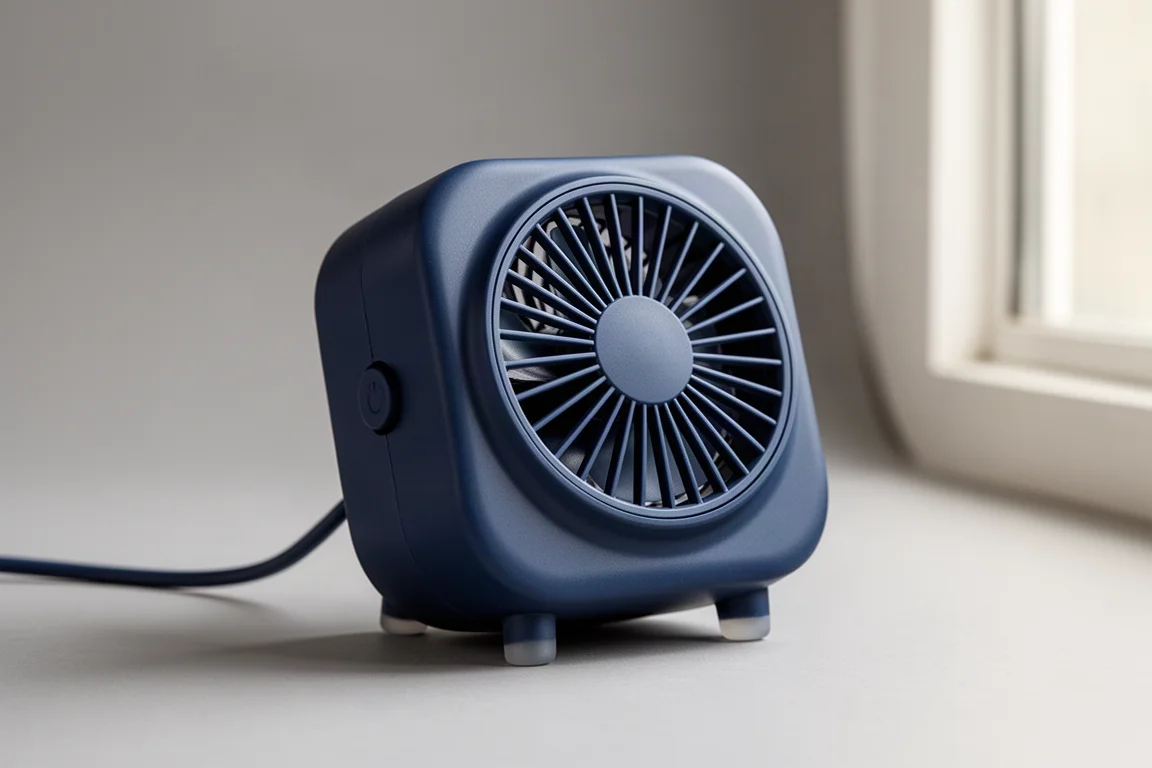
The RJVW fan measures 4.8 by 4.8 by 1.7 inches, weighs 5.9 ounces, and uses a 46.8-inch power cord. It offers three speeds and produces airflow that is difficult to tell apart from the more expensive Smart Devil unit. It has been in regular use since spring across backpacking trips, overland travel, and an off-grid cabin, and it has held up without complaints.
Color availability shifts over time. At the time of writing the fan can be found in black, blue, a creamy yellow, and pink, while the green and orange versions appear to be sold out. Build quality is solid, the finish survives being packed and unpacked repeatedly, and the silicone feet keep the fan planted on a table or a truck tailgate.
Smart Devil USB Fan: Five Years of Reliable Service
The Smart Devil fan is the older of the two, with more than five years of steady use behind it. Dimensions are nearly identical at 4.7 by 4.7 by 1.9 inches, weight is 6 ounces, and the cord measures 45 inches. It has never failed to start, and it has traveled widely in tents, vehicles, and cabins.
Two small signs of age are worth noting. The rotating head has loosened over time, though it still holds whatever angle you set, and a short section of cable shielding has pulled back near the housing. Neither affects performance. This fan is also harder to track down in search results, where it tends to sit lower than other listings, so it can take a little patience to find the color you want. Blue and pink are the confirmed options, with other colors possibly available.
Performance, Noise, and Power Draw
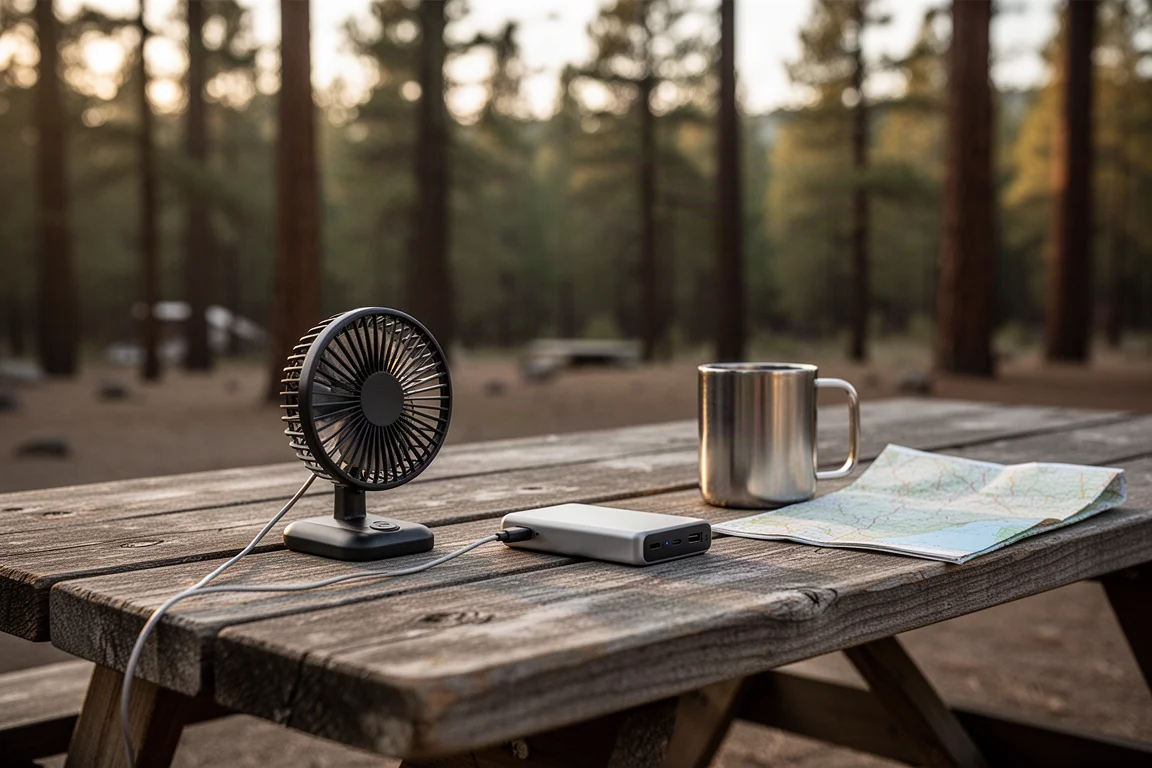
Both fans run from any USB power source, so a power bank, a wall adapter, a laptop, or a vehicle outlet will all work. With a 10,000 mAh battery pack, low speed can run all night and still leave enough capacity to charge a phone, although that depends on the phone and the battery involved. Rough estimates put low-speed draw well below high-speed draw, which is what makes overnight use realistic on a modest battery.
Noise is well controlled. There is motor sound as speeds increase, but no whine and no rattle, and nothing that becomes irritating in a quiet tent. Low speed is quiet enough to sleep beside, which is where most people will spend their time. High speed is noticeably louder but moves a great deal of air for a fan this size.
Build Details and Real-World Mounting
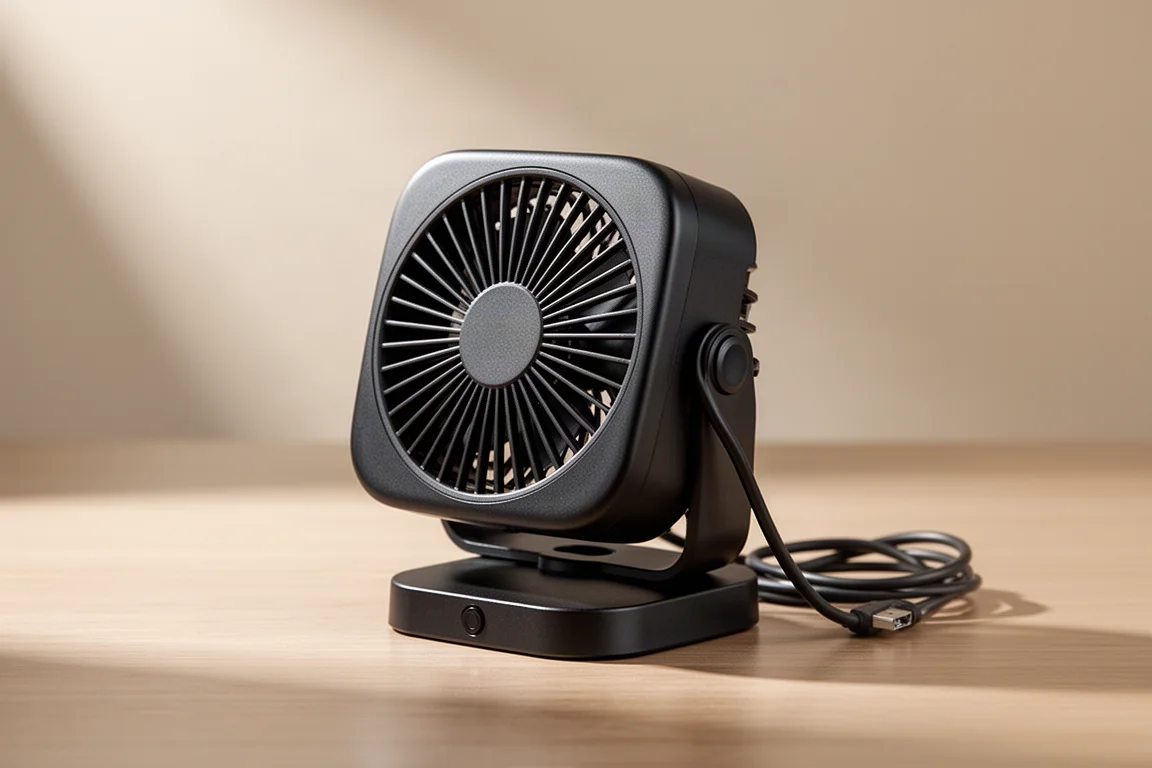
The head rotates a full 360 degrees, so airflow can be aimed exactly where it is needed, and a single button cycles through low, medium, high, and off. The silicone feet grip smooth surfaces and keep the fan steady. A small strip of hook-and-loop tape on top of the housing allows the fan to be mounted inside a vehicle, where the head can then be angled toward a sleeping area, a simple trick that makes car camping far more comfortable.
Both fans use a USB-A plug. Anyone carrying USB-C only chargers will need an adapter, which are easy to find and inexpensive. The cable itself cannot be detached or replaced, which is the main long-term limitation of the design.
Pros and Cons to Keep in Mind
The strengths are consistent across both models. Build quality is good, durability is proven, and the airflow is strong for the size. The rotating head adds real versatility, letting the same fan work on a table, in a tent, in a vehicle, or in a cabin. Operation is simple enough that there is nothing to learn, and the quiet motor means the fan can run while you sleep.
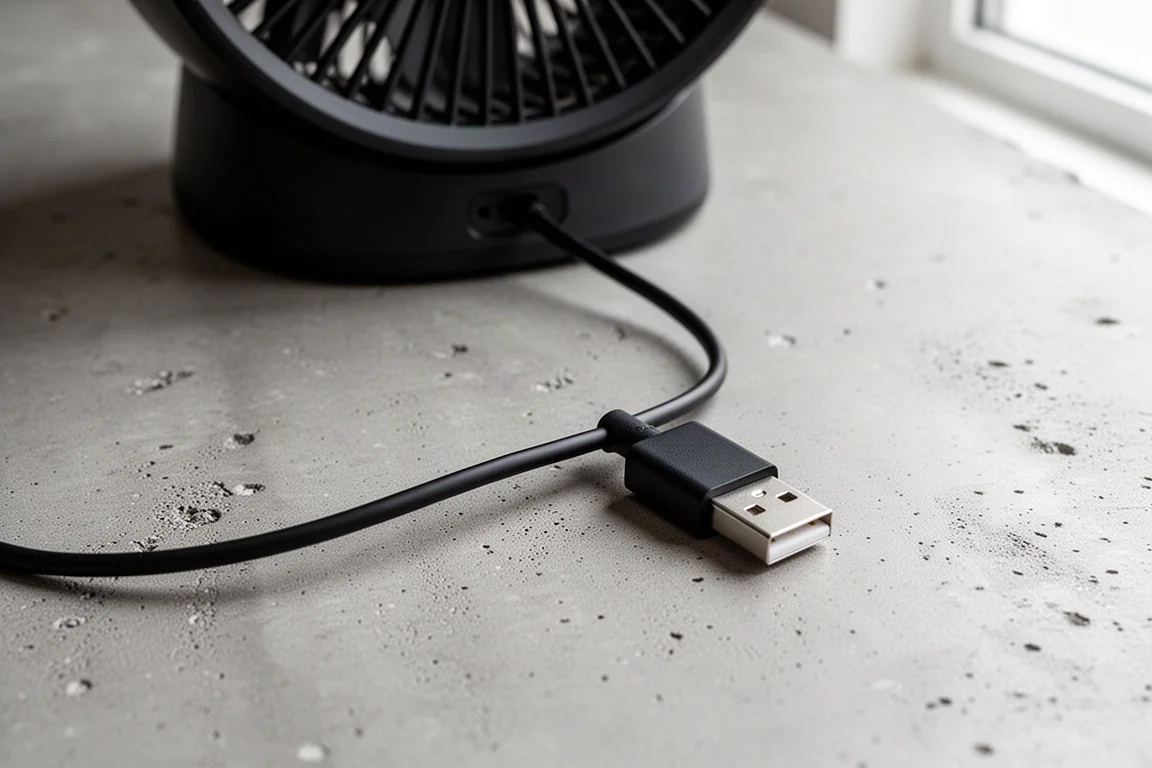
The drawbacks are shared as well. One fan is not enough for two people, so anyone camping with a partner should plan on a second unit. The permanently attached cord cannot be swapped out if it is damaged or if the shielding wears, and a replaceable connection would be a welcome improvement. The USB-A plug is the last point to consider, since some users will prefer USB-C and need an adapter to bridge the difference.
Buying Advice
If performance is the deciding factor, the two fans are effectively the same product, which makes price the practical tiebreaker. The RJVW fan delivers the same airflow and the same three speeds for roughly $13 against about $23 for the Smart Devil fan, so the lower-cost option is the straightforward choice for most buyers. Color availability changes from week to week and month to month, so it is worth ordering the finish you want while it is in stock.

Buy one fan per person rather than sharing a single unit, and add a USB-C adapter if your chargers do not include a USB-A port. For anyone who values a long service record above all else, the Smart Devil fan has five years of reliable use behind it, while the RJVW fan is the newer arrival that has performed identically since spring. Either way, the small hook-and-loop mounting trick is worth copying for vehicle use, and a 10,000 mAh power bank is enough to cover an overnight run on low.
Conclusion
These two fans are close enough in design and output that the decision comes down to price and patience. The RJVW fan matches the Smart Devil fan’s airflow at roughly half the cost, while the Smart Devil fan offers a longer track record and can simply be harder to find in listings. Both are lightweight, quiet, and easy to power, and both turn a hot, humid night into a manageable one. For warm-weather camping, that is a small addition with an outsized effect on comfort.
Further reading
Related Reviews
Camping Gear
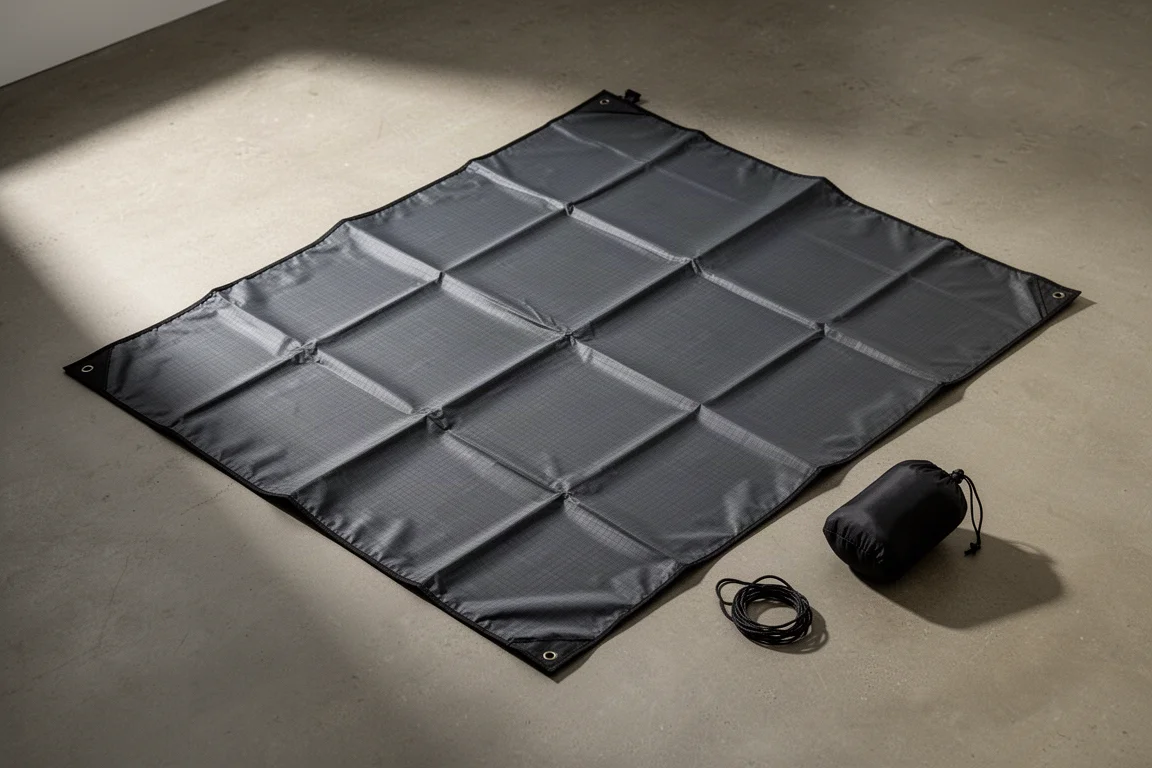
3FUL Ultralight Ground Sheet Review: A Two-Person Footprint Worth Packing
A 6.7 oz two-person ground sheet in ripstop silnylon, priced around $30. Here is what it protects, what it does not do, and who should pack it.
Camping Gear
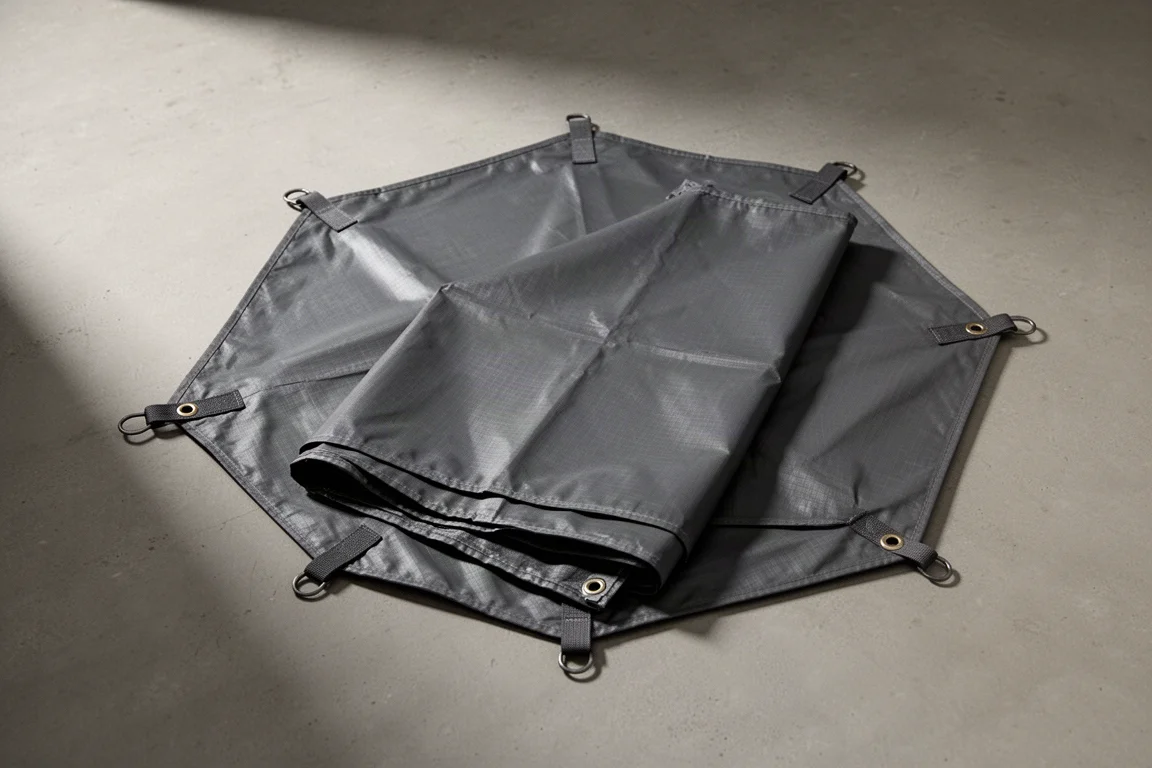
Backcountry Light Dual-Function Tarp and Floor Review: A Footprint First
A dual-purpose tent floor and tarp that keeps falling rain off you, but cannot block wind. Here is where it works and where it does not.
Camping Gear
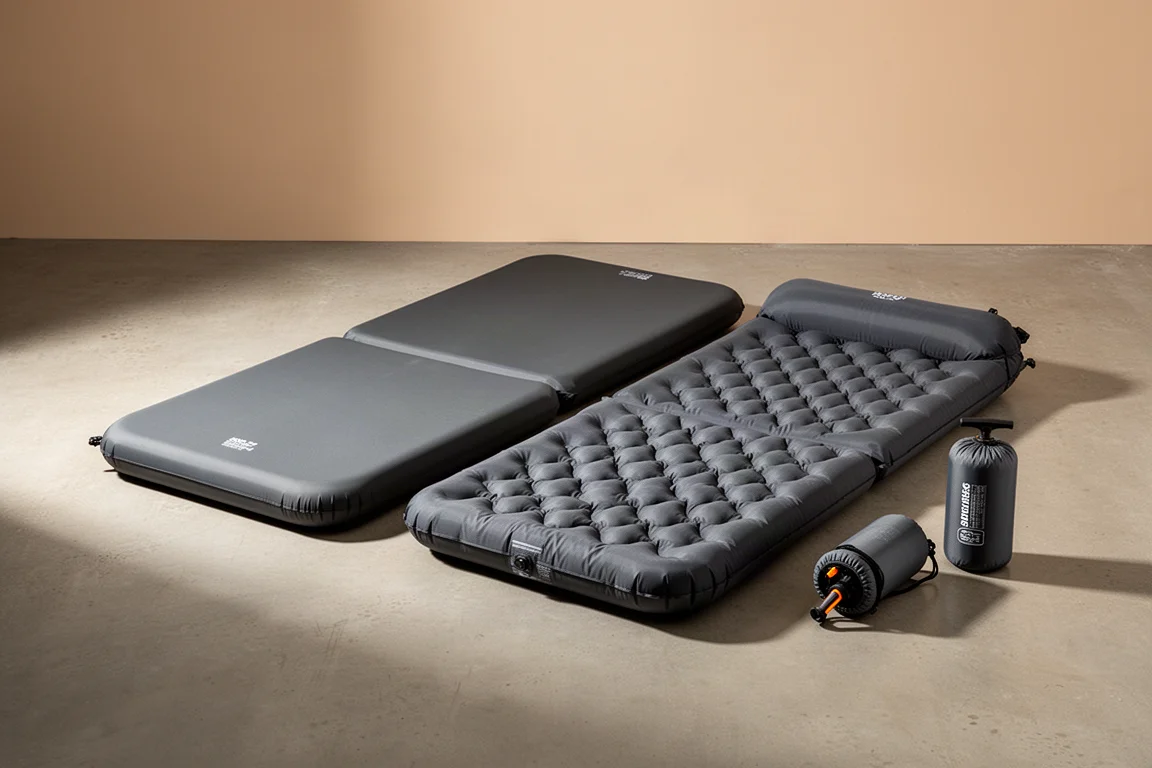
Best 2-Person Camping Mattresses for Couples: 10 Options Compared
A practical comparison of ten two-person camping mattresses, covering self-inflating pads, air pads and air mattresses for couples.