Snowboard Boots
Ride Trident Snowboard Boot Review: Stiff, Responsive, and Built for Freeride
A close look at Ride's second-stiffest boot, with triple Boa closure, a burrito wrap liner, and Michelin rubber outsole.
Introduction
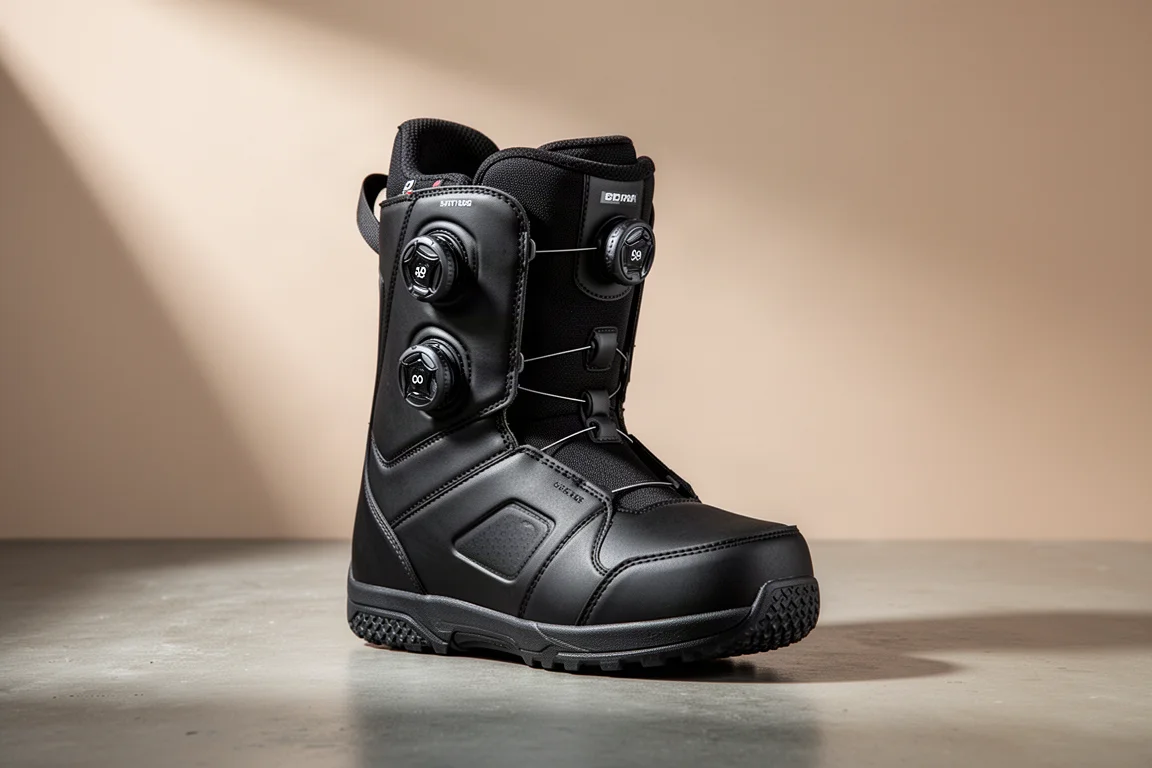
The Ride Trident sits near the top of Ride’s boot line as the brand’s second-stiffest offering, aimed squarely at riders who want response, rebound, and a low-profile feel. It ships with a triple Boa closure system and Ride’s burrito wrap dream liner. If you are considering buying boots online, it is still worth getting sized properly at a local shop first, because the best boot is the one that fits your foot and fits your needs.
Who This Boot Is For
The Trident is best understood as a freeride boot. It suits riders who put a lot of power into their riding, live in their boots, and want strong response. It is not aimed at park-heavy riders. Think big lines, aggressive carving, and terrain where a stiff, planted boot earns its keep. If that description sounds like you, keep reading. If you want a softer, more forgiving ride, other models in the line will make more sense.

Shell and Durability
The shell leans heavily on TPU, especially around the toe area. The only real seam you are likely to notice sits on the side, and even that one is not aggressive. When you crank your toe strap down, you probably will not feel it. There is also a double stitch seam at the bottom holding the tongue on with a small guard, so if you hack at the boot with your edge, you are mostly hitting TPU rather than damaging the boot itself.
Around the ankle, articulation is aggressive and takes a fair amount of break-in. The boot feels more vertically oriented, and it is on the stiffer side, though not as stiff as the Insano. At the back, Ride applies its urethane “slime” panel, which provides rebound and drive when you push back into the boot. A generous cutout at the top pushes out slightly for riders with larger calf muscles, though if your calves are truly outsized, a model with an adjustable back piece like the Insano may be the better pick.
Triple Boa Closure System
The Trident uses three Boa dials. The front dial controls the upper, the dial on the outside of the boot controls the lower, and the dial on the inside controls the internal harness. That gives you a lot of customization over how the boot wraps your foot and lower leg.
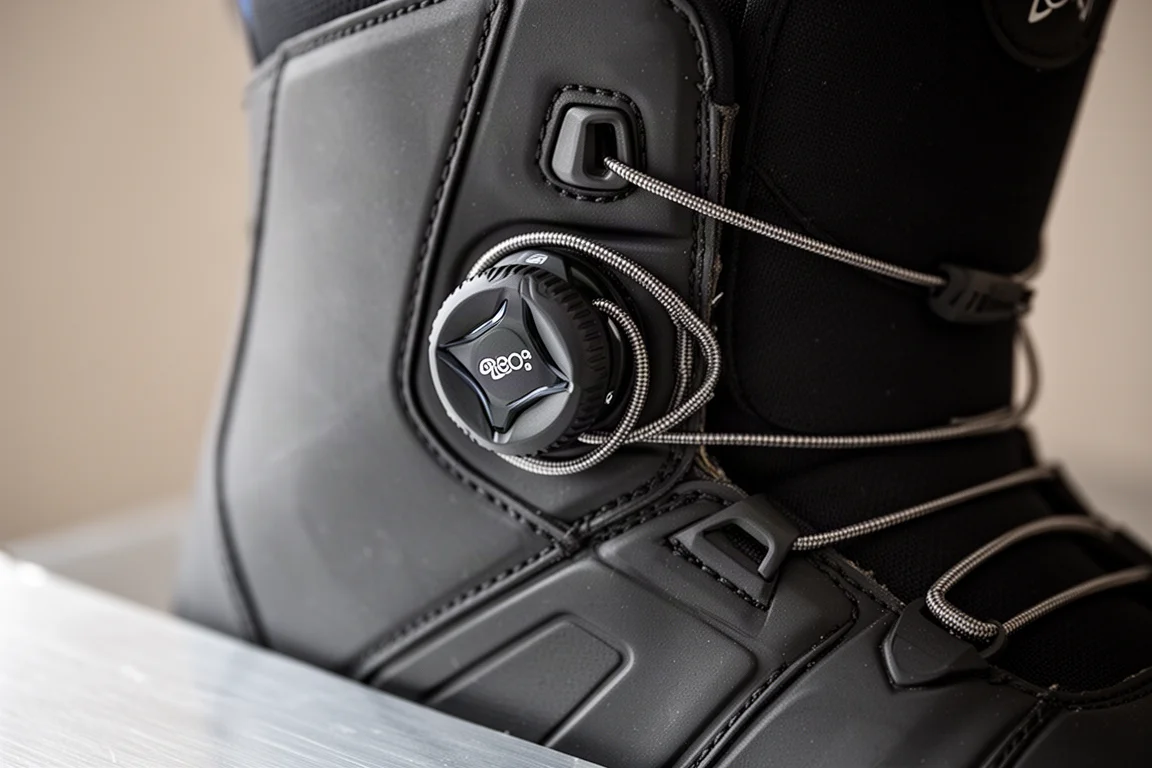
One quirk to know before you buy: the outside dials use the Boa H5 and the tightening directions are mirrored between boots. On the left boot, righty is loosey and lefty is tighty; on the right boot it is the standard righty tighty. It is not uniform, and it takes some getting used to.
Liner and Comfort Details
Inside, you get Ride’s burrito wrap dream liner. Rather than opening from the front, it opens from the side, which changes how the liner sits around the leg. The liner features a cord-out heel pocket that works well for larger ankle bone protrusions. If you swap the stock insole, make sure your ankle bone lines up with that heel pocket.
A large butterfly wrap adds rigidity to the back and sides of the liner for better response. There is one lower seam that some riders may feel and others will not, held in place with Velcro. Inside you also get fantasy fur to help your foot slide in, plus a slip-and-grip panel that lets your foot slide down on entry but grips your sock when you pull back up. J-bars in a hybrid V and U shape round out the heel hold.
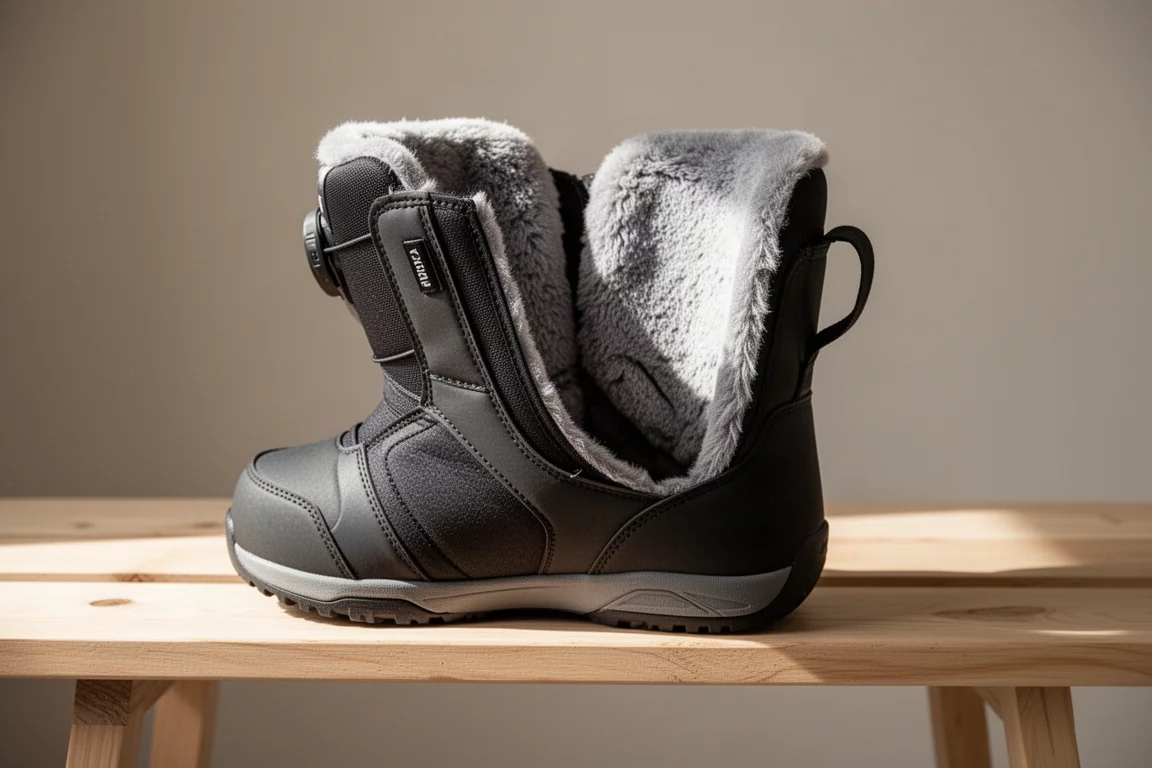
The footbed is Ride’s Impact Elite, with posting and a deep heel pocket. If you ride more than five to ten days a year, swapping in an aftermarket insole is a worthwhile upgrade.
Sole and Board Feel
Underfoot, the Trident gets Michelin rubber, which offers better grip on icy conditions along with a solid tread pattern and good impact dampening. The trade-off is that the sole is fairly rigid, so it dissipates kinetic energy rather than passing it through. If you are chasing maximum board feel, that dampening works against you. The sole is also not especially tall, so you sit a bit lower in the boot, which changes how your binding performs.
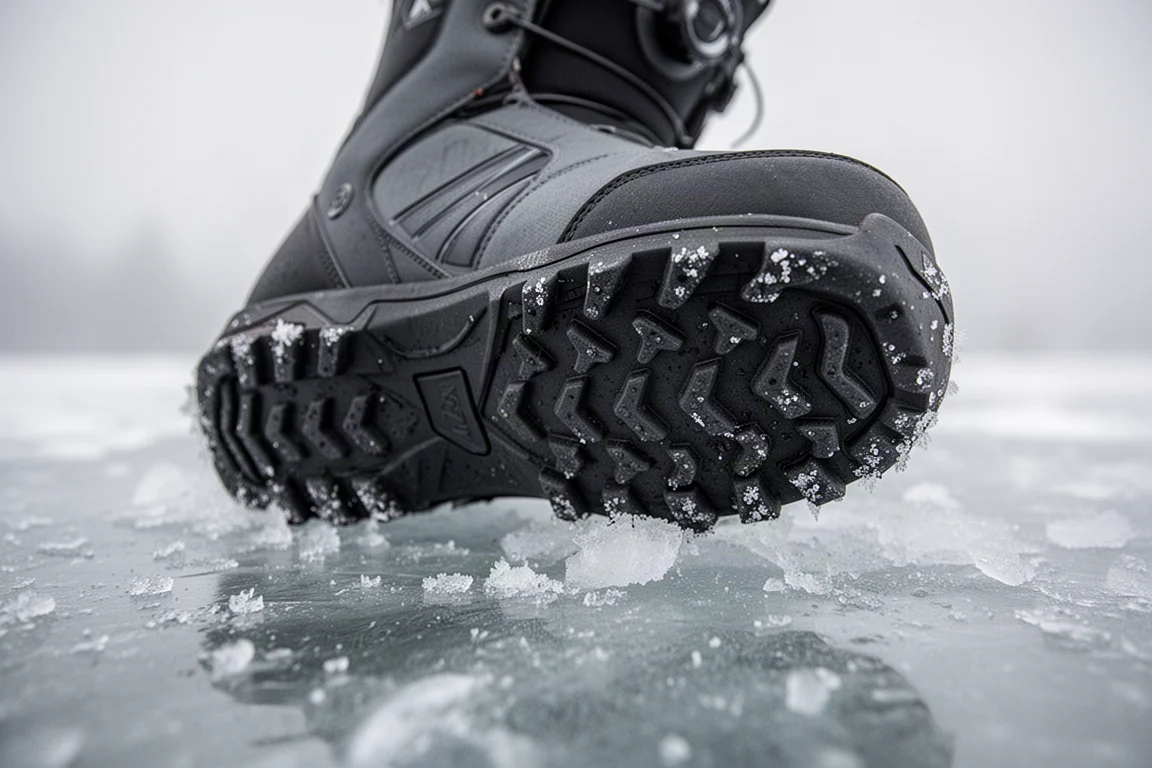
For a size US 10 (28 mondo), the boot shell measures just over 10 inches at the back and just under 10.5 inches at the front, with a forefoot width of about 4.5 inches at the widest section and a toe-to-heel length of just over 12 inches. The stock footbed comes in around 10.75 inches long and 3.75 inches wide.
Buying Advice
The Trident’s triple Boa system will not be for everyone, but it delivers meaningful customization, and the urethane-heavy construction gives the boot real rebound you can feel when driving into it. Compared with the Insano, it is a little more forgiving; compared with softer boots like the Torrent or Fuse, it is noticeably stiffer. If you want a responsive, low-profile boot with strong rebound for freeriding, aggressive carving, and big terrain, the Trident deserves a spot on your shortlist. Just get sized properly, because fit decides everything with boots.
Conclusion
The Ride Trident is a purpose-built freeride boot: stiff, responsive, well protected, and backed by thoughtful liner details. Riders who demand power transfer and durability will get a lot out of it, while softer-riding park-focused riders should look elsewhere in the line. If it fits your foot and fits your needs, it is a strong choice.
Product link
View more details for Ride Trident
This product is mentioned in the review. Check the specifications, options, and compatibility before buying.
View more details for Ride TridentFurther reading
Related Reviews

Snowboard Boots
32 Team Two Double Boa Review: 32's Highest-End Women's Snowboard Boot
A closer look at 32's top-tier women's snowboard boot, from the 3D molded toe box and double Boa lacing to the Performance Fit liner and heat-reflective footbed.

Snowboard Boots
Bataleon Acid BOA Snowboard Boot Review: A Serious First Entry from a Board Brand
Bataleon's first snowboard boot, designed by a former Burton boot designer, brings a stiff flex, dual BOA closure, and a heel hold system worth a closer look.

Snowboard Boots
Battalion Acid Boot Review: A Stiff, Aggressive Boot Built to Last
The Battalion Acid Boot is the brand's highest-end offering, built with seamless construction, TPU reinforcement, dual BOA lacing, and a heat-moldable liner. Here is what to know before buying.