Snowboards
Ride Shadowband Review: A Consistent All-Mountain Freestyle Snowboard
A practical look at the Ride Shadowband, a directional twin camber snowboard positioned as a one-board quiver for all-mountain freestyle riding.
Introduction
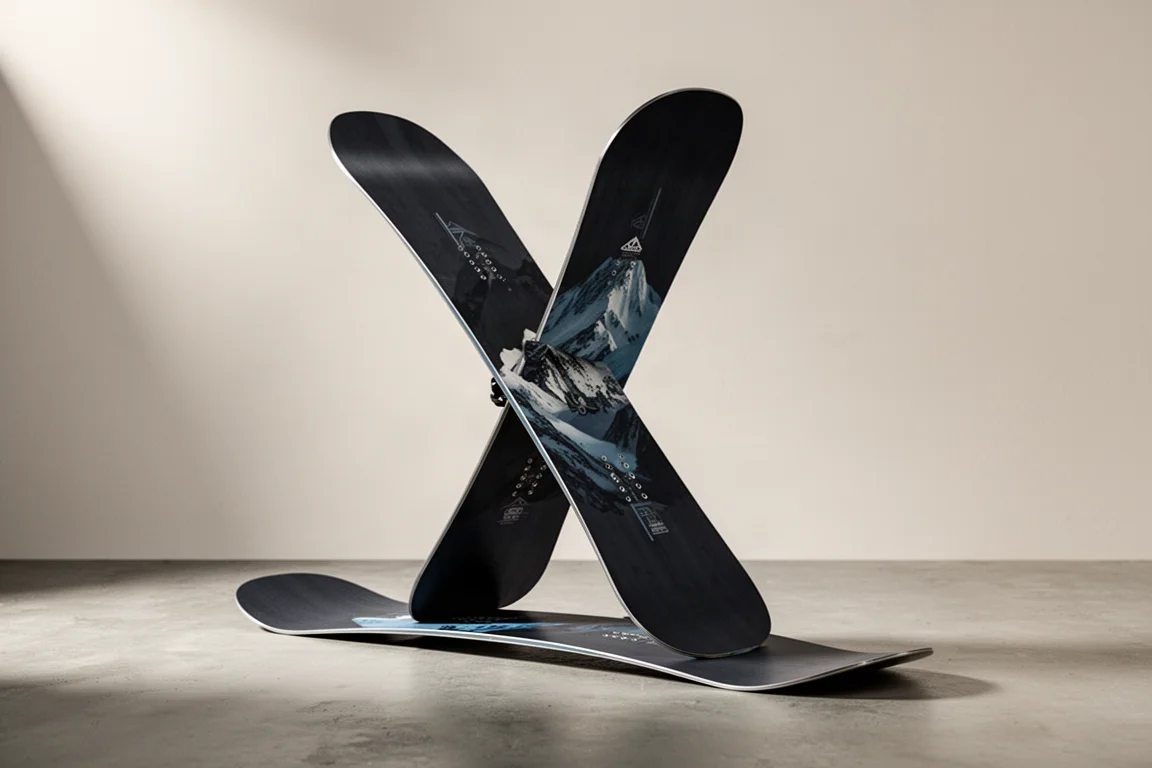
The Ride Shadowband is a directional twin snowboard built on a directional cam rocker profile: rocker in the nose, camber running through the inserts and just past them, and a smaller rocker zone in the tail. That combination is intended to preserve the load, pop, snap and drive of traditional camber underfoot while making turn entry and exit easier and improving float in powder.
Ride positions the Shadowband as the little brother to the Algorithm. It is available in 147, 151, 154, 157 and 161, along with wide versions at 155, 160 and 164.
Who the Ride Shadowband Is For
This is a board aimed at the rider who wants a single setup that covers everything, a true quiver of one. It is an all-mountain freestyle board first, which means it is expected to handle groomers, park laps, side hits and powder days without asking you to bring a second deck along.
The profile is camber dominant, so riders who already understand how camber loads and releases will get the most out of it. It also suits anyone who prefers a consistent, predictable feel over a twitchy, highly reactive ride.
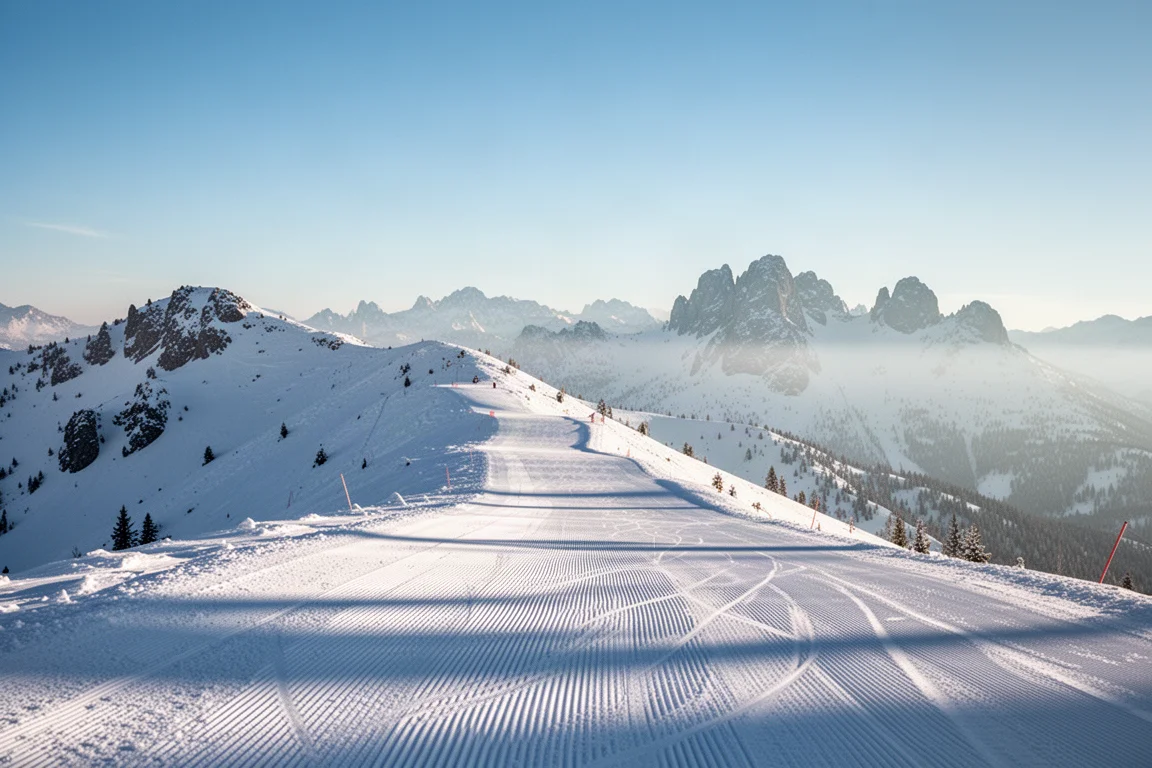
Because the flex is uniform from tip to tail, there is no adjustment period where you have to learn a soft nose and a stiff mid-section. The board behaves the same way wherever you stand on it, and that consistency is what makes it easy to trust on a first lap.
Main Strengths: Flex, Camber, and Stability
The defining characteristic of the Shadowband is consistency. Flex is uniform from tip to tail, with defined flex points where the rocker zones meet the camber section in the nose and tail. Between the feet there is a modest amount of torsional give rather than an excessive amount, so the overall feel is a middle-of-the-road flex that stays even across the whole board.
Stability is a clear strength. The ride is smooth and damp while still retaining some liveliness, without becoming wildly reactive. At higher speeds the tips stay quiet and there is very little chatter to manage, and the board dissipates kinetic energy well before it reaches your feet.
The camber section is dominant and generous, which gives the board genuine snap. You do have to load the camber to feel it, and you feel the downward weight drive into the board, but the rebound is predictable rather than a fight.
Jump Performance and Pop
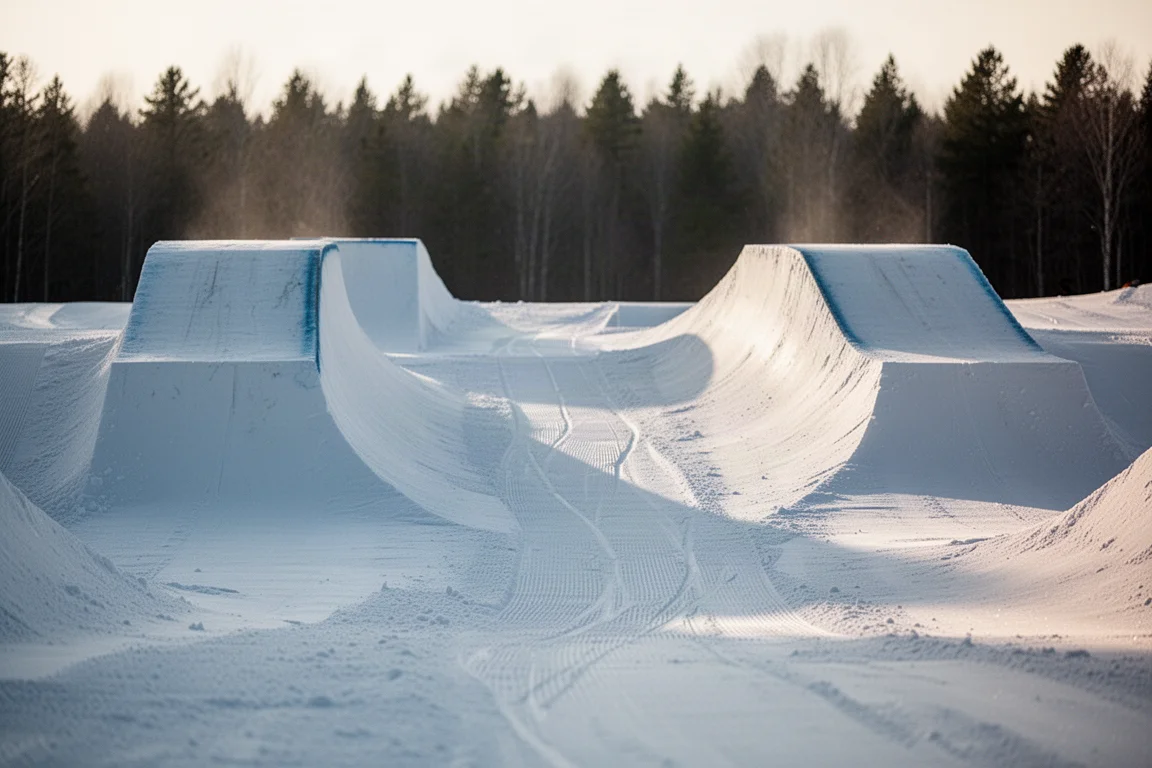
Roll back onto the tail, spring off the smaller rocker zone, and the Shadowband wants to pop. It handles side hits, cat track gaps and ollies over whatever is in the way. Small, medium and large jumps all sit comfortably within its range.
On the lip you have a choice. You can stay laid back and let the transition throw you, or pop off the lip for extra height and a little more distance. Either approach works, and the board feels fully at home in the park.
Buttering and Jibbing
Buttering is easier off the nose because the nose rocker section is larger, but you still have to get your weight outside the insert pack and flex hard into it. Expect a small pushback right at the point where camber meets rocker, which produces a snappy release out of the nose. The tail rocker is smaller, but it locks in firmly and springs out when you disengage.
Because the profile is so camber dominant, it can feel hooky during butters. Riders with solid butter technique will be fine. Riders without it may find the board pushes back.
Jibbing rewards a little speed and a little muscle. The board locks into presses and releases with a predictable snap at the end of the feature, and when you go sideways it cradles slightly around the feature and slides well. It is a board you can jib on if you understand that there is rebound to work with and that it is snappy without being overly reactive.
Carving Performance
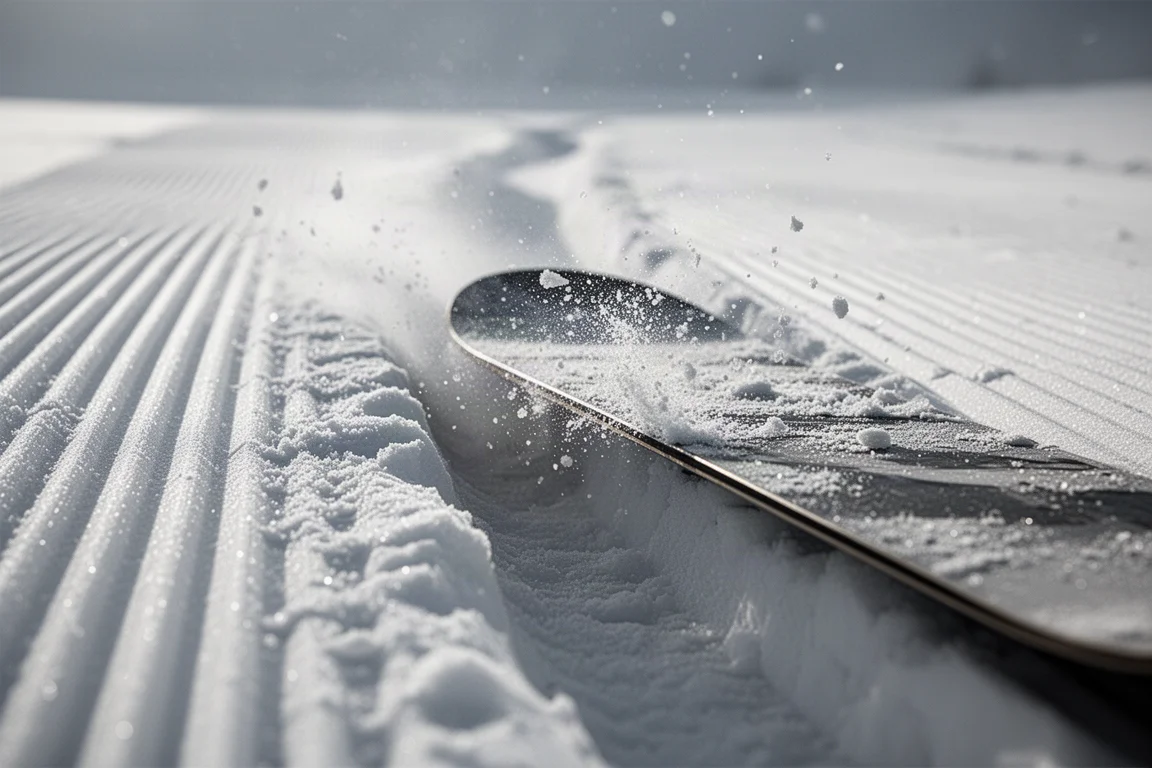
Carving is where the Shadowband is at its best. Edge to edge transitions are smooth and the board genuinely wants to be on edge. The construction roll helps with grip underfoot, and the board steers from the ankle, so it feels like you are driving it from just outside the inserts.
It grips and locks in whether you are making a deep carve or a mellow turn, and when you crank it over and drive off the tail it snaps out of the turn. Heel edge to toe edge and back again feels locked in throughout. Short tight carves, medium mellow carves, long hard deep carves and euro carves are all handled with ease.
Things to Consider Before Buying
The camber-dominant profile is the main thing to weigh up. It delivers the snap and grip that make the board so capable, but it also makes butters less forgiving and can feel hooky if your weight management is off.
The flex sits in the middle of the range and stays consistent rather than softening in the tips. Riders looking for a very playful, jib-first park feel or a very stiff, aggressive charger may want to look further toward either end of the spectrum.
It is also not a board described as highly reactive. The trade-off for its smooth, damp and consistent character is that it does not snap back at you instantly. That is a strength for most riders, but it is worth knowing before you commit.
Buying Advice
The Shadowband makes the most sense as a one-board quiver for a rider who splits time between groomers, park and natural features. If you are cross-shopping, the Jones Mountain Twin, Capita Indoor Survival and Rossignol One sit in the same conversation.
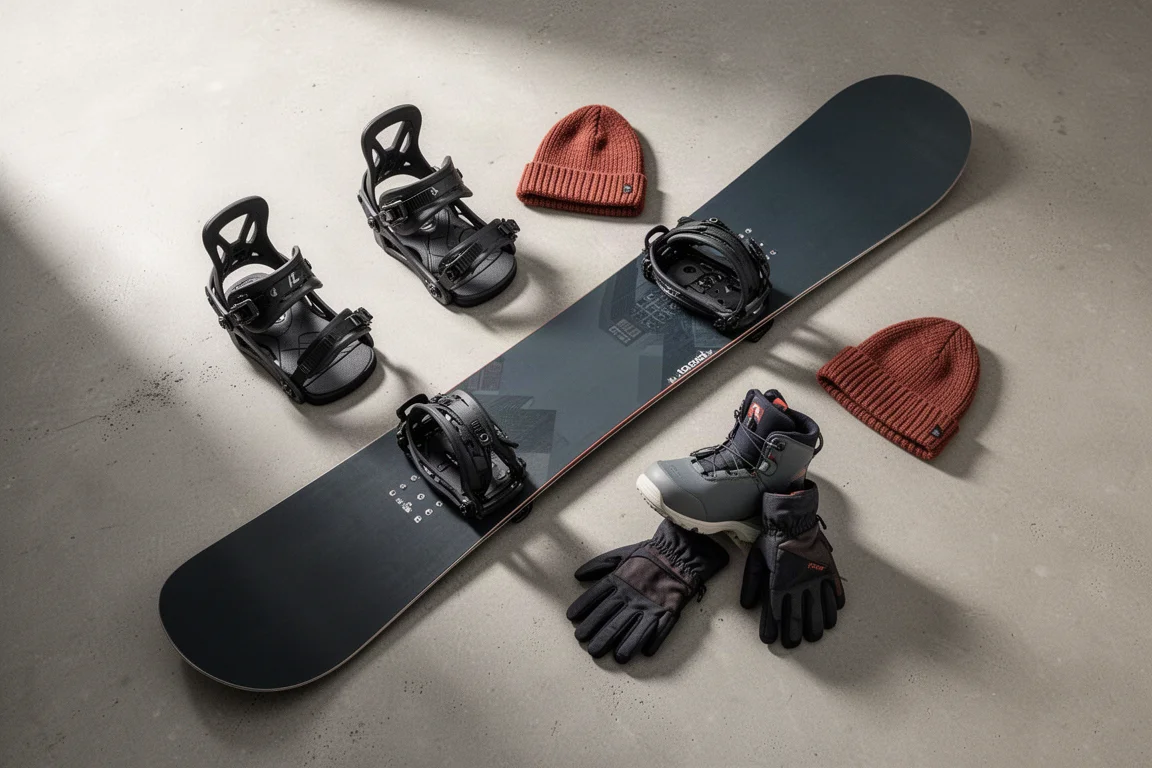
For bindings, the Ride C6, Rome Dod and Now Select Pro are sensible pairings. The board has also been ridden with Rome Black Label bindings and K2 Thraxis boots, so that combination is a known quantity if you already own either.
Sizing runs from 147 up to 161 in the standard widths, with wide options at 155, 160 and 164. Match the length to your weight and the terrain you ride most, and move into a wide if your boots run large.
Conclusion
The Ride Shadowband earns its place as an all-mountain freestyle board that does a great deal well. Its uniform flex, camber-driven snap and smooth, damp stability make it predictable across a wide range of conditions, and its carving performance is a genuine highlight. The trade-off is a camber-dominant character that asks for solid technique in the softer park disciplines. For a rider who wants one board to cover the whole mountain, it is a confident and coherent choice.
Product link
View more details for Ride Shadowband
This product is mentioned in the review. Check the specifications, options, and compatibility before buying.
View more details for Ride ShadowbandFurther reading
Related Reviews

Snowboards
32 Middle Earth Scott Stevens Pro Model Snowboard Review: A Park Board With a Reversed Flex
A medium traditional camber park board with carbon V reinforcement that is stiffer in the tips and more playful between the feet. Here is how it rides and who it suits.

Snowboards
32 Snafu Review: A Directional All-Mountain Freestyle Board with Serious Pop
The 32 Snafu pairs a directional camber-rocker profile with a stiffening tail for powerful carves, big ollies, and a surprisingly damp ride.

Snowboards
32 XXX Pat Fava Pro Snowboard Review: A Stiff Camber Beast for Hard-Charging Riders
A full-width traditional camber deck that rewards aggression with stability and edge power, but demands effort everywhere else.